📖 Lesson: Waves & Electromagnetic Radiation
Understand wave types, properties, and the electromagnetic spectrum
🧪 Interactive Simulations
Explore waves through hands-on interactive simulations
Mechanical Waves Simulation
Explore how mechanical waves travel through different mediums. Create waves with a dripping faucet, audio speaker, or laser! Observe transverse and longitudinal waves in action.
Electromagnetic Waves Lab
Discover the relationship between electromagnetic fields and waves. Explore radio waves, microwaves, infrared, visible light, UV, X-rays, and gamma rays across the spectrum.
📝 Waves Summary: Revision Notes on Wave Types, Properties and the EM Spectrum
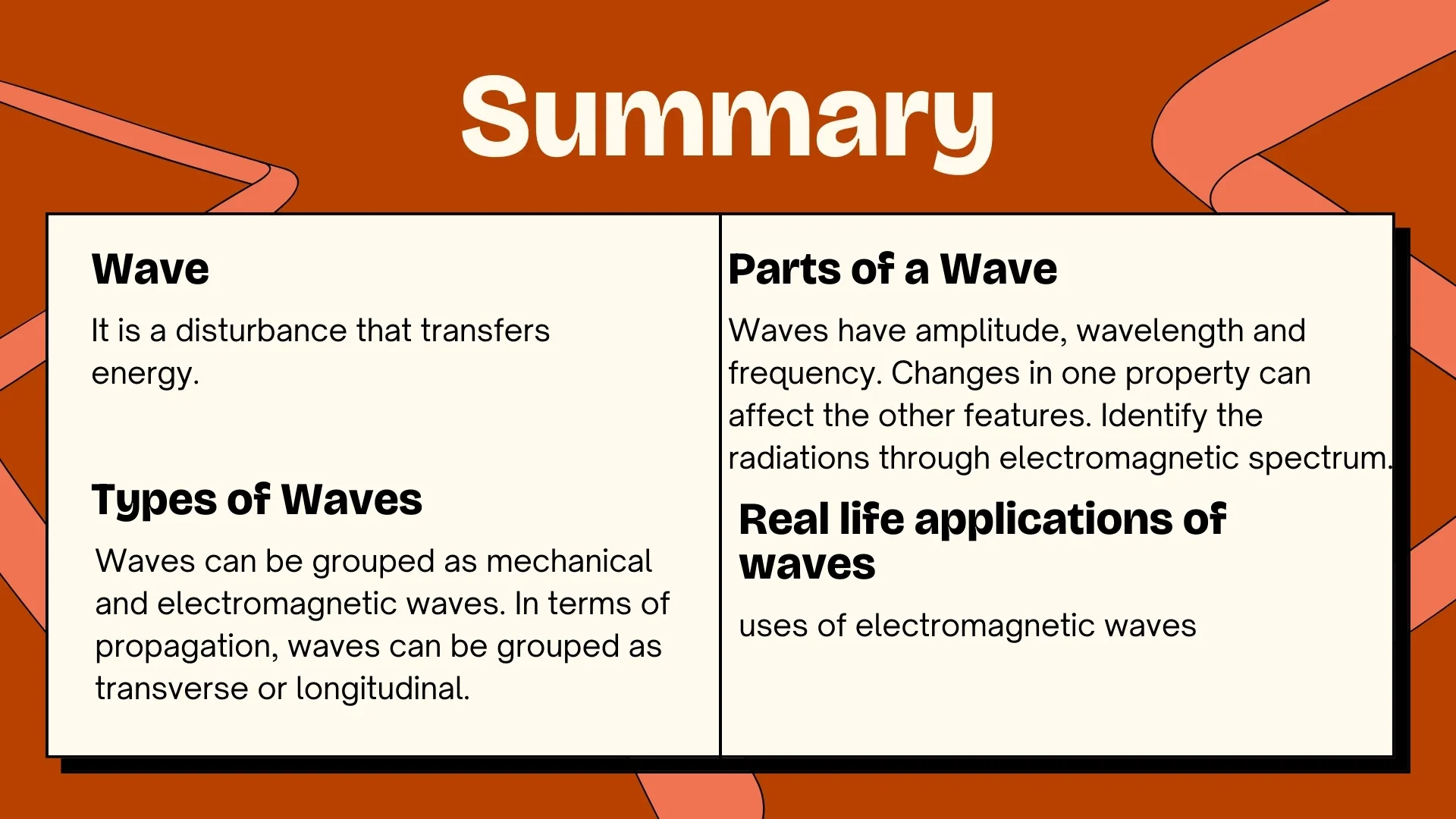
This is the whole waves topic on one page, written for last-minute revision. Every definition below is the one examiners expect. For the full teaching version with diagrams and a quiz, see our waves and electromagnetic spectrum lesson.
What a wave is
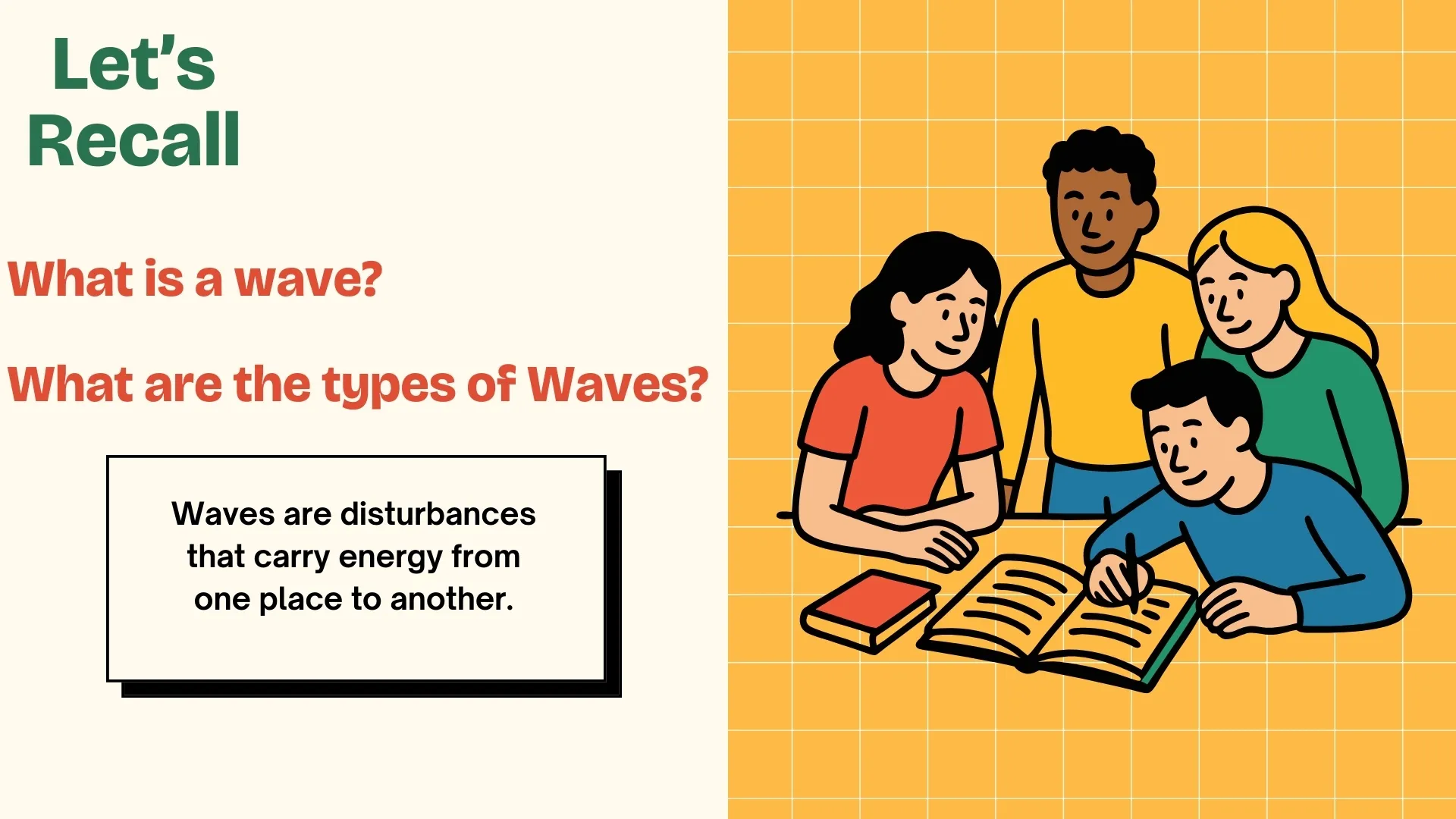
A wave is a vibration, or oscillation, that transfers energy from one place to another without transferring matter. A cork floating on a pond bobs up and down as ripples pass, but it does not travel along with them; the water itself stays put and only the energy moves on. The same is true of sound in air and light crossing space.
Transverse and longitudinal waves
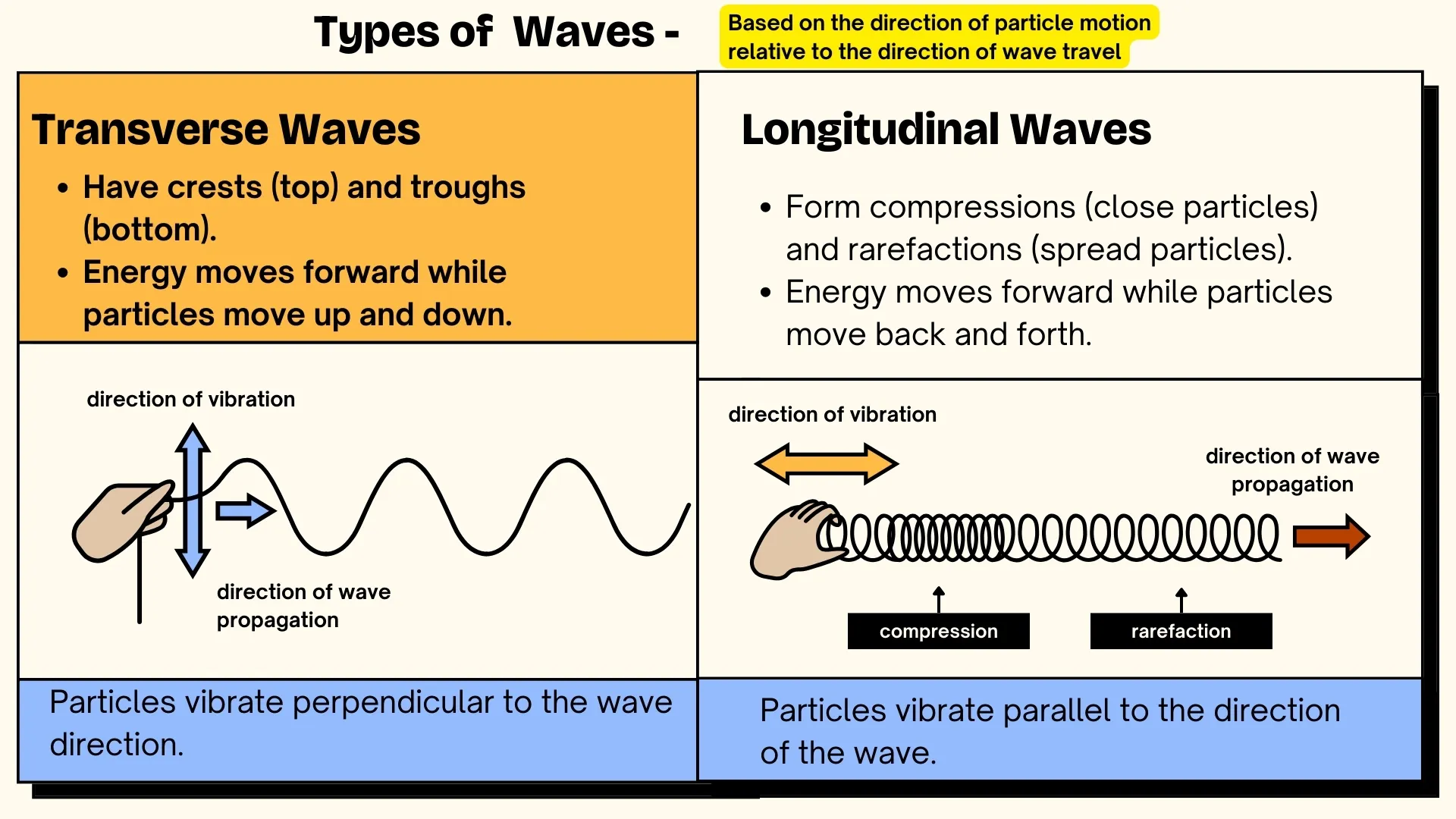
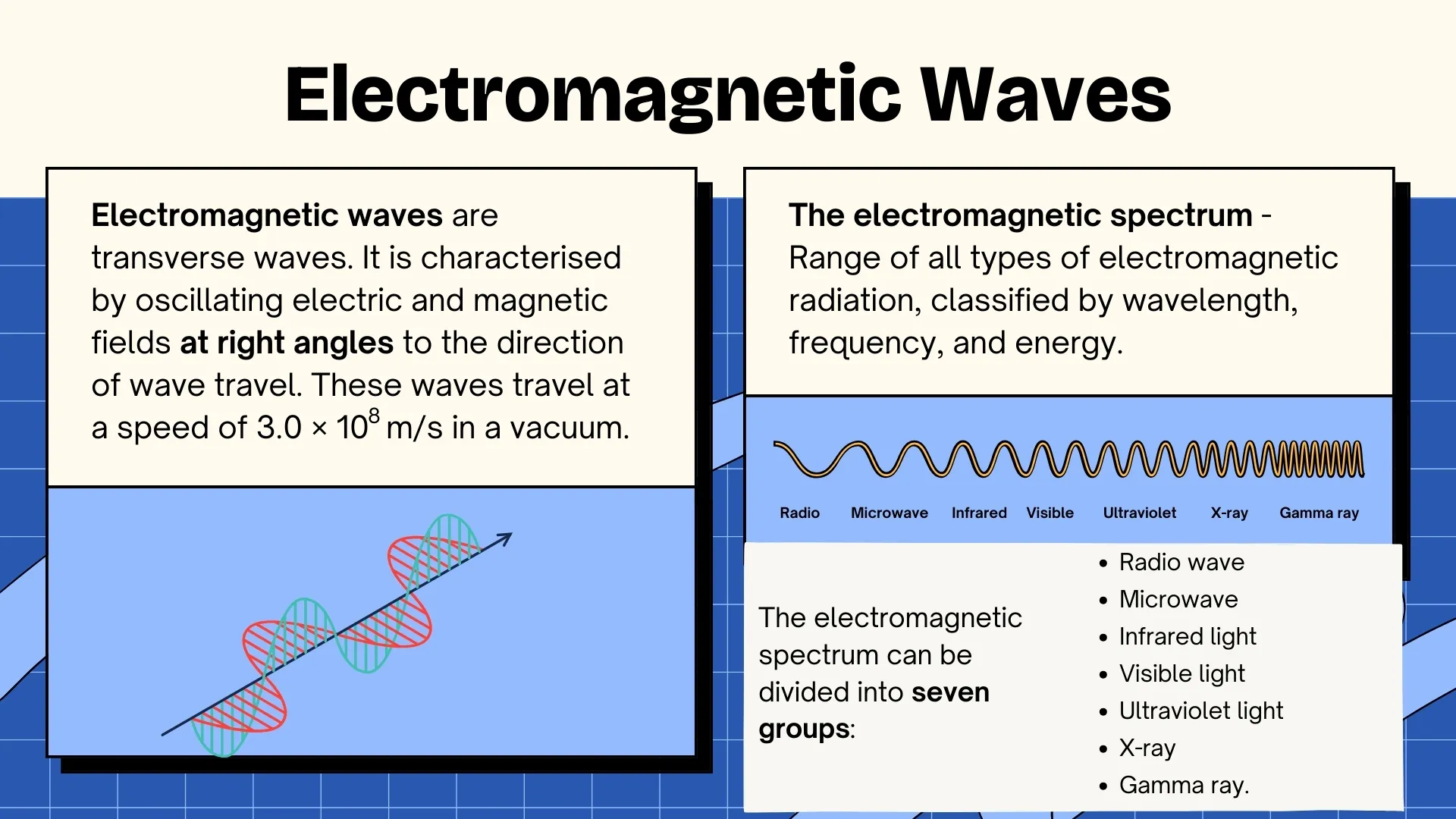
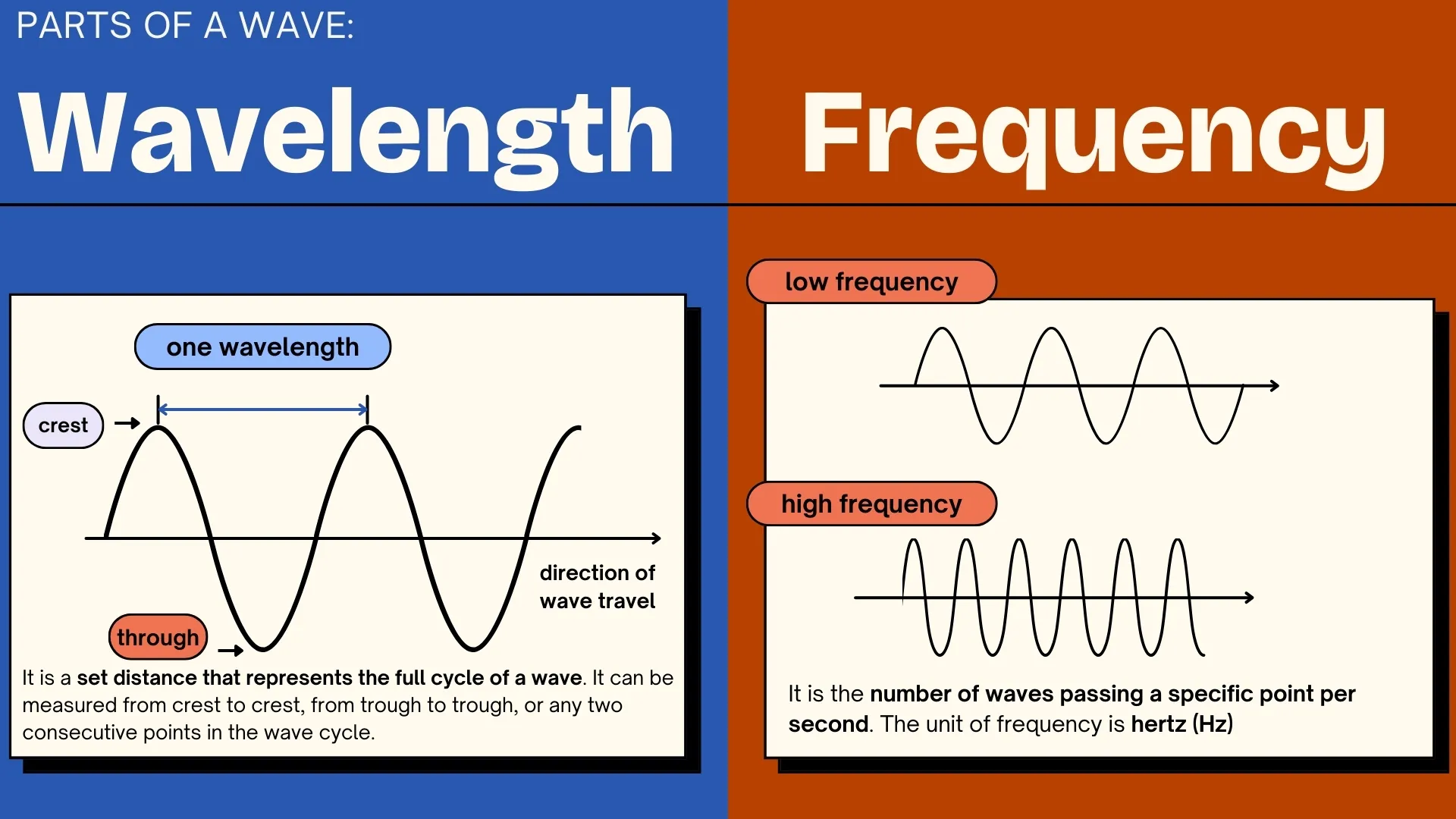
- Transverse wave: the oscillations are perpendicular (at right angles) to the direction the energy travels. Examples: ripples on water, a wave sent along a rope, all electromagnetic waves, and the S-waves of an earthquake. Transverse waves have crests and troughs.
- Longitudinal wave: the oscillations are parallel to the direction the energy travels. Examples: sound, a slinky spring pushed and pulled along its length, and the P-waves of an earthquake. Longitudinal waves have compressions (particles squashed together) and rarefactions (particles spread out).
Mechanical and electromagnetic waves
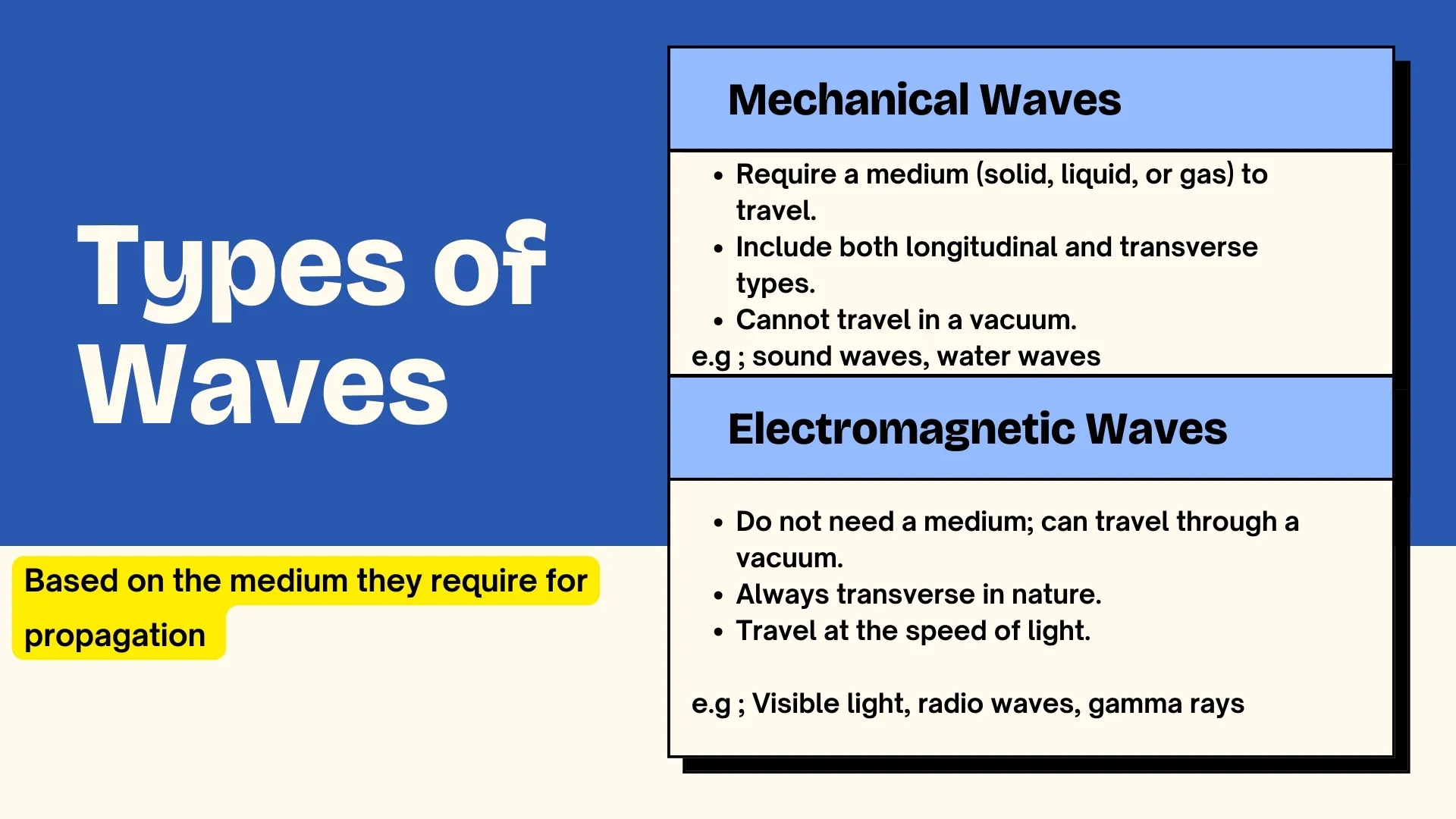
Mechanical waves need a medium, a material whose particles can vibrate, and so they cannot travel through a vacuum. Everyday examples are sound from a speaker, ripples on a pond, ocean waves, the vibration of a guitar string, ultrasound used in hospital scans, and the seismic waves of an earthquake. Because sound is mechanical, no sound crosses the vacuum of space.
Electromagnetic (EM) waves are oscillating electric and magnetic fields, need no medium, and are all transverse. Every EM wave, from radio to gamma, travels through a vacuum at the same speed, about 3 × 10⁸ m/s, the speed of light. That is why we see the Sun and receive signals from spacecraft.
The properties of a wave
- Amplitude (A)
- The maximum displacement of a point on the wave from its rest position, measured in metres. Larger amplitude means more energy: a louder sound or a brighter light.
- Wavelength (λ)
- The distance between one point on a wave and the same point on the next wave, such as crest to crest, measured in metres (m).
- Frequency (f)
- The number of complete waves passing a point each second, measured in hertz (Hz). 1 Hz is one wave per second.
- Period (T)
- The time taken for one complete wave to pass a point, measured in seconds (s).
- Wave speed (v)
- The distance the wave travels each second, measured in metres per second (m/s).
The two equations you need
wave speed = frequency × wavelength v = f λ v in m/s, f in Hz, λ in m. Rearranged: f = v ÷ λ and λ = v ÷ f. period = 1 ÷ frequency T = 1 / f T in s, f in Hz. A 50 Hz wave has a period of 1 ÷ 50 = 0.02 s.Worked example: sound travels through air at about 340 m/s. A note of frequency 170 Hz has wavelength λ = v ÷ f = 340 ÷ 170 = 2 m. Second example: a radio wave of wavelength 300 m travels at 3 × 10⁸ m/s, so its frequency is f = v ÷ λ = 3 × 10⁸ ÷ 300 = 1 × 10⁶ Hz, or 1 MHz. Notice that for any wave travelling at a fixed speed, a longer wavelength means a lower frequency.
The electromagnetic spectrum
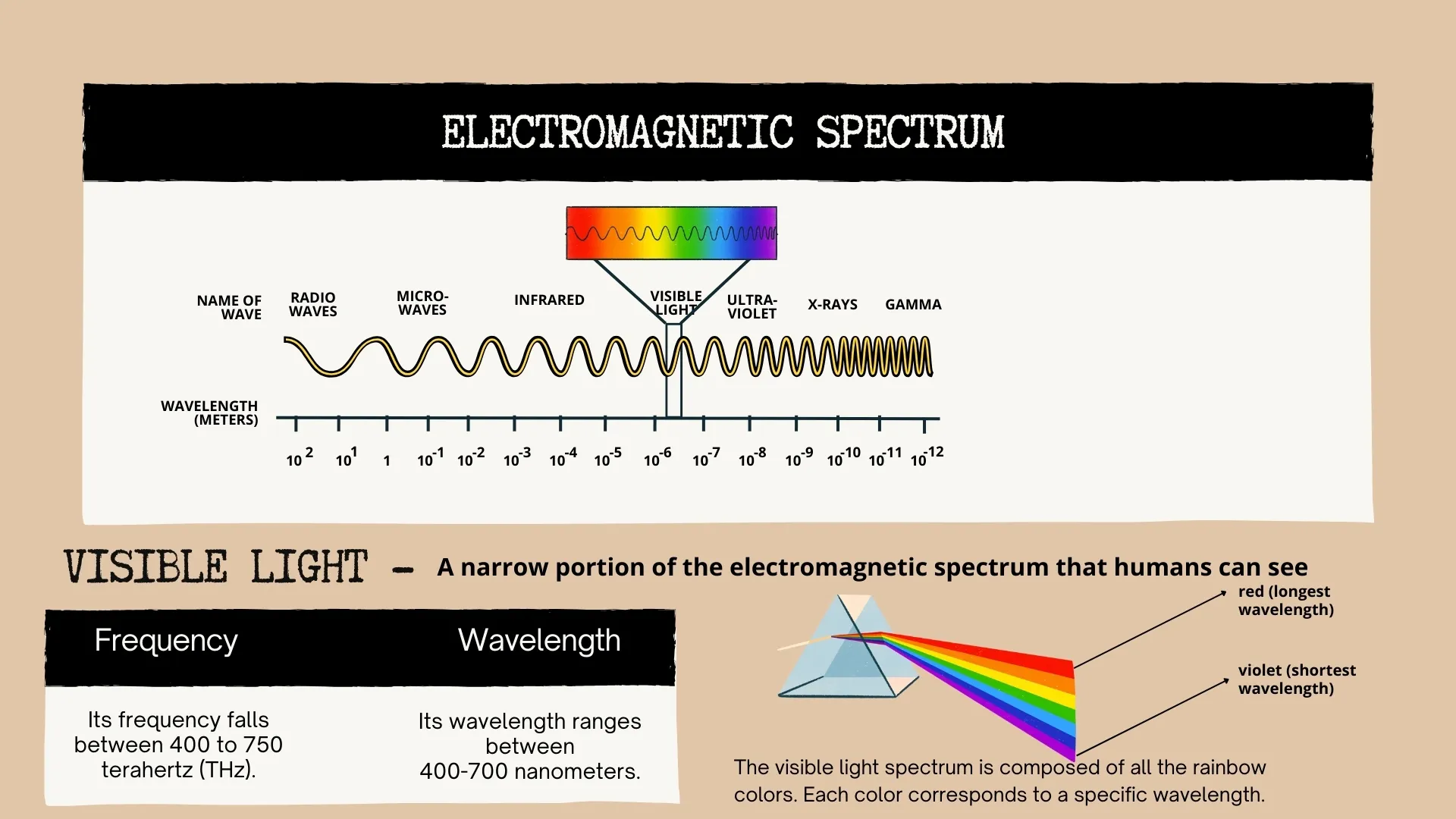
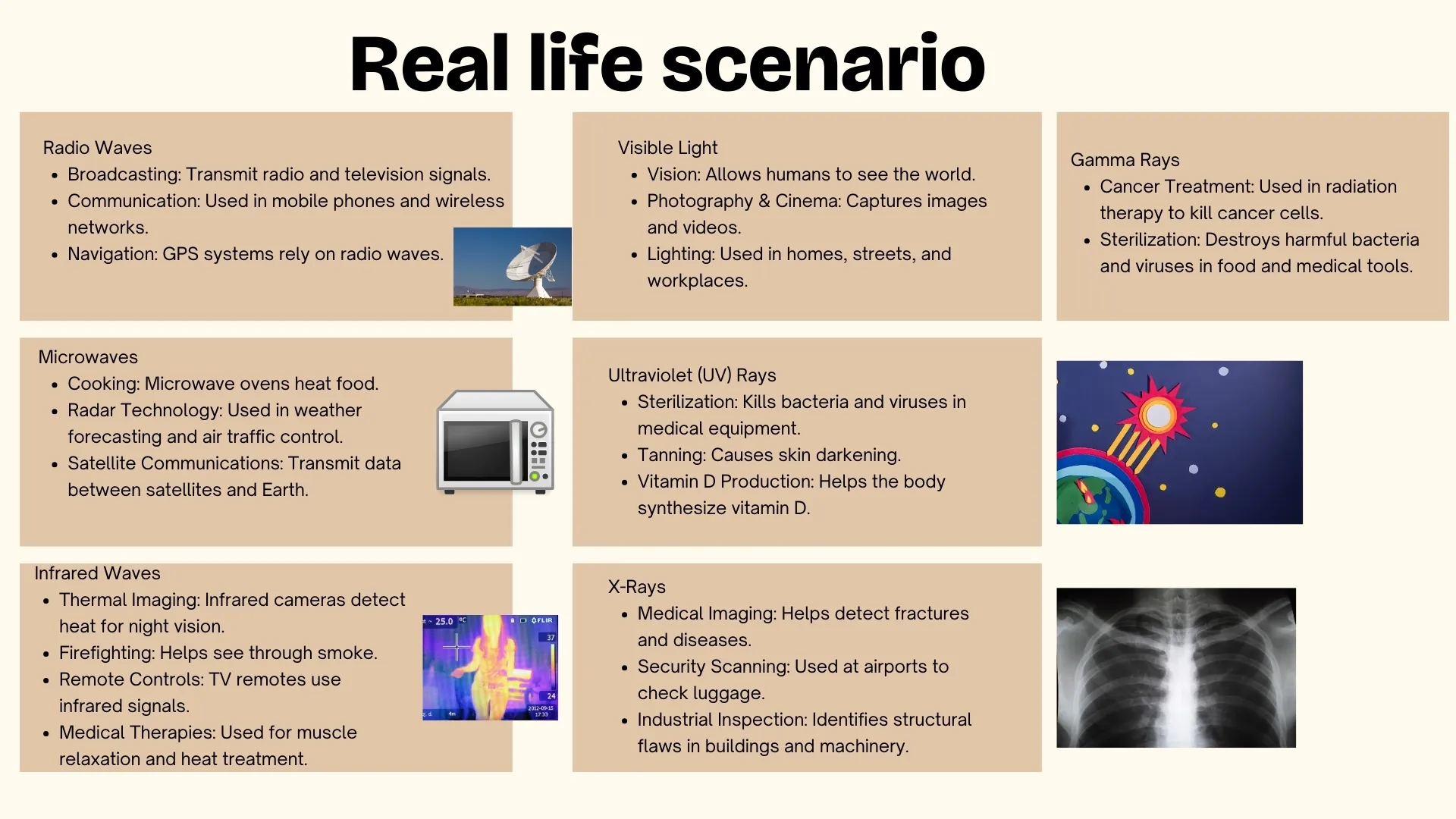
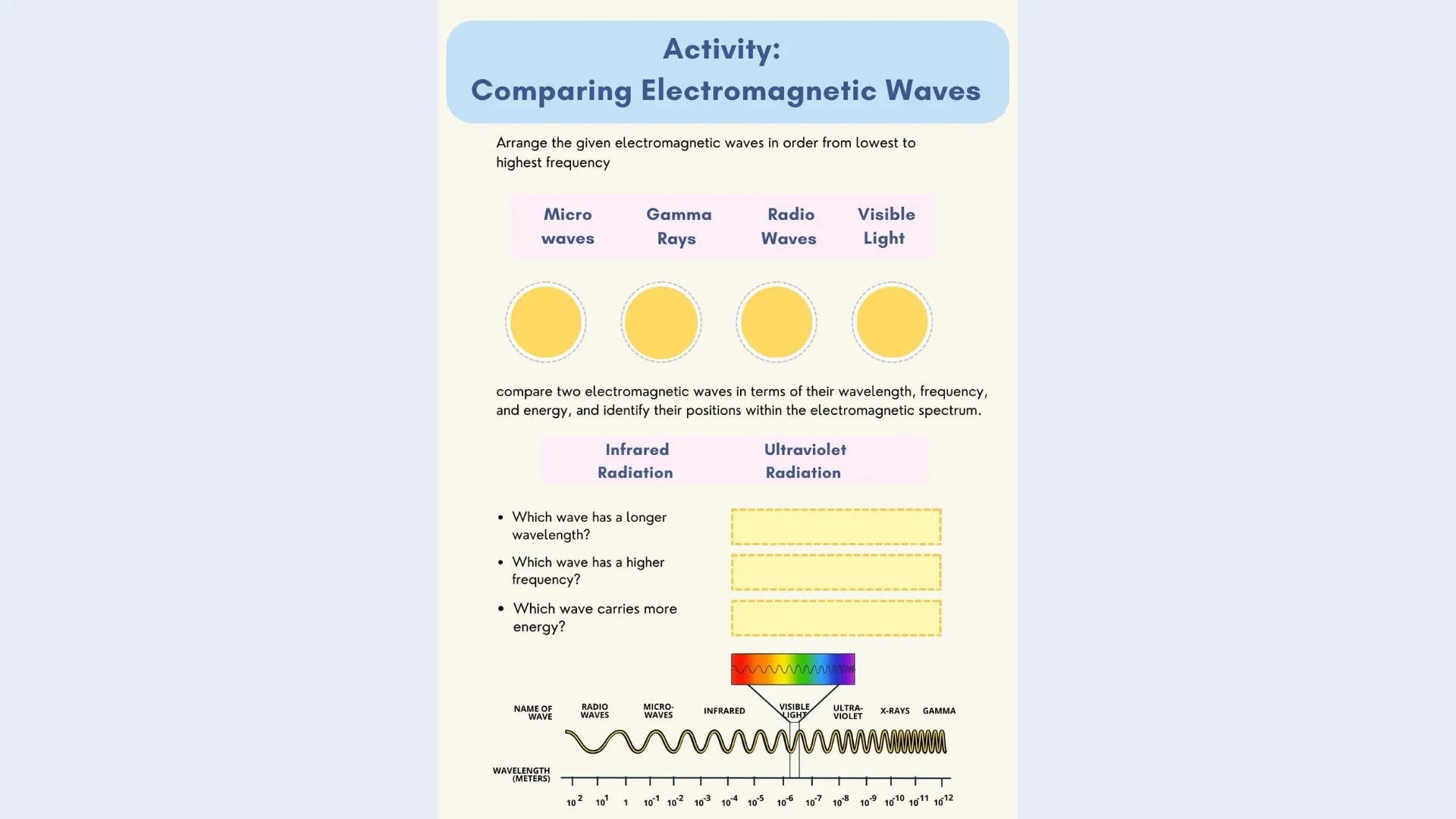
The EM spectrum is the whole family of electromagnetic waves arranged by wavelength. The table lists the seven bands in order of increasing wavelength, from gamma rays (shortest) to radio waves (longest). Reading down the table, wavelength increases while frequency and energy decrease. Gamma rays, X-rays and high-frequency ultraviolet carry enough energy to be ionising: they can knock electrons out of atoms and damage the DNA in living cells, which is the reason for their hazards.
| Band | Typical use | Hazard |
|---|---|---|
| Gamma rays | Sterilising medical equipment; treating cancer (radiotherapy); medical tracers | Ionising: damages cells and DNA, can cause mutation and cancer |
| X-rays | Imaging bones and teeth; airport baggage scanners | Ionising: cell damage, so exposure is kept to a minimum |
| Ultraviolet (UV) | Fluorescent lamps; sterilising water; detecting forged banknotes | Sunburn, skin cancer and eye damage |
| Visible light | Seeing; photography; fibre-optic communication | Very intense light, such as a laser, can damage the eye |
| Infrared (IR) | Electric heaters and grills; thermal-imaging cameras; TV remote controls | Skin burns from strong sources |
| Microwaves | Cooking (heats the water in food); mobile phones; satellite communication | Internal heating of body tissue |
| Radio waves | Television and radio broadcasting | No known harm at everyday intensities |
Ten-point revision checklist
- Waves transfer energy, not matter.
- Transverse: oscillations perpendicular to energy transfer. Longitudinal: parallel.
- Sound is longitudinal and mechanical; light is transverse and electromagnetic.
- Mechanical waves need a medium; EM waves do not, so sound cannot cross a vacuum but light can.
- All EM waves travel at 3 × 10⁸ m/s in a vacuum.
- Wavelength is crest to crest, in metres; frequency is waves per second, in hertz.
- v = fλ and T = 1/f. Check the units before substituting.
- The EM spectrum from shortest to longest wavelength: gamma, X-ray, UV, visible, IR, microwave, radio.
- Shorter wavelength means higher frequency and higher energy.
- Gamma, X-rays and UV are ionising, which is why they are the dangerous end of the spectrum.