📖 Lesson: Ohm's Law
Learn the fundamental relationship between voltage, current, and resistance
🃏 Flashcards
Click each card to reveal the definition
🎮 Interactive Games
Test your knowledge of Ohm's Law
🔌 Ohm's Law Explained: Statement, Formula and Worked Examples
State Ohm's law
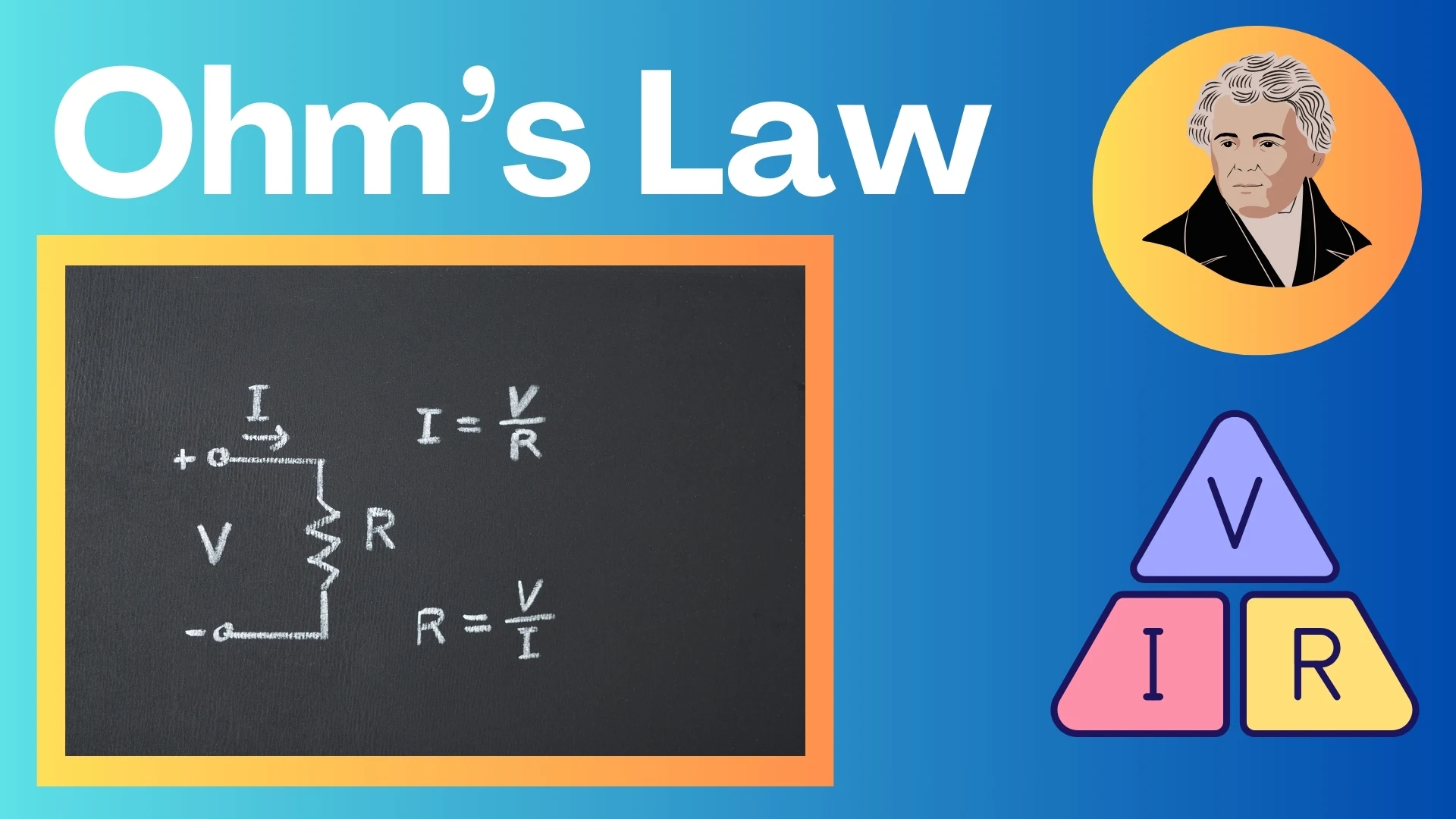
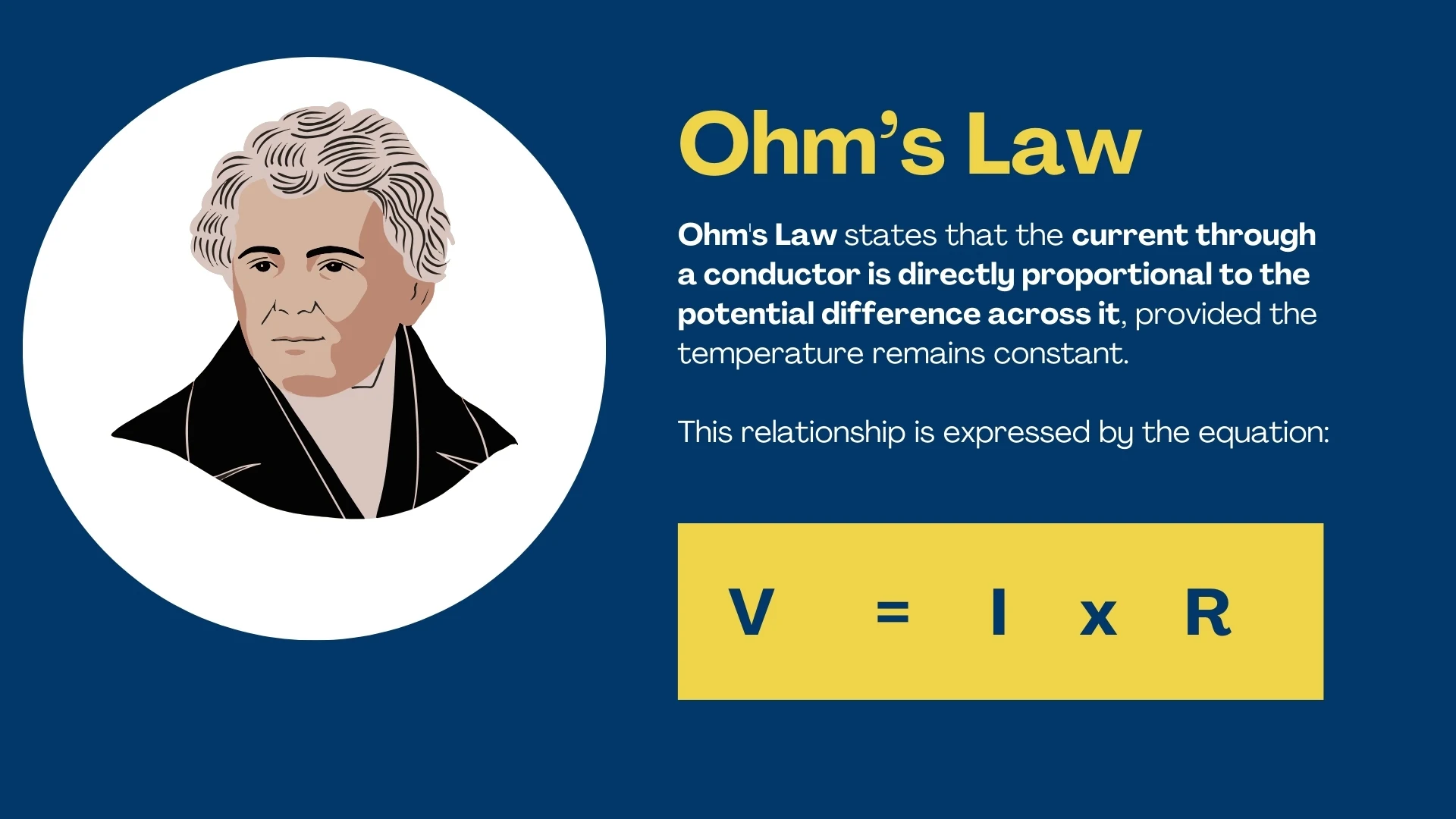
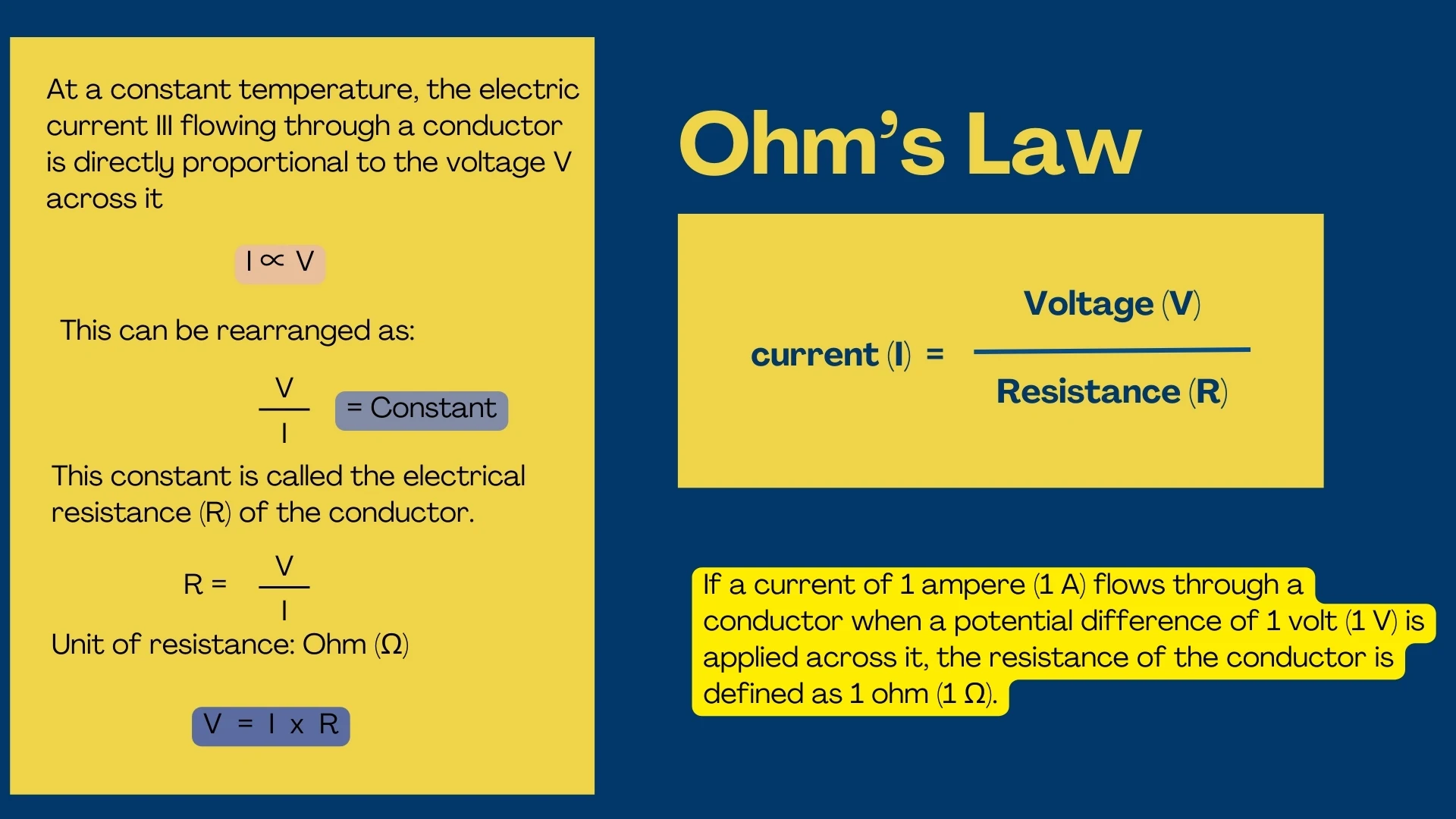
Ohm's law states that the current flowing through a metallic conductor is directly proportional to the potential difference across its ends, provided the temperature and other physical conditions of the conductor stay constant.
In symbols, that proportionality is written:
I ∝ V (at constant temperature)"Directly proportional" has a precise meaning. It says that if you double the potential difference across the conductor, the current through it doubles; if you reduce the potential difference to a third, the current falls to a third. The ratio of voltage to current stays the same no matter which pair of readings you take.
The law is named after the German physicist Georg Simon Ohm, who published the relationship in 1827, and the unit of resistance is named after him too.
The Ohm's law formula
Because the ratio of voltage to current is constant, it can be given a name. That constant is the resistance of the conductor, and turning the proportionality into an equation gives the formula everyone learns:
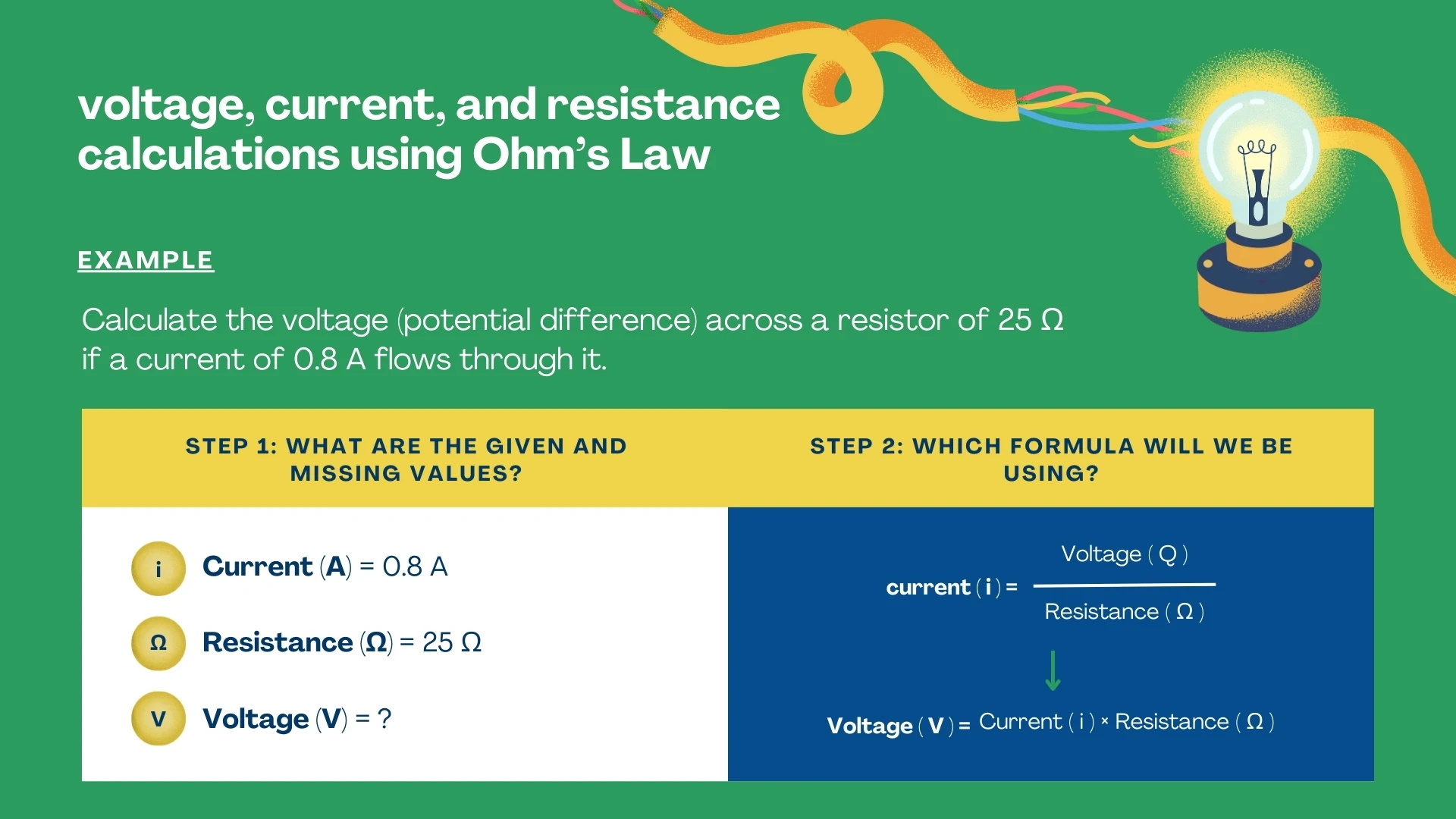
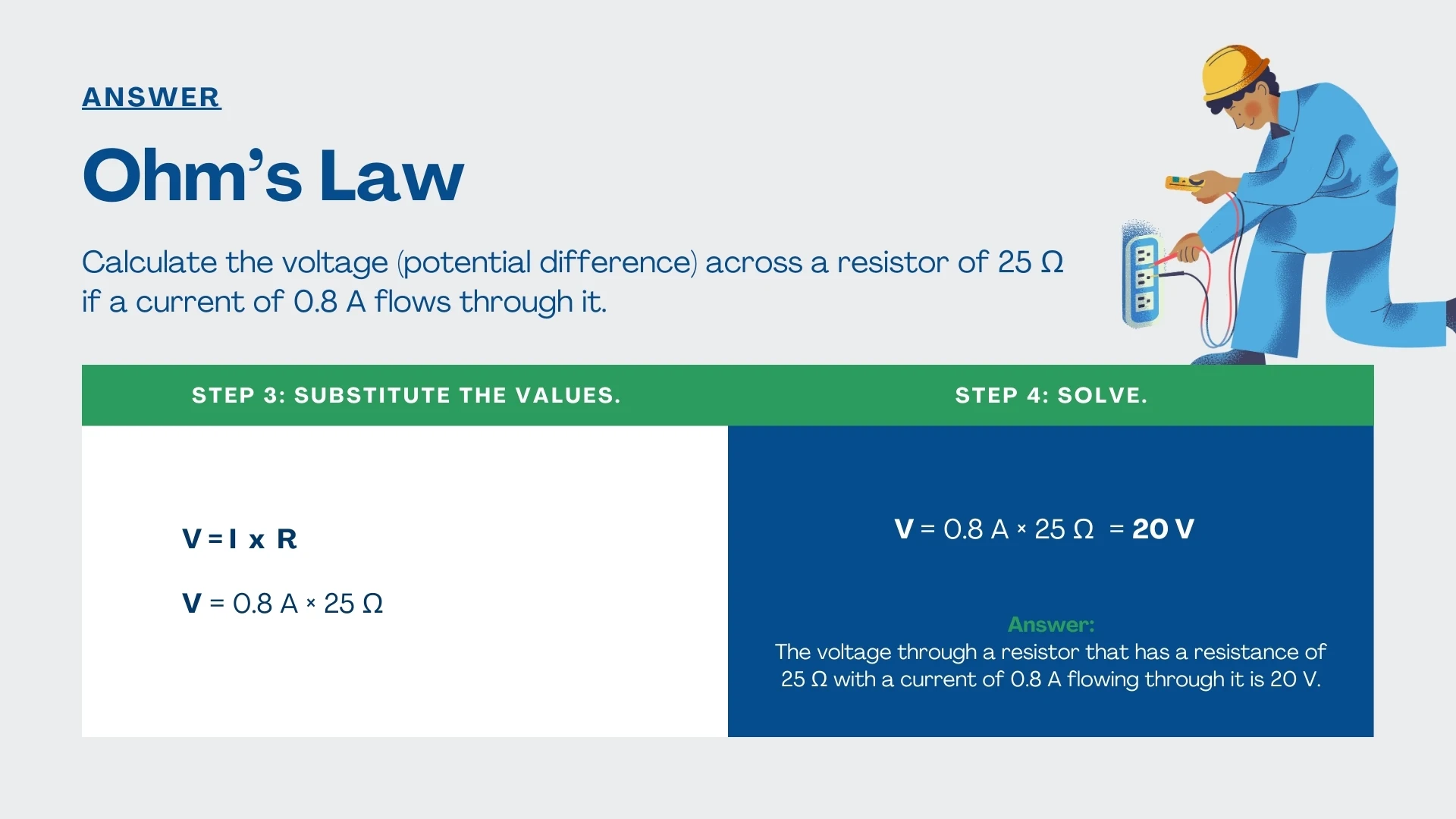
V = I × RThe same relationship rearranges two ways, and you will need all three forms in an exam:
- V = I × R — to find the potential difference when you know the current and the resistance.
- I = V ÷ R — to find the current when you know the potential difference and the resistance.
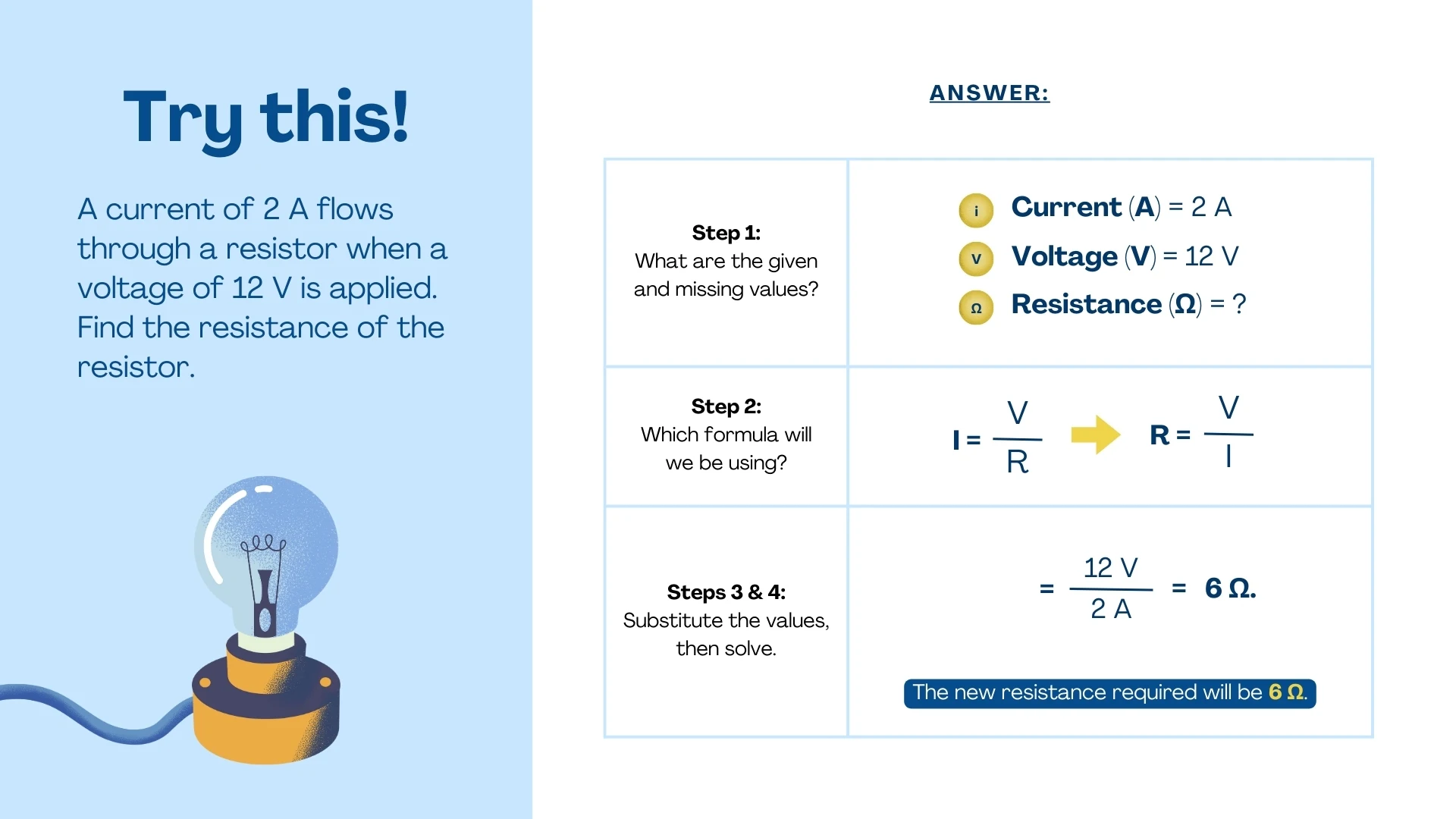
- R = V ÷ I — to find the resistance when you know the potential difference and the current.
A useful memory aid is the Ohm's law triangle: write V in the top half, with I and R side by side in the bottom half. Cover the quantity you want with a finger and the triangle shows you the calculation. Cover V and the two letters sit side by side, so you multiply. Cover I and V sits above R, so you divide.
What the three quantities mean, and their units
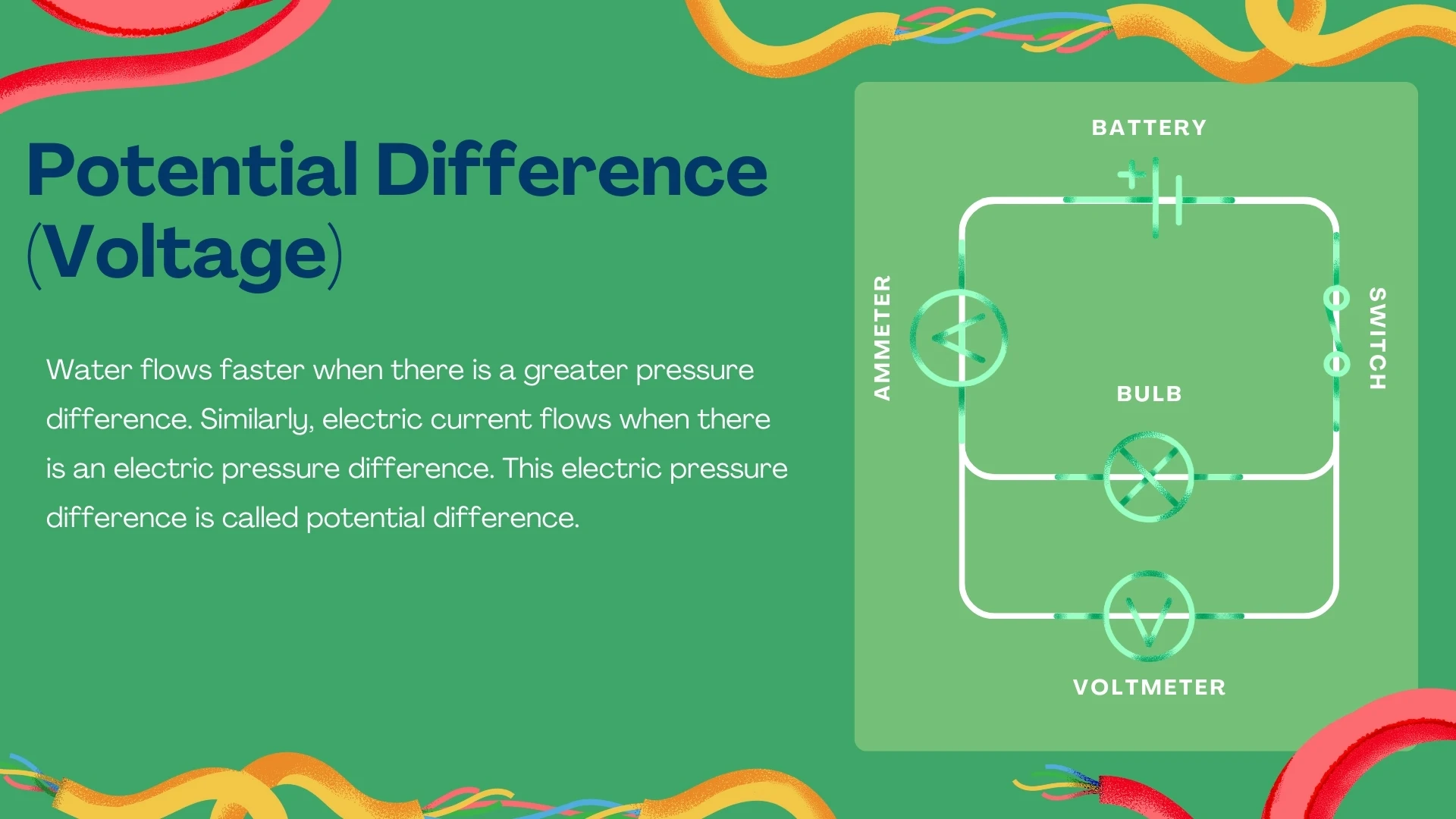
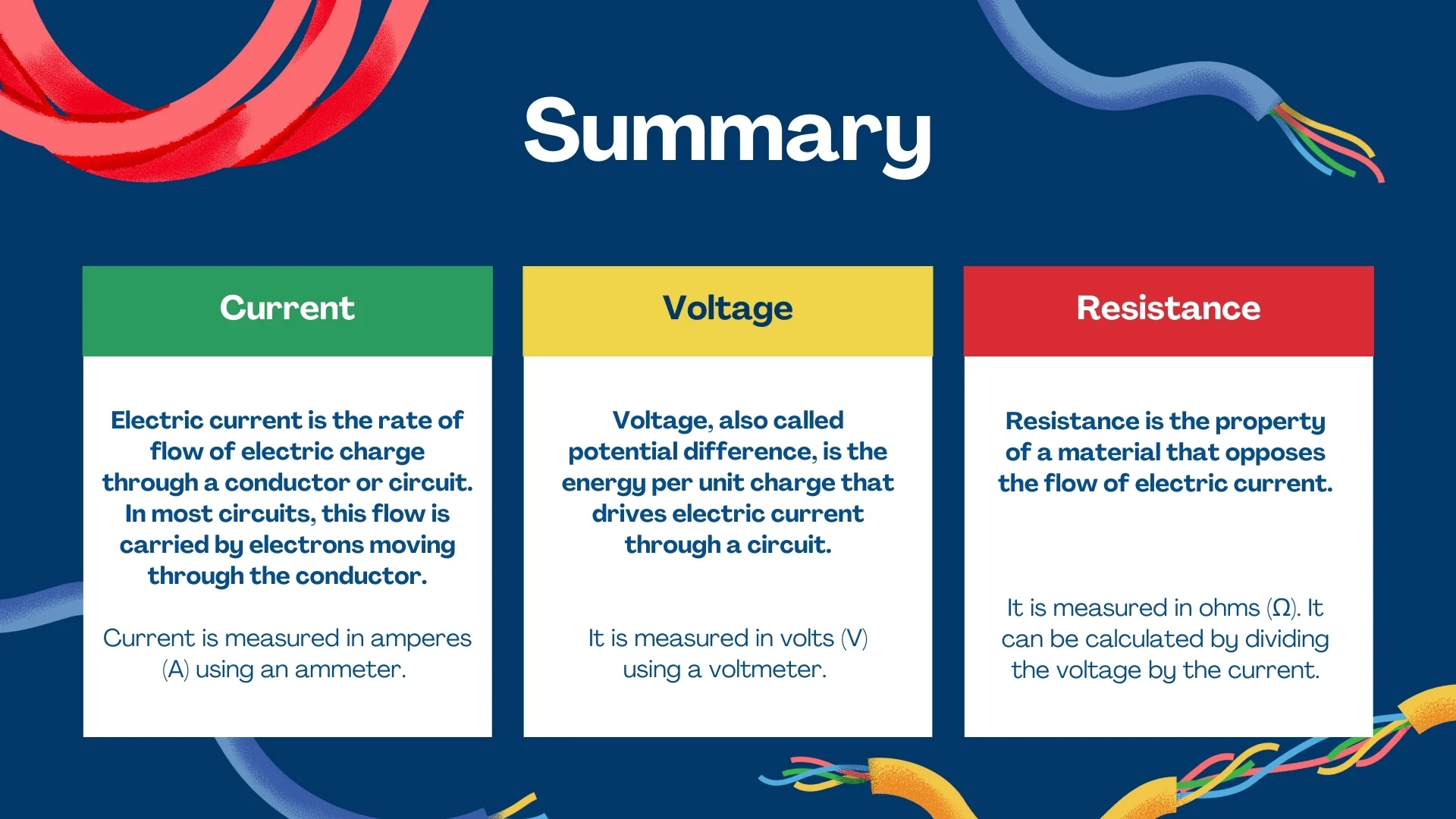
- Potential difference (V), also called voltage, is the energy given to each unit of charge as it passes through a component. It is the electrical push. It is measured in volts (V) with a voltmeter, which is always connected in parallel with the component.
- Current (I) is the rate of flow of electric charge. It is measured in amperes, or amps (A), with an ammeter, which is always connected in series so the current it is measuring flows through it.
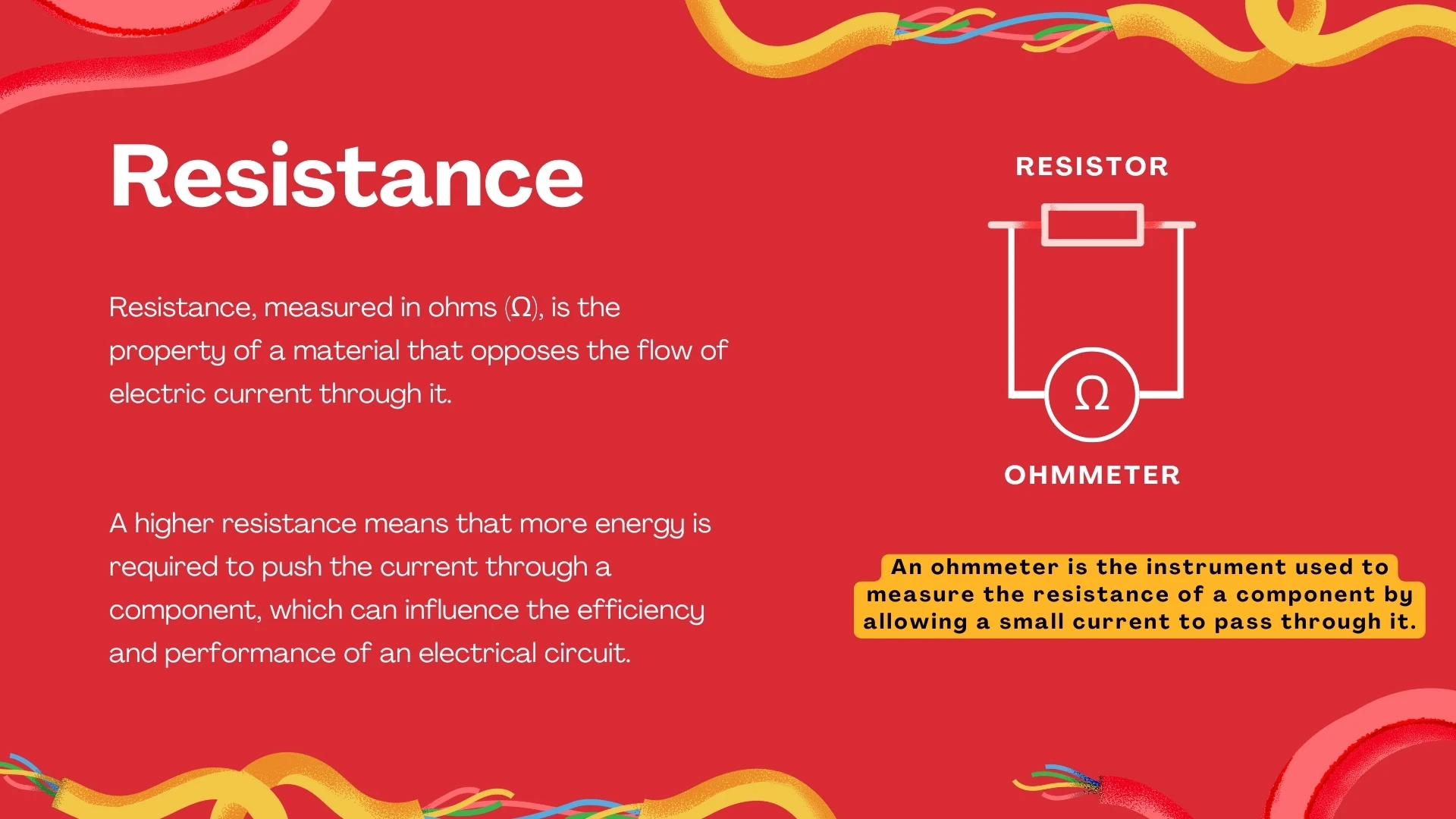
- Resistance (R) is the opposition a component offers to the flow of current. It is measured in ohms (Ω). One ohm is the resistance of a conductor that carries a current of one ampere when a potential difference of one volt is applied across it, so 1 Ω = 1 V/A.
Exam questions people ask about Ohm's law
"According to Ohm's law, at a constant temperature, what is the current through a metallic conductor proportional to?" The current is directly proportional to the potential difference (the voltage) applied across the ends of that conductor. It is not proportional to the resistance — in fact, for a fixed voltage the current is inversely proportional to the resistance, because I = V ÷ R.
"Ohm's law states that current and potential difference are directly proportional in a circuit. True or false?" The intended answer is true — that is exactly what the law says. But note the condition that makes it true: it holds for an ohmic conductor at constant temperature. It is not a rule that every electrical component obeys, as the next section explains.
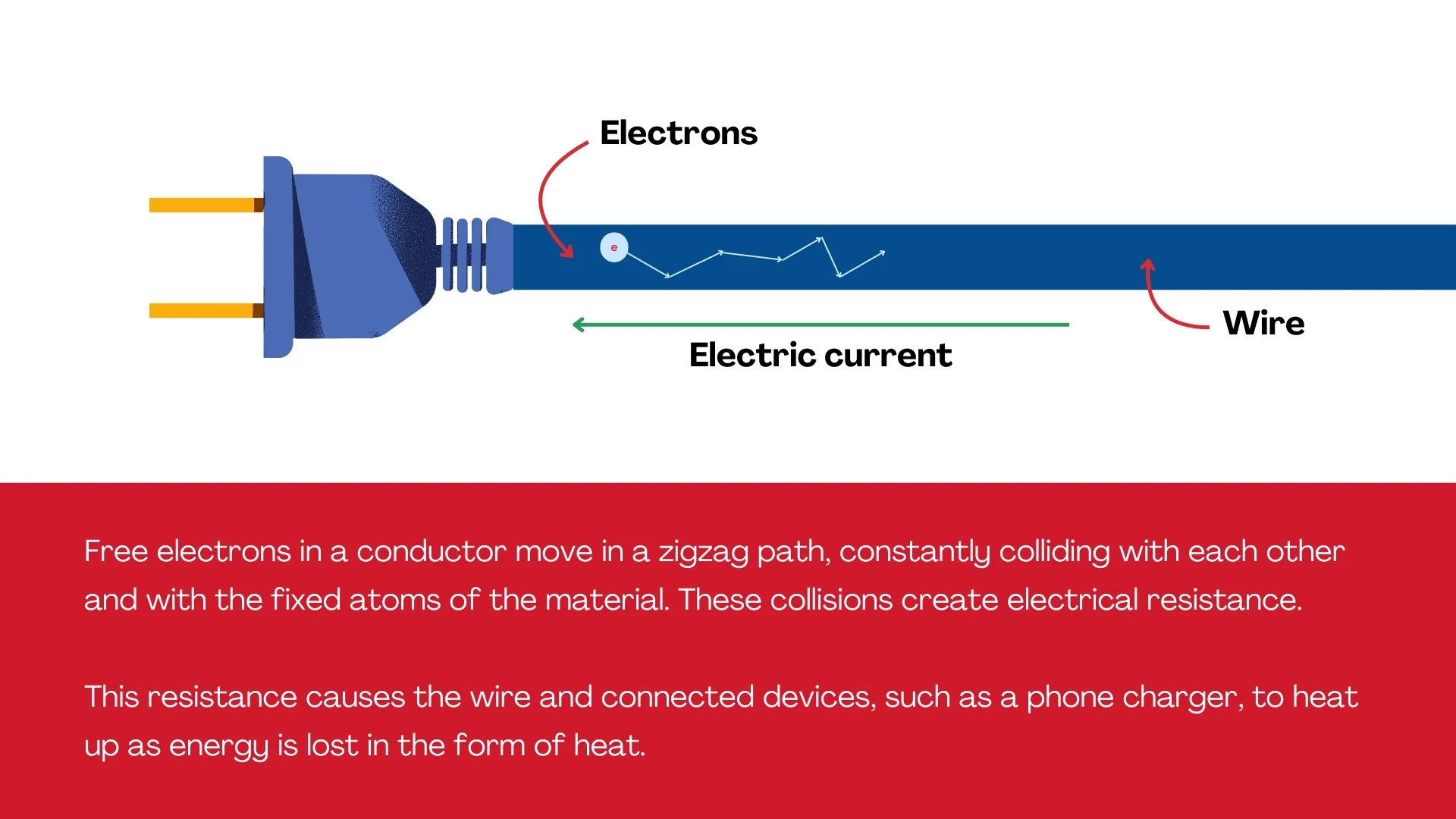
"Why must the temperature be constant?" Heating a metal makes its ions vibrate more strongly, so the moving electrons collide with them more often and lose more energy. The resistance of the metal therefore rises with temperature. If the conductor is allowed to heat up as the current increases, the ratio V ÷ I no longer stays fixed and the proportionality breaks down — which is why the law includes the condition rather than leaving it out.
The V-I graph: what a straight line tells you
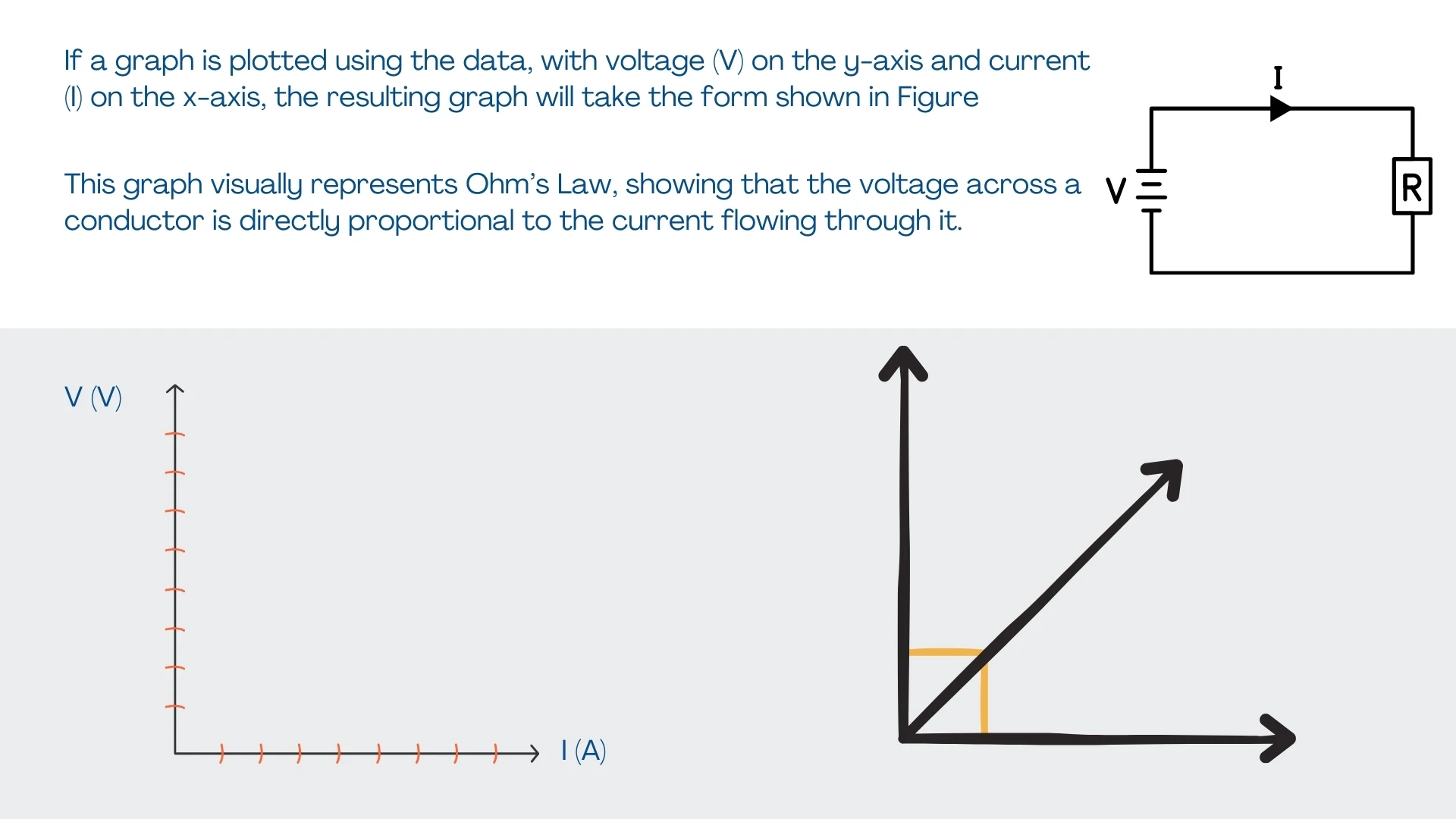
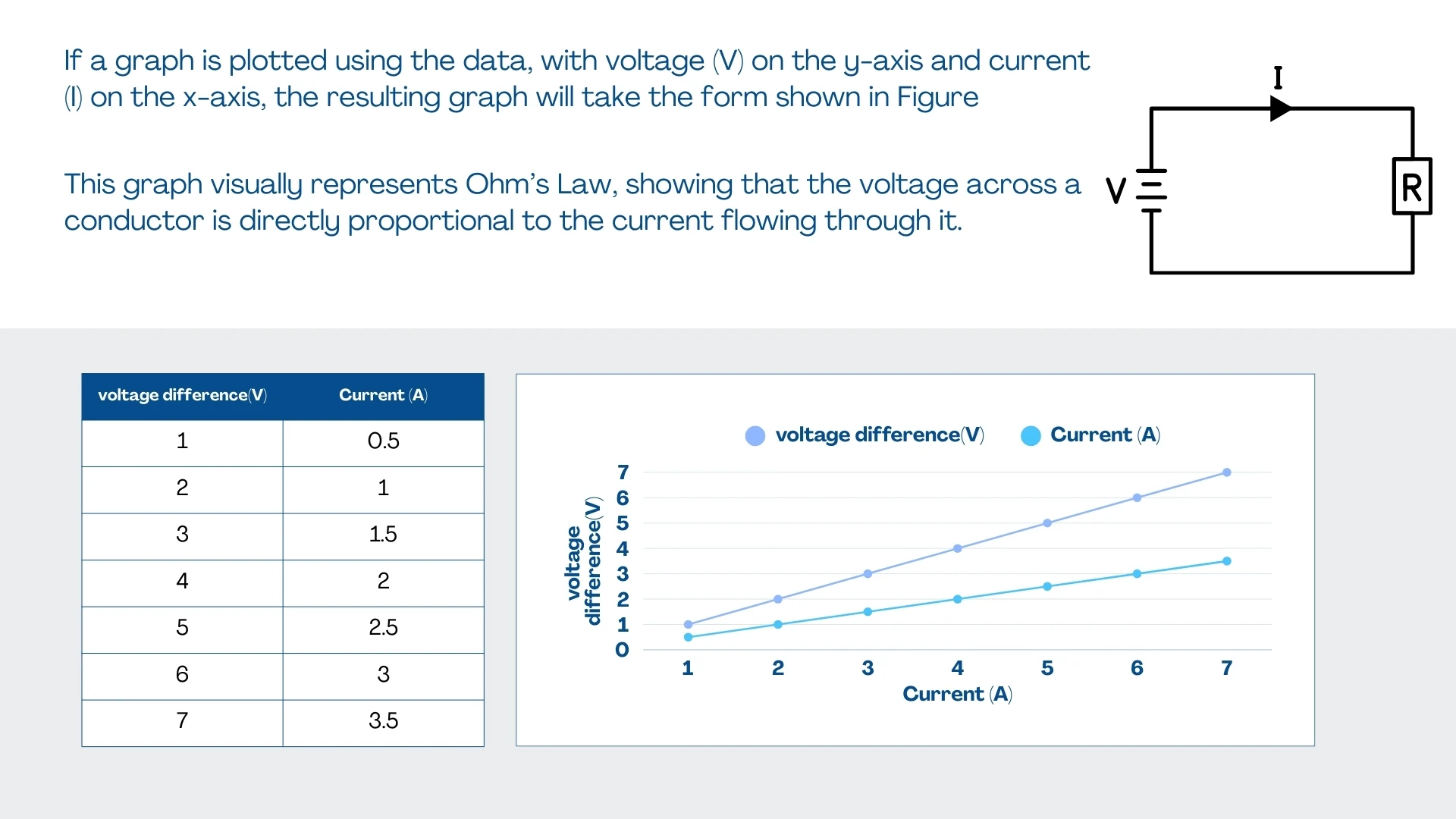
If you measure the current through a conductor for several different potential differences and plot the results, the shape of the graph tells you whether the conductor obeys Ohm's law.
- A straight line passing through the origin means the two quantities are directly proportional, so the conductor is ohmic. A length of metal wire at constant temperature, or a fixed resistor used gently, gives this shape.
- On a graph of V (vertical) against I (horizontal), the gradient of that line is the resistance. A steeper line means a higher resistance.
- On a graph of I (vertical) against V (horizontal), the gradient is 1 ÷ R. Here a steeper line means a lower resistance, which is the step most students lose marks on.
Components that do not obey Ohm's law
Components whose V-I graph is a curve rather than a straight line are called non-ohmic.
- A filament lamp gets hot as the current rises, so its resistance increases and the graph curves over.
- A diode allows current in one direction only, so its graph is not even symmetrical about the origin.
- A thermistor of the common type has a resistance that falls sharply as it gets warmer, which makes it useful as a temperature sensor.
- A light-dependent resistor (LDR) has a resistance that falls as the light on it gets brighter.
Worked examples
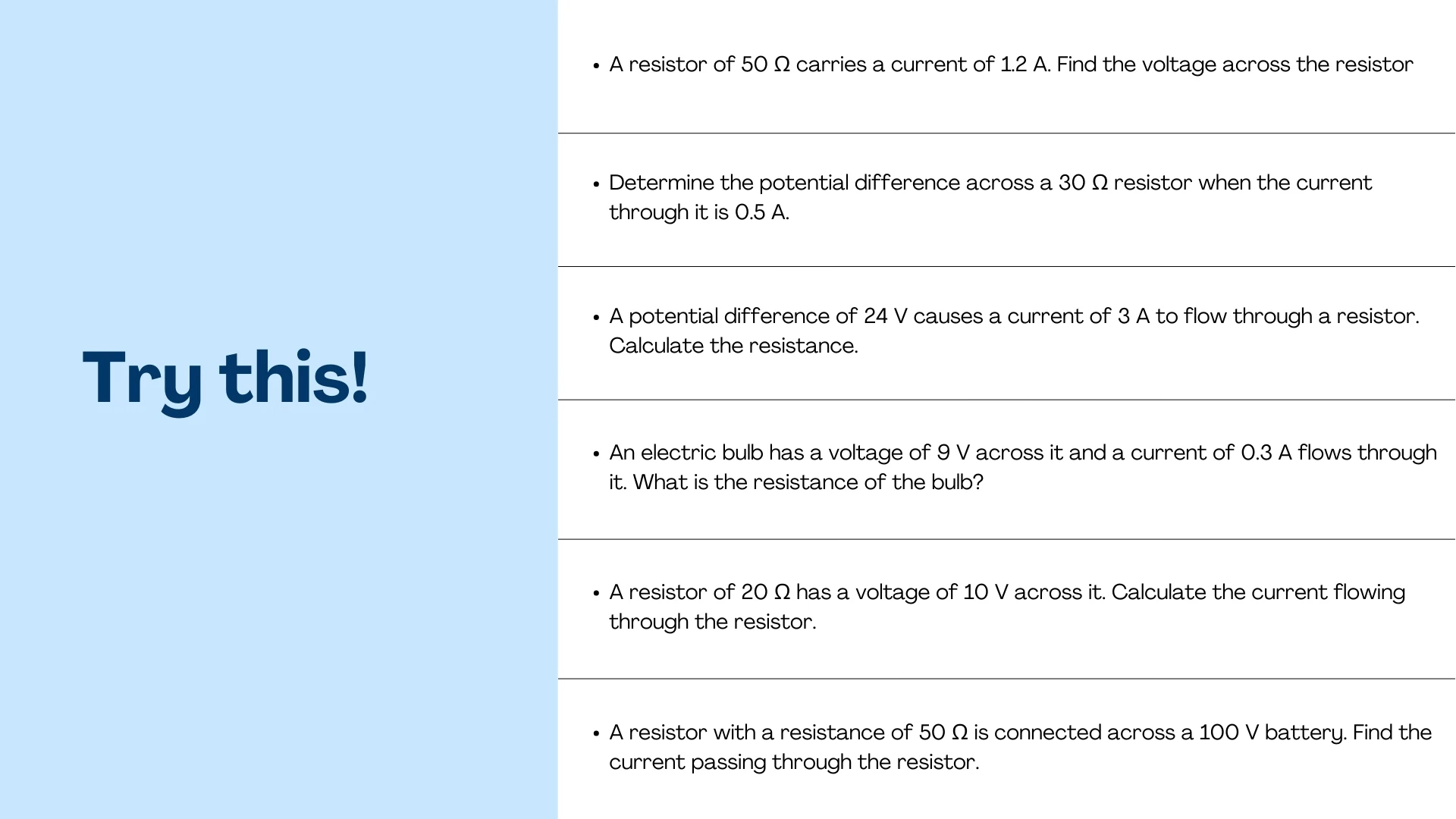
Example 1 — find the potential difference. A current of 0.5 A flows through a 12 Ω resistor. Using V = I × R gives V = 0.5 × 12 = 6 V.
Example 2 — find the current. A heating element of resistance 46 Ω is connected to a 230 V supply. Using I = V ÷ R gives I = 230 ÷ 46 = 5 A.
Example 3 — find the resistance. A lamp draws 0.4 A from a 12 V battery. Using R = V ÷ I gives R = 12 ÷ 0.4 = 30 Ω.
Example 4 — watch the units. A 9 V battery is connected across a 4.5 kΩ resistor. Convert first: 4.5 kΩ = 4500 Ω. Then I = 9 ÷ 4500 = 0.002 A, which is 2 mA. Always convert kilo-ohms to ohms and milliamps to amps before substituting, or the answer will be out by a factor of a thousand.
Testing Ohm's law in the laboratory
The standard experiment uses a cell, the test wire or resistor, an ammeter in series with it, a voltmeter across it, and a variable resistor to change the current. Take several pairs of readings, switching the current off between them so the wire does not warm up, then plot V against I. A straight line through the origin confirms the conductor is ohmic, and the gradient of the line gives its resistance more reliably than any single pair of readings, because drawing the best line through all the points averages out small measurement errors.
Key terms
- Ohm's law
- The current through a metallic conductor is directly proportional to the potential difference across it, at constant temperature.
- Potential difference (V)
- The energy transferred per unit of charge passing between two points; measured in volts with a voltmeter in parallel.
- Current (I)
- The rate of flow of electric charge; measured in amperes with an ammeter in series.
- Resistance (R)
- The opposition of a component to current, equal to V ÷ I; measured in ohms (Ω).
- Ohm (Ω)
- The unit of resistance. 1 Ω = 1 volt per ampere.
- Directly proportional
- Two quantities whose ratio stays constant, so doubling one doubles the other; their graph is a straight line through the origin.
- Ohmic conductor
- A conductor that obeys Ohm's law, giving a straight-line V-I graph through the origin at constant temperature.
- Non-ohmic component
- A component whose resistance changes with conditions, such as a filament lamp, diode or thermistor, giving a curved V-I graph.