📖 Lesson: Acids, Bases & Alkalis
Explore the chemistry of acids, bases, alkalis, and neutralisation reactions
🎮 Interactive Activities
Test your knowledge with these fun activities
🔗 Match the Terms
Click a term, then click its matching definition!
✏️ Fill in the Blanks
Click on a word from the word bank, then click on the blank to fill it
1. Acids produce ions (H⁺) when dissolved in water.
2. Alkalis produce ions (OH⁻) in solution.
3. A neutral substance has a pH of .
4. When an acid reacts with a base, the products are and .
5. Acids turn blue litmus paper .
6. Alkalis turn red litmus paper .
7. The reaction between an acid and a base is called .
You got 0/8 correct!
📚 Flashcards
Click on each card to reveal the definition
Acid
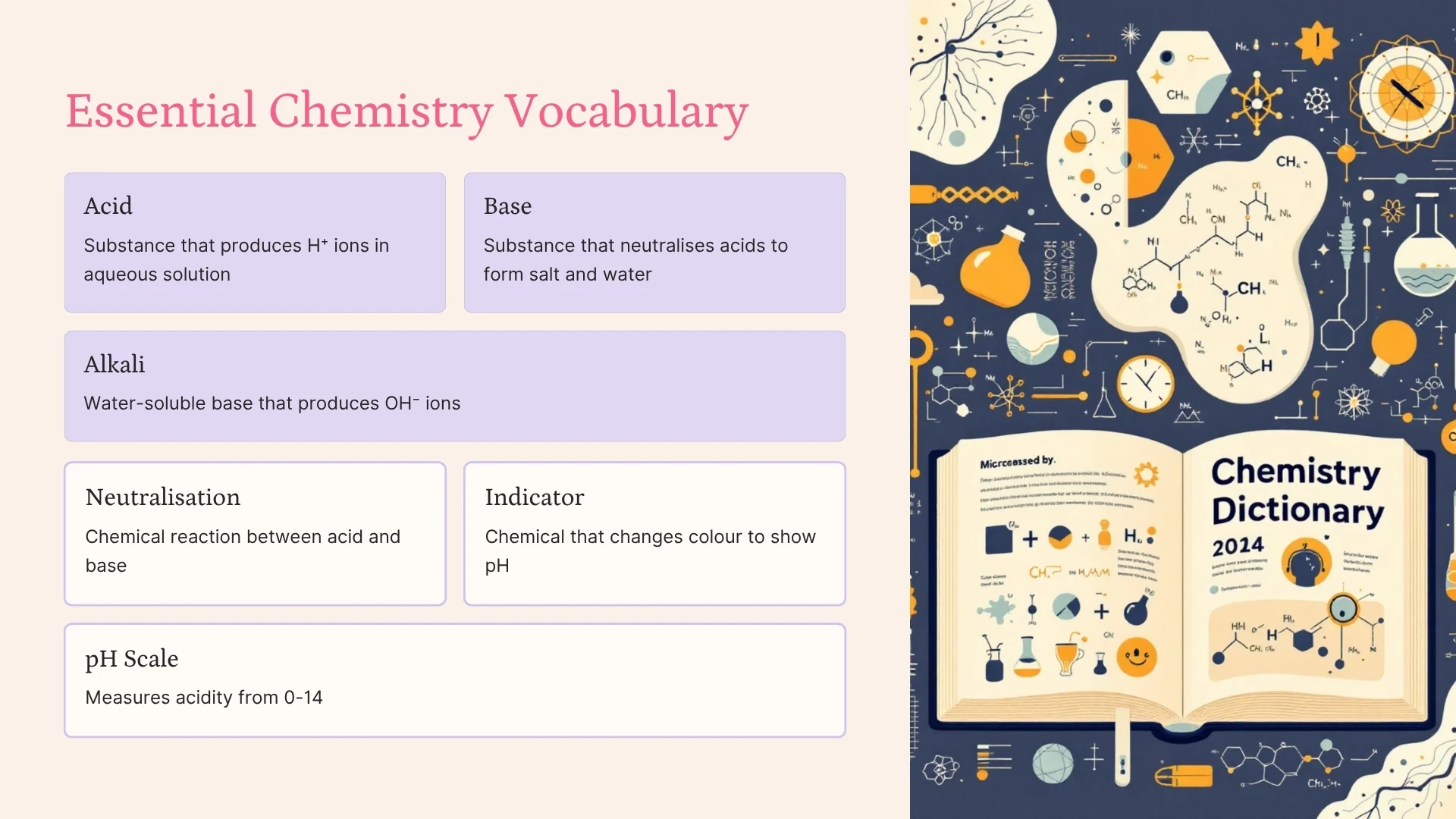
Click to revealA substance that produces hydrogen ions (H⁺) when dissolved in aqueous solution. Acids have a pH less than 7 and turn blue litmus paper red.
Base
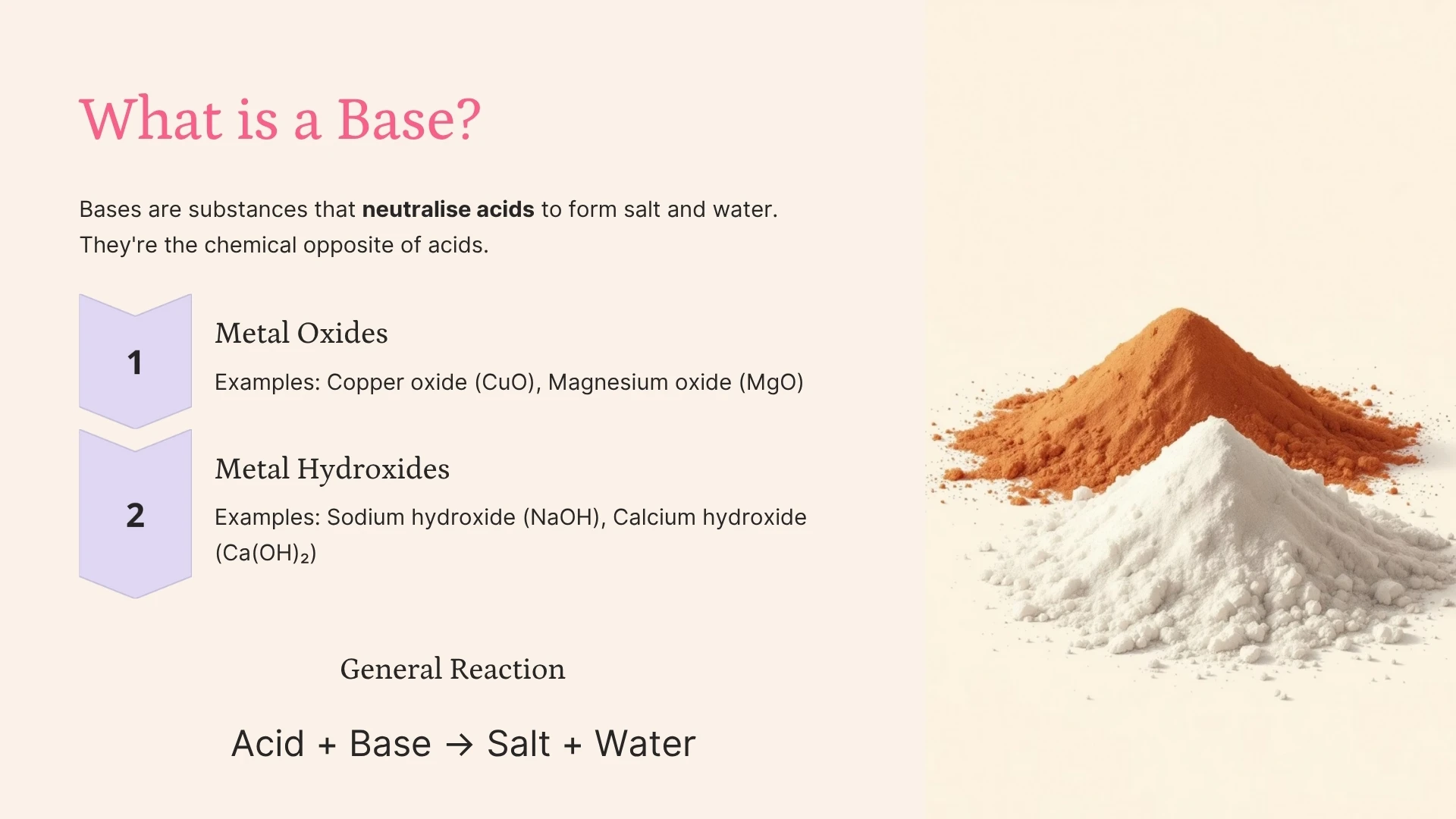
Click to revealA substance that neutralises acids to form salt and water. Bases are the chemical opposite of acids. Examples include metal oxides and metal hydroxides.
Alkali
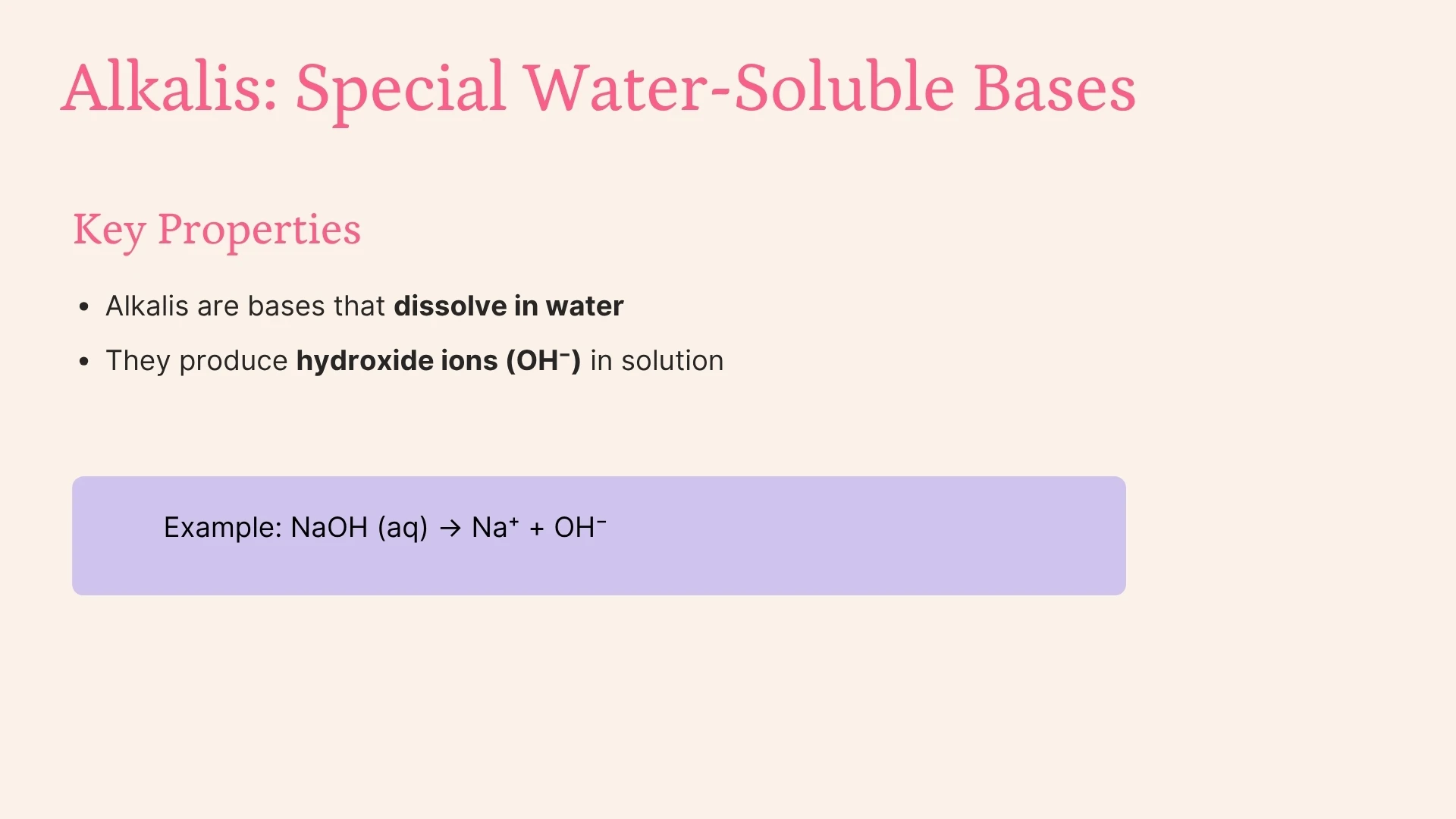
Click to revealA water-soluble base that produces hydroxide ions (OH⁻) in solution. All alkalis are bases, but not all bases are alkalis. pH is greater than 7.
pH Scale
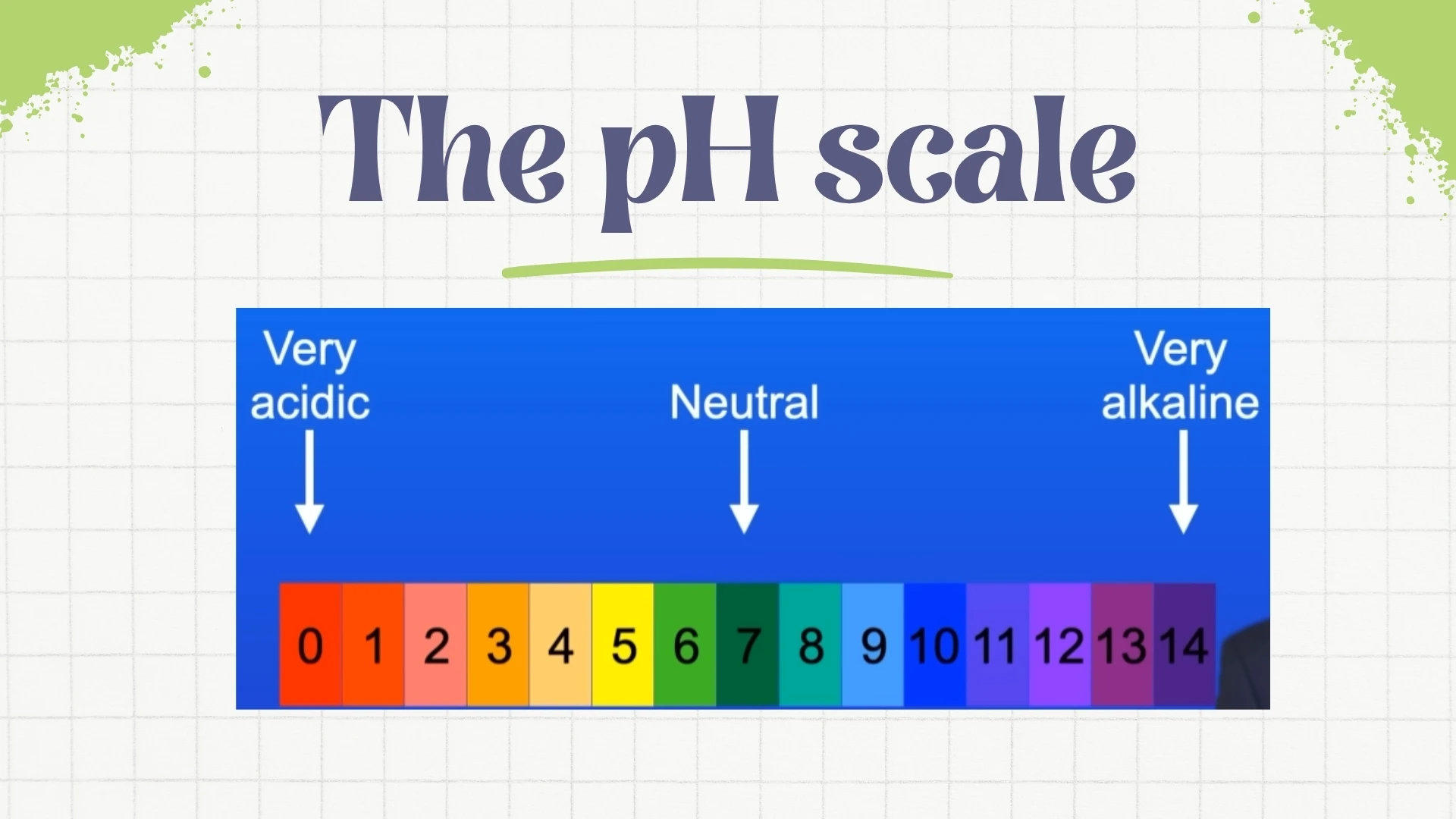
Click to revealA scale from 0-14 that measures acidity or alkalinity. pH 0-6 is acidic, pH 7 is neutral, and pH 8-14 is alkaline. The lower the pH, the stronger the acid.
Indicator
Click to revealA chemical that changes colour to show pH. Examples: litmus paper (red/blue), universal indicator (rainbow colours), phenolphthalein (colourless/pink).
Neutralisation
Click to revealA chemical reaction between an acid and a base. The products are salt and water. Ionic equation: H⁺ + OH⁻ → H₂O
Hydrogen Ion (H⁺)
Click to revealA positively charged ion produced when acids dissolve in water. The presence of H⁺ ions gives acids their characteristic properties including sour taste.
Hydroxide Ion (OH⁻)
Click to revealA negatively charged ion produced when alkalis dissolve in water. The presence of OH⁻ ions gives alkalis their characteristic slippery feel.
Strong vs Weak Acids
Click to revealStrong acids (HCl, H₂SO₄, HNO₃) fully dissociate in water. Weak acids (citric, ethanoic) only partially dissociate. Strength ≠ concentration!
🖱️ Interactive Simulations
Explore acids and bases through hands-on virtual experiments
pH Scale Simulation
Test the pH of different household substances. Add acids and bases to see how pH changes. Discover what makes something acidic or alkaline!
Launch SimulationAcid-Base Solutions Lab
Investigate how acids and bases interact with water. Explore the relationship between concentration, strength, and pH in this virtual laboratory.
Launch Simulation🧪 Acids, Bases and Alkalis Explained
What are acids and alkalis?
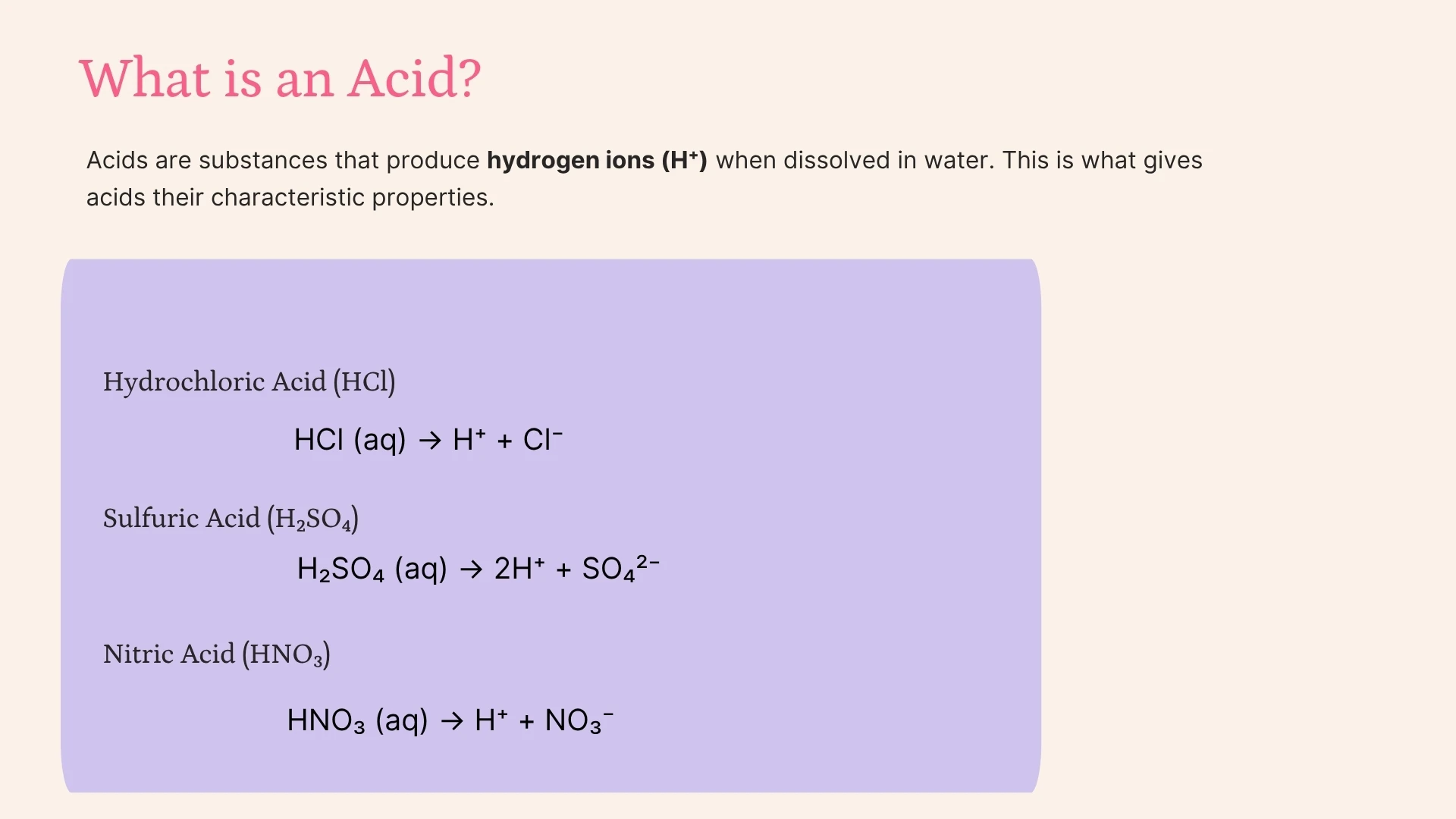
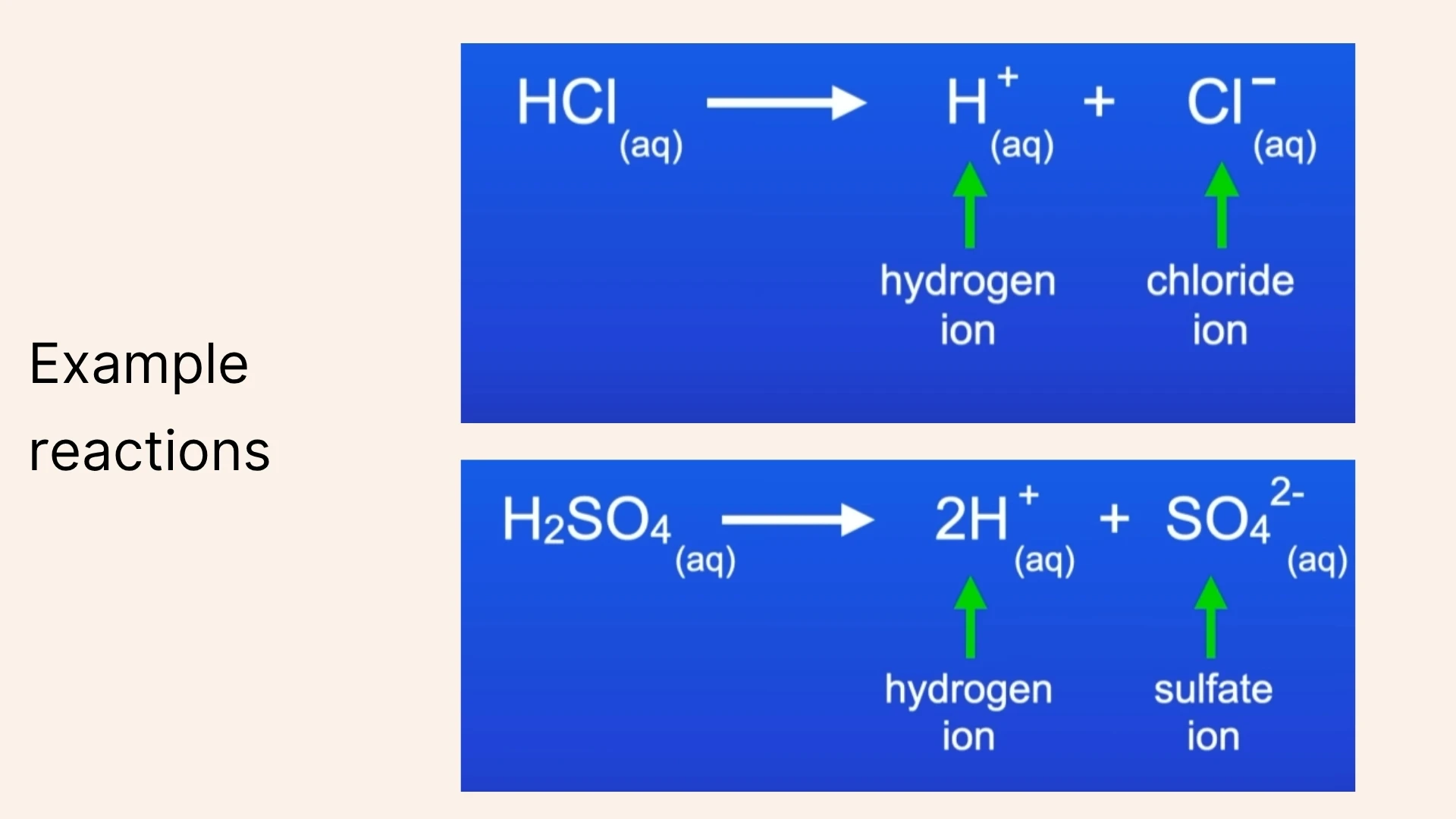
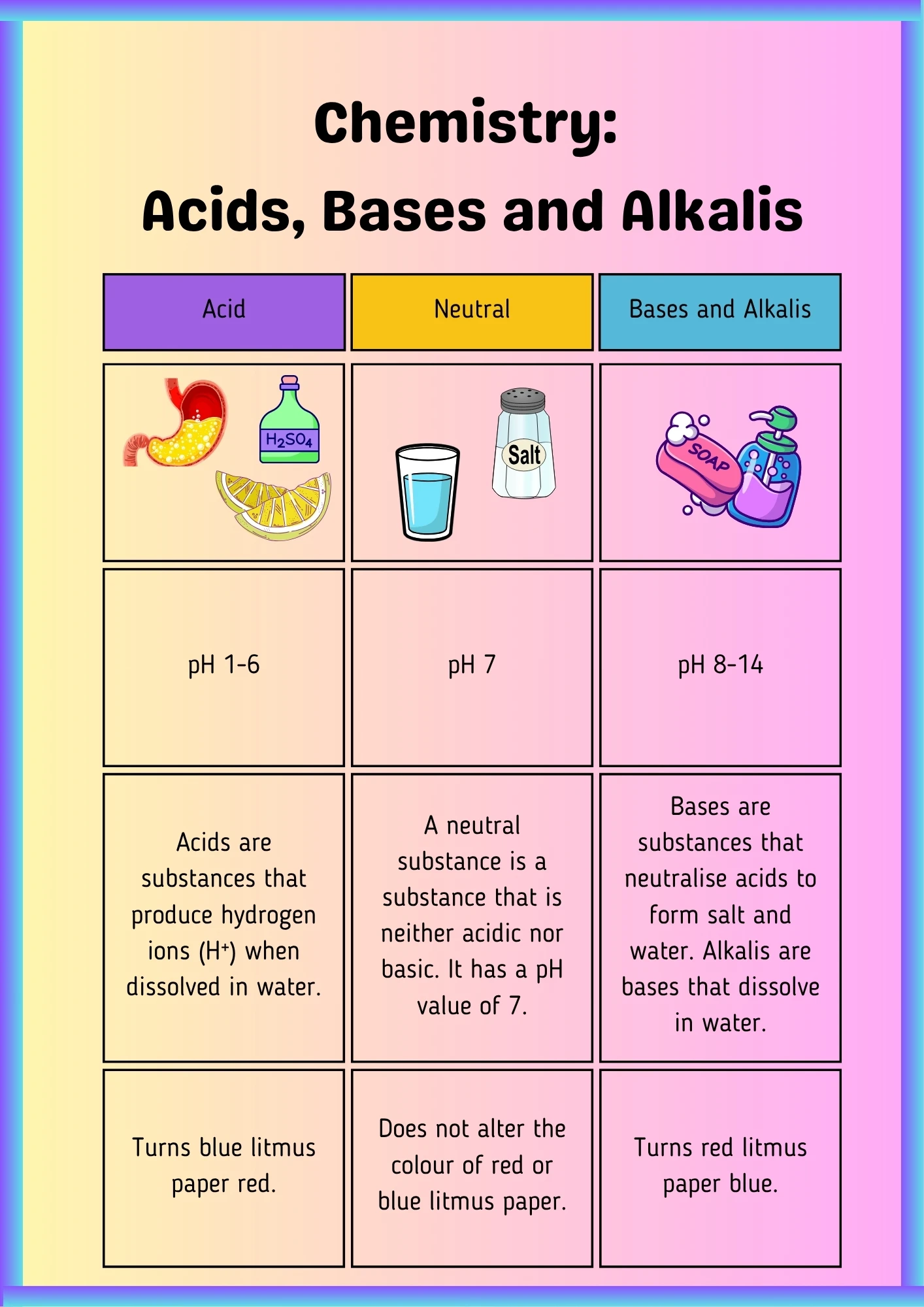
An acid is a substance that releases hydrogen ions, H⁺, when it dissolves in water. Those loose hydrogen ions are what make an acid behave like an acid: they give it a sour taste, they turn blue litmus paper red, and they are what gets used up when the acid reacts. Acidic solutions have a pH below 7.
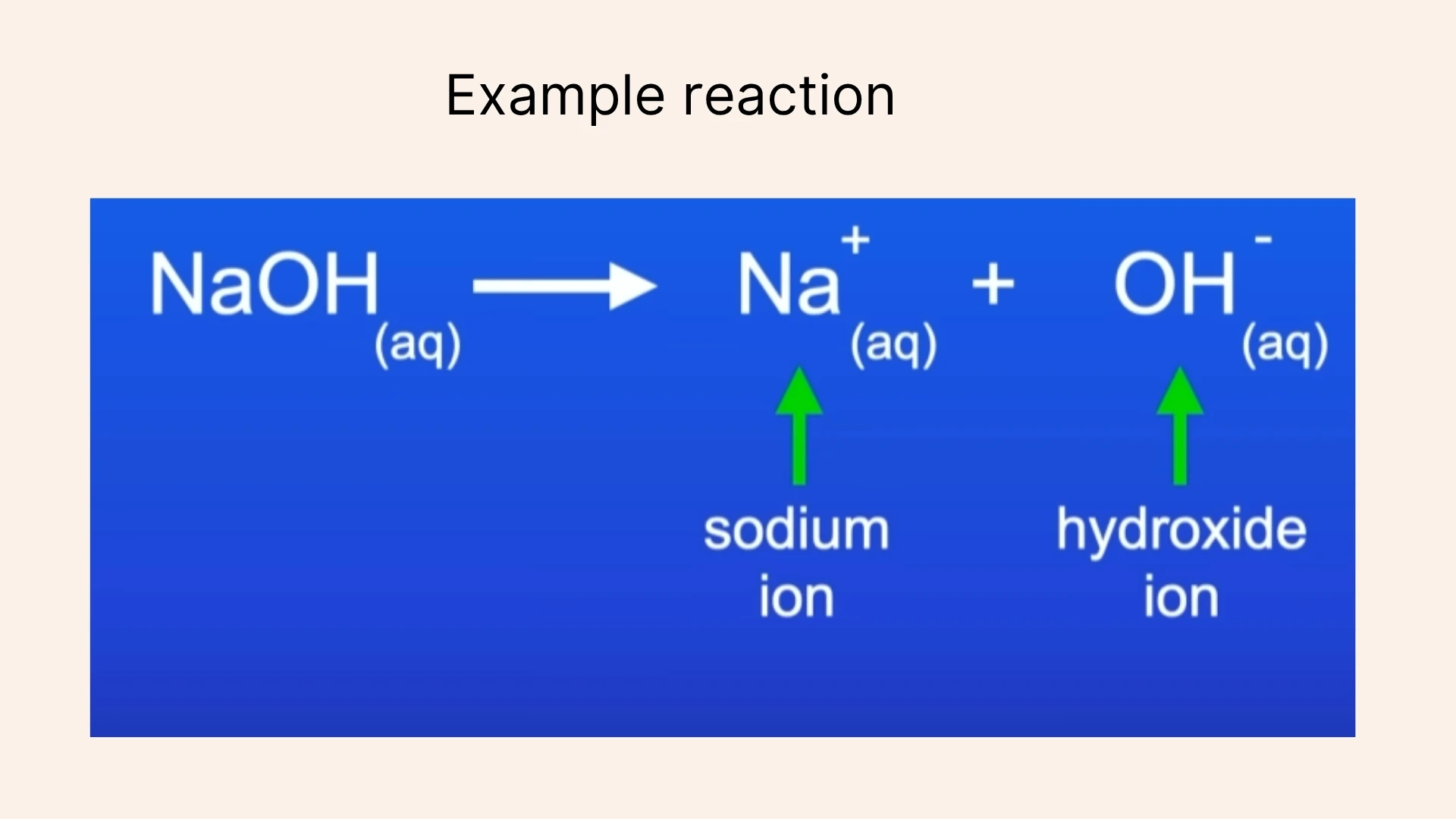
An alkali is a substance that releases hydroxide ions, OH⁻, when it dissolves in water. Alkaline solutions feel soapy or slippery between the fingers, turn red litmus paper blue, and have a pH above 7.
Acids and alkalis are chemical opposites. Mix them in the right amounts and they cancel each other out, leaving a solution that is neither — a reaction called neutralisation, which is explained further down this page.
Acid, base or alkali? The difference explained
This is the part that confuses most people, and it is worth getting straight because textbooks use all three words on the same page.
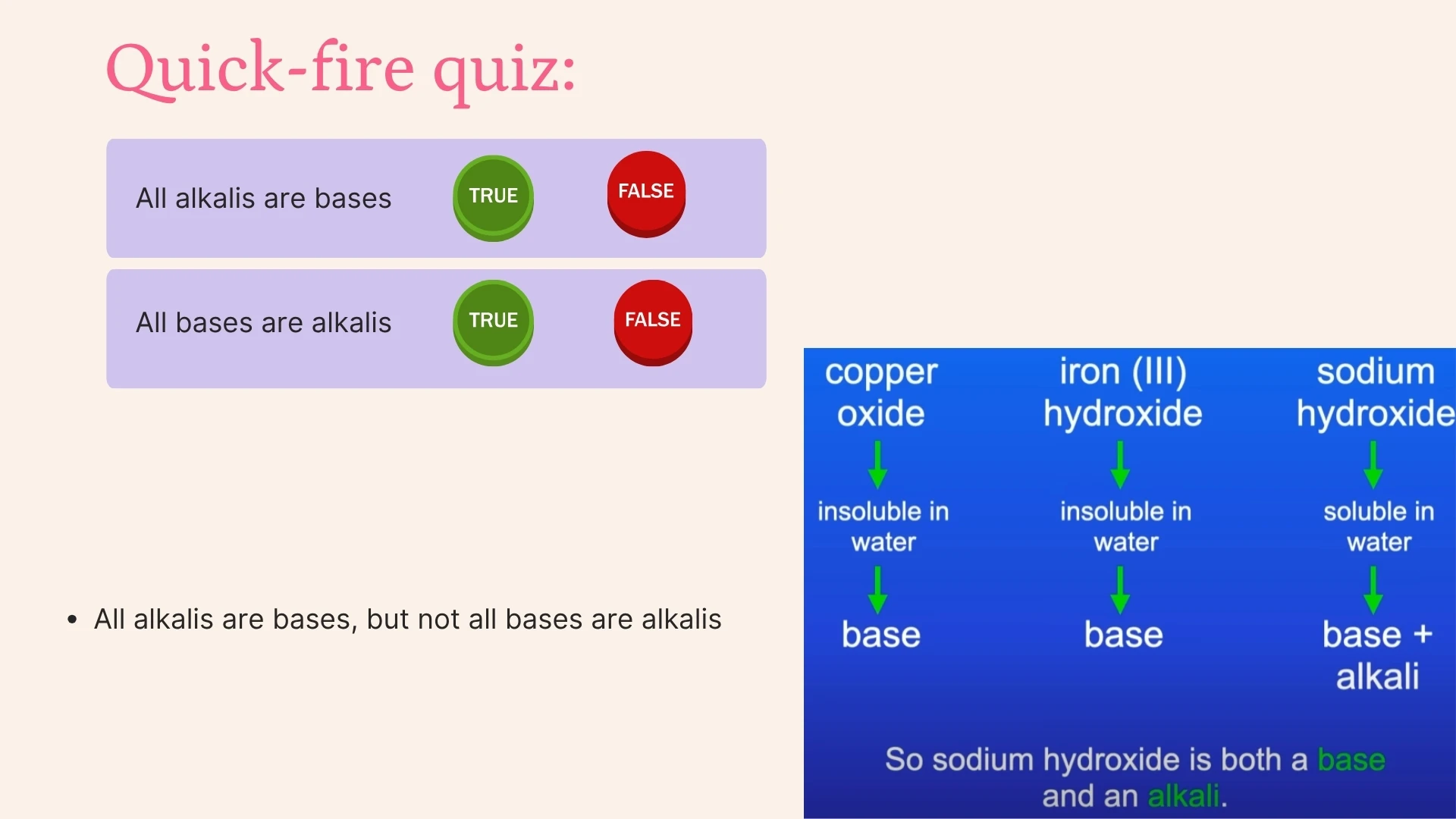
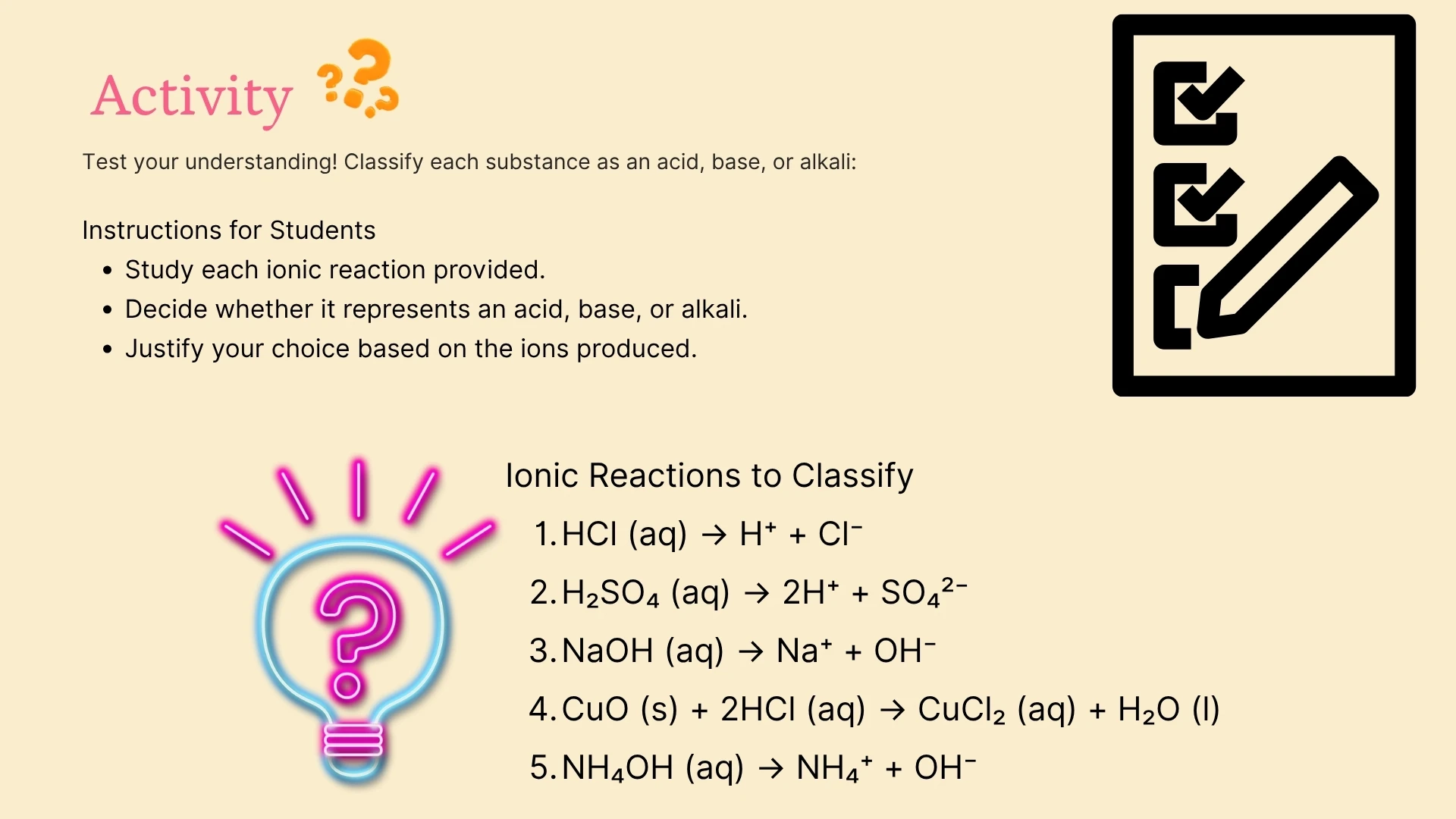
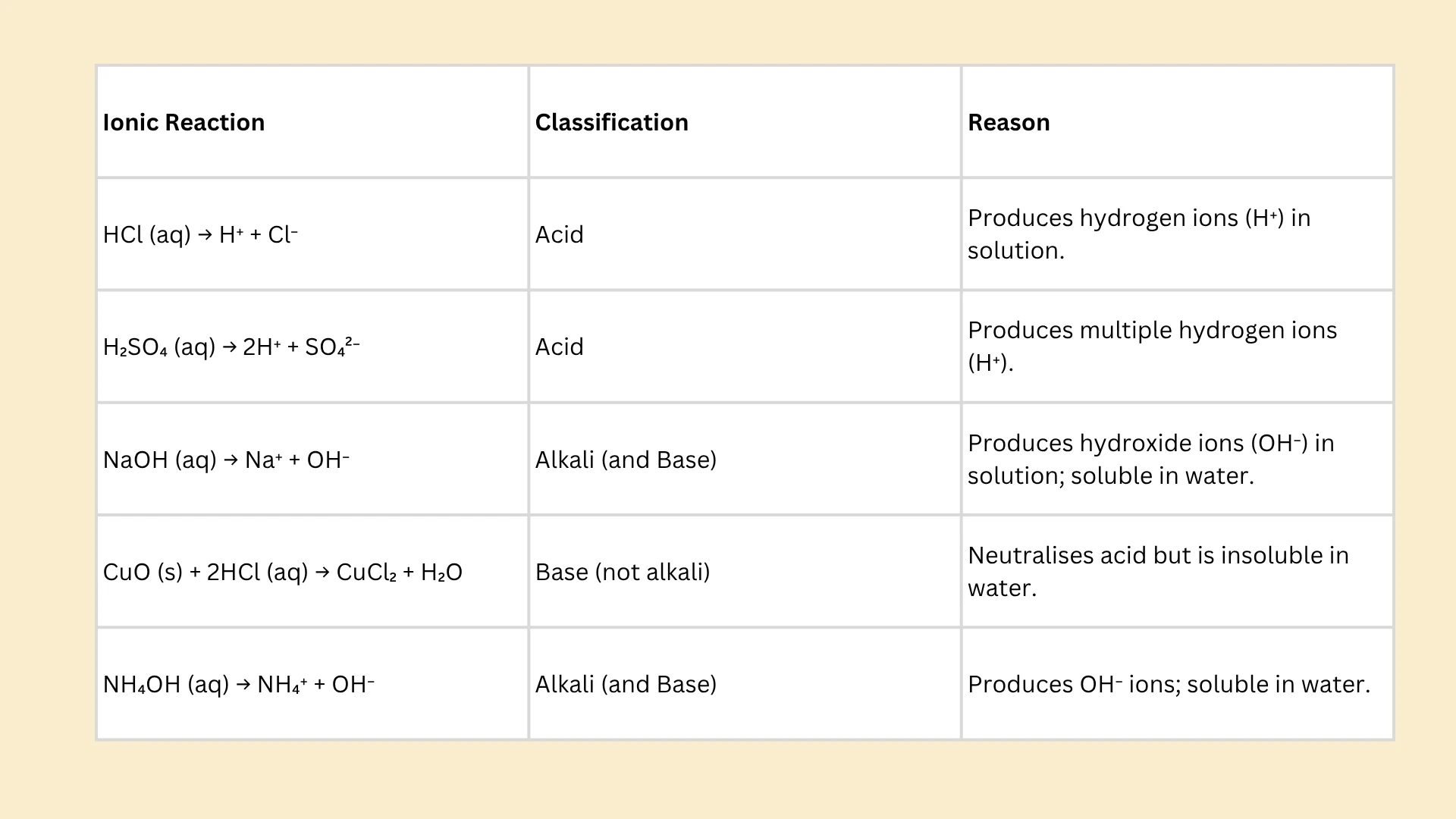
A base is any substance that neutralises an acid. Metal oxides, metal hydroxides and metal carbonates are all bases. Many of them are solids that will not dissolve in water at all — copper(II) oxide is a black powder that sits at the bottom of the beaker no matter how long you stir it, yet it will happily neutralise an acid.
An alkali is simply a base that dissolves in water. That is the whole distinction. Sodium hydroxide is a base, and because it dissolves readily it is also an alkali. Copper(II) oxide is a base, but because it does not dissolve it is not an alkali. So:
- Every alkali is a base. There are no exceptions.
- Not every base is an alkali. Only the soluble ones qualify.
- You can only measure a pH in solution, which is why only alkalis — not insoluble bases — give you an alkaline pH reading.
Examples of acids
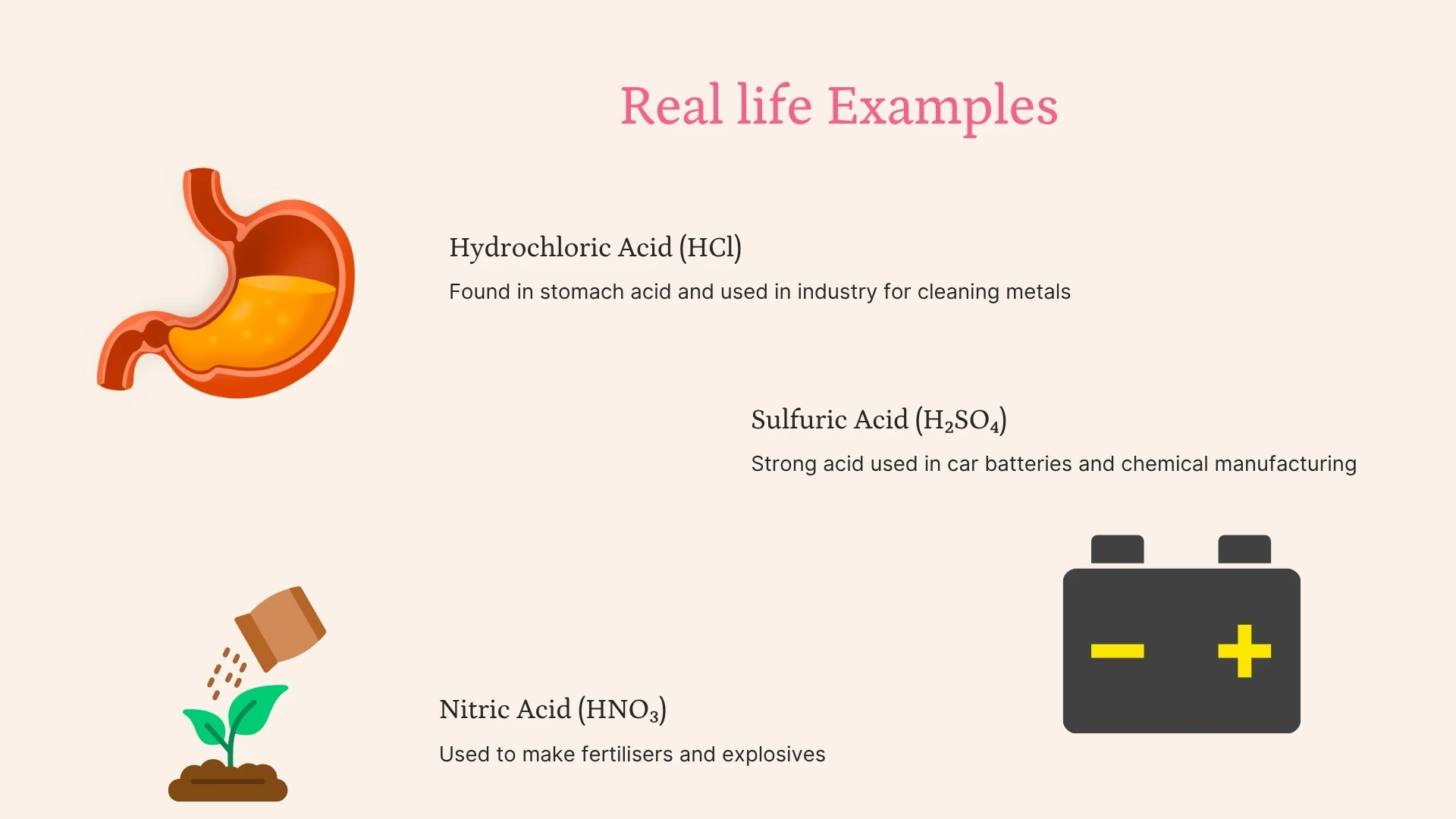
In the laboratory, the three acids you meet most often are hydrochloric acid (HCl), sulfuric acid (H₂SO₄) and nitric acid (HNO₃). All three are corrosive when concentrated and are normally used dilute, with eye protection.
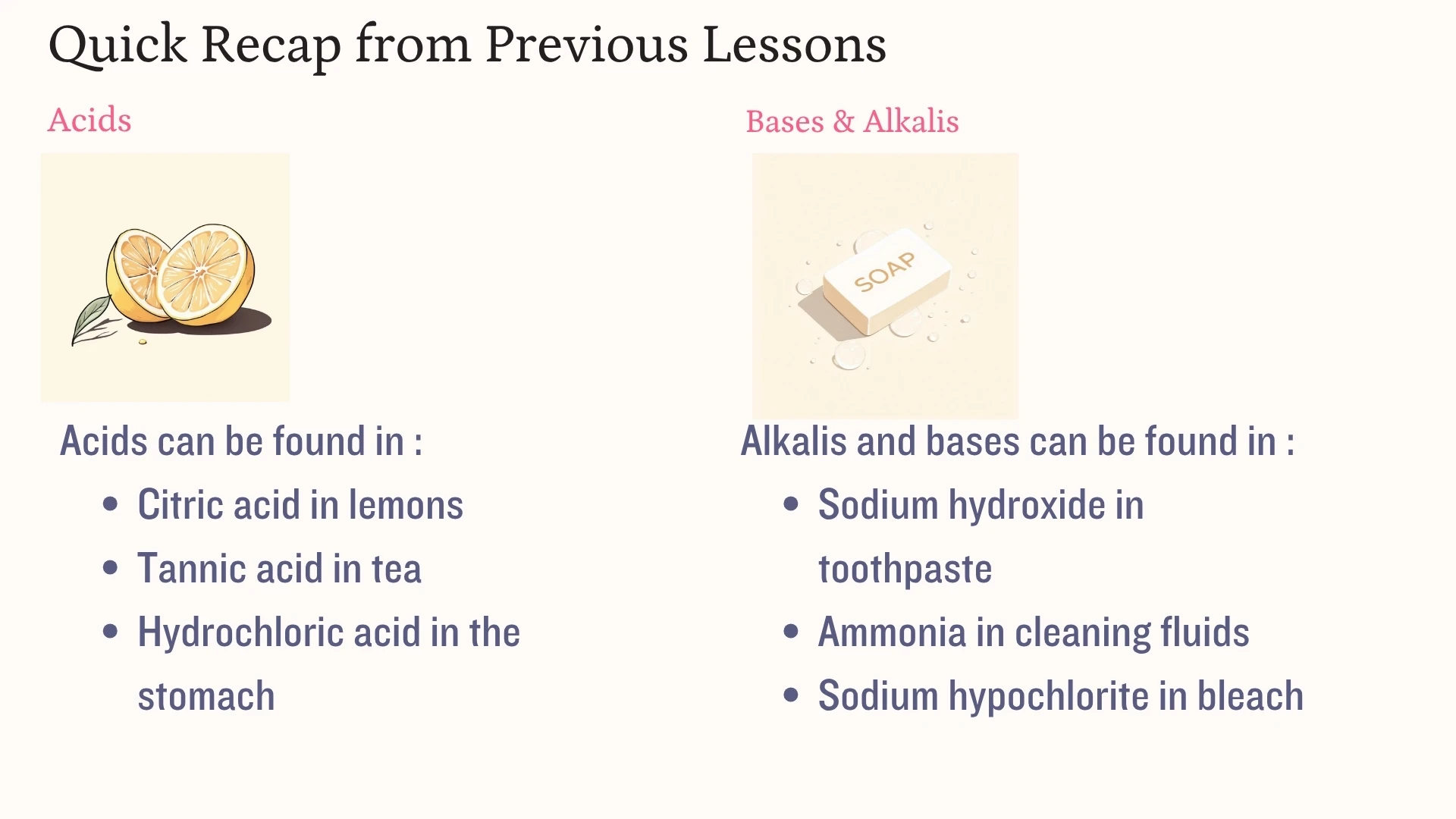
In everyday life, acids are far more familiar than most people realise. Citric acid gives lemons, limes and oranges their sharp taste. Ethanoic acid, better known as acetic acid, is what makes vinegar sour. Carbonic acid forms when carbon dioxide dissolves in fizzy drinks. Lactic acid gives yoghurt and sour milk their tang. Ascorbic acid is vitamin C. And your own stomach produces dilute hydrochloric acid to help digest food and kill bacteria.
Examples of bases and alkalis
Common alkalis — the soluble bases — include sodium hydroxide (NaOH), potassium hydroxide (KOH), calcium hydroxide (Ca(OH)₂, whose solution is the limewater used to test for carbon dioxide) and ammonia solution. Around the house you will find alkalis in soap, in oven cleaner, in bleach and in bicarbonate of soda.
Bases that are not alkalis include copper(II) oxide (CuO) and iron(III) oxide (Fe₂O₃). They neutralise acids perfectly well, but they are insoluble, so they never make an alkaline solution. Chemists use exactly this property to make pure salts: you add the insoluble base to warm acid until no more will react, then filter off what is left over.
The pH scale and indicators
The pH scale puts a number on how acidic or alkaline a solution is, usually running from 0 to 14:
- pH below 7 — acidic. The lower the number, the stronger the acidity. Stomach acid sits around pH 1 to 2; lemon juice around pH 2; black coffee around pH 5.
- pH exactly 7 — neutral. Pure water is the standard example, and so is a solution of table salt in water.
- pH above 7 — alkaline. The higher the number, the stronger the alkalinity. Baking soda solution is around pH 9; oven cleaner can reach pH 13 or 14.
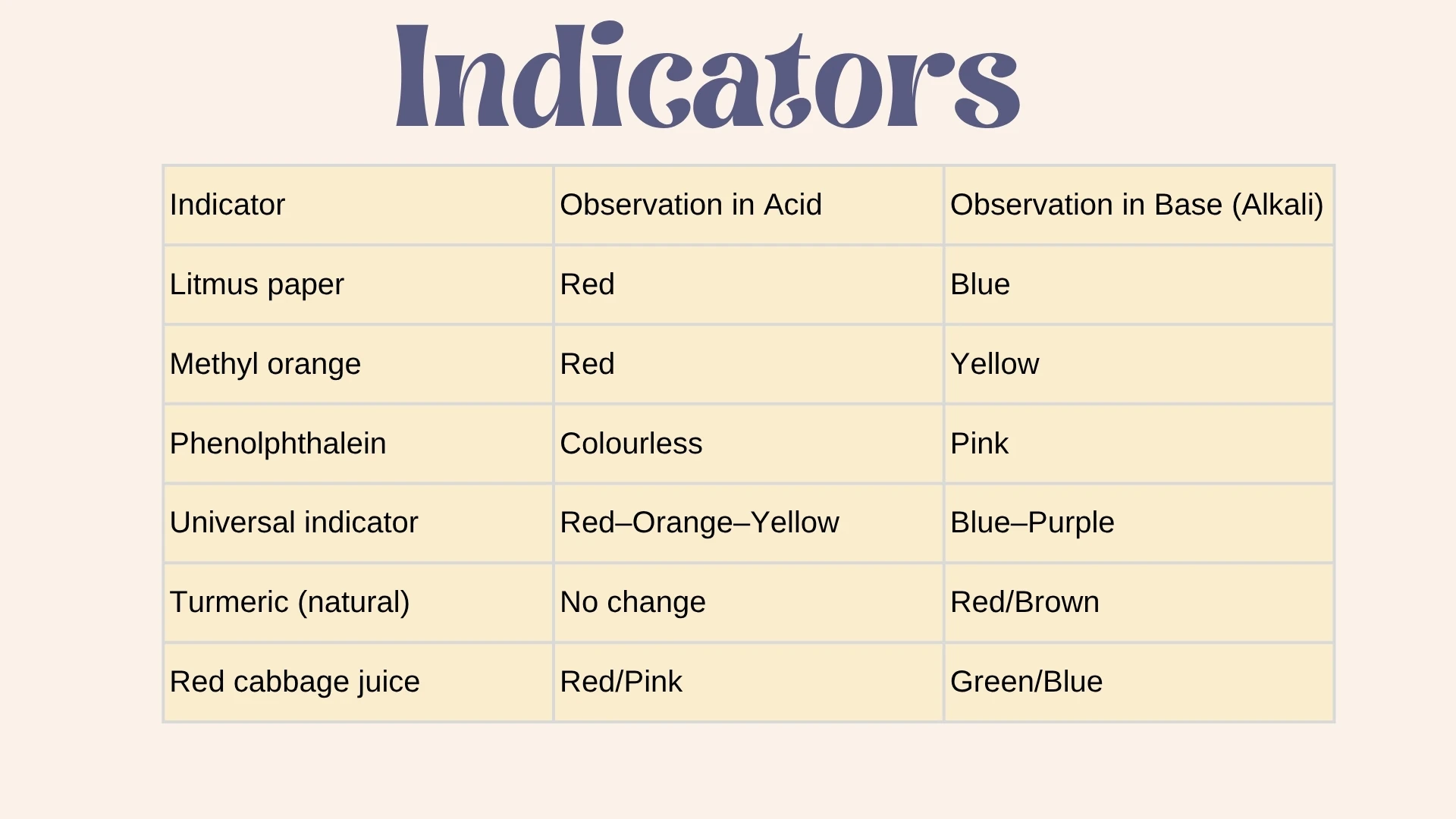
You find the pH with an indicator, a dye that changes colour depending on what it is in. Litmus gives a simple yes-or-no answer: red in acid, blue in alkali. Universal indicator is a mixture of dyes that gives a whole range of colours — red and orange for acids, green for neutral, and blue through purple for alkalis — so it reports an approximate pH number rather than just a category. Phenolphthalein is colourless in acid and bright pink in alkali, and methyl orange is red in acid and yellow in alkali; both are favourites for titrations because their colour change is sudden and unmistakable.
Neutralisation: what happens when acid meets alkali
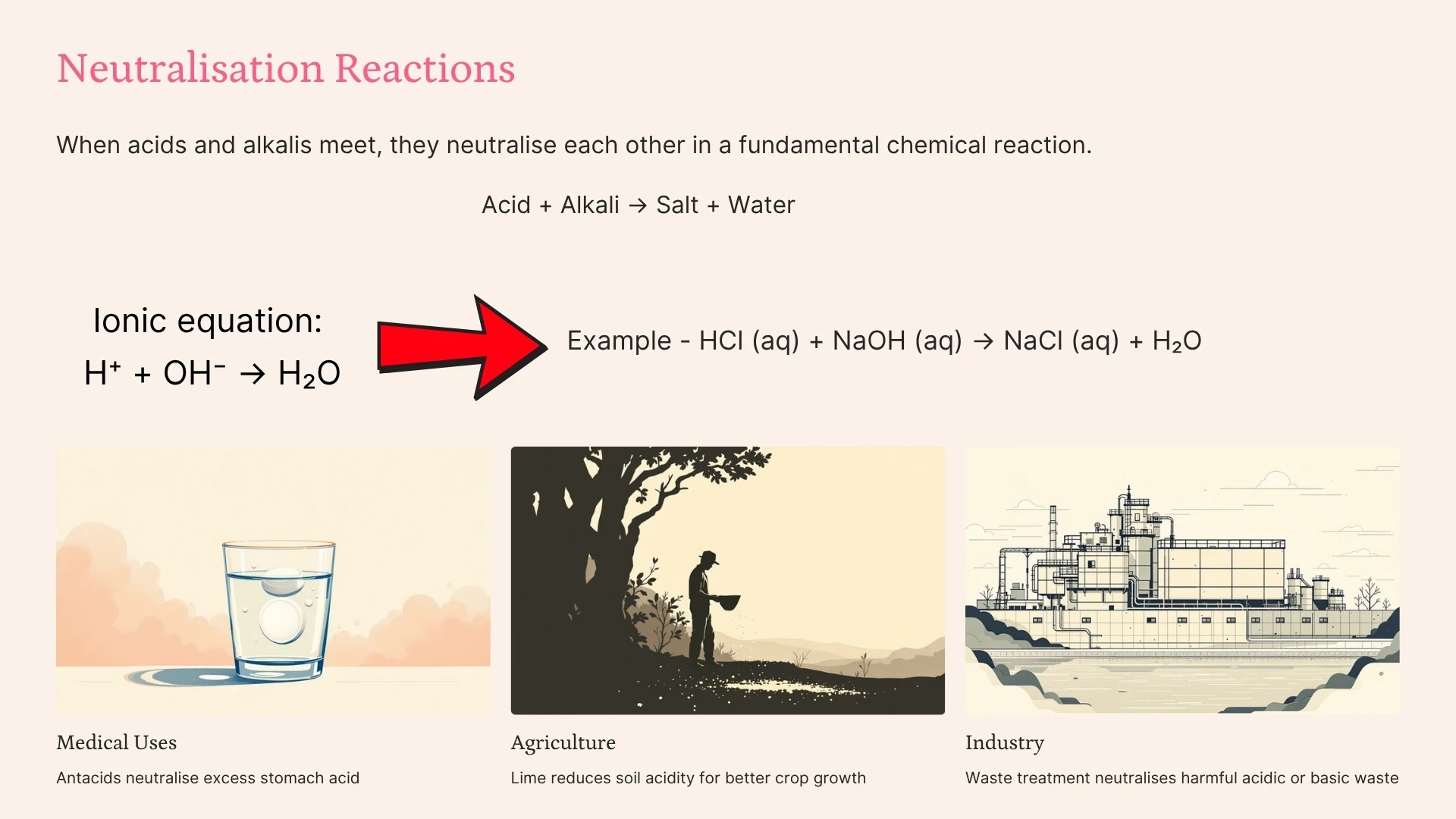
When an acid reacts with an alkali, the two cancel each other out and produce a salt and water. This is neutralisation, and the general word equation is one of the most useful things in school chemistry:
acid + alkali → salt + water
The same equation works for any base, not just the soluble ones, so you will also see it written as acid + base → salt + water. If exactly the right amounts are mixed, the final solution is neutral at pH 7.
The ionic equation for neutralisation
Underneath every one of those reactions the same thing is happening. The hydrogen ions from the acid join up with the hydroxide ions from the alkali to make water:
H⁺(aq) + OH⁻(aq) → H₂O(l)
That single ionic equation is the whole of neutralisation. The other ions present — the sodium, the chloride, the nitrate — are spectator ions: they float about unchanged in the solution and only become visible as the solid salt once the water is evaporated away.
Naming the salt
The salt produced takes its first name from the metal in the base and its second name from the acid. Hydrochloric acid makes chlorides, sulfuric acid makes sulfates, and nitric acid makes nitrates. Three worked examples:
hydrochloric acid + sodium hydroxide → sodium chloride + water
HCl + NaOH → NaCl + H₂O
sulfuric acid + potassium hydroxide → potassium sulfate + water
H₂SO₄ + 2KOH → K₂SO₄ + 2H₂O
nitric acid + calcium hydroxide → calcium nitrate + water
2HNO₃ + Ca(OH)₂ → Ca(NO₃)₂ + 2H₂O
Notice that the first of these makes ordinary table salt. That is where the chemical meaning of the word "salt" comes from: sodium chloride is just the most famous member of a very large family.
The other reactions of acids
Alkalis are not the only things acids react with, and each reaction has its own pattern worth learning:
- acid + metal oxide → salt + water. For example, sulfuric acid + copper(II) oxide → copper(II) sulfate + water (H₂SO₄ + CuO → CuSO₄ + H₂O). This is neutralisation by an insoluble base.
- acid + metal carbonate → salt + water + carbon dioxide. For example, hydrochloric acid + calcium carbonate → calcium chloride + water + carbon dioxide (2HCl + CaCO₃ → CaCl₂ + H₂O + CO₂). The fizzing is the giveaway, and the gas turns limewater cloudy.
- acid + metal → salt + hydrogen. For example, hydrochloric acid + magnesium → magnesium chloride + hydrogen (2HCl + Mg → MgCl₂ + H₂). The hydrogen gives a squeaky pop with a lit splint.
Neutralisation in everyday life
Indigestion tablets, or antacids, contain bases such as magnesium hydroxide or calcium carbonate that neutralise the excess hydrochloric acid in the stomach. Farmers spread lime — calcium oxide or calcium hydroxide — on fields that have become too acidic, because most crops grow badly below about pH 6. Toothpaste is mildly alkaline so that it neutralises the acid produced by bacteria on your teeth, which is what dissolves enamel.
Key terms
- Acid
- A substance that releases hydrogen ions (H⁺) in water and has a pH below 7.
- Base
- A substance that neutralises an acid, producing a salt and water. Metal oxides, hydroxides and carbonates are bases.
- Alkali
- A base that dissolves in water, releasing hydroxide ions (OH⁻) and giving a solution with a pH above 7.
- Neutral
- Neither acidic nor alkaline; a pH of exactly 7, as in pure water.
- pH scale
- A numerical scale, usually 0 to 14, measuring how acidic or alkaline a solution is.
- Indicator
- A dye that changes colour according to the pH of the solution it is in, such as litmus or universal indicator.
- Neutralisation
- The reaction between an acid and a base or alkali, producing a salt and water.
- Salt
- The compound formed when the hydrogen in an acid is replaced by a metal, such as sodium chloride or potassium sulfate.
- Spectator ion
- An ion present in the solution that takes no part in the reaction, such as the sodium ion during neutralisation.
- Corrosive
- Able to attack and damage skin, eyes and other materials. Concentrated acids and concentrated alkalis are both corrosive.