📖 Lesson: Aquatic Habitats
Discover the various water-based ecosystems and the life they support
Introduction to Aquatic Habitats
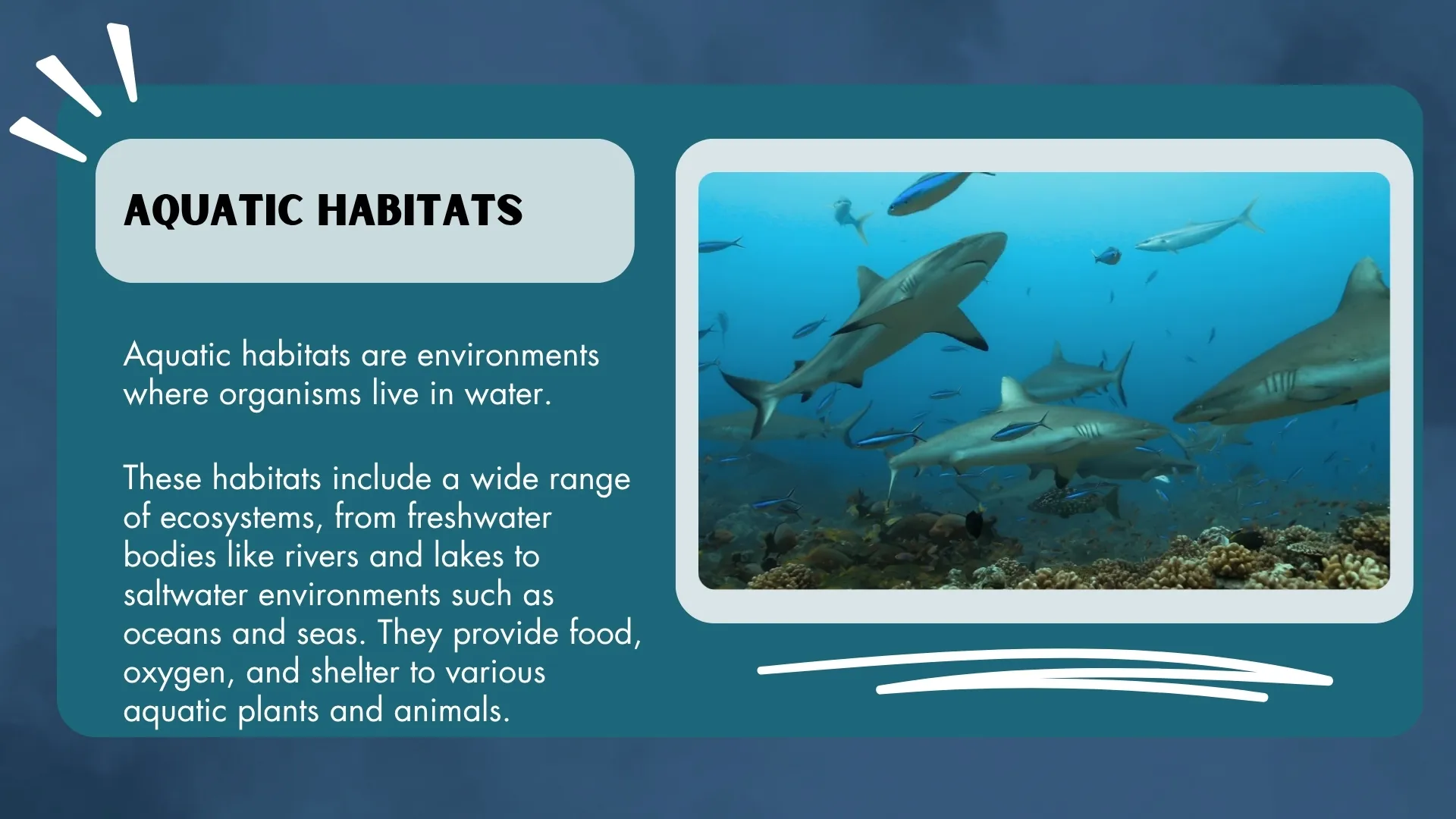
Water environments supporting diverse life forms
Freshwater Habitats
Rivers, streams, lakes, and ponds
Transitional Habitats
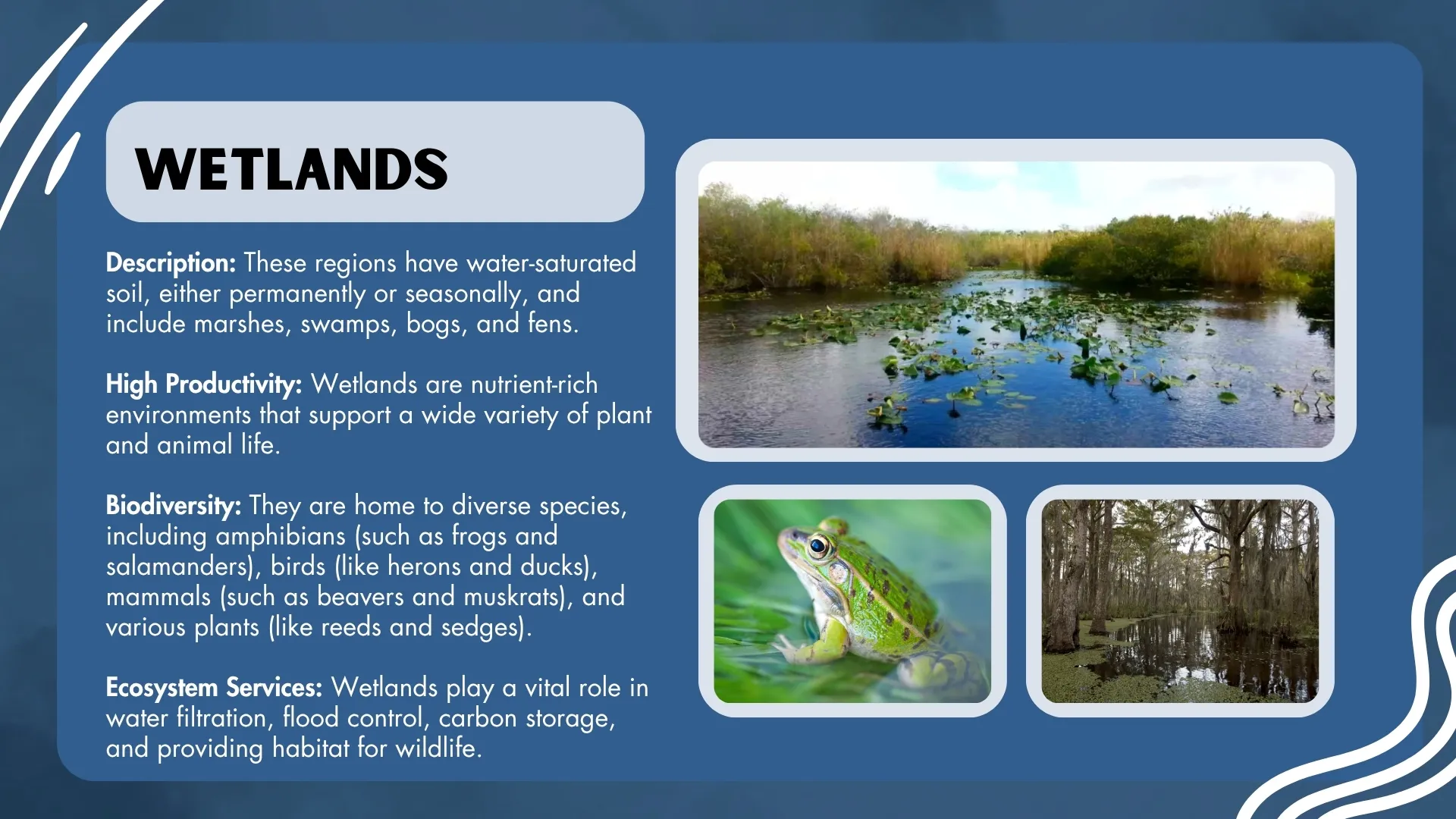
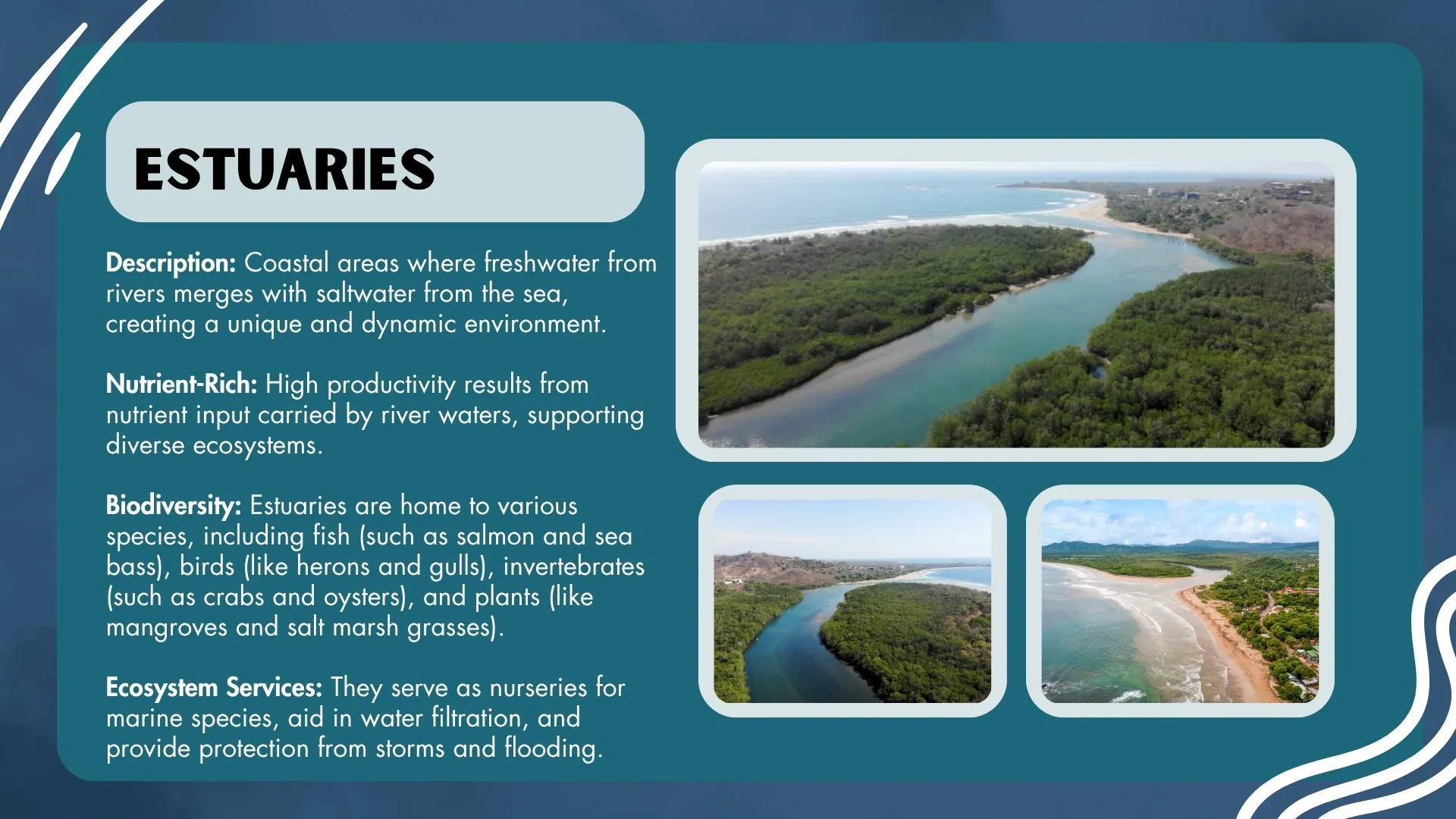
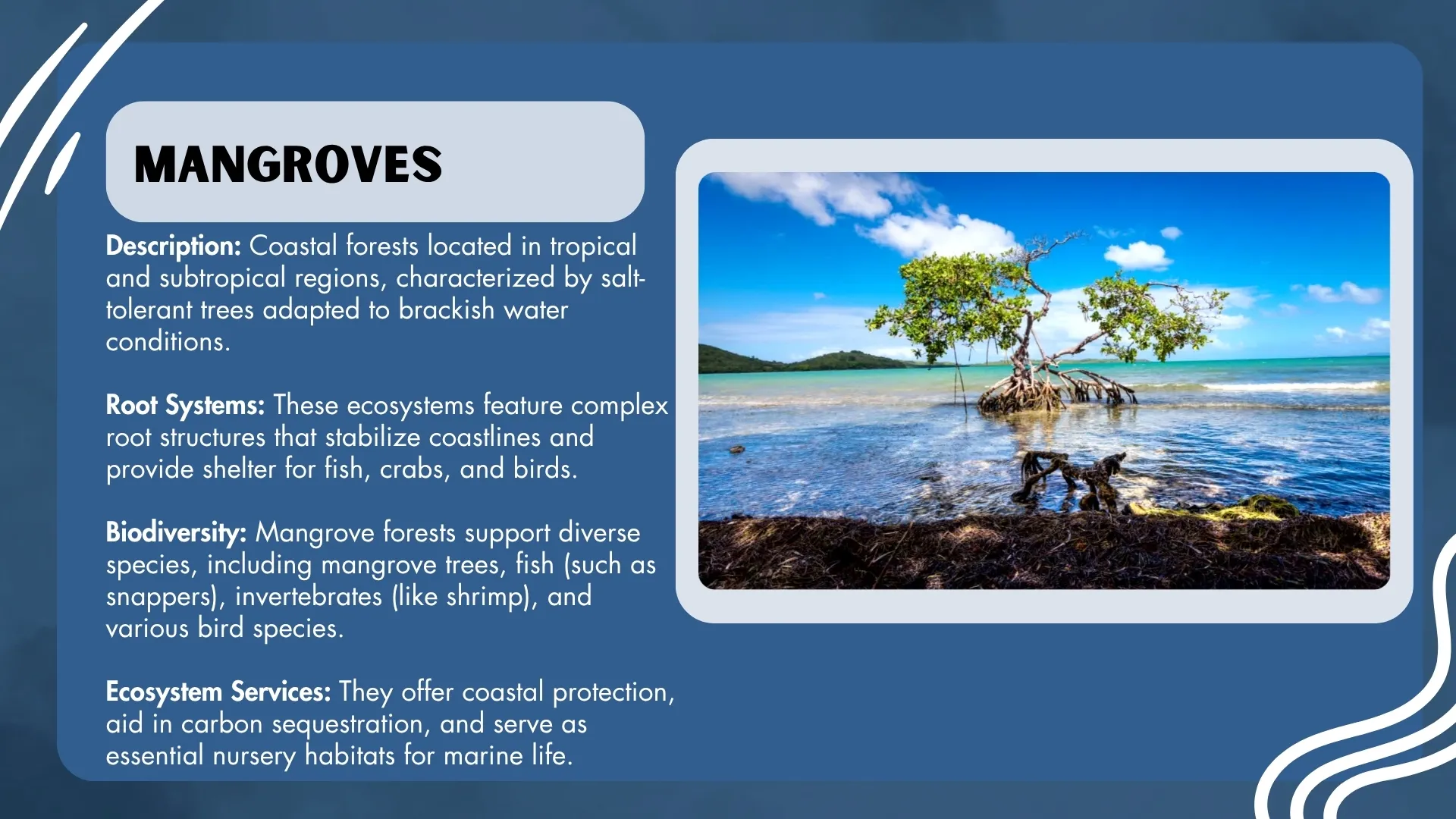
Wetlands, estuaries, and mangroves
Marine Habitats
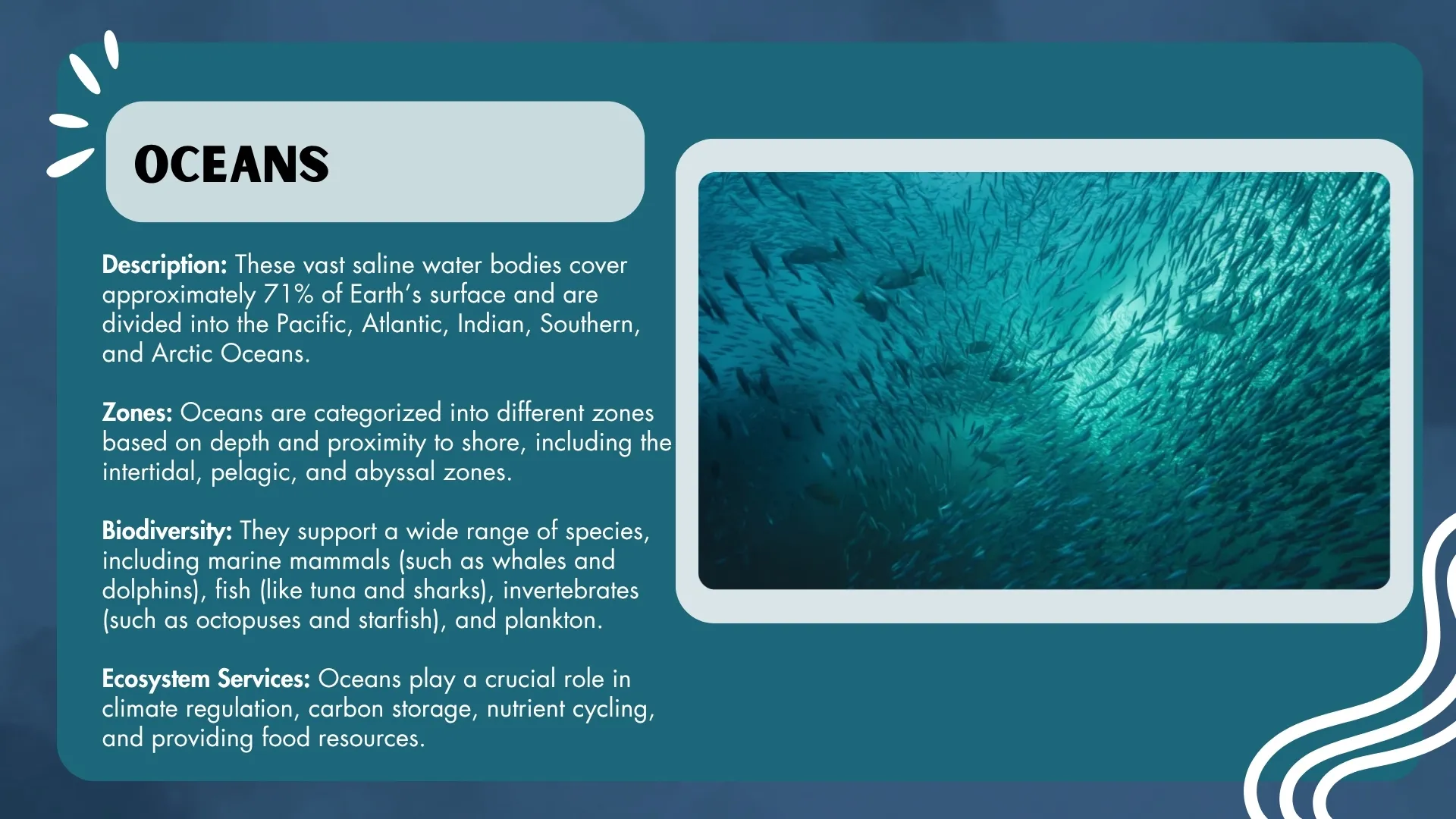
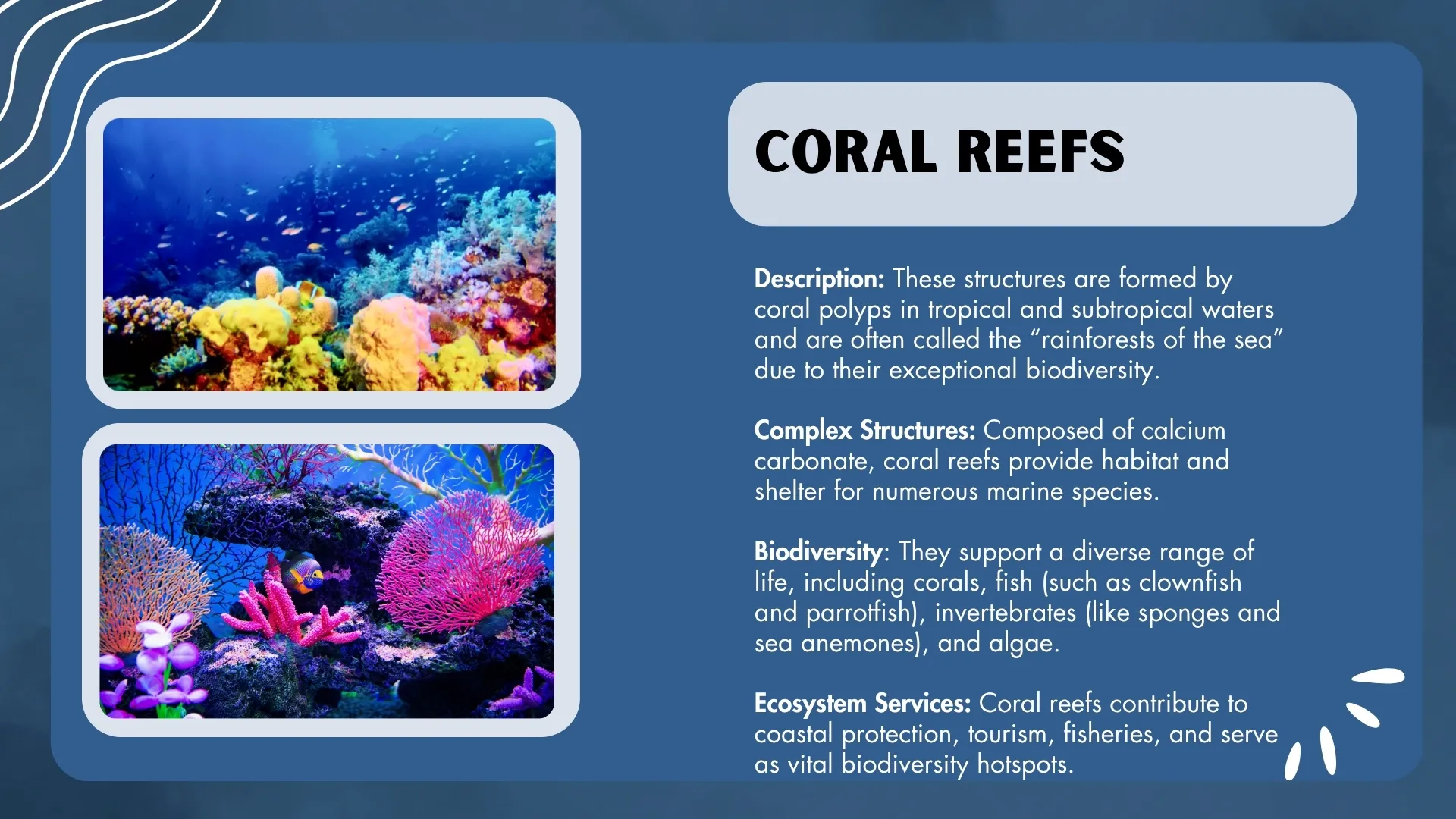
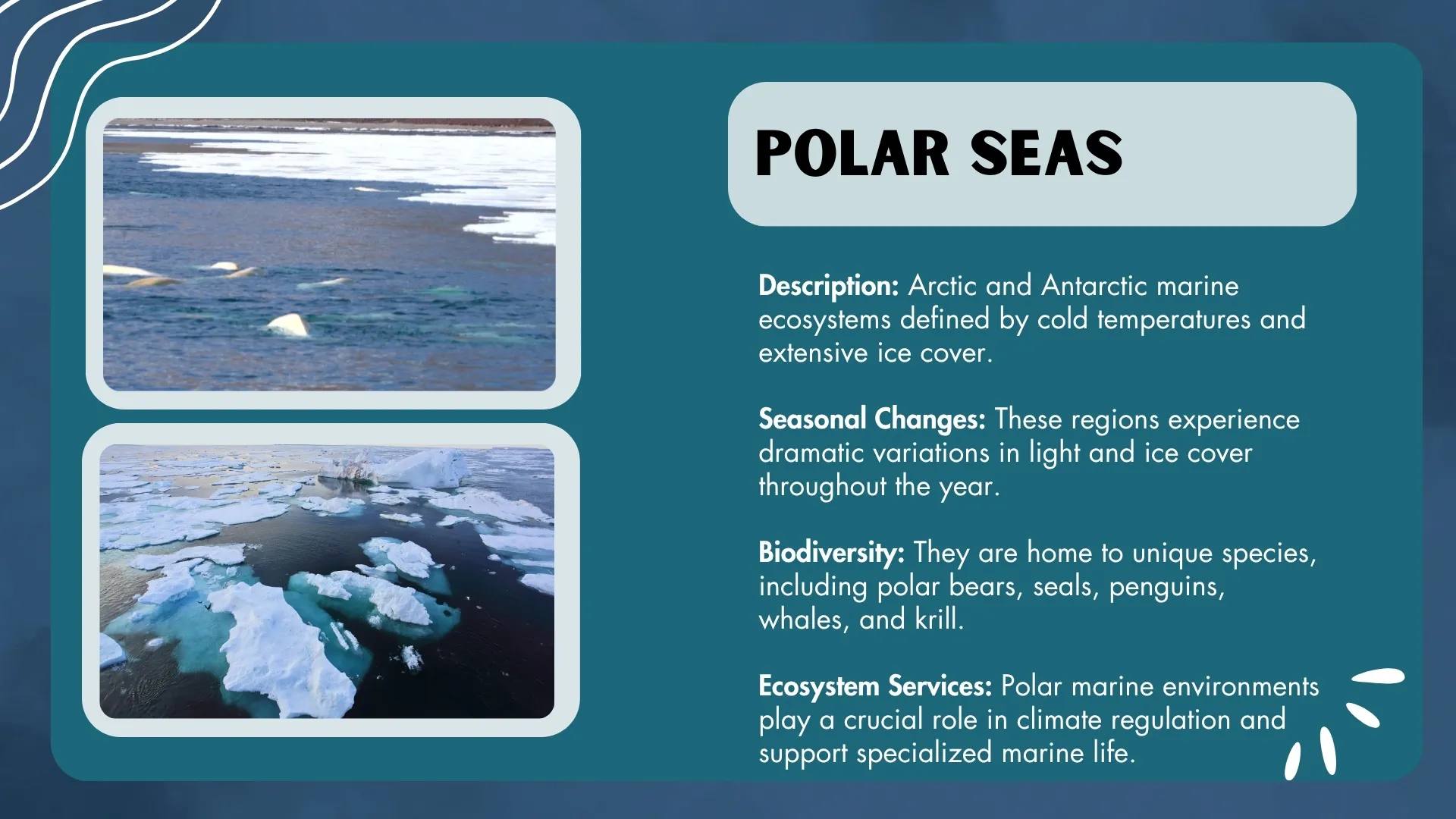
Oceans, coral reefs, and polar seas
📝 Quiz: Test Your Knowledge
Complete both quizzes to test what you've learned about aquatic habitats
📚 Aquatic Habitats Explained: Definitions and Examples
What is an aquatic habitat?
An aquatic habitat is any place where water is the medium organisms live in, rather than simply something they drink. Every aquatic habitat is shaped by four conditions: how much salt the water carries, how far sunlight reaches into it, how much oxygen is dissolved in it, and how fast it moves. Change any one of those and the community of living things changes with it, which is why a fast upland stream and a still lowland pond, only a few miles apart, hold almost entirely different species.
Salt content, or salinity, is the measure biologists use to sort aquatic habitats into three groups. Fresh water carries less than about 0.5 parts of salt per thousand parts of water. Sea water averages about 35 parts per thousand — roughly three and a half per cent salt. Anything between the two is brackish.
1. Freshwater habitats
Definition: habitats with very low salinity, fed by rain, snowmelt and springs. They cover less than one per cent of the Earth's surface, yet support roughly forty per cent of all known fish species.
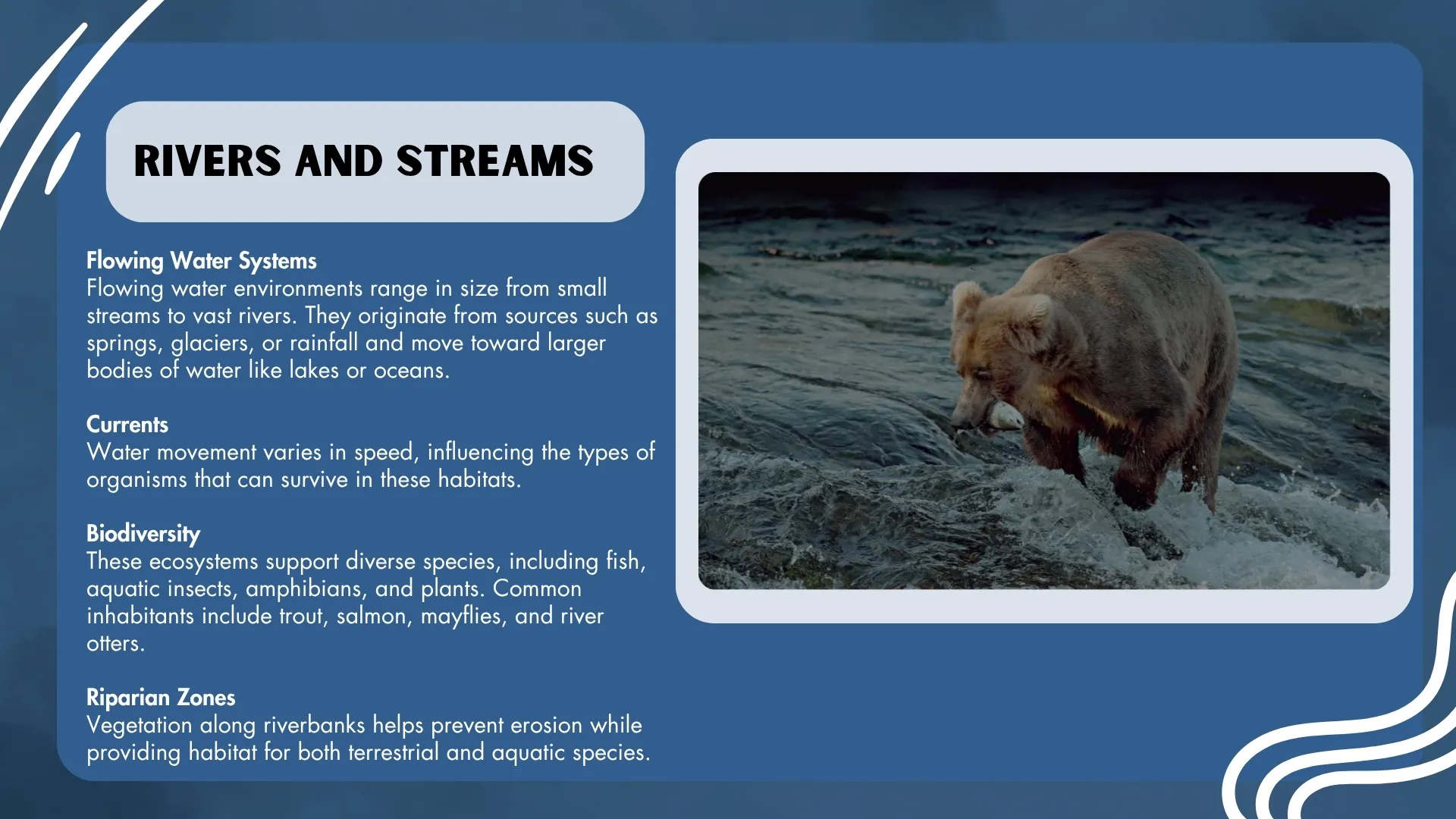
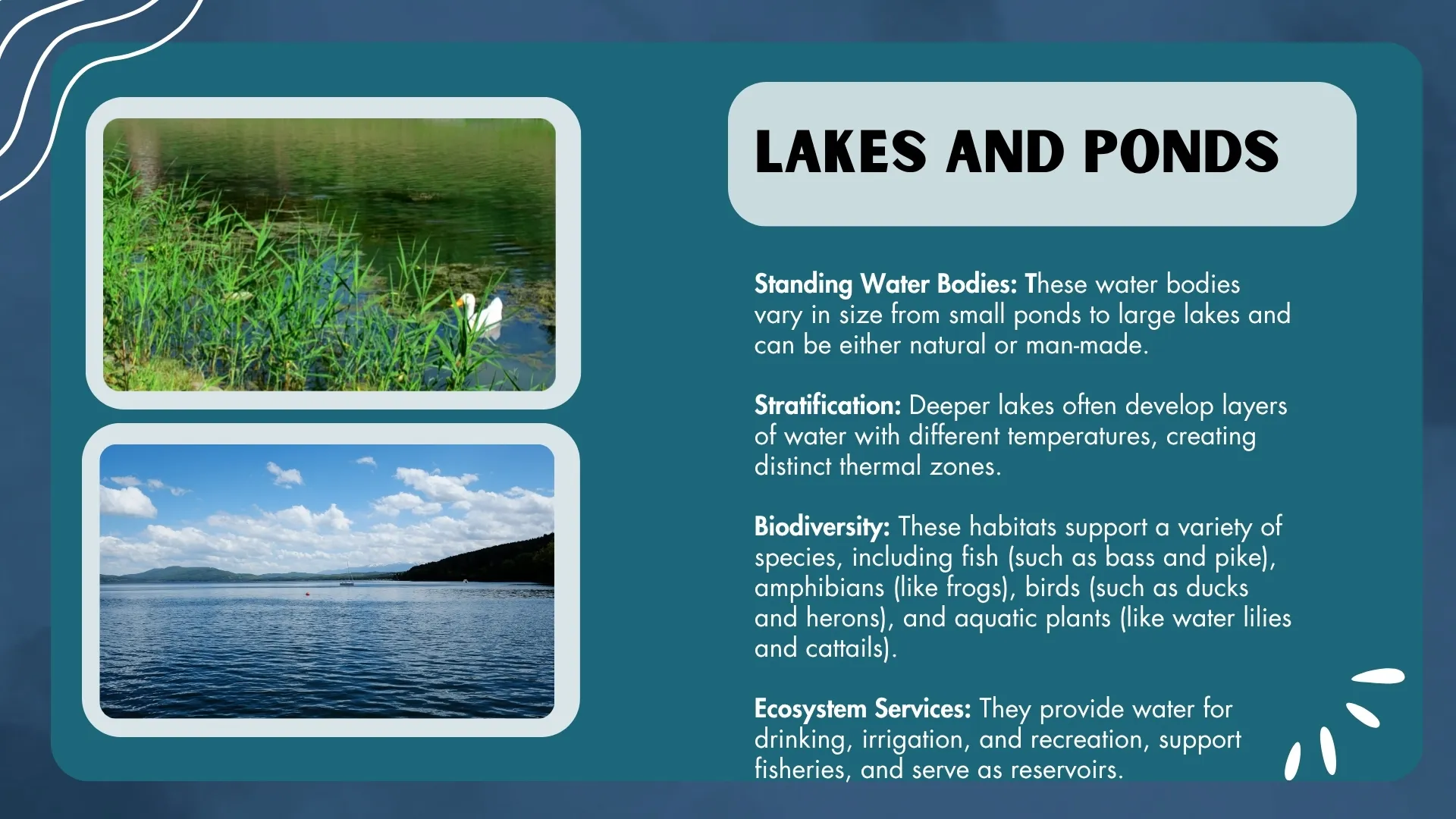
They divide into moving water and still water. Moving water — rivers and streams — is well oxygenated because tumbling mixes air into it, so the animals living there are usually built to grip or to be streamlined. Examples include the Amazon, which discharges more water than any other river on Earth, and the Nile. Still water — lakes and ponds — warms and cools more slowly and holds less oxygen near the bottom. Lake Baikal in Siberia is the deepest freshwater lake at about 1,642 metres and holds around a fifth of the planet's unfrozen surface fresh water.
Typical organisms: trout and salmon in cold fast water; carp, perch and pike in still water; water lilies and reeds at the margins; mayfly and caddisfly larvae under stones, whose presence is used as an indicator of clean water.
2. Transitional habitats: where fresh meets salt
Definition: brackish habitats that sit between a river and the sea, or between land and open water. Salinity here does not sit still — it rises and falls with every tide — so the organisms must tolerate a moving target.
Estuaries are the mouths of rivers, where fresh water meets the tide. They trap nutrients washed down from inland, which makes them some of the most productive habitats anywhere and a nursery ground for young fish. Wetlands are areas of permanently or seasonally waterlogged ground; the Everglades in Florida is the largest subtropical wetland in the United States. Mangrove forests are coastal woodlands of salt-tolerant trees whose stilt roots trap sediment and break wave energy. The Sundarbans, shared by Bangladesh and India, is the largest mangrove forest on Earth and the only one holding a population of Bengal tigers.
3. Marine habitats
Definition: salt-water habitats, covering about seventy-one per cent of the Earth's surface. Because light fades with depth, marine habitats are layered into zones. The sunlight zone, the top 200 metres or so, is the only layer with enough light for photosynthesis, and therefore the only one where producers live. Below it light thins to nothing and animals depend on food drifting down from above.
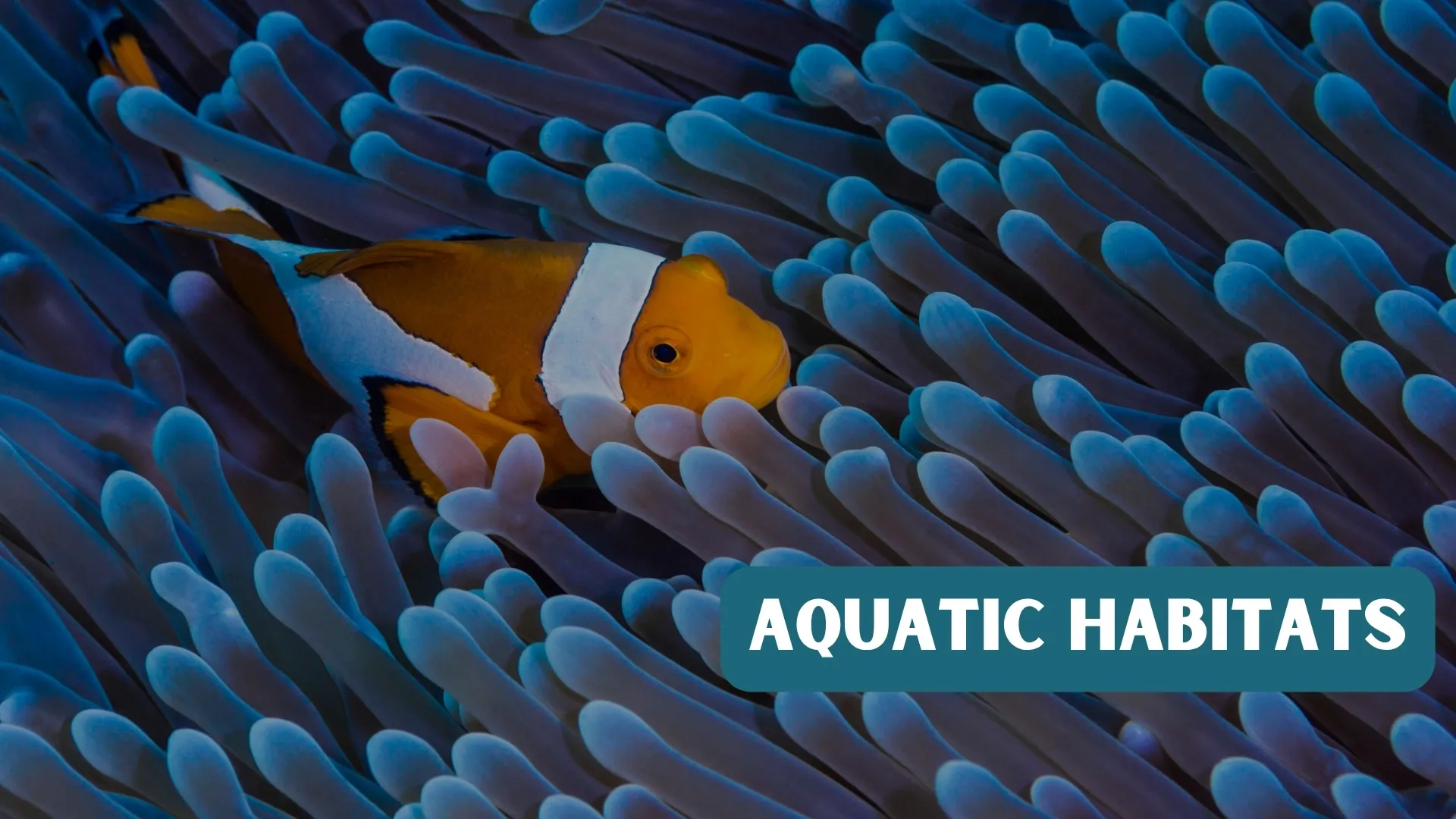
Coral reefs are built by tiny animals called coral polyps, which house microscopic algae in their tissues and share the food those algae make. The Great Barrier Reef off Queensland, Australia runs for roughly 2,300 kilometres and is the largest reef system in the world. At the other extreme, the Challenger Deep in the Mariana Trench reaches nearly 11,000 metres, where the water is a few degrees above freezing and permanently dark. Polar seas are cold but rich: cold water dissolves more oxygen than warm water, and summer plankton blooms feed krill, which in turn feed whales.
How organisms are adapted to life in water
- Getting oxygen. Fish pass water over gills, which pull dissolved oxygen straight out of it. Whales and dolphins, being mammals, cannot do this and must surface to breathe air.
- Handling salt. A freshwater fish constantly absorbs water through its skin and gills, so it produces large amounts of very dilute urine to get rid of the excess. A marine fish has the opposite problem — it loses water to the sea — so it drinks sea water and pumps the surplus salt back out through its gills.
- Staying in place. Stream insects are flattened to hide from the current; limpets clamp to rock; kelp anchors with a holdfast rather than roots.
- Coping with darkness and cold. Deep-sea fish often have oversized eyes, or make their own light through bioluminescence. Polar fish carry antifreeze proteins that stop ice crystals forming in their blood.
Why aquatic habitats matter
Microscopic floating plants called phytoplankton drift in the sunlight zone and carry out photosynthesis on an enormous scale; they are thought to produce roughly half of the oxygen in the Earth's atmosphere. Oceans also absorb a large share of the carbon dioxide people release, and move heat from the equator towards the poles, which is why a change in the sea is felt in the weather on land.
These habitats are under pressure from pollution, overfishing, and warming water. When the sea warms, corals expel the algae living in them and turn white — a process called coral bleaching. A bleached coral is not yet dead, but it has lost most of its food supply and will die if the warm conditions continue.
Key terms
- Salinity
- The amount of dissolved salt in water, measured in parts per thousand.
- Brackish
- Water saltier than fresh water but less salty than the sea, typical of estuaries.
- Sunlight zone
- The upper layer of the ocean, about the first 200 metres, where enough light reaches for photosynthesis.
- Phytoplankton
- Microscopic photosynthetic organisms drifting near the surface; the producers of most marine food chains.
- Estuary
- The tidal mouth of a river, where fresh water mixes with sea water.
- Bioluminescence
- Light produced by a living organism, common in deep-sea animals.
- Coral bleaching
- The loss of the algae living inside coral, usually caused by water that is too warm, which leaves the coral white.