📖 Lesson: Functions of Hormones
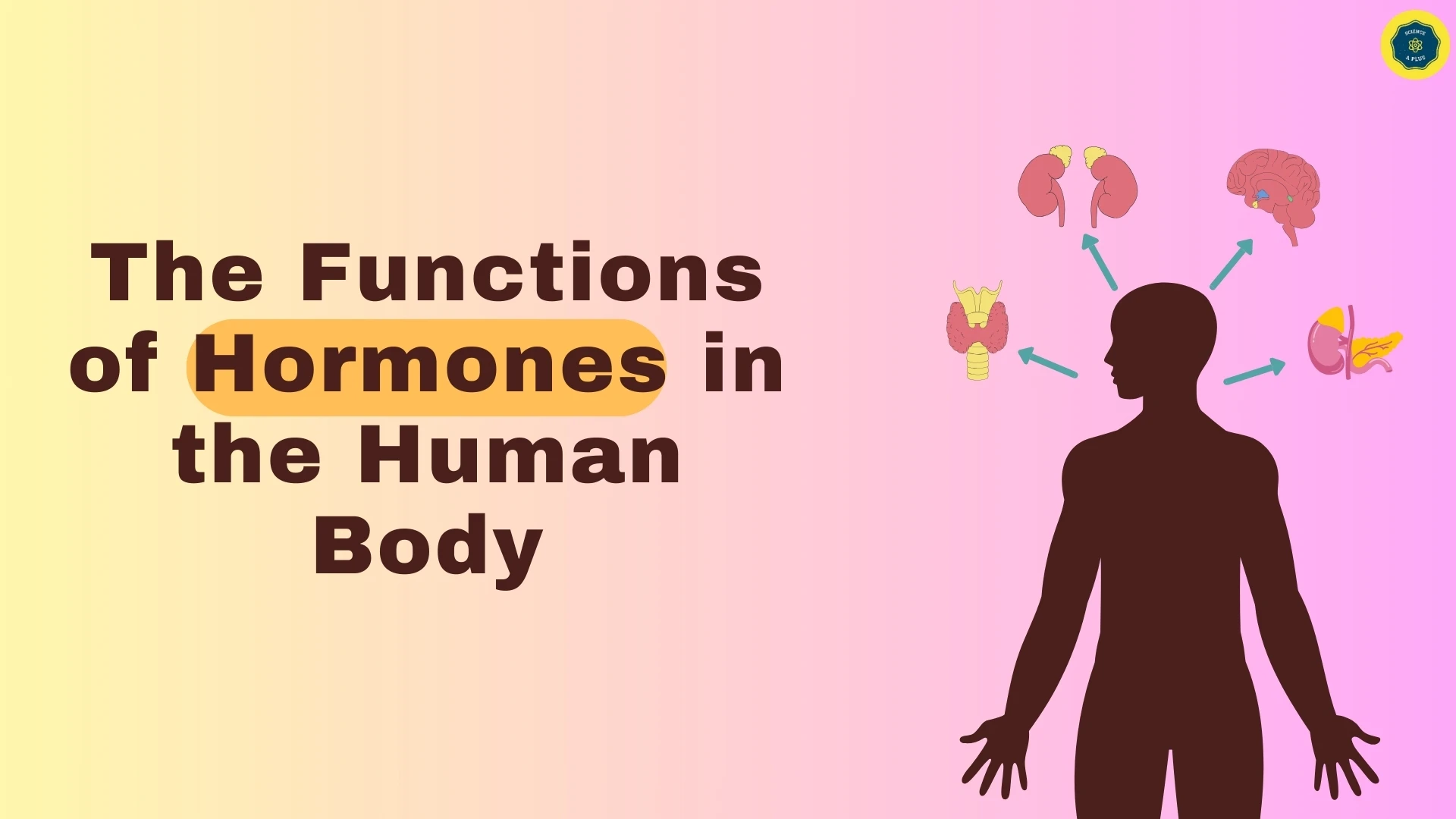
Explore the endocrine system and how hormones control body processes
🗂️ Revision Flashcards
Click each card to flip and reveal the hormone's function and source
🎮 Games: Test Your Knowledge
Play interactive games to reinforce what you've learned about hormones
🧪 Hormones in the Human Body: What They Are and What They Do
What is a hormone?
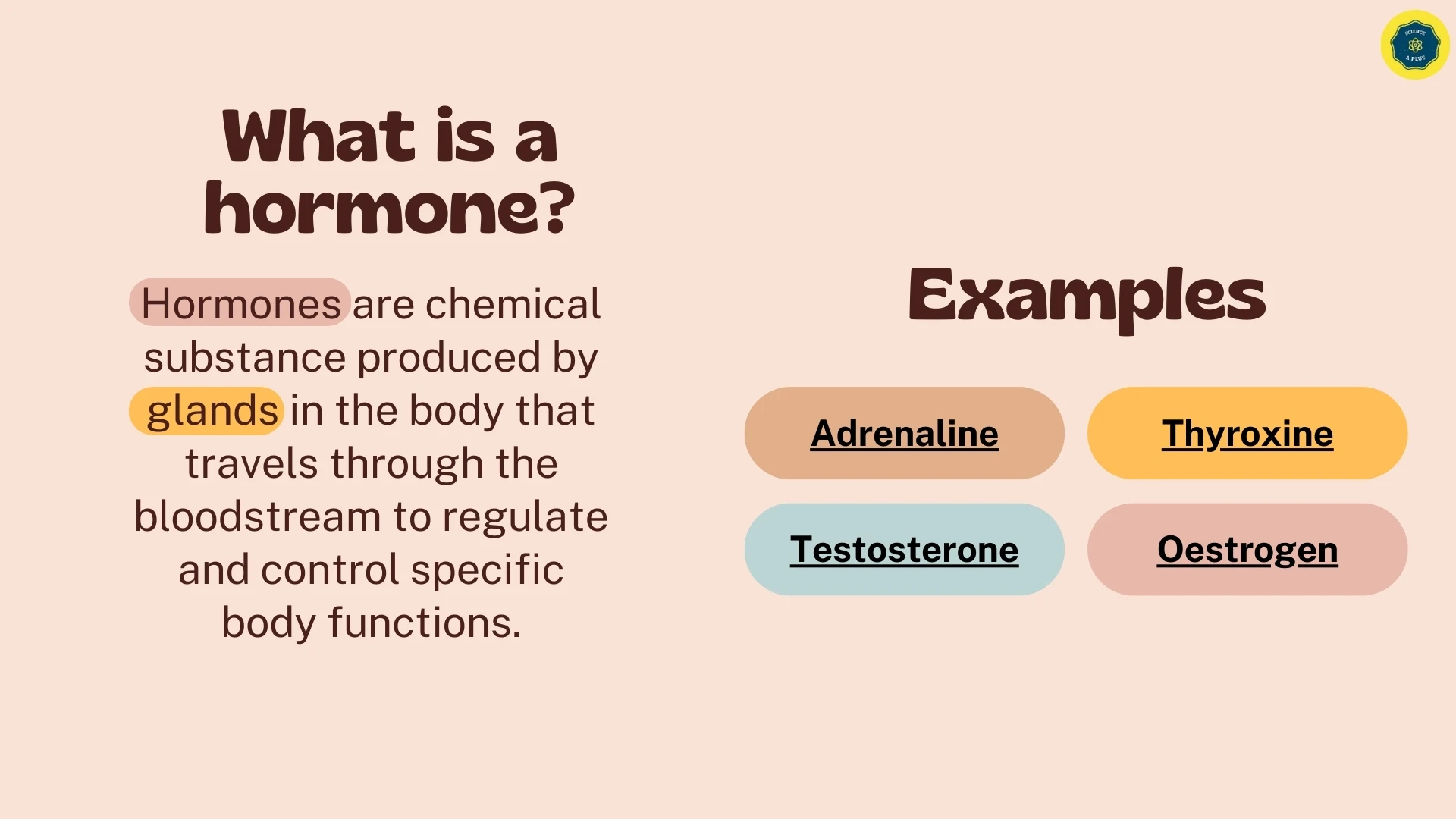
A hormone is a chemical messenger made by an endocrine gland, released directly into the blood, and carried around the body to the organs it acts on, which are called its target organs. A hormone passes every organ in the body, but only its target organs respond, because only they have the receptor molecules that recognise it.
The glands that make hormones together form the endocrine system. So when a textbook says that the body is "controlled by chemicals called hormones", the system doing that control is the endocrine system. Endocrine glands are ductless: they have no tube to carry their product away and simply secrete it into the blood flowing through them. That makes them different from exocrine glands such as the salivary and sweat glands, which pour their products through ducts.
The main endocrine glands and their hormones
The table lists the main glands and the hormone each one releases. Notice that the pancreas makes two hormones with opposite effects.
| Gland | Where it is | Hormone | Main effect |
|---|---|---|---|
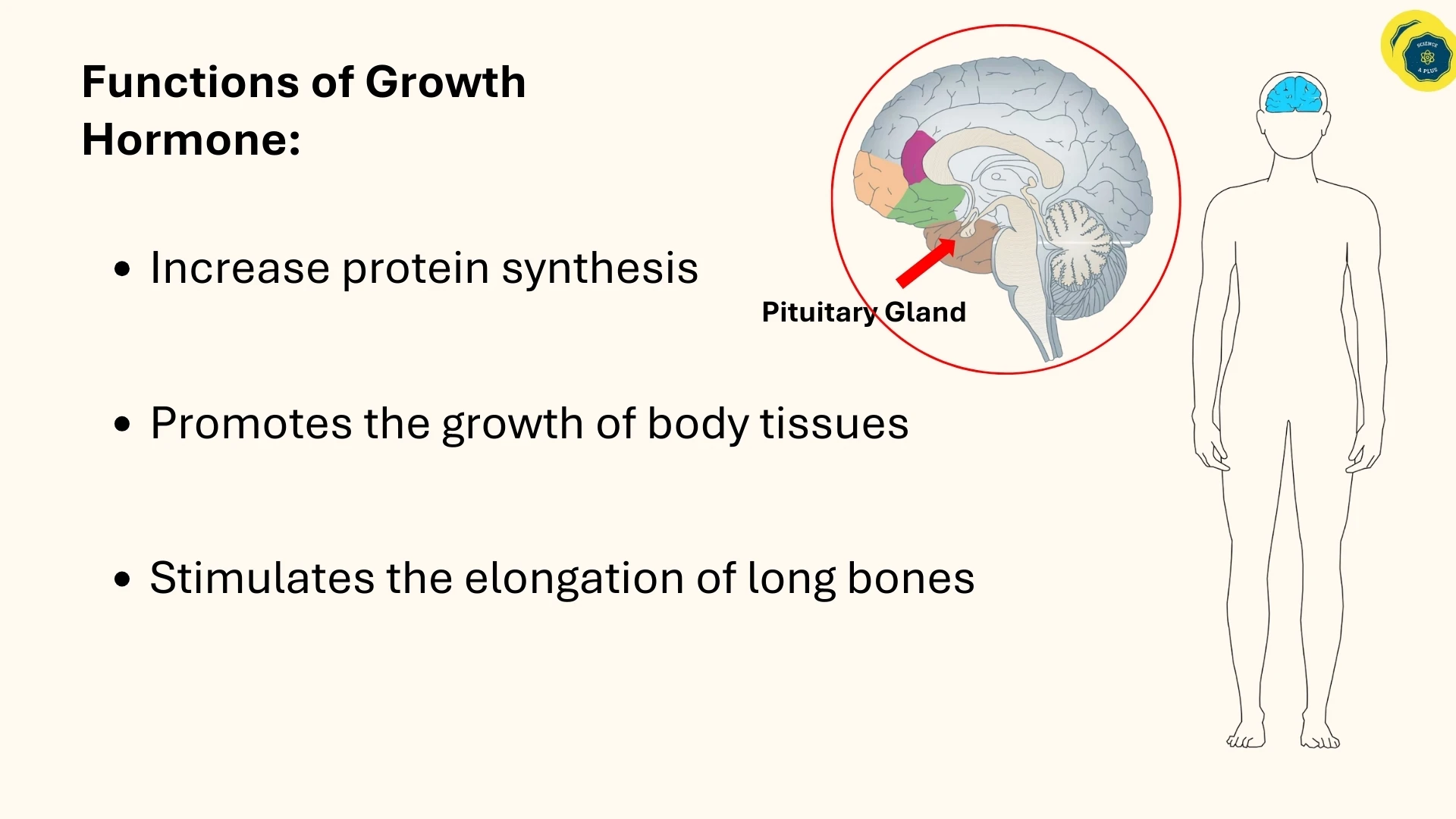
| Pituitary | Base of the brain | Growth hormone; also ADH, FSH, LH and TSH | Growth hormone stimulates growth of bones and muscles. ADH controls water balance in the kidneys. FSH and LH control the sex glands. TSH controls the thyroid. |
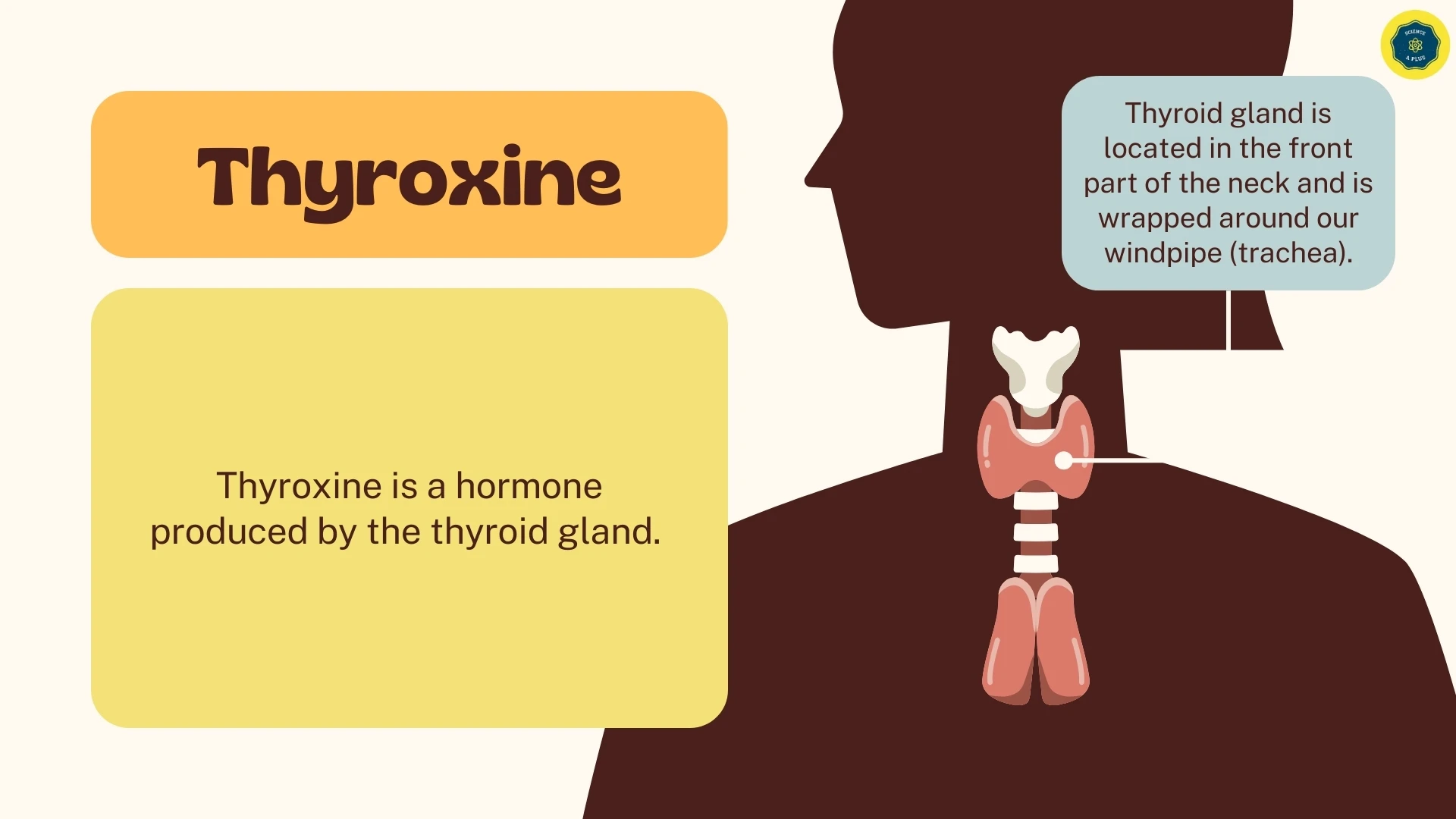
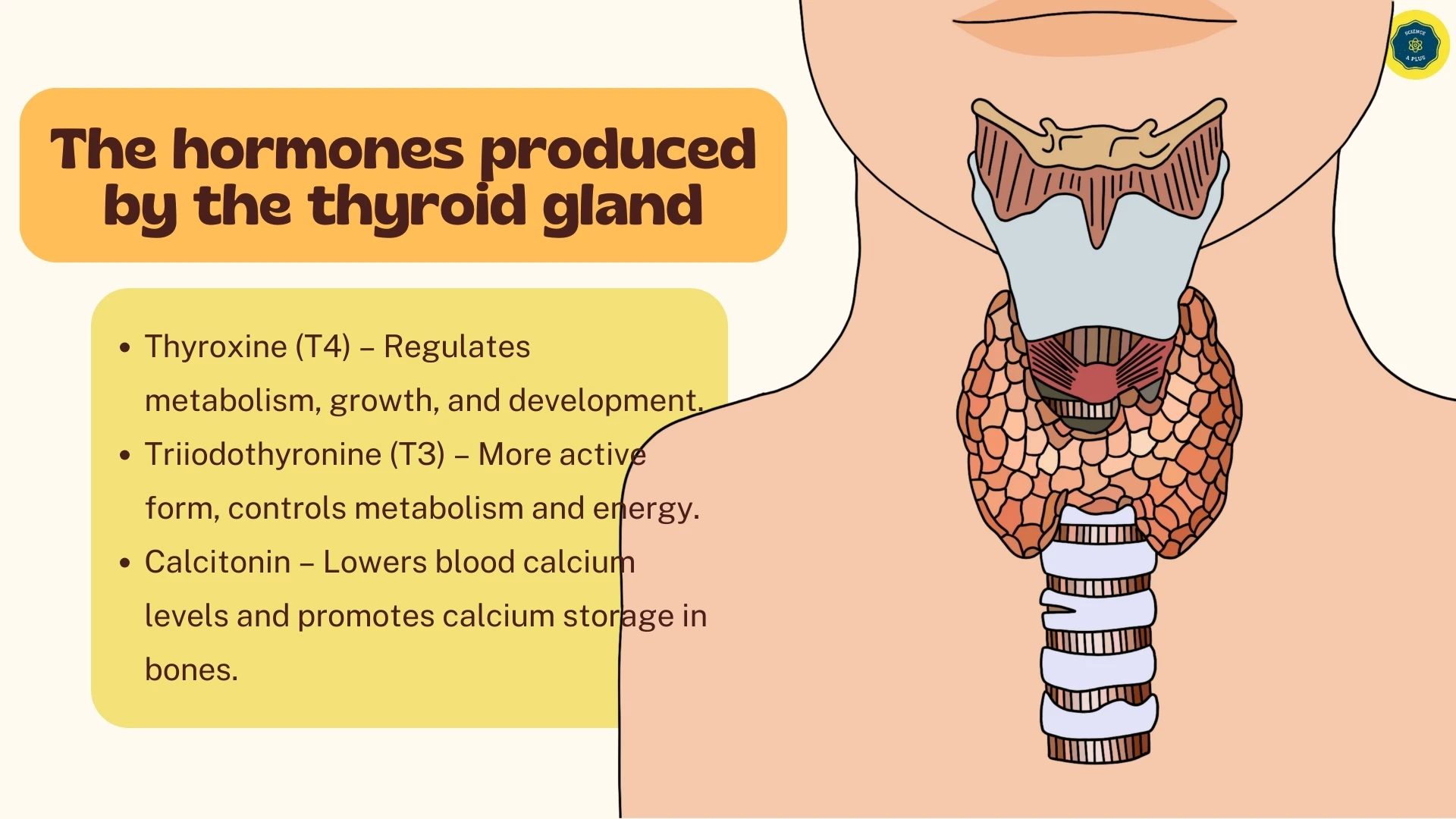
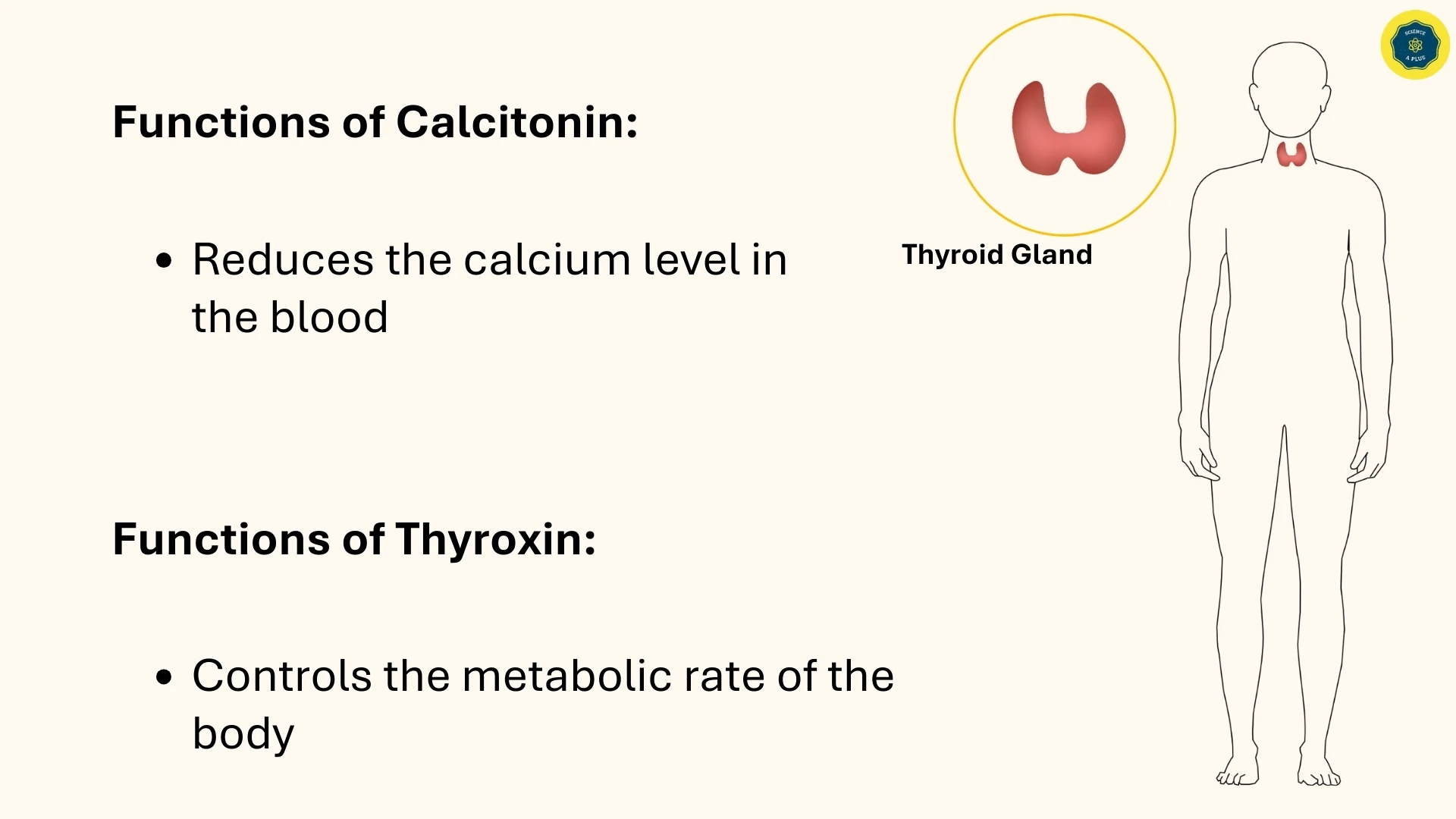
| Thyroid | Front of the neck | Thyroxine (and calcitonin) | Thyroxine controls the metabolic rate: how quickly the cells release energy. Calcitonin lowers the level of calcium in the blood. |
| Adrenal glands | On top of each kidney | Adrenaline | Prepares the body for "fight or flight": faster heart rate and breathing, more glucose in the blood, blood sent to the muscles. |
| Pancreas | Below the stomach | Insulin and glucagon | Insulin lowers blood glucose; glucagon raises it. Together they keep blood glucose steady. |
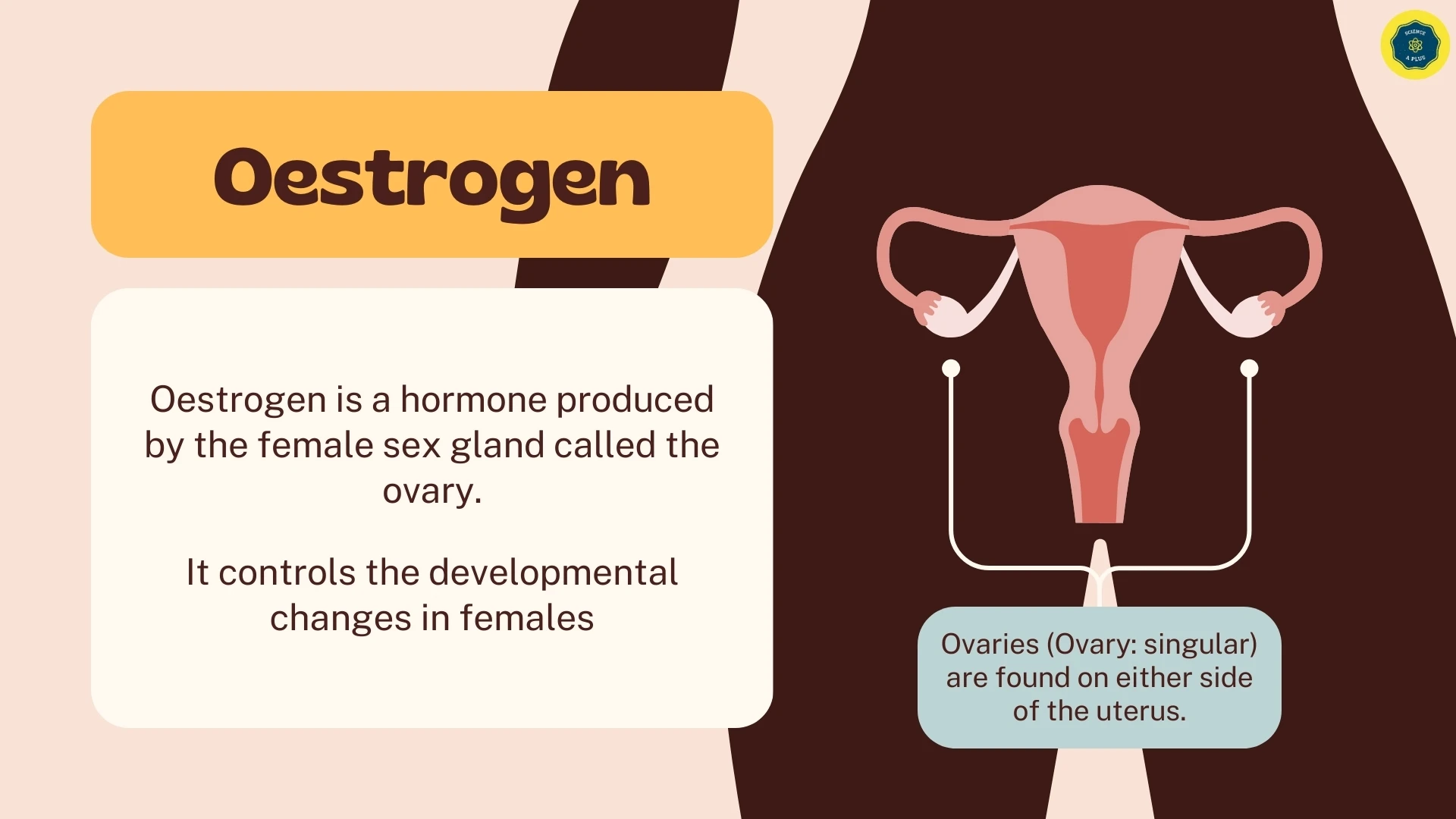
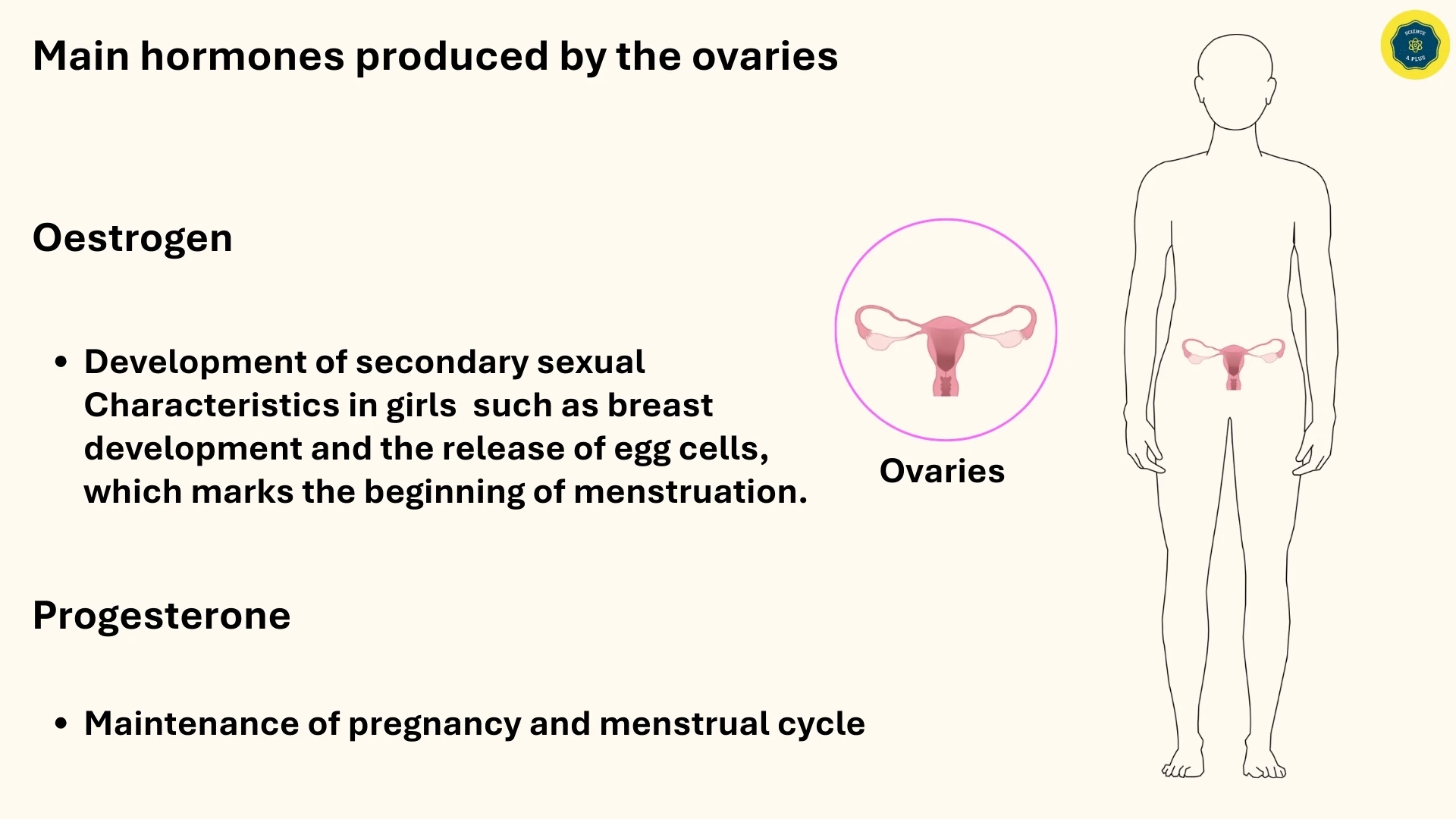
| Ovaries | Female lower abdomen | Oestrogen and progesterone | Oestrogen brings about female secondary sexual characteristics and rebuilds the uterus lining each cycle; progesterone maintains that lining. |
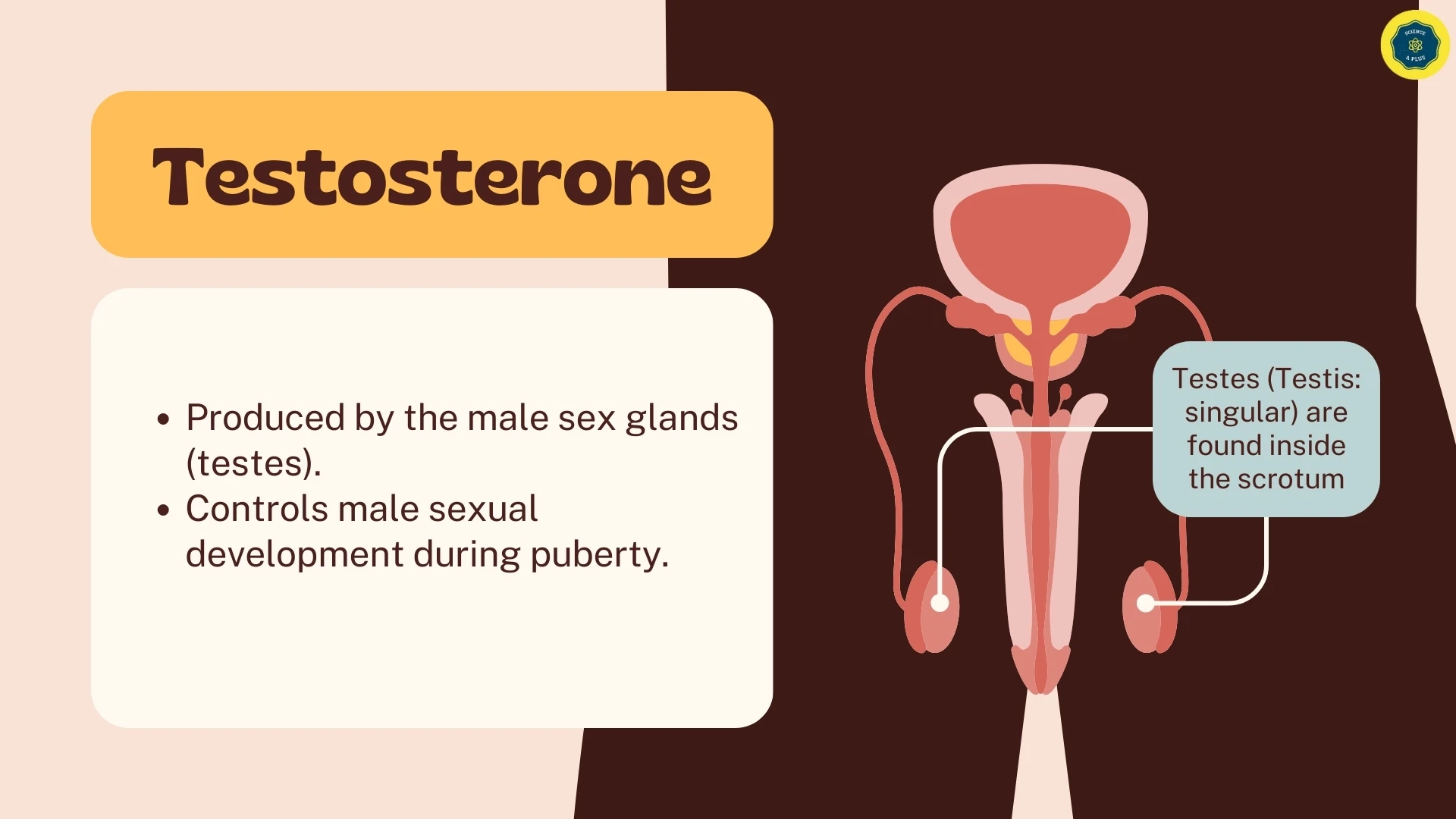
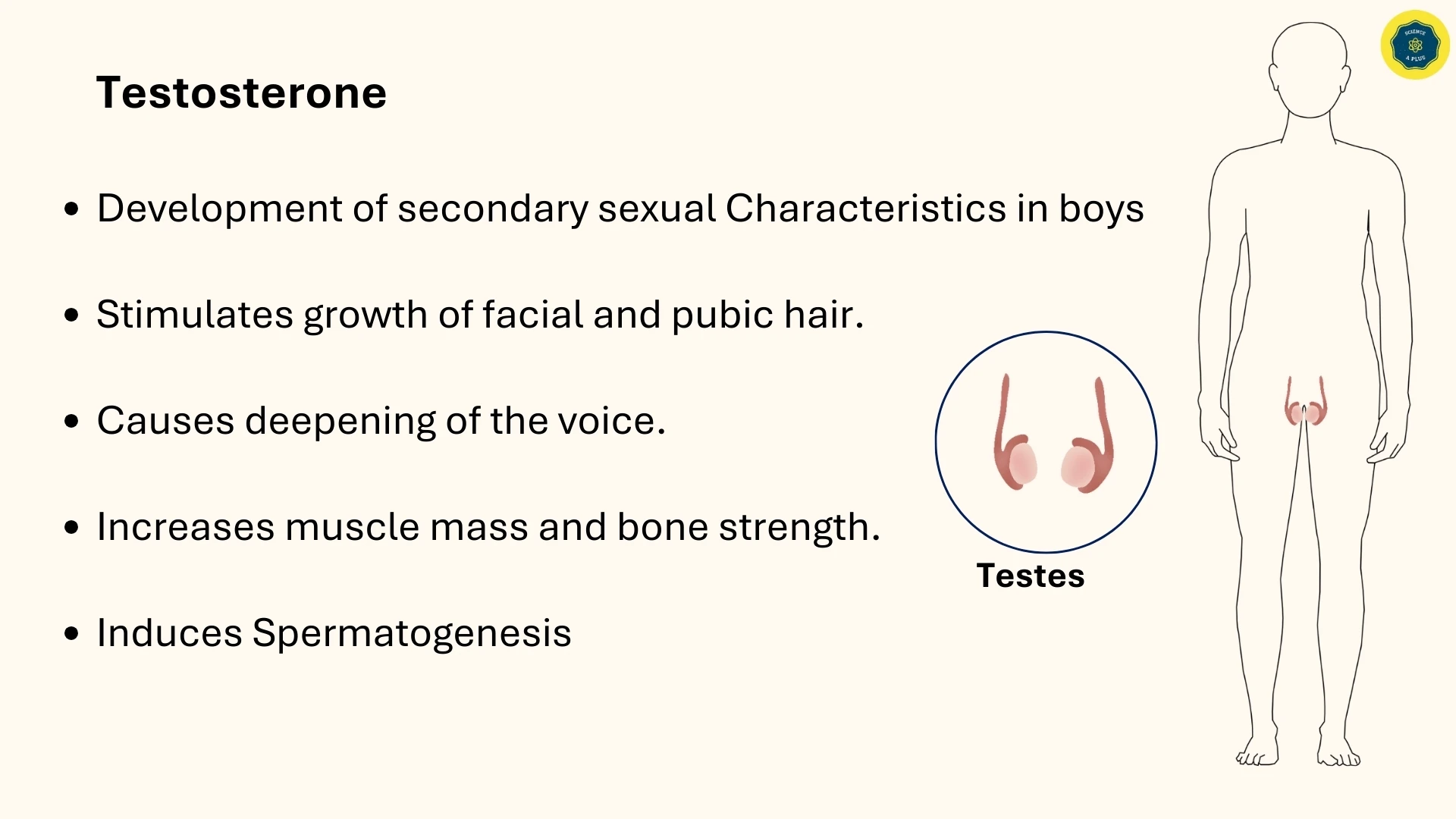
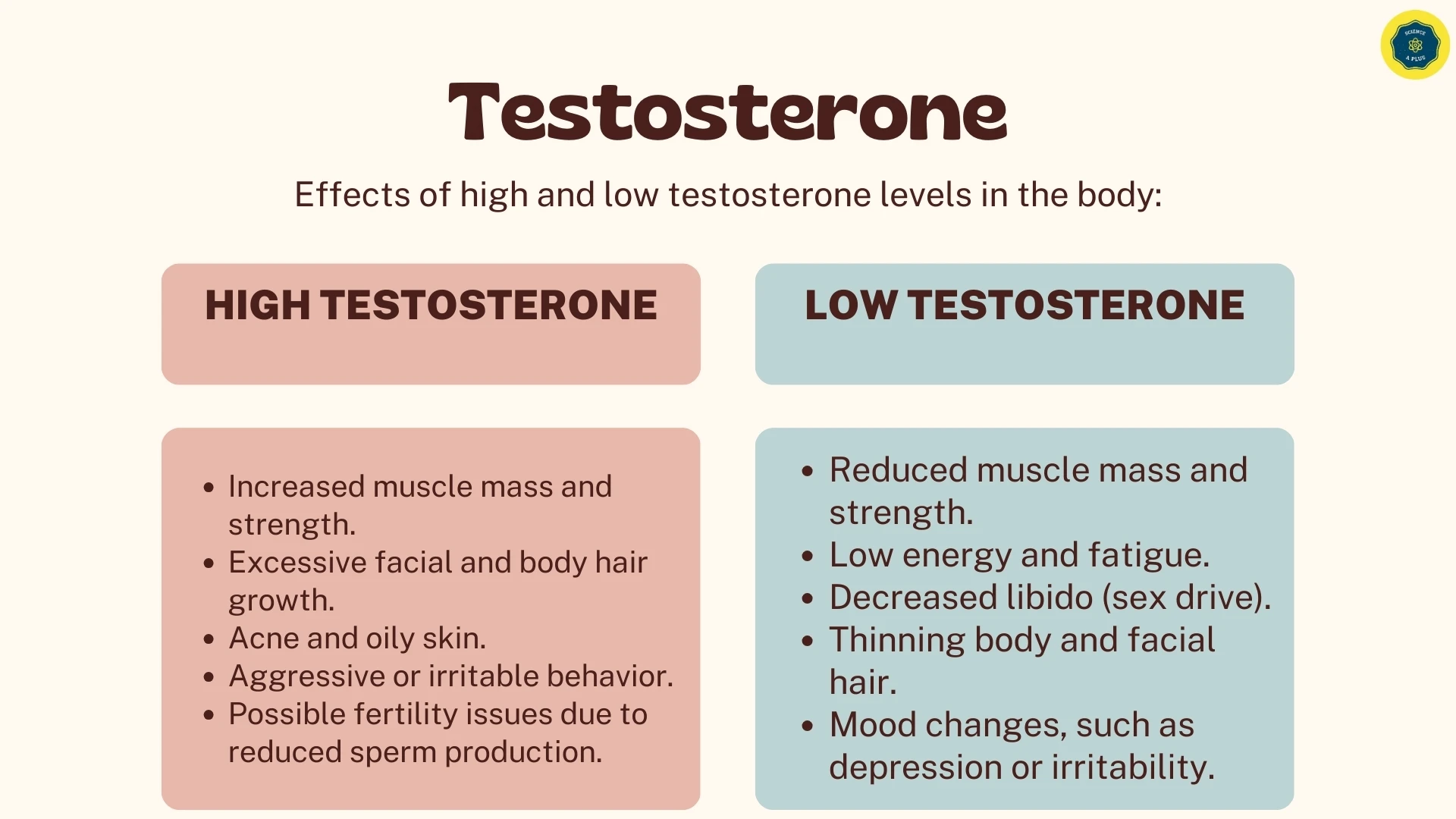
| Testes | Male, in the scrotum | Testosterone | Brings about male secondary sexual characteristics and stimulates sperm production. |
Pituitary gland: the master gland
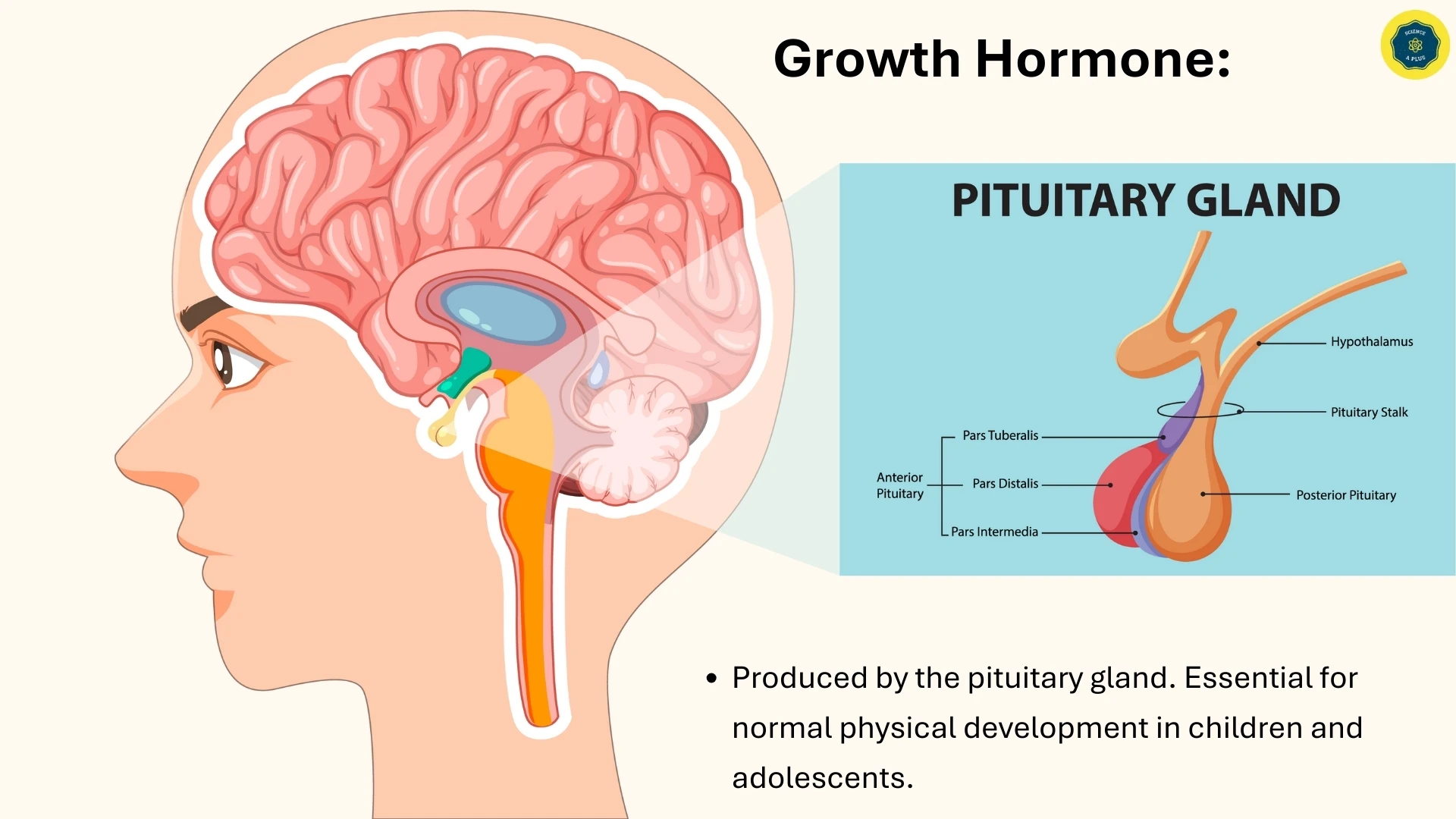
The pituitary gland is about the size of a pea and hangs from the underside of the brain, just below the hypothalamus. It is called the master gland because several of its hormones do not act on ordinary body tissues at all: they act on other endocrine glands and switch them on. TSH tells the thyroid to release thyroxine; FSH and LH tell the ovaries or testes to release their hormones. The pituitary also releases growth hormone, which acts directly on bones and muscles.
Thyroid gland and thyroxine
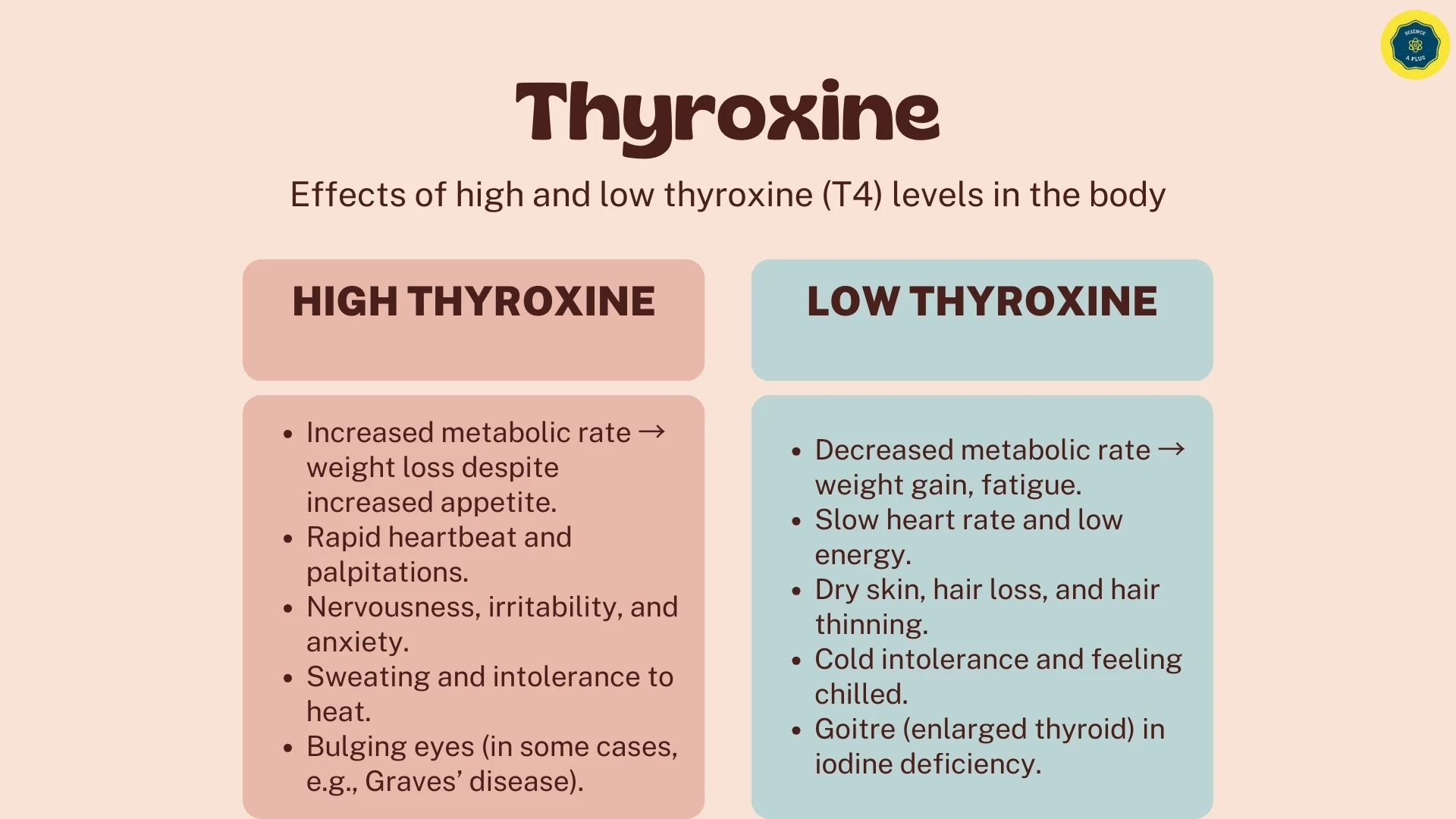
The thyroid sits in the front of the neck, and its main hormone is thyroxine. Thyroxine sets the basal metabolic rate, which is the speed at which cells respire and release energy while the body is at rest. It is also needed for normal growth and development of the brain and body in children. Thyroxine contains iodine, so iodine in the diet is essential. Thyroxine levels are held steady by negative feedback: when thyroxine rises, the pituitary releases less TSH and the thyroid slows down; when it falls, more TSH is released.
Adrenal glands and adrenaline
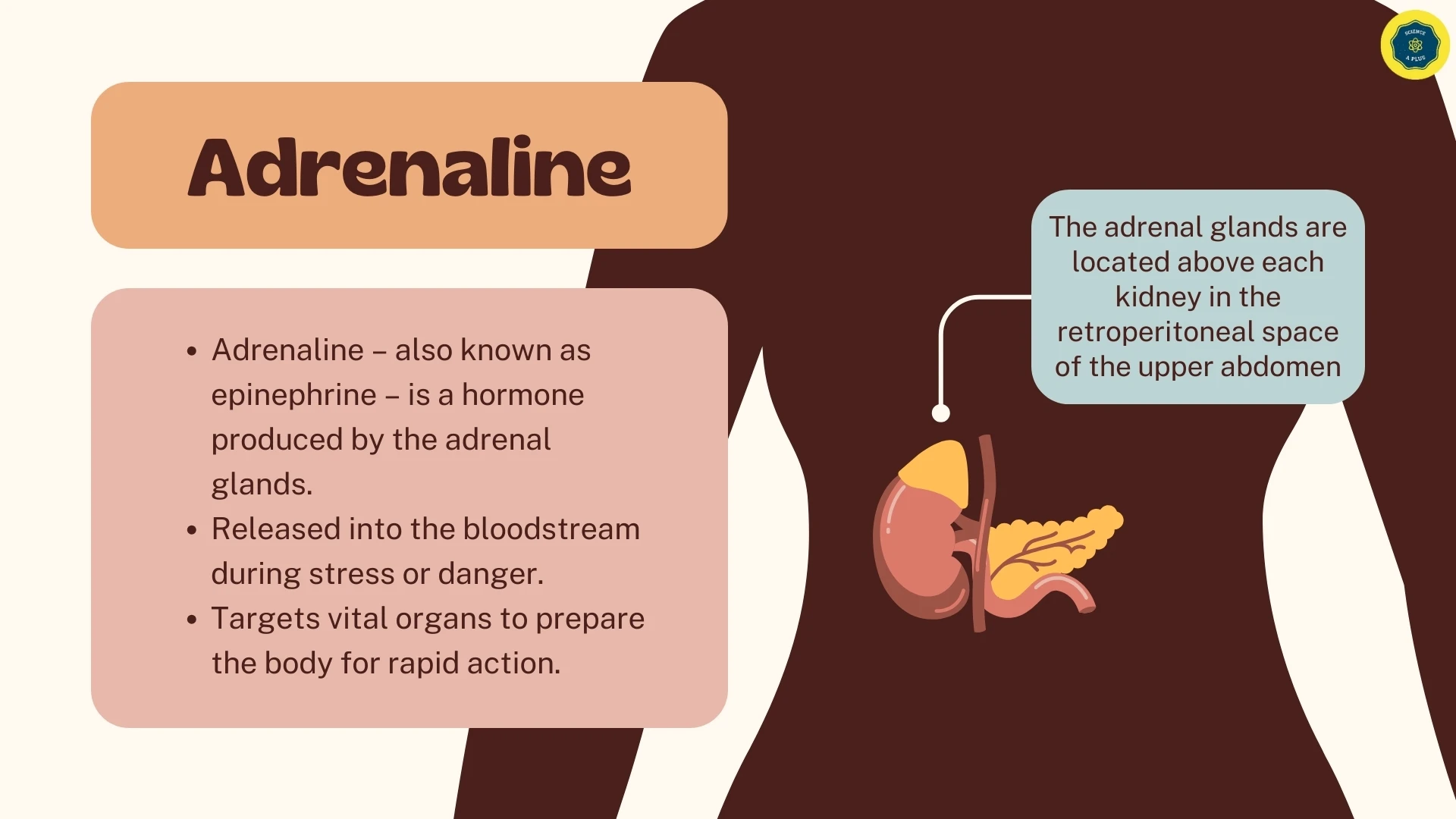
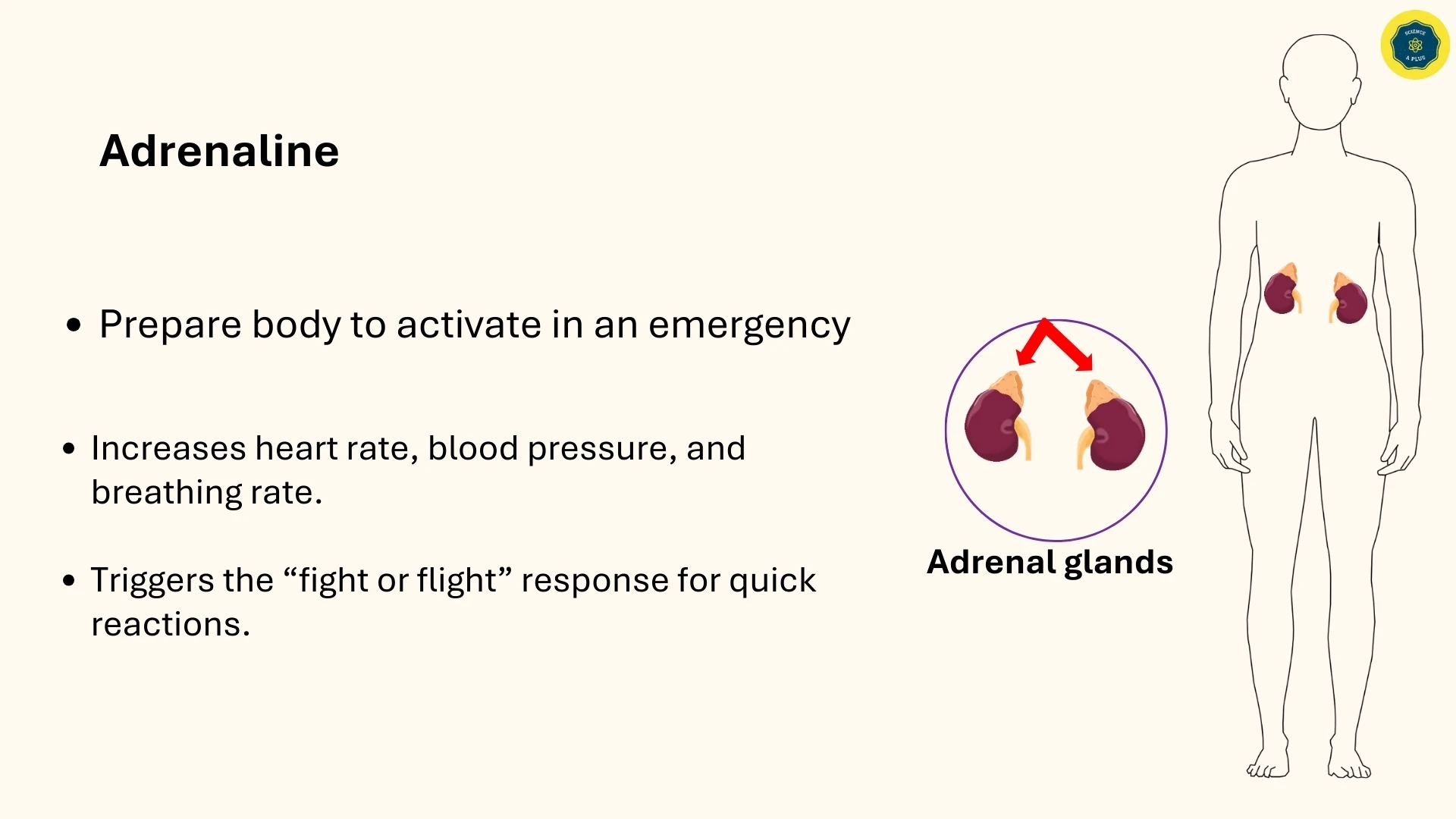
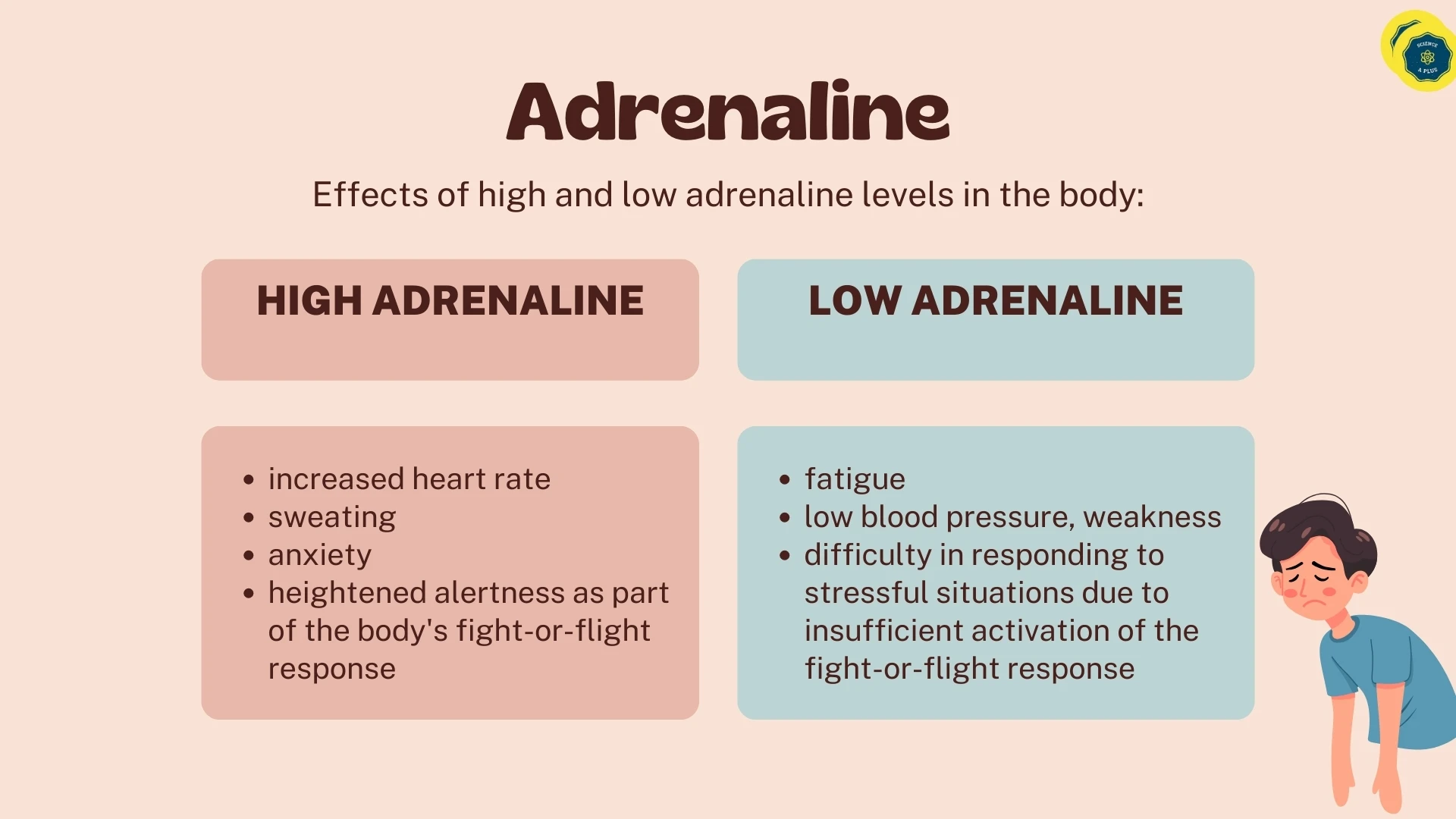
The two adrenal glands sit like caps on top of the kidneys. When you are frightened, excited or about to compete, the nervous system tells them to release adrenaline within seconds. Adrenaline prepares the body for sudden action:
- the heart beats faster and harder, so more blood reaches the muscles;
- breathing becomes faster and deeper, supplying more oxygen;
- the liver converts stored glycogen into glucose, raising blood glucose for respiration;
- blood is diverted away from the skin and digestive system towards the muscles;
- the pupils widen and the body becomes more alert.
Pancreas: insulin and glucagon
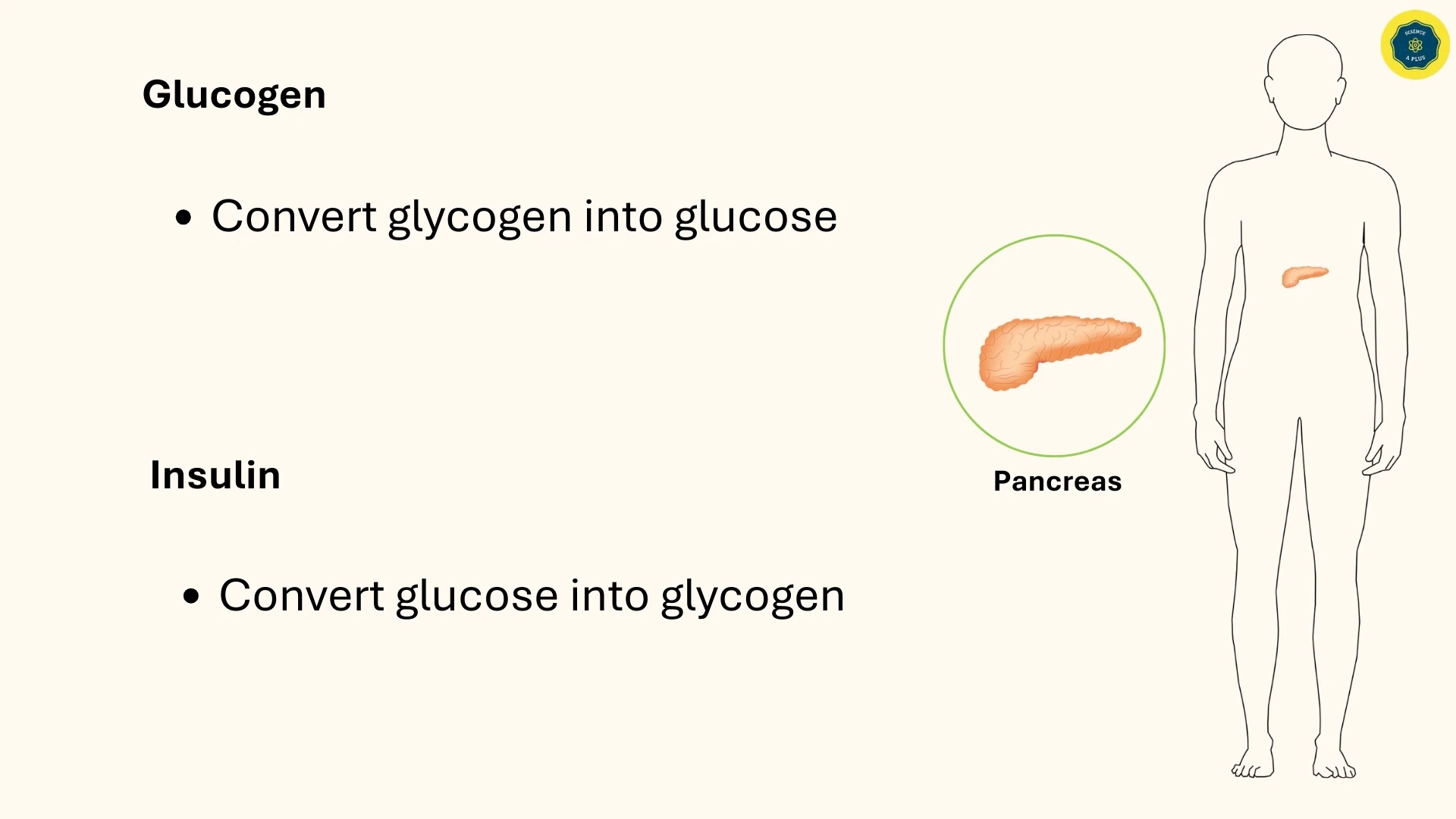
The pancreas is unusual because it is both an exocrine gland, sending digestive enzymes down a duct to the small intestine, and an endocrine gland. Small groups of cells scattered through it, the islets of Langerhans, make two hormones that work as a pair.
- Insulin is released when blood glucose rises after a meal. It makes the liver and muscle cells take glucose out of the blood and store it as glycogen, so blood glucose falls.
- Glucagon is released when blood glucose falls, for example between meals or during exercise. It makes the liver break glycogen back down into glucose and release it, so blood glucose rises.
This is another example of negative feedback: each hormone reverses the change that triggered it, keeping blood glucose within a narrow range. If the pancreas cannot make enough insulin, glucose stays high in the blood after meals and appears in the urine. This is Type 1 diabetes, and people who have it replace the missing insulin by injection.
Ovaries and testes: the sex hormones
At puberty the pituitary begins to release FSH and LH, and these switch on the sex glands. In females the ovaries release oestrogen, which brings about the female secondary sexual characteristics such as breast development and widening of the hips, and which thickens the lining of the uterus during each menstrual cycle. Progesterone, also from the ovaries, keeps that lining in place. In males the testes release testosterone, which brings about the male secondary sexual characteristics, including a deeper voice, facial hair and greater muscle growth, and which drives the production of sperm.
Hormonal control compared with nervous control
The body has two coordinating systems, and exam questions often ask you to compare them. The nervous system sends electrical impulses along neurones to one precise place; the message arrives in milliseconds and the effect stops almost as soon as the impulses stop. The endocrine system sends chemical messages in the blood, so a hormone takes seconds to minutes to reach its target, but it can affect many organs at once and its effect can last for hours, days or, in the case of growth and sex hormones, years. In short: nervous control is electrical, fast, short-lived and precise; hormonal control is chemical, slower, longer-lasting and widespread.
Key terms
- Hormone
- A chemical messenger made by an endocrine gland, carried in the blood, that changes the activity of its target organs.
- Endocrine gland
- A ductless gland that secretes hormones directly into the blood.
- Target organ
- An organ that has receptors for a particular hormone and therefore responds to it.
- Master gland
- The pituitary gland, so called because its hormones control other endocrine glands.
- Metabolic rate
- The rate at which the body's cells carry out chemical reactions and release energy; set by thyroxine.
- Negative feedback
- A control mechanism in which a change in a level triggers a response that reverses the change, holding the level steady.
- Glycogen
- The storage form of glucose in liver and muscle cells; insulin promotes its formation and glucagon its breakdown.
- Secondary sexual characteristics
- Features that develop at puberty under the control of oestrogen or testosterone, other than the reproductive organs themselves.