📖 Introduction
Cell division and growth are fundamental biological processes that allow organisms to develop, repair tissues, reproduce, and maintain life. Every living organism, from single-celled bacteria to multicellular humans, relies on precise control of cell division to function correctly.
This lesson is specially designed for students in Grades 9–11 studying GCSE, IGCSE, AP, and CBSE curricula. It includes interactive activity sheets, flashcards, revision tasks, and engaging learning activities to help you understand mitosis, meiosis, and the importance of cell division in living organisms.
🔬 Importance of Cell Division
Cells divide for several key reasons:
- Growth: Multicellular organisms start as a single fertilized cell and grow by producing more cells.
- Repair and Replacement: Damaged or worn-out cells, like skin or blood cells, are replaced through division.
- Reproduction: In unicellular organisms, division allows reproduction, while in multicellular organisms, it contributes to gamete production.
Example: Human skin cells divide constantly to replace dead cells, maintaining the integrity of the skin barrier.
🎥 Learning Videos
Mitosis Phases Learning Video
Animated explanation of the phases of mitosis showing chromosome movement and cell division.
Microscopic Real Video of Mitosis
Real microscopic footage showing actual cells undergoing mitosis in real-time.
Mitosis Explained with Diagrams
Detailed explanation of mitosis phases with clear diagrams and annotations.
🧬 Types of Cell Division
Mitosis
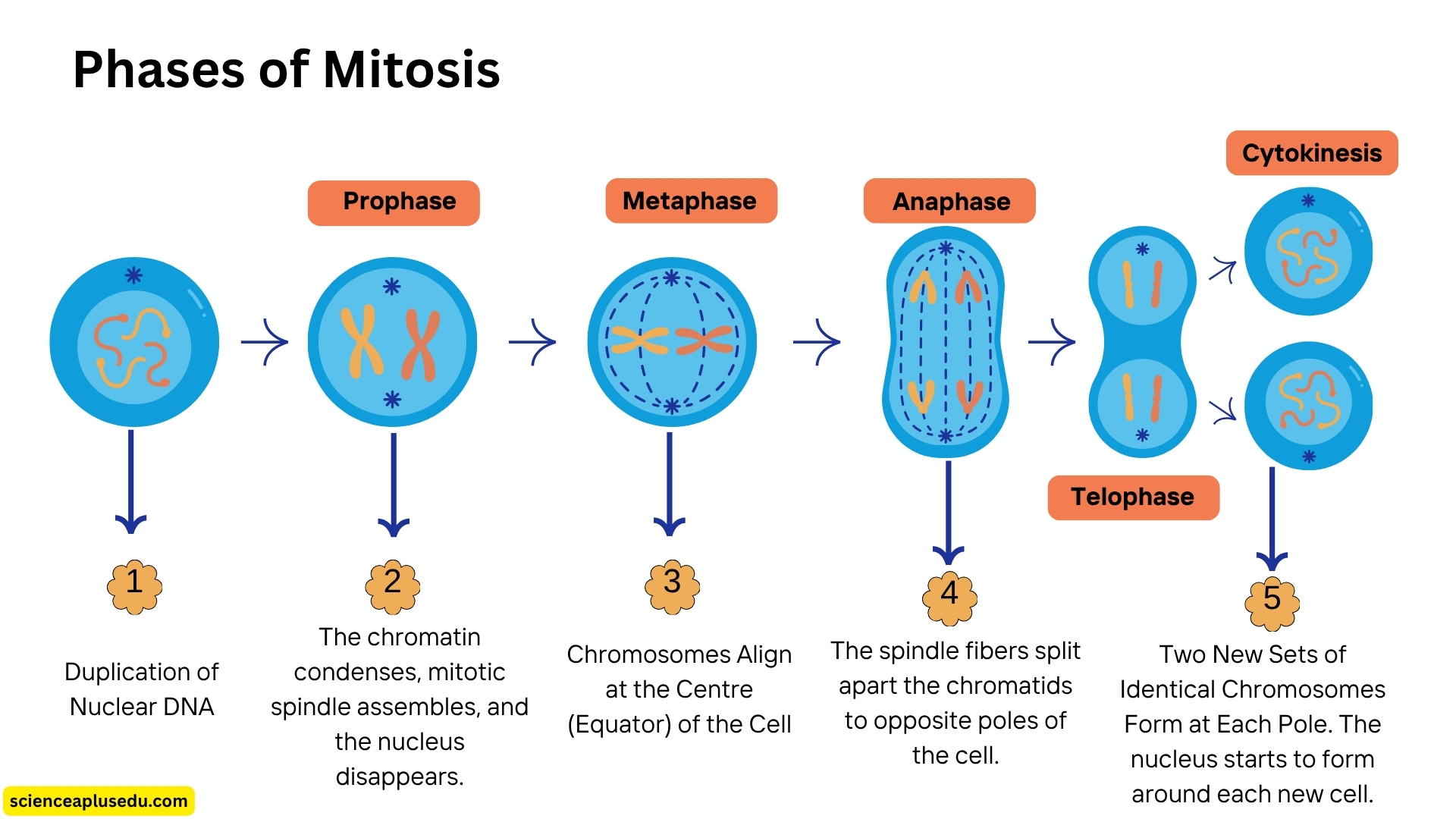
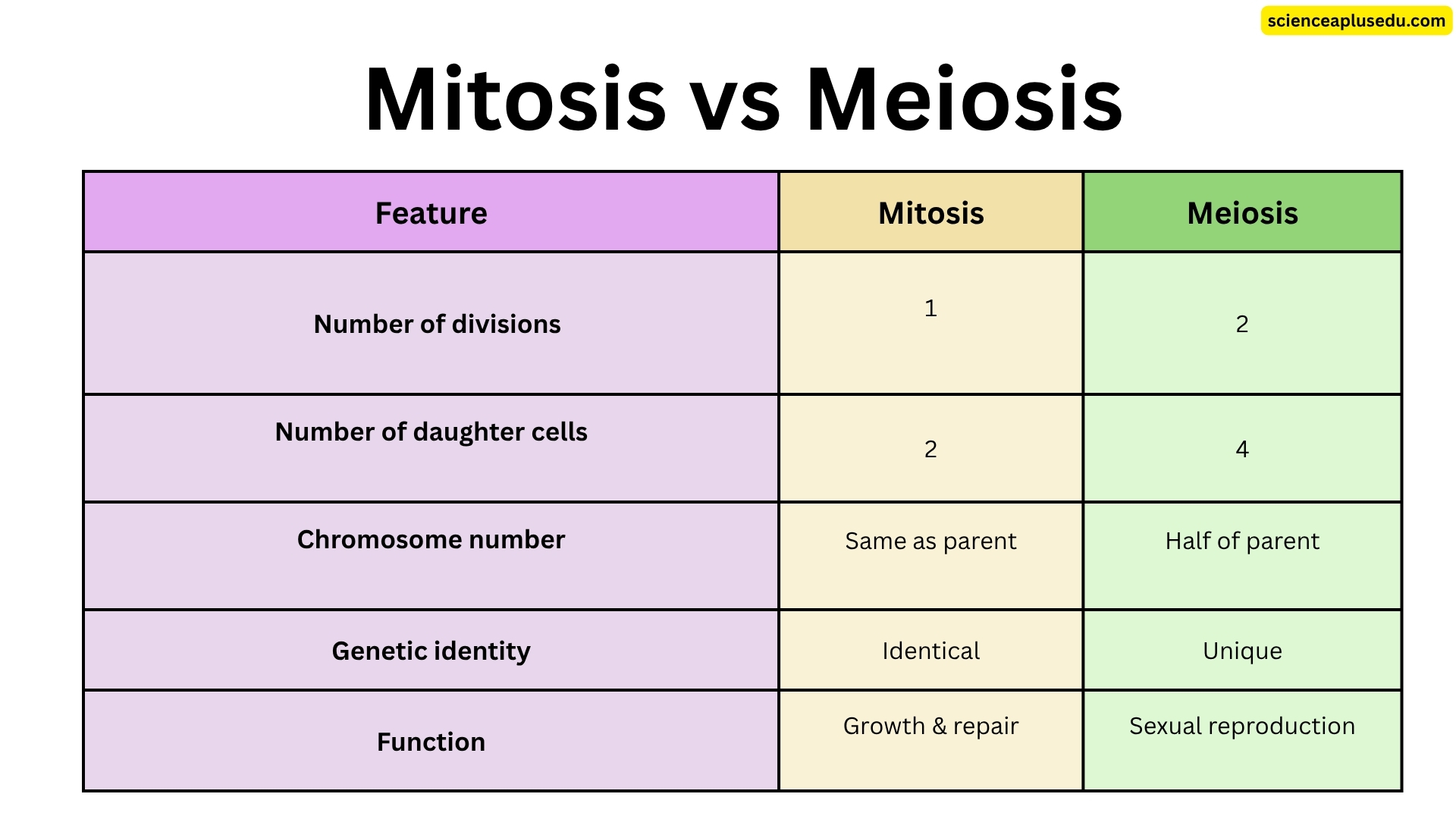
Mitosis produces two genetically identical daughter cells with the same number of chromosomes as the parent cell. It occurs in somatic (body) cells.
Example: Skin cell repair, liver regeneration.
Phases of Mitosis:
- Prophase: Chromosomes condense, spindle fibers form, nuclear envelope breaks down.
- Metaphase: Chromosomes align at the cell's equator.
- Anaphase: Sister chromatids separate and move to opposite poles.
- Telophase: Nuclear membranes form around each set of chromosomes.
- Cytokinesis: Cytoplasm divides, forming two daughter cells.
Meiosis
Meiosis produces four genetically unique daughter cells, each with half the number of chromosomes (haploid). It occurs in gamete-producing cells. (Produces sperm and eggs in humans)
Importance: Genetic diversity, sexual reproduction.
Key Features:
- Two rounds of division: Meiosis I and II
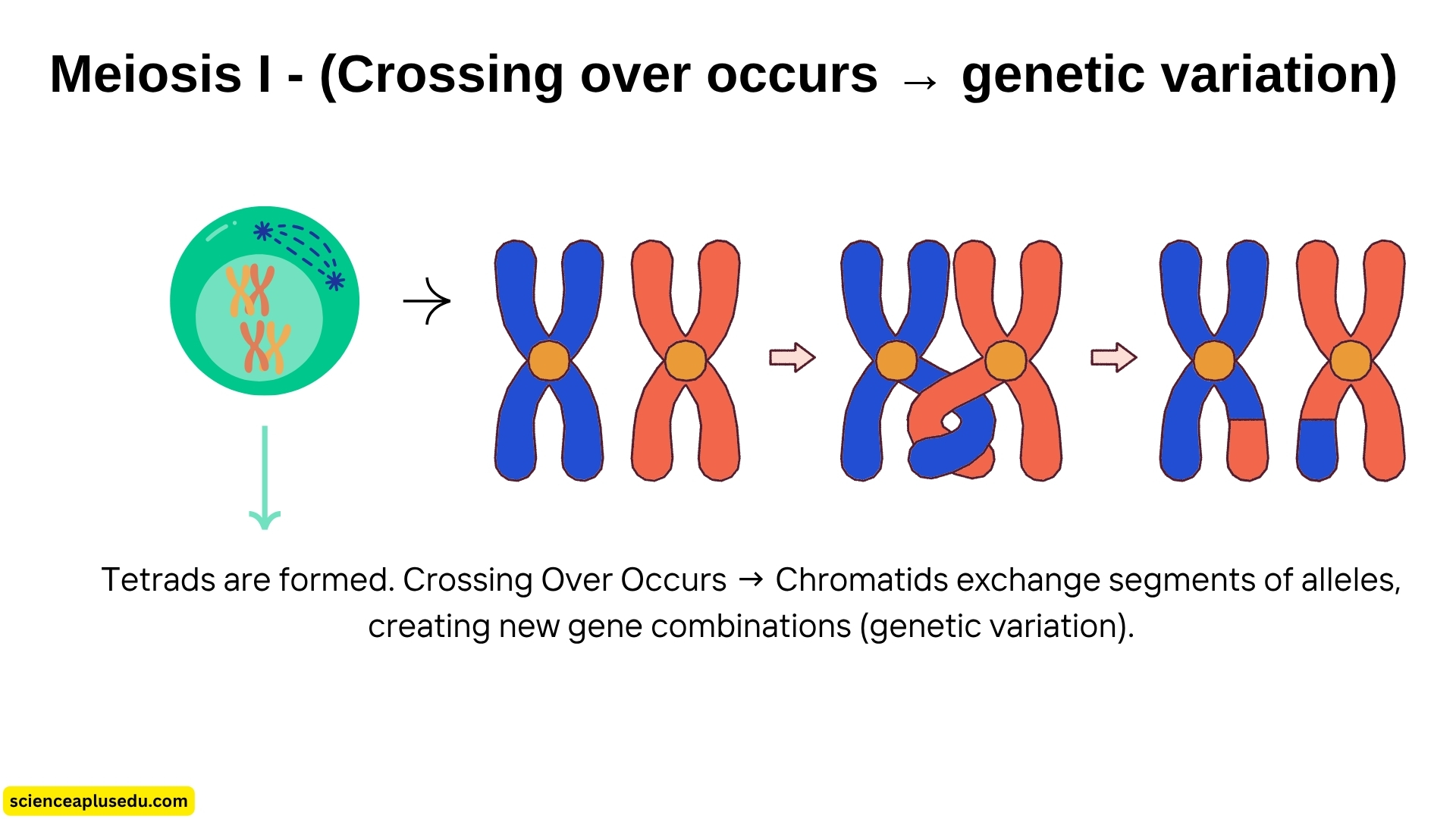
- Crossing over occurs → genetic variation
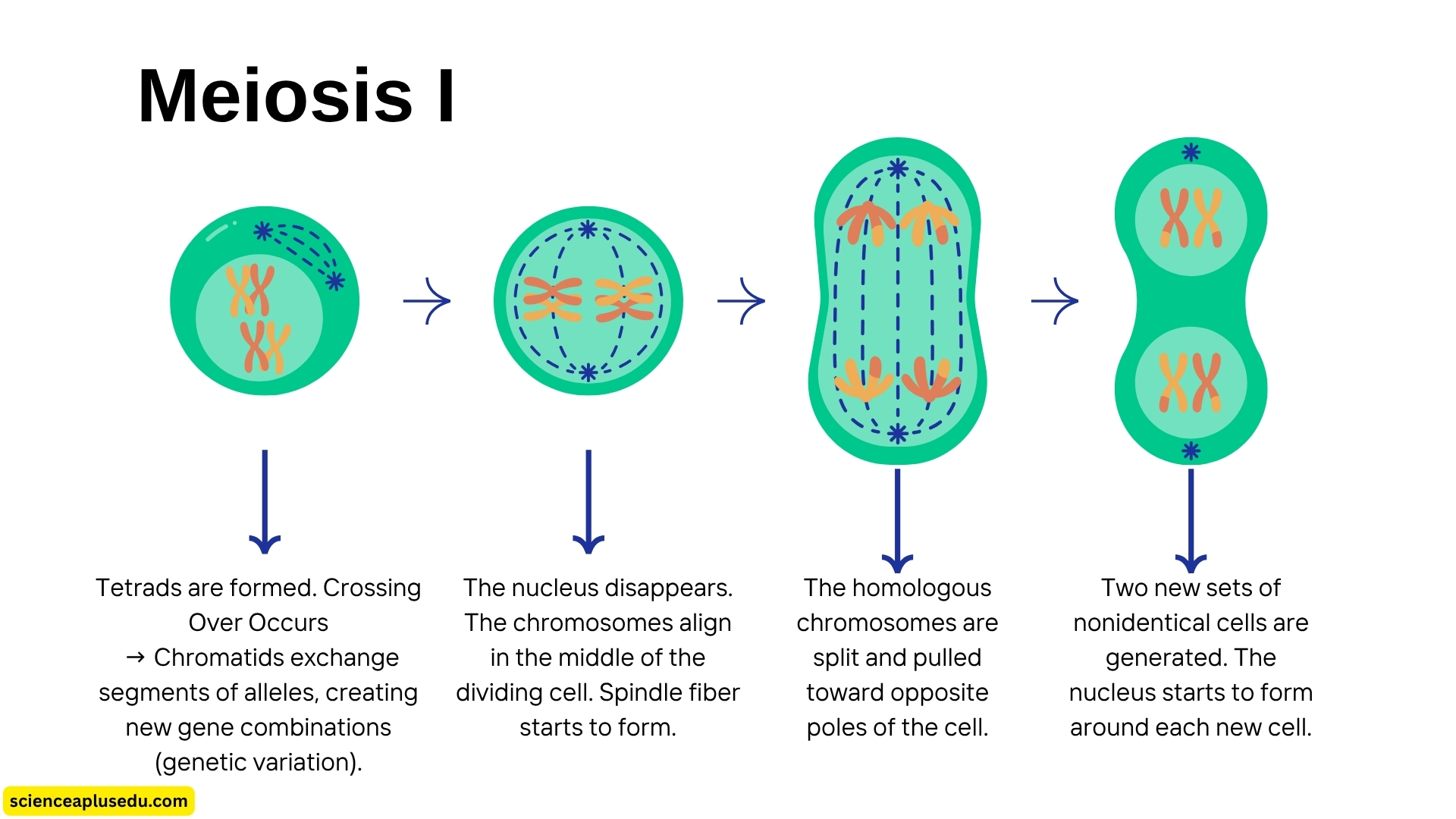
Meiosis I
- Prophase I: Chromosomes condense and become visible. Homologous chromosomes pair up (synapsis). Crossing over occurs, exchanging genetic material. Spindle fibers begin to form.
- Metaphase I: Homologous chromosome pairs line up along the equator of the cell. Spindle fibers attach to each chromosome.
- Anaphase I: Homologous chromosomes separate and move to opposite poles. Sister chromatids remain attached.
- Telophase I: Chromosomes arrive at the poles. The cell divides into two haploid cells (cytokinesis).
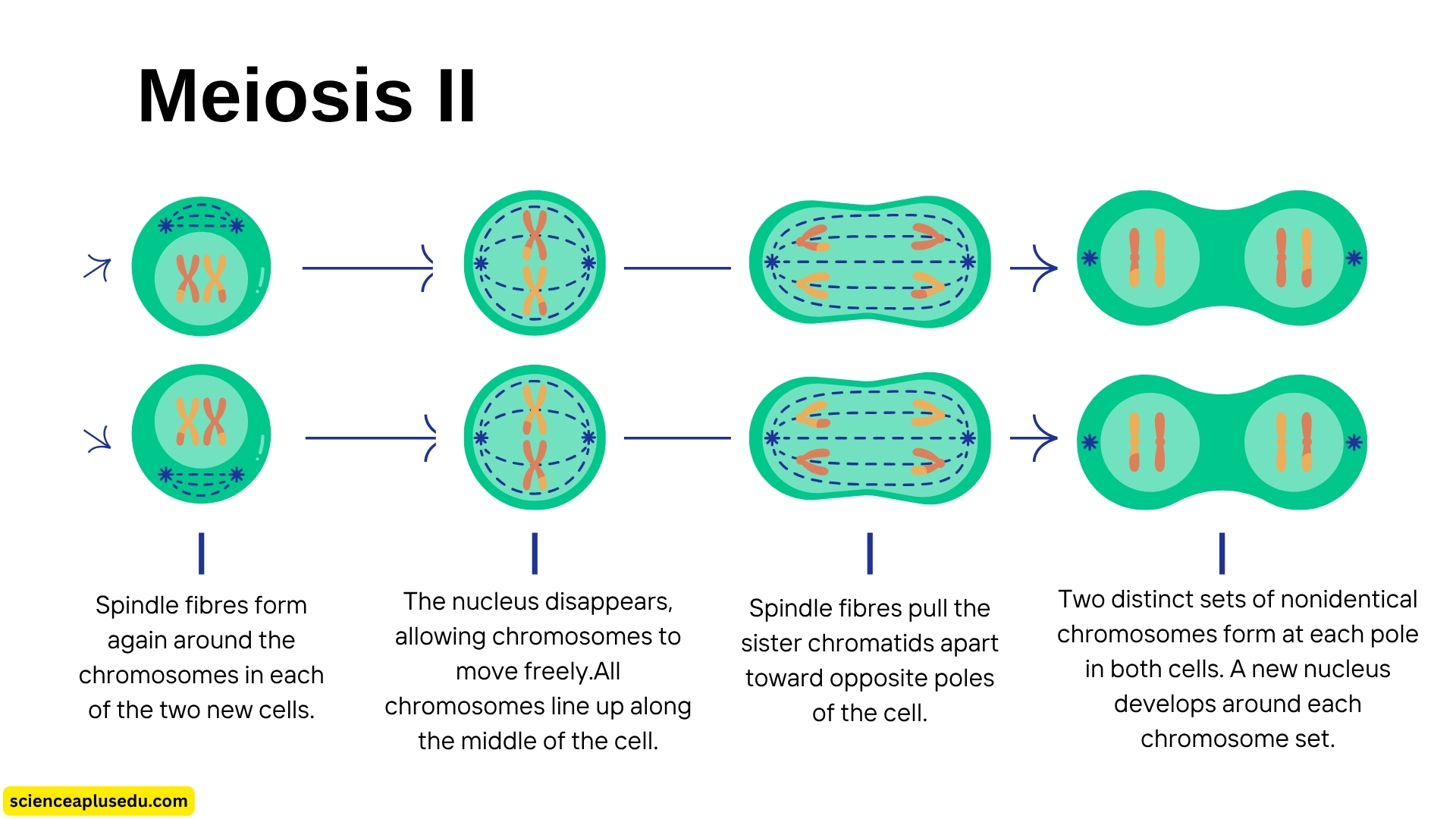
Meiosis II
- Prophase II: Chromosomes condense again in each new cell. Spindle fibers form.
- Metaphase II: Chromosomes line up single file along the equator.
- Anaphase II: Sister chromatids separate and move to opposite poles.
- Telophase II: Chromatids reach the poles. Nuclei reform, and four genetically unique haploid cells are produced after cytokinesis.
📊 Interactive Diagrams
🎴 Interactive Flashcards
Click on any card to flip and reveal the answer
📝 Test Your Knowledge
Answer the following questions to test your understanding of cell division and growth. Click "Submit Quiz" when you're done to see your results!
Your Score:
📄 Downloadable Worksheets
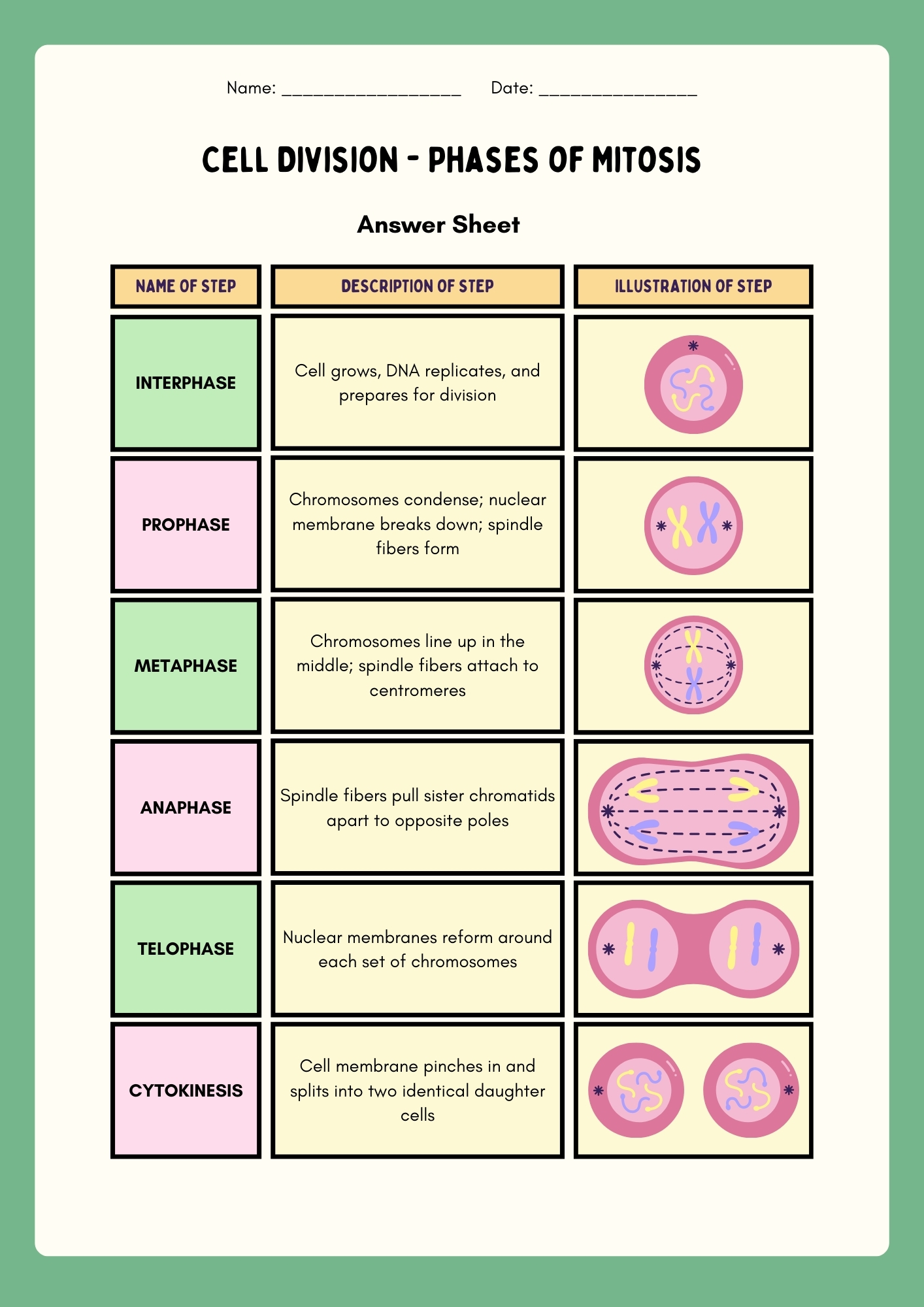
Phases of Mitosis - Table Activity (Answers)
Complete answer sheet for the phases of mitosis table activity showing all stages with descriptions and illustrations.
Download with Answers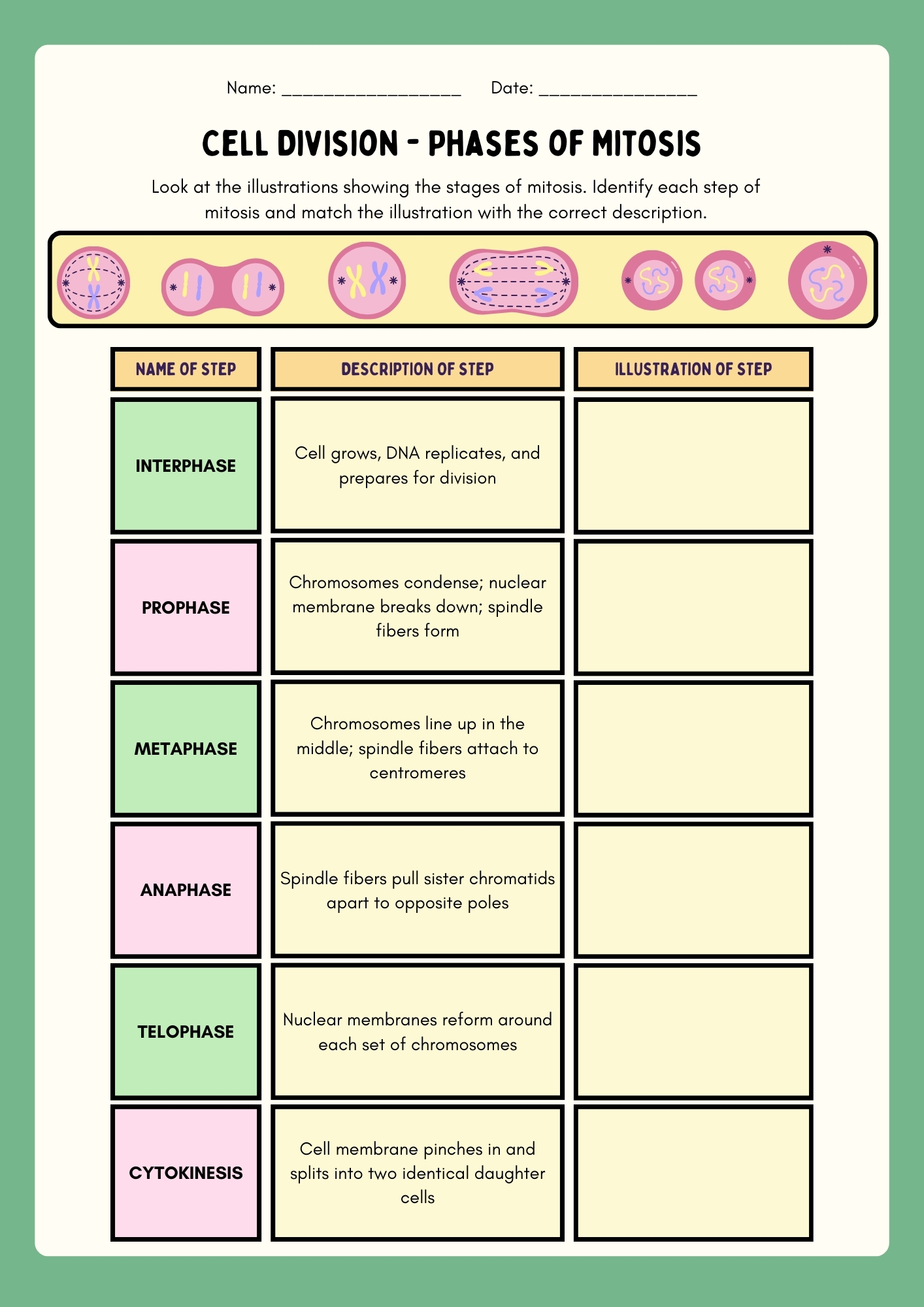
Phases of Mitosis - Matching Activity
Match each phase of mitosis with the correct illustration and description. Great for visual learners!
Download Worksheet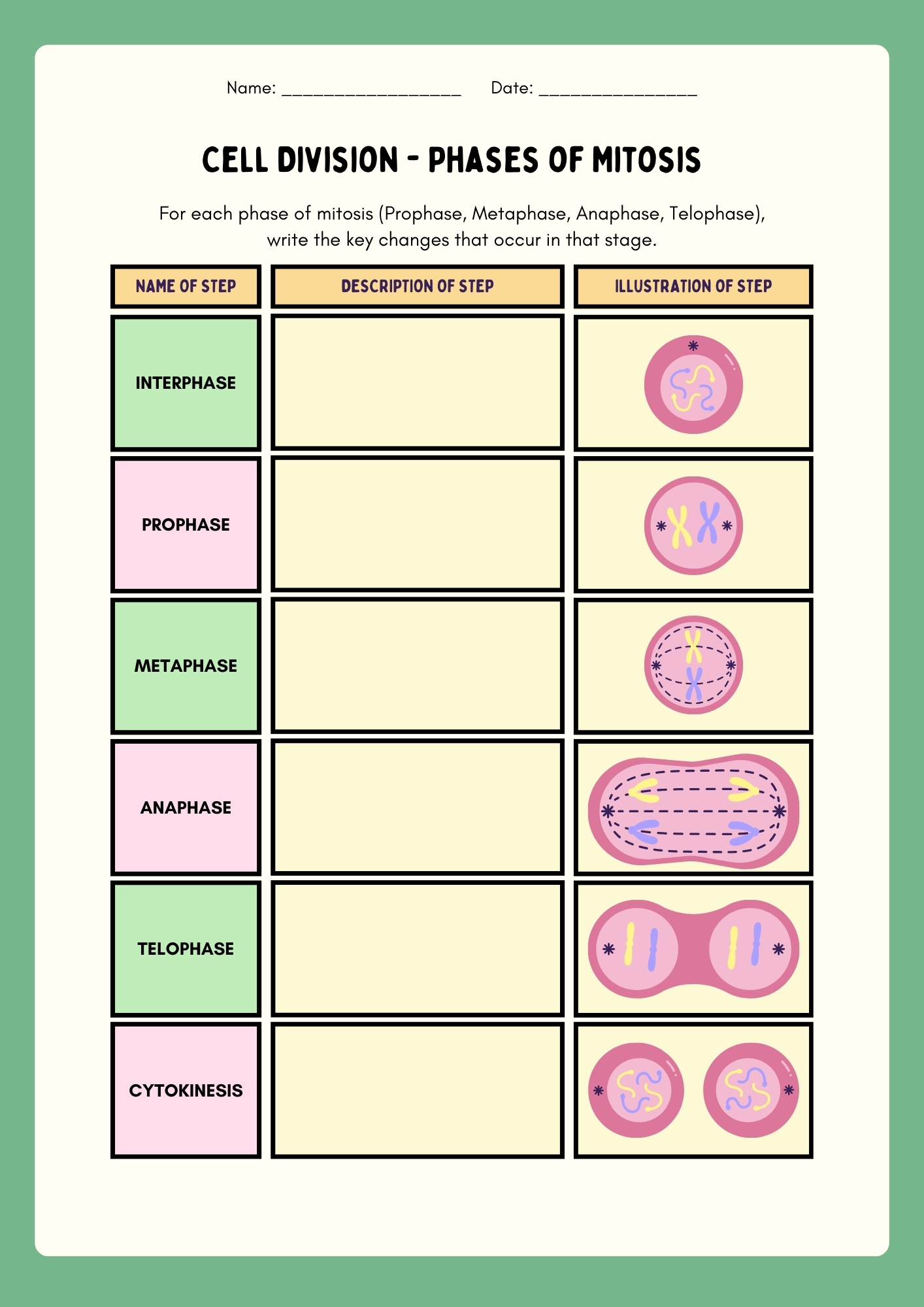
Mitosis Key Changes Activity
Write the key changes that occur during each phase of mitosis in the provided spaces.
Download Worksheet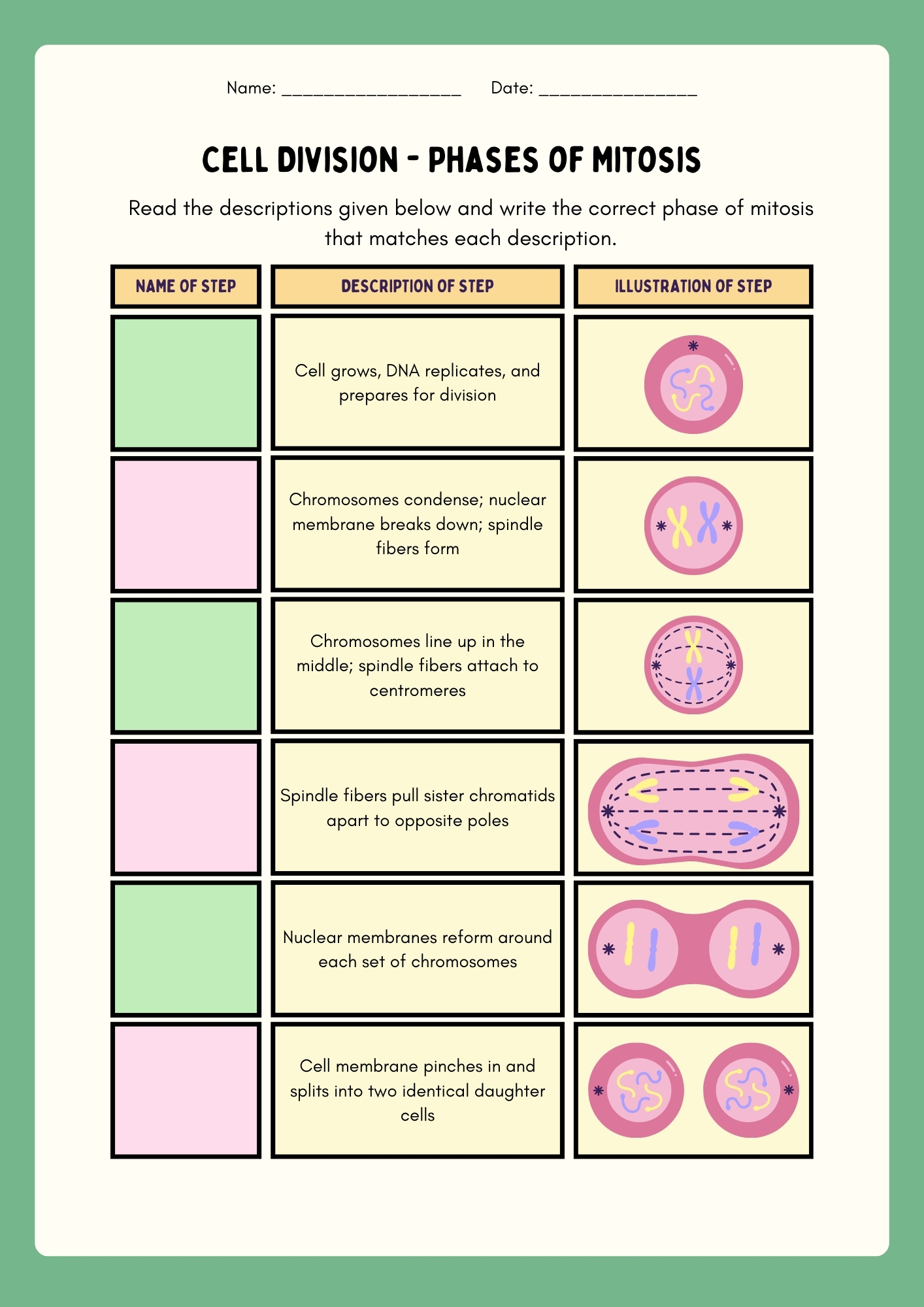
Identify Mitosis Phases
Read the descriptions and write the correct phase name of mitosis for each stage.
Download Worksheet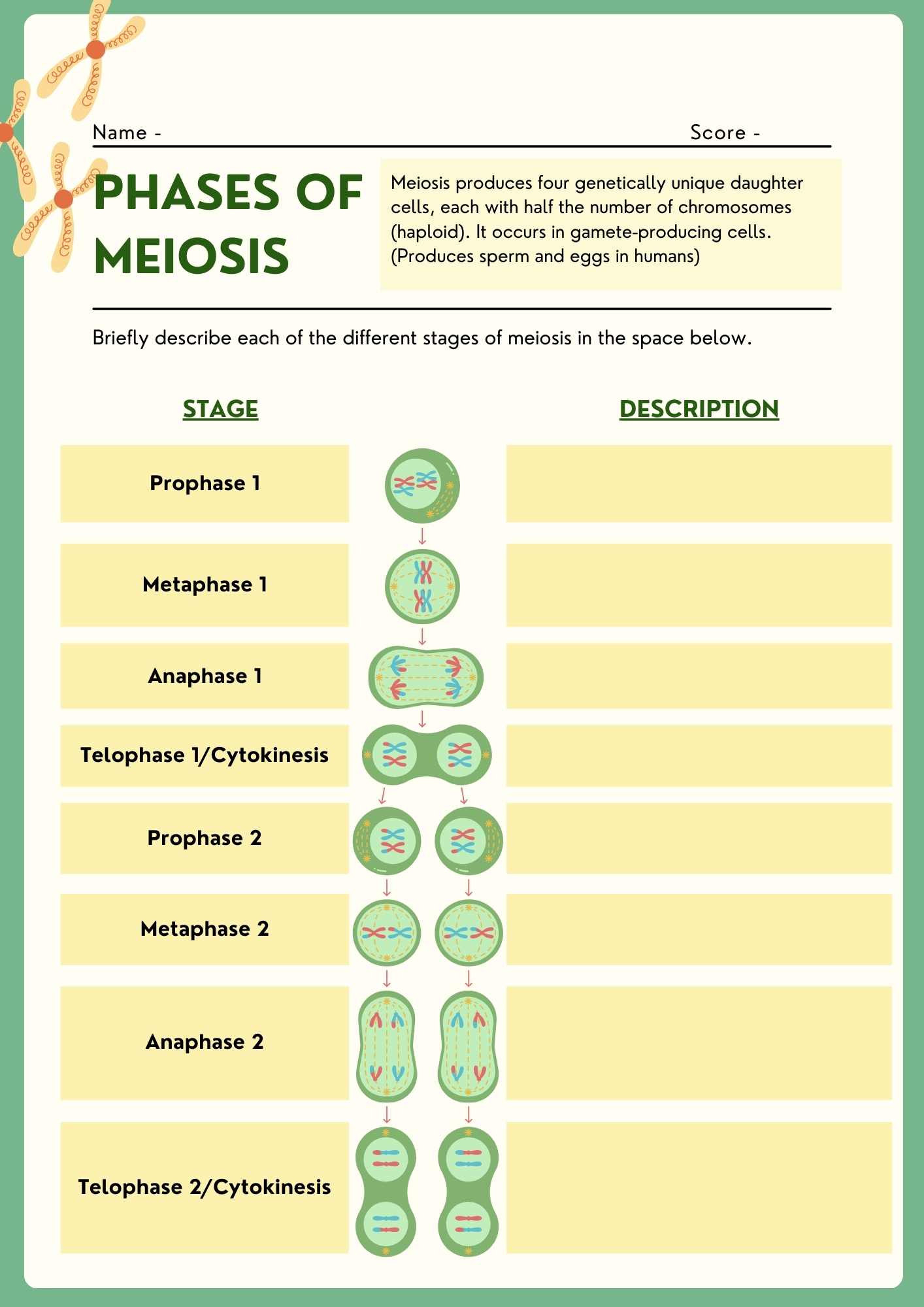
Mitosis Chart Fill Activity
Fill in the chart with information about each stage of mitosis based on the provided illustrations.
Download Worksheet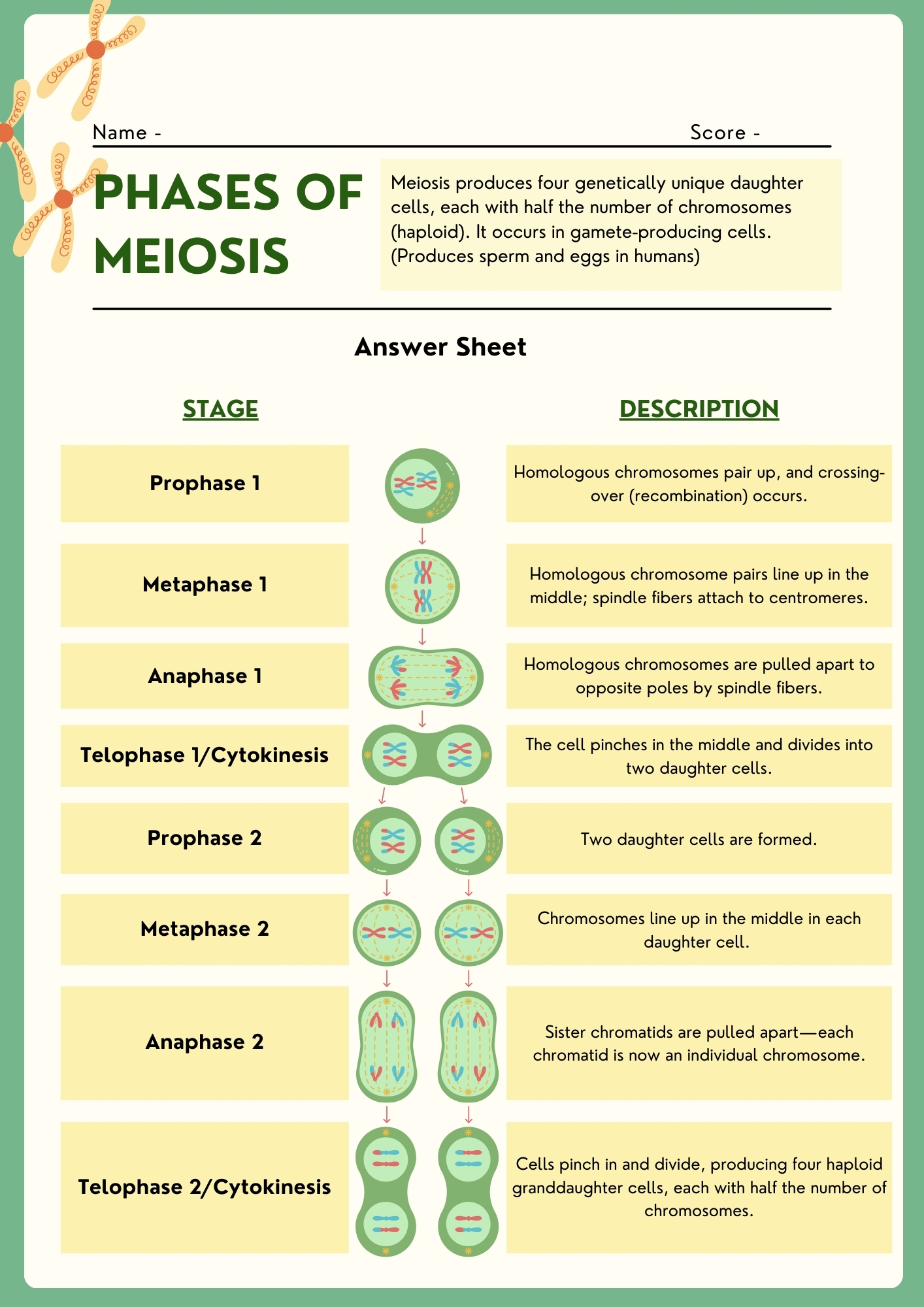
Mitosis Chart - Answer Key
Complete answer key for the mitosis chart activity with all stages fully described.
Download Answers