📖 Lesson: The Nervous System
Discover the body's control center and communication network - Grade 9-10
🎮 Interactive Games
Test your knowledge about the human nervous system
🧠 The Human Nervous System: Parts, Functions and the Reflex Arc
What the nervous system does
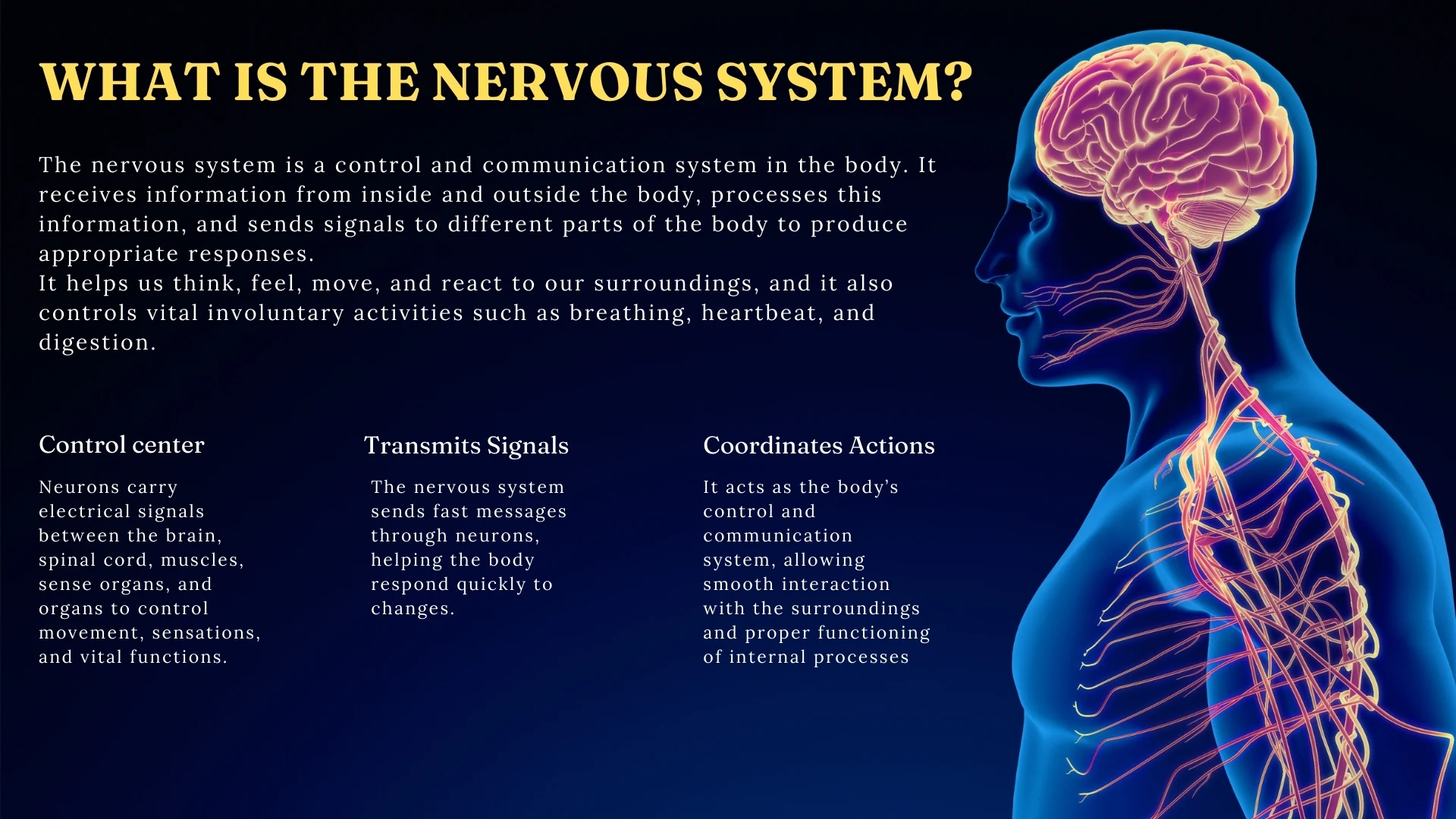
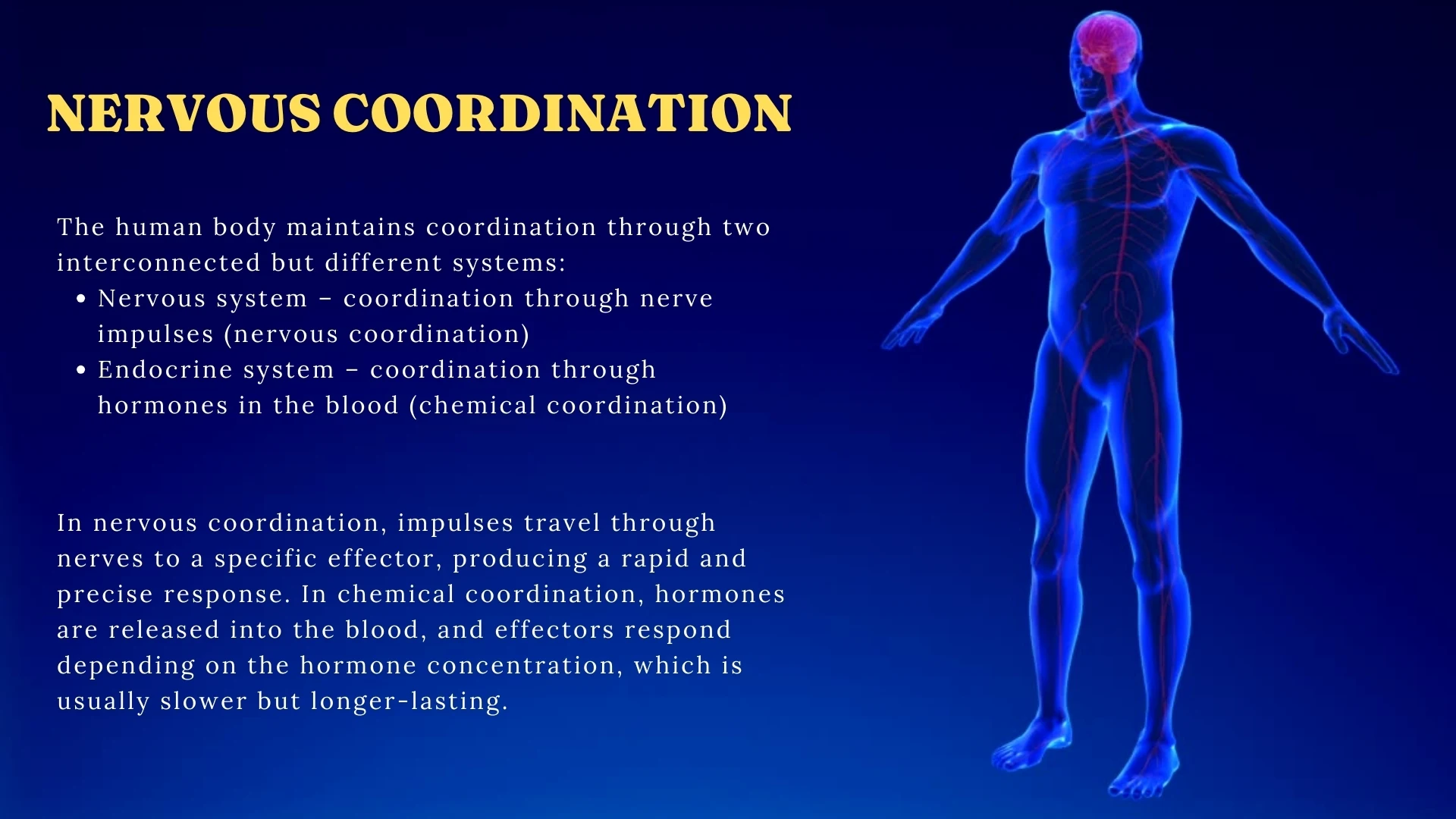
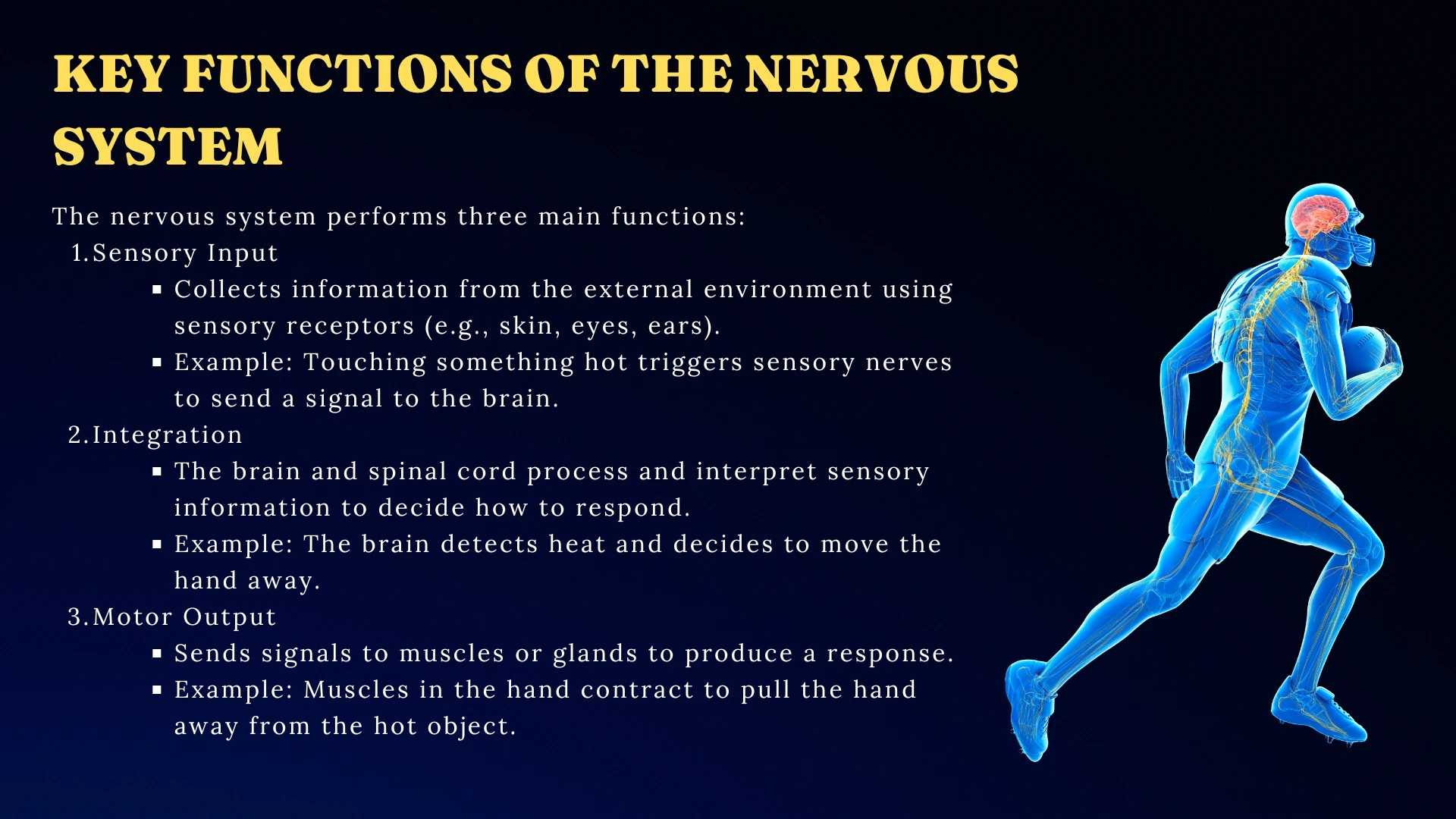
The nervous system is the body's fast communication and control network. It detects changes inside and outside the body, called stimuli, decides what to do about them, and sends instructions to the muscles and glands that carry out the response. It does all of this with electrical impulses travelling along specialised cells called neurones (also spelled neurons), and a message can cross the body in a few thousandths of a second. That speed is what separates nervous control from hormonal control, which sends slower chemical messages in the blood.
Central and peripheral nervous systems
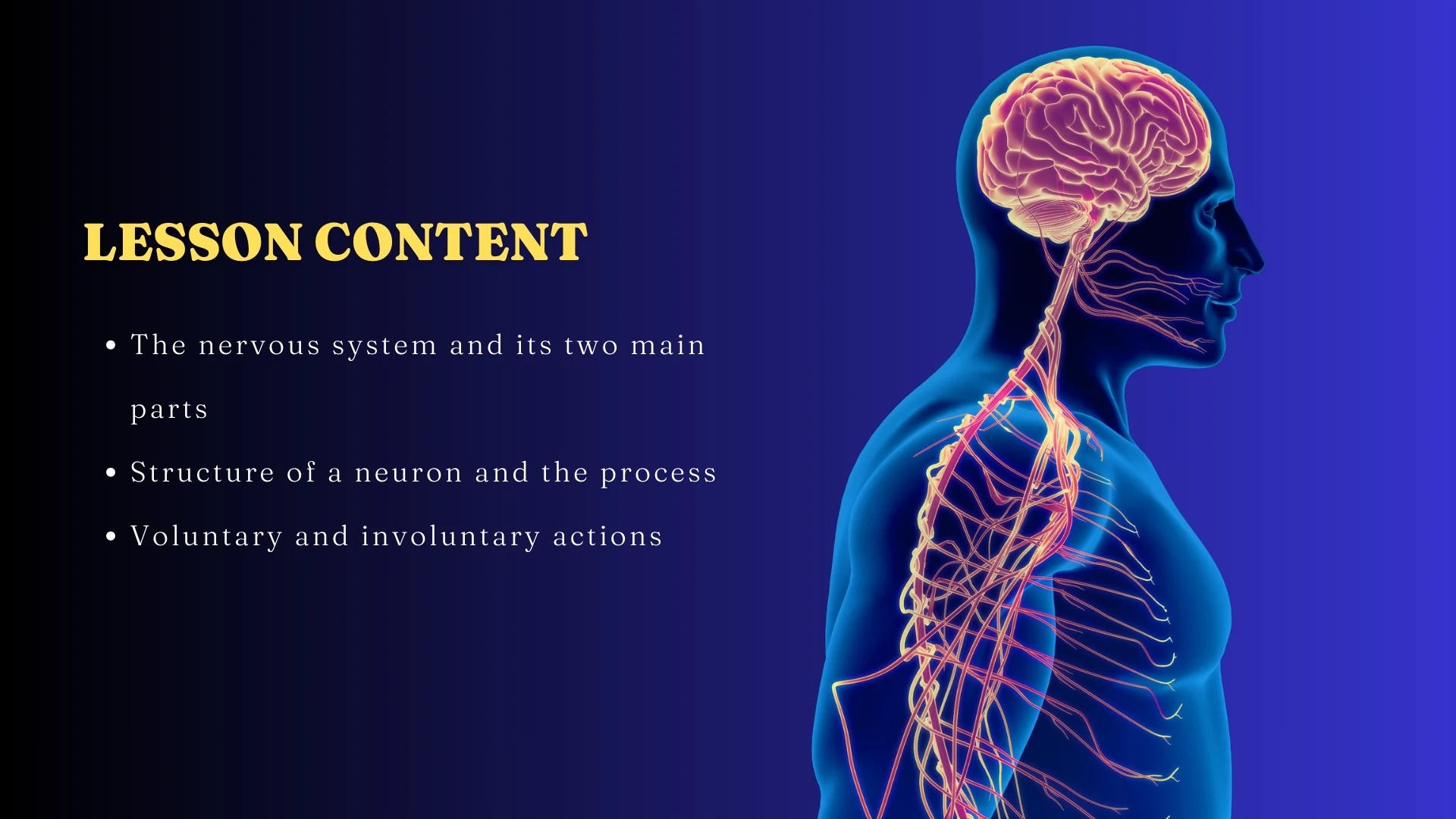
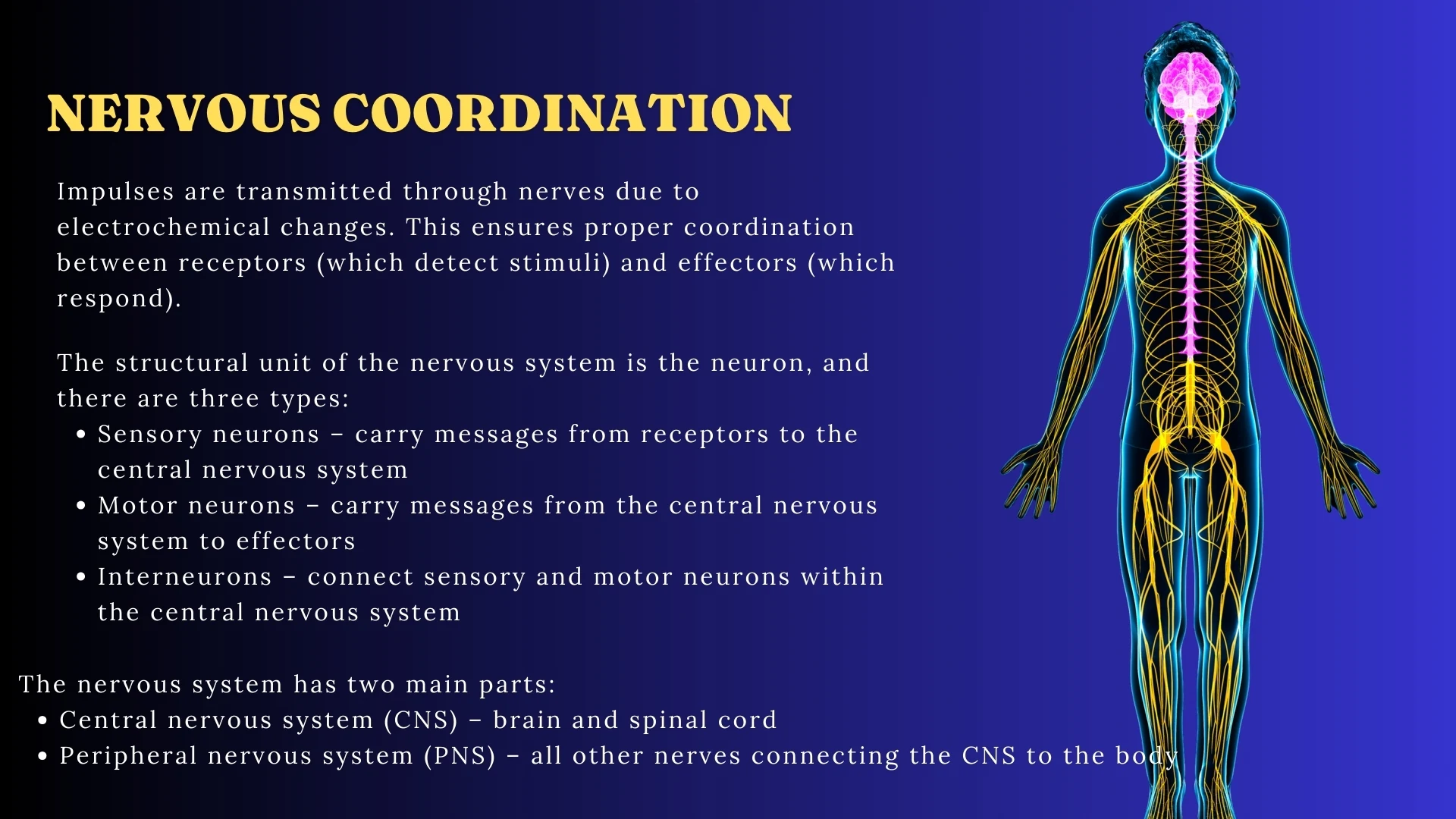
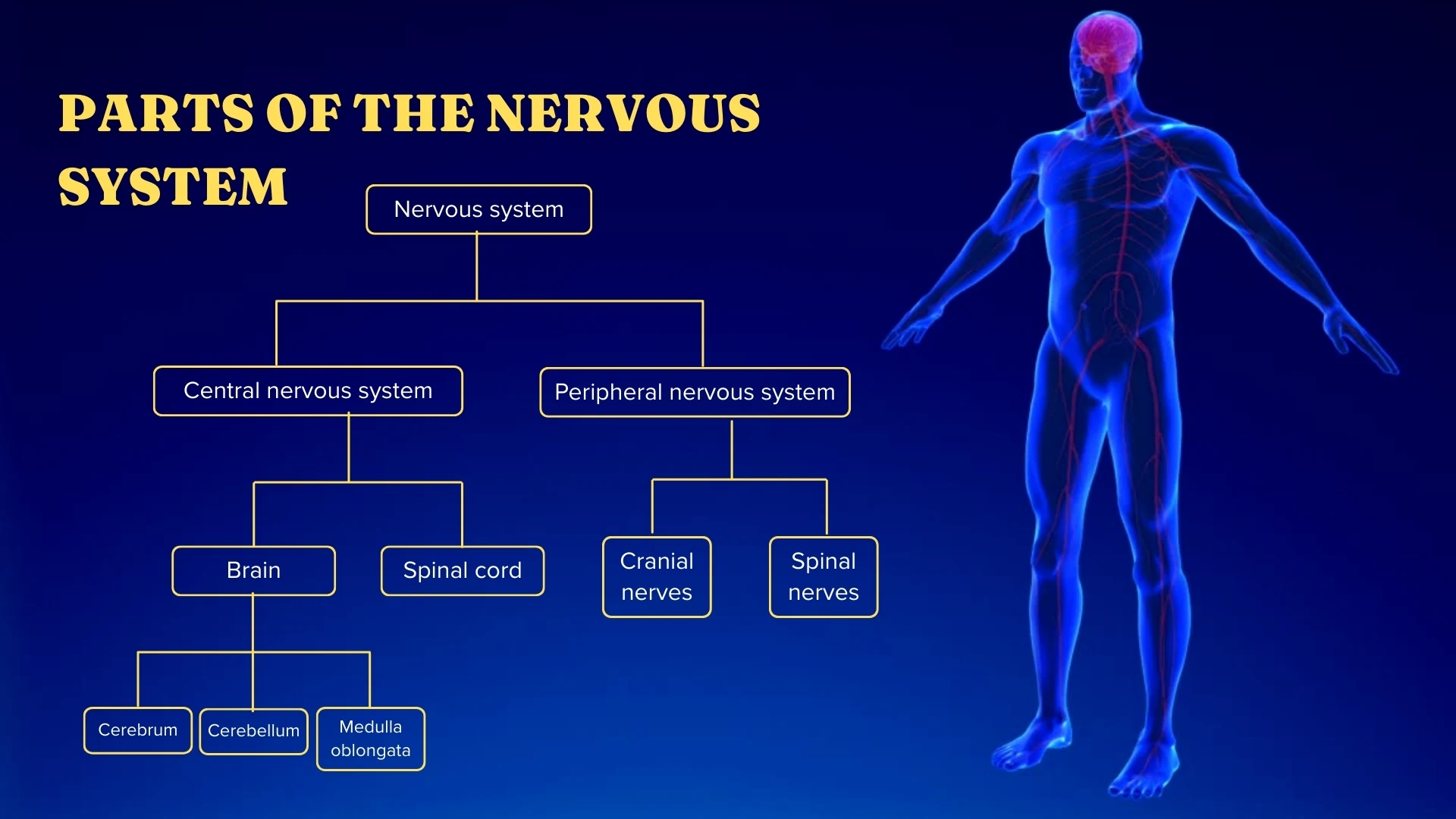
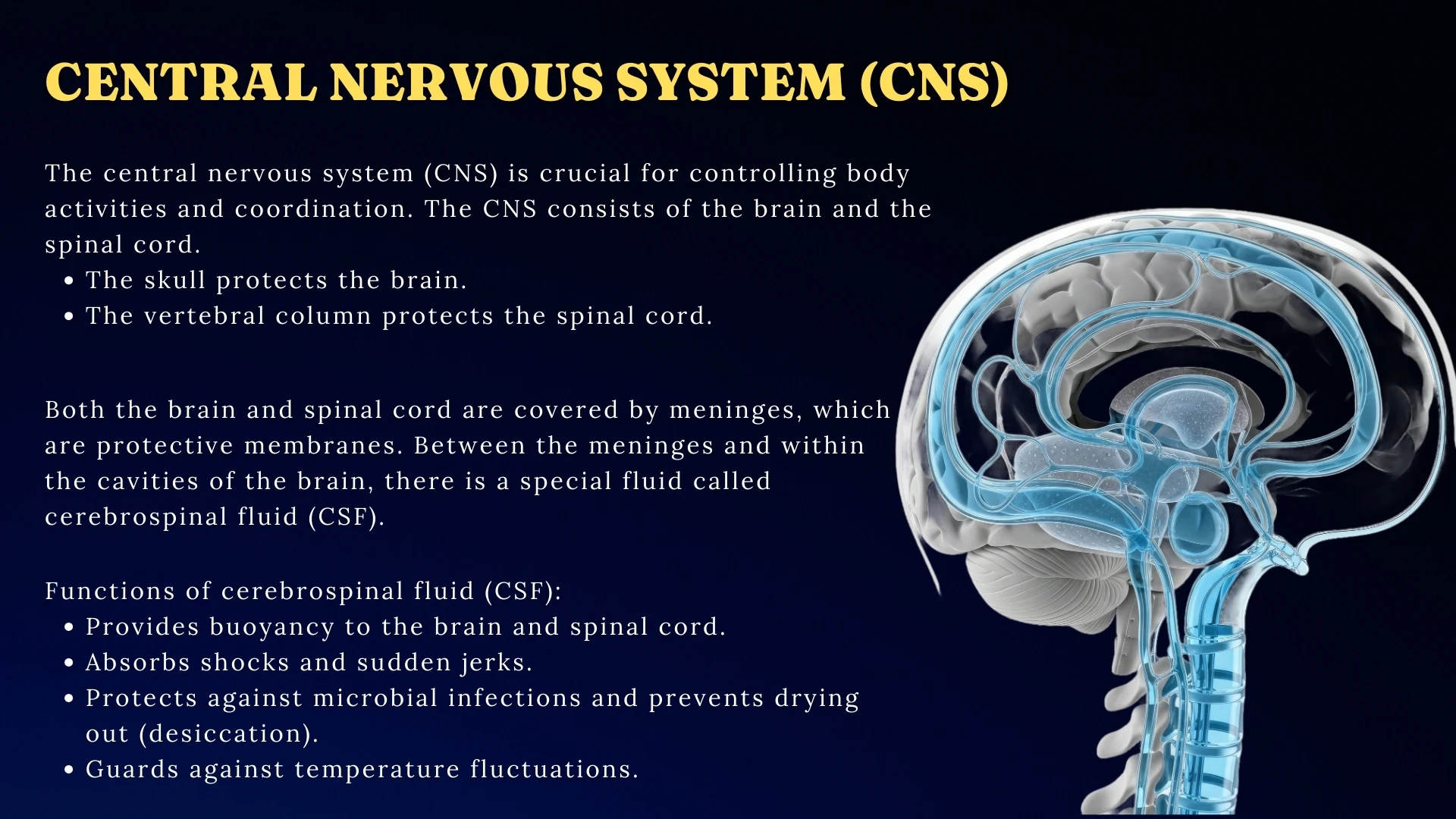
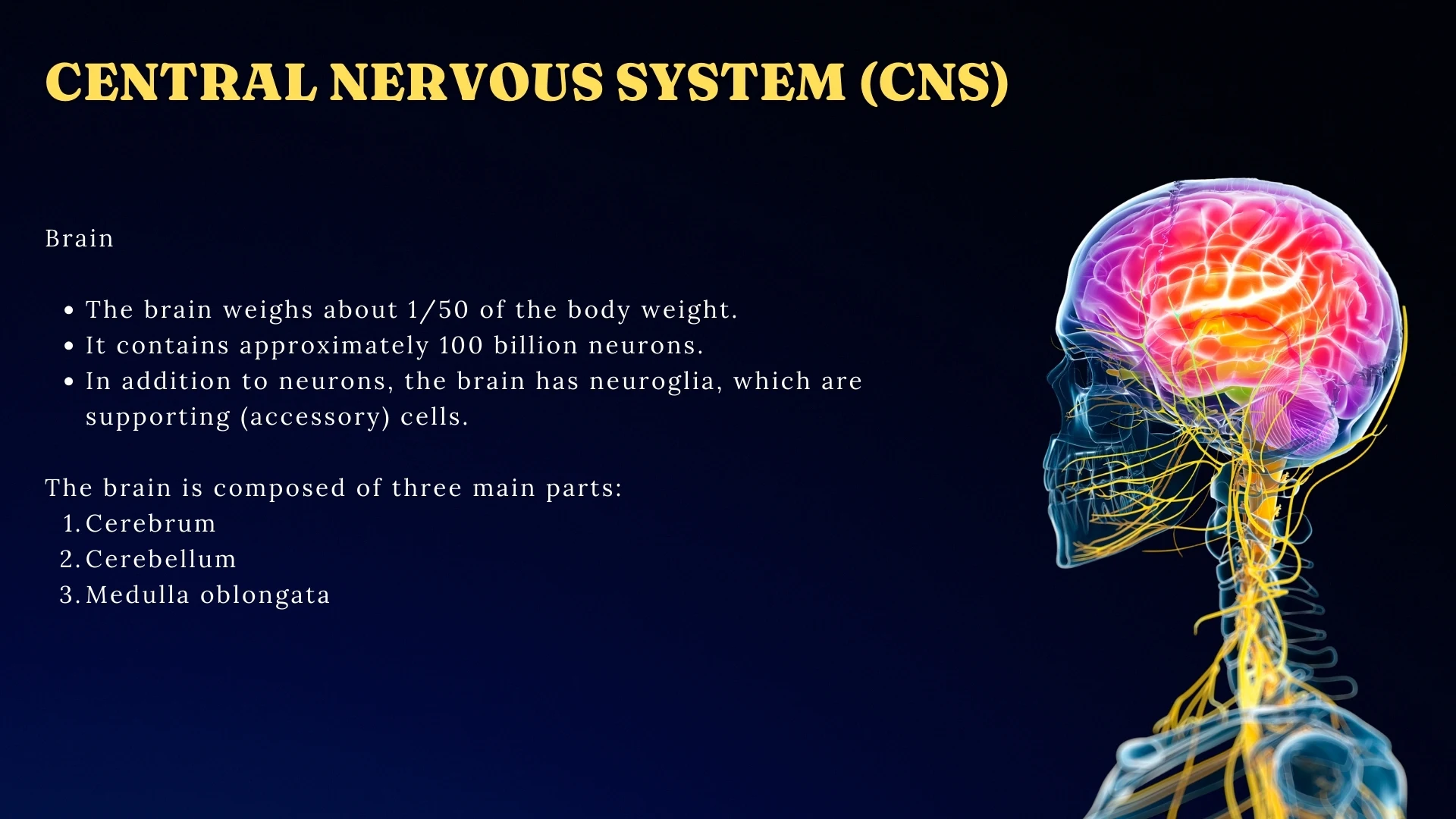
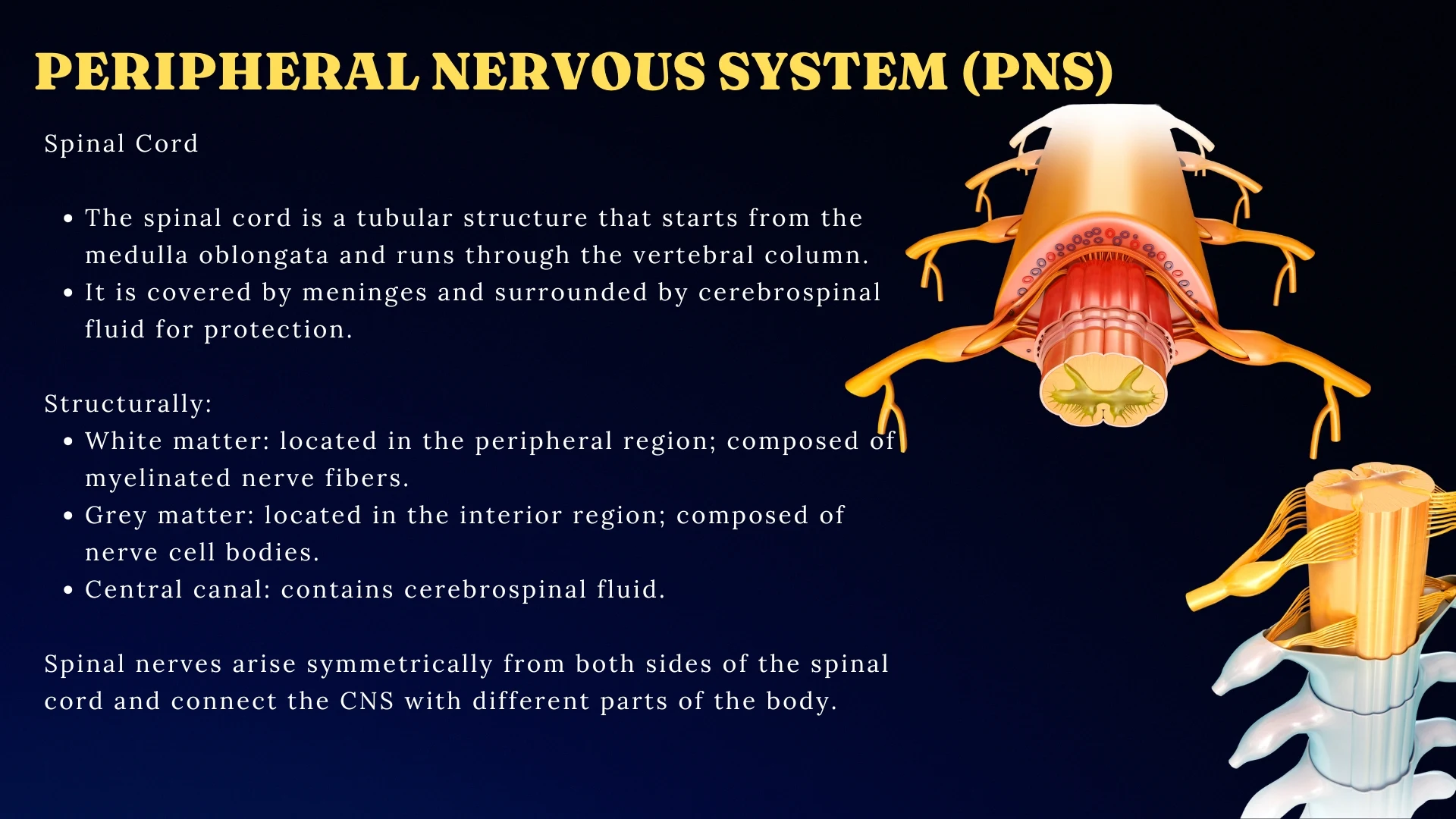
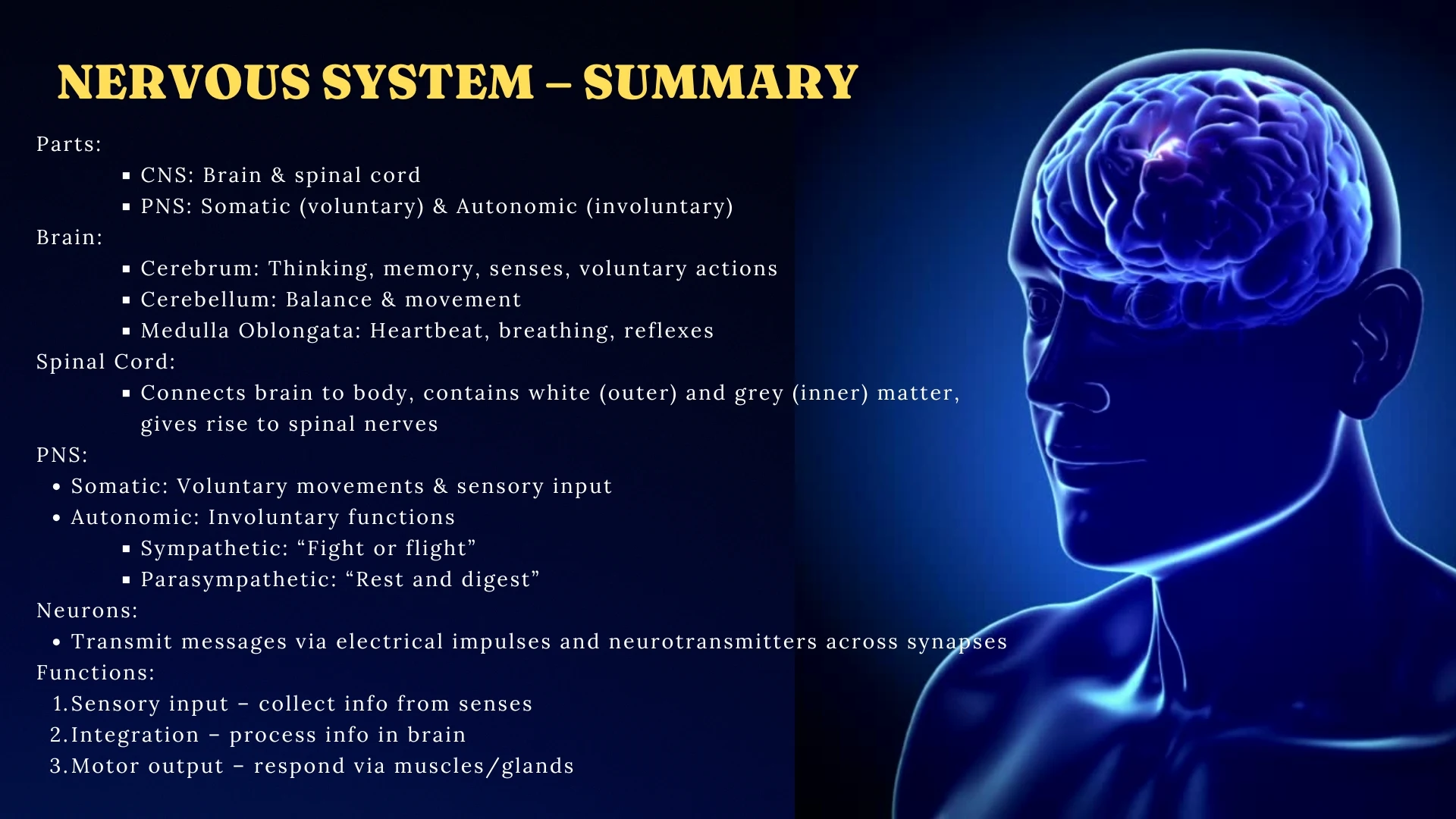
The system has two main divisions. The central nervous system, or CNS, consists of the brain and the spinal cord. It is the processing centre: every piece of sensory information is sent here and every instruction starts here. Both parts are well protected, the brain by the skull and the spinal cord by the bones of the backbone.
The peripheral nervous system, or PNS, is everything outside the brain and spinal cord: the nerves that run out to every part of the body. A nerve is a bundle of many neurone fibres wrapped together, like wires in a cable. Twelve pairs of cranial nerves leave the brain directly and thirty-one pairs of spinal nerves branch off the spinal cord. The PNS carries information from the sense organs into the CNS and carries instructions from the CNS out to the muscles and glands.
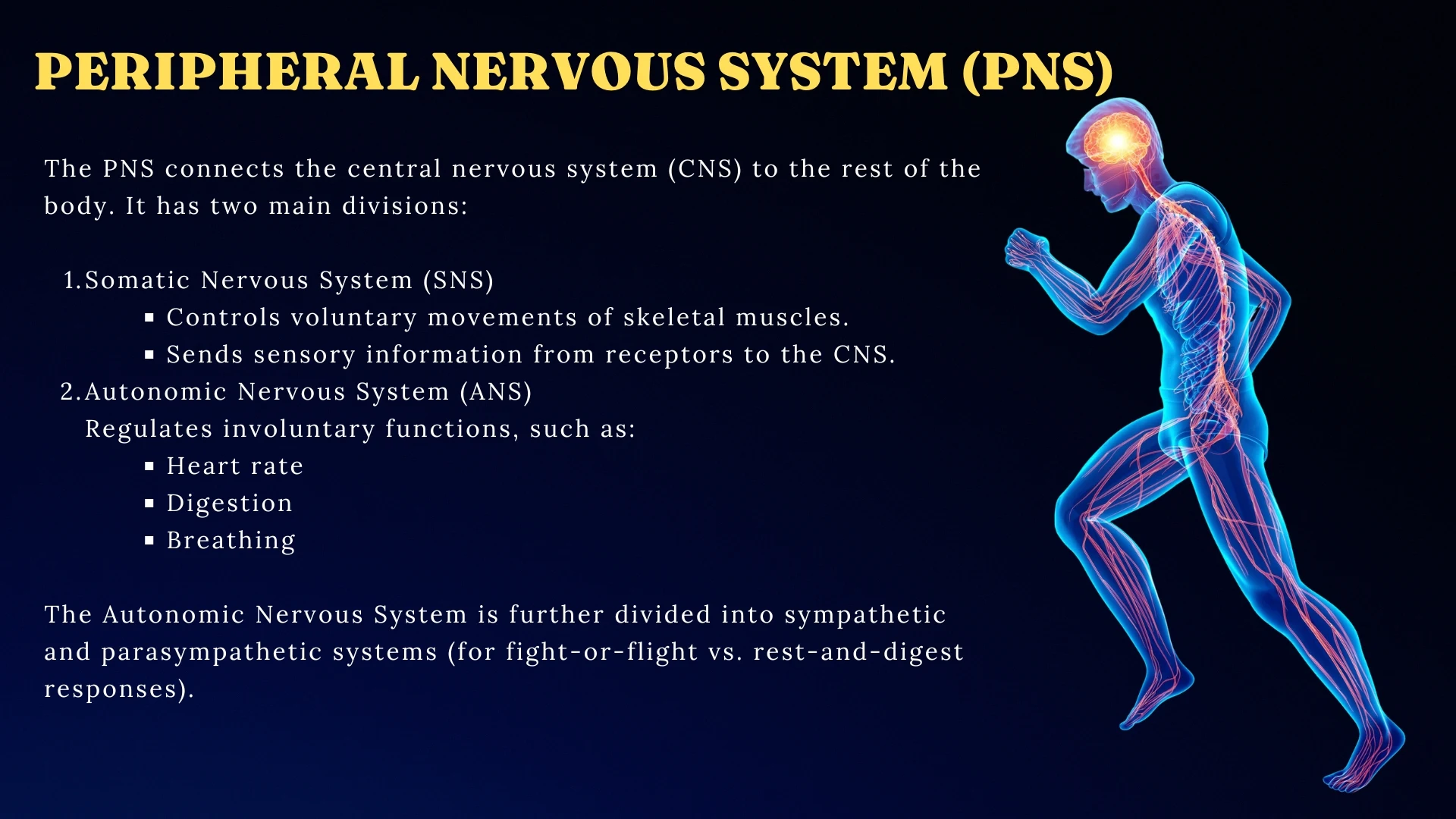
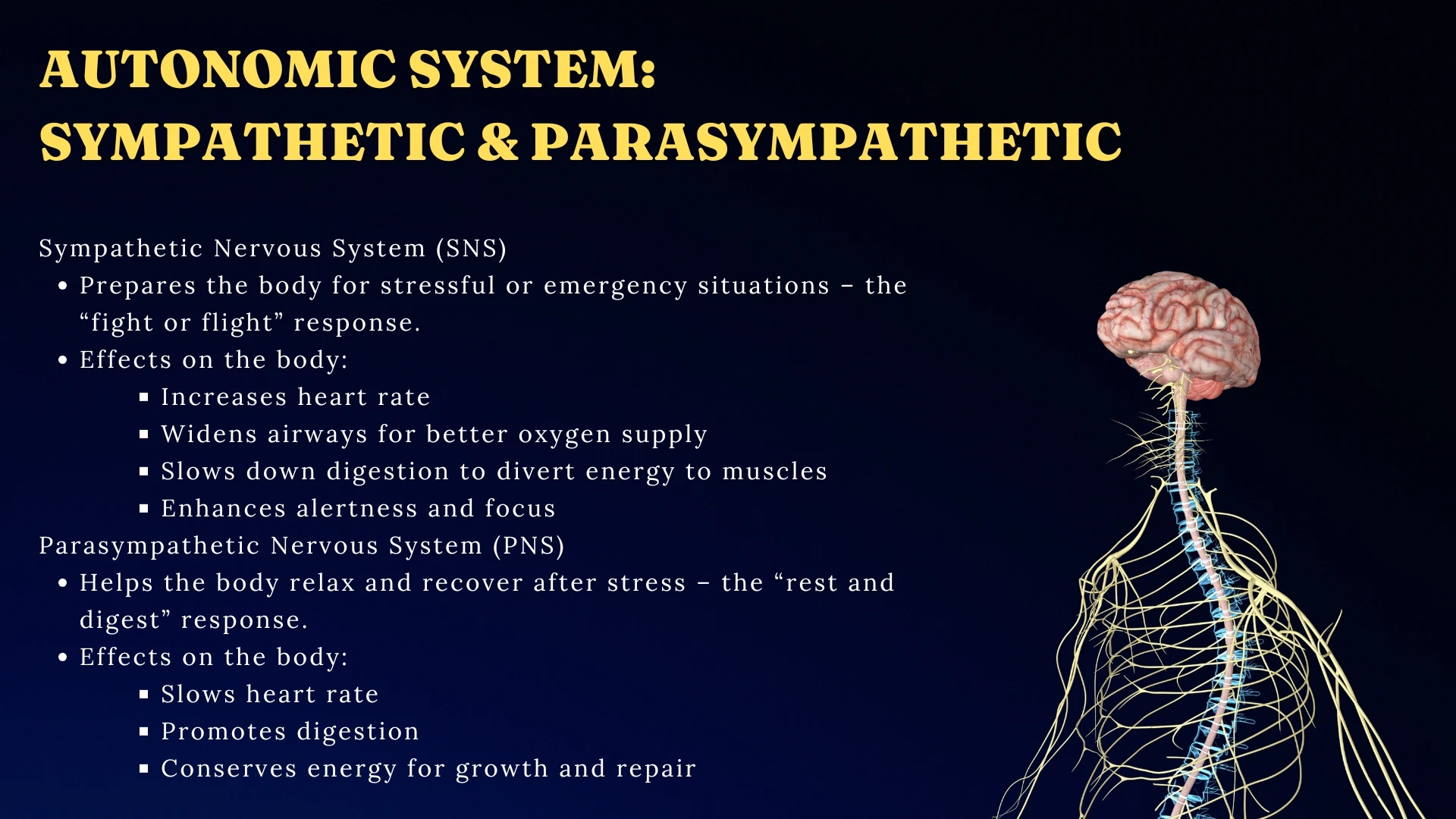
The PNS is itself split by function. The somatic part deals with the things you control deliberately, such as moving your skeletal muscles. The autonomic part controls things that happen without conscious thought, such as heart rate, breathing, digestion and pupil size. The autonomic system has two branches that work against each other: the sympathetic branch prepares the body for action, speeding up the heart and slowing digestion, and the parasympathetic branch calms the body down and restores normal activity.
The main parts of the brain
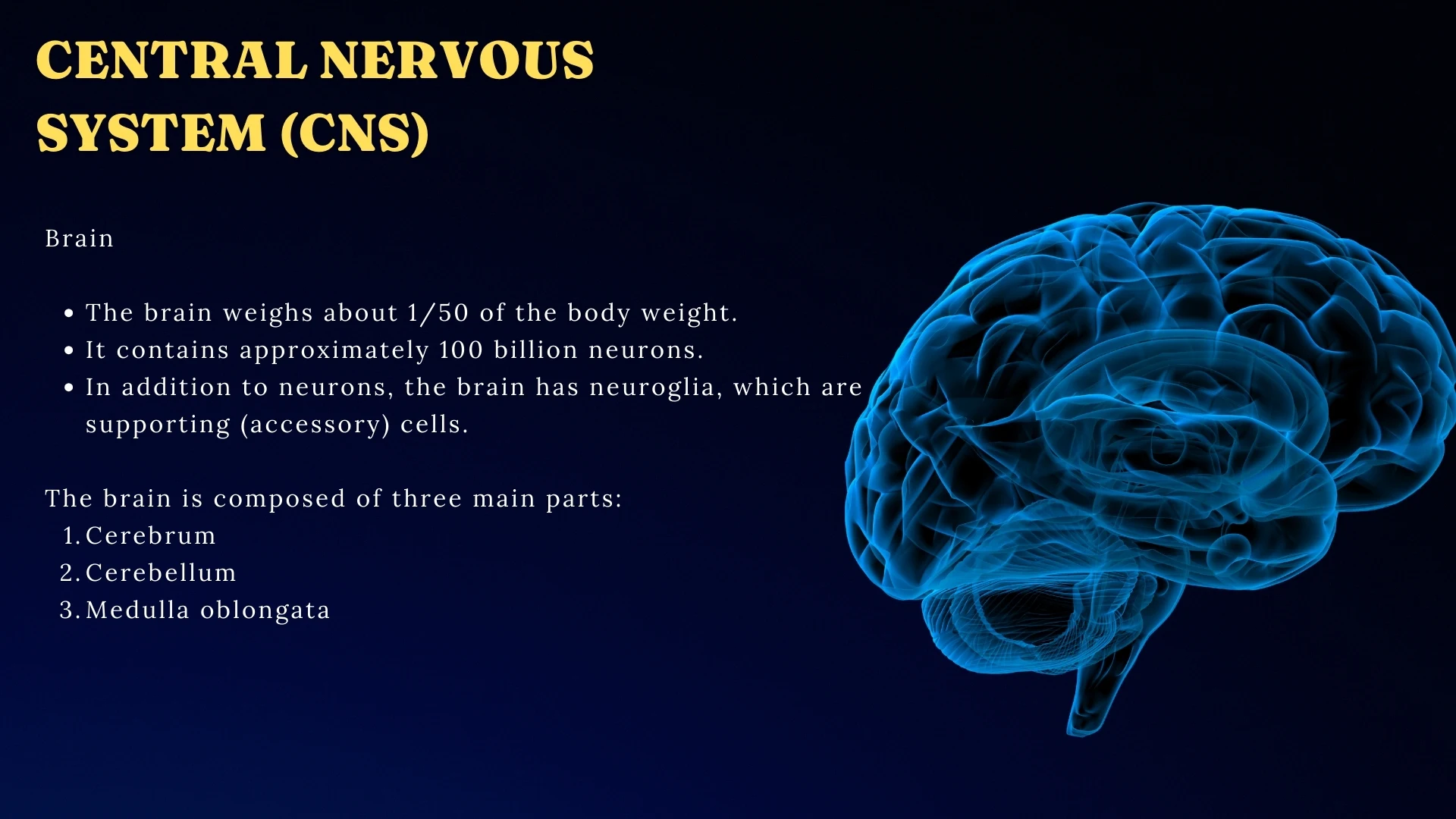
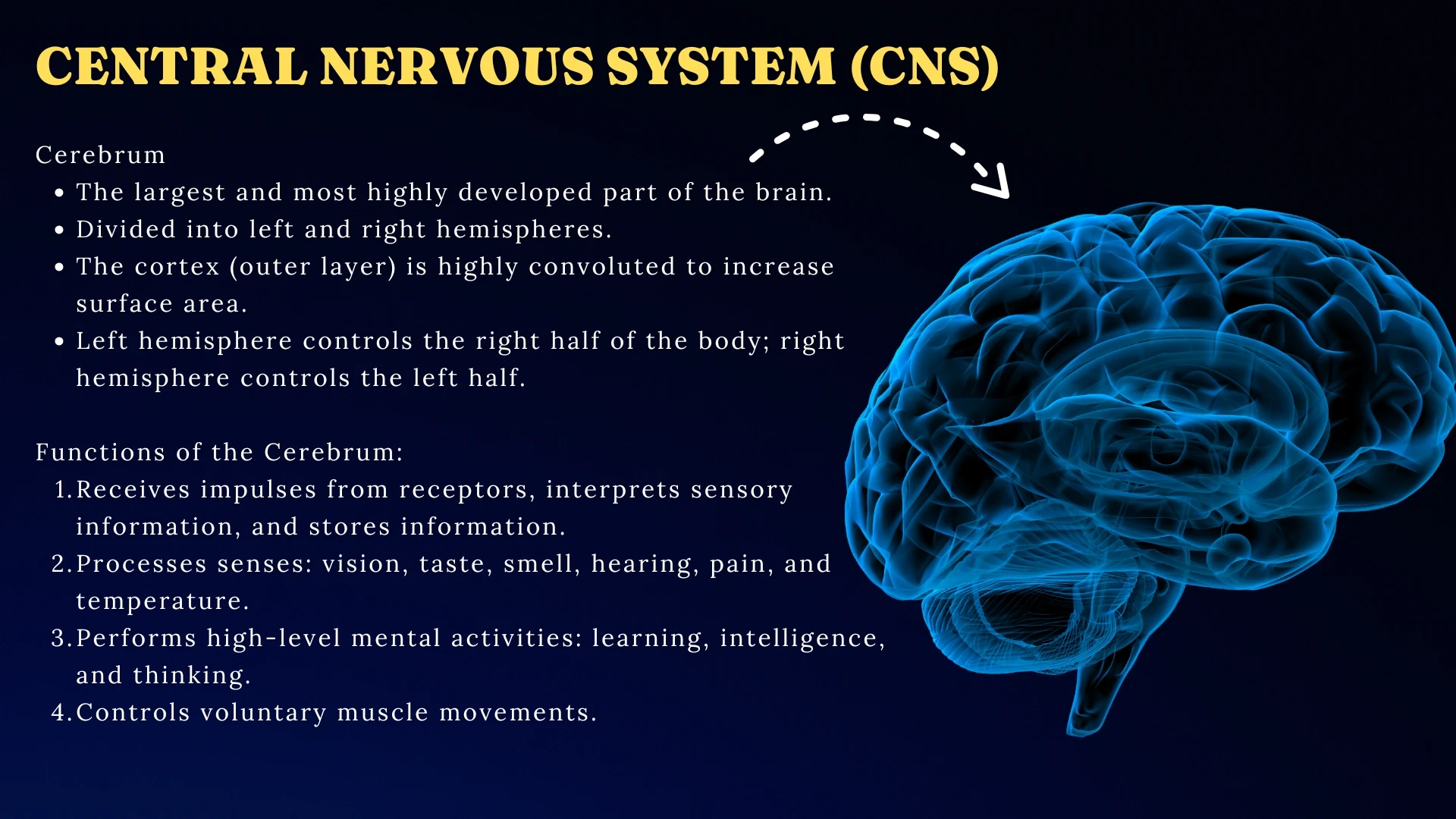
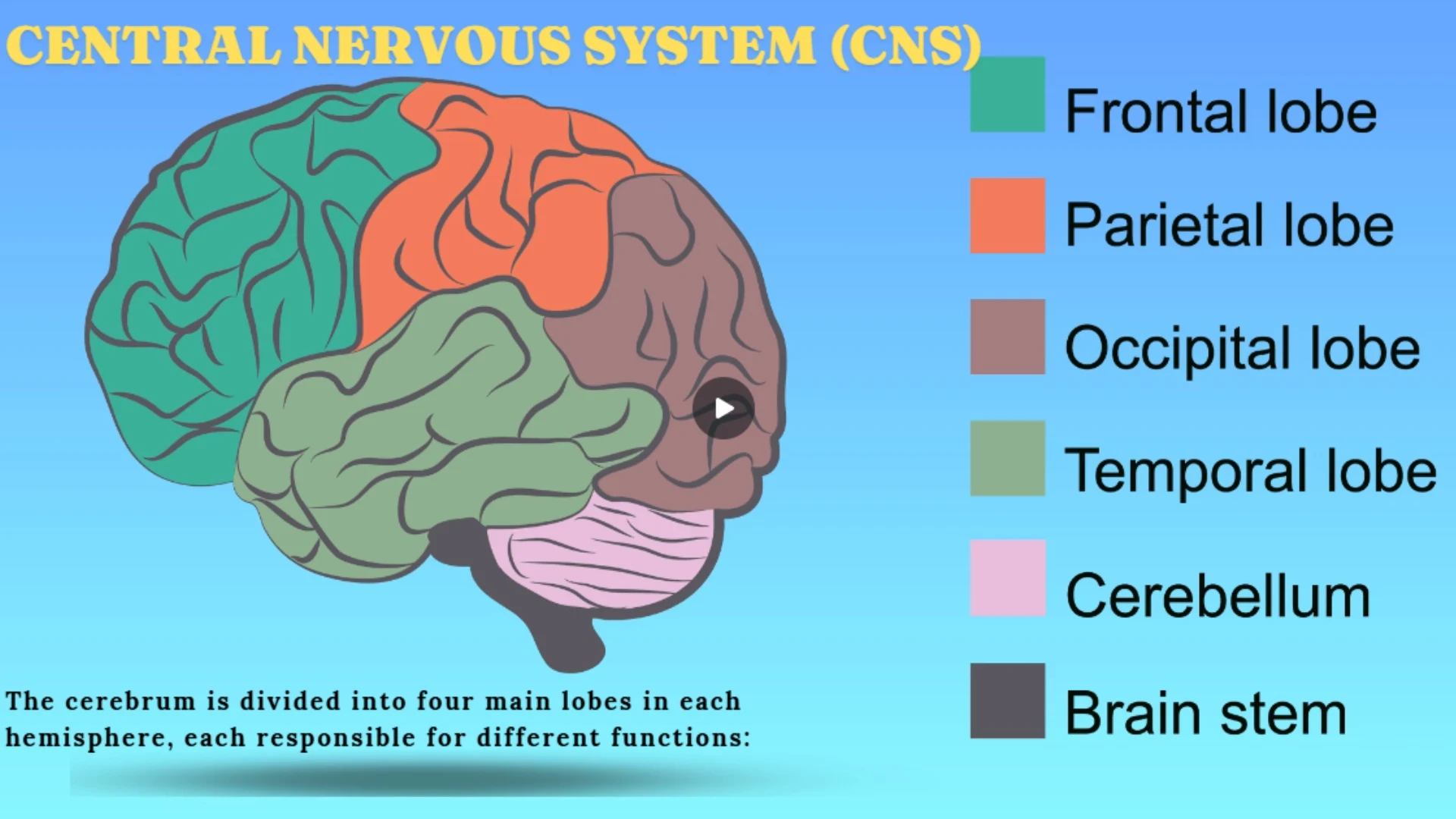
- The cerebrum is the large, folded upper part and is divided into two hemispheres. It handles conscious thought, memory, language, the senses and voluntary movement.
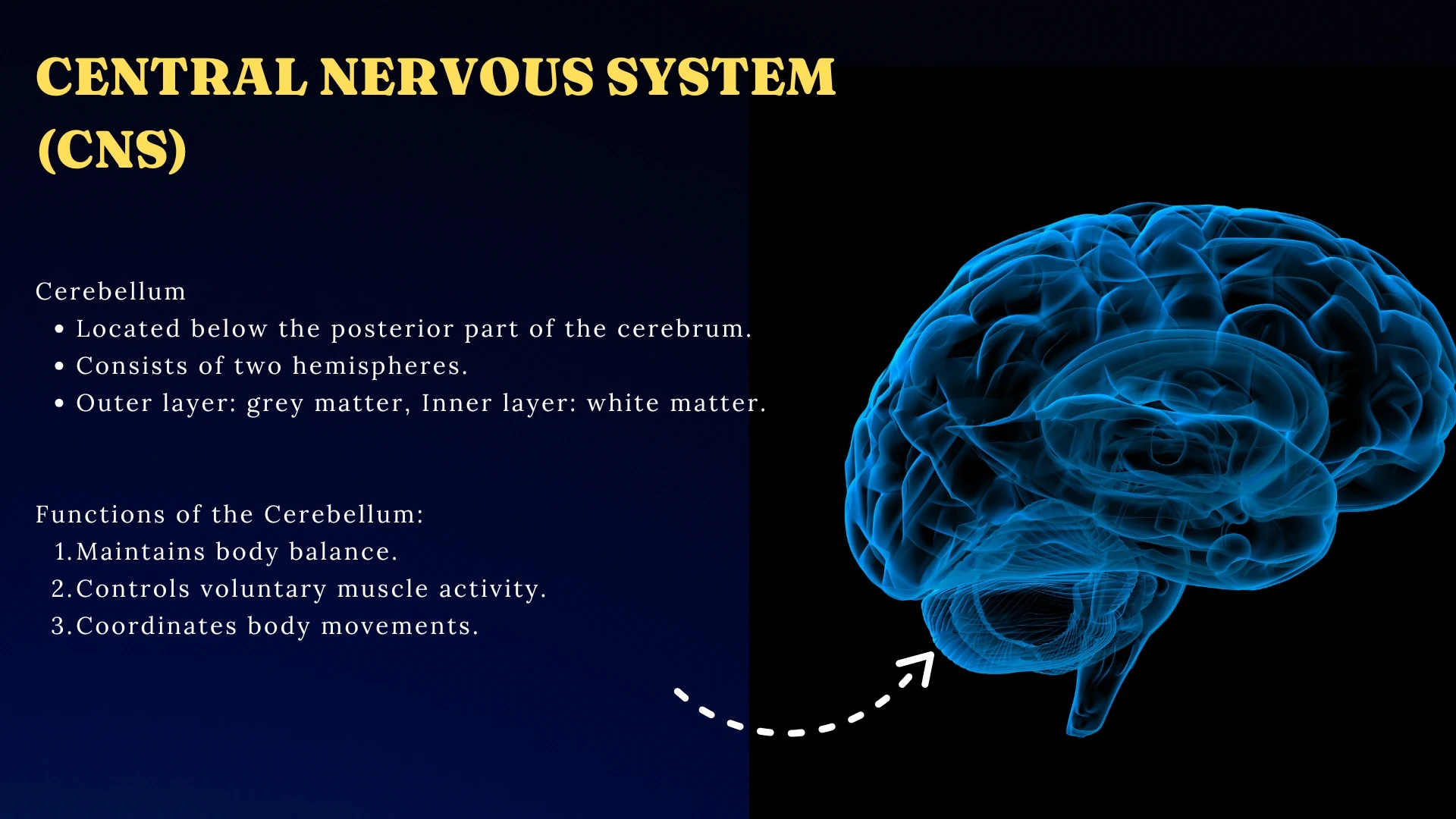
- The cerebellum, tucked underneath at the back, coordinates movement and keeps balance and posture.
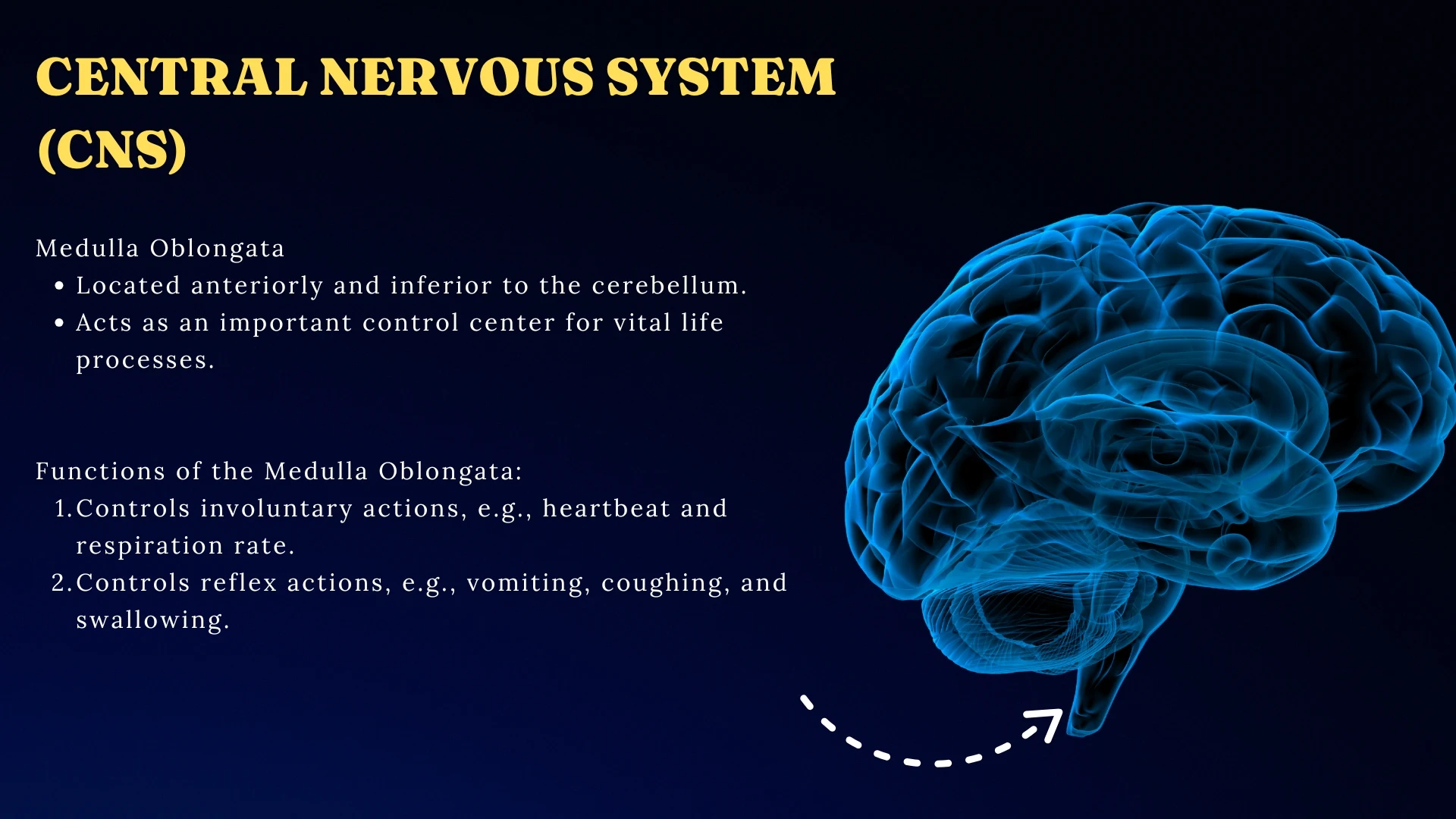
- The medulla oblongata, where the brain joins the spinal cord, controls automatic processes such as breathing, heart rate and swallowing.
- The hypothalamus regulates body temperature and water balance and links the nervous system to the hormone system through the pituitary gland.
Neurones: the three types
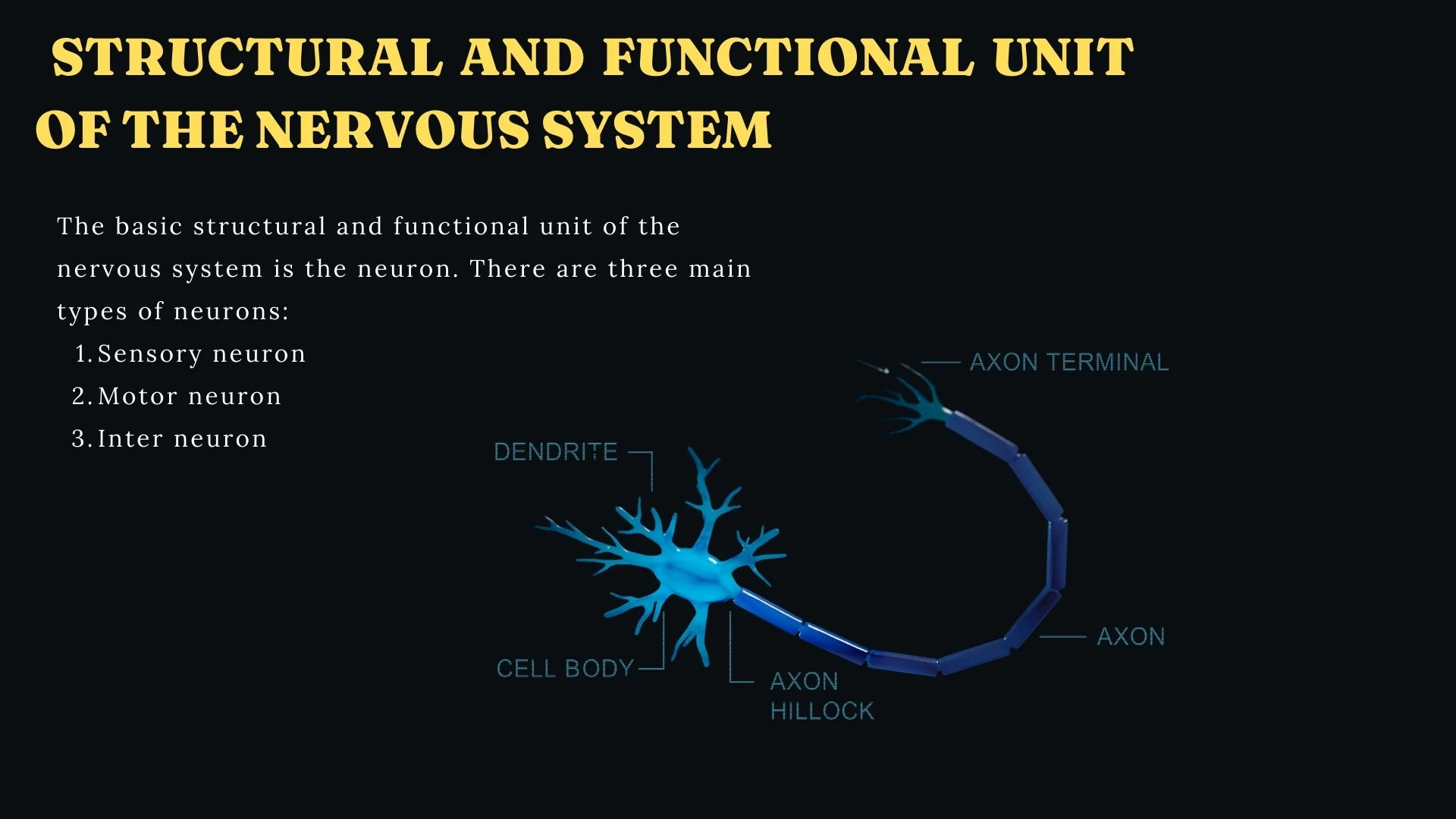
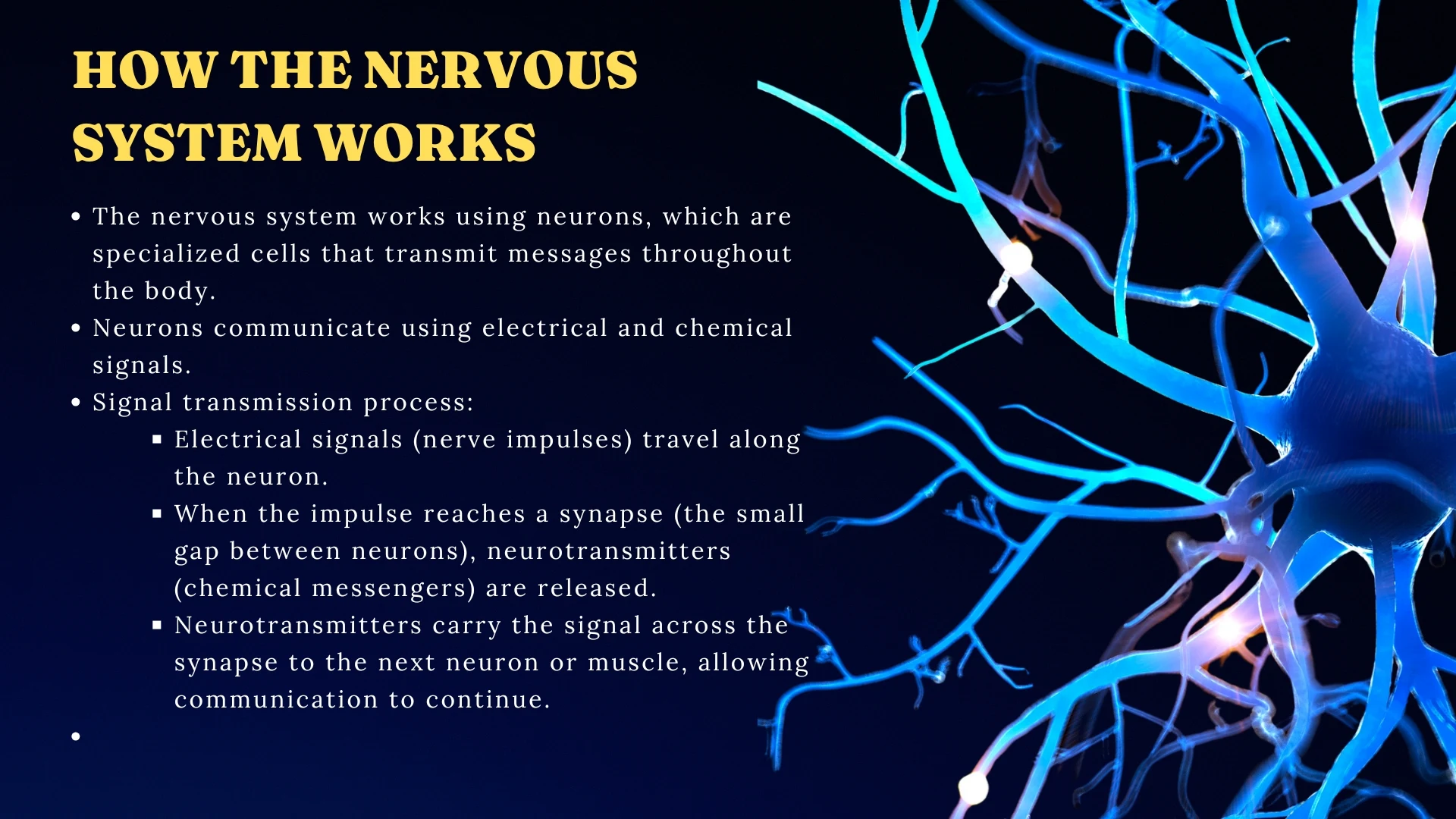
A neurone is a nerve cell adapted to carry electrical impulses. It has a cell body containing the nucleus, short branching dendrites that receive impulses from other cells, and a long fibre called the axon that carries the impulse away. Many axons are wrapped in a fatty myelin sheath, which insulates the fibre and makes the impulse travel much faster. There are three types of neurone, and they always work in the same order.
| Neurone | Carries impulses from | Carries impulses to | Where it is found |
|---|---|---|---|
| Sensory neurone | A receptor, such as a pain receptor in the skin | The CNS | Mostly in the PNS; cell body sits part-way along the fibre, just outside the spinal cord |
| Relay neurone | A sensory neurone | A motor neurone | Entirely inside the CNS; short, with many branches |
| Motor neurone | The CNS | An effector: a muscle or a gland | Cell body inside the CNS, long axon running out through the PNS |
Receptors are the cells that detect a stimulus: the light-sensitive cells of the eye, the sound receptors of the ear, and the touch, pressure, temperature and pain receptors of the skin. Effectors are the parts that respond: muscles respond by contracting and glands respond by releasing a secretion.
The synapse
Neurones do not touch. Where the end of one neurone meets the dendrite of the next there is a tiny gap called a synapse. An electrical impulse cannot jump the gap, so the message is passed on chemically. When an impulse reaches the end of the first neurone, it releases a chemical called a neurotransmitter from small sacs. The neurotransmitter diffuses across the gap and binds to receptor molecules on the next neurone, which triggers a new electrical impulse there. Because the chemical is stored on only one side, a synapse allows impulses to travel in one direction only. Crossing a synapse takes a fraction of a millisecond, so a pathway with fewer synapses is faster, which matters for reflexes.
The reflex arc: a worked example
A reflex is a rapid, automatic response to a stimulus that protects the body from harm. It is involuntary, which means you do not decide to do it, and it does not need the brain to start it: the pathway is coordinated by the spinal cord. The route the impulse takes is called a reflex arc. Suppose you touch a hot pan:
- Stimulus: the heat of the pan.
- Receptor: temperature and pain receptors in the skin of the finger detect it and generate an impulse.
- Sensory neurone: carries the impulse along the arm to the spinal cord.
- Relay neurone: inside the spinal cord, passes the impulse across a synapse from the sensory neurone to the motor neurone.
- Motor neurone: carries the impulse out of the spinal cord back down the arm.
- Effector: the biceps muscle receives the impulse and contracts.
- Response: the hand is pulled away from the pan.
The whole arc is complete before you feel the pain. The relay neurone also sends impulses up the spinal cord to the brain, so you become aware of what happened a moment later, but that awareness comes after the hand has already moved. Other everyday reflexes include blinking when something approaches the eye, the knee jerk, and the narrowing of the pupil in bright light. Reflexes are fast for two reasons: the pathway is short, and it contains only two synapses. A voluntary action such as picking up a pen follows a much longer route through the brain, where a decision is made before any motor neurone fires.
Key terms
- Central nervous system (CNS)
- The brain and spinal cord, where information is processed and instructions begin.
- Peripheral nervous system (PNS)
- All the nerves outside the CNS, linking it to receptors and effectors.
- Neurone
- A nerve cell specialised to carry electrical impulses.
- Stimulus
- A change in the environment, inside or outside the body, that can be detected.
- Receptor
- A cell or organ that detects a stimulus and starts a nerve impulse.
- Effector
- A muscle or gland that carries out a response.
- Synapse
- The gap between two neurones, crossed by a chemical neurotransmitter.
- Reflex arc
- The pathway of a reflex: receptor, sensory neurone, relay neurone, motor neurone, effector.