📖 Lesson: Conservation of Mass
Discover how atoms are rearranged but never created or destroyed in chemical reactions
🧪 Interactive Activities
Explore conservation of mass through hands-on virtual experiments
Molecular Level Simulation
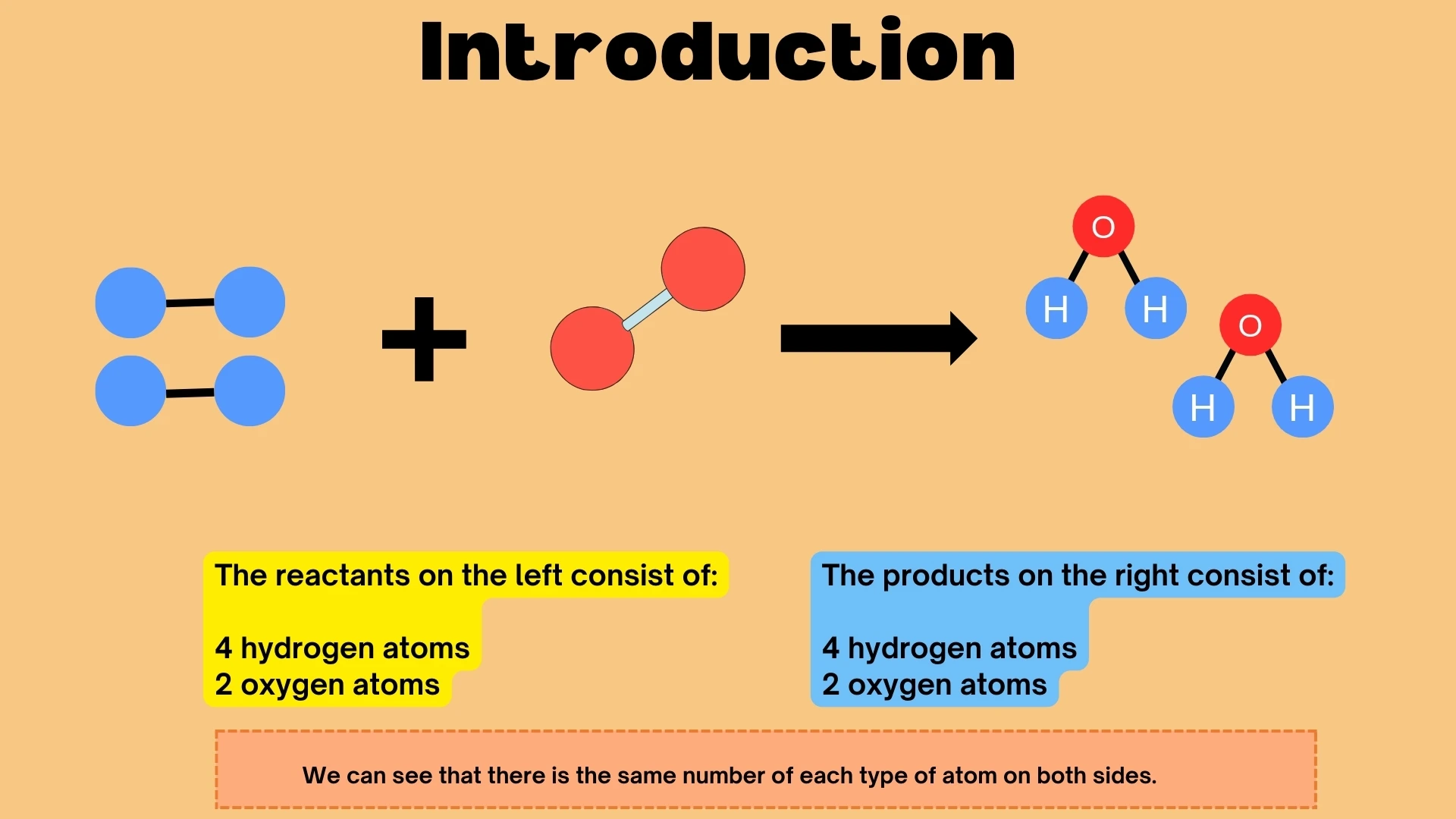
Explore chemical reactions at the molecular level! Watch atoms rearrange as reactants become products, and verify that the total number of atoms remains constant throughout the reaction.
⚖️ The Law of Conservation of Mass Explained
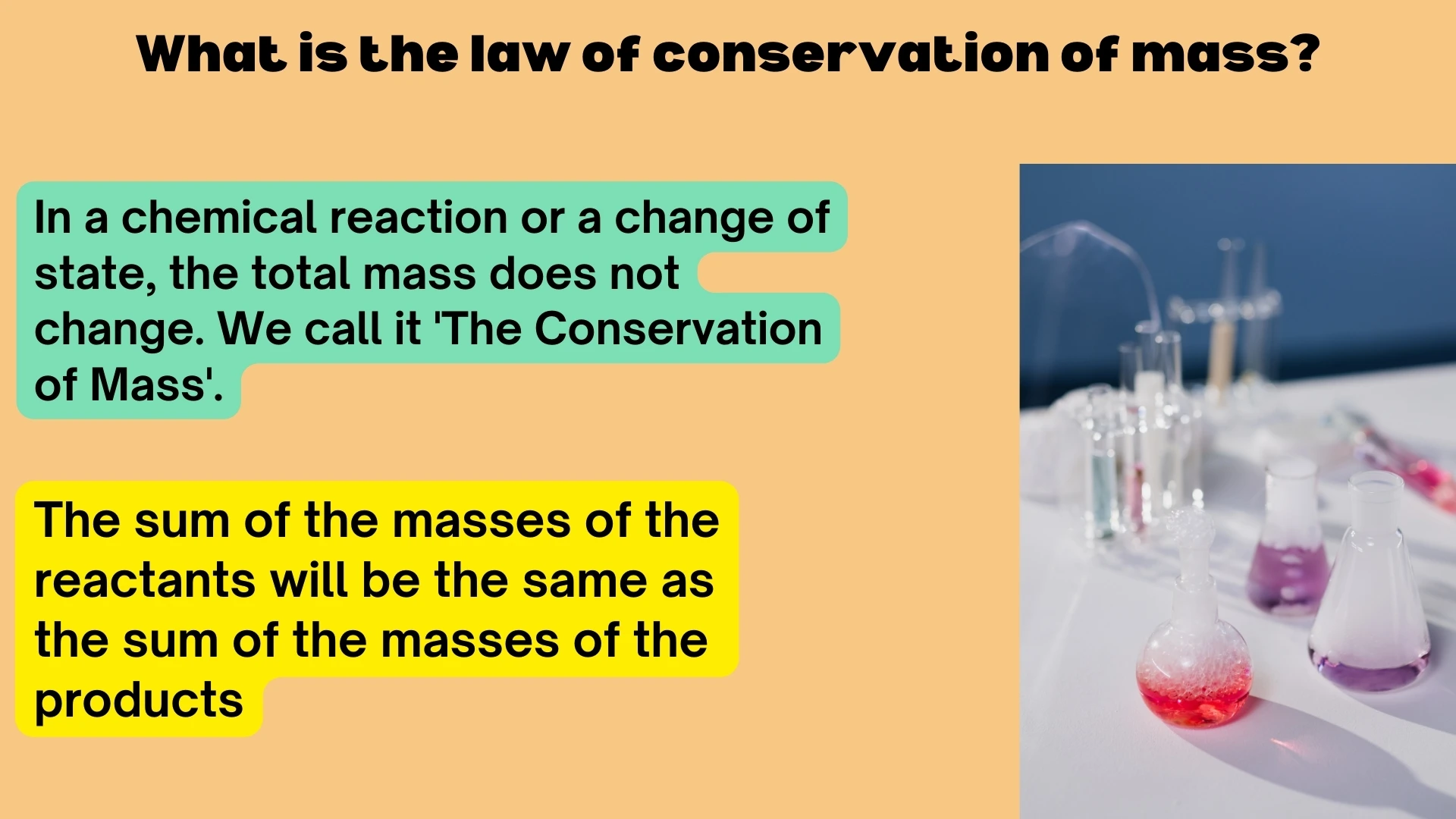
What is the law of conservation of mass?
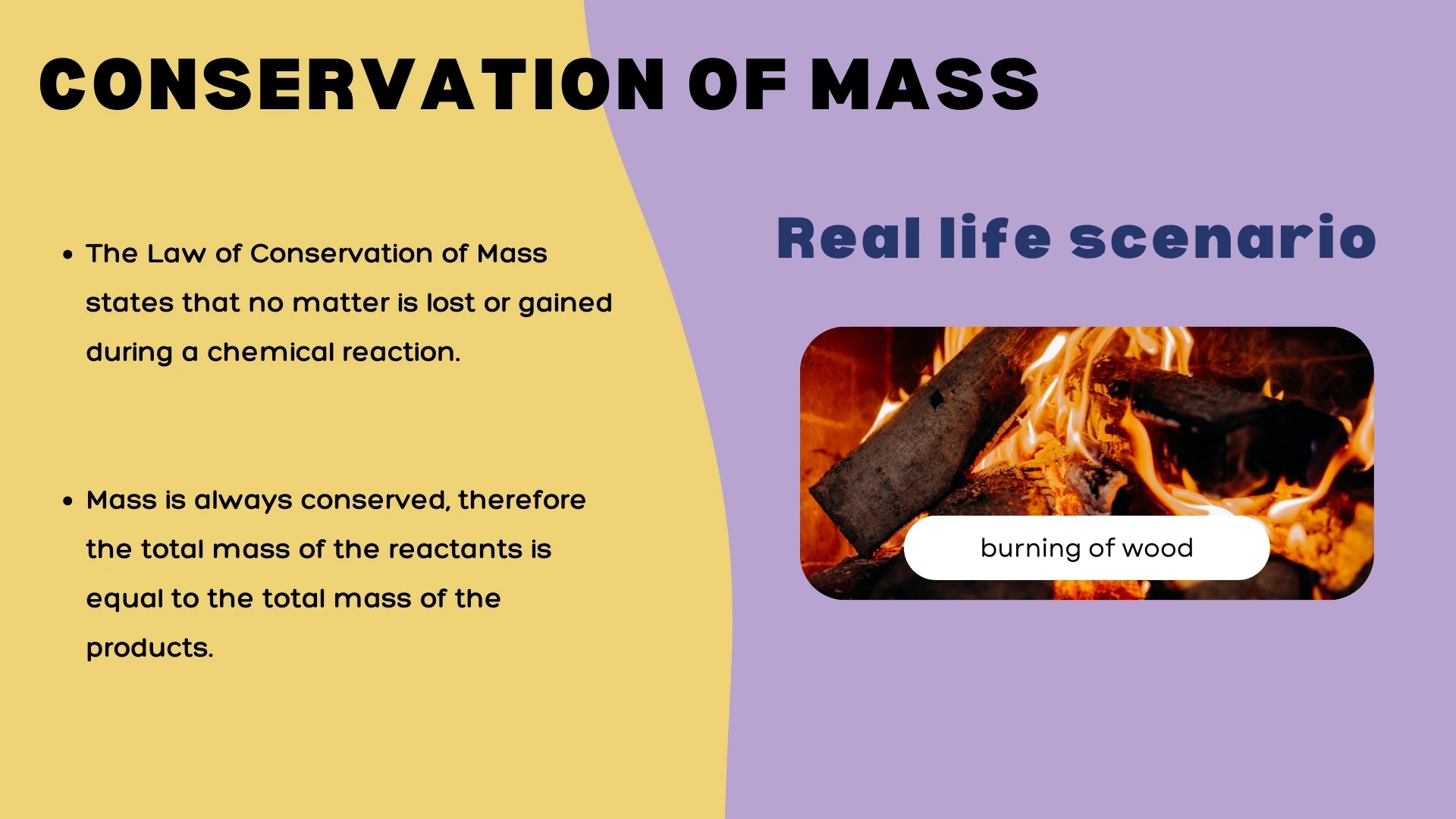
The law of conservation of mass states that in a chemical reaction, the total mass of the products is exactly equal to the total mass of the reactants. Nothing is gained and nothing is lost. Written as a single line:
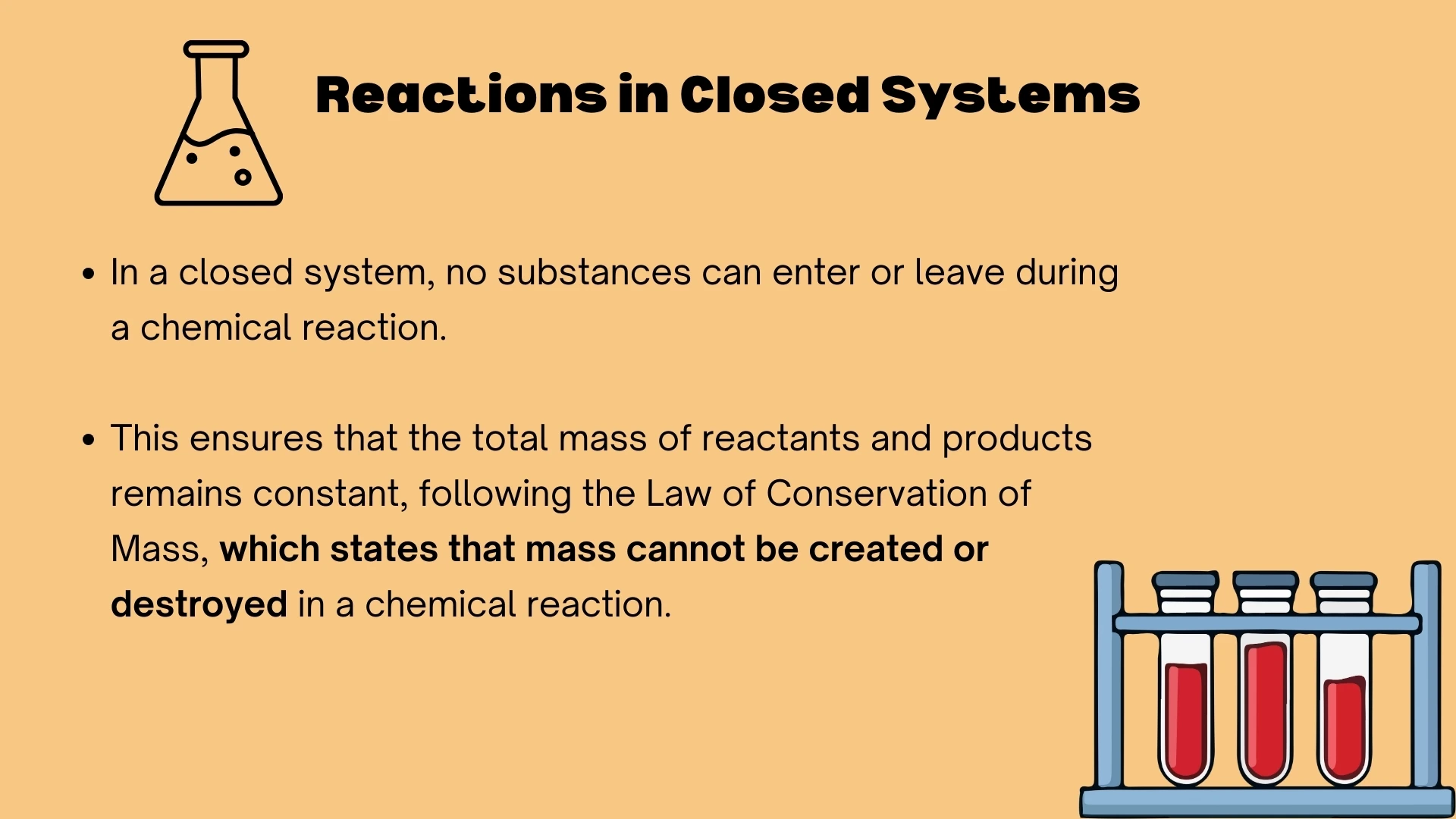
total mass of reactants = total mass of products true for any chemical reaction in a closed systemThe law is usually credited to the French chemist Antoine Lavoisier, who in the 1770s carried out reactions in sealed vessels and weighed them before and after. Because the vessel was sealed, nothing could escape or get in, and the balance read the same both times. That sealed vessel is the key to the whole topic, and it is the detail most students leave out.
Why is mass conserved? Atoms are rearranged, not destroyed
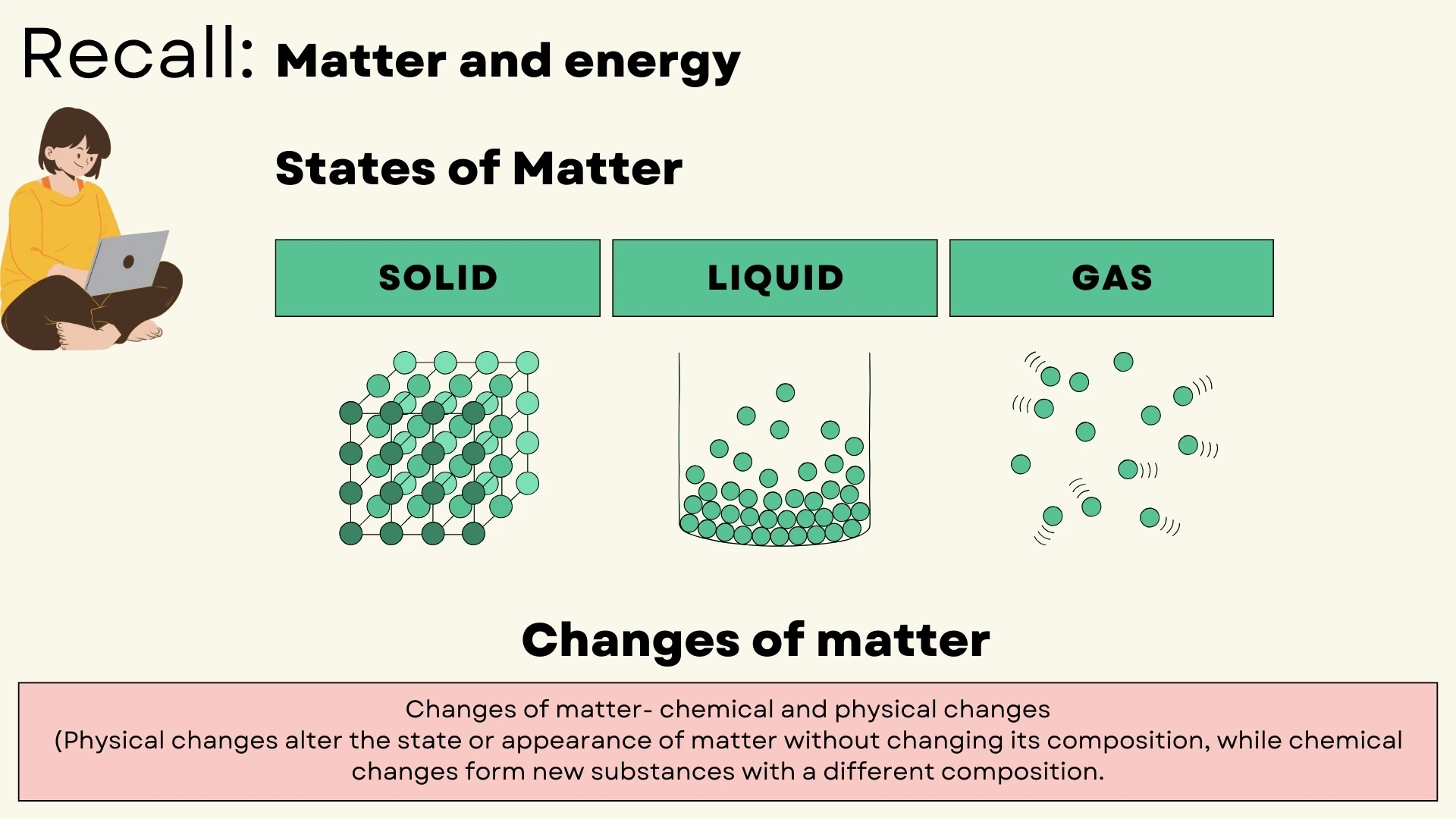
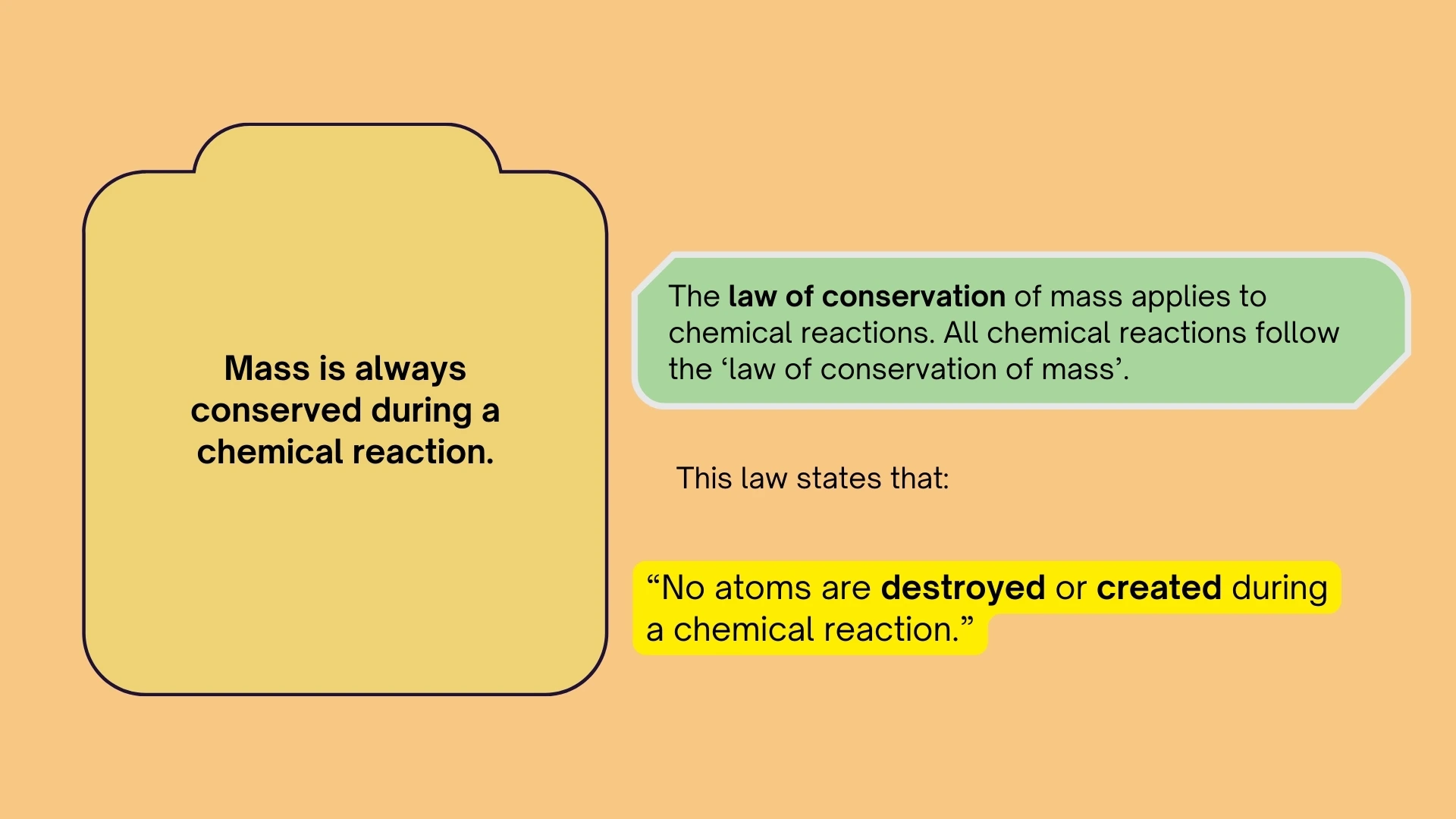
A chemical reaction does not make new matter. It breaks the bonds holding atoms together in the reactants and forms new bonds, so the same atoms end up joined in a different arrangement. No atom is created and no atom is destroyed. Because every atom has a fixed mass, the same set of atoms must weigh the same before and after, whatever they are bonded to.
This is exactly why a balanced chemical equation has the same number of each type of atom on both sides. The equation is a statement of conservation of mass written in symbols. Take the burning of methane:
CH4 + 2O2 → CO2 + 2H2O Left: 1 C, 4 H, 4 O. Right: 1 C, 4 H, 4 O. Balanced.Worked example: putting numbers on it
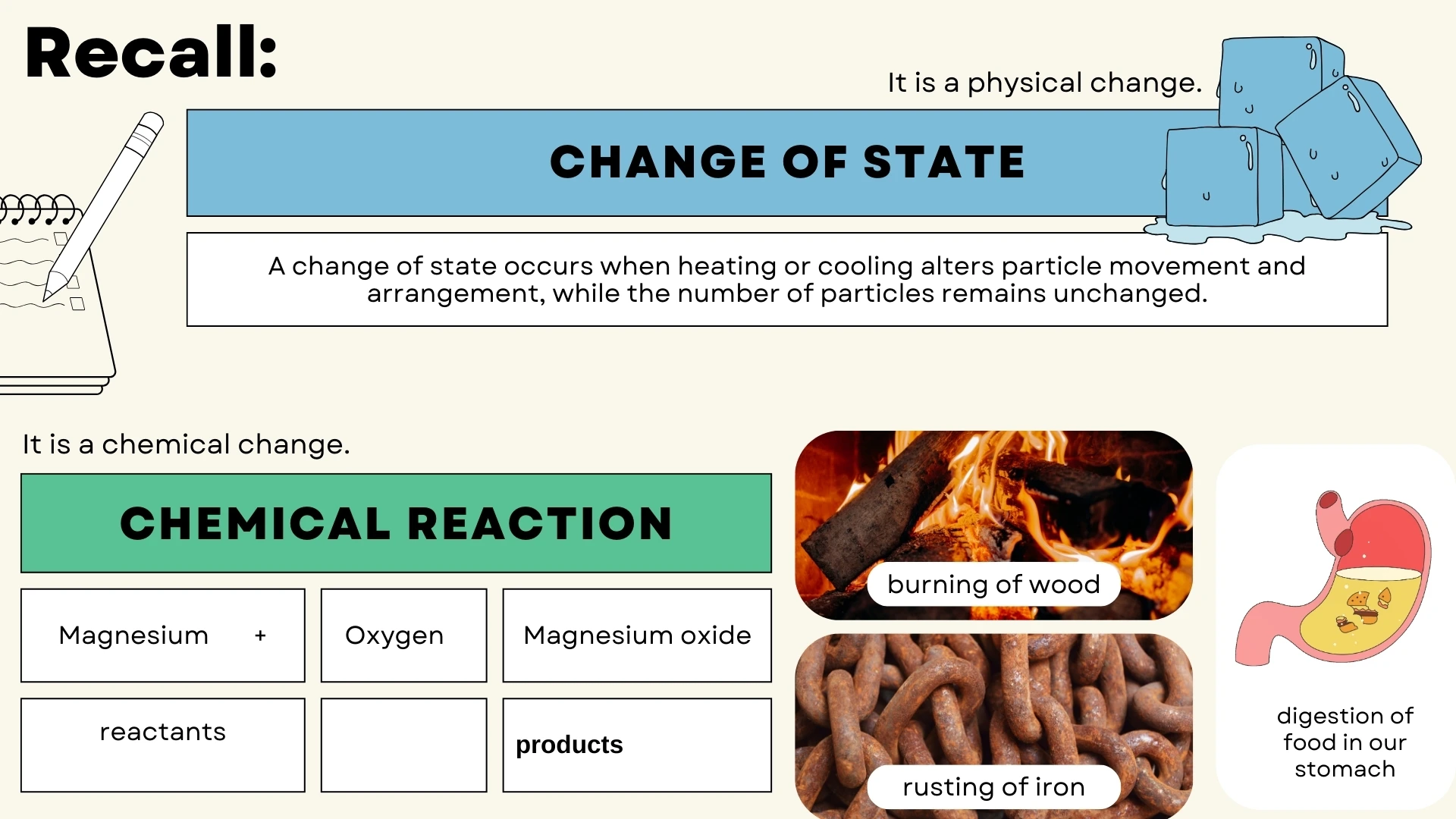
Magnesium burning in oxygen gives magnesium oxide. Using relative atomic masses of Mg = 24 and O = 16:
2Mg + O2 → 2MgO Left: 2 Mg, 2 O. Right: 2 Mg, 2 O. Balanced.If 2.4 g of magnesium reacts completely, it combines with 1.6 g of oxygen and produces 4.0 g of magnesium oxide. Add the reactants: 2.4 g + 1.6 g = 4.0 g, which is exactly the mass of the product.
| Reaction | Balanced equation | Mass check |
|---|---|---|
| Magnesium burns in oxygen | 2Mg + O2 → 2MgO | 2.4 g + 1.6 g → 4.0 g |
| Hydrogen burns in oxygen | 2H2 + O2 → 2H2O | 0.4 g + 3.2 g → 3.6 g |
| Limestone decomposes on heating | CaCO3 → CaO + CO2 | 10.0 g → 5.6 g + 4.4 g |
Apparent exception 1: a reaction that seems to lose mass
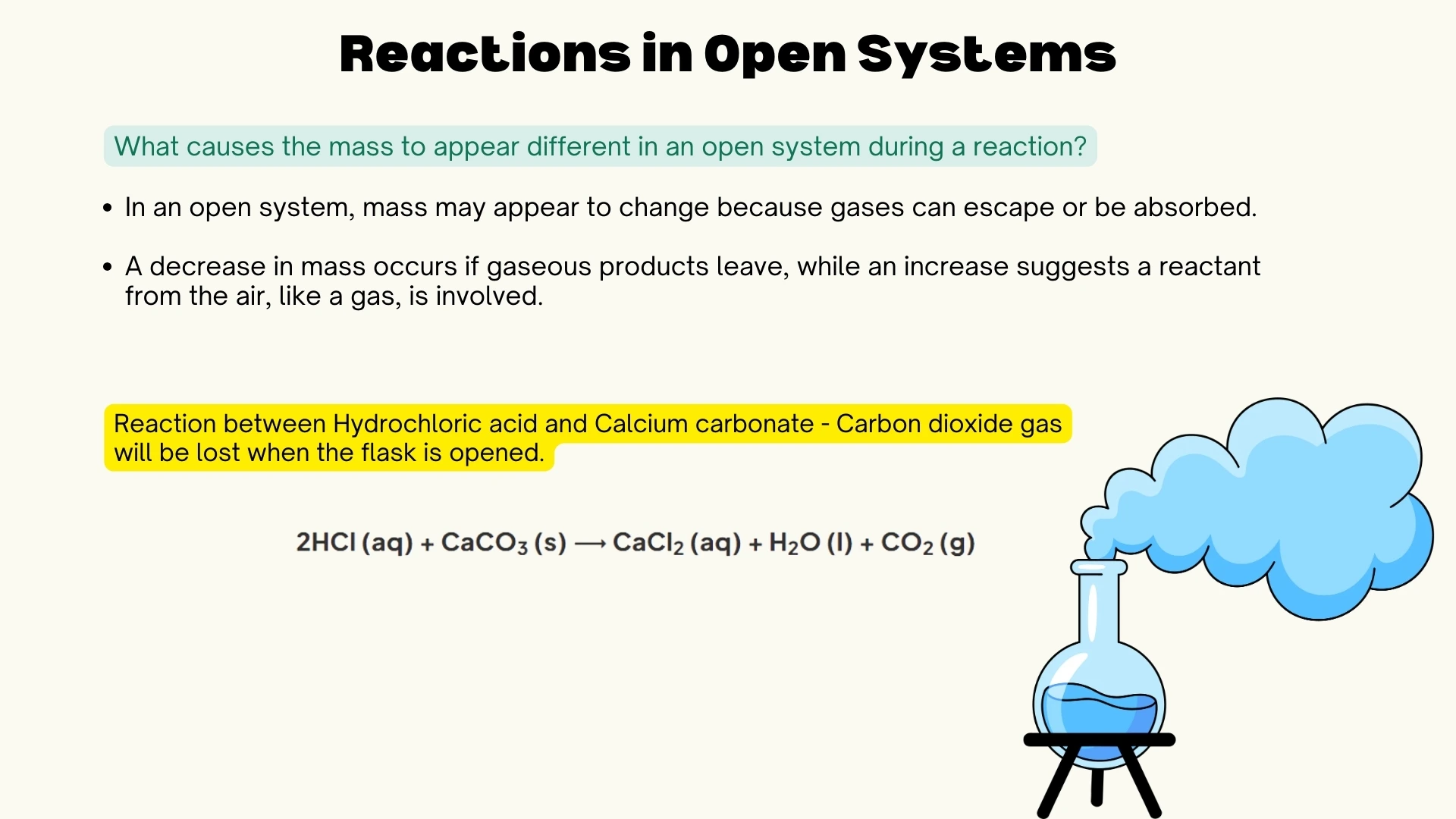
Drop marble chips into dilute hydrochloric acid in an open beaker, stand the beaker on a balance, and the reading falls steadily. It looks as though mass has been destroyed. It has not. The reaction is:
CaCO3 + 2HCl → CaCl2 + H2O + CO2 Left: 1 Ca, 1 C, 3 O, 2 H, 2 Cl. Right: 1 Ca, 1 C, 3 O, 2 H, 2 Cl. Balanced.One of the products is carbon dioxide gas, and in an open beaker it escapes into the room. The balance can only weigh what is still in the beaker, so the mass it reads goes down by exactly the mass of gas that has left. If 10.0 g of calcium carbonate reacts completely, 4.4 g of carbon dioxide is produced, and the balance reading drops by 4.4 g.
The closed-system test: repeat the experiment in a stoppered flask, or in a flask fitted with a gas syringe that catches the carbon dioxide, and the total mass does not change at all. The gas is still there; it has simply been weighed. Mass was never lost — it left the measurement, not the universe.
Apparent exception 2: a reaction that seems to gain mass
Heat a coil of magnesium ribbon in an open crucible and the white powder left behind weighs more than the ribbon did. Students often conclude that mass has been created. It has not: the extra mass is oxygen taken from the air, which is a reactant even though nobody put it on the balance.
Using the same figures as before, 2.4 g of magnesium ribbon becomes 4.0 g of magnesium oxide. The 1.6 g difference is precisely the mass of oxygen that combined with it. Weigh the magnesium and the oxygen it consumes, and the totals match again.
Both classic cases come down to the same rule: conservation of mass applies to a closed system, meaning one where no substance can enter or leave. Whenever a measured mass appears to change, the first question to ask is whether a gas has escaped into the room or been drawn in from the air.
Balancing equations: change coefficients, never subscripts
Balancing is how conservation of mass is applied in practice. The single rule that matters is that you may only put numbers in front of a formula. The small numbers written below the line — the subscripts — are part of the substance's identity. Changing H2O to H2O2 to balance an oxygen does not balance the equation; it swaps water for hydrogen peroxide, which is a different chemical entirely.
- Write the correct formula for every reactant and product first, and then leave them alone.
- Count each type of atom on both sides and list the ones that do not match.
- Balance the elements that appear in only one substance on each side first, leaving oxygen and hydrogen until last.
- Adjust the coefficient in front of a whole formula, then recount — a coefficient changes every atom in that formula at once.
- Finish by checking each element atom by atom, left against right.
Worked through on propane burning: start from C3H8 + O2 → CO2 + H2O. Carbon appears once on each side, so 3 carbons on the left need 3CO2 on the right. Eight hydrogens need 4H2O. That now fixes the oxygen on the right at (3 × 2) + 4 = 10, so the left needs 5O2:
C3H8 + 5O2 → 3CO2 + 4H2O Left: 3 C, 8 H, 10 O. Right: 3 C, 8 H, 10 O. Balanced.One honest footnote
Conservation of mass is a law about chemical reactions. In nuclear reactions a small amount of mass is converted into energy, so mass alone is not conserved. Chemical reactions release or absorb energy too, but the matching mass change is far too small to detect on a laboratory balance.
Key terms
- Law of conservation of mass
- In a chemical reaction, the total mass of the products equals the total mass of the reactants.
- Closed system
- A system that no substance can enter or leave, so every reactant and product stays on the balance.
- Open system
- A system in contact with its surroundings, where a gas can escape or be taken in, making the measured mass appear to change.
- Balanced equation
- An equation with the same number of each type of atom on both sides, adjusted using coefficients only.
- Coefficient
- The large number written in front of a formula, which multiplies every atom in that formula.
- Subscript
- The small number written after an element symbol inside a formula. It is part of the substance's identity and must never be changed to balance an equation.