🌿 Introduction to Plants
Plants are living organisms that play a vital role in our ecosystem. They are the primary producers in the food chain, converting sunlight into energy through photosynthesis. Understanding plant structure and growth helps us appreciate the complexity and beauty of nature.
Every plant, from the smallest seed to the tallest tree, follows a fascinating life cycle. Plants have specialized parts that work together to help them survive, grow, and reproduce. Each part has a specific function, whether it's absorbing water, capturing sunlight, or producing seeds.
Learning about plant anatomy and life cycles helps us understand how plants adapt to their environment, how they reproduce, and why they're essential for life on Earth. Let's explore the different parts of plants and discover how they grow and develop through interactive activities!
🎮 Interactive Activities
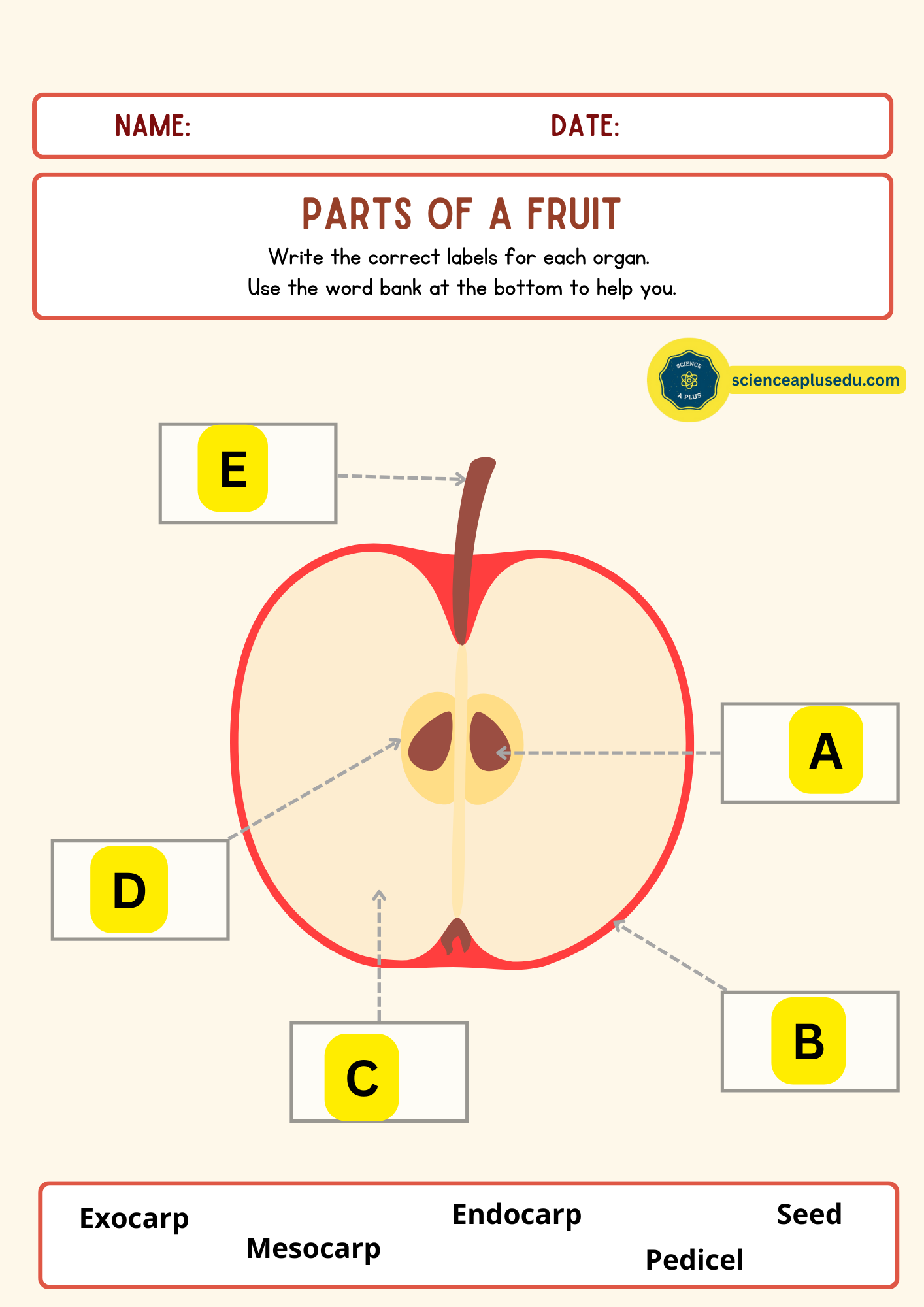
🍎 Activity 1: Parts of a Fruit
Drag the labels to identify each part of the fruit
Drag the correct label to each position:
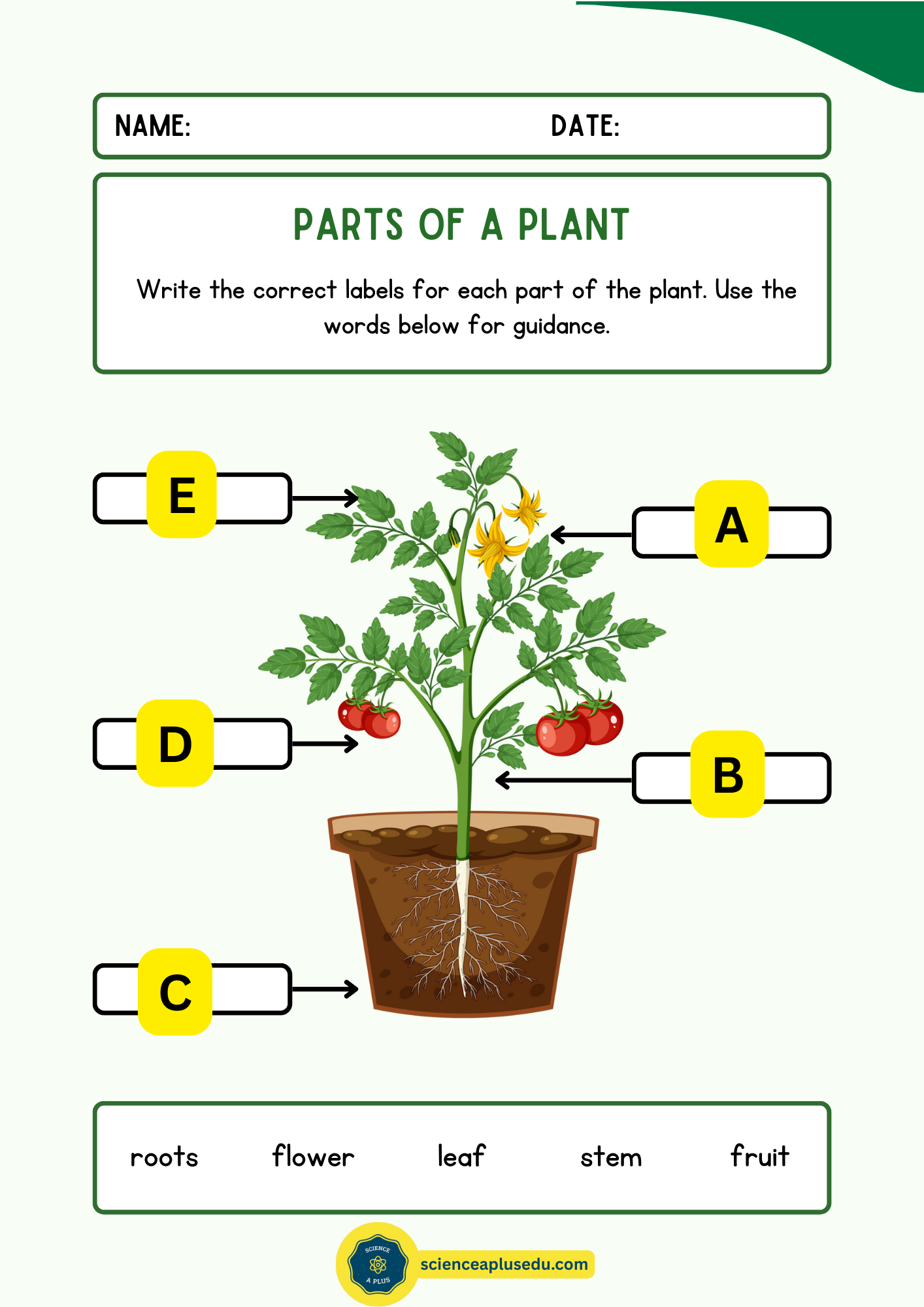
🌻 Activity 2: Parts of a Plant
Drag the labels to identify each part of the plant
Drag the correct label to each position:
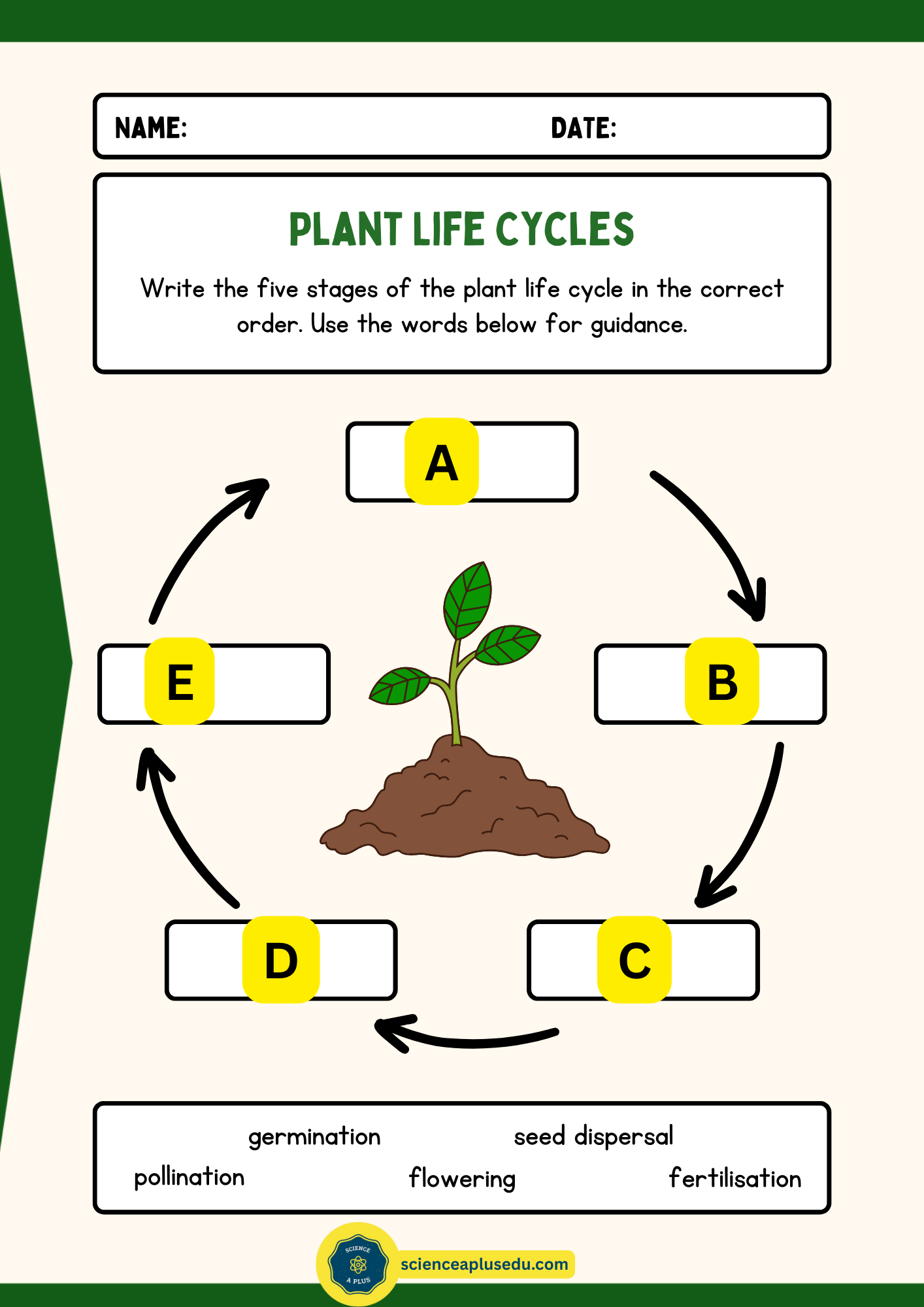
🌱 Activity 3: Plant Life Cycle
Arrange the stages in the correct order
Drag the labels to complete the life cycle:
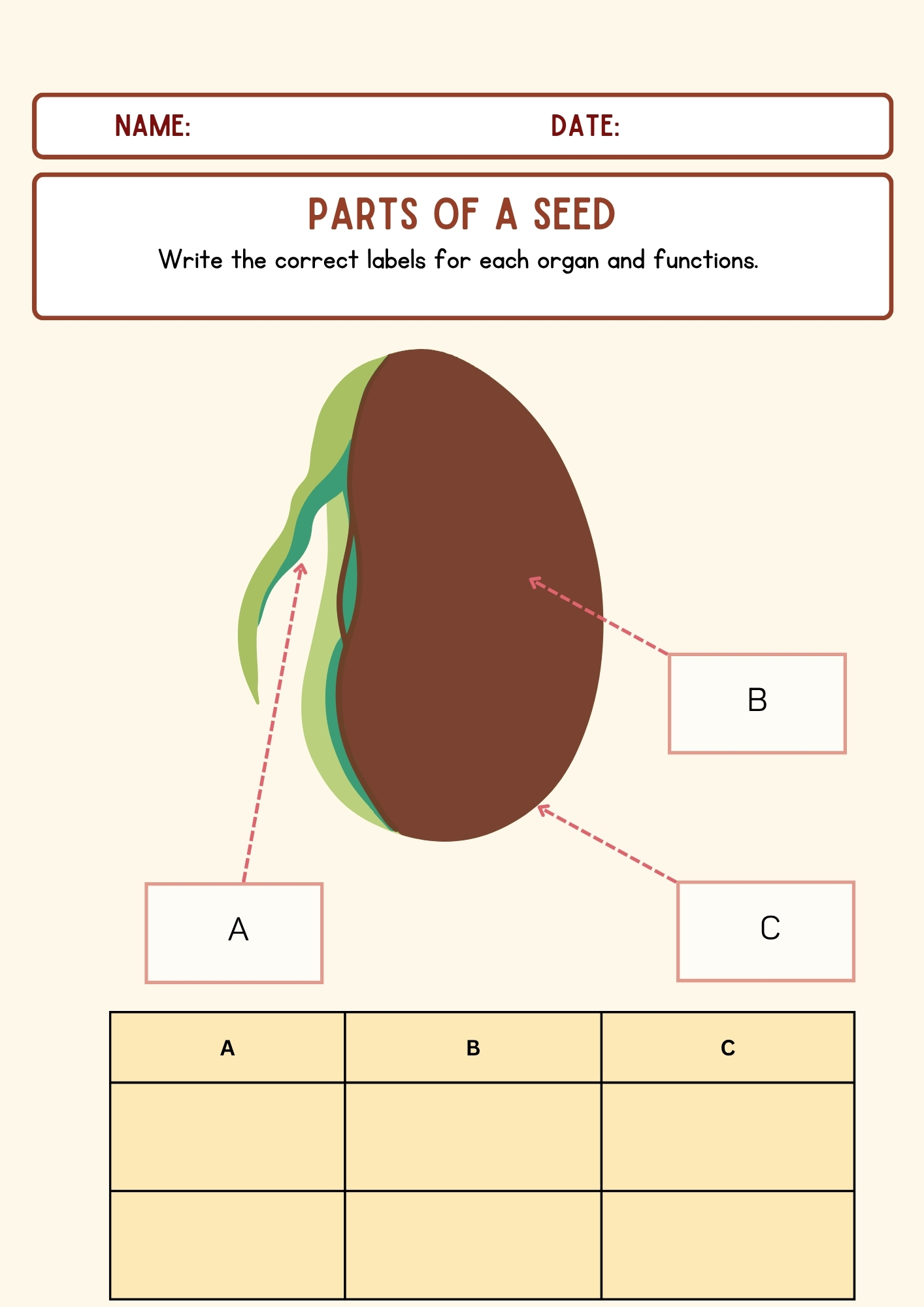
🌰 Activity 4: Parts of a Seed
Identify the three main parts of a seed and their functions
Drag the correct label to each position:
| Part | Function |
|---|---|
| Embryo | Young plant that grows into a new plant |
| Endosperm | Food store that provides nutrients |
| Seed Coat | Protective outer covering |
📝 Worksheets & Posters
Educational Posters
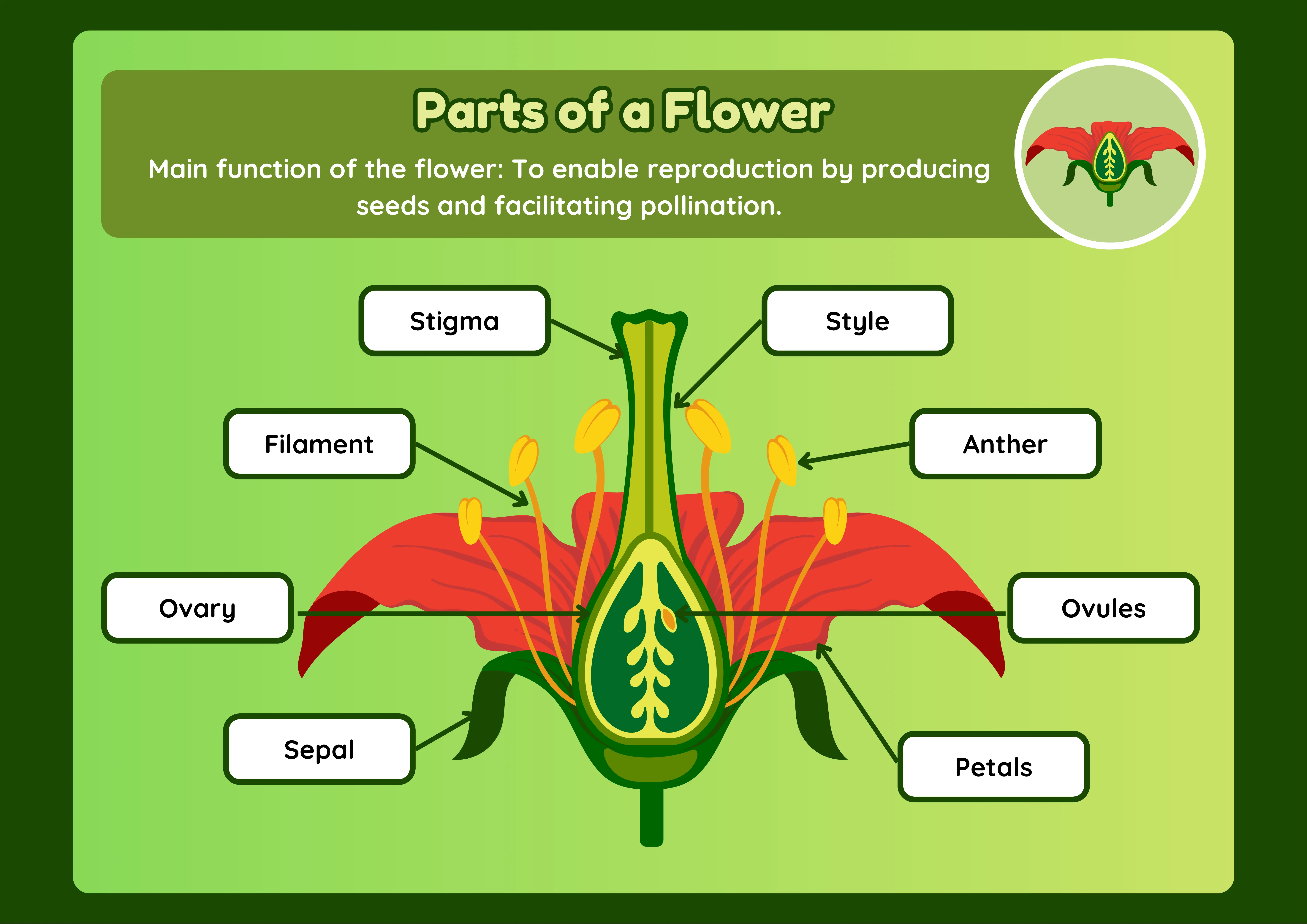
Parts of a Flower
Learn about stigma, style, anther, filament, ovary, ovules, sepal, and petals with this detailed diagram.
Download Poster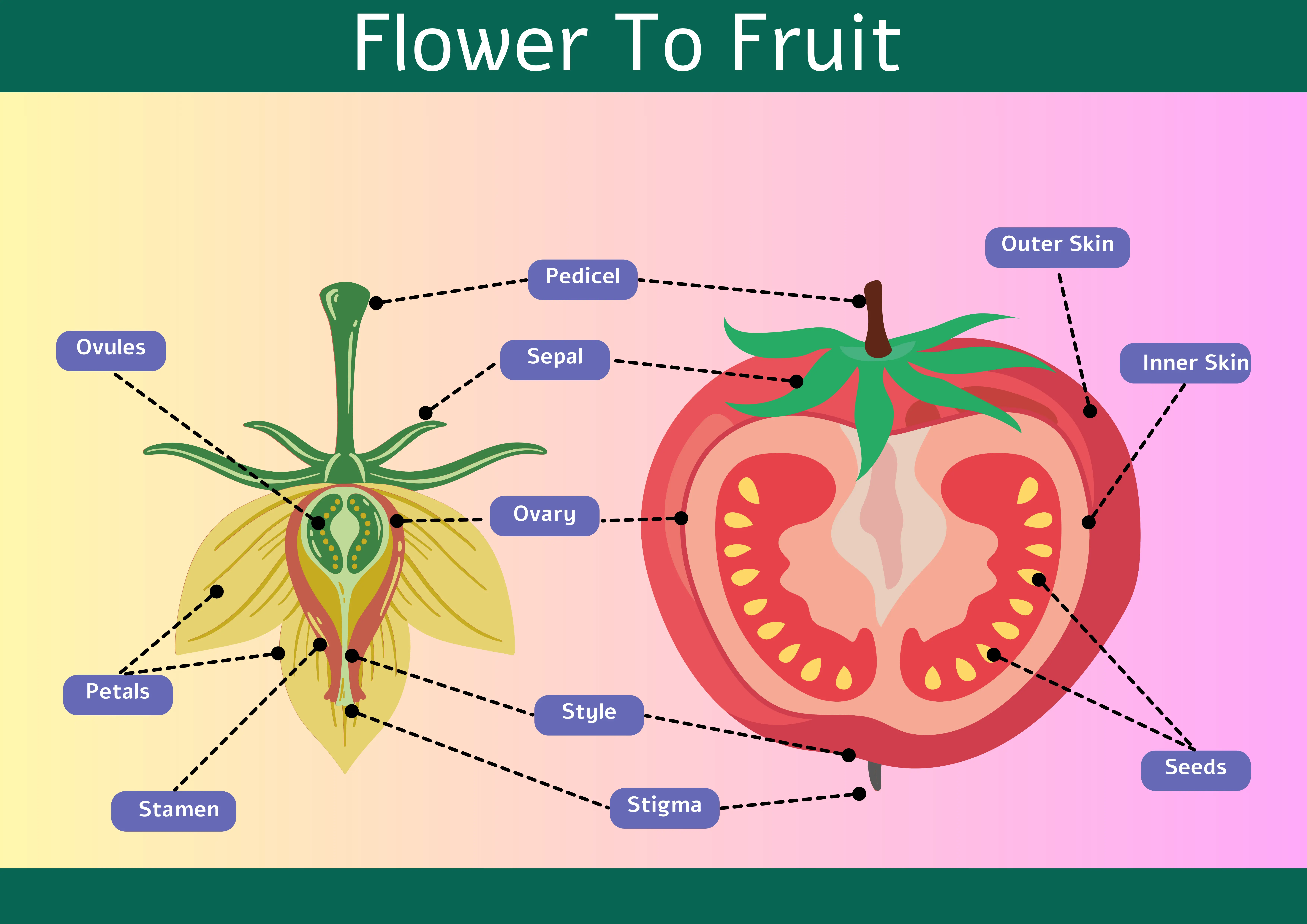
Flower to Fruit
Discover how flowers transform into fruits, showing the development of seeds and protective layers.
Download Poster🌻 Plant Growth Explained: Parts, Seeds, Flowers and Fruit
What do plants need to grow?
A plant needs six things, and a shortage of any one of them will hold growth back. It needs light to drive photosynthesis, carbon dioxide from the air and water from the soil as the raw materials for making glucose, and warmth, because the reactions inside a plant are controlled by enzymes that work slowly in the cold. It needs space — roots and leaves competing with neighbours get less water and less light. And it needs mineral ions dissolved in soil water.
Those minerals are worth knowing individually. Nitrate ions are used, with glucose, to make amino acids and therefore proteins, which a plant needs for growth; a plant short of nitrate is stunted and its older leaves yellow. Magnesium ions are needed to make chlorophyll, so a shortage causes yellowing between the leaf veins. Phosphate and potassium ions matter too, for root growth and for flowering and fruit formation. Notice what is not on the list: soil itself. A plant does not "eat" soil. Nearly all of the mass it gains comes from carbon dioxide in the air and water from the ground.
Parts of a plant and what each one does
- Roots anchor the plant in the ground and absorb water and mineral ions. Root hair cells have long, thin extensions that give an enormous surface area for absorption.
- Stem holds the leaves up towards the light and carries substances between roots and leaves. Inside it, xylem vessels carry water and minerals upwards, while phloem tubes carry dissolved sugars from the leaves to wherever they are needed or stored.
- Leaves are the food factories. They are broad and flat to catch light, and their cells are packed with chloroplasts.
- Flower is the reproductive part, where pollination and fertilisation happen and where seeds are made.
- Fruit develops after fertilisation and protects the seeds inside it while helping them to be carried away.
Plants do not grow all over at once. New cells are made at the tips of roots and shoots, in tissue called meristem. Cells there divide, then stretch and lengthen, then specialise into the particular kind of cell they will spend their life as — division, elongation and differentiation.
Inside a seed, and how germination works
A seed is a plant in waiting. The tough outer seed coat, or testa, protects what is inside. The embryo is the tiny undeveloped plant: its root end is called the radicle and its shoot end the plumule. Around or beside the embryo is a food store — the endosperm in seeds such as maize and wheat, or seed leaves called cotyledons in seeds such as beans.
Germination is the moment that dormant seed starts to grow. It needs three conditions: water, to swell the seed and activate its enzymes; oxygen, because the embryo respires to release energy; and a suitable temperature, warm enough for those enzymes to work. Light is not on that list — most seeds germinate perfectly well buried in the dark, living off their own food store until the first leaves reach the surface and can begin photosynthesising.
Parts of a flower
The poster above labels a typical insect-pollinated flower. The male part is the stamen, made of an anther, which produces pollen, held up by a stalk called the filament. The female part is the carpel: the sticky stigma at the top catches pollen, the style is the column beneath it, and at the base the ovary contains one or more ovules, each holding a female sex cell.
Around these are the petals, usually large, brightly coloured and scented to attract insects, and the sepals, the small green flaps that enclosed and protected the whole flower while it was still a bud. Wind-pollinated flowers such as grasses look very different: dull, small or absent petals, anthers dangling outside the flower, and large feathery stigmas that catch pollen drifting past.
Pollination, fertilisation and the flower-to-fruit sequence
Pollination is the transfer of pollen from an anther to a stigma, carried by an insect or by the wind. It is not the same as fertilisation, and the two are regularly confused. Fertilisation happens afterwards: the pollen grain grows a pollen tube down through the style to an ovule, and the male nucleus fuses with the female nucleus inside it.
What follows is the sequence the second poster shows. Each fertilised ovule becomes a seed. The ovary wall around them becomes the fruit. The petals and stamens, having done their job, wither and drop. That is why the fruit-parts activity above labels three layers: the whole fruit wall is the pericarp, made of the exocarp (the skin), the mesocarp (the flesh you eat in a peach or a plum) and the endocarp (the innermost layer, which in a peach is the hard stone around the seed). The pedicel is the short stalk joining the fruit to the plant.
Seed dispersal
Seeds that all landed beneath their parent would compete with it, and with each other, for light, water and minerals. Seed dispersal spreads them out, and the structure of a fruit usually shows which method it relies on.
- Wind: light seeds with parachutes, as in dandelion, or with wings, as in sycamore.
- Animals: sweet, brightly coloured fruits that are eaten, the hard seeds passing through undamaged; or hooked fruits such as burdock that catch in fur.
- Water: buoyant, waterproof fruits such as the coconut, carried on currents.
- Self-dispersal: pods that dry, twist and split open, flicking their seeds out, as in peas and gorse.
Put the whole cycle together and it runs: germination, growth, flowering, pollination, fertilisation, seed and fruit formation, seed dispersal — and then germination again, which is exactly the order the life-cycle activity above asks you to rebuild.
Key terms
- Germination
- The start of growth in a seed, needing water, oxygen and a suitable temperature.
- Meristem
- Tissue at the tips of roots and shoots where new cells are made by cell division.
- Xylem
- Vessels that carry water and mineral ions from the roots upwards.
- Phloem
- Tubes that carry dissolved sugars from the leaves to the rest of the plant.
- Stamen
- The male part of a flower: the anther, which makes pollen, on its filament.
- Ovule
- The structure inside the ovary that becomes a seed after fertilisation.
- Pollination
- The transfer of pollen from an anther to a stigma.
- Fertilisation
- The fusion of a male nucleus from a pollen grain with a female nucleus in an ovule.
- Pericarp
- The wall of a fruit, formed from the ovary wall, made of exocarp, mesocarp and endocarp.
- Seed dispersal
- The spreading of seeds away from the parent plant, by wind, animals, water or self-dispersal.