Your hair, your muscles, the haemoglobin in your blood, the antibodies that fight infection and the enzymes that digest your lunch are all proteins. Your body contains tens of thousands of different kinds, and every single one is built by a remarkable process called protein synthesis. It is the way a cell turns the information stored in its DNA into the working molecules that make life possible. In this guide we break protein synthesis down into simple steps, explain the genetic code and show what happens when things go wrong.
📖 Lesson
Transcription, translation, codons and anticodons, protein folding and mutations, step by step.
Why Are Proteins So Important?
Proteins are long chains of smaller units called amino acids. There are 20 different amino acids used in human proteins, and they can be joined in any order. The order of amino acids decides how the chain folds, and the folded shape decides what the protein does.
Proteins have many jobs in the body:
Enzymes speed up chemical reactions.
Structural proteins such as collagen and keratin give strength to skin, bones, hair and nails.
Transport proteins such as haemoglobin carry oxygen in the blood.
Hormones such as insulin carry chemical messages.
Antibodies help the immune system recognise and destroy pathogens.
Muscle proteins such as actin and myosin allow movement.
Because proteins do so much, making the right protein at the right time is vital.
Slide: Protein synthesis
From genes to proteins
1/1
DNA, Genes and the Genetic Code
DNA (deoxyribonucleic acid) is the molecule that stores genetic information. It is a double helix made of two strands. Each strand is a chain of nucleotides, and each nucleotide contains one of four bases: adenine (A), thymine (T), cytosine (C) and guanine (G). The bases on the two strands pair up by complementary base pairing: A always pairs with T, and C always pairs with G.
A gene is a section of DNA that codes for a particular protein. The sequence of bases in the gene decides the sequence of amino acids in the protein.
What is a codon?
The genetic code is read in groups of three bases called triplets, or codons when they are in mRNA. Each codon codes for one amino acid. For example, the mRNA codon AUG codes for the amino acid methionine and also acts as the start signal. Three codons, UAA, UAG and UGA, do not code for any amino acid. They are stop codons that tell the ribosome to finish the protein.
Key features of the genetic code
Triplet code: three bases code for one amino acid.
Degenerate: most amino acids are coded for by more than one codon. There are 64 possible codons but only 20 amino acids.
Non-overlapping: each base is read only once, as part of one codon.
Universal: the same codons code for the same amino acids in almost all living things, from bacteria to humans. This is why a human insulin gene can be put into bacteria to make human insulin.
Why Can't DNA Just Make Proteins Directly?
In eukaryotic cells, such as human cells, DNA is too large to leave the nucleus through the nuclear pores, but proteins are made on ribosomes in the cytoplasm. The cell solves this problem by making a small, portable copy of just one gene. This copy is messenger RNA (mRNA). It carries the instructions from the nucleus to the ribosomes, a bit like photocopying one recipe from a precious cookbook that must never leave the library.
DNA vs RNA: What Is the Difference?
| Feature | DNA | RNA |
|---|---|---|
| Sugar | Deoxyribose | Ribose |
| Number of strands | Two (double helix) | One (single strand) |
| Bases | A, T, C, G | A, U, C, G (uracil replaces thymine) |
| Length | Very long | Short |
| Main job | Stores genetic information | Carries and uses the information to make proteins |
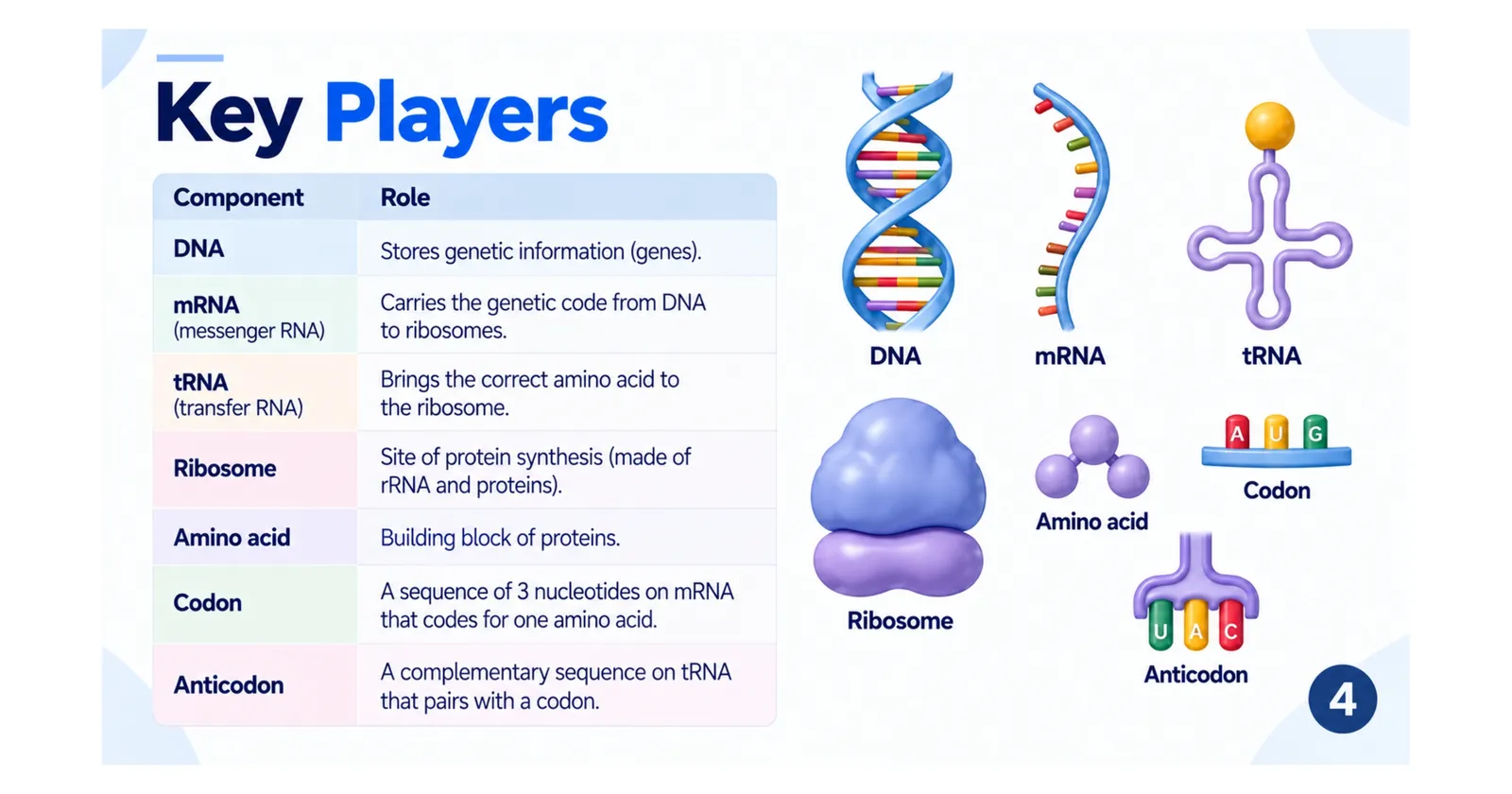
There are three main types of RNA in protein synthesis: messenger RNA (mRNA), transfer RNA (tRNA) and ribosomal RNA (rRNA), which forms part of the ribosome.
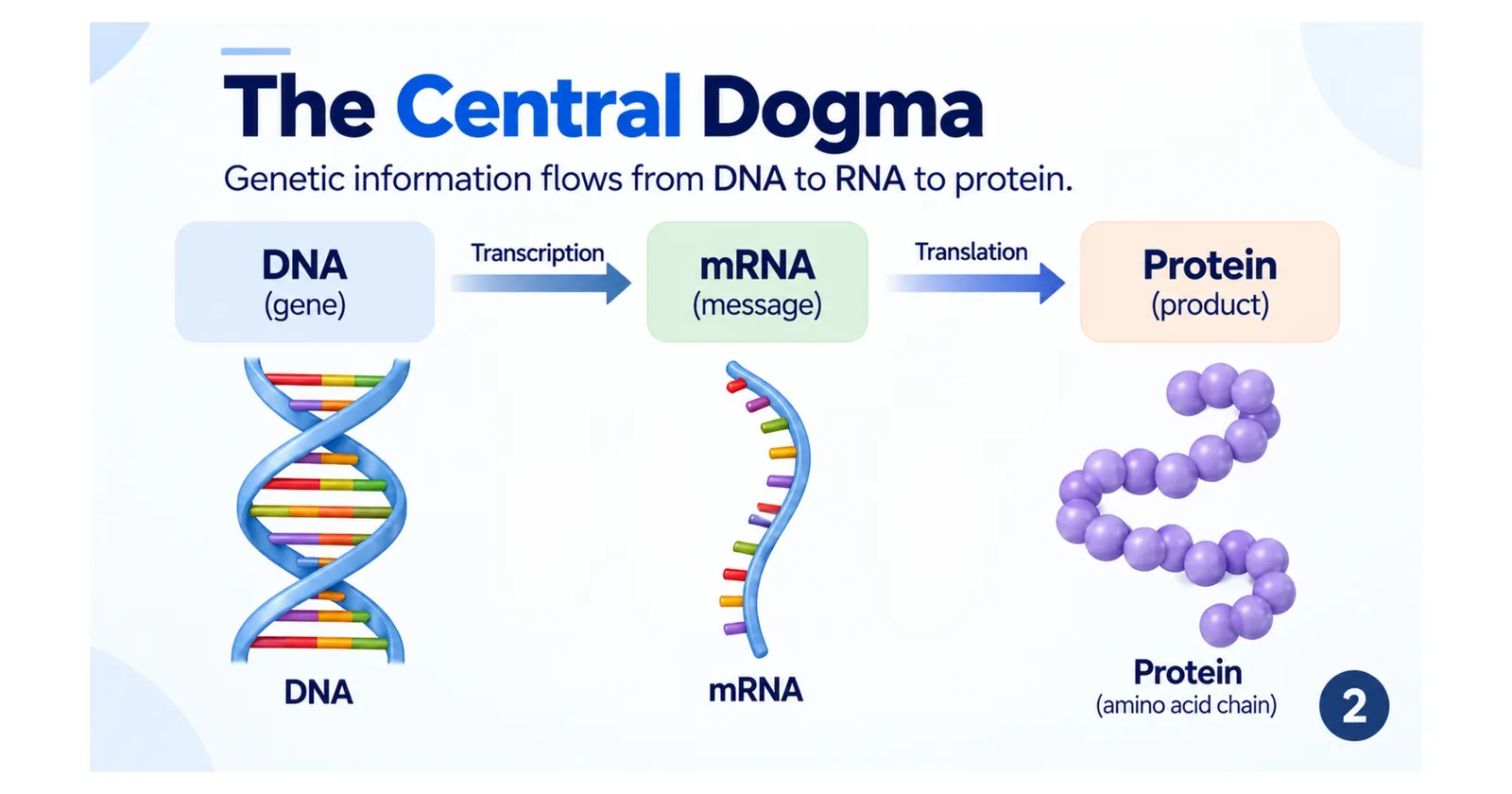
Slides: The central dogma and the key players
DNA to mRNA to protein, and who does what
1/2
Stage 1: Transcription (DNA to mRNA)
Transcription takes place in the nucleus. The word means "copying out".
Step-by-step transcription
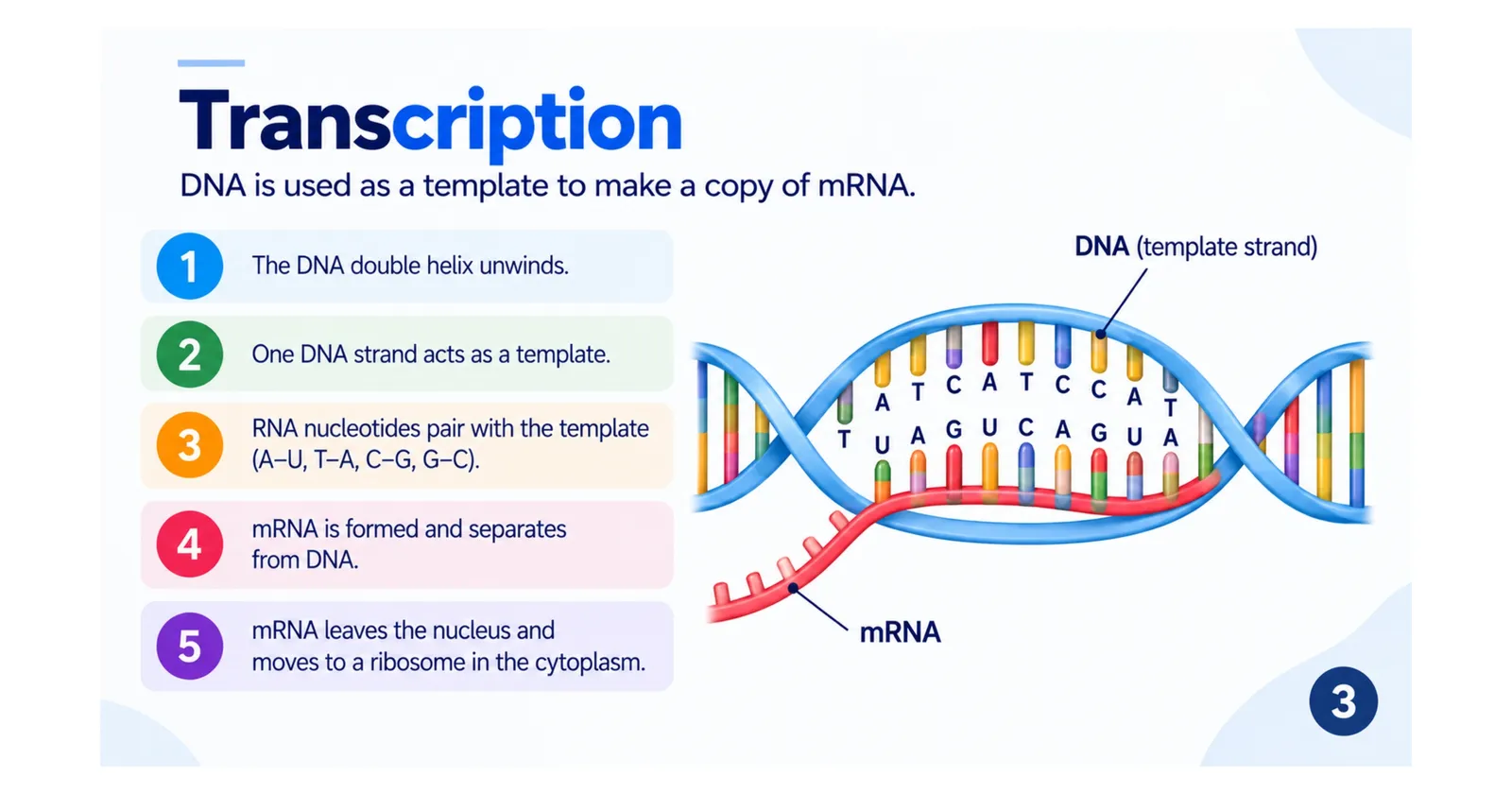
The enzyme RNA polymerase attaches to the DNA at the start of a gene.
The hydrogen bonds between the two DNA strands break, and the double helix unwinds, exposing the bases.
Only one strand, called the template strand, is used.
Free RNA nucleotides in the nucleus pair up with the exposed DNA bases by complementary base pairing. Adenine in DNA pairs with uracil in RNA, thymine pairs with adenine, cytosine pairs with guanine and guanine pairs with cytosine.
RNA polymerase joins the RNA nucleotides together to form a single strand of mRNA.
When RNA polymerase reaches the end of the gene, the mRNA strand detaches, and the DNA zips back up.
The mRNA leaves the nucleus through a nuclear pore and travels to a ribosome.
For example, if the DNA template strand reads TAC GGA TTC, the mRNA will read AUG CCU AAG.
Splicing (A Level extra)
In eukaryotes the first copy, called pre-mRNA, contains sections that do not code for amino acids, called introns. These are cut out, and the coding sections, called exons, are joined together. This process is called splicing. Splicing can join exons in different ways, which means one gene can produce several different proteins.
Slide: Transcription
DNA is used as a template to make a copy of mRNA
1/1
Stage 2: Translation (mRNA to Protein)
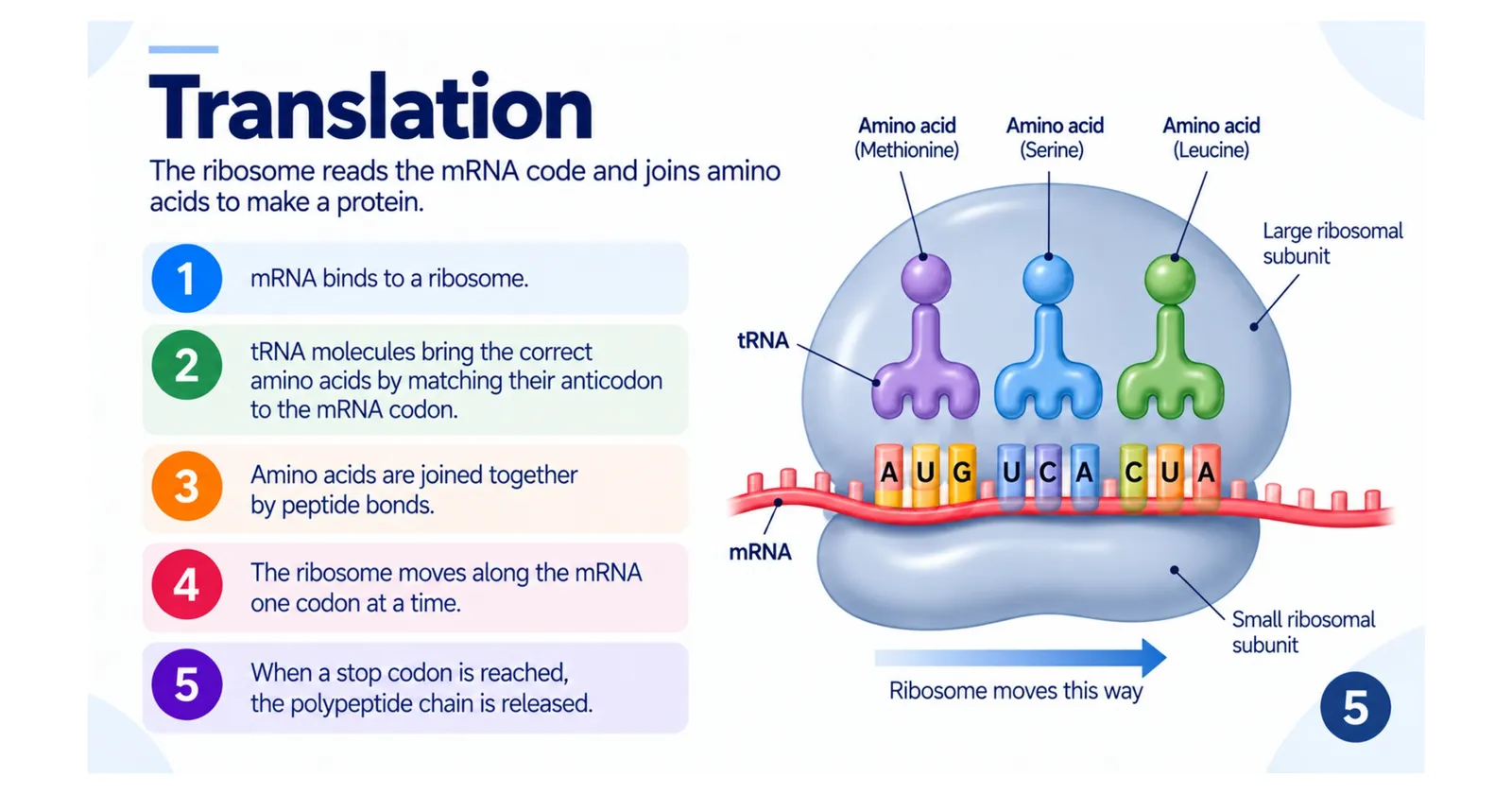
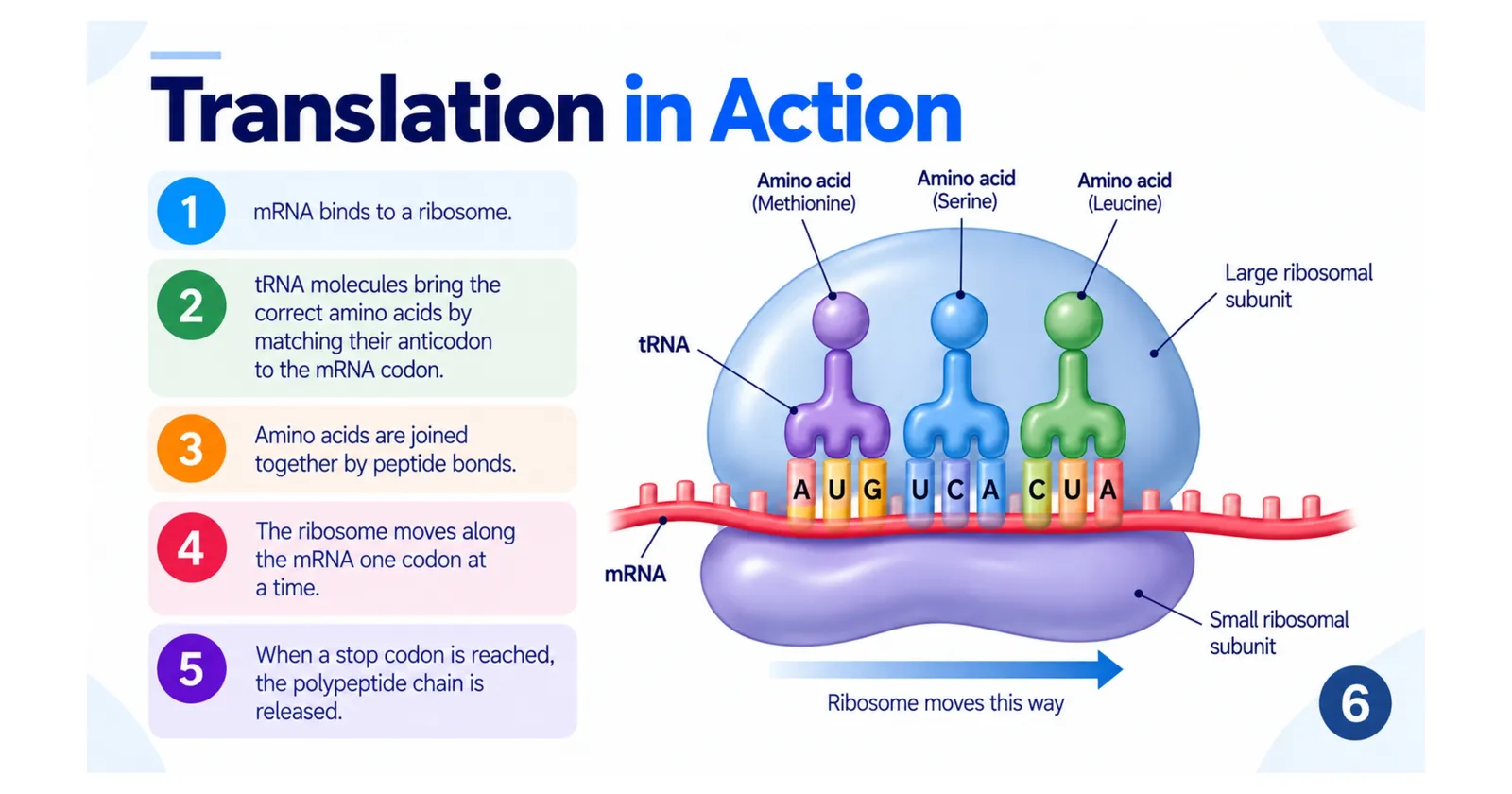
Translation takes place on ribosomes in the cytoplasm or on the rough endoplasmic reticulum. The word means changing the message from the language of bases into the language of amino acids.
The role of tRNA
Transfer RNA molecules are small, folded RNA molecules shaped roughly like a clover leaf. Each tRNA carries one specific amino acid at one end. At the other end it has three bases called an anticodon, which is complementary to a codon on the mRNA. tRNA molecules are the translators of the cell: they match each codon with the correct amino acid.
Step-by-step translation
The mRNA attaches to a ribosome.
The ribosome finds the start codon, AUG.
A tRNA with the complementary anticodon, UAC, brings the amino acid methionine and binds to the codon.
A second tRNA carrying its amino acid binds to the next codon.
The ribosome joins the two amino acids with a peptide bond. This reaction needs energy from ATP.
The ribosome moves along the mRNA by one codon. The first tRNA leaves and goes to collect another amino acid.
The process repeats, adding one amino acid at a time and forming a growing chain called a polypeptide.
When the ribosome reaches a stop codon, translation ends and the polypeptide is released.
Several ribosomes can translate the same mRNA at once, forming a structure called a polysome. This allows a cell to make many copies of a protein quickly.
Slides: Translation
Ribosomes read mRNA and join amino acids
1/2
What Happens After Translation? Protein Folding
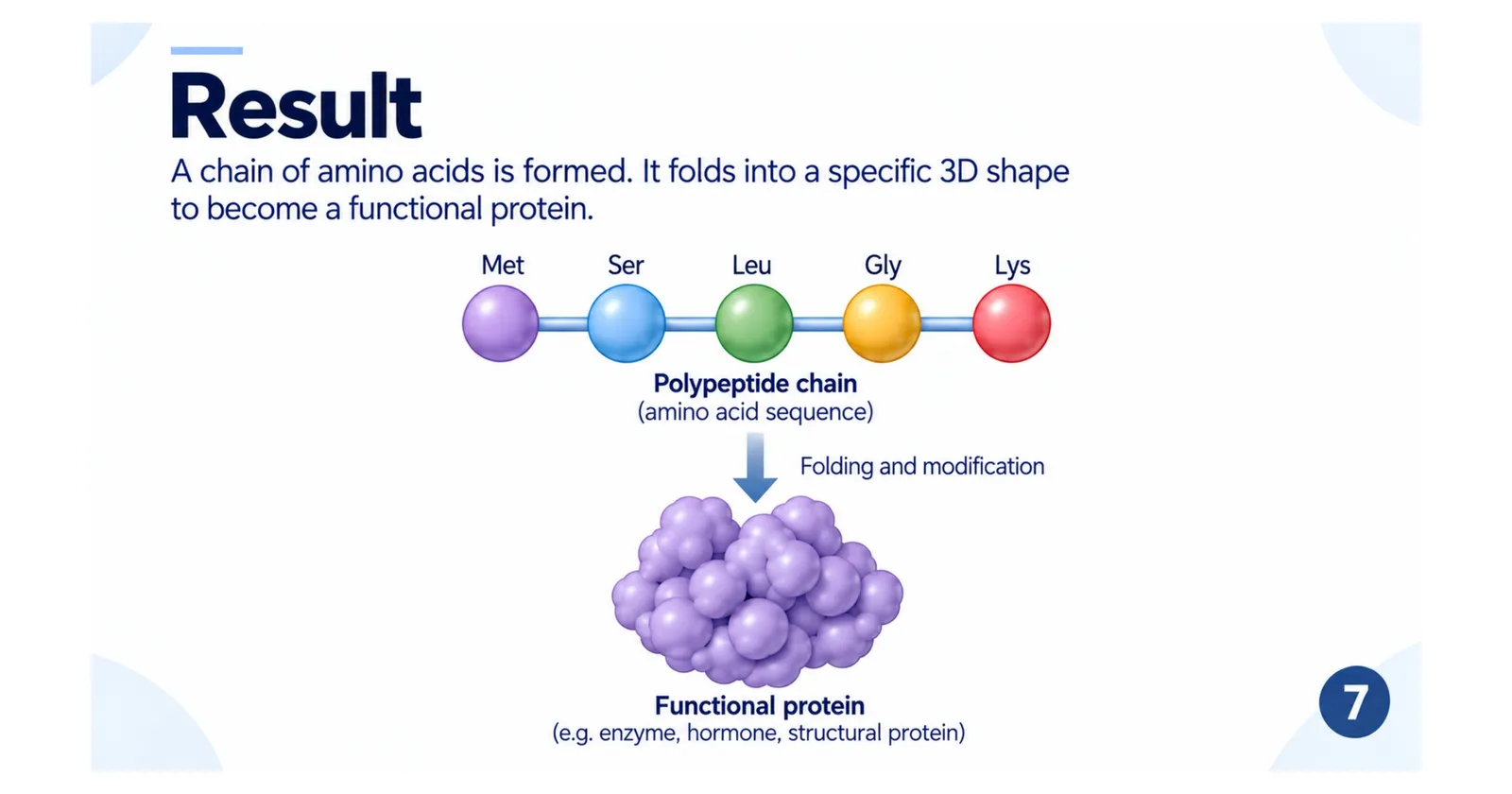
A newly made polypeptide is just a chain. To work, it must fold into a precise three-dimensional shape.
Primary structure: the sequence of amino acids.
Secondary structure: the chain coils into alpha helices or folds into beta pleated sheets, held by hydrogen bonds.
Tertiary structure: the whole chain folds further into a specific 3D shape, held by hydrogen bonds, ionic bonds and disulfide bridges.
Quaternary structure: some proteins, such as haemoglobin, are made of more than one polypeptide chain joined together.
Many proteins are then sent to the Golgi apparatus, where they are modified, for example by adding carbohydrate groups, and packaged for use inside the cell or for secretion. Antibodies and digestive enzymes are made and exported this way.
Slide: The result
A chain of amino acids folds into a functional protein
1/1
Protein Synthesis Summary Table
| Transcription | Translation | |
|---|---|---|
| Where | Nucleus | Ribosomes in the cytoplasm |
| Template | DNA template strand | mRNA |
| Product | mRNA | Polypeptide (protein) |
| Key enzymes or structures | RNA polymerase | Ribosome, tRNA |
| Base pairing | DNA with RNA nucleotides | mRNA codon with tRNA anticodon |
Protein Synthesis in Prokaryotes
Bacteria have no nucleus, so transcription and translation both happen in the cytoplasm. In fact, ribosomes can start translating an mRNA before transcription has even finished. Bacterial ribosomes are smaller (70S) than human ribosomes (80S). Some antibiotics, such as tetracycline and streptomycin, work by blocking bacterial ribosomes without harming ours.
Mutations: When Protein Synthesis Goes Wrong
A mutation is a change in the base sequence of DNA. Because the base sequence decides the amino acid sequence, mutations can change the protein that is made.
Substitution: one base is swapped for another. This may change one amino acid, or none at all because the code is degenerate. This is called a silent mutation.
Insertion: an extra base is added.
Deletion: a base is removed.
Insertions and deletions cause a frameshift, because every codon after the mutation is read differently. This usually produces a completely useless protein.
A famous example is sickle cell anaemia. A single base substitution in the gene for haemoglobin replaces the amino acid glutamic acid with valine. This tiny change makes haemoglobin molecules stick together when oxygen levels are low, bending red blood cells into a sickle shape. Read our blood diseases guide to learn more.
Controlling Protein Synthesis: Switching Genes On and Off
Cells do not make every protein all the time, because that would waste energy and materials. Instead, they control which genes are transcribed. Proteins called transcription factors bind to DNA near the start of a gene and either help or block RNA polymerase. Hormones such as oestrogen work by activating transcription factors. In bacteria, groups of genes called operons are switched on only when needed; for example, E. coli makes the enzymes to digest lactose only when lactose is present. Faults in gene control can make cells divide uncontrollably, which is one of the causes of cancer.
Real-World Applications of Protein Synthesis
mRNA vaccines: some COVID-19 vaccines deliver mRNA that instructs your own ribosomes to make a harmless piece of the virus's spike protein. Your immune system learns to recognise it.
Genetic engineering: bacteria given the human insulin gene use protein synthesis to make insulin for people with diabetes.
Antibiotics: many target bacterial ribosomes, stopping bacteria from making proteins.
Gene therapy: scientists are developing ways to supply working genes so that patients can make missing proteins.
Common Exam Mistakes
Do not say transcription happens in the cytoplasm in human cells. It happens in the nucleus.
Do not forget that uracil replaces thymine in RNA.
Remember that ribosomes read codons on mRNA, while tRNA carries anticodons.
Do not say DNA leaves the nucleus. Only mRNA does.
Frequently Asked Questions About Protein Synthesis
How long does it take to make a protein?
A ribosome adds roughly 2 to 20 amino acids per second, so an average protein of a few hundred amino acids can be made in under a minute.
What is the central dogma of biology?
The central dogma describes the flow of genetic information: DNA is transcribed into RNA, and RNA is translated into protein.
Do all cells make the same proteins?
No. Every cell contains the same genes, but different cells switch on different genes. A muscle cell makes lots of actin and myosin, while a red blood cell precursor makes lots of haemoglobin.
Key Takeaways
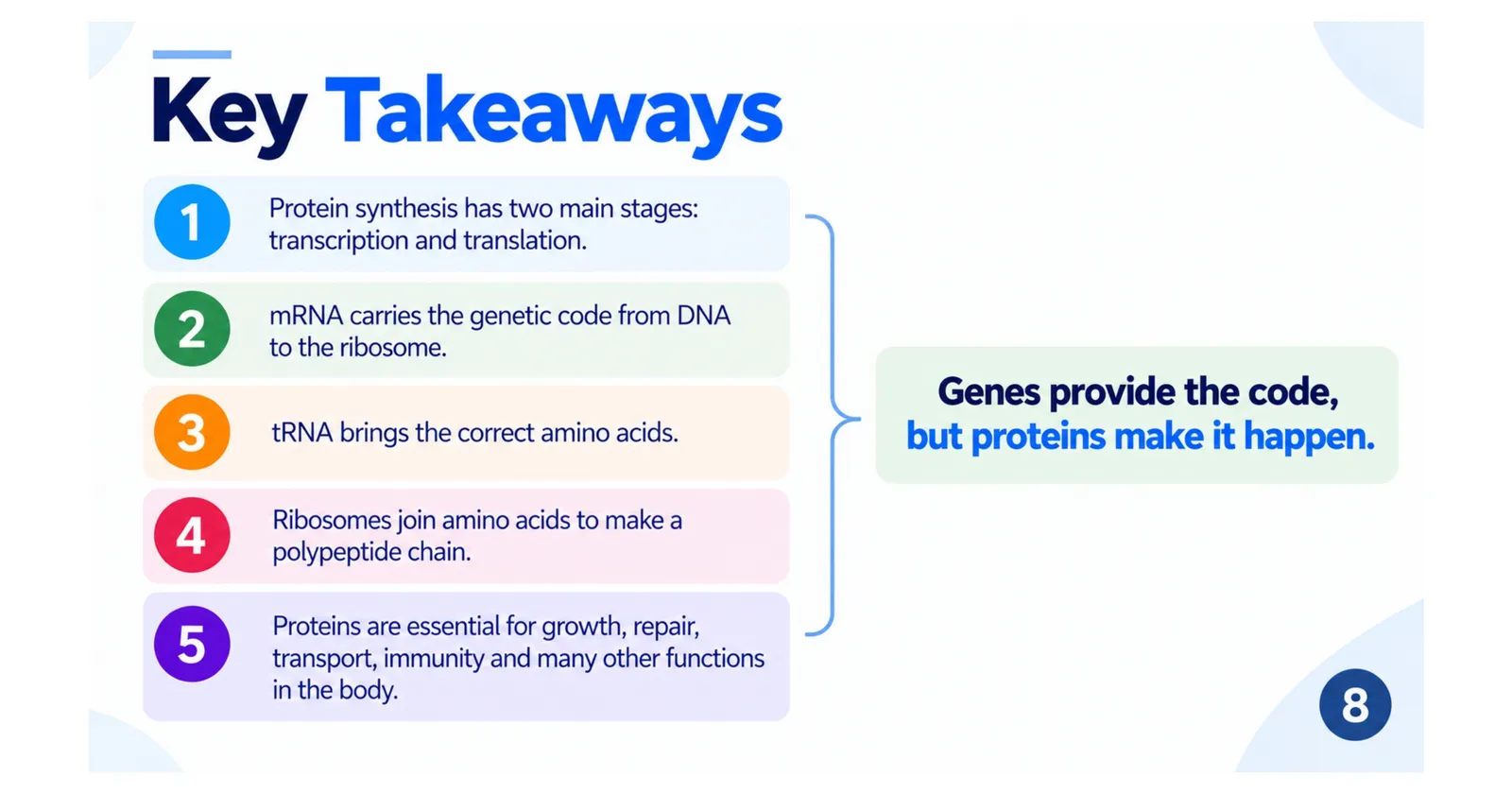
Protein synthesis turns the base sequence of a gene into the amino acid sequence of a protein.
Transcription copies a gene into mRNA in the nucleus using RNA polymerase.
Translation happens at ribosomes, where tRNA anticodons match mRNA codons.
The genetic code is a universal, degenerate triplet code with start and stop codons.
Mutations change the base sequence and can change or destroy the protein.
Slide: Key takeaways
1/1
Proteins made by protein synthesis include the enzymes that run your metabolism. Read our enzymes guide next to find out how these proteins do their remarkable work.
🗂️ Revision Flashcards
Tap a card to reveal the answer.
🎯 Quick Quiz
8 questions. Pick an answer to check it straight away.
1Where does transcription take place in human cells?
Transcription takes place in the nucleus; saying the cytoplasm is a common exam mistake.
2Which base replaces thymine in RNA?
RNA uses A, U, C and G: uracil replaces thymine.
3If the DNA template strand reads TAC GGA TTC, what does the mRNA read?
Complementary pairing with uracil instead of thymine gives AUG CCU AAG.
4Which enzyme joins RNA nucleotides together during transcription?
RNA polymerase joins the RNA nucleotides to form a single strand of mRNA.
5What is the anticodon on the tRNA that brings methionine to the start codon AUG?
A tRNA with the complementary anticodon UAC brings methionine.
6Why is the genetic code described as degenerate?
There are 64 possible codons but only 20 amino acids, so most amino acids have more than one codon.
7Which type of mutation causes a frameshift?
Insertions and deletions make every codon after the mutation read differently.
8Why can some antibiotics block bacterial protein synthesis without harming ours?
Antibiotics such as tetracycline and streptomycin block the smaller 70S bacterial ribosomes.