📖 Lesson: Rainforest Food Chains
Discover how energy flows through tropical rainforest ecosystems

📚 Rainforest Food Chain Examples
Six named food chains from the Amazon, Congo, Asian and Australian rainforests, written out step by step.
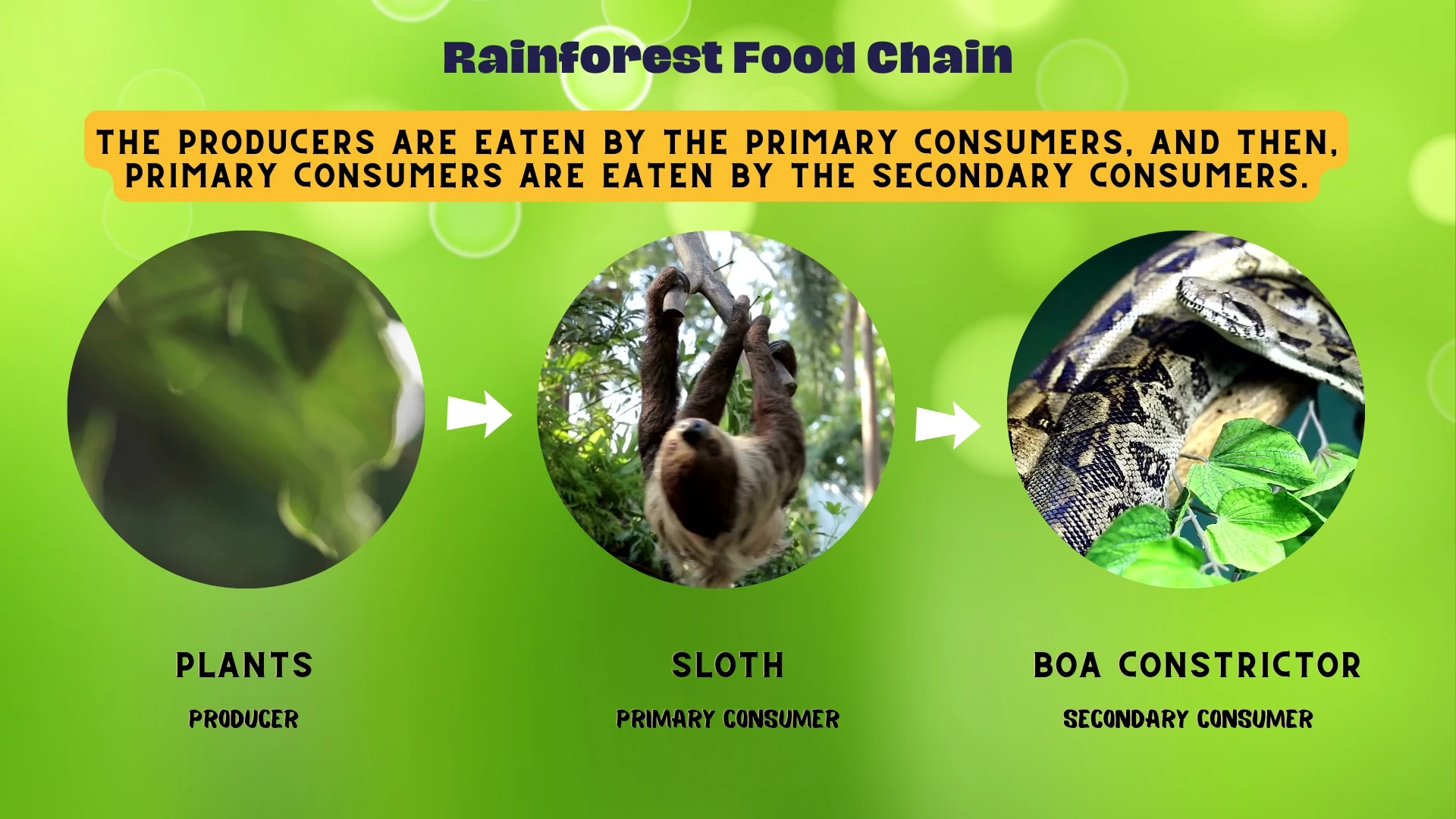
A food chain shows one single path that energy takes through an ecosystem. It always starts with a producer (a plant, which makes its own food using sunlight) and each arrow means “is eaten by”, so the arrow always points in the direction the energy travels.
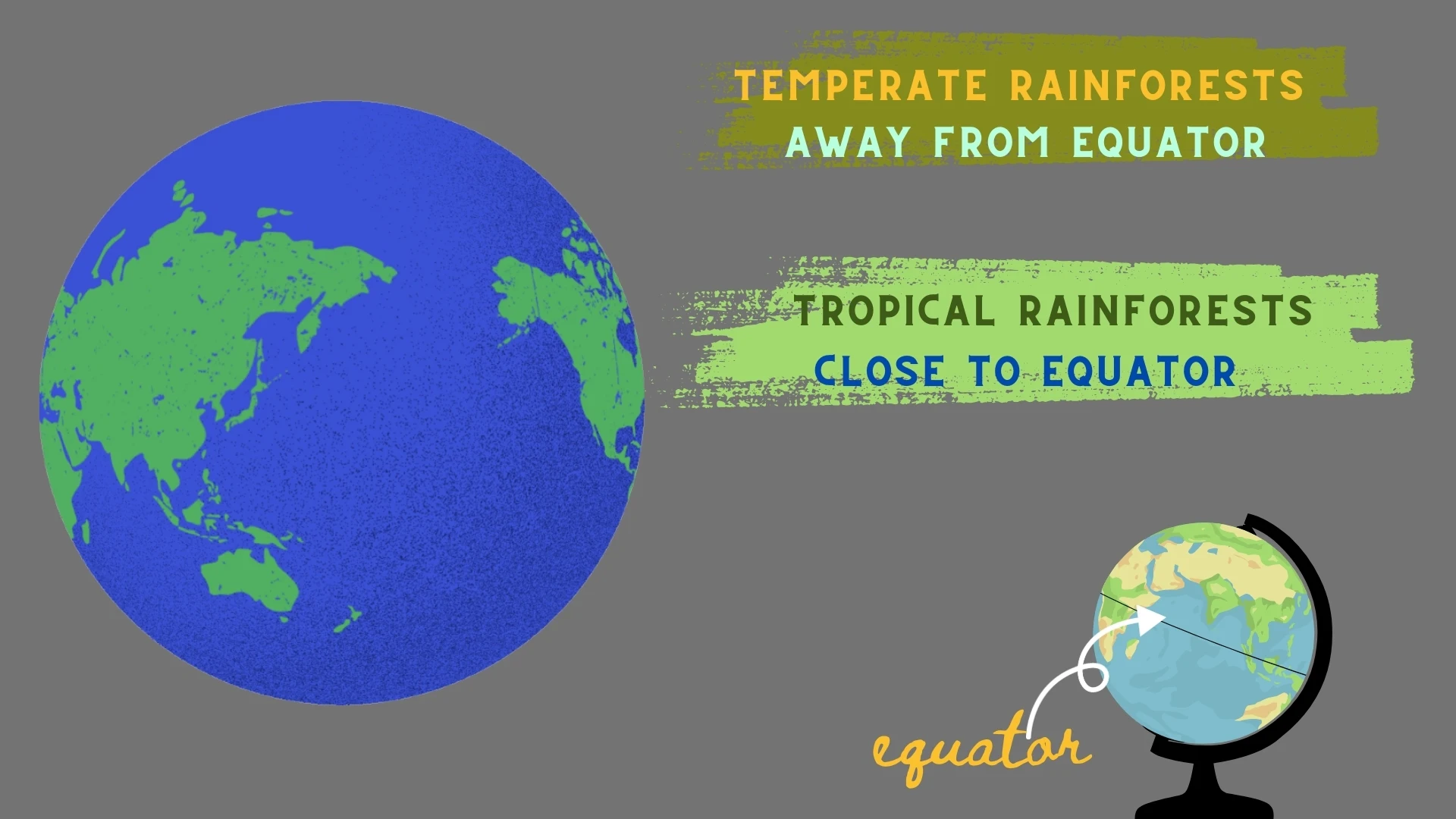
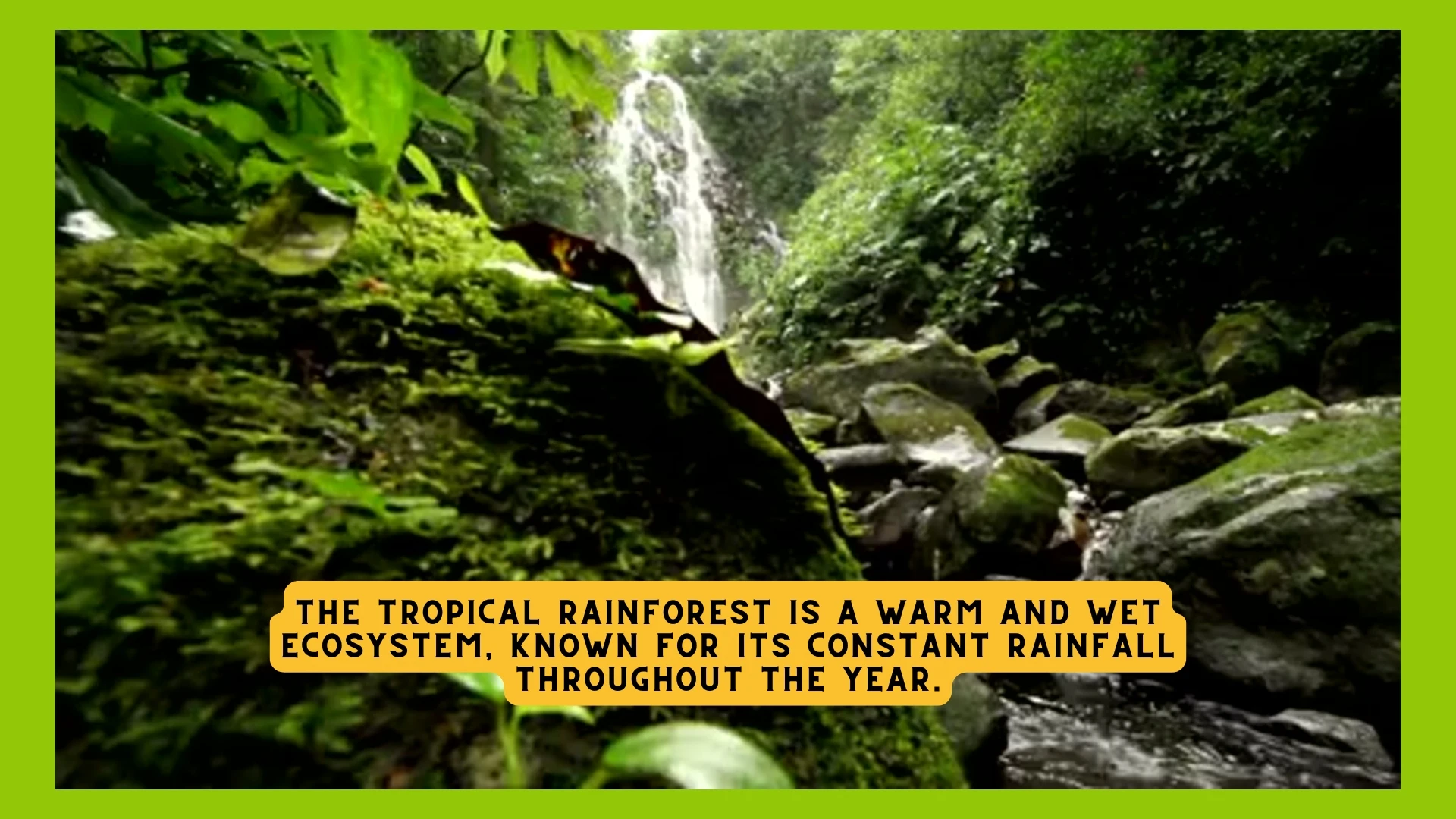
Tropical rainforests are warm and wet all year, so plants grow quickly and never stop producing food. That is why a rainforest can support so many layers of consumers. Only about 10% of the energy at one level is passed on to the next level, which is why there are thousands of insects and leaves for every one jaguar or harpy eagle.
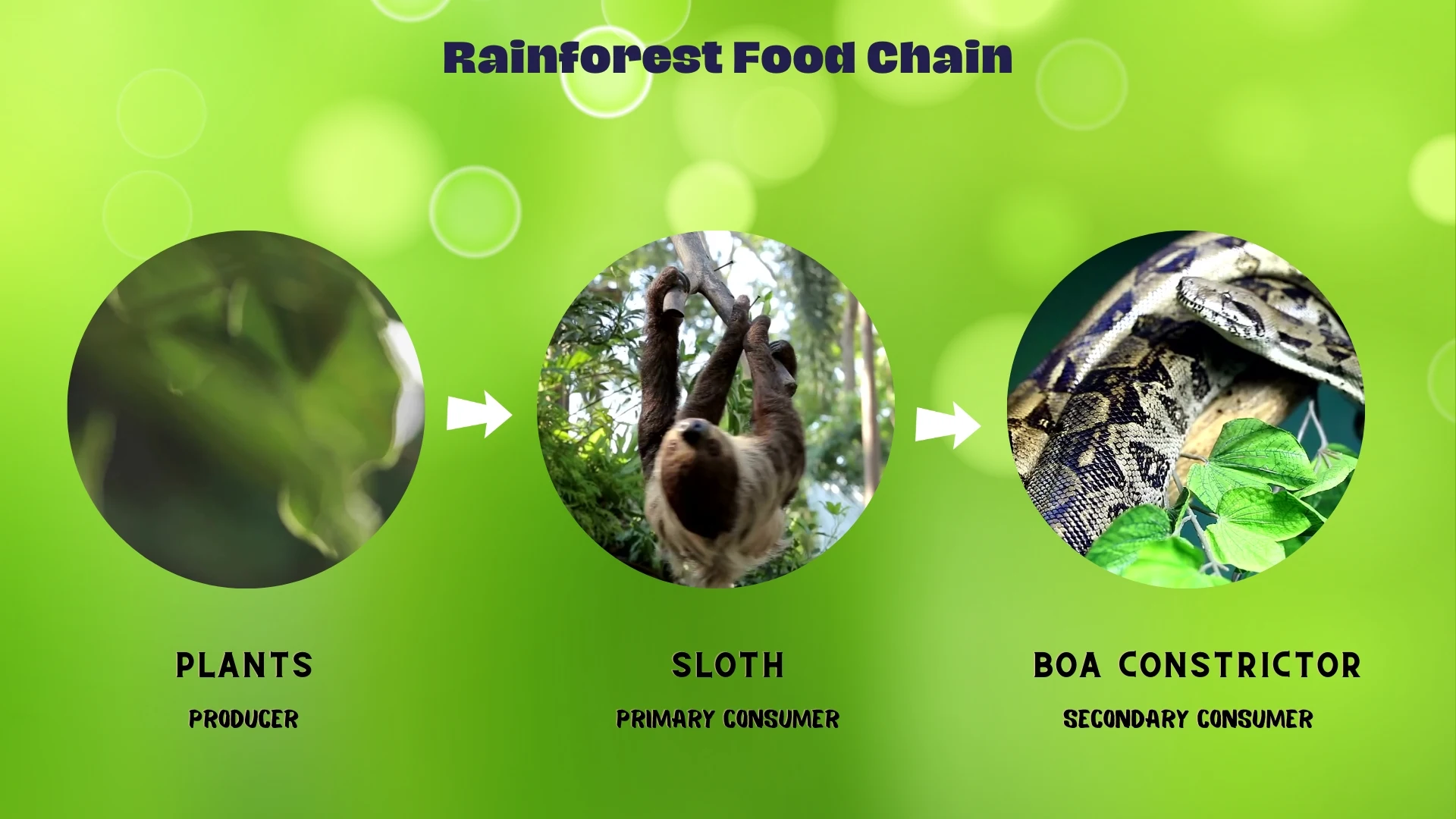
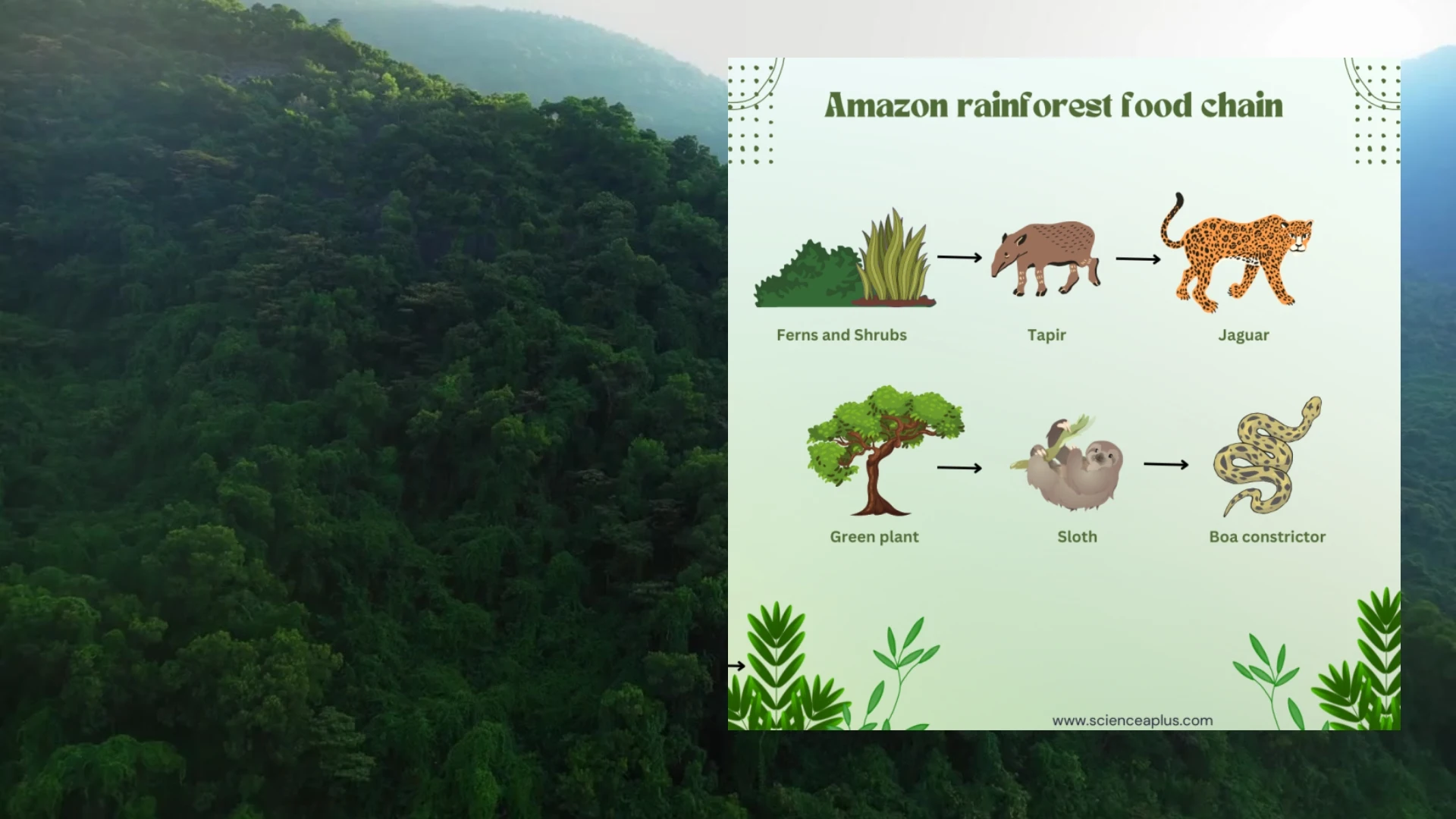
Sloth Food Chain: Leaves → Three-Toed Sloth → Boa Constrictor → Harpy Eagle
The three-toed sloth is a folivore, which means it eats almost nothing but leaves. It is especially fond of the soft young leaves of the Cecropia tree, a fast-growing pioneer tree of the Amazon. Leaves are a poor, low-energy food, so the sloth moves slowly and digests very slowly to get every last bit of energy out of them. That makes the leaves the producer and the sloth the primary consumer in this chain.
Sloths come down to the forest floor about once a week to go to the toilet, and that is when they are most at risk. A boa constrictor waiting in the low branches or leaf litter can take a sloth, wrapping around it and squeezing until it cannot breathe. The boa is therefore the secondary consumer (a carnivore that eats a herbivore).
At the top sits the harpy eagle, one of the most powerful birds of prey on Earth, with talons as long as a grizzly bear’s claws. Harpy eagles hunt through the canopy and will take large snakes as well as monkeys and sloths, so they act as the tertiary consumer and the apex predator of this chain. Nothing in the rainforest hunts a healthy adult harpy eagle.
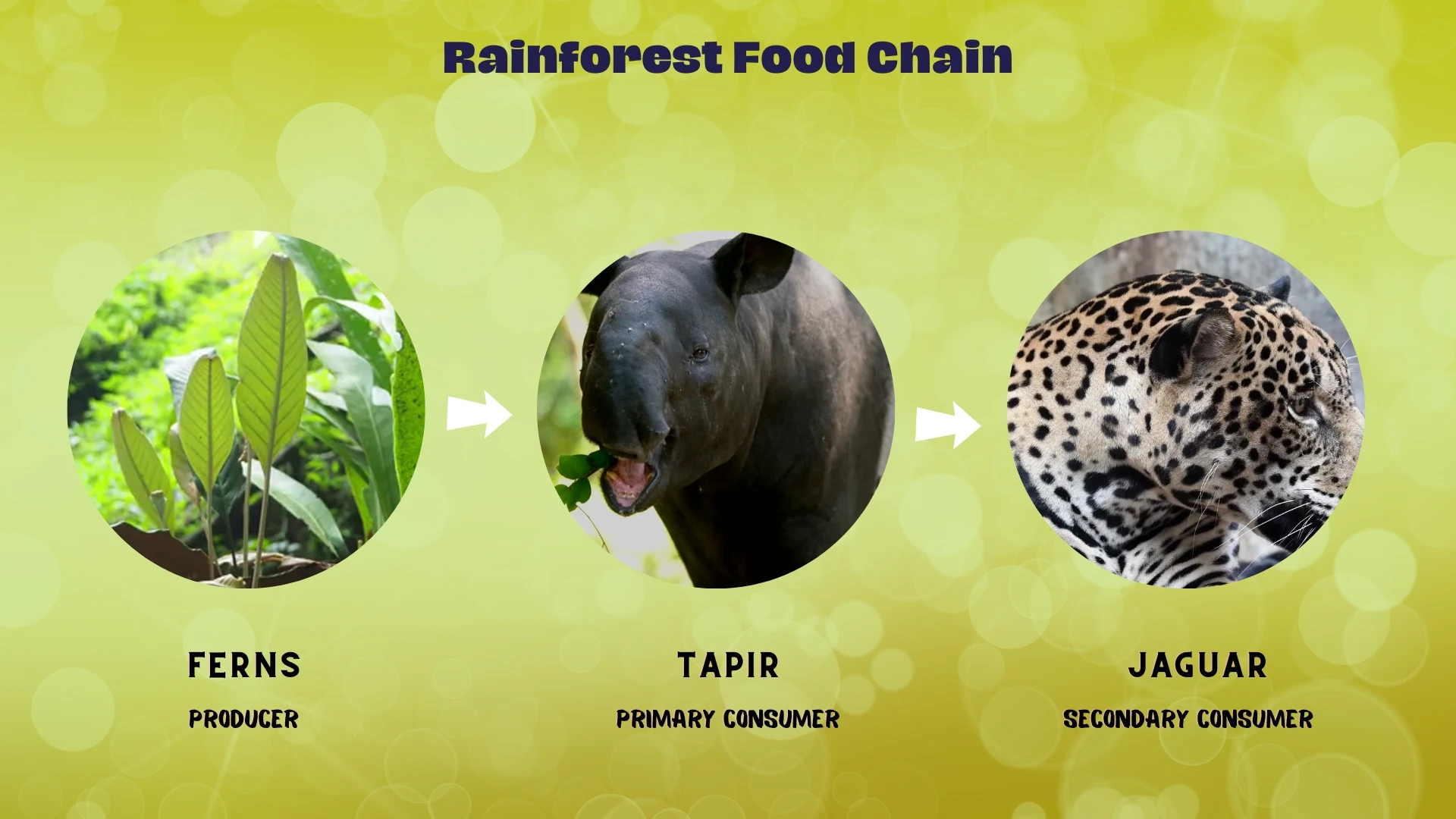
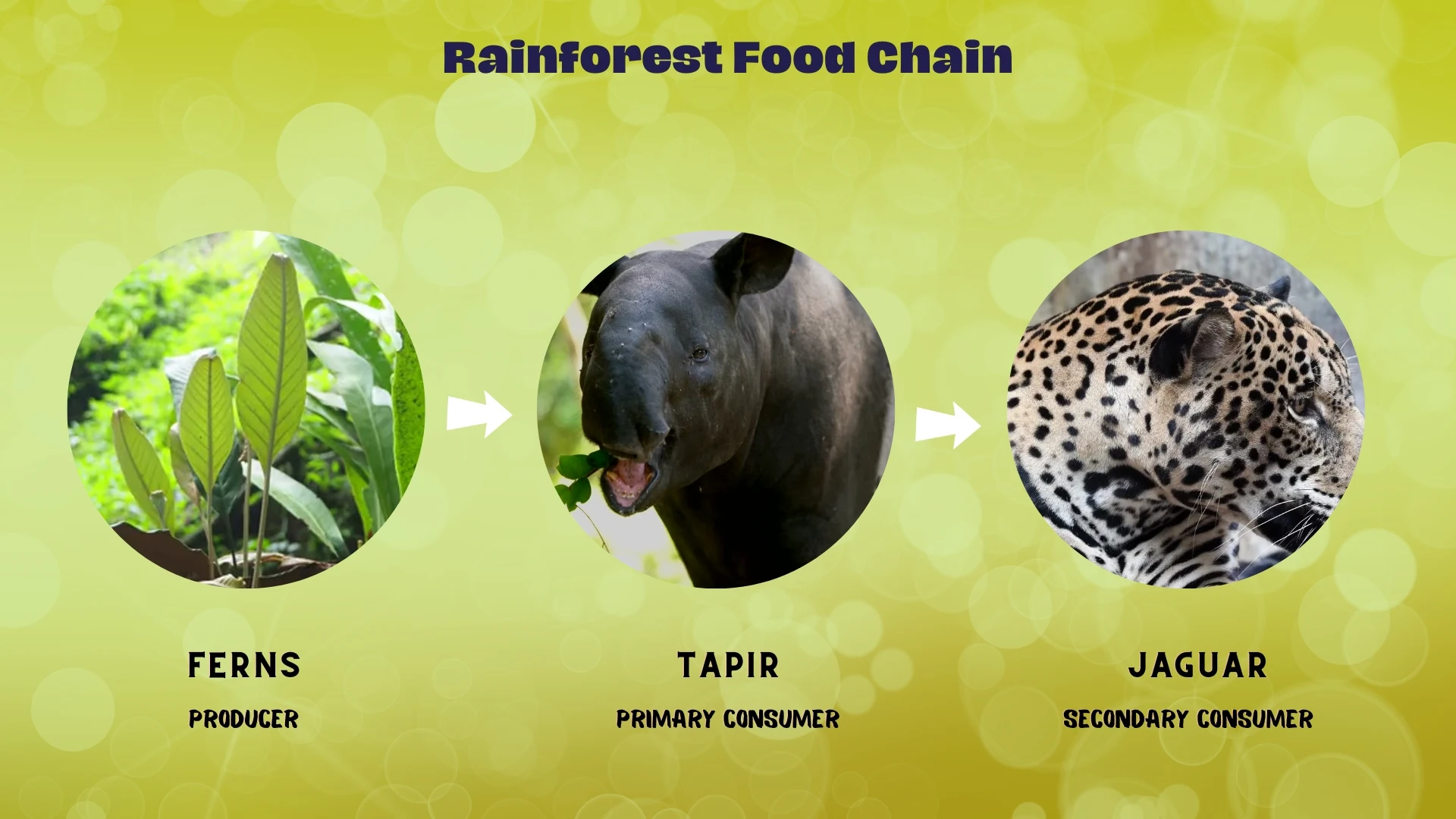
Jaguar Food Chain: Ferns and Leaves → Tapir → Jaguar
The South American tapir is the largest land mammal in the Amazon, and it is a pure herbivore. It browses on ferns, low leaves, shoots and stems, and it eats a great deal of fallen fruit – so much that tapirs are important seed dispersers for the forest. That makes the tapir a primary consumer feeding on the forest’s producers.
The jaguar is the largest cat in the Americas and the apex predator of the Amazon. Unlike most cats it kills by biting straight through the skull, which is how it can tackle prey as large and tough-skinned as a tapir or a caiman. In this chain the jaguar is the secondary consumer, and because no other animal hunts an adult jaguar it is also the top carnivore.
Jaguars are not fussy: as well as tapirs they hunt capybaras, peccaries, agoutis, armadillos, caimans, turtles and fish. If you are asked for a longer jaguar chain, this one works well: leaves → agouti → ocelot → jaguar, because a jaguar will also kill smaller cats.
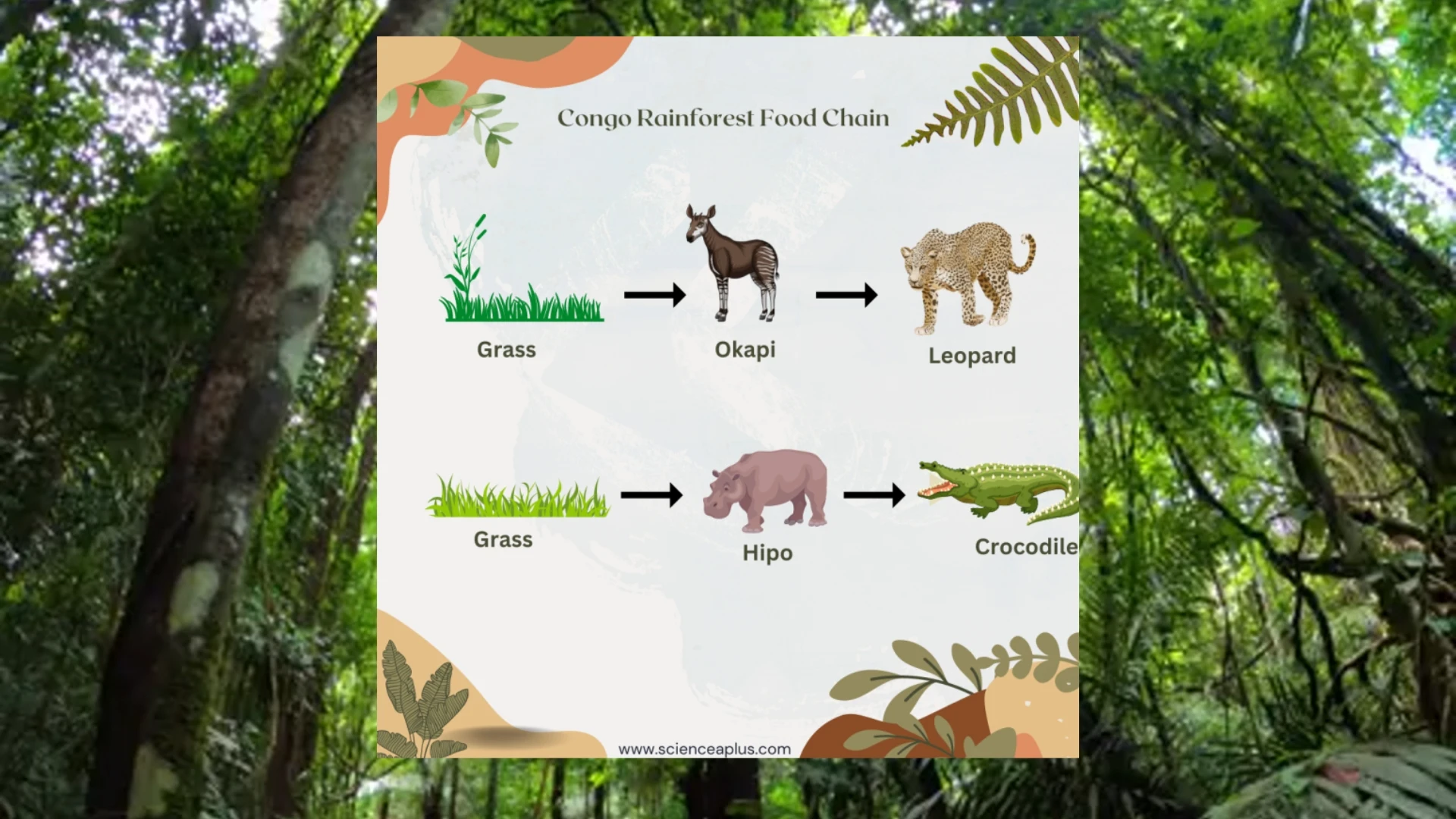
Congo Rainforest Food Chain: Leaves → Okapi → Leopard
The okapi lives only in the rainforests of the Democratic Republic of the Congo and is the giraffe’s closest living relative. It is a browser: it uses a long dark tongue to strip leaves, buds, shoots, fruit and fungi from the understorey, so it is a primary consumer. The striped hindquarters that make it look like a zebra are camouflage in the dappled forest light.
The okapi’s main natural predator is the leopard, which hunts by ambush and often drags its kill up into a tree. The leopard is the secondary consumer and the main apex predator of the Congo forest floor. The crowned eagle is the other great Congo predator, taking monkeys and small antelope from the canopy.
Two more Congo chains you can use in homework:
The western lowland gorilla eats leaves, stems, pith and fruit (plus a few termites and ants), so it is mostly a primary consumer. Leopards very occasionally kill gorillas, but an adult silverback has almost no predators. The African forest elephant is even safer – a full-grown adult has no natural predator at all, so its chain ends not with a hunter but with the decomposers that break its body down when it eventually dies.
Asian Rainforest Food Chain: Leaves → Sambar Deer → Sumatran Tiger
The sambar deer is a large browsing deer of the Southeast Asian rainforest. It feeds on leaves, young shoots, grasses and fallen fruit, making it a primary consumer. It is the favourite prey of the Sumatran tiger, the smallest surviving tiger and a critically endangered apex predator. Tigers also hunt wild boar and muntjac deer.
A second Asian chain uses the region’s most famous animal:
The Bornean orangutan is mainly a frugivore – over half its diet is fruit, especially figs, with leaves, bark and the occasional insect making up the rest. Adult orangutans are far too big for most predators, but clouded leopards can take young ones, and on Sumatra tigers are a threat to orangutans that come down to the ground.
Australian Rainforest Food Chain: Fruit → Musky Rat-Kangaroo → Amethystine Python
Australia’s tropical rainforests, such as the Daintree in Queensland, have their own set of species. The musky rat-kangaroo is the smallest kangaroo in the world, about the size of a rabbit, and it forages on the forest floor for fallen fruit, seeds, fungi and insects. Because most of its diet is plant material it counts as a primary consumer (strictly, an omnivore).
The amethystine python (also called the scrub python) is Australia’s longest snake and hunts along the ground and through the branches, taking possums, rats, bats and birds. It is the secondary consumer here.
A second Australian chain features the forest’s most important gardener:
The southern cassowary is a huge flightless bird that swallows fruit whole and spreads the seeds across the forest in its droppings. More than 70 rainforest tree species depend on it. An adult cassowary has no natural predator in Australia, so it sits at the top of its chain and its energy passes on to the decomposers.
Every Rainforest Food Chain Ends With Decomposers
Whether an animal is eaten or simply dies of old age, its energy and nutrients end up with the decomposers. In a rainforest this happens astonishingly fast: it is so warm and wet that a fallen leaf can be broken down in a few weeks, compared with a year or more in a cool forest.
That speed is the reason rainforest soil is surprisingly poor. Nutrients do not build up in the ground – they are recycled straight back into the living trees, and most rainforest tree roots are shallow and spread out sideways to grab them. It is also why land cleared of rainforest usually stops being fertile after only a few seasons of farming.
How These Chains Join Into a Rainforest Food Web
A food web is what you get when you draw all of an ecosystem’s food chains on one diagram and join them where they overlap. It is a far more honest picture than a single chain, because almost no rainforest animal eats only one thing.
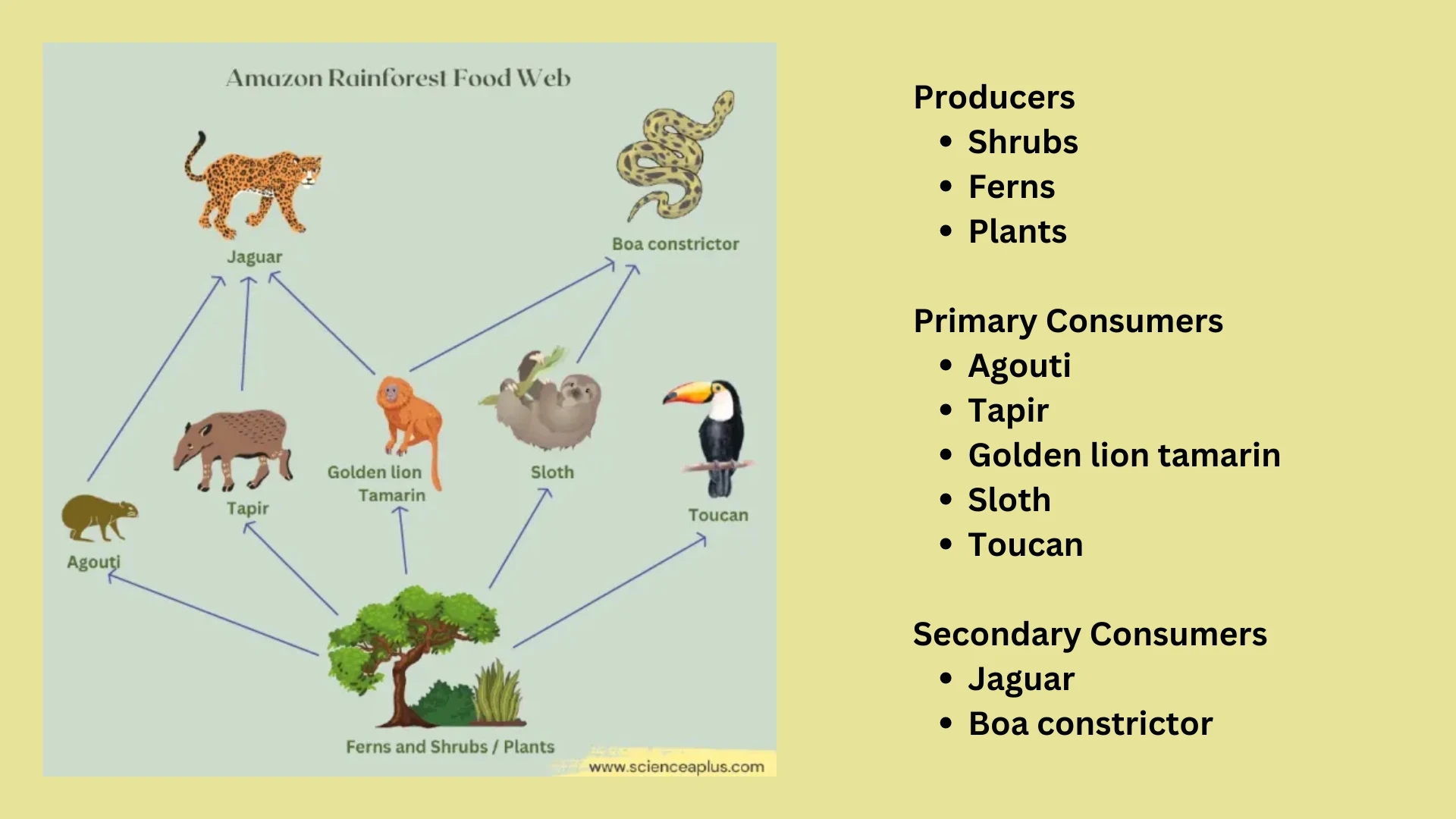
In an Amazon rainforest food web, ferns, shrubs and trees feed the agouti, the tapir, the golden lion tamarin, the sloth and the toucan. The jaguar hunts the agouti and the tapir; the boa constrictor takes the sloth, the tamarin and the toucan; the harpy eagle hunts the sloth and the tamarin. Because the jaguar and the boa share prey, they are competitors as well as predators.
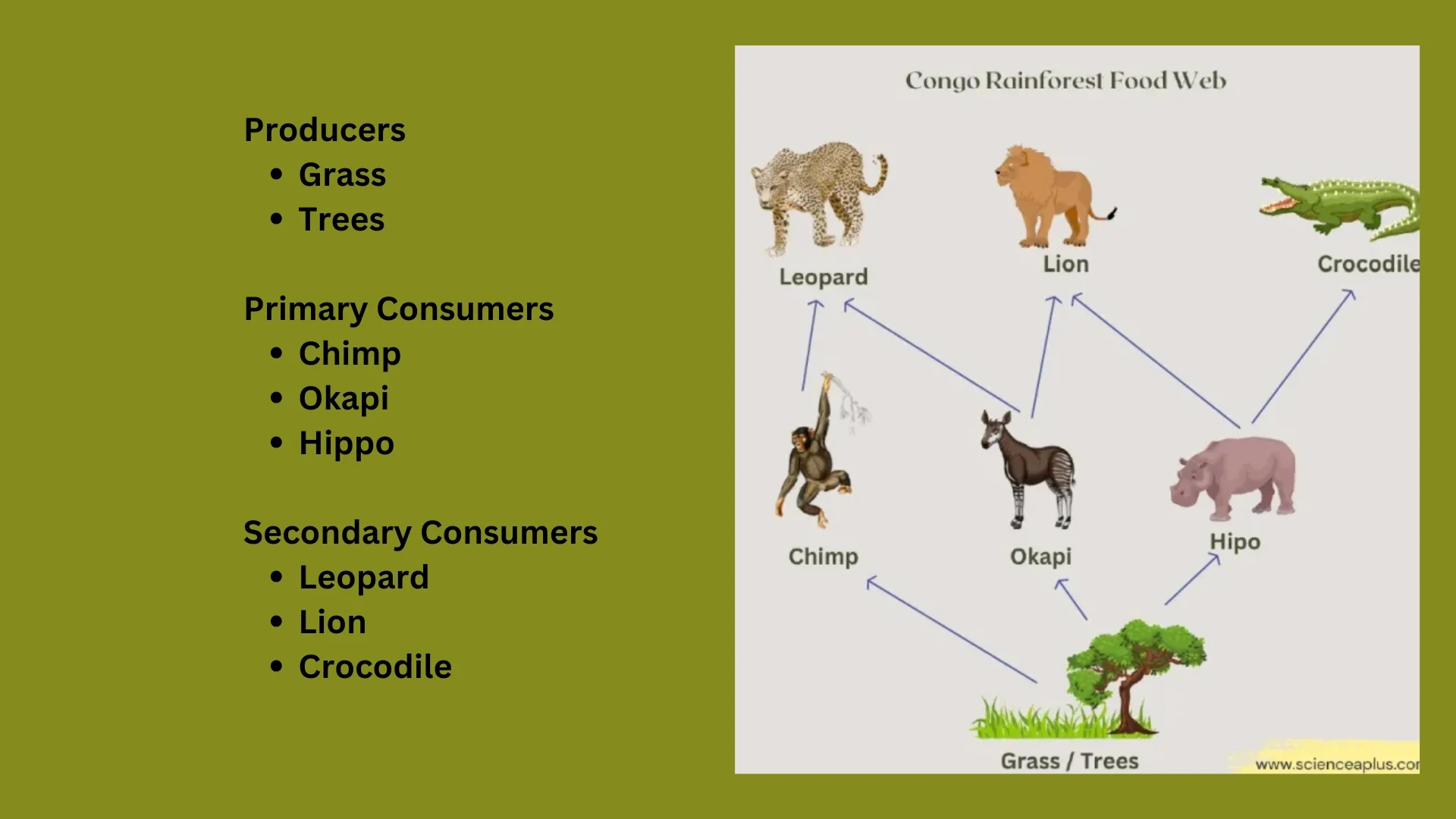
In a Congo rainforest food web, grass, herbs and trees feed the okapi, the chimpanzee, the gorilla, the forest elephant and the forest buffalo. The leopard hunts the okapi, young chimpanzees and duikers; the crowned eagle takes monkeys from the canopy; and along the rivers the Nile crocodile hunts fish and any large mammal that comes to drink.
This is why food webs matter for conservation. Remove one species and every arrow that touched it is affected. If jaguars disappear, the number of agoutis and peccaries rises, they eat far more seeds and seedlings, and the mix of trees in the forest slowly changes – an effect ecologists call a trophic cascade.
🌱 Producers, Consumers and Decomposers in the Rainforest
Every rainforest species has a job in the ecosystem. Here is how to sort them into trophic levels, with named examples.
Producers in the Rainforest
A producer is an organism that makes its own food from sunlight, water and carbon dioxide by photosynthesis. Producers are the first level of every food chain, and in a rainforest they are almost all green plants. Rainforests are the most productive land ecosystems on Earth: warmth, constant rain and year-round sunshine mean the plants never stop growing.
Named rainforest producers:
- Kapok tree – a giant emergent tree of the Amazon that grows up to 60 m and towers above the canopy.
- Cecropia tree – a fast-growing pioneer tree; its soft leaves are the favourite food of the three-toed sloth.
- Strangler fig – grows around a host tree and produces fruit all year, feeding toucans, monkeys and fruit bats.
- Ferns – carpet the shady understorey and are browsed by tapirs and other herbivores.
- Bromeliads – epiphytes that perch on branches and hold pools of rainwater in which frogs and insects live.
- Orchids – another group of epiphytes that grow high on trunks to reach the light.
- Lianas (woody vines) – climb from the forest floor to the canopy and link the treetops together.
- Heliconias and wild bananas – broad-leaved understorey plants whose flowers feed hummingbirds.
Primary Consumers in the Rainforest
A primary consumer is a herbivore – an animal that eats producers. Primary consumers sit on the second level of the food chain and are the link between plants and every meat-eater above them. Because rainforest leaves are tough and low in energy, many rainforest herbivores are either very slow (like the sloth) or very large (like the tapir and the forest elephant).
Named rainforest primary consumers:
- Three-toed sloth (Amazon) – eats leaves, especially young Cecropia leaves.
- South American tapir (Amazon) – browses ferns, shoots, leaves and fallen fruit.
- Agouti (Amazon) – a rodent that eats seeds, nuts and fruit, and is one of the few animals able to crack open a Brazil nut pod.
- Howler monkey (Amazon) – feeds mainly on leaves plus some fruit and flowers.
- Leafcutter ant (Amazon) – carries cut leaves underground to grow a fungus, and then eats the fungus.
- Okapi (Congo) – strips leaves, buds, shoots and fungi from the understorey.
- African forest elephant (Congo) – eats leaves, bark, grasses and huge quantities of fruit.
- Capybara (Amazon riverbanks) – the world’s largest rodent, grazing on grasses and water plants.
- Sambar deer (Asian rainforest) – browses leaves, shoots and fruit.
- Blue morpho caterpillar (Amazon) – chews the leaves of pea-family plants before it becomes a butterfly.
Secondary Consumers in the Rainforest
A secondary consumer is an animal that eats primary consumers. Most secondary consumers are carnivores, though omnivores count too when they are eating meat. They are the third level of the food chain, and in a rainforest they range from a frog small enough to sit on your thumbnail to a snake three metres long.
Named rainforest secondary consumers:
- Boa constrictor (Amazon) – squeezes and swallows sloths, rodents, bats and birds.
- Poison dart frog (Amazon) – eats ants, mites and termites, and gets its poison from the ants it swallows.
- Ocelot (Amazon) – a small spotted cat that hunts agoutis, rodents, lizards and birds.
- Emerald tree boa (Amazon) – hangs in the canopy and ambushes small mammals and birds.
- Insect-eating bats (all rainforests) – catch moths, beetles and mosquitoes at night using echolocation.
- Praying mantis (all rainforests) – an ambush predator of other insects.
- Army ants (Amazon) – hunt in huge swarms, eating insects, spiders and other invertebrates.
- Spectacled caiman (Amazon rivers) – eats fish, frogs, snails and water birds.
- Chimpanzee (Congo) – mostly a fruit-eater, but hunts colobus monkeys in organised groups, which makes it a secondary consumer at those meals.
Tertiary Consumers and Apex Predators in the Rainforest
A tertiary consumer eats secondary consumers. An apex predator is a tertiary (or higher) consumer that nothing else hunts once it is fully grown. Because only about a tenth of the energy passes up each level, there is very little energy left this high, so apex predators are always rare and each one needs a very large territory.
Named rainforest tertiary consumers and apex predators:
- Jaguar (Amazon) – hunts tapirs, capybaras, peccaries, caimans and even smaller cats.
- Harpy eagle (Amazon) – snatches sloths, monkeys and large snakes out of the canopy.
- Green anaconda (Amazon wetlands) – the heaviest snake in the world; takes capybaras, caimans and deer.
- Black caiman (Amazon rivers) – the largest predator in the Amazon river system, eating fish, capybaras and other reptiles.
- Leopard (Congo) – the okapi’s main predator; also takes duikers, monkeys and bushpigs.
- Crowned eagle (Congo) – hunts monkeys and small antelope from above the canopy.
- Sumatran tiger (Asian rainforest) – hunts sambar deer, wild boar and muntjac.
- Clouded leopard (Asian rainforest) – a superb climber that hunts monkeys, birds and small deer in the trees.
Decomposers in the Rainforest
A decomposer breaks down dead plants, dead animals and waste, releasing the nutrients locked inside them back into the soil. Decomposers are not usually drawn as a level of the food chain because they feed on every level. Without them the rainforest floor would be buried metres deep in dead leaves and nothing new could grow.
Named rainforest decomposers and detritivores:
- Bracket fungi and mushrooms – grow through fallen trunks and digest the wood from the inside.
- Bacteria – microscopic and everywhere; they finish the job on anything that dies.
- Termites – eat dead wood and leaf litter, helped by microbes living in their guts.
- Millipedes – shred rotting leaves on the forest floor into small pieces.
- Earthworms – pull dead plant material down into the soil and mix it in.
- Dung beetles – bury animal droppings, returning the nutrients underground.
- Springtails and soil mites – tiny animals that swarm through leaf litter breaking it down further.
❓ Rainforest Food Chain FAQs
Short answers to the questions students ask most about rainforest food chains and food webs.
What is a rainforest food chain?
A rainforest food chain is a diagram showing one path that energy takes through a rainforest, starting with a plant and moving up through the animals that eat it. Each arrow means “is eaten by”. A simple example is Cecropia leaves → three-toed sloth → boa constrictor → harpy eagle.
What is the jaguar’s food chain?
A common jaguar food chain is ferns and leaves → tapir → jaguar. The ferns are the producer, the tapir is the primary consumer and the jaguar is the secondary consumer. Because nothing hunts an adult jaguar, it is also the apex predator of the Amazon rainforest.
What is the sloth’s food chain, and what eats a sloth?
The sloth food chain runs leaves → three-toed sloth → boa constrictor → harpy eagle. Sloths eat leaves, and sloths are eaten by harpy eagles, boa constrictors, jaguars and ocelots – most often when they come down to the forest floor.
What is the Congo rainforest food chain?
A typical Congo rainforest food chain is leaves and shoots → okapi → leopard. Other Congo chains include leaves → gorilla → leopard and grass → forest buffalo → leopard. Joining them together gives the Congo rainforest food web, in which the leopard, the crowned eagle and the Nile crocodile are the main predators.
What is the okapi’s food chain?
The okapi’s food chain is leaves, buds and fungi → okapi → leopard. The okapi is a primary consumer that browses in the Congo rainforest understorey, and the leopard is its main natural predator.
What are 3 primary consumers in the rainforest?
Three clear primary consumers in the Amazon rainforest are the three-toed sloth (eats leaves), the South American tapir (eats ferns, shoots and fruit) and the agouti (eats seeds and nuts). In the Congo rainforest you could use the okapi, the gorilla and the forest elephant.
What are 2 producers in the rainforest?
Two rainforest producers are the kapok tree and ferns. Other correct answers include the Cecropia tree, strangler figs, bromeliads, orchids and lianas – any green plant that makes its own food by photosynthesis.
What are secondary consumers in the rainforest?
Secondary consumers are animals that eat the herbivores. Rainforest examples include the boa constrictor, the poison dart frog, the ocelot, the emerald tree boa, insect-eating bats, army ants and the spectacled caiman.
What is a decomposer in the Amazon rainforest?
Fungi and bacteria are the main decomposers in the Amazon rainforest. Termites, millipedes, earthworms and dung beetles also break down dead material – these are strictly called detritivores. Rainforest decomposition is very fast because the forest is warm and wet all year.
What is the difference between a food chain and a food web?
A food chain shows one single feeding path, while a food web joins many food chains together to show all the feeding relationships in an ecosystem. Food webs are more realistic because most rainforest animals eat several different foods and are eaten by several different predators.
What animal is at the top of the rainforest food chain?
It depends on the rainforest. In the Amazon it is the jaguar on the ground and the harpy eagle in the canopy; in the Congo it is the leopard; in Southeast Asia it is the tiger. These animals are called apex predators because no other animal hunts them.
Why are there so few predators in a rainforest food chain?
Only about 10% of the energy at one trophic level is passed on to the next, because animals use most of what they eat for movement, warmth and growth, and lose the rest as waste. After three or four levels there is so little energy left that the forest can only support a small number of top predators, each needing a large territory.
🎮 Interactive Games
Test your knowledge about rainforest food chains