📖 Lesson: Animal Habitats
Explore the diverse environments where animals live and thrive
🎮 Interactive Games
Test your knowledge about animal habitats
Animal Habitats Explained: Terrestrial, Aquatic, Aerial, Arboreal and Amphibious
What is a habitat?
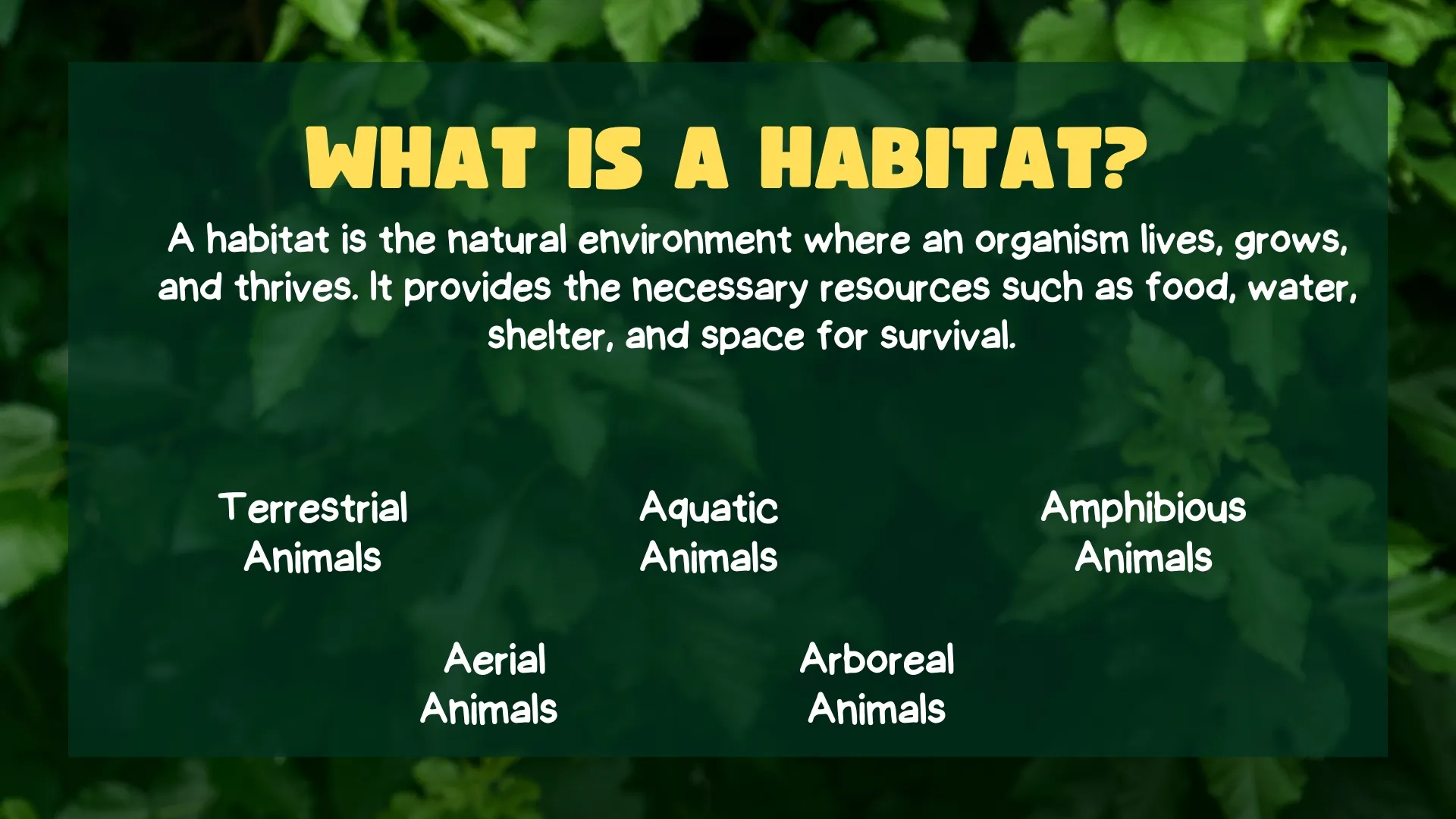
A habitat is the natural place where an animal lives. It is not simply a location on a map: a habitat is the particular set of surroundings that supplies an animal with the four things it cannot live without — food, water, shelter from weather and predators, and space in which to find a mate and raise young. Remove any one of the four and the animal cannot stay.
A habitat is an animal's address; its niche is its job — what it eats, when it is active, and what eats it. That is how an owl and a woodpecker share a wood without competing.
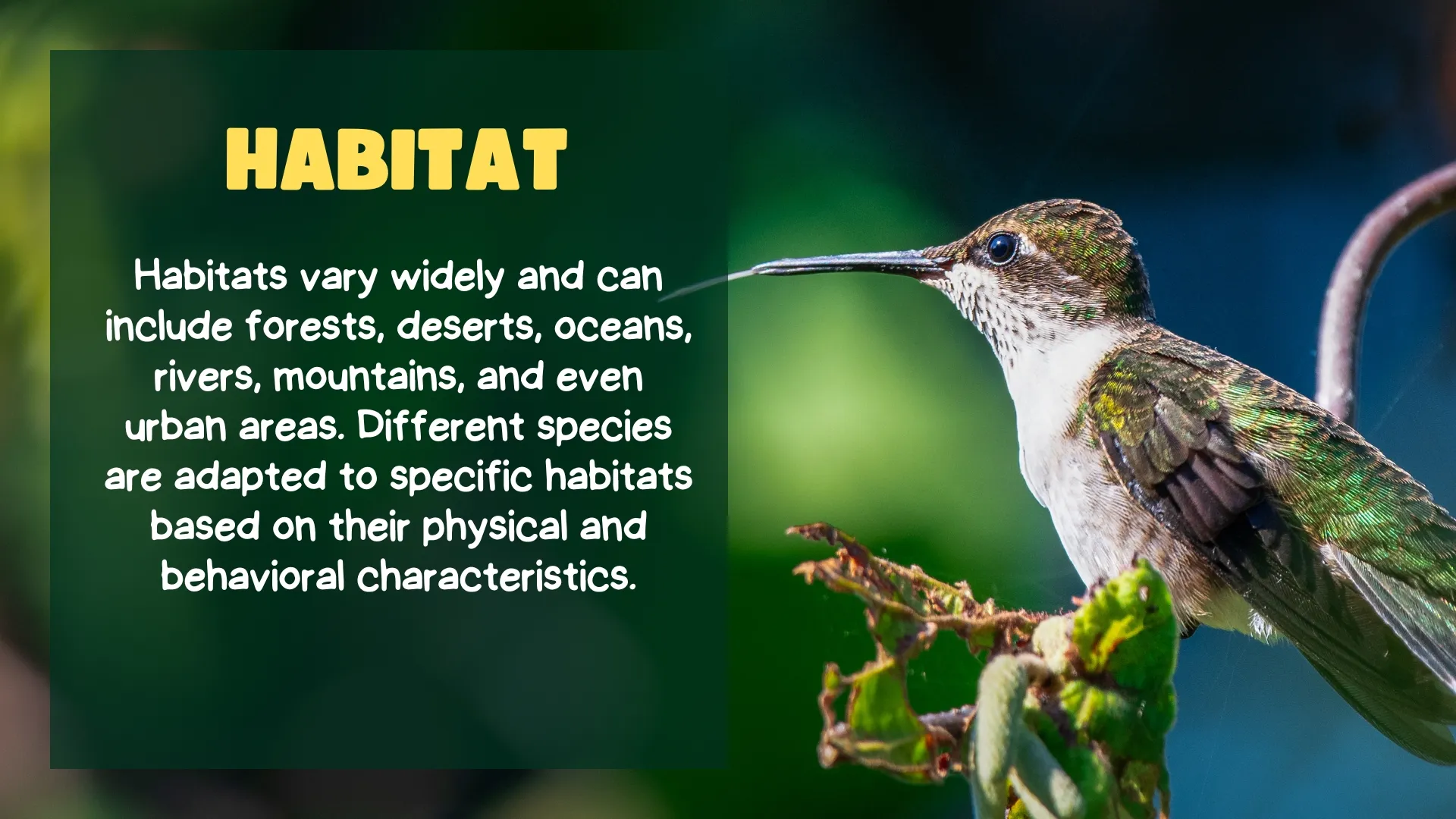
Habitats are sorted two ways: by where the animal spends its life (the five groups below), and by climate and vegetation — desert, polar, grassland, forest — covered further down.
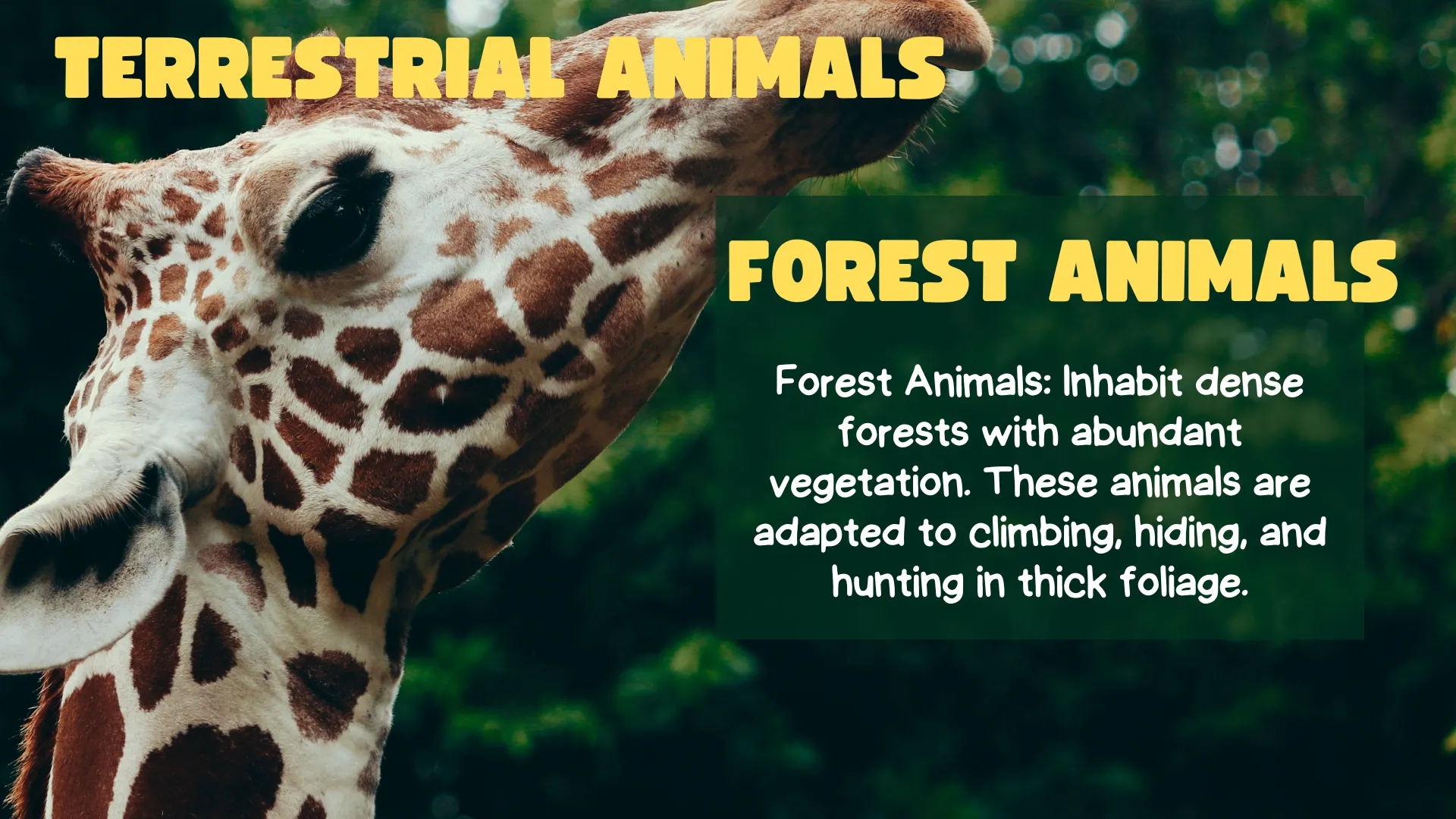
1. Terrestrial animals: life on land
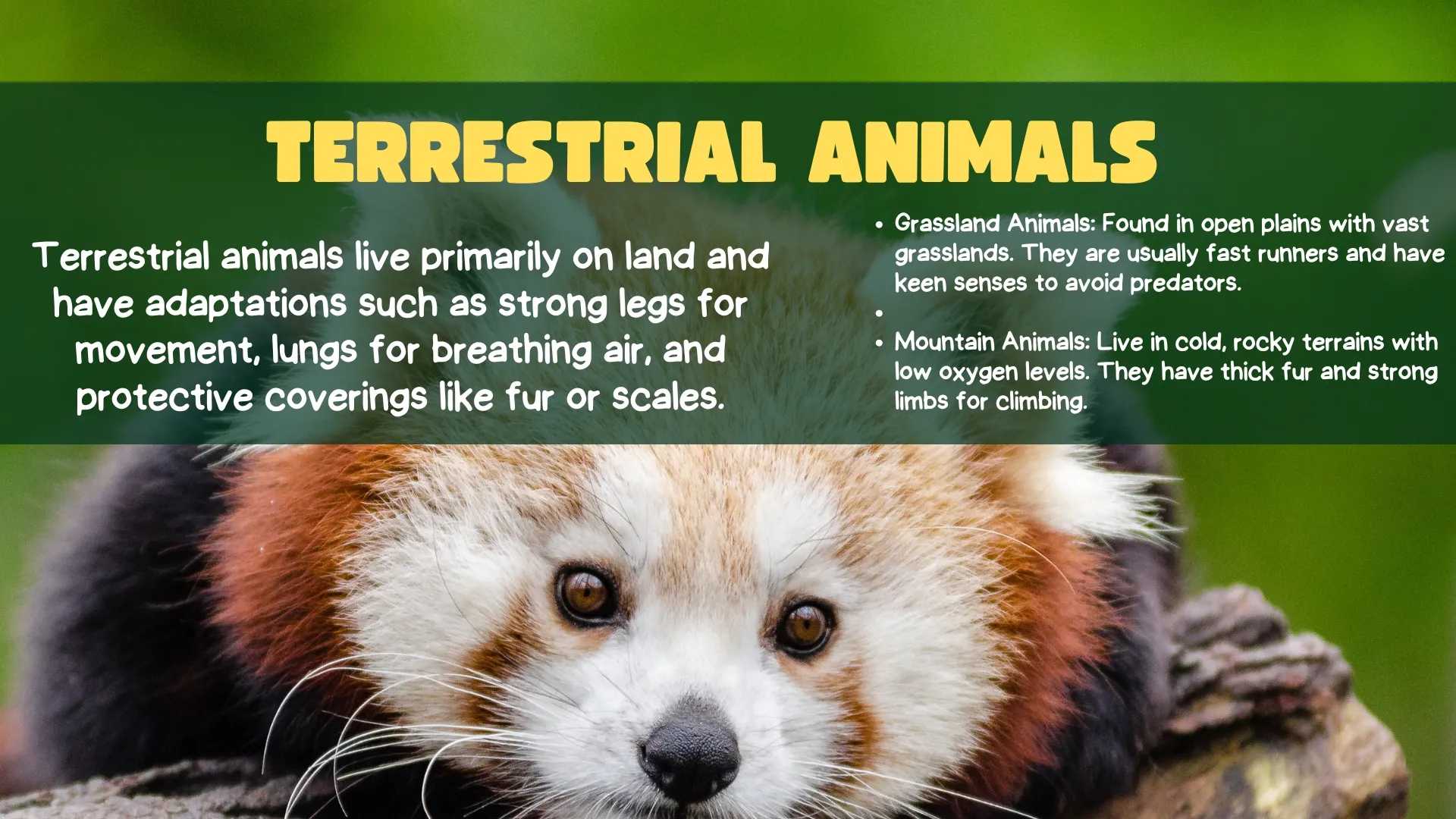
Definition: terrestrial animals live on the ground. They breathe air through lungs, support their own weight on legs, and must hold on to body water, because air dries a body out in a way that water never does.
- African elephant — pillar-like legs carry an enormous body mass, and the broad ears are filled with blood vessels that release heat, acting as radiators.
- Camel — the hump stores fat, not water, and wide two-toed feet spread its weight on loose sand.
- Lion — sandy-coloured fur blends into dry grass, and forward-facing eyes judge distance for the final pounce.
- Earthworm — a land animal with no legs, moving through soil by waves of muscle contraction and breathing through moist skin, so it must stay in damp ground.
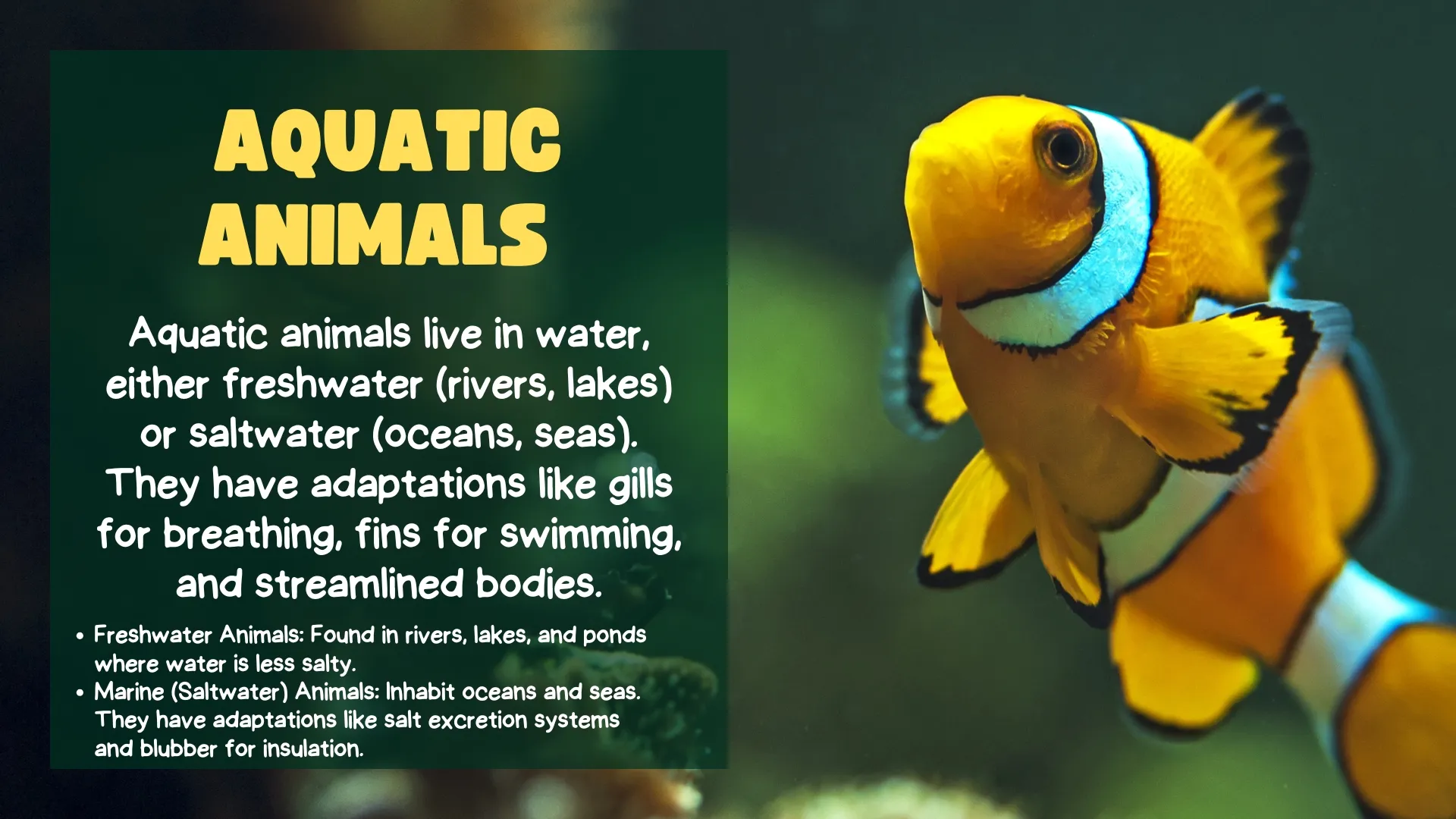
2. Aquatic animals: life in water
Definition: aquatic animals spend their whole lives in water, fresh or salt. Water supports their weight, but holds far less oxygen than air and resists movement, so the two problems are getting oxygen and reducing drag.
- Salmon and other fish — gills pull dissolved oxygen straight out of the water, fins steer, and a streamlined body slips through it.
- Dolphin — an aquatic mammal. It has no gills, so it must surface to breathe air through a blowhole, and it keeps warm in cold water with a layer of fat called blubber.
- Octopus — no skeleton at all, so it can squeeze through any gap wider than its beak, and it changes skin colour and texture to hide.
3. Aerial animals: life in the air
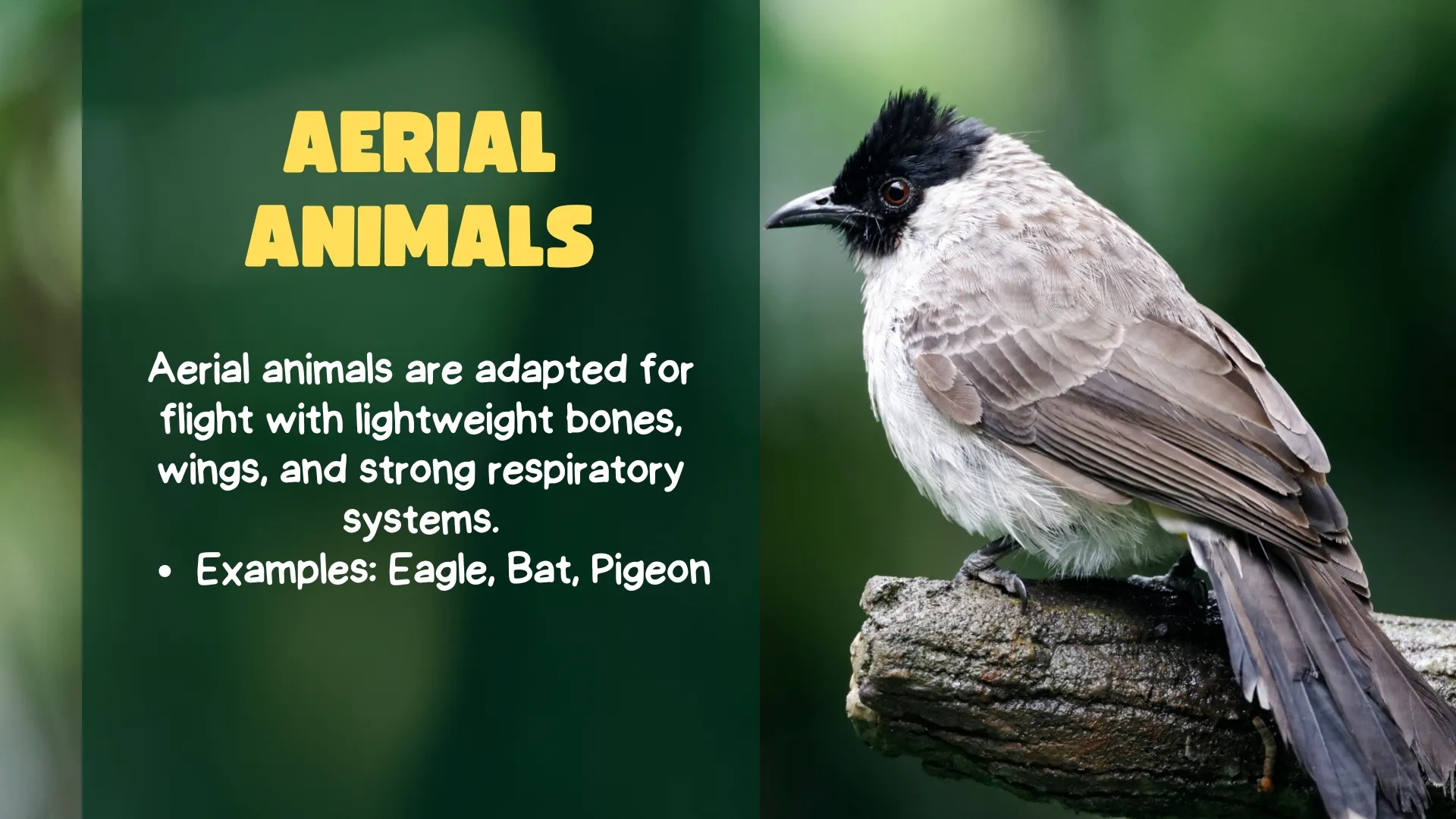
Definition: aerial animals fly, and spend most of their active life airborne. No animal lives in the air permanently — every flyer must land to nest or roost — but flight is how they feed, travel and escape. It demands a light body and a source of lift.
- Eagle — wings give lift, and the bones of birds are hollow with internal struts, keeping the skeleton strong but light. Feathers make a smooth flight surface.
- Swift — the most committed flyer of all: common swifts feed, drink and even sleep on the wing, coming down mainly to breed.
- Bat — the only mammal capable of true powered flight. Its wing is a skin membrane stretched between very long finger bones, and most species hunt in darkness using echolocation.
- Dragonfly and butterfly — flying insects, whose wings are not limbs at all but thin outgrowths of the body wall.
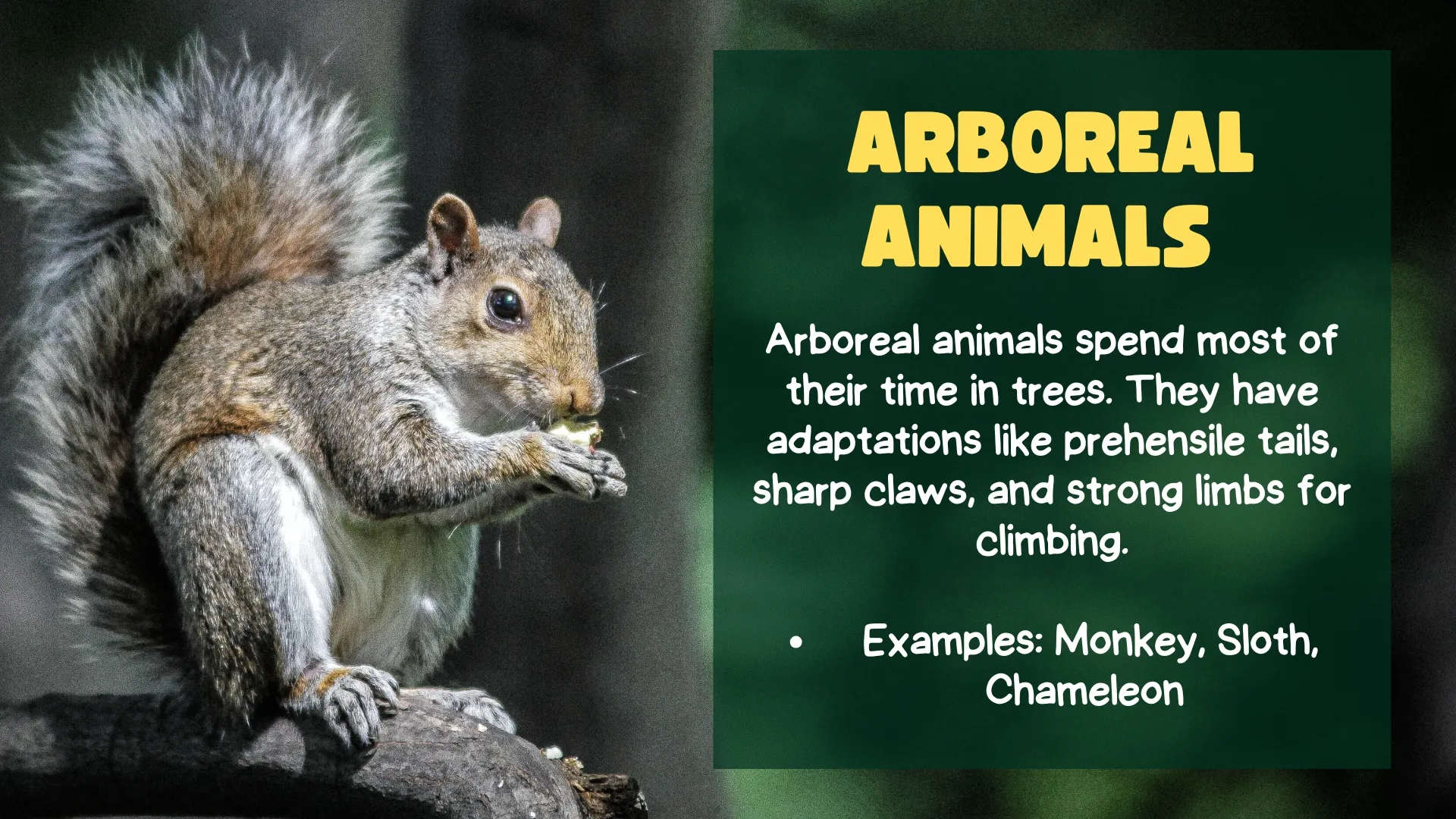
4. Arboreal animals: life in the trees
Definition: arboreal animals live in trees. The challenge is not falling while still moving quickly along narrow, bending branches, so arboreal bodies are built around grip and balance.
- Sloth — long, hooked claws let it hang beneath a branch with almost no muscular effort, and moving slowly makes it hard for a hunting eagle to spot.
- Spider monkey — a prehensile tail that grips like a fifth limb, leaving all four hands free to feed.
- Koala — rough foot pads and two opposable digits on each front paw clamp around a eucalyptus trunk, and it eats the leaves of the same trees.
- Tree frog — sticky pads on the toe tips hold it to smooth wet leaves.
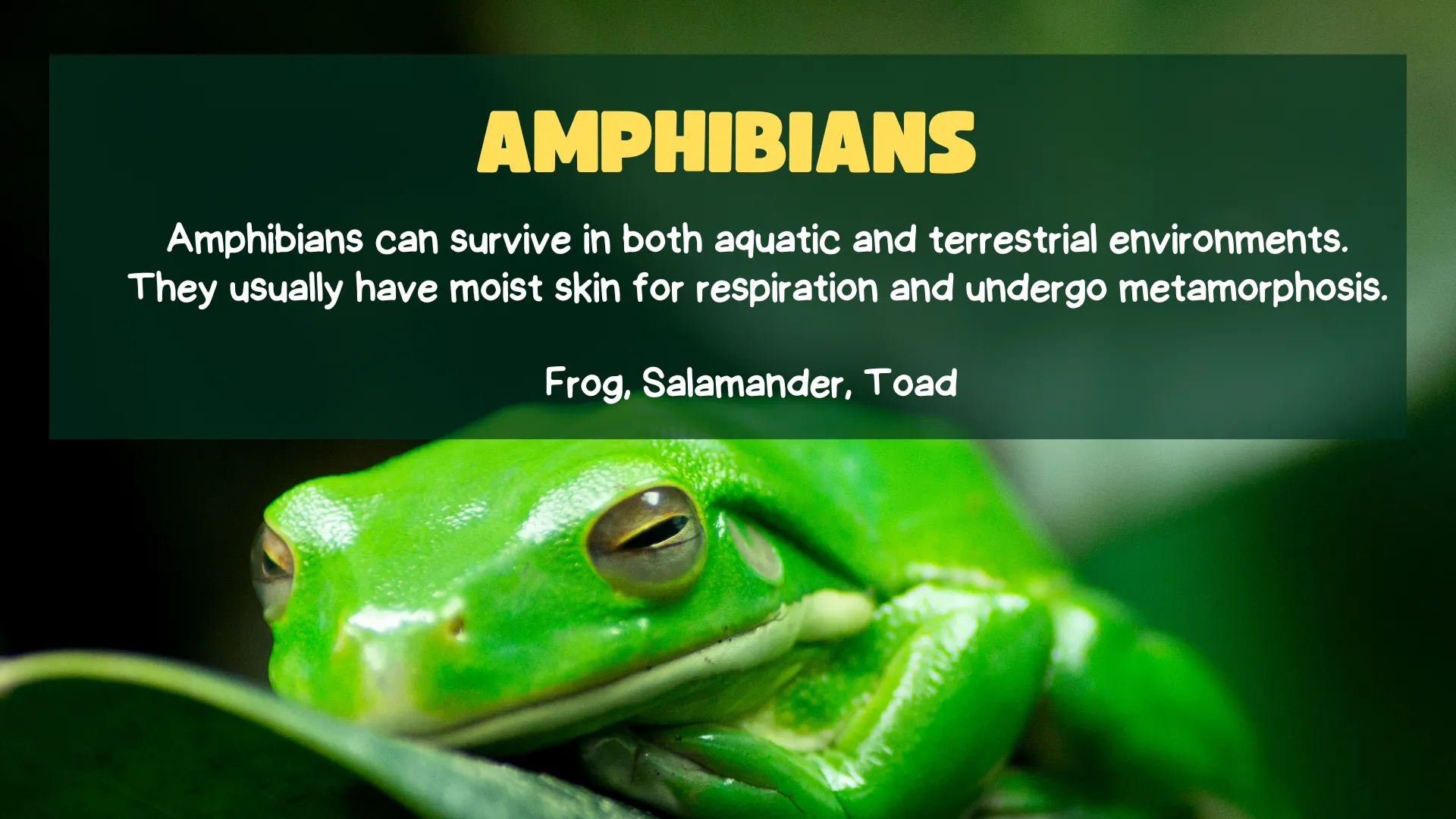
5. Amphibious animals: life on land and in water
Definition: amphibious animals are at home both on land and in water, and move between the two during normal daily life.
Be careful with this word. "Amphibious" describes a way of living. The Amphibia are a class of vertebrates — frogs, toads, newts and salamanders — defined by their biology, not their address. A hippopotamus is amphibious but is not an amphibian; it is a mammal. Every amphibian is amphibious; not every amphibious animal is an amphibian.
- Frog — a true amphibian. It hatches as a tadpole with gills and a tail, then grows lungs and legs; the adult also absorbs oxygen through moist, permeable skin, which is why it must stay damp.
- Crocodile — a reptile that hunts in water with eyes, ears and nostrils set high on the head, so it can watch the bank while almost completely submerged, and basks on land to warm up.
- Hippopotamus — a mammal that rests in rivers through the heat of the day and walks out at night to graze on land.
Habitats grouped by climate: desert, polar, grassland and forest
- Desert — very little rainfall, often hot days and cold nights. The fennec fox has ears far larger than its head, which lose heat to the air; the kangaroo rat lives on the water released by digesting dry seeds; scorpions shelter under stones by day.
- Polar — permanently cold, with ice and a short summer. The polar bear carries thick blubber, a dense coat and a compact shape with small ears that gives away less heat; the Arctic fox grows a white winter coat. Polar bears live only in the Arctic and penguins only in the southern hemisphere, so they never meet in the wild.
- Grassland — open country of grasses with few trees, such as the African savanna. With nowhere to hide, zebra and wildebeest rely on speed and on the safety of a large herd, while meerkats take turns standing sentry over a burrow.
- Forest and woodland — layered from leaf litter to canopy, so animals divide the space: deer browse at ground level, woodpeckers take insects from inside trunks, and owls hunt at night on silent, fringed wing feathers.
Why one animal can fit more than one group
These categories describe habits, not watertight boxes. A duck is aerial when it migrates, aquatic when it feeds and terrestrial when it nests; a sea turtle is aquatic for almost its whole life, yet the female must come ashore to lay eggs, because the eggs need air. When you classify an animal, name the habitat where it spends most of its life and finds its food — and say why.
Key terms
- Habitat
- The natural place where an animal lives, providing food, water, shelter and space to breed.
- Terrestrial
- Living on land.
- Aquatic
- Living in water, either fresh water or the sea.
- Aerial
- Living largely in the air; flying animals.
- Arboreal
- Living in trees.
- Amphibious
- Living both on land and in water. Not the same as being an amphibian, which is a class of vertebrate.
- Adaptation
- A feature of an animal's body or behaviour that makes it better suited to its habitat.
- Niche
- The role an animal plays in its habitat — what it eats, when it is active, and what feeds on it.