📖 Lesson: Renewable Energy
Learn about clean and sustainable energy sources for our future
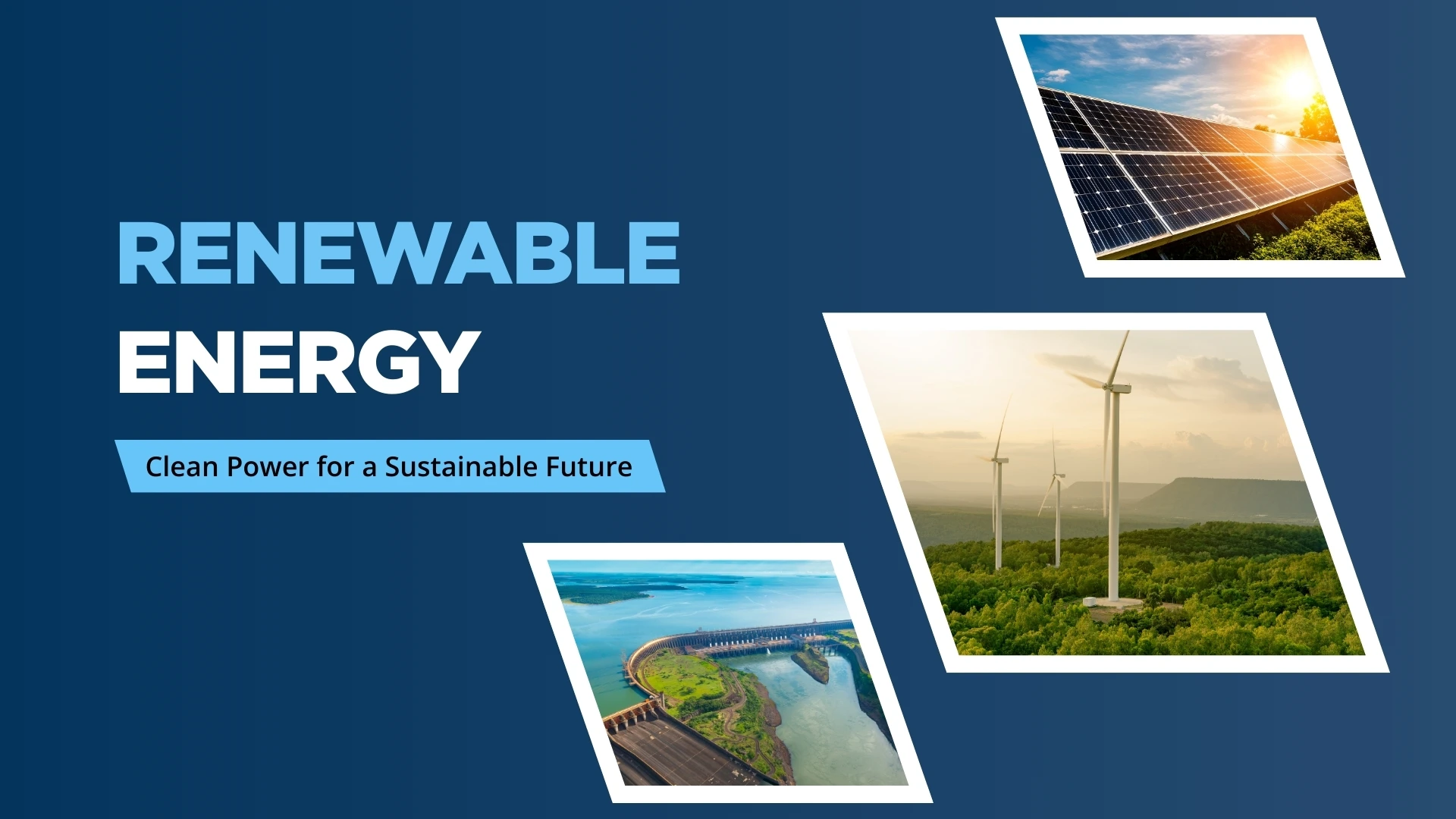
🃏 Flashcards
Click each card to reveal the definition
🎮 Interactive Games
Test your knowledge of renewable energy
☀️ Renewable Energy Explained: Sources, Uses and Drawbacks
What is renewable energy?
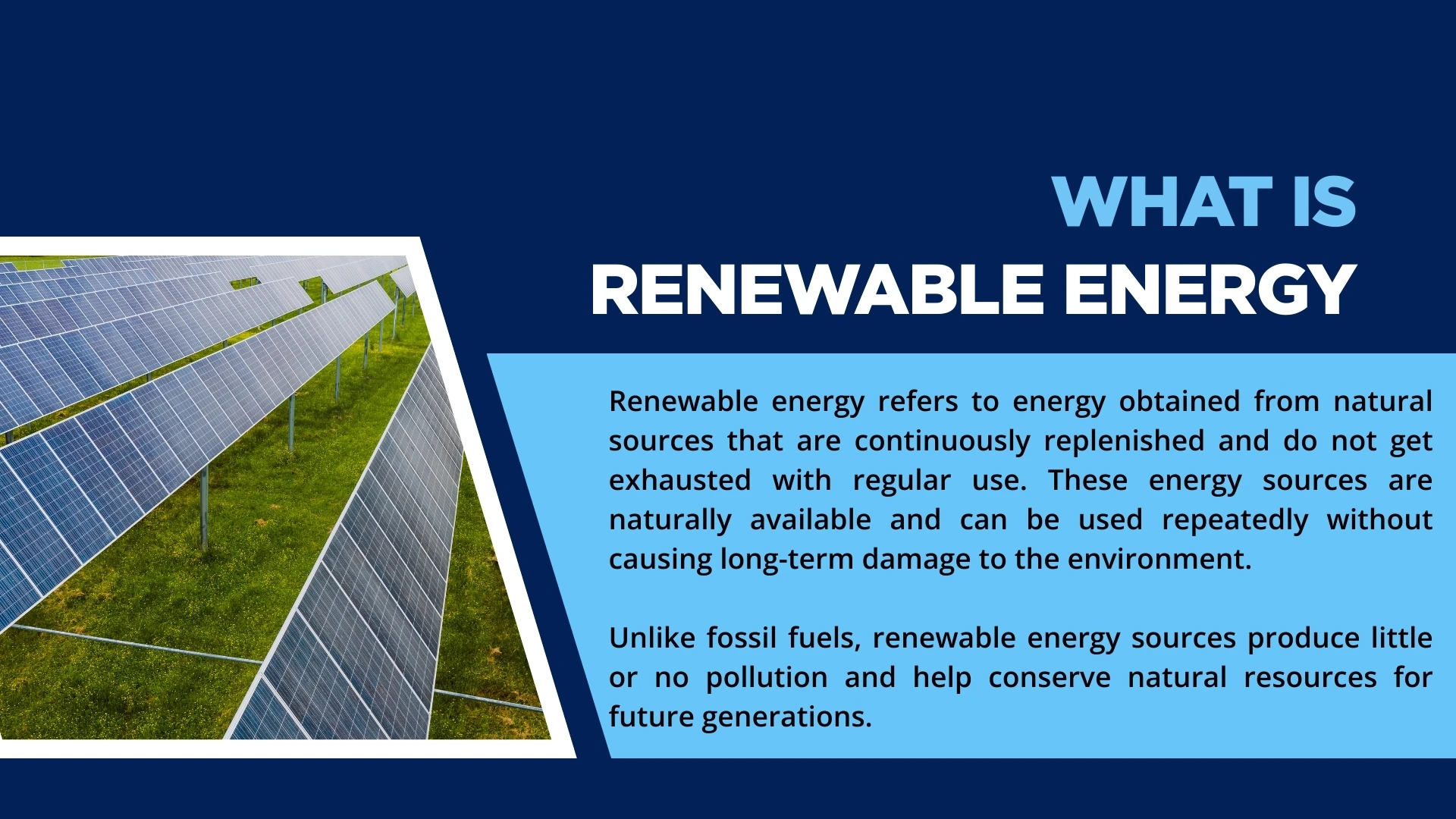
Renewable energy comes from sources that are naturally replaced as fast as we use them, so they are not used up. Sunlight keeps arriving, wind keeps blowing, rivers keep flowing and the inside of the Earth stays hot whether we take energy from them or not. That is the difference between renewable and non-renewable sources such as coal, oil, natural gas and uranium, which exist in a fixed amount and cannot be replaced once used.
Almost every renewable source is sunlight in disguise. The Sun heats the air unevenly, and the resulting pressure differences make wind. The Sun evaporates sea water, which falls as rain on high ground and runs back down as rivers, giving hydroelectric power. Plants store it as chemical energy by photosynthesis, which is what biomass fuels release. Only two common renewables are not powered by the Sun: tidal energy comes mostly from the gravitational pull of the Moon, and geothermal energy from heat inside the Earth.
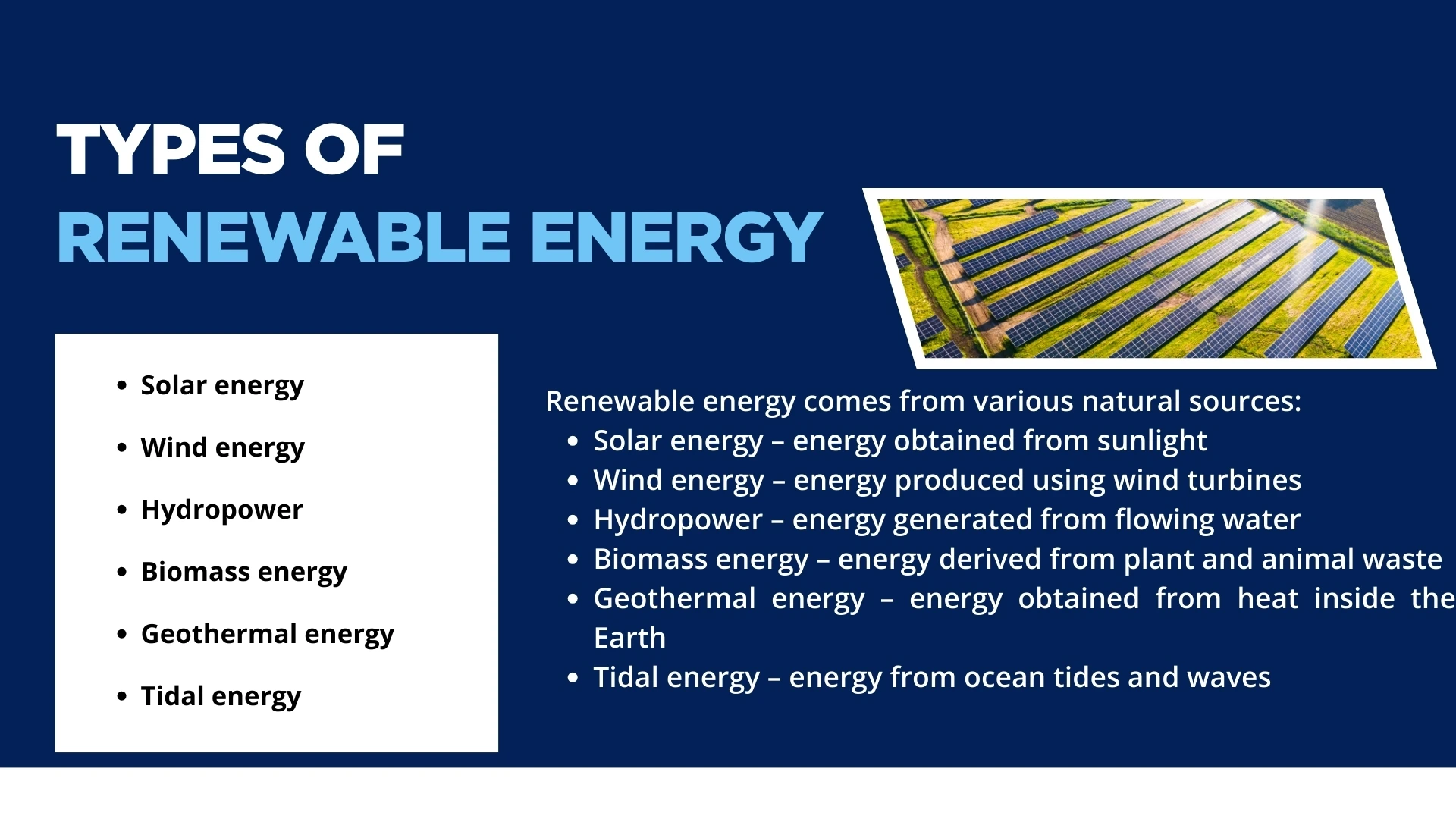
1. Solar energy
How it works. Photovoltaic (PV) cells, usually made of silicon, convert light directly into electricity: light falling on the cell frees charges inside it and a voltage appears across it, with no moving parts at all. Solar thermal systems instead use sunlight as heat, warming water in dark roof panels or using curved mirrors to concentrate sunlight onto a pipe and raise steam for a turbine.
Where it suits. Sunny places with clear skies, and anywhere too remote for power lines, where one panel can run a pump or a light. Drawbacks. No output at night and much less under cloud, so batteries or a back-up supply are needed; large solar farms take up a lot of ground.
2. Wind energy
How it works. Moving air pushes on shaped blades, turning a shaft; a generator converts the kinetic energy of that spinning shaft into electricity. Where it suits. Exposed places with a steady wind — coasts, ridges and open sea. Offshore winds are stronger and steadier than winds inland, which is why so many large wind farms are built at sea. Drawbacks. Below a certain wind speed the turbine will not turn, and above a certain speed it must be shut down to avoid damage, so output follows the weather rather than demand. Turbines are also noisy close up, change the look of a landscape, and can kill birds and bats.
3. Hydroelectric power
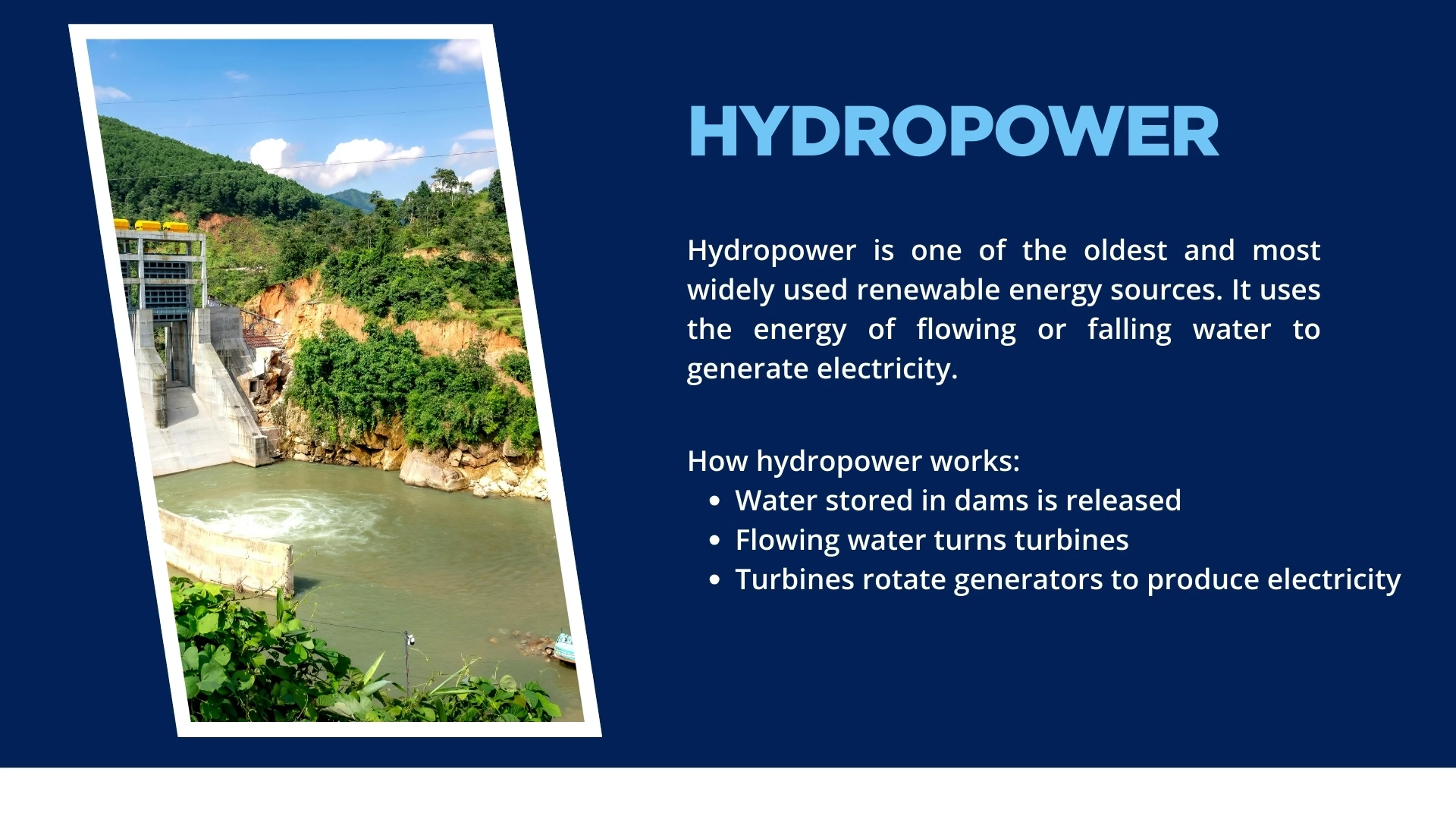
How it works. A dam holds back a river to make a reservoir. Water stored high up has gravitational potential energy; when released it falls through pipes, gaining kinetic energy that spins a turbine connected to a generator. Where it suits. Mountainous country with steep valleys and reliable rainfall. Drawbacks. Building the dam floods a valley, destroying habitats and farmland and sometimes forcing people to move. Dams also block migrating fish such as salmon and trap the silt that once fertilised land downstream. A related scheme, pumped storage, uses surplus electricity to pump water back uphill and releases it at peak demand, storing energy rather than generating it.
4. Tidal and wave energy
Tidal energy uses the rise and fall of the sea caused by the gravitational pull of the Moon and, to a lesser extent, the Sun. A barrage across an estuary traps water at high tide and releases it through turbines as the tide falls; underwater turbines can instead be placed in fast tidal streams. Its great advantage is predictability — tides are known years in advance, unlike wind or sunshine. Its drawbacks are the small number of suitable estuaries, the very high construction cost, and the damage a barrage does to estuary mudflats and wildlife.
Wave energy uses the up-and-down movement of the sea surface, which is itself made by wind: floating devices rise and fall with the waves, or waves push air in and out of a chamber to spin a turbine. It suits exposed ocean coasts, but storms and salt water damage equipment.
5. Geothermal energy
How it works. The rock below us is hot, partly from heat left over from the Earth's formation and partly from radioactive decay in the rock. Where hot rock lies near the surface, water is pumped down and returns as steam or very hot water to drive a turbine. On a smaller scale a ground source heat pump uses the steady temperature a few metres down to heat buildings. Where it suits. Volcanic and tectonically active regions — Iceland and New Zealand are well-known examples. Drawbacks. Few places have hot rock shallow enough to be worth drilling, deep drilling is expensive, and the water returning to the surface can carry dissolved gases and minerals. Geothermal is one of the few renewables that runs steadily day and night.
6. Biomass and biofuels
How it works. Biomass is fuel made from living or recently living material: wood, straw, crop waste, dung and fast-growing energy crops. It can be burned to raise steam, rotted without air to make biogas (mainly methane), or processed into liquid biofuels such as ethanol for vehicles. Where it suits. Farming and forestry regions, and anywhere with organic waste that would otherwise be thrown away. Drawbacks. Burning biomass does release carbon dioxide; it is only close to carbon neutral if new plants are grown to absorb an equivalent amount, which does not happen automatically. Fuel crops can also take land needed for food, and burning wood indoors produces harmful smoke.
Advantages and disadvantages of renewable energy
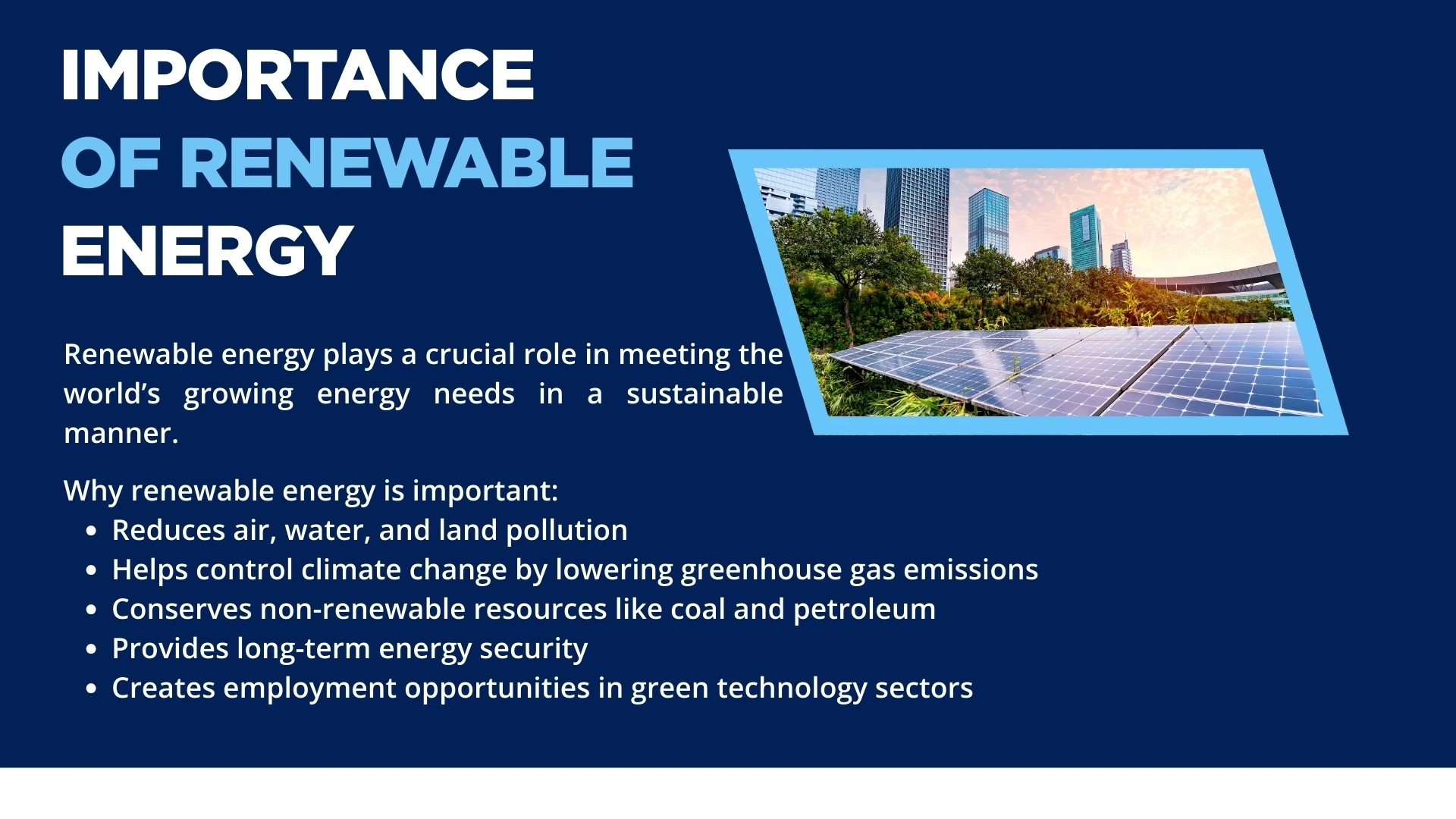
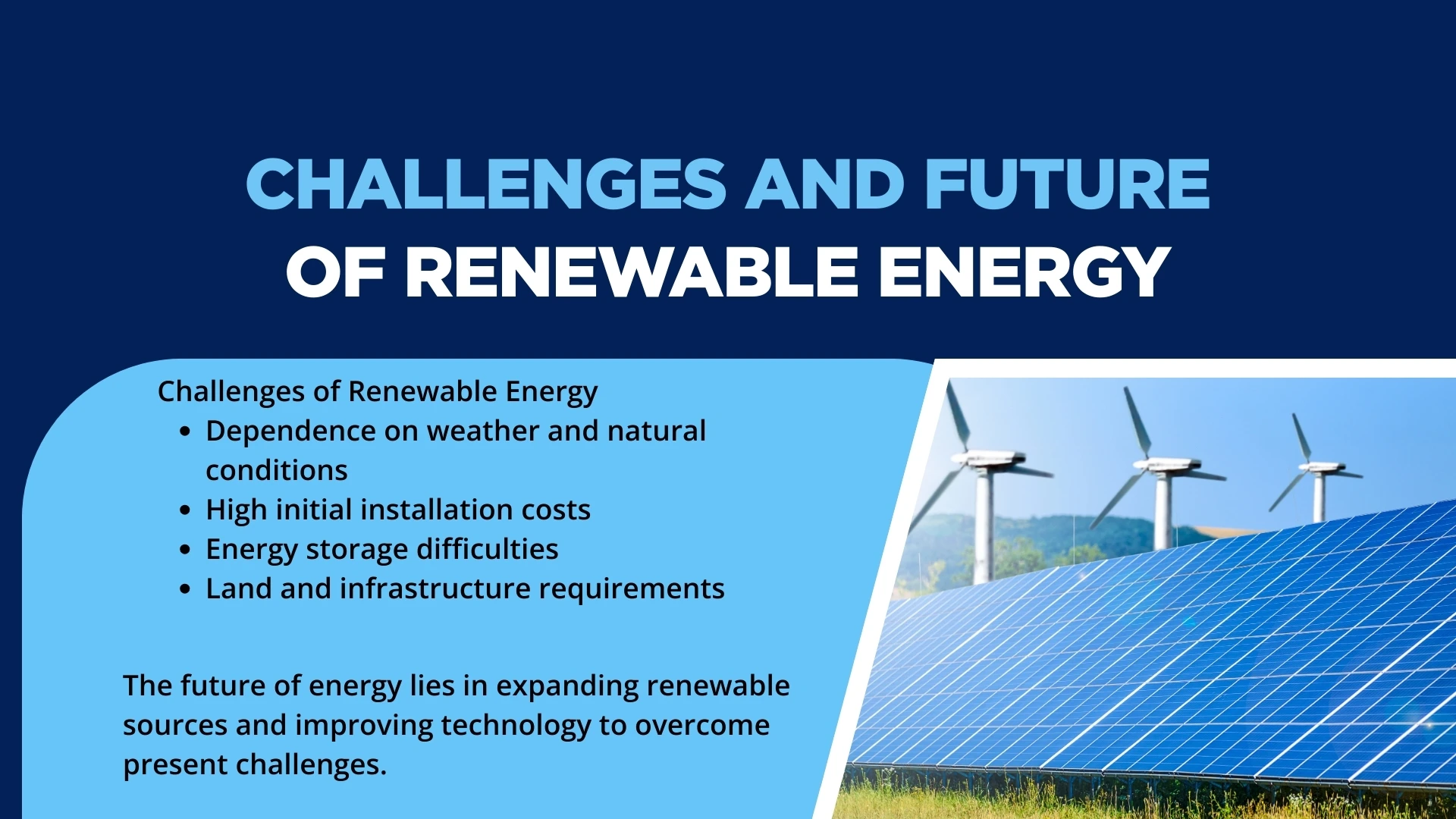
- Advantages: the source is not used up; most produce no carbon dioxide or air pollution while generating; the fuel is free once the equipment is built; a country using its own sunshine, wind or water does not depend on imported fuel.
- Disadvantages: many are intermittent, producing when the weather allows rather than when electricity is wanted, so they need storage or back-up; the equipment is expensive to build; and most depend on geography, since you cannot dam a flat plain or drill for steam in cold, stable rock.
| Feature | Renewable | Non-renewable |
|---|---|---|
| Will it run out? | No — replaced naturally as fast as it is used | Yes — a fixed stock that took millions of years to form |
| CO₂ while generating | None for solar, wind, hydro, tidal, wave or geothermal; biomass releases CO₂ | Large amounts from coal, oil and gas; none from nuclear fission |
| Reliability | Variable for solar and wind; predictable for tidal; steady for geothermal | Steady — a station can run whenever fuel is supplied |
| Fuel cost and siting | No fuel cost, but strongly limited by climate and landscape | Fuel must be bought and transported; can be built almost anywhere |
Key terms
- Renewable energy
- Energy from a source naturally replenished as fast as it is used, so it does not run out.
- Intermittent source
- A source such as wind or solar whose output depends on conditions rather than on demand.
- Photovoltaic cell
- A semiconductor device that converts light directly into electricity, with no moving parts.
- Biomass
- Fuel made from plant or animal material, such as wood, crop waste, dung or energy crops.