📖 Lesson: Atomic Structure
Explore atoms, subatomic particles, and how electrons are arranged
🎮 Interactive Activities
Test your knowledge with these fun activities
🧠 Memory Match Game
Match the terms with their definitions!
✏️ Fill in the Blanks
Click on a word from the word bank, then click on the blank to fill it
1. The central part of an atom is called the , which contains protons and neutrons.
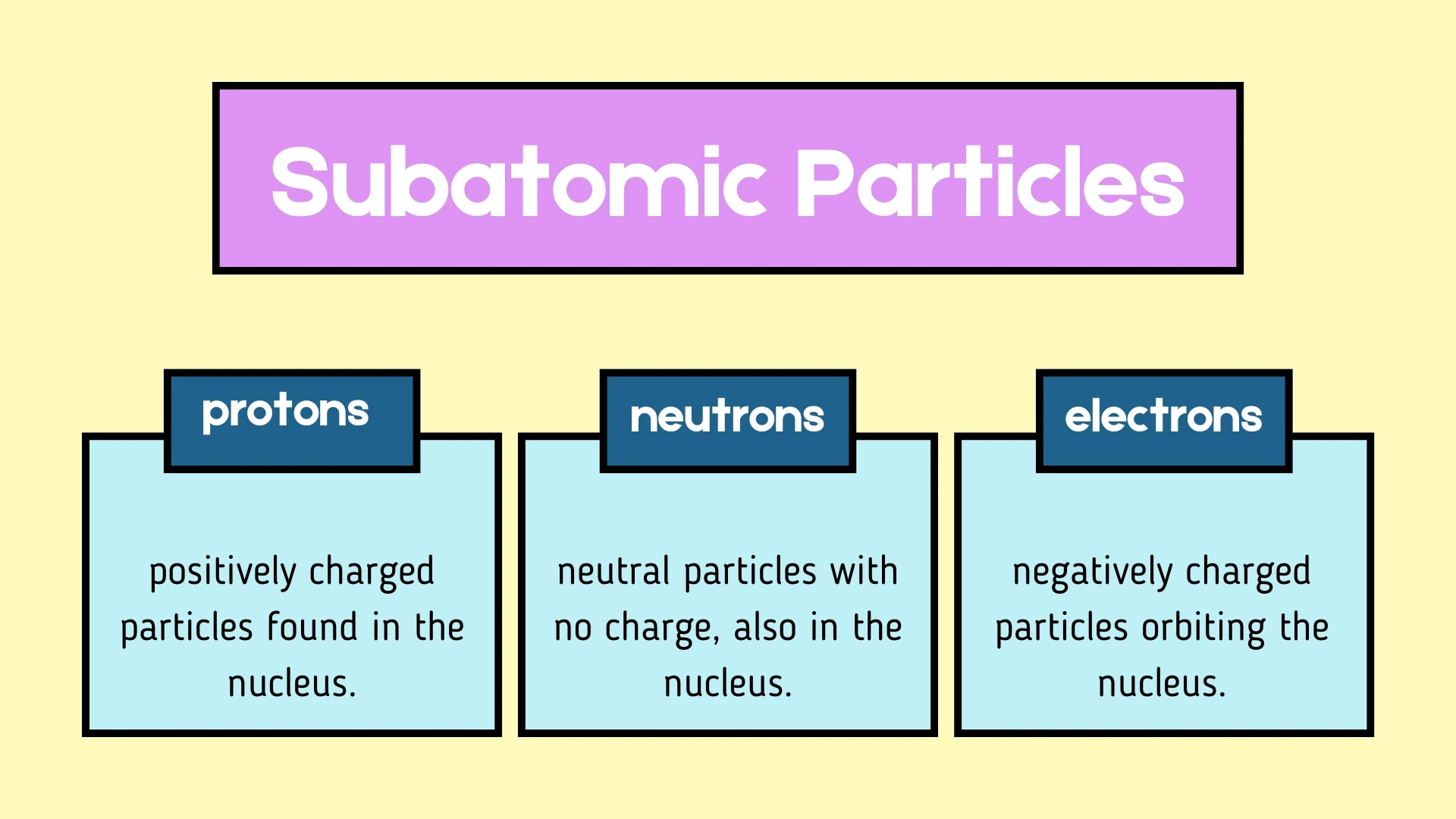
2. are positively charged particles found in the nucleus.
3. have no electrical charge and are also found in the nucleus.
4. are negatively charged particles that orbit around the nucleus.
5. Protons have a charge while electrons have a charge.
6. Atoms are because they have equal numbers of protons and electrons.
7. Electrons are arranged in energy levels, also called .
You got 0/8 correct!
📚 Flashcards
Click on each card to reveal the definition
Atom
Click to revealThe smallest unit of matter that retains the properties of an element. It consists of a nucleus containing protons and neutrons, surrounded by electrons in energy levels.
Proton
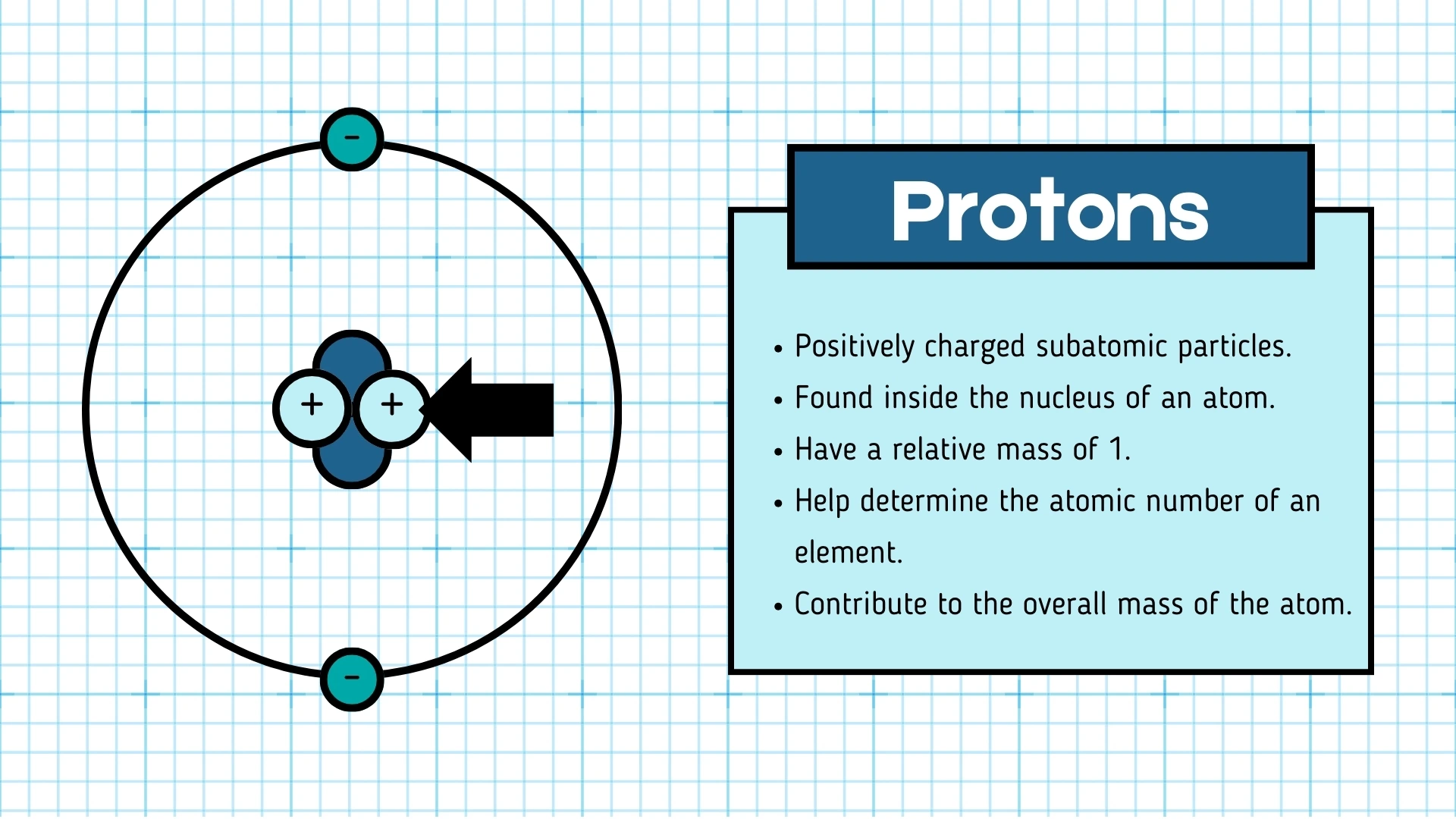
Click to revealA positively charged subatomic particle found in the nucleus. It has a relative mass of 1 and determines the atomic number of an element.
Neutron
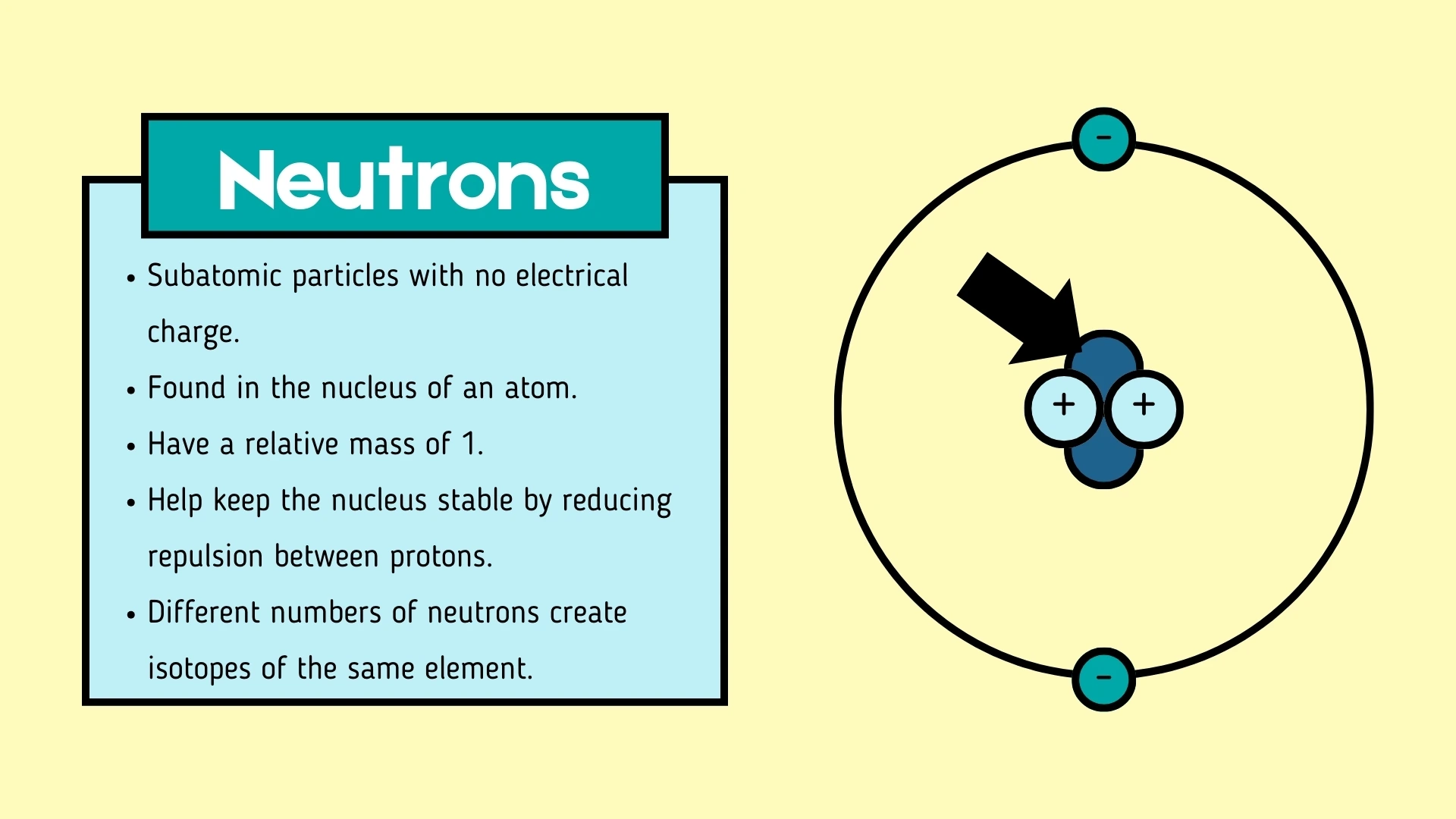
Click to revealA subatomic particle with no electrical charge (neutral) found in the nucleus. It has a relative mass of 1 and helps keep the nucleus stable.
Electron
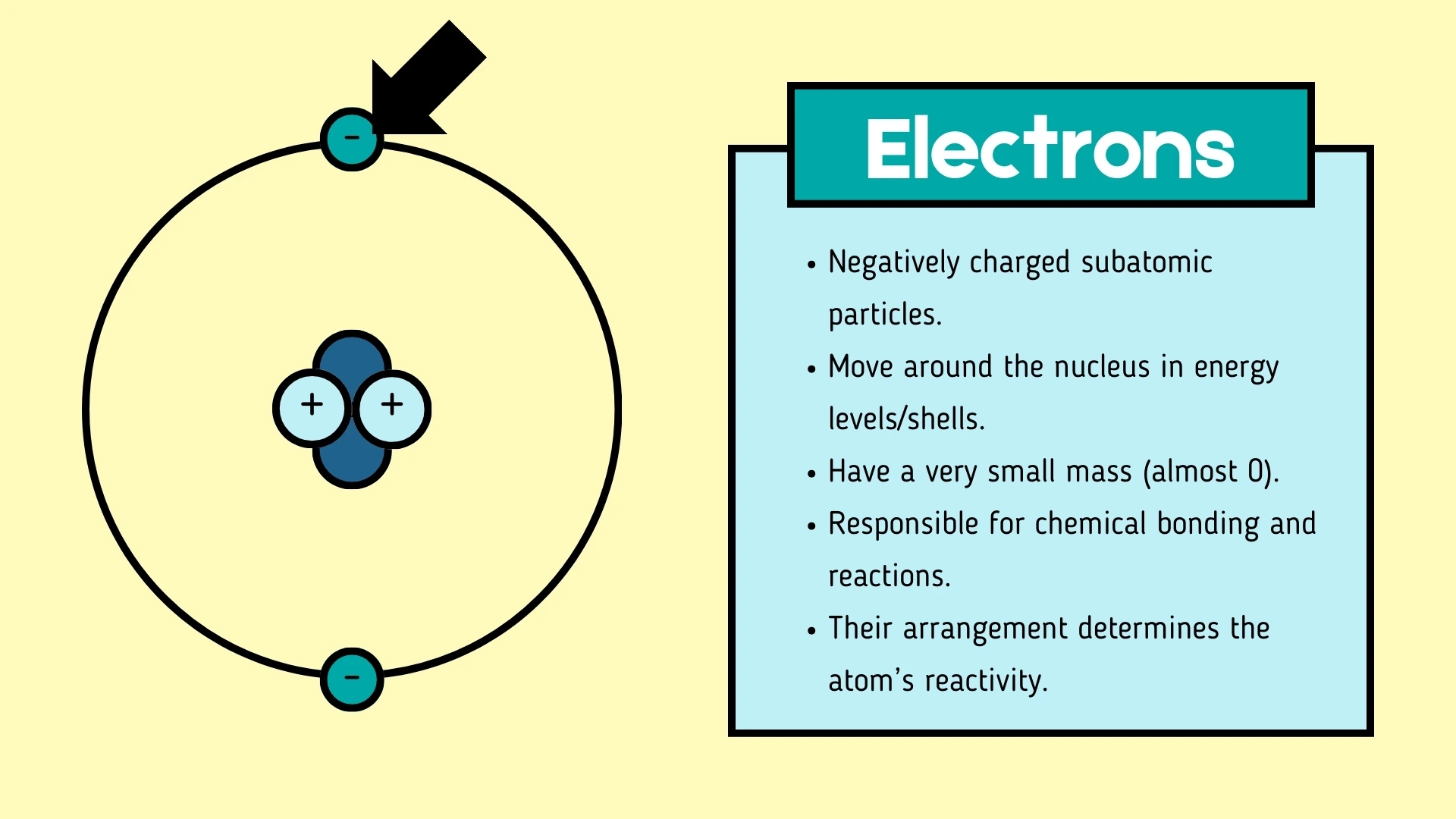
Click to revealA negatively charged subatomic particle that orbits the nucleus in energy levels (shells). It has a very small mass (almost 0) and is responsible for chemical bonding.
Nucleus
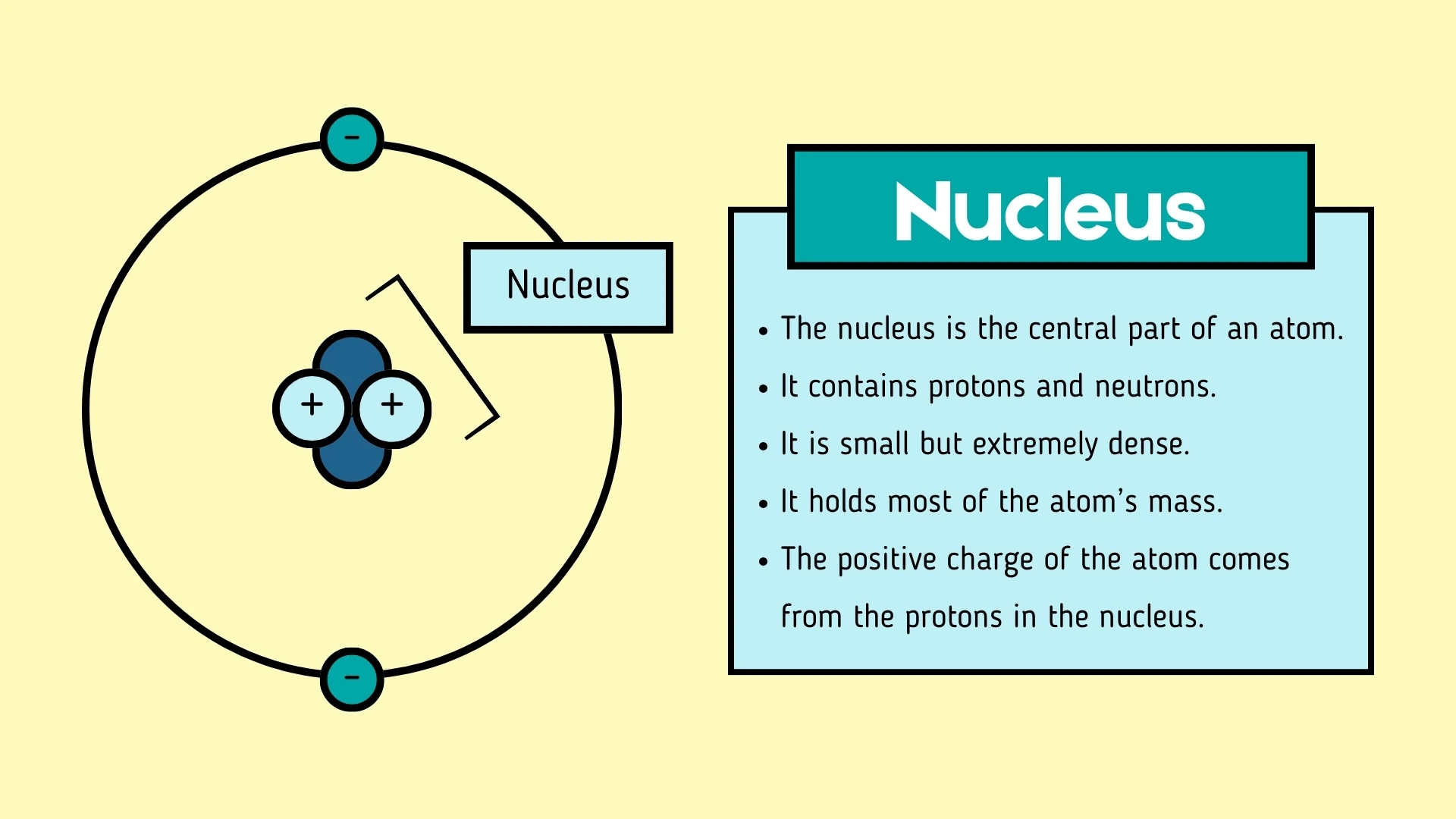
Click to revealThe central part of an atom containing protons and neutrons. It is small but extremely dense and holds most of the atom's mass.
Electron Configuration
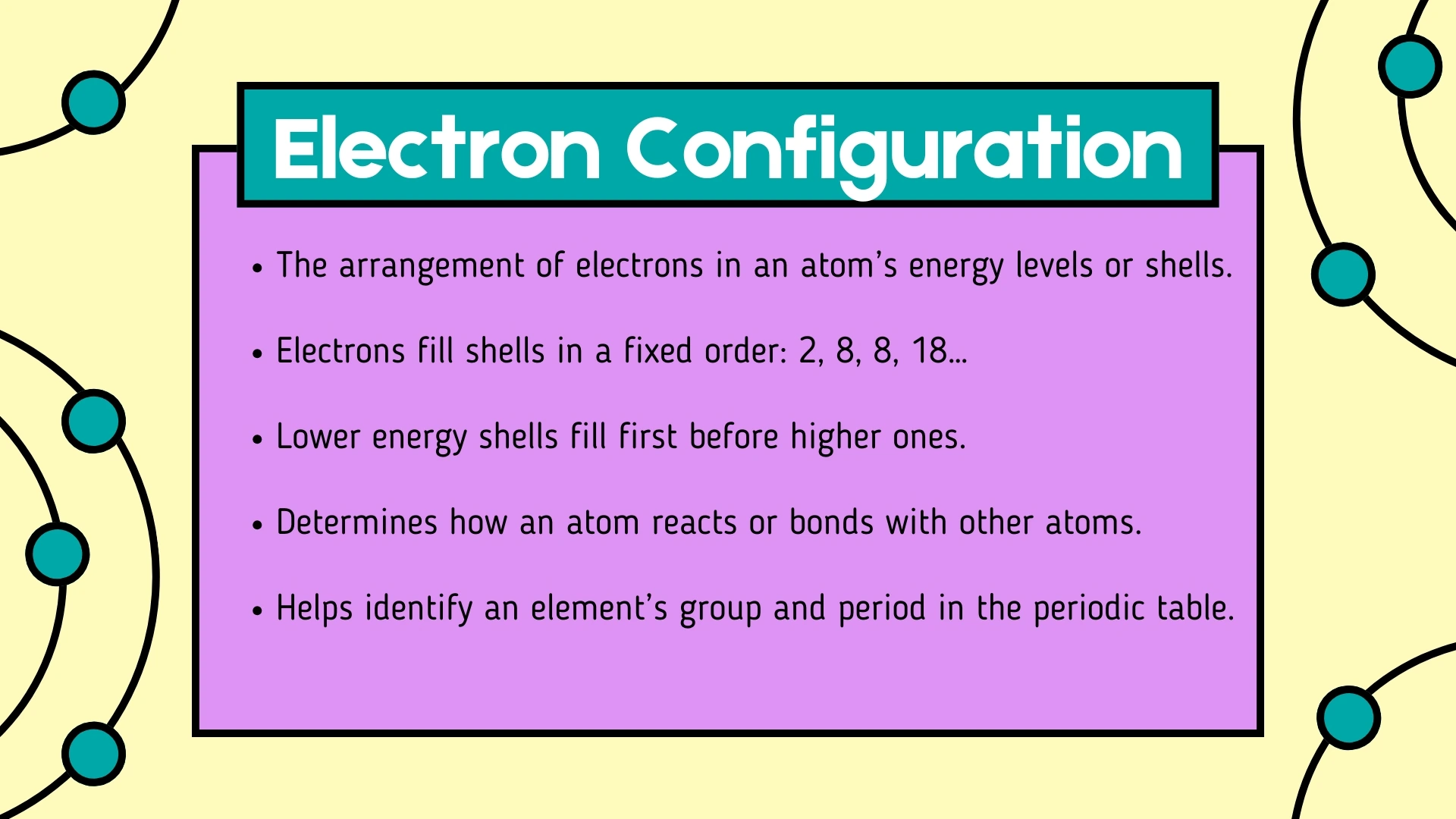
Click to revealThe arrangement of electrons in an atom's energy levels or shells. Electrons fill shells in order: 2, 8, 8, 18... with lower shells filling first.
Atomic Number
Click to revealThe number of protons in the nucleus of an atom. It determines what element the atom is and equals the number of electrons in a neutral atom.
Mass Number
Click to revealThe total number of protons and neutrons in the nucleus of an atom. Mass Number = Protons + Neutrons.
Isotope
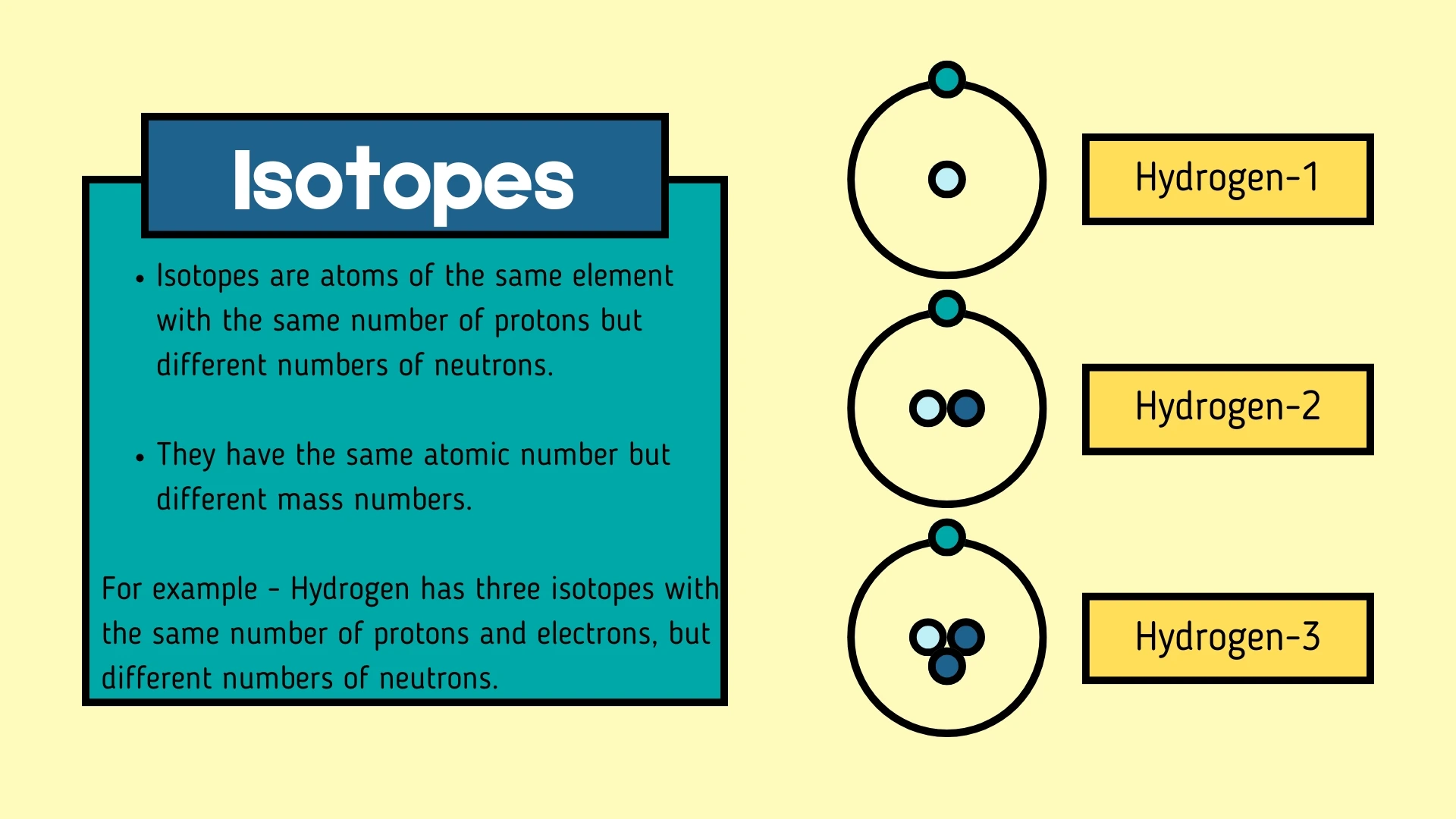
Click to revealAtoms of the same element with the same number of protons but different numbers of neutrons. They have the same atomic number but different mass numbers.
⚛️ Atomic Structure Revision Notes: Definitions, Particles and Worked Examples
Atomic structure: the definition
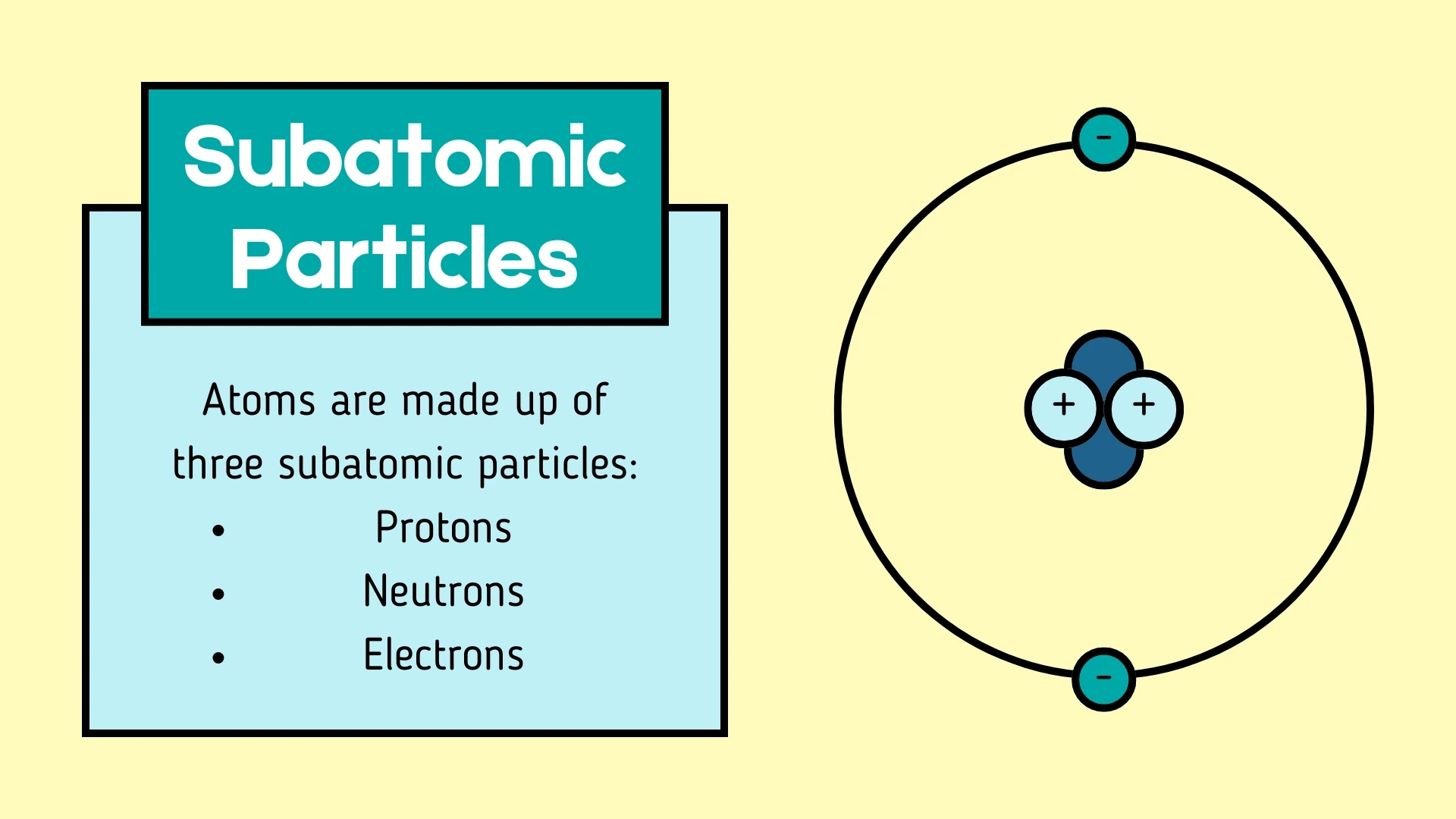
An atom is the smallest particle of an element that still has the chemical properties of that element. Atomic structure is the way an atom is built: a tiny, dense, positively charged nucleus of protons and neutrons at the centre, surrounded by negatively charged electrons arranged in shells (energy levels). Atoms are around 0.1 nanometres across — a ten-millionth of a millimetre — and the nucleus is roughly ten thousand times smaller than the atom itself, so almost all of an atom is empty space.
The three sub-atomic particles
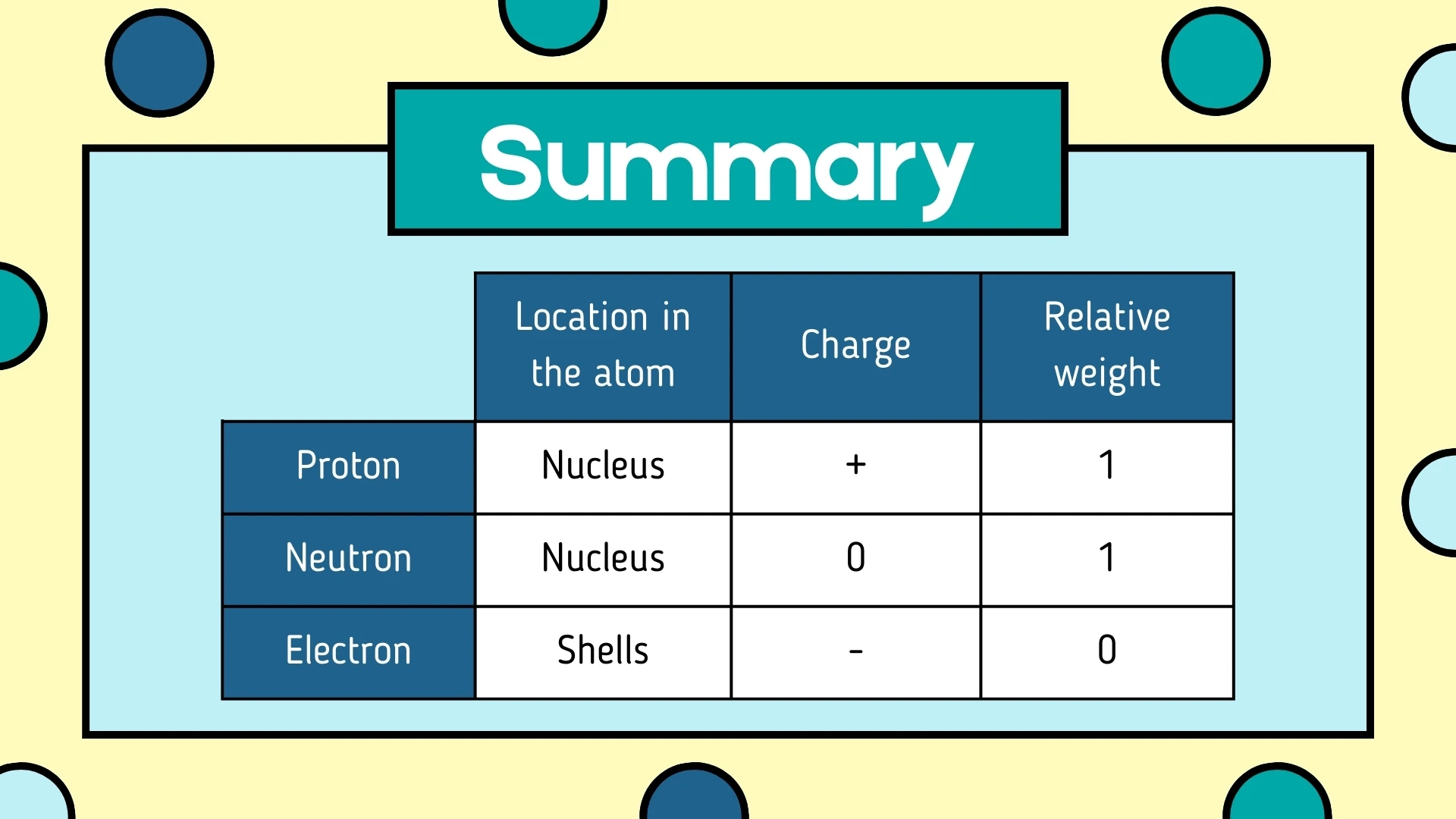
| Particle | Relative mass | Relative charge | Where it is found |
|---|---|---|---|
| Proton | 1 | +1 | In the nucleus |
| Neutron | 1 | 0 | In the nucleus |
| Electron | About 1/1836 (usually treated as negligible) | −1 | In shells around the nucleus |
Because protons and neutrons each have a relative mass of 1 and electrons weigh almost nothing, nearly all of an atom's mass is in the nucleus. Because the proton's charge (+1) and the electron's charge (−1) cancel, an atom with equal numbers of the two has no overall charge. Neutrons carry no charge; their job is to add mass and hold the nucleus together.
Atomic number and mass number
Every element has two numbers on the periodic table. The atomic number (symbol Z) is the number of protons; it is what makes an element that element, so every carbon atom has 6 protons and every oxygen atom has 8. The mass number (symbol A) is the number of protons plus neutrons. From those two you can work out everything:
- Protons = atomic number
- Electrons = atomic number (in a neutral atom, protons and electrons are equal)
- Neutrons = mass number − atomic number
Worked example 1 — sodium, ²³Na, atomic number 11. Protons = 11. Electrons = 11. Neutrons = 23 − 11 = 12.
Worked example 2 — chlorine, ³⁵Cl, atomic number 17. Protons = 17. Electrons = 17. Neutrons = 35 − 17 = 18.
Worked example 3 — an ion. A magnesium ion, Mg²⁺, has atomic number 12, so it still has 12 protons; the 2+ charge tells you it has lost two electrons, so it has 12 − 2 = 10 electrons. Losing or gaining electrons makes an ion; the number of protons never changes.
Electron shells and electron configuration
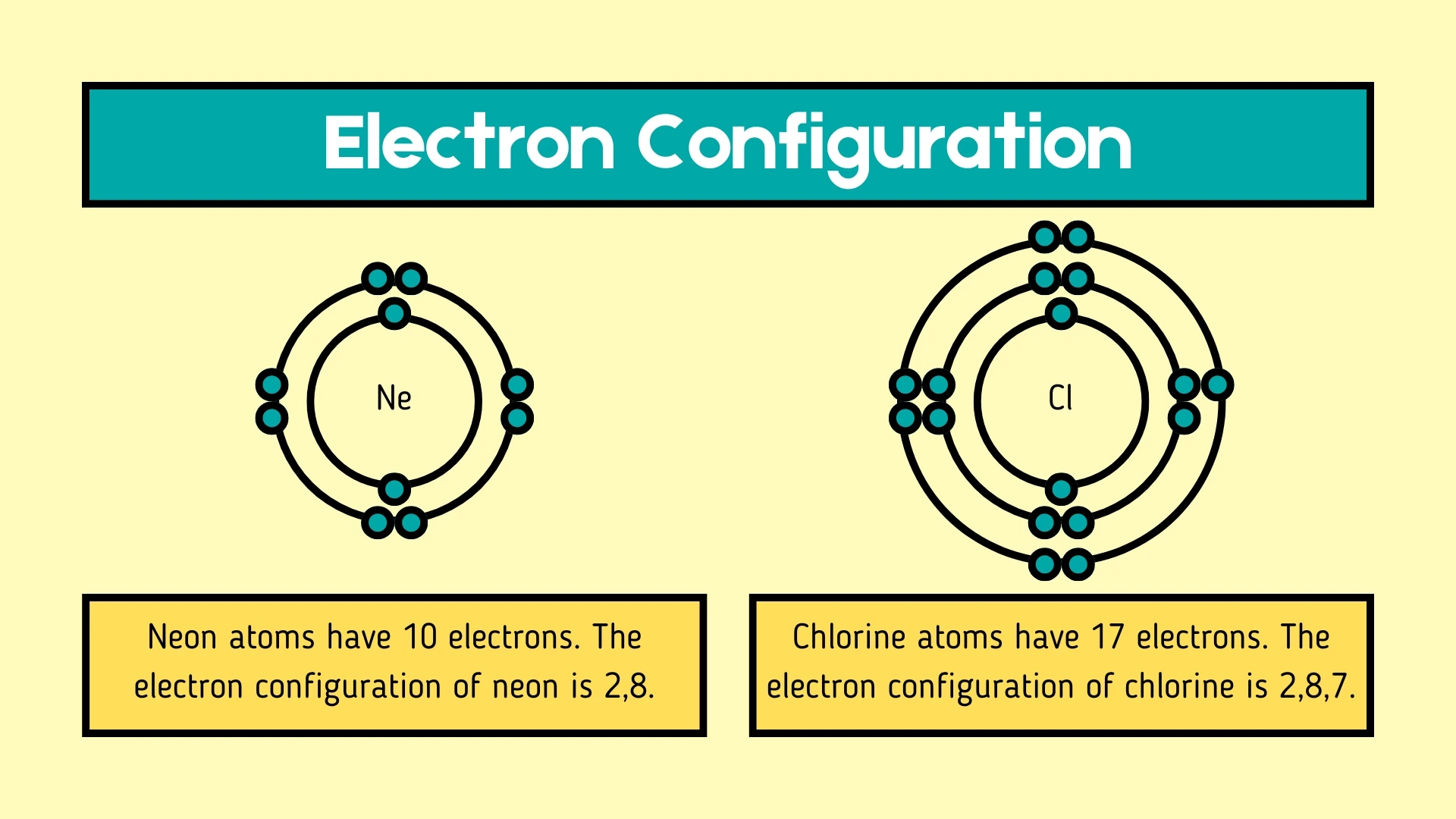
Electrons occupy shells at increasing distances from the nucleus, and each shell fills before the next one starts. For the first twenty elements the rule is: the first shell holds up to 2 electrons, the second up to 8, the third up to 8, and any remaining electrons start the fourth shell. Writing the number in each shell, separated by commas, gives the electron configuration.
- Oxygen, 8 electrons: 2, 6
- Sodium, 11 electrons: 2, 8, 1
- Argon, 18 electrons: 2, 8, 8 (a full outer shell, so it is unreactive)
- Calcium, 20 electrons: 2, 8, 8, 2
Two shortcuts save time in exams. The number of shells equals the period (row) the element is in, and the number of electrons in the outer shell equals its group number for Groups 1 to 7. Sodium (2, 8, 1) is in Period 3, Group 1; chlorine (2, 8, 7) is in Period 3, Group 7. It is the outer electrons that take part in reactions, which is why elements in the same group behave alike.
Isotopes
Isotopes are atoms of the same element with the same number of protons but different numbers of neutrons. They therefore share an atomic number but have different mass numbers. Chlorine-35 and chlorine-37 both have 17 protons; one has 18 neutrons and the other 20. Because their electron configurations are identical, isotopes react in the same way — only their mass differs. Carbon has three natural isotopes: carbon-12, carbon-13 and the radioactive carbon-14 used in dating ancient objects.
Relative atomic mass
Because most elements are a mixture of isotopes, the mass shown on the periodic table is an average. The relative atomic mass (Ar) is the weighted average mass of an element's atoms compared with one twelfth of the mass of a carbon-12 atom. To calculate it, multiply each isotope's mass number by its percentage abundance, add the results, and divide by 100.
Worked example — chlorine. Natural chlorine is about 75% chlorine-35 and 25% chlorine-37. Ar = (35 × 75 + 37 × 25) ÷ 100 = (2625 + 925) ÷ 100 = 35.5. That is why chlorine's mass on the periodic table is not a whole number even though every individual atom has a whole-number mass.
Quick recap for the activities
- Protons: mass 1, charge +1, nucleus. Neutrons: mass 1, charge 0, nucleus. Electrons: negligible mass, charge −1, shells.
- Atomic number = protons. Mass number = protons + neutrons. Neutral atom: electrons = protons.
- Shells fill 2, 8, 8, then 2 for the first twenty elements.
- Isotopes: same protons, different neutrons, same chemistry.
- Relative atomic mass is the abundance-weighted average of the isotope masses.
Key terms
- Atom
- The smallest particle of an element that keeps the properties of that element.
- Nucleus
- The tiny, dense centre of an atom, containing the protons and neutrons.
- Atomic number
- The number of protons in an atom; it identifies the element.
- Mass number
- The total number of protons and neutrons in an atom.
- Electron configuration
- The arrangement of electrons in shells, written as numbers such as 2, 8, 1.
- Ion
- An atom that has gained or lost electrons and so carries a charge.
- Isotope
- An atom of an element with the usual number of protons but a different number of neutrons.
- Relative atomic mass
- The average mass of an element's atoms, weighted by isotope abundance, on a scale where carbon-12 = 12.