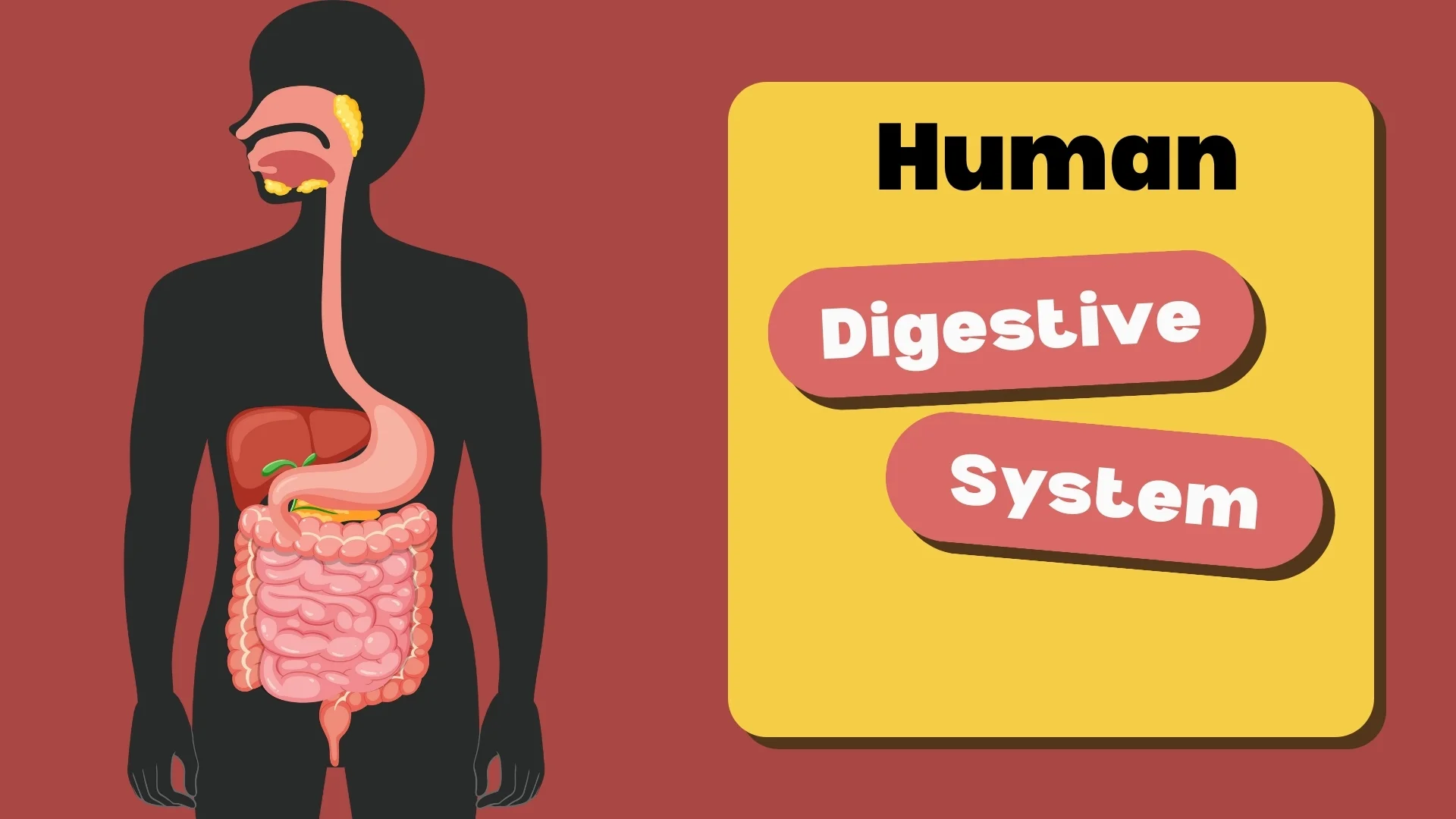
📖 Lesson: Human Digestive System
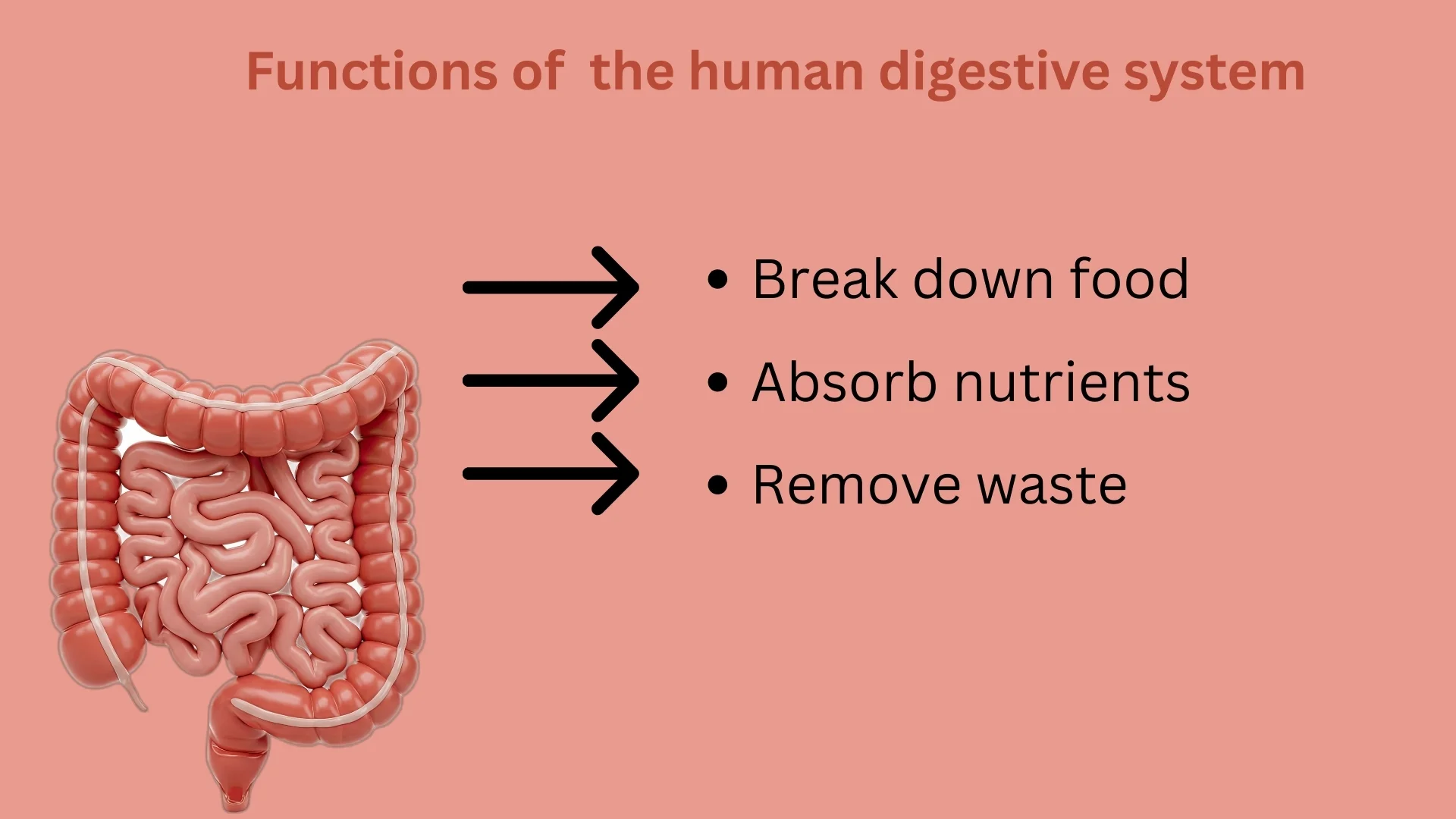
Explore how our body breaks down food, absorbs nutrients, and removes waste
🎮 Interactive Activities
Test your knowledge with these fun activities
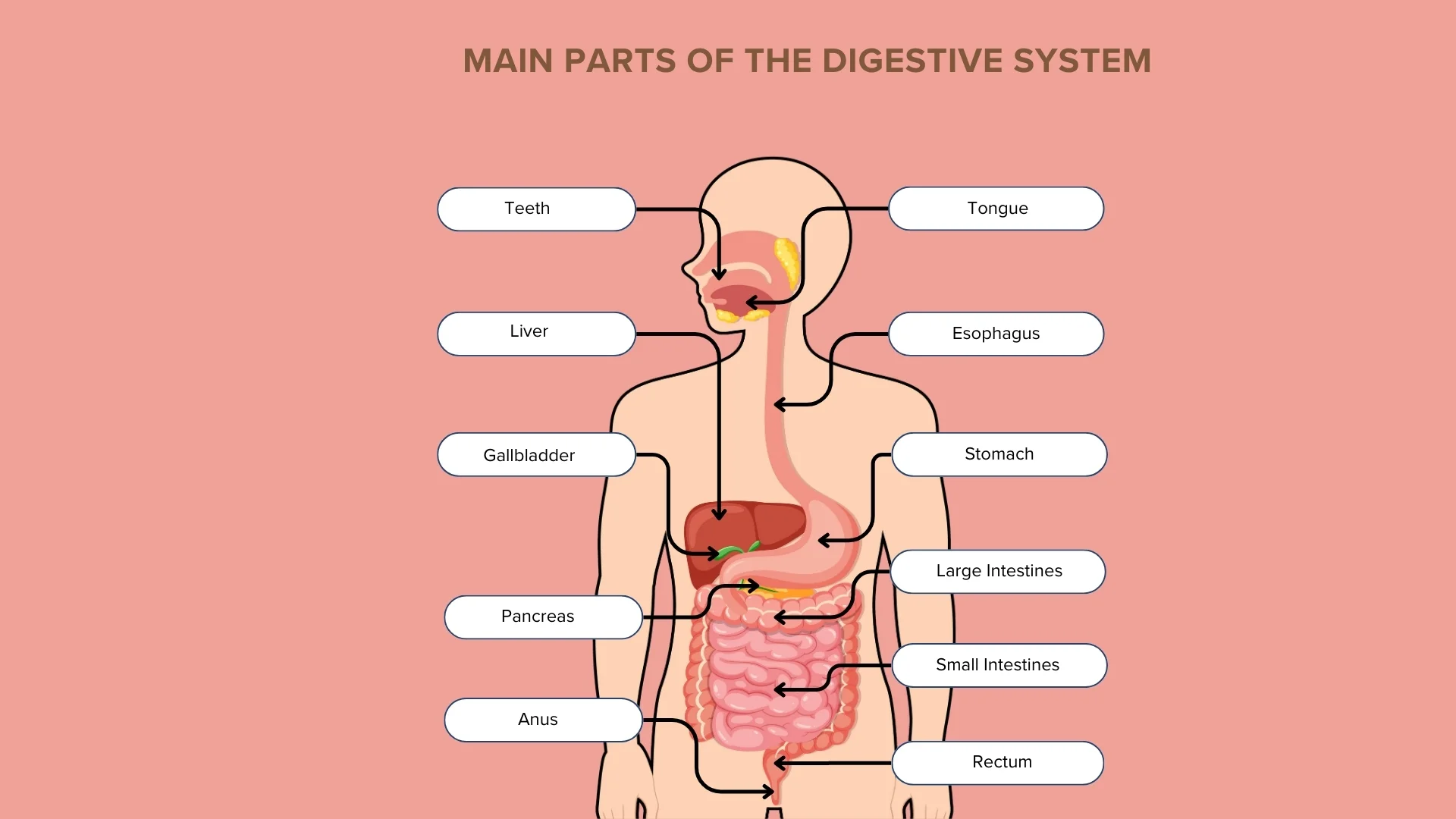
🔗 Match the Organs to Their Functions
Click an organ, then click its matching function!
✏️ Fill in the Blanks
Click on a word from the word bank, then click on the blank to fill it
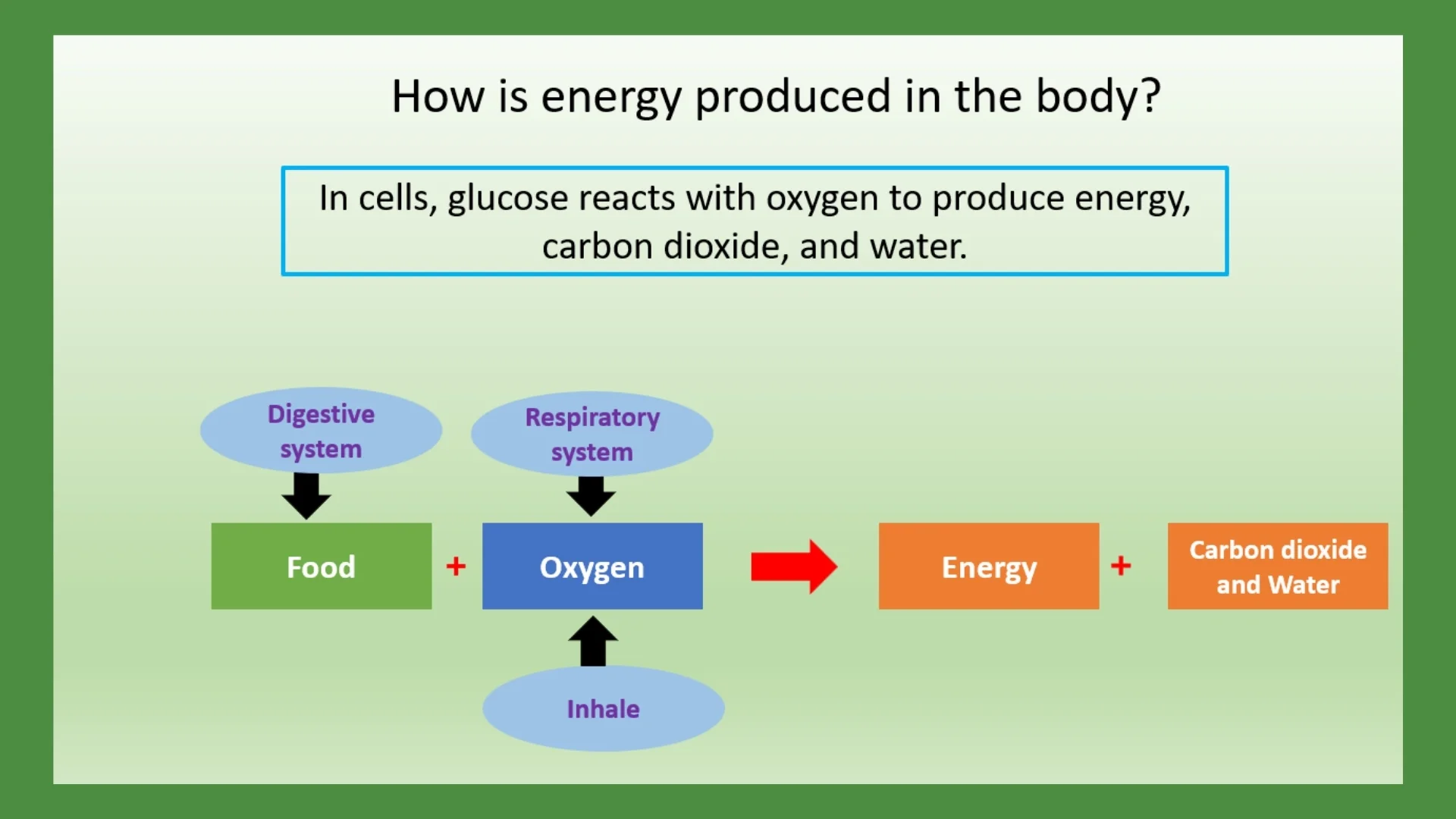
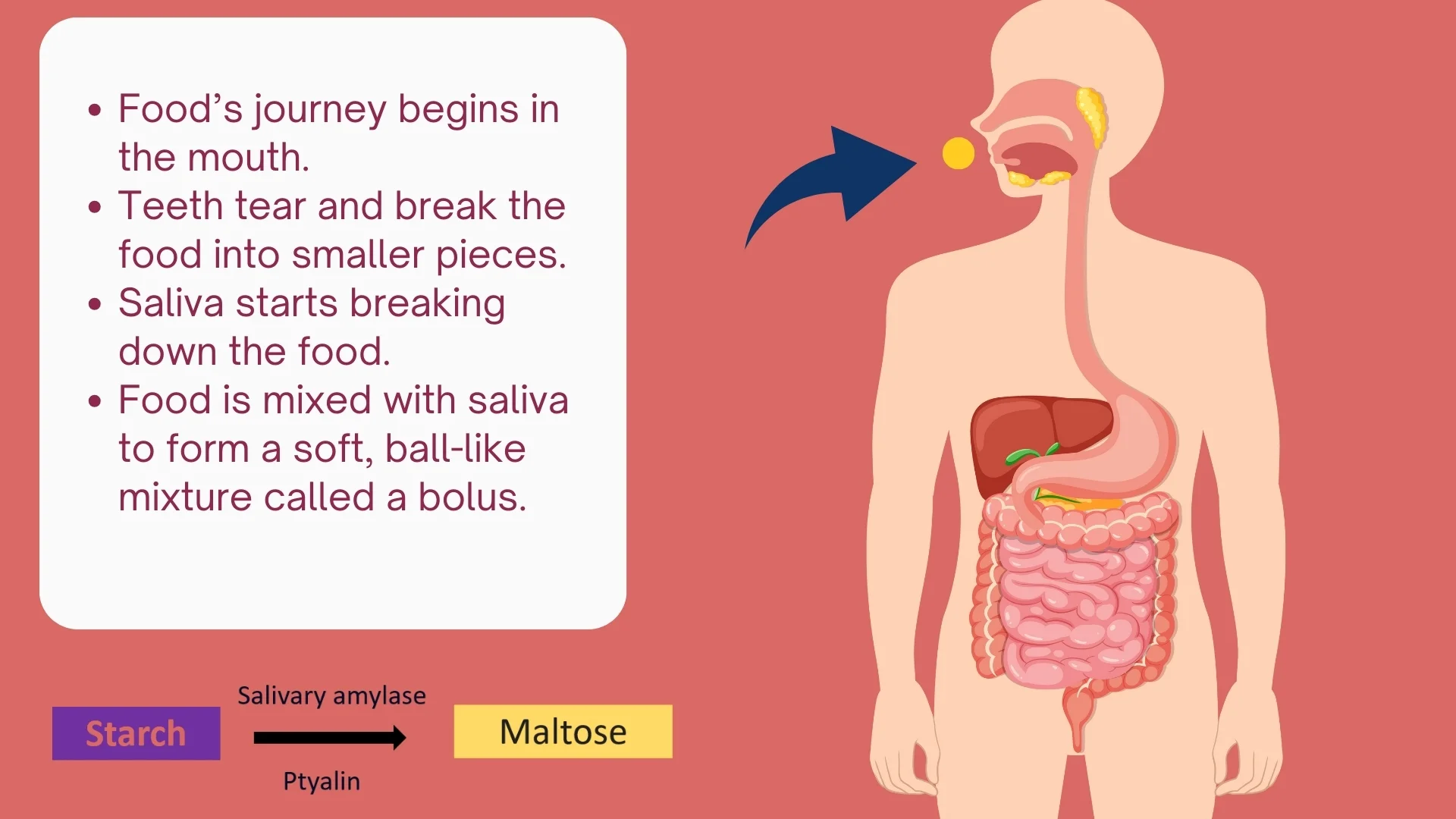
1. Food mixed with saliva in the mouth forms a soft ball called a .
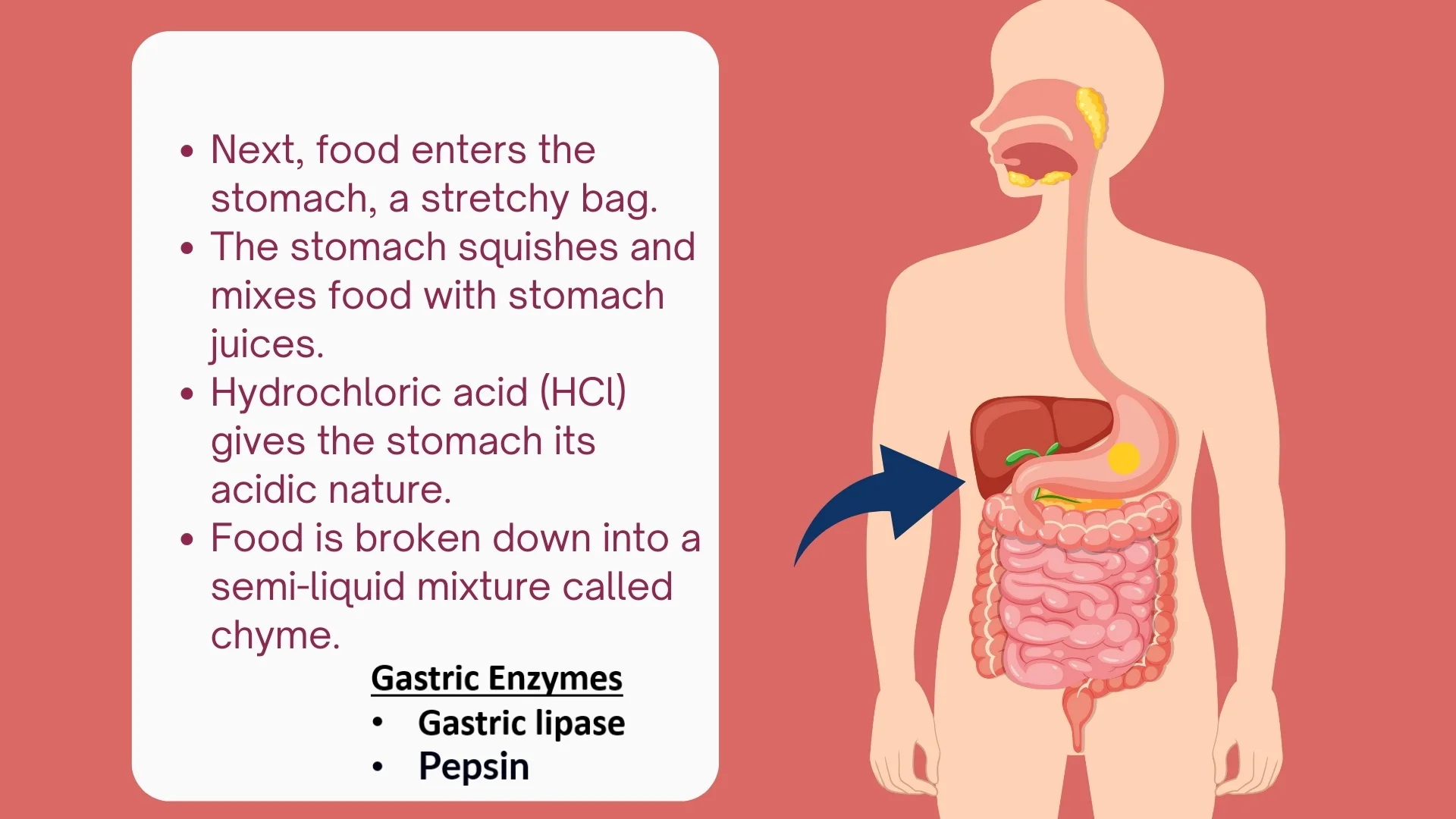
2. In the stomach, food is broken down into a semi-liquid mixture called .
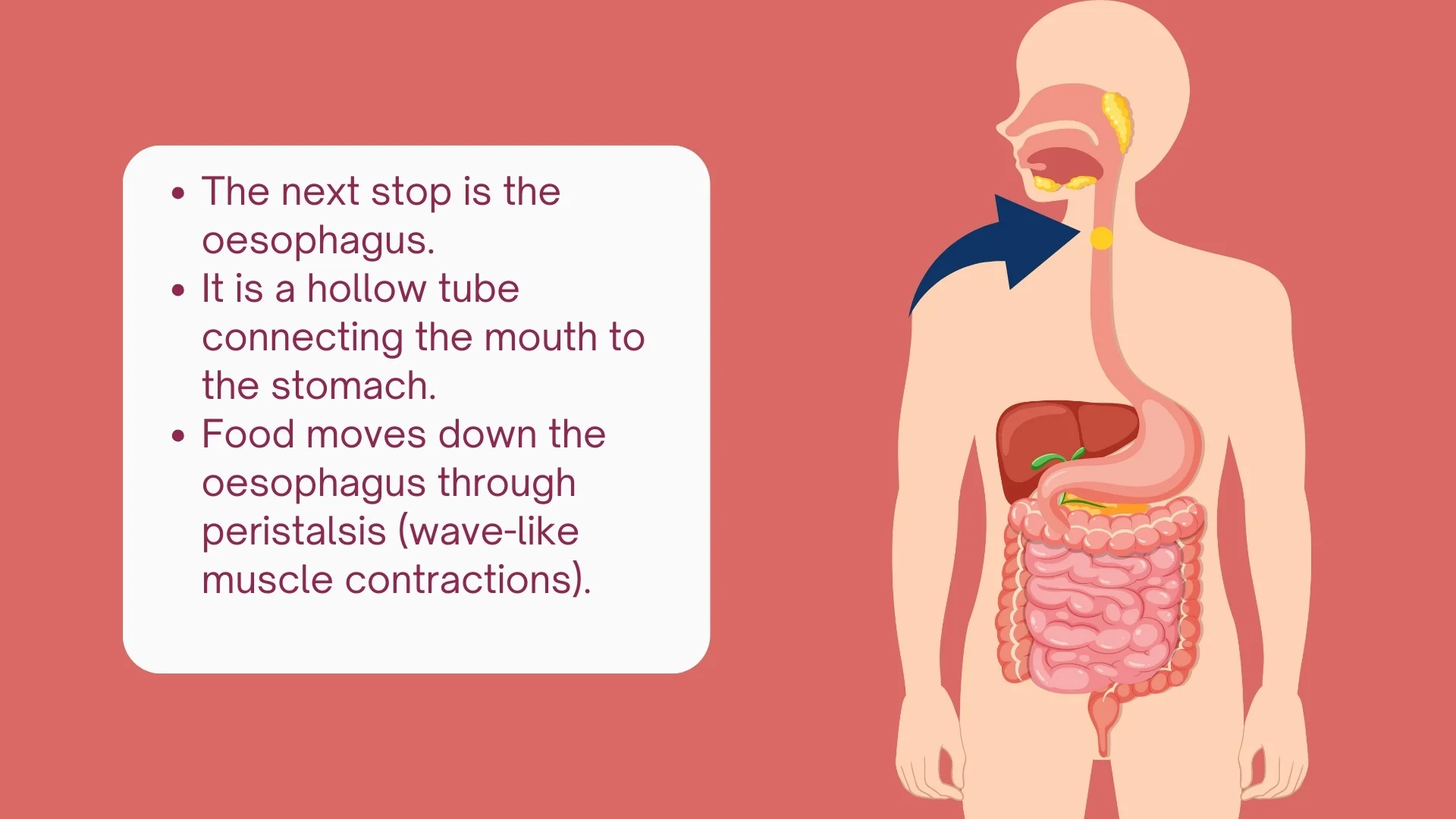
3. Wave-like muscle contractions that move food through the digestive tract are called .
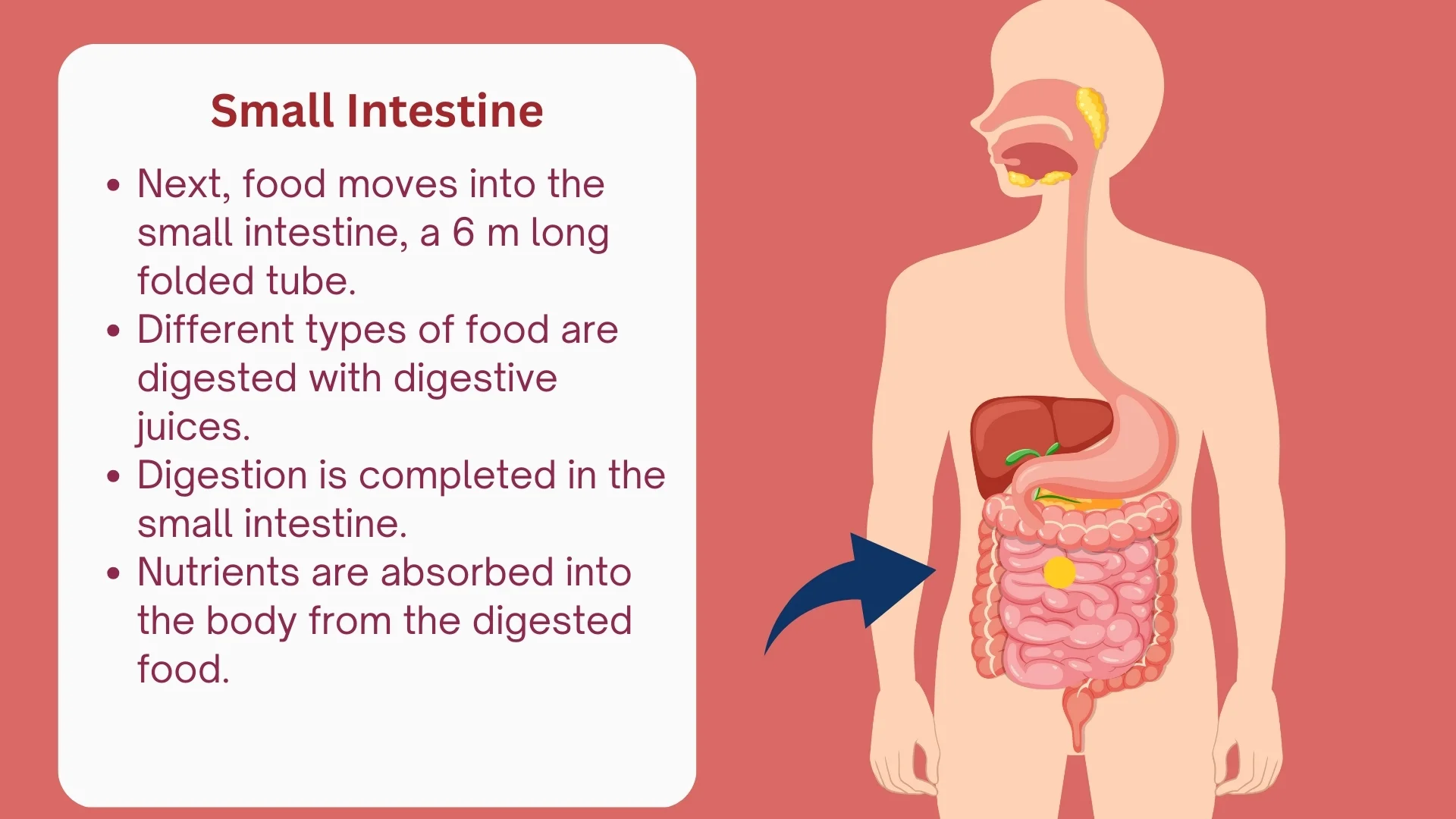
4. Digestion is completed and nutrients are absorbed in the .
5. The small intestine has finger-like projections called that increase surface area for absorption.
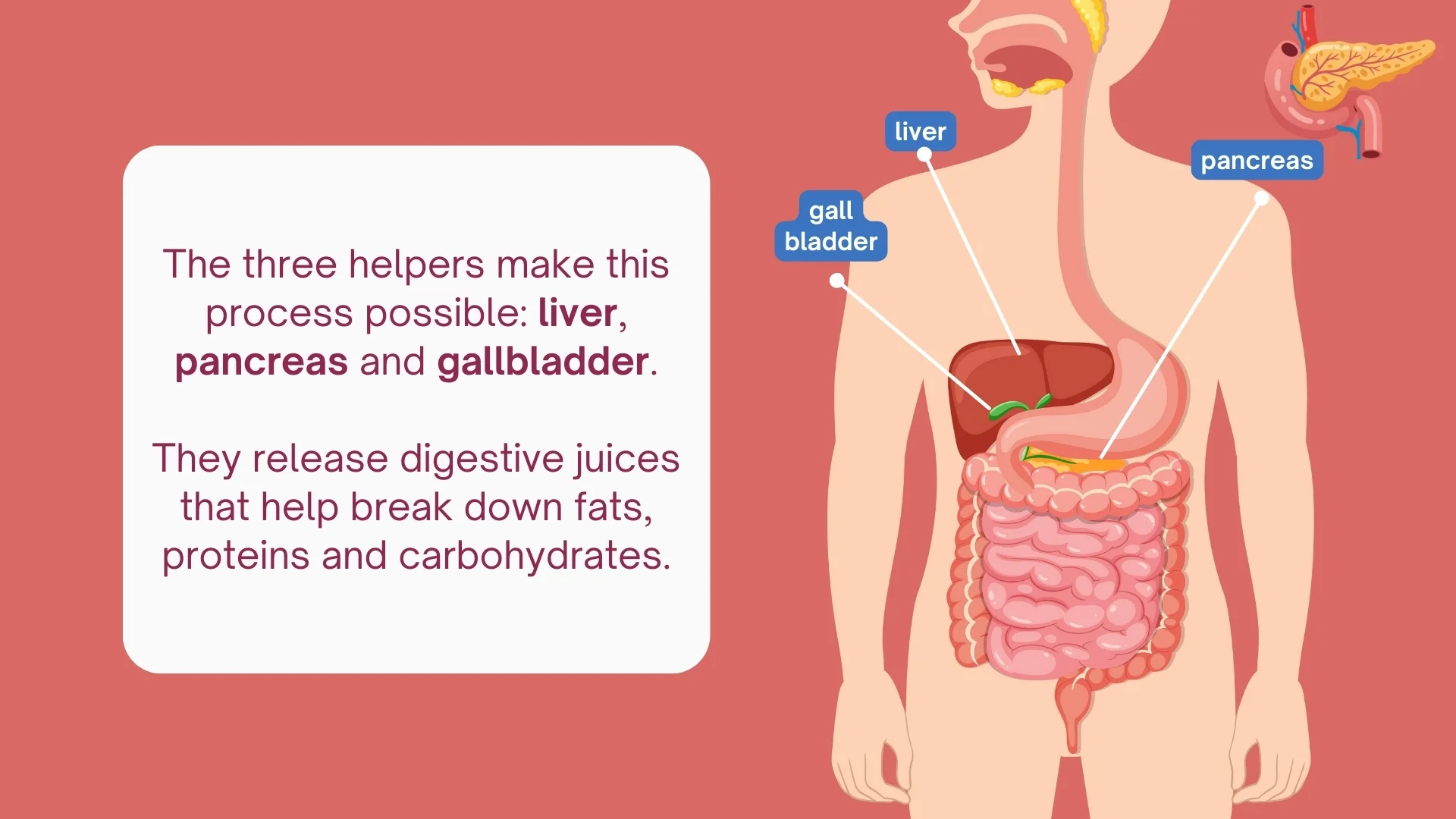
6. The liver produces which emulsifies fats.
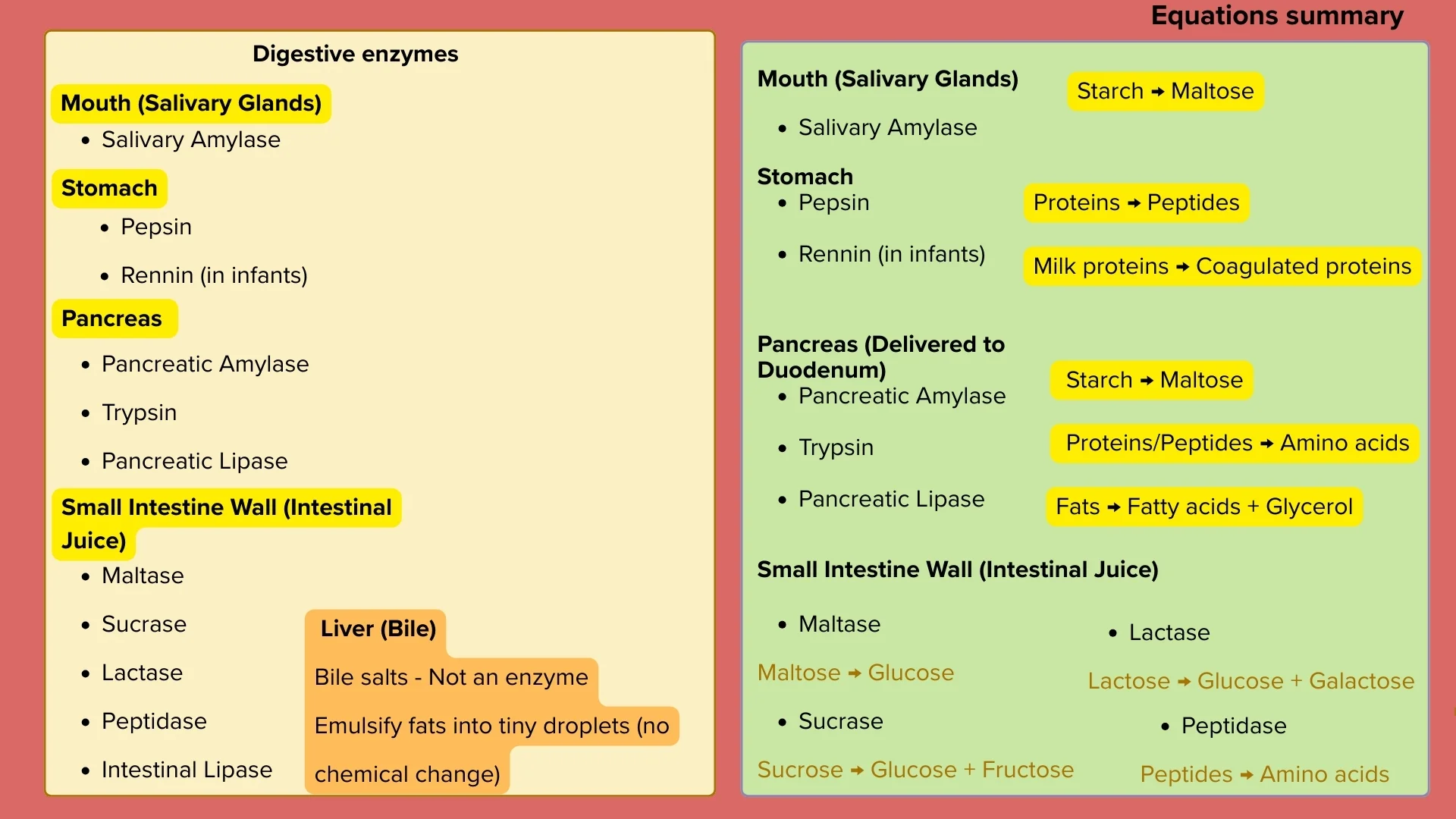
7. The enzyme breaks down starch into maltose.
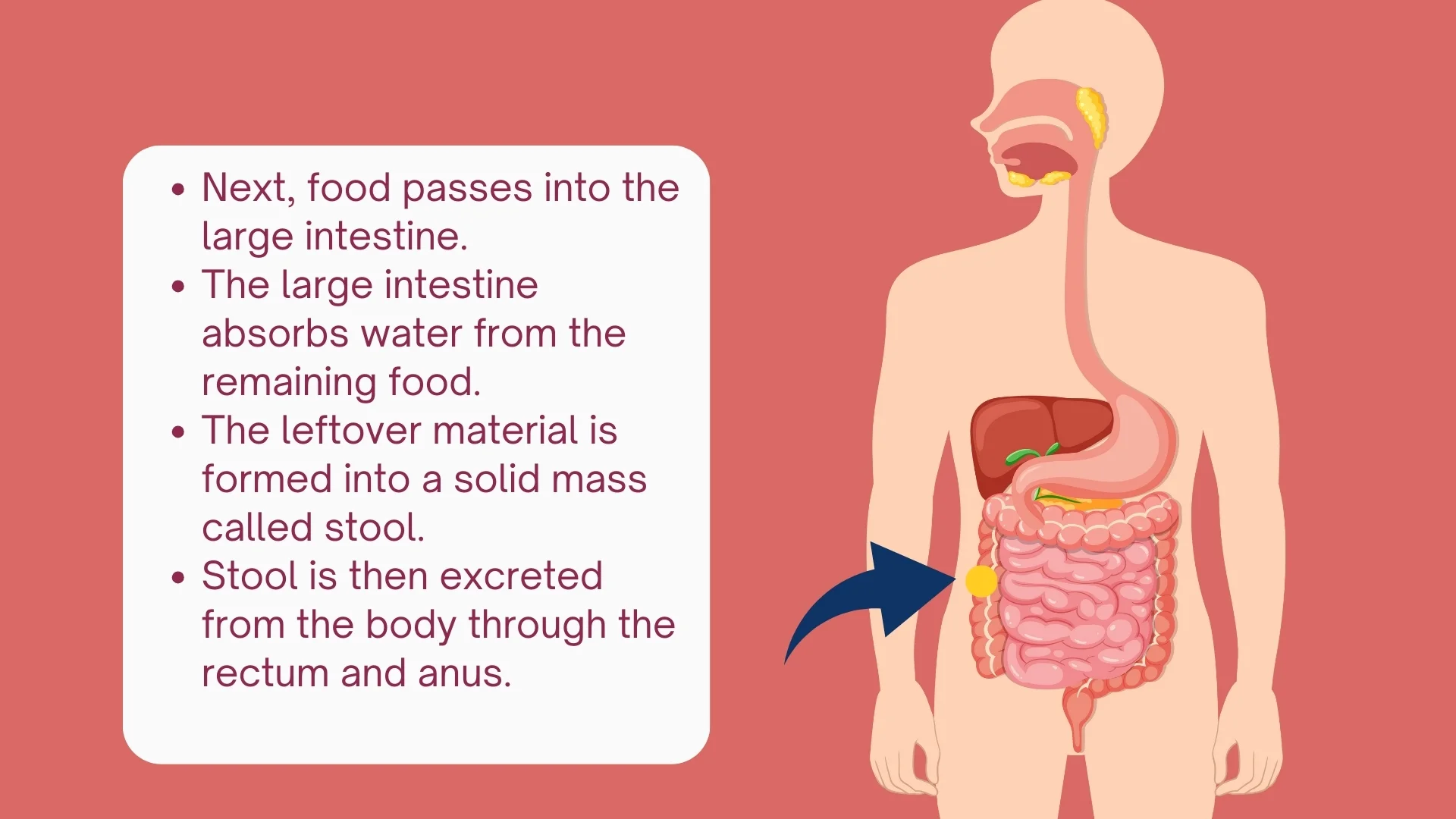
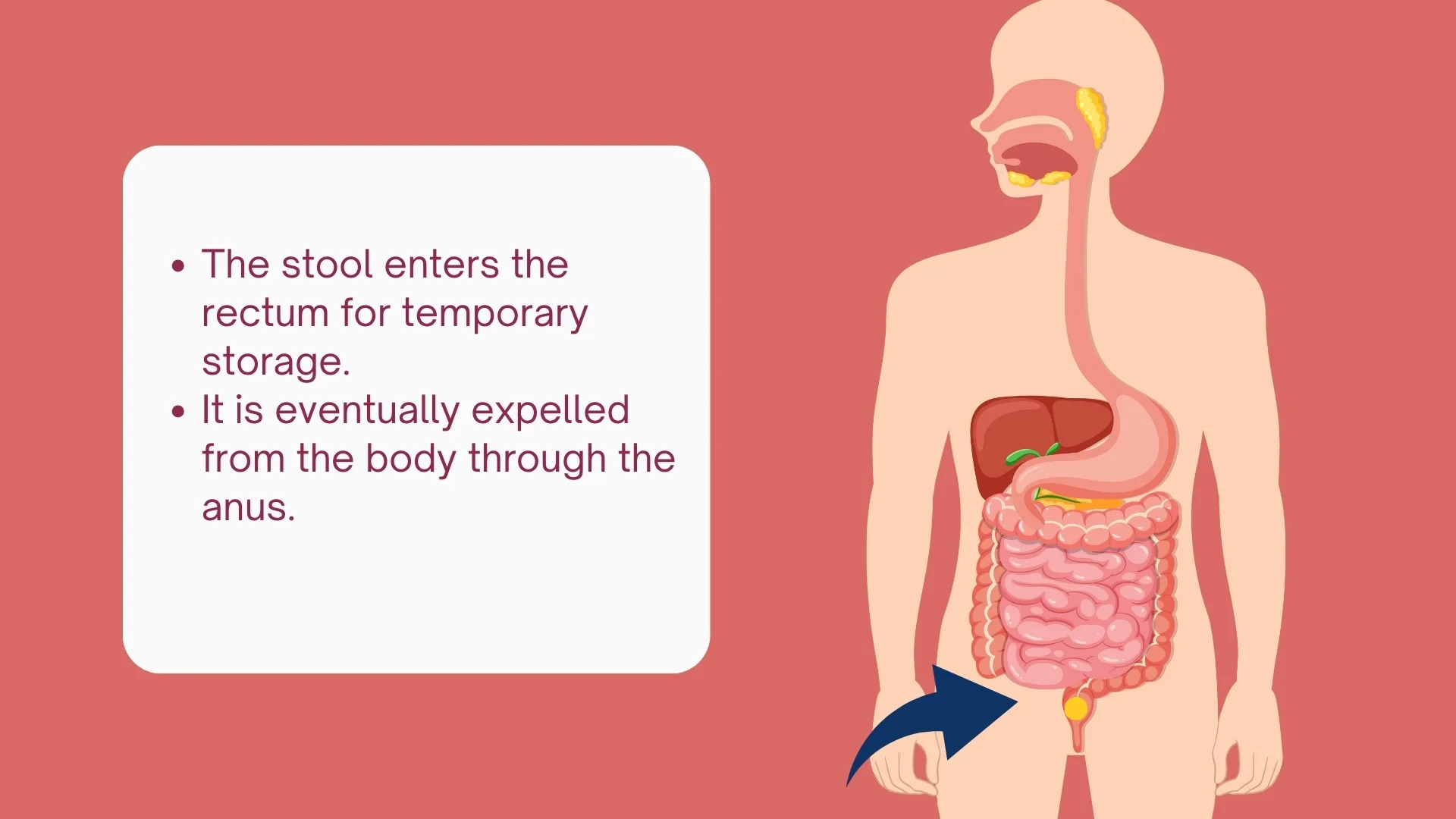
8. Waste is stored temporarily in the before excretion.
You got 0/8 correct!
📚 Flashcards
Click on each card to reveal the definition
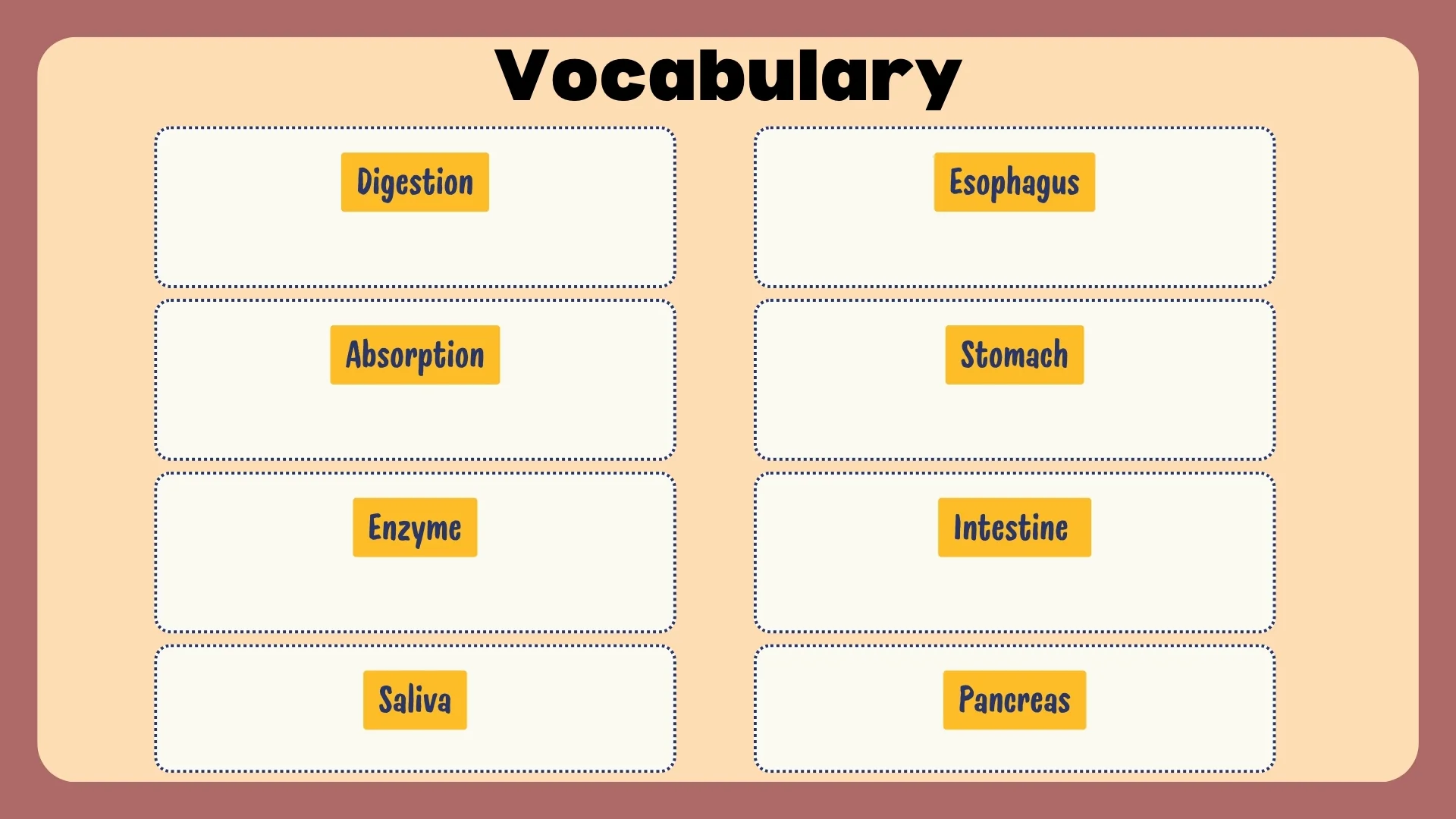
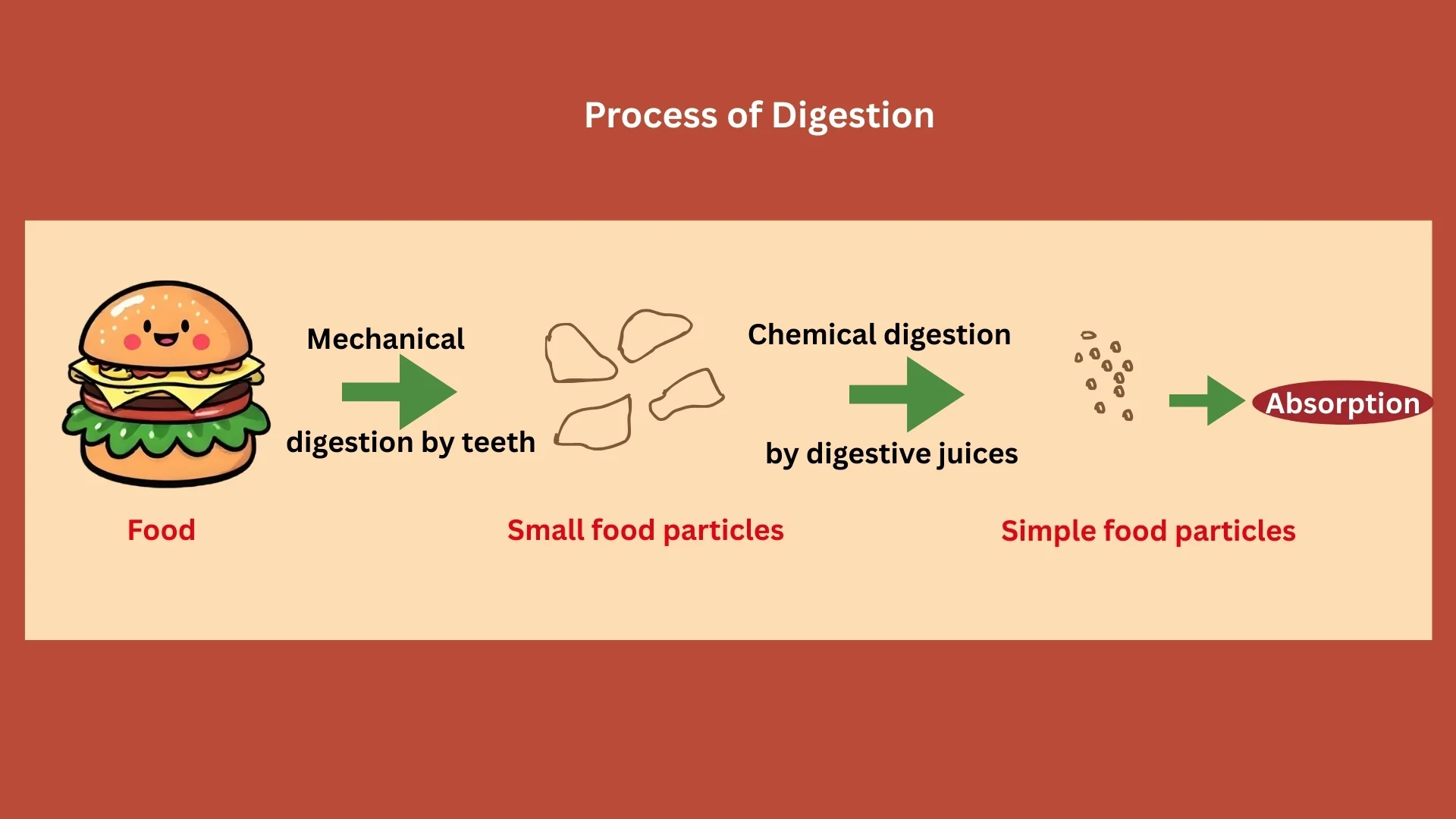
Digestion
Click to revealThe process of breaking down food into smaller molecules that can be absorbed by the body. Includes mechanical and chemical digestion.
Absorption
Click to revealThe process by which digested nutrients pass through the walls of the small intestine into the bloodstream to be used by the body.
Enzyme
Click to revealA biological catalyst that speeds up chemical reactions in the body. Digestive enzymes break down food molecules (e.g., amylase, pepsin, lipase).
Peristalsis
Click to revealWave-like muscle contractions that push food through the digestive tract. Works in the oesophagus, stomach, and intestines.
Villi
Click to revealTiny finger-like projections lining the small intestine. They increase surface area for maximum nutrient absorption.
Bile
Click to revealA greenish fluid produced by the liver and stored in the gallbladder. It emulsifies (breaks down) fats into smaller droplets for easier digestion.
Chyme
Click to revealThe semi-liquid mixture of partially digested food and gastric juices that leaves the stomach and enters the small intestine.
Bolus
Click to revealA soft, rounded ball of chewed food mixed with saliva that forms in the mouth before being swallowed.
Amylase
Click to revealAn enzyme that breaks down starch into maltose (a sugar). Found in saliva (salivary amylase) and pancreatic juice (pancreatic amylase).
❓ Knowledge Quiz
Test yourself with 10 questions - some have multiple correct answers!