The basic structural and functional unit of all living organisms
Biology · Grade 9-11 · 12 min read
🧫 Cell theory🦠 Prokaryotes🧬 Eukaryotes🌿 Plant vs animal💧 Osmosis🔬 Microscopes
📖 Lesson
What cells are, how they were discovered, how they are built and how the different types compare.
Introduction: The Smallest Thing That Is Alive
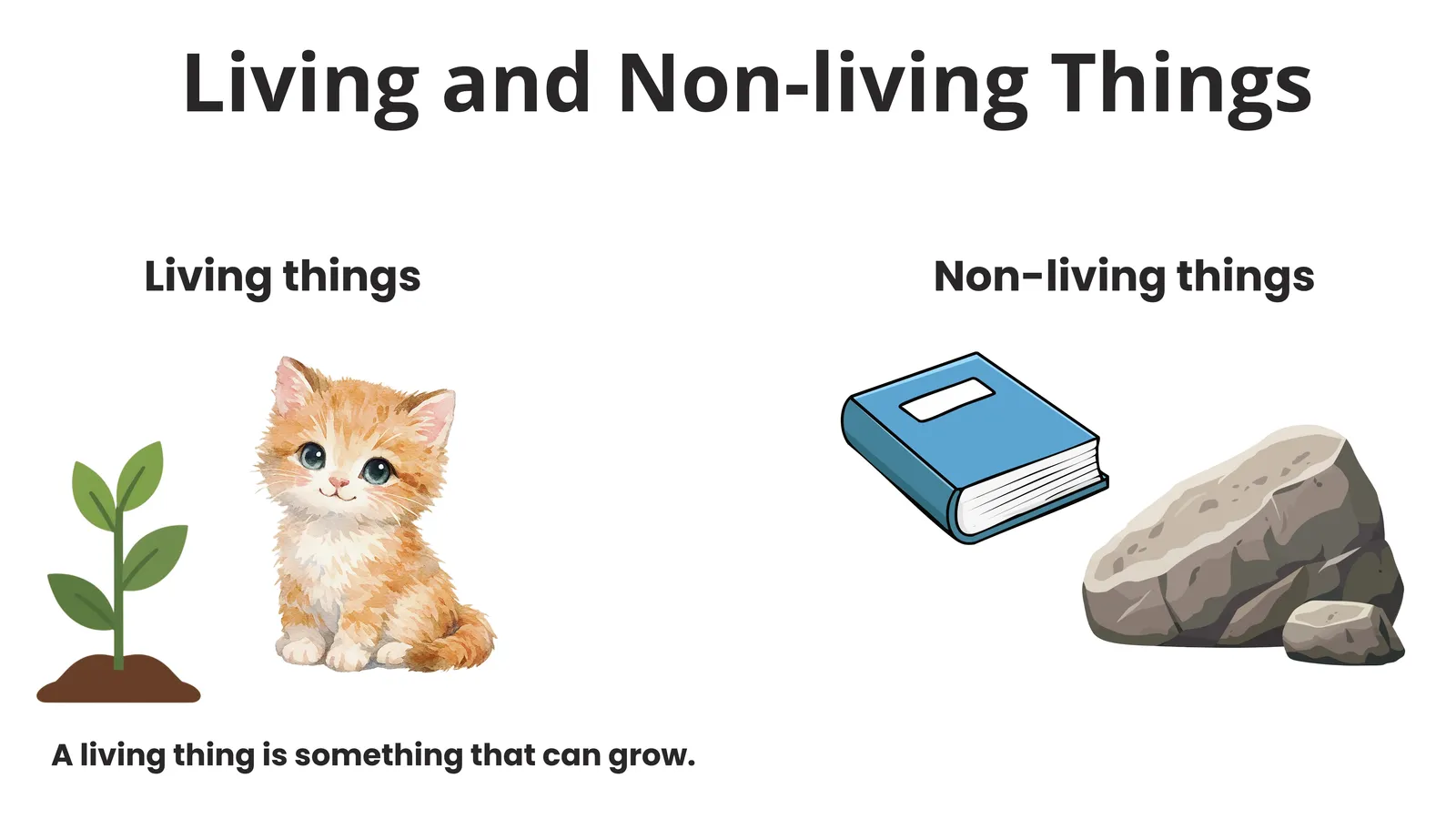
Break a table into smaller and smaller pieces and you eventually get wood dust. Break the dust further and you get molecules, then atoms. At no point does anything become alive, because the table was never alive.
Now do the same with a leaf. Cut it smaller and smaller, and at a certain point you reach a structure that cannot be divided further without destroying life itself. That structure is the cell.
The cell is the smallest unit that can genuinely be called alive. It takes in nutrients, releases energy, removes waste, responds to its surroundings, grows and reproduces. Every one of those activities is happening in each of the roughly thirty seven trillion cells that make up your body while you read this sentence.
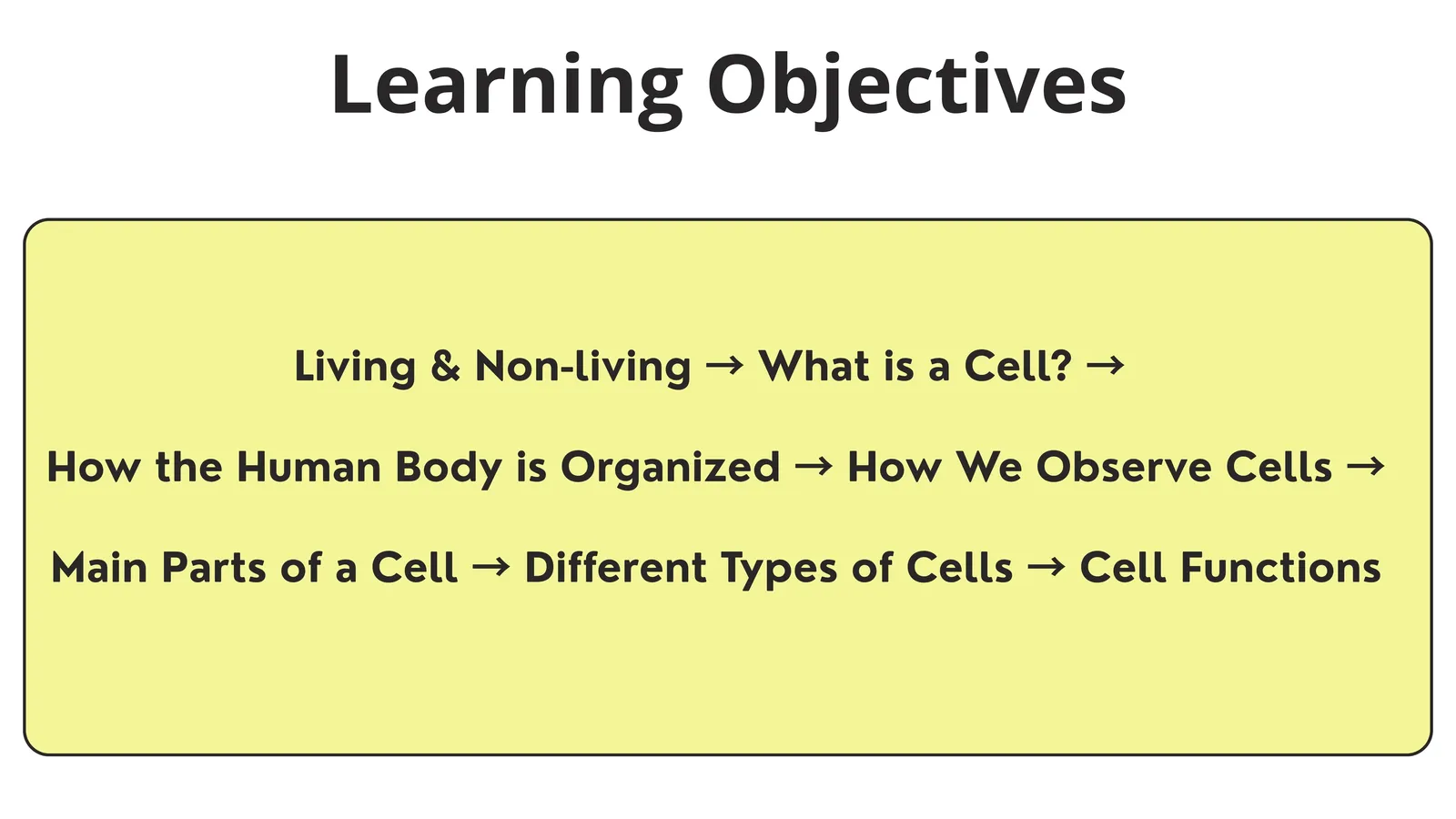
This guide explains what cells are, how they were discovered, how they are built, and how the different types compare.
🌱
Slides: Cell structure and function
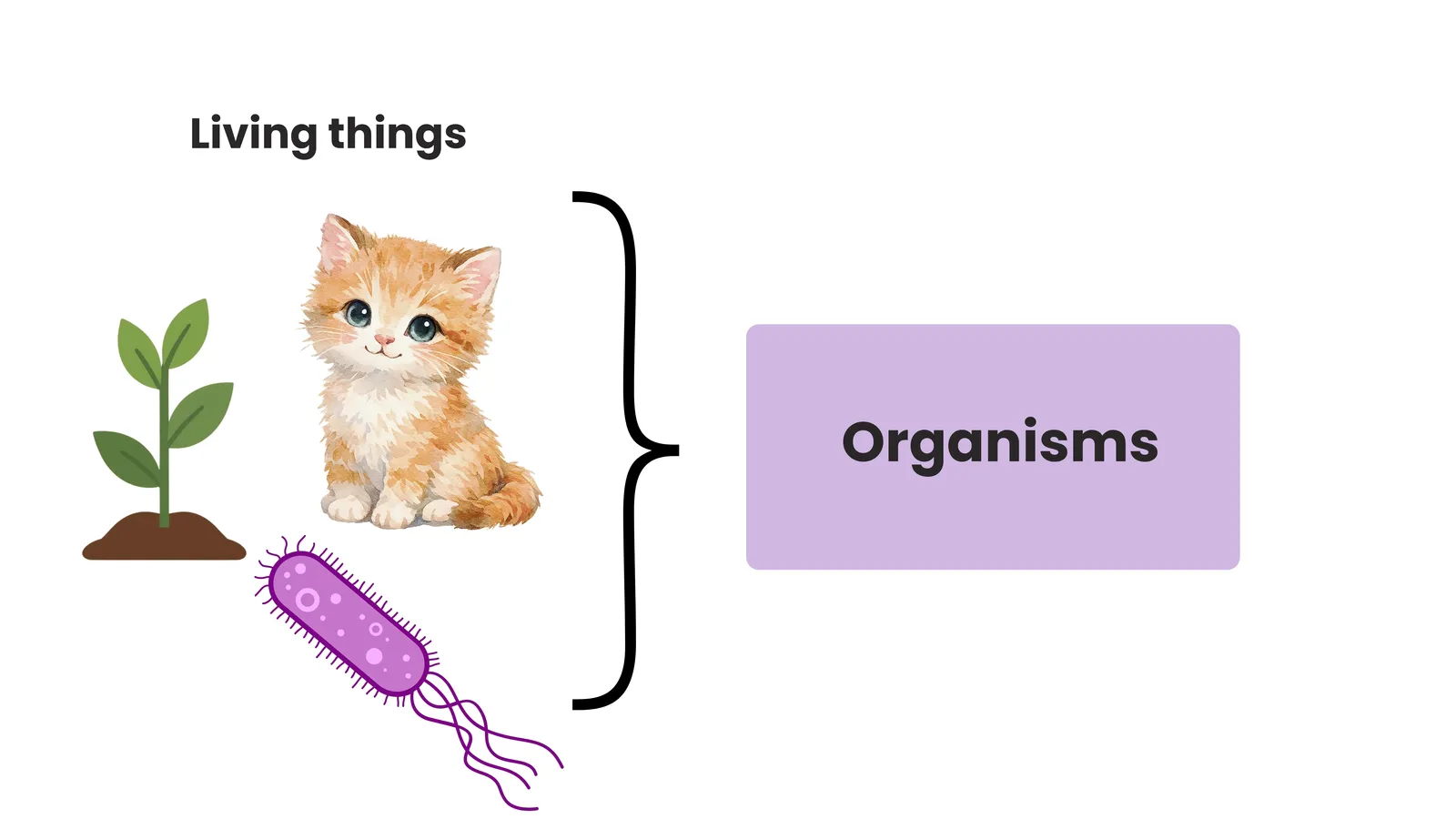
Living and non-living things
1/3
What Is a Cell?
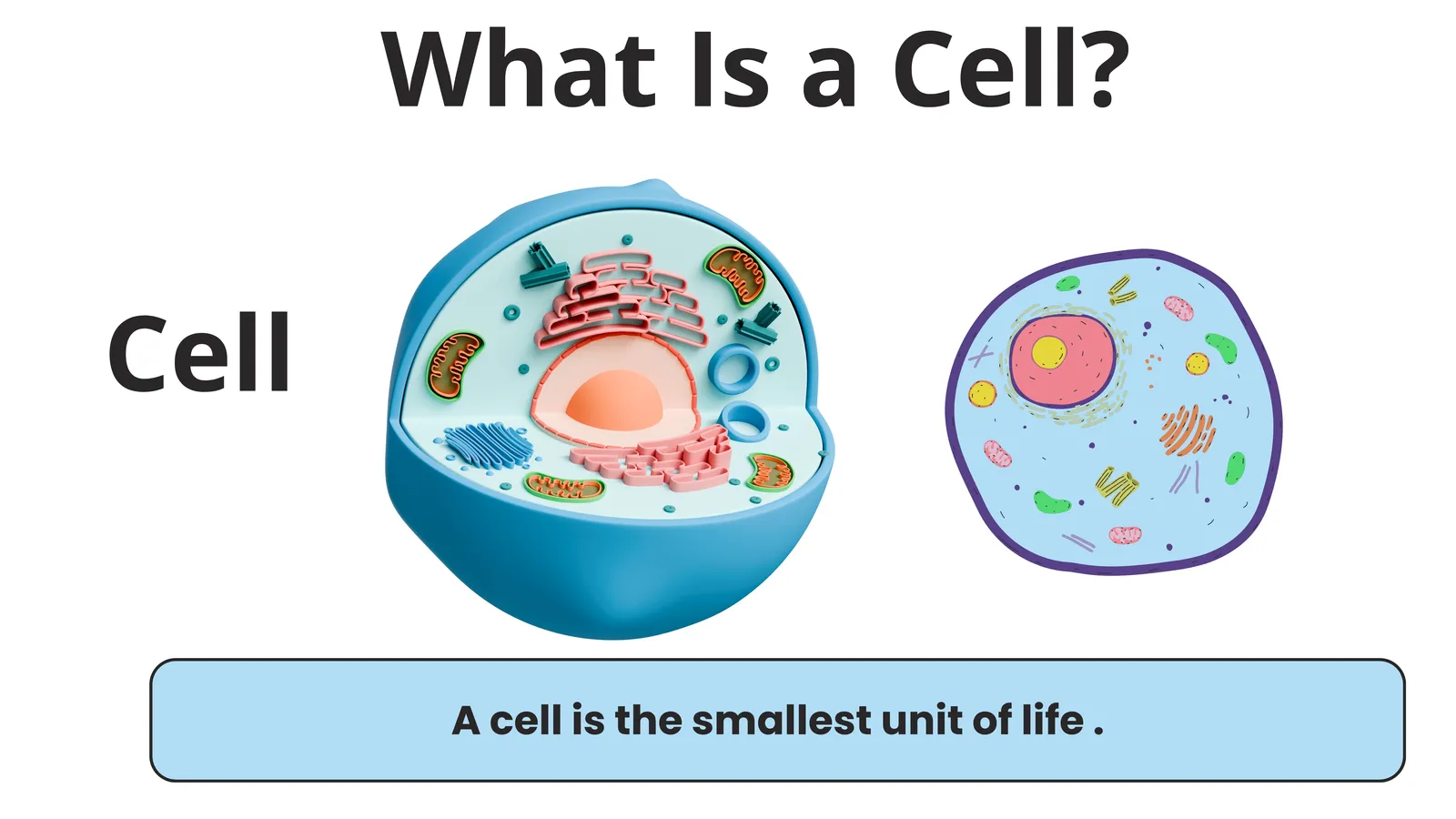
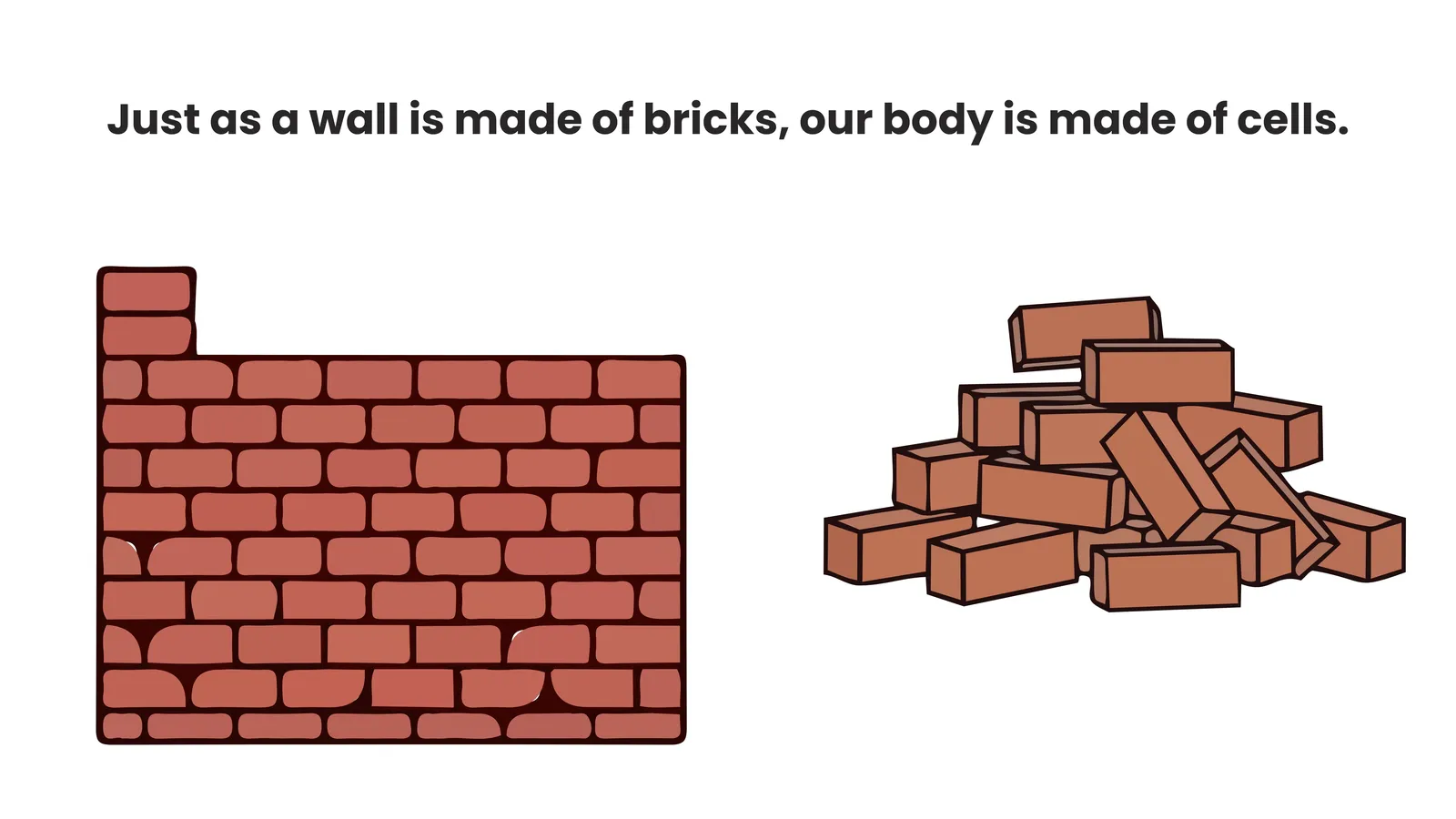
A cell is the basic structural and functional unit of all living organisms. The word structural means that bodies are built out of cells the way a wall is built out of bricks. The word functional means that all the chemical processes of life actually take place inside them.
Cells vary enormously in size. Most human cells measure between ten and thirty micrometres across, far too small for the naked eye. Yet a nerve cell running from the spinal cord to the foot can be about one metre long, and the yolk of an ostrich egg is a single cell you can hold in your hand. Bacterial cells may be less than one micrometre wide.
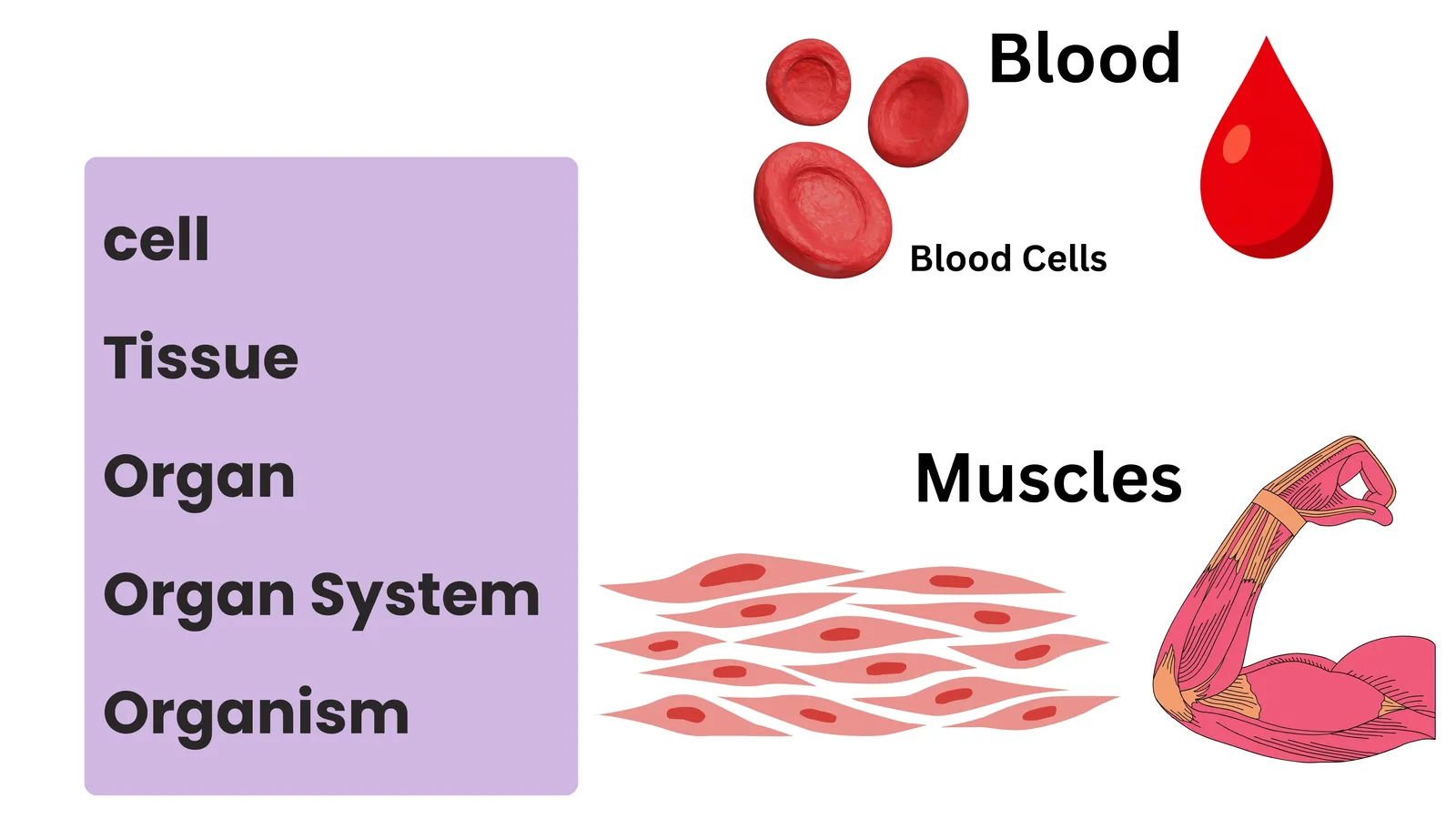
They also vary enormously in shape, and the shape almost always reflects the job. A red blood cell is a flattened disc, which gives it a large surface area for absorbing oxygen and lets it squeeze through narrow capillaries. A nerve cell is long and thin so that it can carry signals over distance. A muscle cell is elongated so that it can shorten and pull. A root hair cell has a long projection that increases the surface area for absorbing water. Whenever you meet a new cell type, ask what shape it has and why that shape helps.
🧱
Slides: What is a cell?
The smallest unit of life
1/3
The Discovery of the Cell
In 1665 an English scientist named Robert Hooke examined a thin slice of cork under a simple microscope. He saw rows of tiny empty boxes that reminded him of the small rooms monks lived in, which were called cells. The name stuck. Ironically, Hooke was looking at dead cell walls, not living cells at all.
A few years later Anton van Leeuwenhoek, working with far better lenses that he ground himself, became the first person to see living cells, including bacteria and sperm cells. He called the moving creatures animalcules.
In 1831 Robert Brown identified the nucleus as a regular feature of plant cells. Then in 1838 and 1839 the botanist Matthias Schleiden and the zoologist Theodor Schwann proposed that all plants and all animals are made of cells. Finally, in 1855 Rudolf Virchow added the crucial statement that every cell arises from a pre existing cell, replacing older beliefs that living things could appear spontaneously from non living matter.
The Cell Theory
Together these discoveries produced the cell theory, one of the foundations of modern biology. It has three main points.
All living organisms are composed of one or more cells.
The cell is the basic structural and functional unit of life.
All cells arise from pre existing cells by division.
🔬
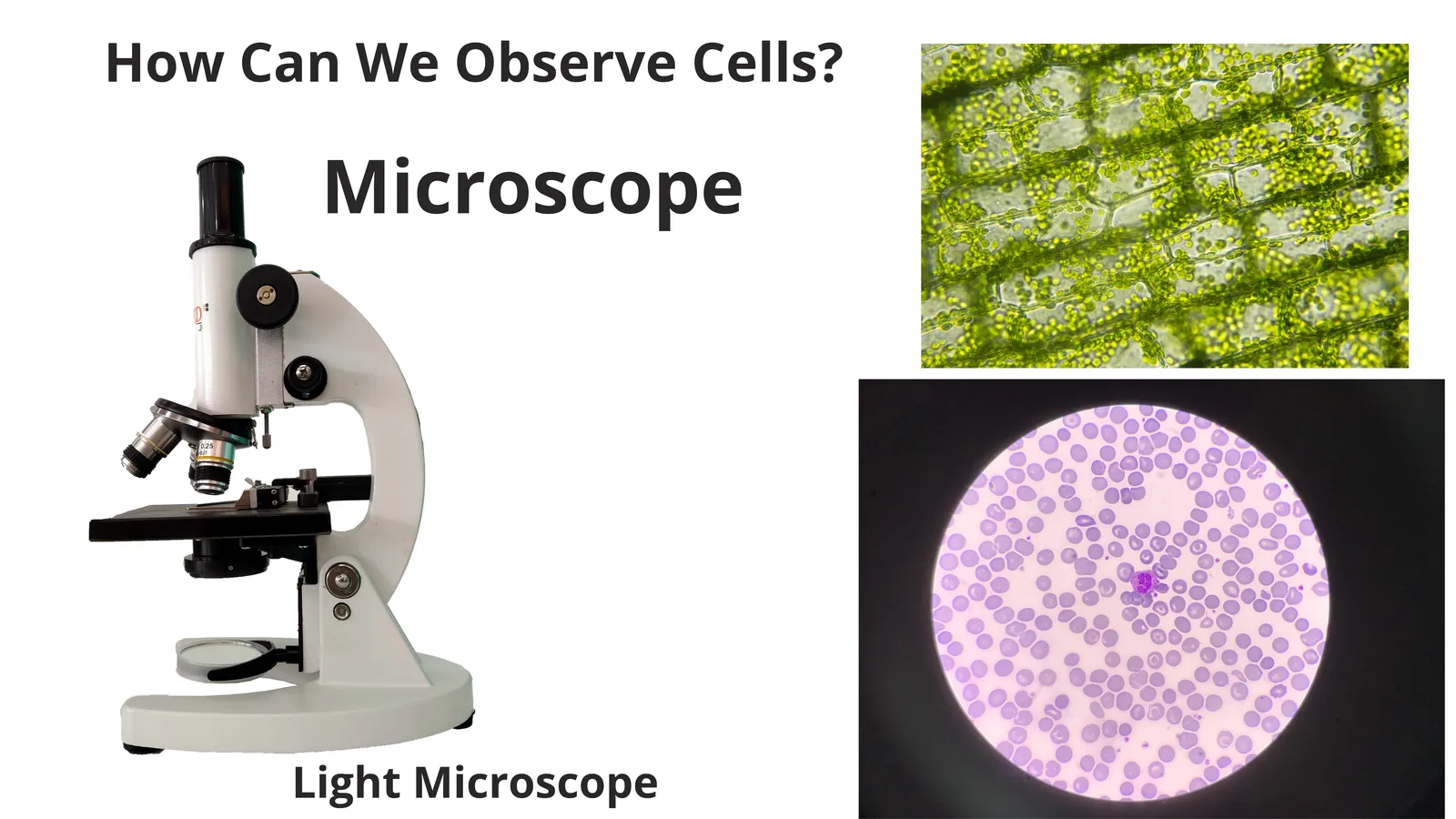
Slide: How can we observe cells?
Seeing cells under the light microscope
1/1
Prokaryotic and Eukaryotic Cells
All cells fall into one of two great categories, and the difference between them is the single most important classification in cell biology.
Prokaryotic Cells
Prokaryotic cells have no true nucleus. Their genetic material sits freely in the cytoplasm in a region called the nucleoid, without a surrounding membrane. They also lack membrane bound organelles, so there is no mitochondrion, no endoplasmic reticulum and no Golgi apparatus.
Prokaryotic cells are small, typically between one and ten micrometres. They possess a cell wall, ribosomes that are smaller than those in other cells, and often extra small rings of DNA called plasmids. Many have a whip like flagellum for movement.
Bacteria and archaea are prokaryotes. Despite their simplicity, they are extraordinarily successful and live almost everywhere on Earth, including inside your own gut.
Eukaryotic Cells
Eukaryotic cells have a true nucleus enclosed in a double membrane, and they contain many membrane bound organelles, each performing a specialised task.
Eukaryotic cells are larger, typically between ten and one hundred micrometres, and they have larger ribosomes and a complex internal skeleton of protein fibres called the cytoskeleton.
Plants, animals, fungi and protists are all eukaryotes. Every cell in your body is a eukaryotic cell.
A helpful way to remember the difference is to picture two workshops. The prokaryotic workshop is a single open room where every job happens in the same space. The eukaryotic workshop is a building divided into separate rooms, each with its own equipment and its own purpose. Dividing the space allows far more complicated work to be done at once without one process interfering with another. That division of labour is called compartmentalisation, and it is the great advantage of eukaryotic cells.
The Three Basic Parts of a Cell
Whatever type it is, a cell has three fundamental components.
The Cell Membrane
The cell membrane, also called the plasma membrane, is a thin flexible boundary surrounding every cell. It separates the inside of the cell from the outside world and decides what may enter or leave.
The membrane is described as selectively permeable or partially permeable, meaning some substances pass through freely while others are blocked or require assistance.
Its structure is described by the fluid mosaic model. It consists of a double layer of phospholipid molecules with protein molecules floating within it, rather like icebergs drifting in a sea. The word fluid describes the fact that the components can move sideways within the layer, and the word mosaic describes the scattered pattern of proteins. Some of these proteins act as channels, some act as pumps, and others act as identity markers or receptors.
The Cytoplasm
The cytoplasm is the jelly like fluid filling the space between the membrane and the nucleus. The fluid part alone is called the cytosol, and it consists mostly of water with dissolved salts, sugars, amino acids and enzymes.
The cytoplasm is not merely a filler. Many essential reactions, including the first stage of respiration, take place directly in it. It also holds the organelles in position and allows materials to move around the cell.
The Nucleus
The nucleus is the control centre of the cell. It is usually the largest structure inside and is surrounded by a double membrane called the nuclear envelope, which is dotted with pores that allow selected materials to pass in and out.
Inside the nucleus is the genetic material, DNA, wound around proteins to form long threads called chromatin. When a cell prepares to divide, this chromatin coils tightly into visible structures called chromosomes. Human body cells contain forty six chromosomes arranged in twenty three pairs.
The nucleus also contains a dense region called the nucleolus, which manufactures ribosomes.
The nucleus controls the cell by controlling which proteins are made. Since proteins include all enzymes, and enzymes control every chemical reaction, whoever controls protein production controls the cell entirely. A cell without a nucleus cannot make new proteins and cannot divide, which is why a mature red blood cell, having lost its nucleus, survives only about one hundred and twenty days.
Plant Cells and Animal Cells Compared
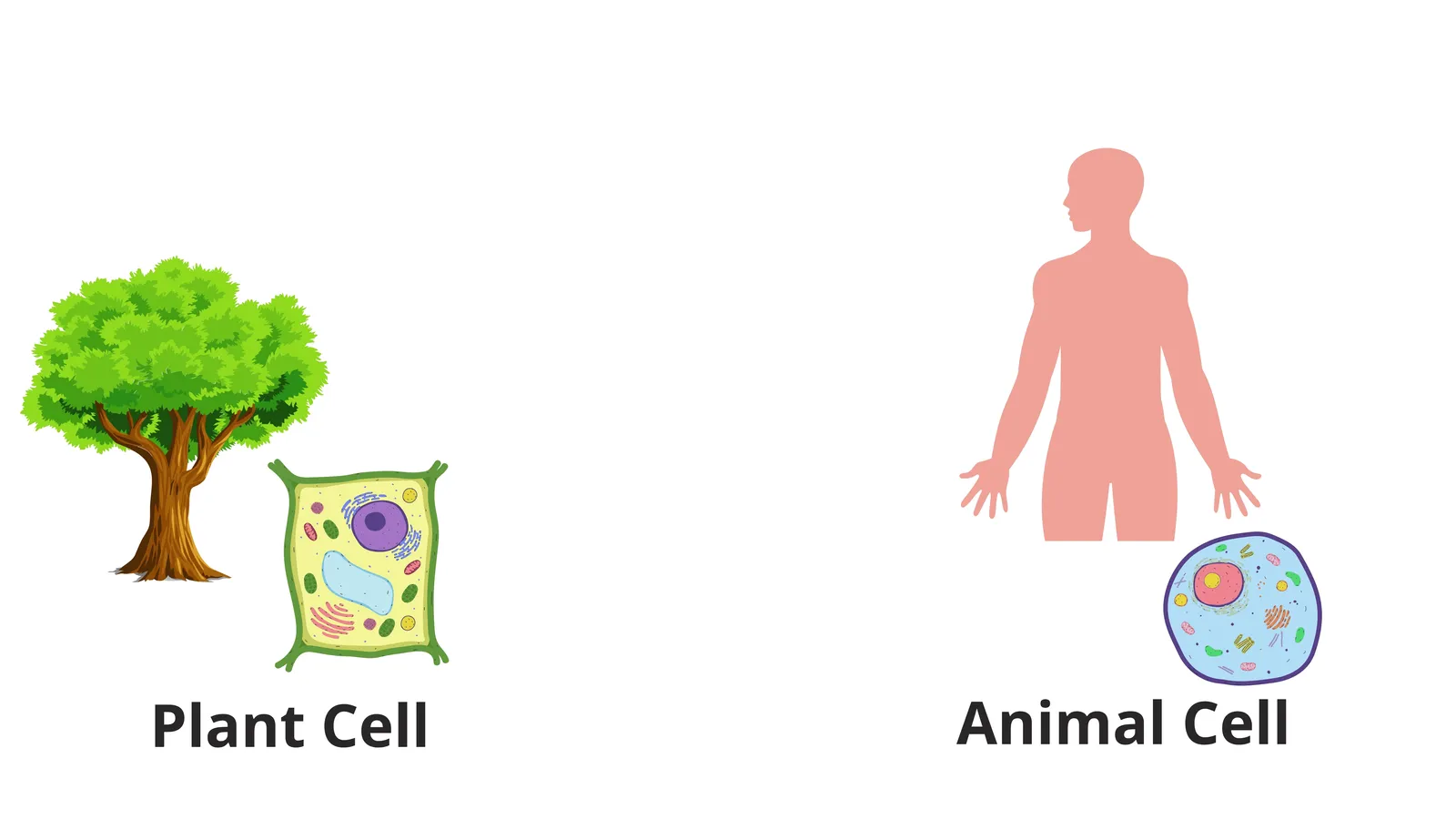
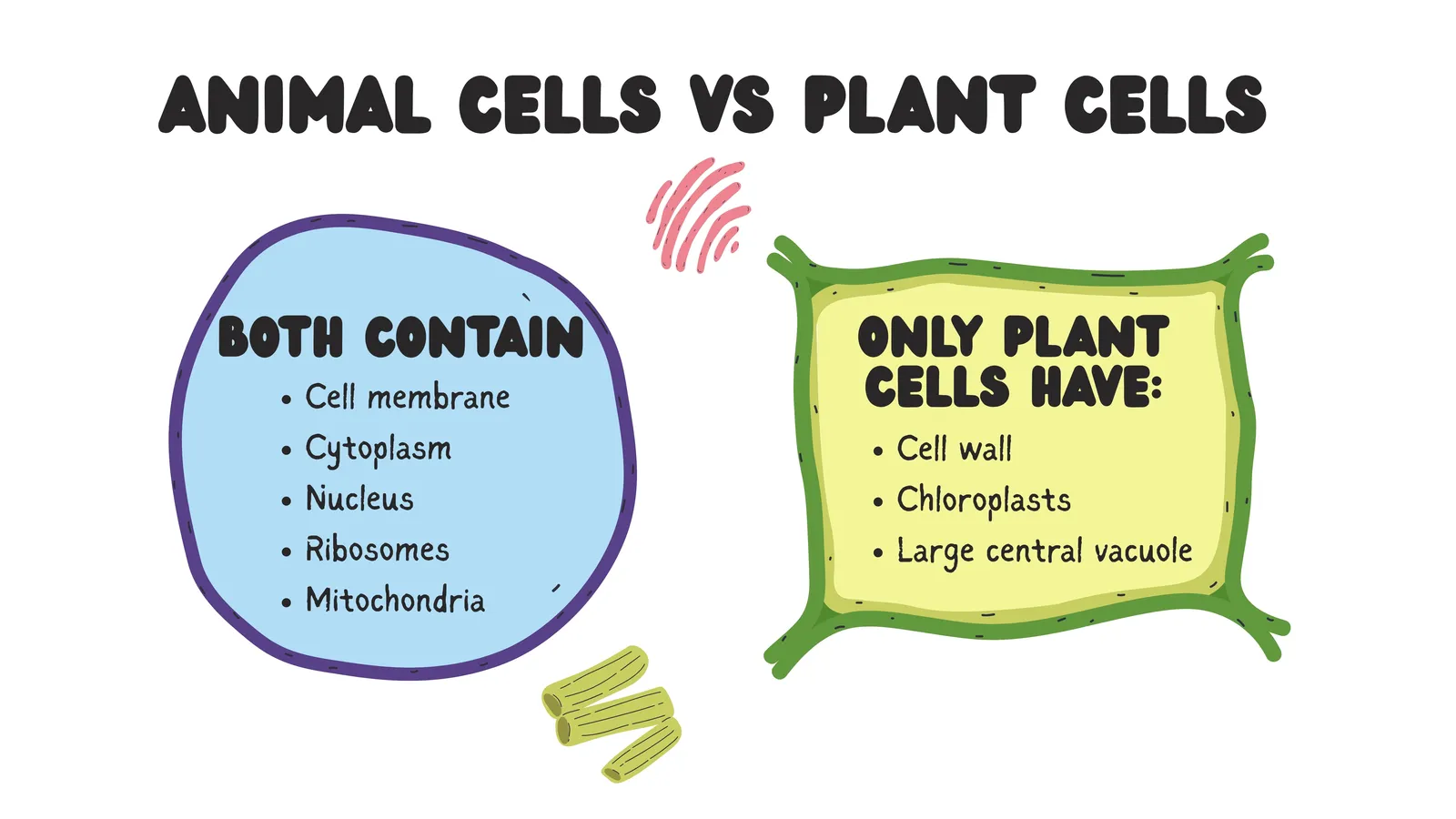
Both are eukaryotic, so they share a nucleus, cytoplasm, membrane, mitochondria, ribosomes and other organelles. Three structures, however, are found only in plant cells.
The Cell Wall
Plant cells have a rigid cell wall made of cellulose outside the cell membrane. It gives the cell a fixed shape, provides mechanical strength, and prevents the cell from bursting when it absorbs a lot of water.
The cell wall is fully permeable, which means it lets almost everything through. It provides support, not selectivity. The membrane inside it remains the true gatekeeper.
This wall is the reason plants can stand upright without a skeleton, and the reason a plant cell always looks like a neat rectangle under a microscope while animal cells look rounded and irregular.
Chloroplasts
Chloroplasts are green organelles found in the cells of leaves and other green parts. They contain the pigment chlorophyll, which absorbs light energy and uses it to make glucose from carbon dioxide and water during photosynthesis.
Chloroplasts are the reason plants can make their own food and the ultimate reason almost every food chain on Earth begins with a plant. Root cells contain no chloroplasts, because there is no light underground.
The Large Central Vacuole
Plant cells contain one large vacuole that may occupy most of the cell volume. It is filled with cell sap, a solution of water, sugars and salts, and is surrounded by a membrane called the tonoplast.
The vacuole stores substances and, more importantly, creates internal pressure. When it is full of water it pushes outwards against the cell wall, making the cell firm or turgid. This turgor pressure is what keeps soft plant stems and leaves upright. When a plant is not watered, the vacuoles lose water, the cells become flabby, and the plant wilts. Water the plant and the vacuoles refill, restoring firmness within hours.
Animal cells may have small temporary vacuoles, but never a single large permanent one.
🌿
Slides: Plant cells and animal cells
What they share and what only plants have
1/2
Movement of Substances Across the Cell Membrane
A cell must constantly take in what it needs and remove what it does not. There are three main methods.
Diffusion
Diffusion is the movement of particles from a region of higher concentration to a region of lower concentration. It requires no energy from the cell, because the particles are simply spreading out naturally.
Spray perfume in one corner of a room and eventually people across the room can smell it. Nobody pushed the molecules there. Oxygen entering a cell and carbon dioxide leaving it both happen by diffusion.
Osmosis
Osmosis is a special case of diffusion involving water. It is the movement of water molecules from a dilute solution to a concentrated solution across a selectively permeable membrane.
Osmosis explains why raisins swell when soaked in water and why sprinkling salt on cut vegetables draws water out of them. It also explains why an animal cell placed in pure water will swell and eventually burst, while a plant cell in the same situation only becomes turgid, because its cell wall resists further expansion.
Active Transport
Active transport moves substances from a region of lower concentration to a region of higher concentration, which is the opposite of the natural direction. Because it works against the concentration gradient, it requires energy supplied by the cell in the form of a molecule called ATP, and it requires carrier proteins embedded in the membrane.
Root hair cells use active transport to absorb mineral ions from soil where the concentration is already lower than inside the cell. The kidney tubule uses it to reabsorb glucose from the filtrate. Cells that carry out a great deal of active transport typically contain very large numbers of mitochondria, since energy demand is high.
Cell Division in Brief
Cells reproduce by dividing, and there are two types of division.
Mitosis produces two daughter cells that are genetically identical to the parent cell and to each other, each with the full chromosome number. It is used for growth, for repairing damaged tissue and for replacing worn out cells. Your skin cells are constantly undergoing mitosis right now.
Meiosis produces four daughter cells, each with half the chromosome number of the parent. It occurs only in reproductive organs and produces gametes, meaning sperm and egg cells. Halving the number is essential, because when two gametes fuse at fertilisation the full number is restored. Meiosis also shuffles genetic material, which is why brothers and sisters resemble each other without being identical.
Levels of Organisation in the Body
Cells rarely work alone in complex organisms. They are organised into a clear hierarchy.
Similar cells working together form a tissue, such as muscle tissue. Different tissues working together form an organ, such as the stomach. Several organs working together form an organ system, such as the digestive system. All the organ systems together form the complete organism.
Understanding this hierarchy makes every other biology topic easier, because it shows how a single microscopic structure connects all the way up to a whole living body.
🪜
Slide: Levels of organisation
From cell to organism
1/1
Frequently Asked Questions About the Cell
Why is the cell called the structural and functional unit of life?
It is structural because all living bodies are built from cells, and functional because every life process, including respiration, growth and reproduction, happens inside them.
What is the difference between the cell wall and the cell membrane?
The cell wall is rigid, made of cellulose, found only in plant cells, and fully permeable. The cell membrane is thin, flexible, present in all cells, and selectively permeable.
Why do animal cells burst in pure water while plant cells do not?
Both take in water by osmosis, but a plant cell has a strong cell wall that resists expansion once the cell is turgid. An animal cell has no such support, so it keeps swelling until it bursts.
Which cell is the longest in the human body?
The nerve cell, or neuron. Some neurons extend from the spinal cord all the way to the toes.
Why does a red blood cell have no nucleus?
Losing the nucleus creates extra space for haemoglobin and gives the cell its flexible biconcave shape, which improves oxygen transport. The cost is a short lifespan of about four months.
Final Thoughts
Every large idea in biology eventually traces back to the cell. Digestion happens because cells in the pancreas make enzymes. Breathing matters because cells need oxygen. Heredity works because cells divide and pass on DNA. Diseases occur when cells are damaged, invaded or start dividing without control.
When you revise this topic, do not simply memorise a diagram. Look at each structure and ask what job it does and what would go wrong without it. That single habit turns a labelled picture into a genuine understanding, and it prepares you perfectly for the next topic, which examines each organelle inside the cell in detail.
🗂️ Revision Flashcards
Tap a card to reveal the answer.
🎯 Quick Quiz
8 questions. Pick an answer to check it straight away.
1Who first named cells after looking at a thin slice of cork in 1665?
Robert Hooke saw rows of tiny empty boxes in cork and called them cells.
2Which statement about prokaryotic cells is correct?
Prokaryotes have no true nucleus; their DNA lies freely in the cytoplasm in the nucleoid.
3Which structure is found in plant cells but not in animal cells?
Only plant cells have a cell wall, chloroplasts and a large central vacuole.
4The plant cell wall is described as…
The cell wall lets almost everything through; the membrane is the selective gatekeeper.
5Which method of transport requires energy from the cell?
Only active transport works against the concentration gradient, so it needs ATP.
6What happens to an animal cell placed in pure water?
Water enters by osmosis and, with no cell wall to resist, the cell bursts.
7How many daughter cells does meiosis produce?
Meiosis produces four daughter cells with half the chromosome number, forming gametes.
8What is the correct order of organisation from smallest to largest?
Similar cells form tissues, tissues form organs, organs form organ systems, and systems form the organism.