📖 Lesson: Ocean Ecosystems
Discover the vast underwater world and its vital role on Earth
🎮 Games: Test Your Knowledge
Play interactive games to reinforce what you've learned about ocean ecosystems
🌊 Ocean Ecosystems Explained: Zones, Food Webs, Reefs and the Deep Sea
What is an ocean ecosystem?
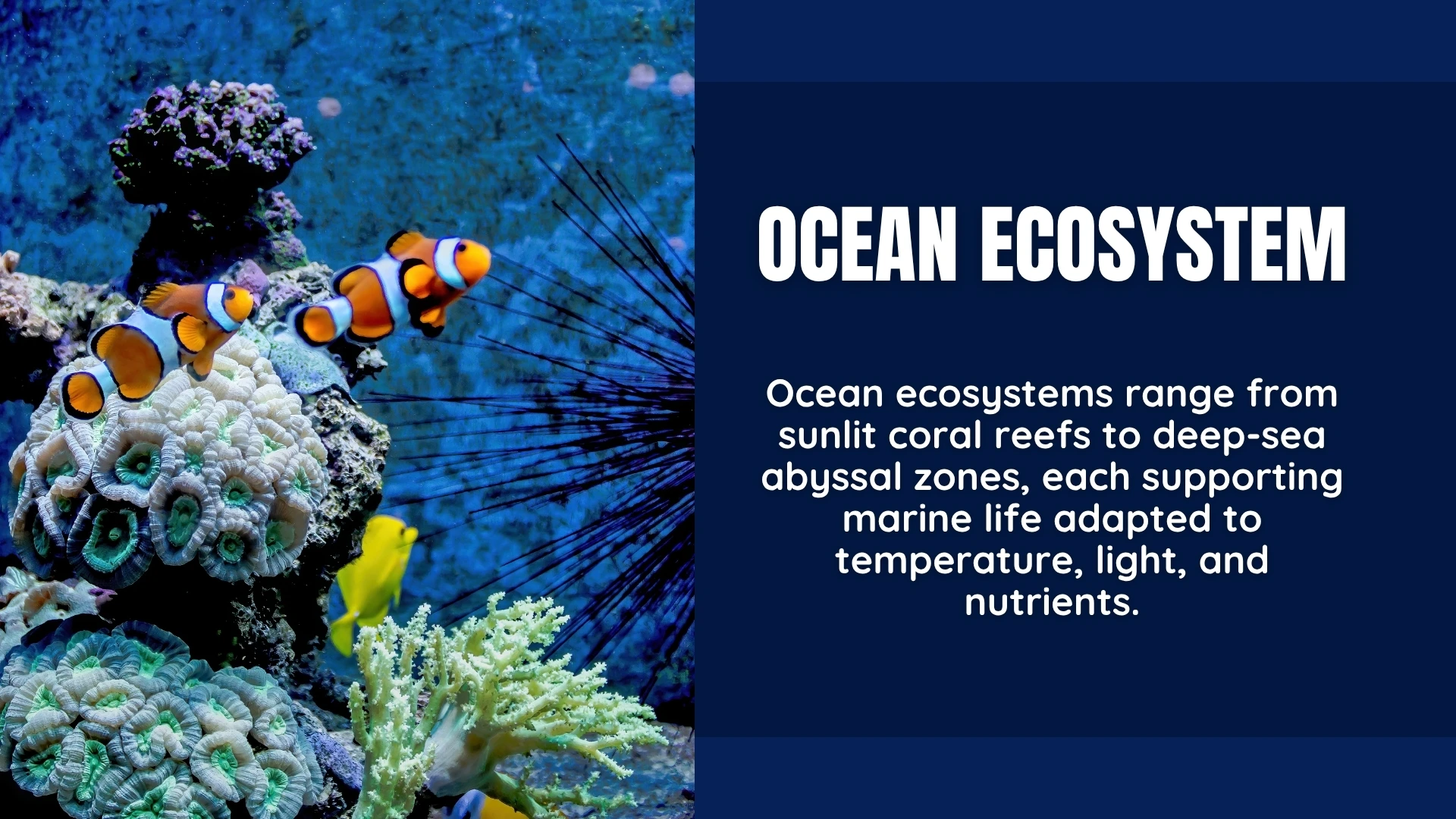
An ecosystem is a community of living things together with the non-living surroundings they interact with. An ocean ecosystem, then, is a community of marine organisms — from microscopic plankton to blue whales — linked to each other by feeding and linked to the salt water around them by the light, temperature, oxygen, pressure and nutrients that water provides. Because those conditions change enormously from the sunlit surface to the black sea floor, the ocean is not one ecosystem but many, stacked and side by side.
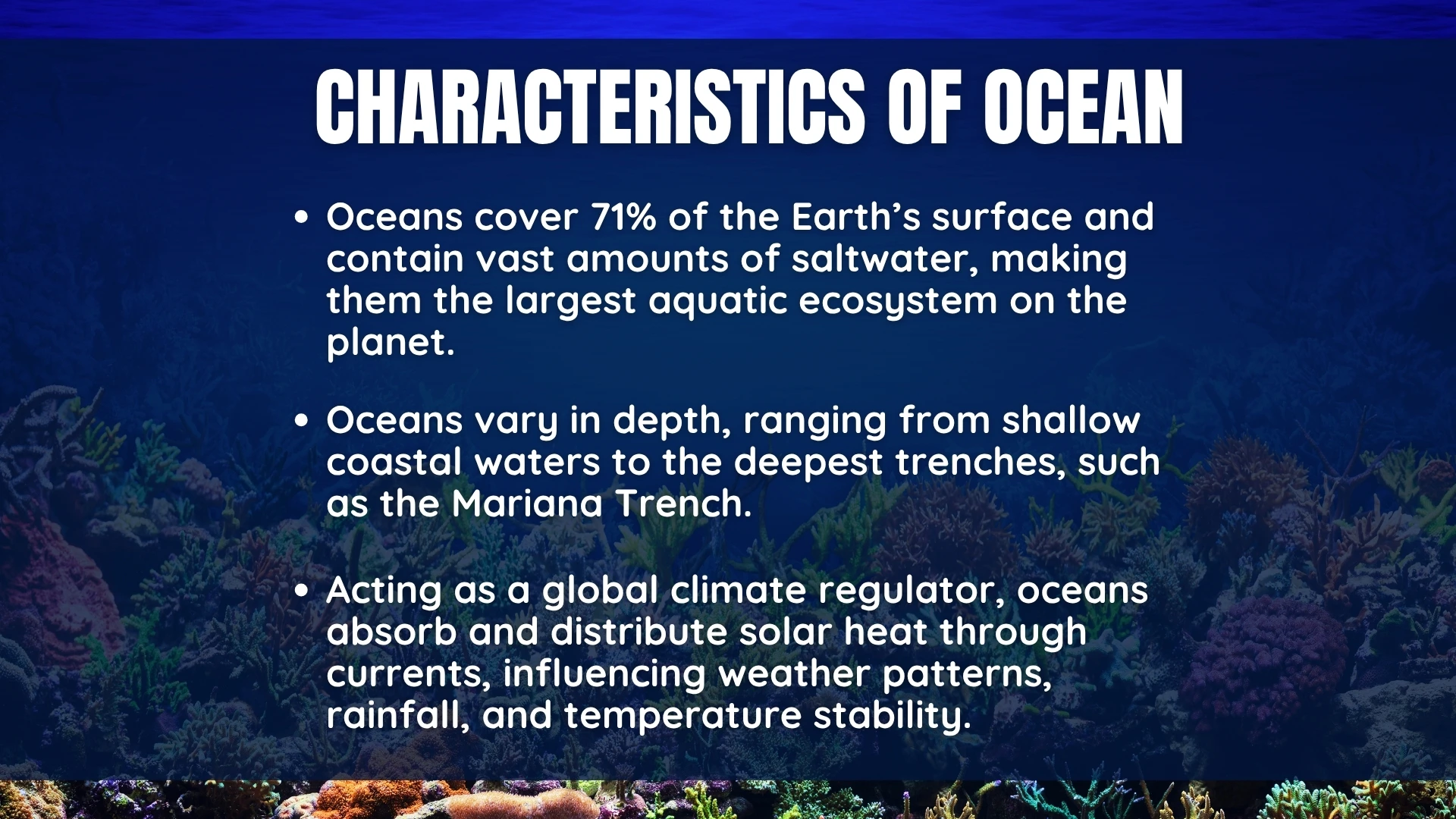
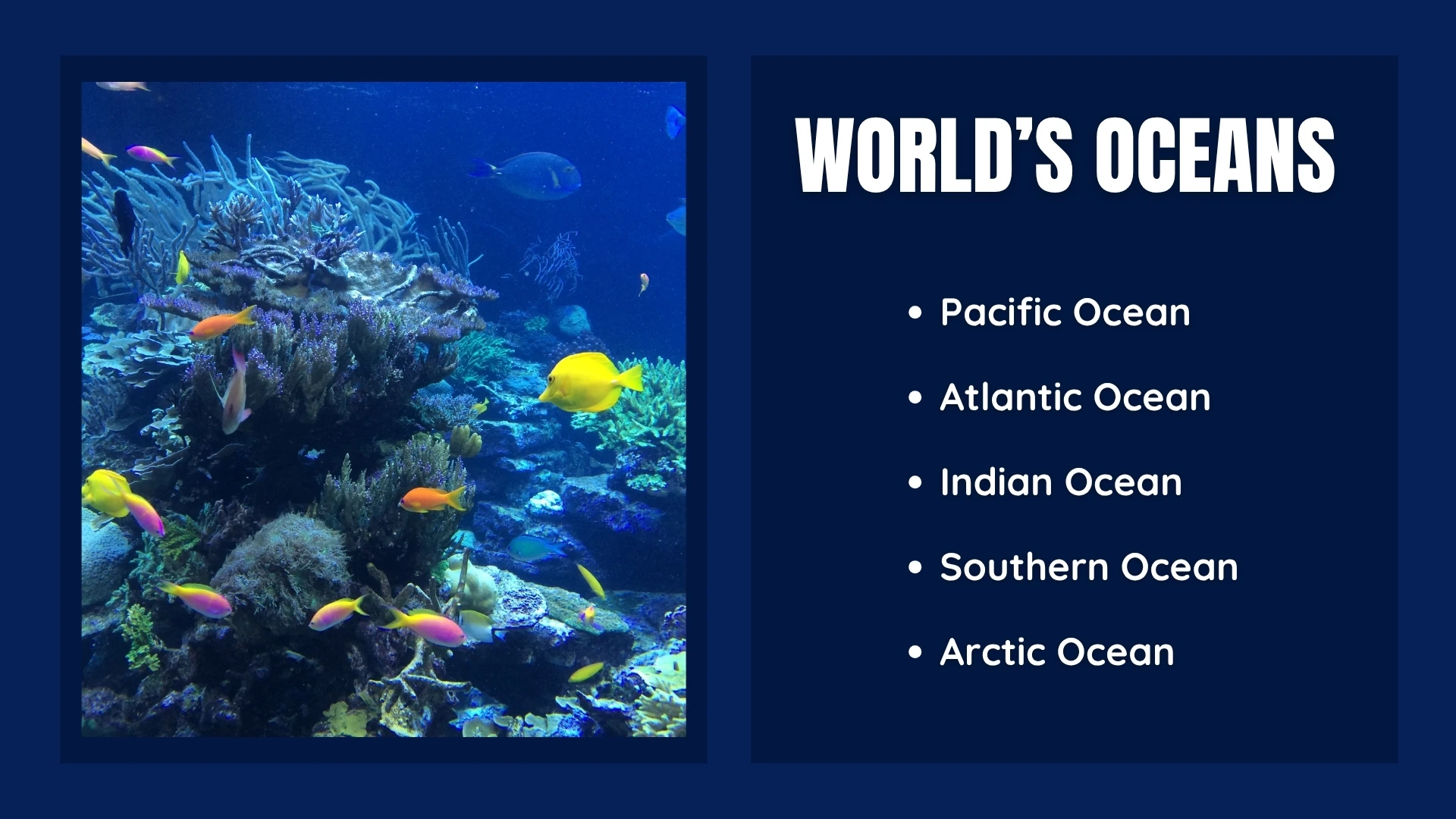
The five named oceans — the Pacific, Atlantic, Indian, Southern and Arctic — are all connected, and together they cover about 71 per cent of the Earth's surface. The Pacific is the largest and the deepest: the Mariana Trench, in its western half, drops to almost 11,000 metres.
Ocean zones: how depth and light divide the sea
Sunlight is absorbed quickly by water. Red light is gone within the first few metres, blue light reaches furthest, and by around 200 metres down there is too little light for any photosynthesis at all. Biologists use this fading light to divide the open ocean into layers.
| Zone | Approximate depth | Light and conditions | Typical life |
|---|---|---|---|
| Sunlight zone | 0 – 200 m | Enough light for photosynthesis; warmest and most oxygen-rich layer | Phytoplankton, seaweeds, coral reefs, most fish, turtles, dolphins |
| Twilight zone | 200 – 1,000 m | Dim light only; no photosynthesis; colder and darker with depth | Lanternfish, squid, jellyfish; many animals glow (bioluminescence) |
| Midnight zone | 1,000 – 4,000 m | Total darkness; near-freezing water; very high pressure | Anglerfish, gulper eels, sperm whales diving to hunt squid |
| Abyssal zone | 4,000 – 6,000 m | Dark, cold and still; covers most of the deep sea floor | Sea cucumbers, brittle stars, deep-sea bacteria |
| Hadal zone | Below 6,000 m (ocean trenches) | The deepest, most crushing pressure on Earth | Small crustaceans called amphipods, snailfish |
Pressure rises by about one atmosphere for every 10 metres of depth, so deep-sea animals have soft, watery bodies with no air spaces to be crushed. The sunlight zone is the thinnest layer, yet because it is the only place where food is made, almost every ocean food chain begins there.
Marine producers: the ocean's invisible forests
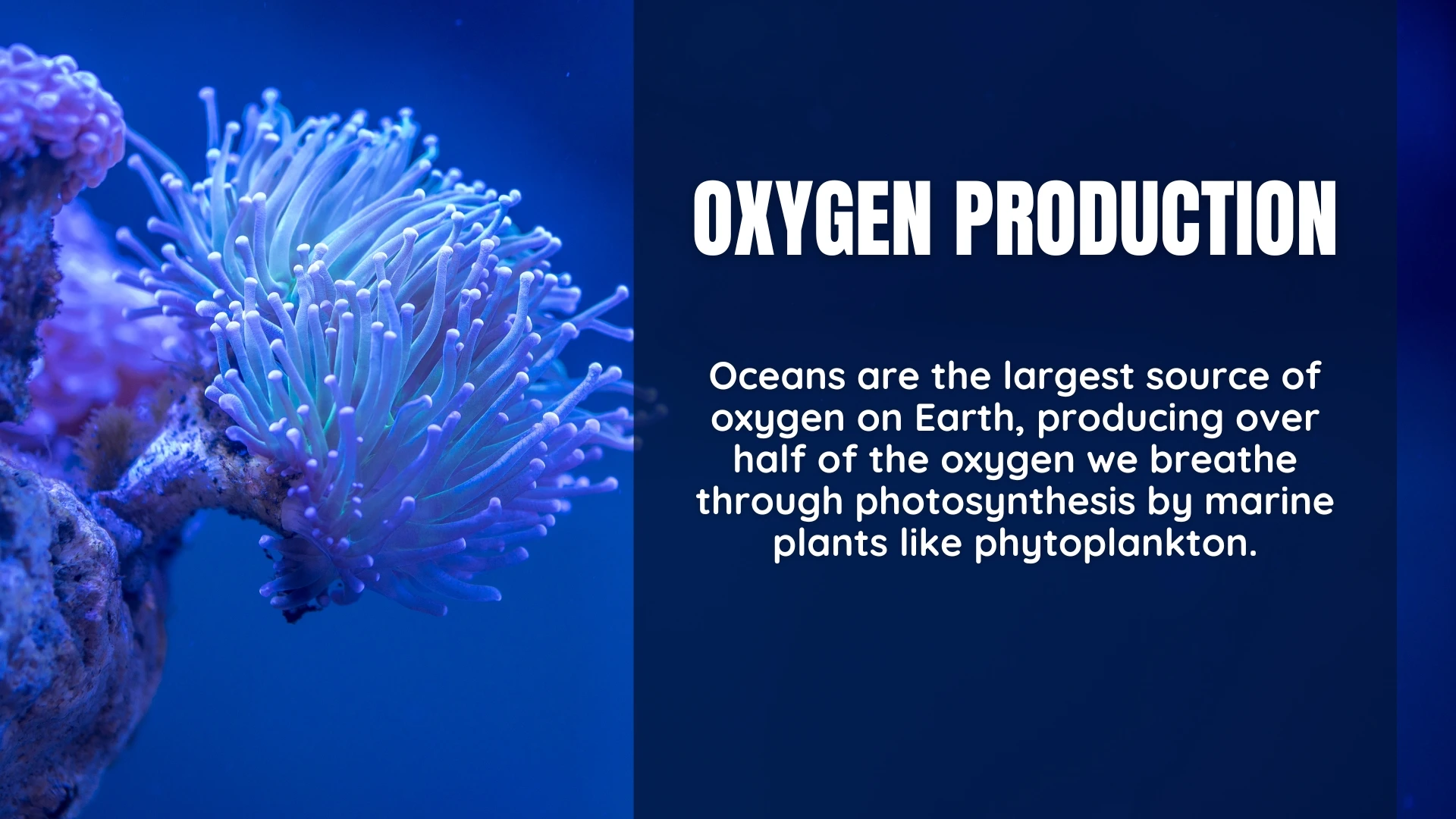
On land the producers are plants. In the ocean the main producers are phytoplankton — microscopic algae and photosynthetic bacteria that drift in the sunlight zone. They are too small to see individually, but there are so many of them that they carry out around half of all the photosynthesis on Earth, releasing oxygen into the water and the air above it. Larger producers include seaweeds such as kelp, which forms underwater forests in cool coastal water. Light is plentiful at the surface but nutrients tend to sink, so the richest patches of ocean are where deep, nutrient-rich water is pushed upwards — a process called upwelling.
Ocean food chains and food webs
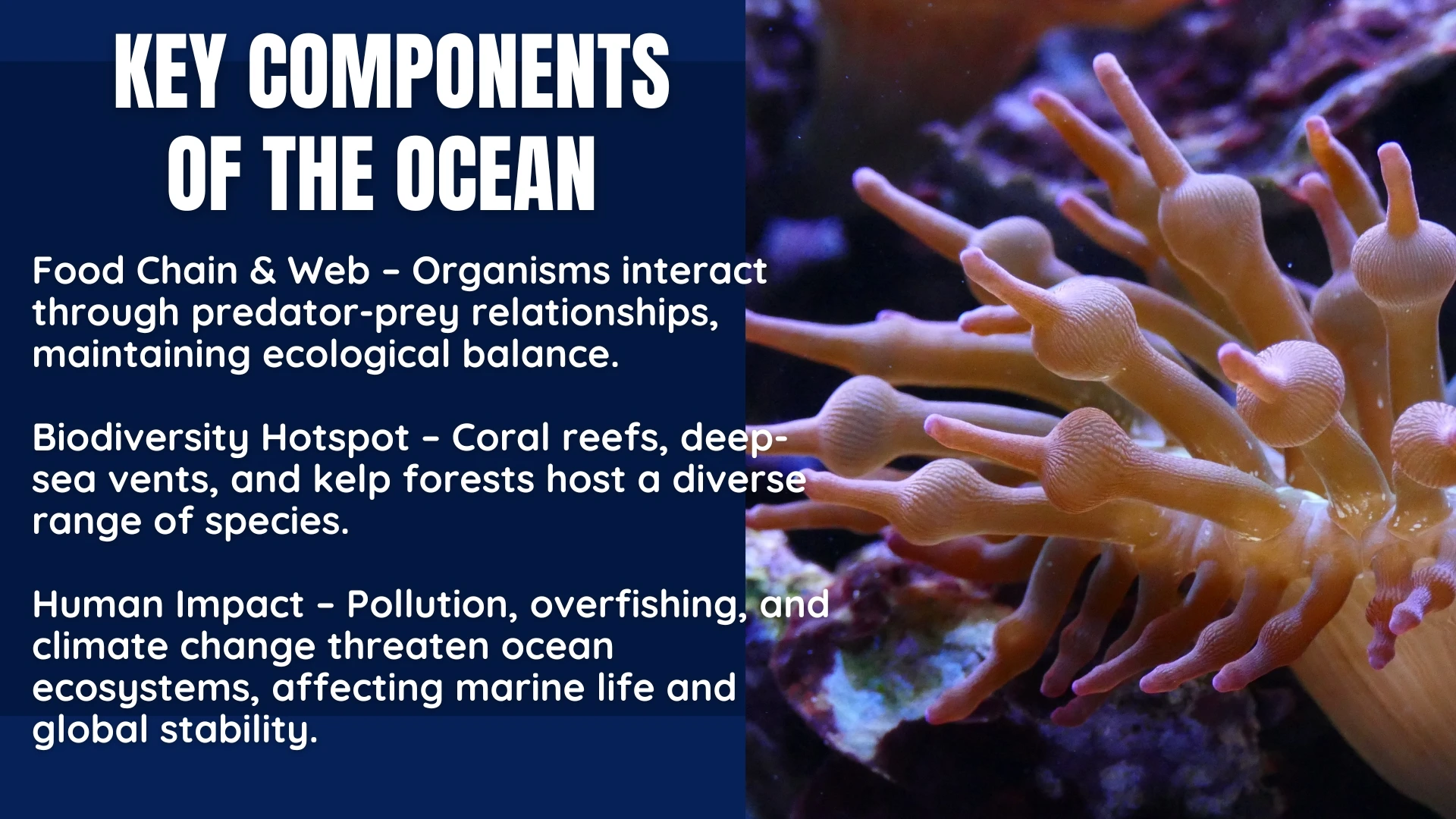
A typical ocean food chain runs: phytoplankton → zooplankton → small fish → larger fish → top predator. Zooplankton are tiny drifting animals such as copepods and krill, and the larvae of crabs and fish. They graze on phytoplankton and are eaten in turn by herring, sardines and anchovies, which are eaten by tuna, which may be eaten by sharks or orcas. Some chains are surprisingly short: a blue whale, the largest animal that has ever lived, feeds almost entirely on krill, only one step above the phytoplankton.
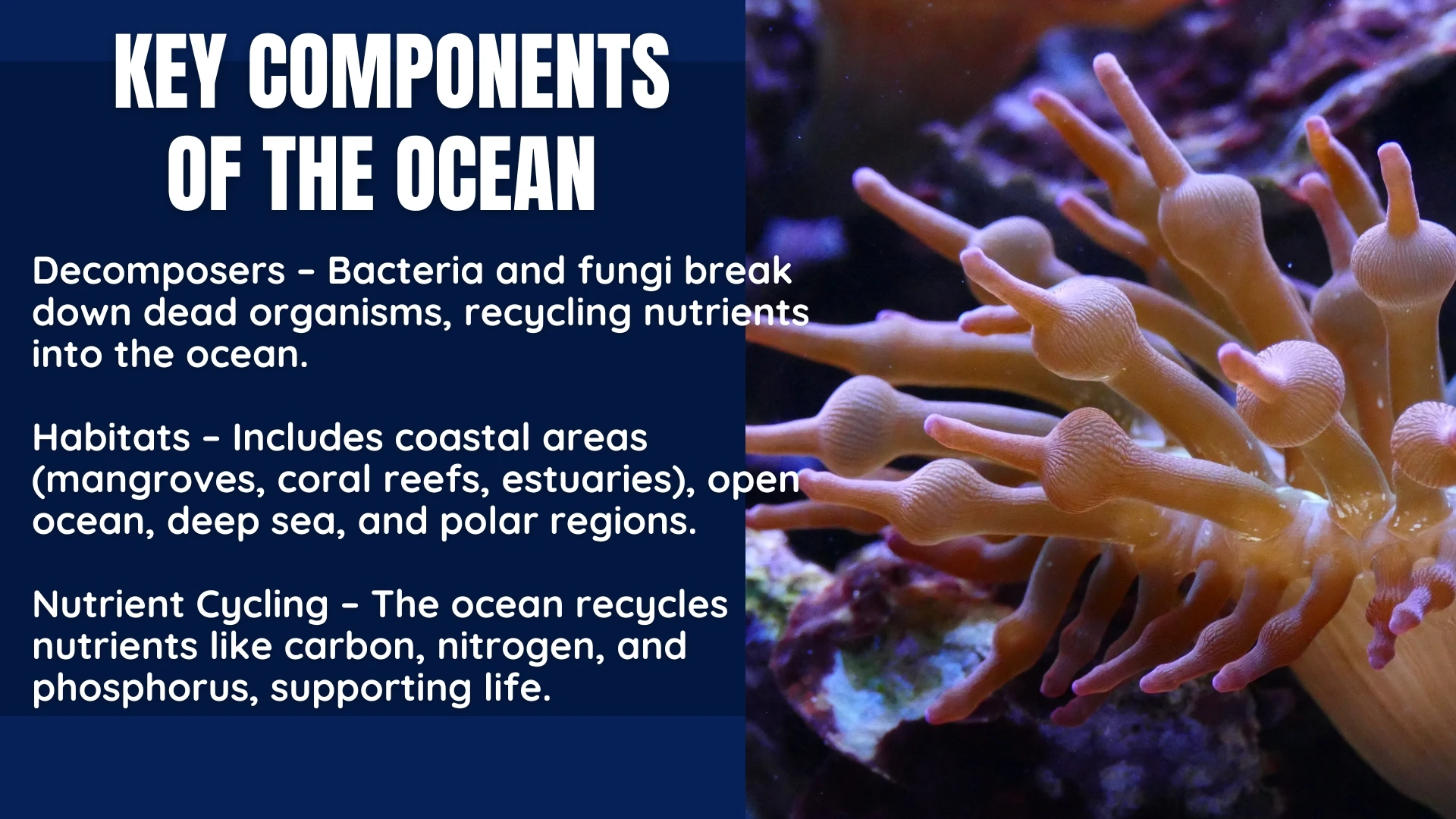
Real feeding relationships are tangled rather than tidy, so biologists draw food webs — many chains joined together. Remove the sardines and every animal that ate them is affected. The web is closed by decomposers: bacteria that break down dead plankton, animal droppings and carcasses as they sink. This slow drizzle of falling organic material is called marine snow, and it is the main food supply for the dark zones where nothing can photosynthesise. Decomposition releases nutrients back into the water, and upwelling returns them to the surface, completing the cycle.
Coral reefs: the rainforests of the sea
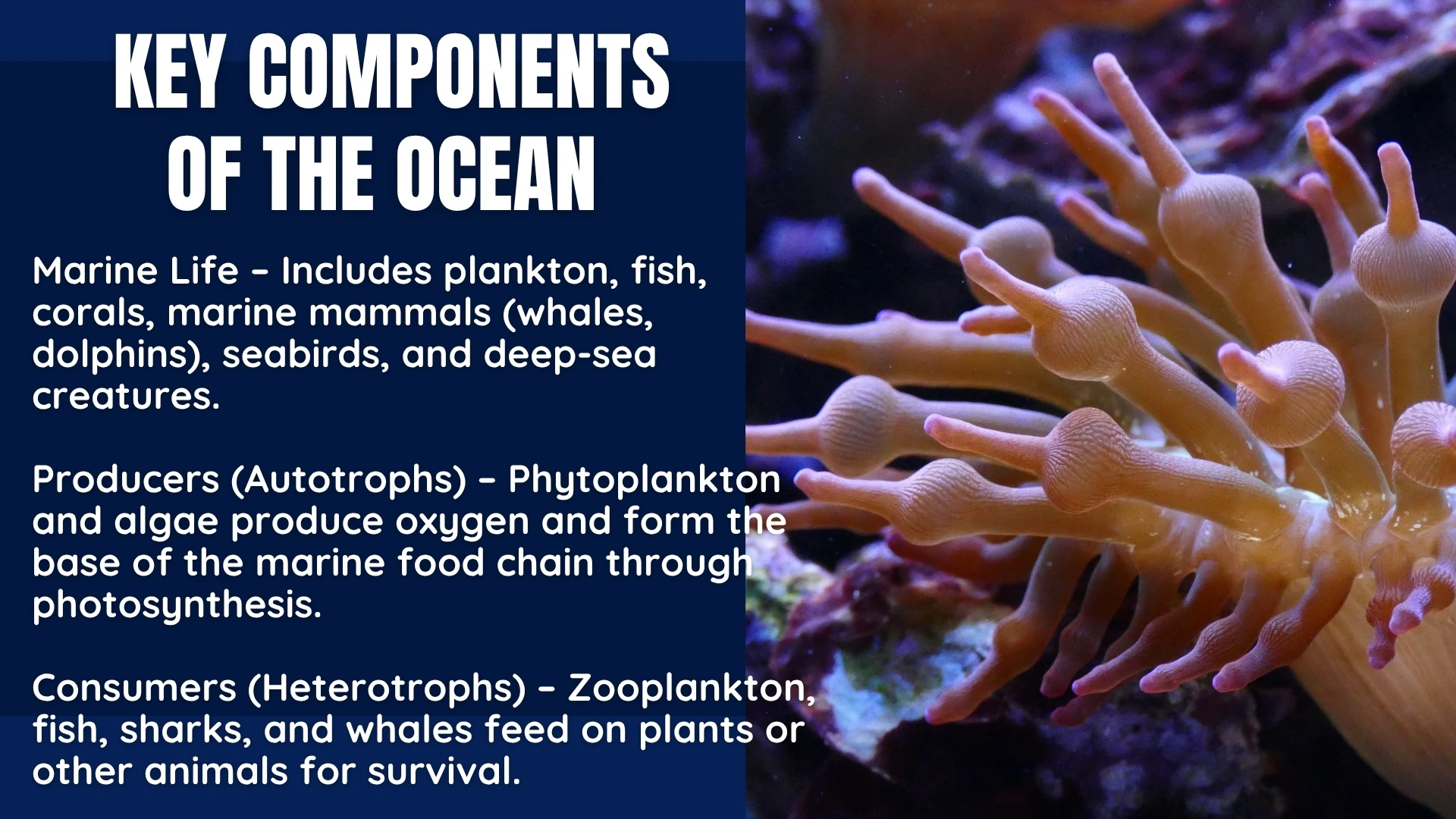
A coral reef is built by coral polyps, tiny soft-bodied animals related to jellyfish and sea anemones. Each polyp secretes a cup of calcium carbonate beneath itself, and over thousands of years the stacked cups of countless polyps form a reef. Living inside the tissues of each polyp are microscopic algae. The algae photosynthesise and pass most of the sugar they make to the polyp; the polyp gives the algae shelter and the carbon dioxide and nutrients from its waste. This partnership is why reefs only grow in warm, clear, shallow water where light reaches the algae.
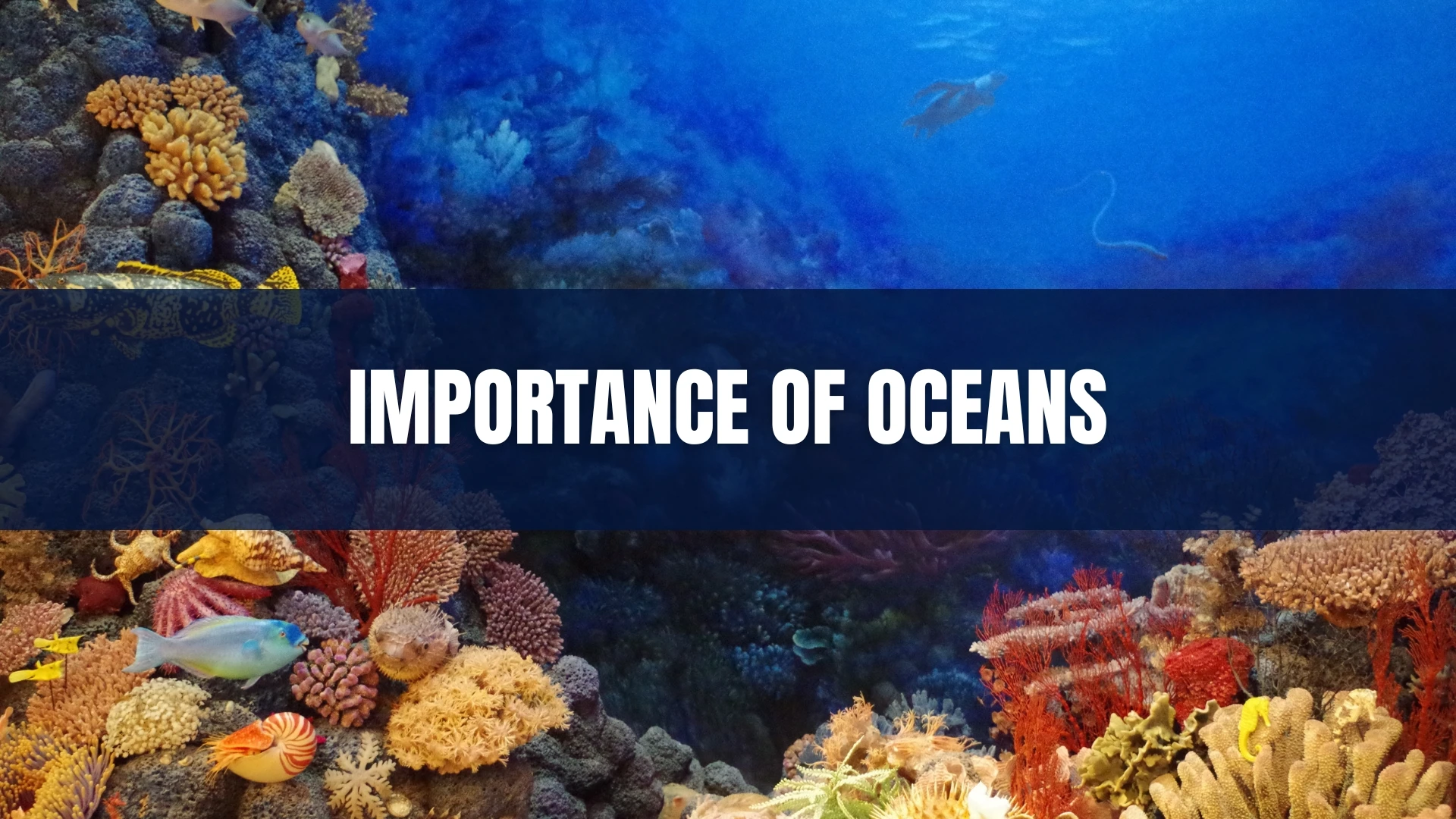
Reefs cover less than one per cent of the ocean floor, yet they shelter roughly a quarter of all known marine species, which earns them the nickname "rainforests of the sea". The Great Barrier Reef off eastern Australia stretches for about 2,300 kilometres and is the largest structure on Earth built by living things.
The deep sea: life without sunlight
Below the sunlight zone, animals have evolved for cold, darkness and scarce food. Many make their own light by bioluminescence: the anglerfish dangles a glowing lure to attract prey, and lanternfish carry rows of light organs along their sides. Every night, billions of twilight-zone animals swim up towards the surface to feed and sink back down at dawn — the largest daily migration of animals on the planet.
The strangest deep-sea ecosystems are around hydrothermal vents, cracks in the sea floor where water heated by volcanic rock gushes out laden with dissolved minerals. No light reaches them, so there is no photosynthesis. Instead, bacteria make food by chemosynthesis, using the energy in chemicals such as hydrogen sulfide. Giant tube worms, clams and blind shrimps live on those bacteria, forming a food web that owes nothing to the sun.
Why oceans matter and what threatens them
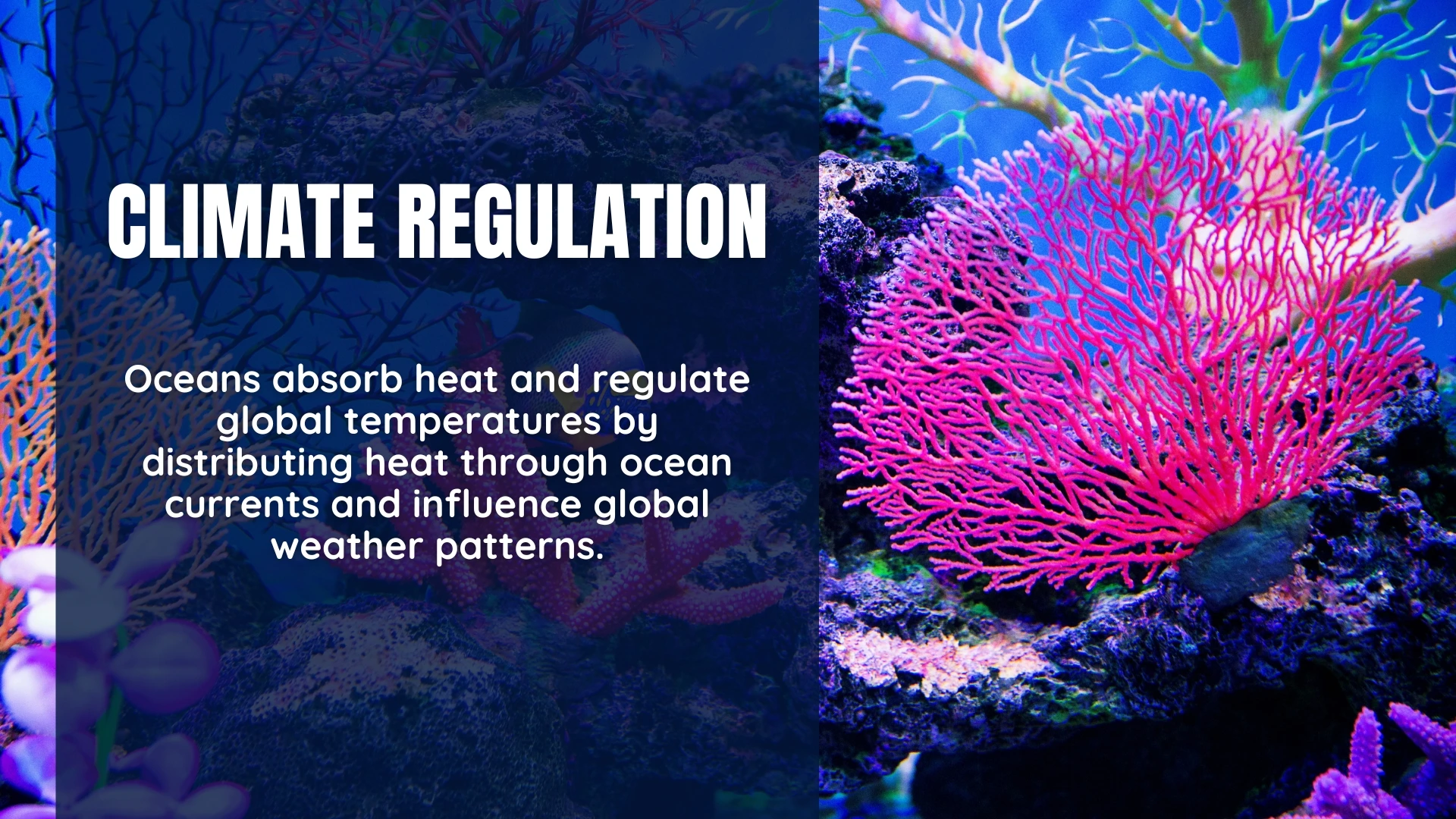
The ocean produces a large share of the oxygen we breathe, moves heat around the globe in currents, absorbs roughly a quarter of the carbon dioxide people release, and feeds billions of people. Four human activities put all of this at risk.
- Overfishing removes fish faster than they can breed, collapsing populations and unbalancing food webs.
- Pollution, especially plastic, is eaten by turtles, seabirds and fish, while fertiliser washed off farmland feeds algal blooms whose decay uses up oxygen and creates "dead zones".
- Warming seas stress corals until they expel their algae and turn white — coral bleaching. A bleached coral is still alive, but it starves if the water does not cool again.
- Ocean acidification: as extra carbon dioxide dissolves it makes sea water slightly more acidic, making it harder for corals, shellfish and some plankton to build shells and skeletons from calcium carbonate.
Key terms
- Ecosystem
- A community of living organisms together with the non-living environment they interact with.
- Sunlight zone
- The top 200 metres or so of the ocean — the only layer with enough light for photosynthesis.
- Phytoplankton
- Microscopic drifting algae and bacteria that photosynthesise; the main producers of the ocean.
- Food web
- Many interconnected food chains showing all the feeding links in an ecosystem.
- Decomposer
- An organism, usually bacteria, that breaks down dead material and returns nutrients to the water.
- Coral polyp
- A tiny animal that builds a calcium carbonate cup and houses algae in its tissues; reefs are made of millions of them.
- Chemosynthesis
- Making food from the energy in chemicals rather than light; carried out by bacteria at hydrothermal vents.