📖 Lesson: Animal Cell Organelles
Navigate through the slides to learn about each part of an animal cell
🎮 Interactive Games
Test your knowledge with fun interactive games
🧠 Memory Match Game
Match each organelle with its function. Click cards to flip!
🔬 Organelle Sorting Game
Drag each organelle to its correct category based on function
📦 Organelles to Sort
⚡ Energy & Metabolism
🏭 Protein Processing
🎯 Control & Storage
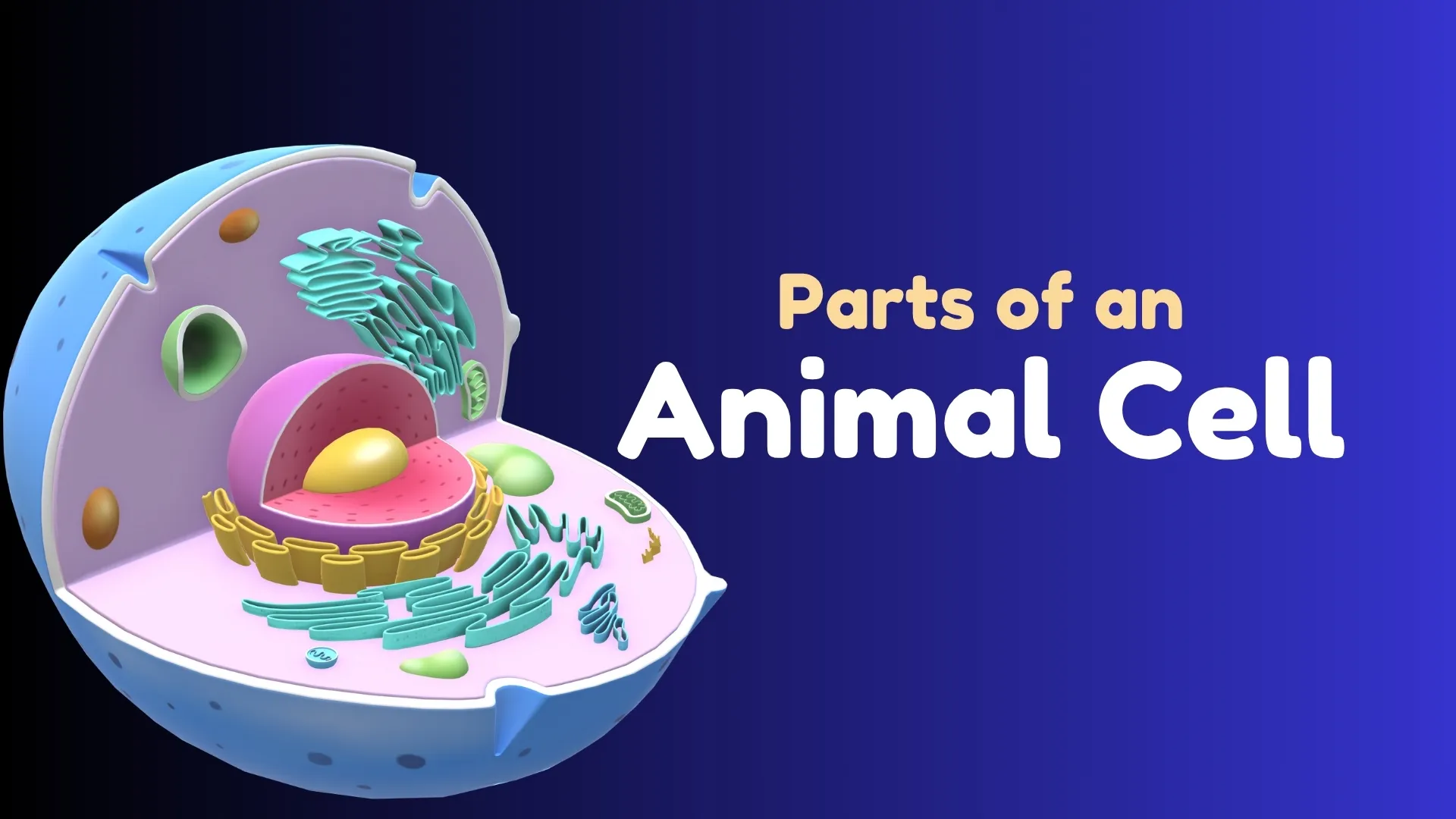
🧫 Animal Cell Structure: Every Part and What It Does
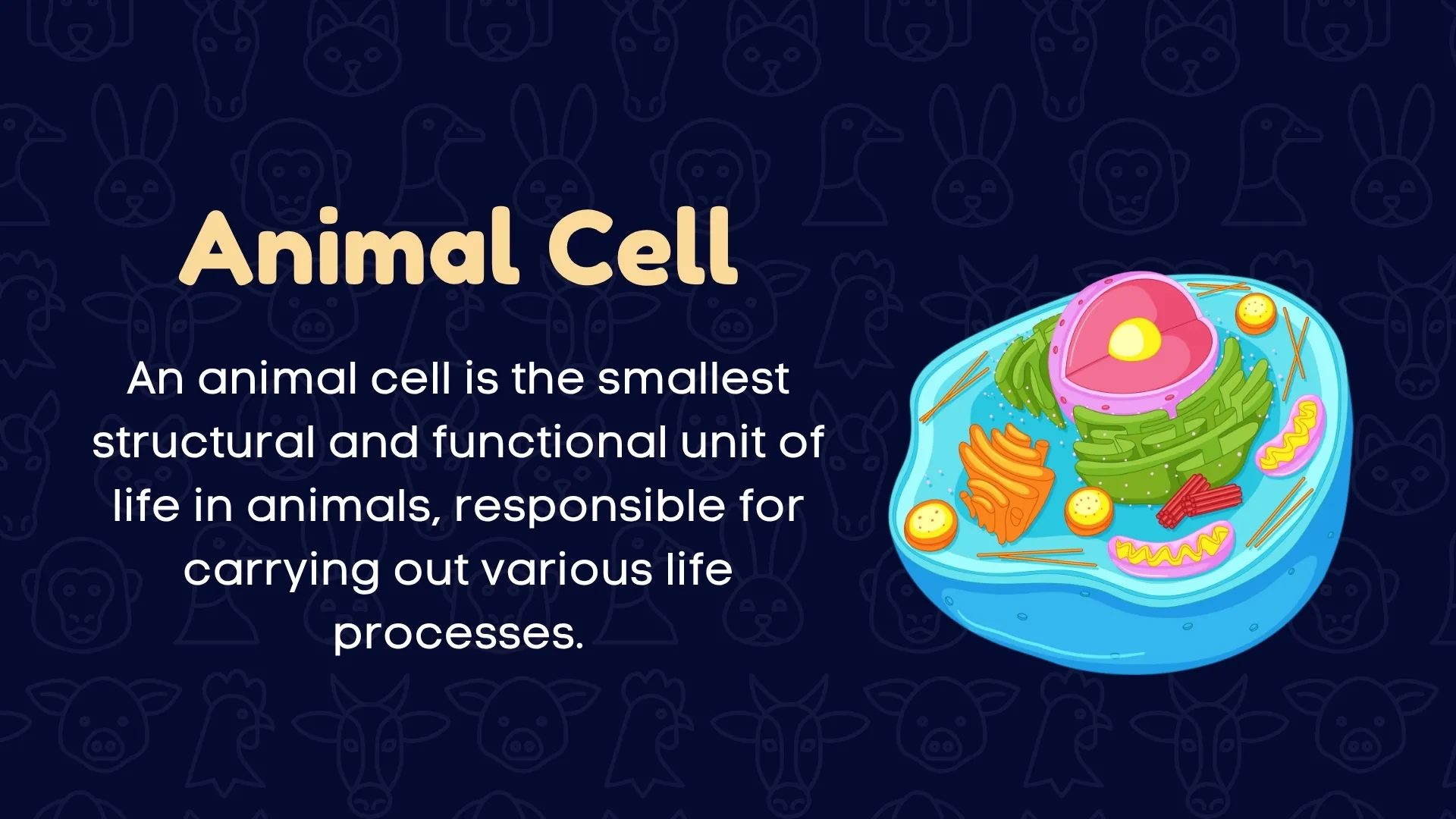
What is an animal cell?
An animal cell is the basic unit of structure and function in every animal, from a jellyfish to a human being. It is a eukaryotic cell, which means its genetic material is held inside a nucleus and its working parts are packaged into membrane-bound compartments called organelles. An organelle is simply a structure inside the cell with a particular job, in the same way that rooms in a hospital each have a particular job.
Most animal cells are between about 10 and 30 micrometres across, far too small to see without a microscope. Because an animal cell has no rigid wall around it, it has no fixed shape: it is held together by its flexible membrane, so animal cells are usually rounded or irregular.
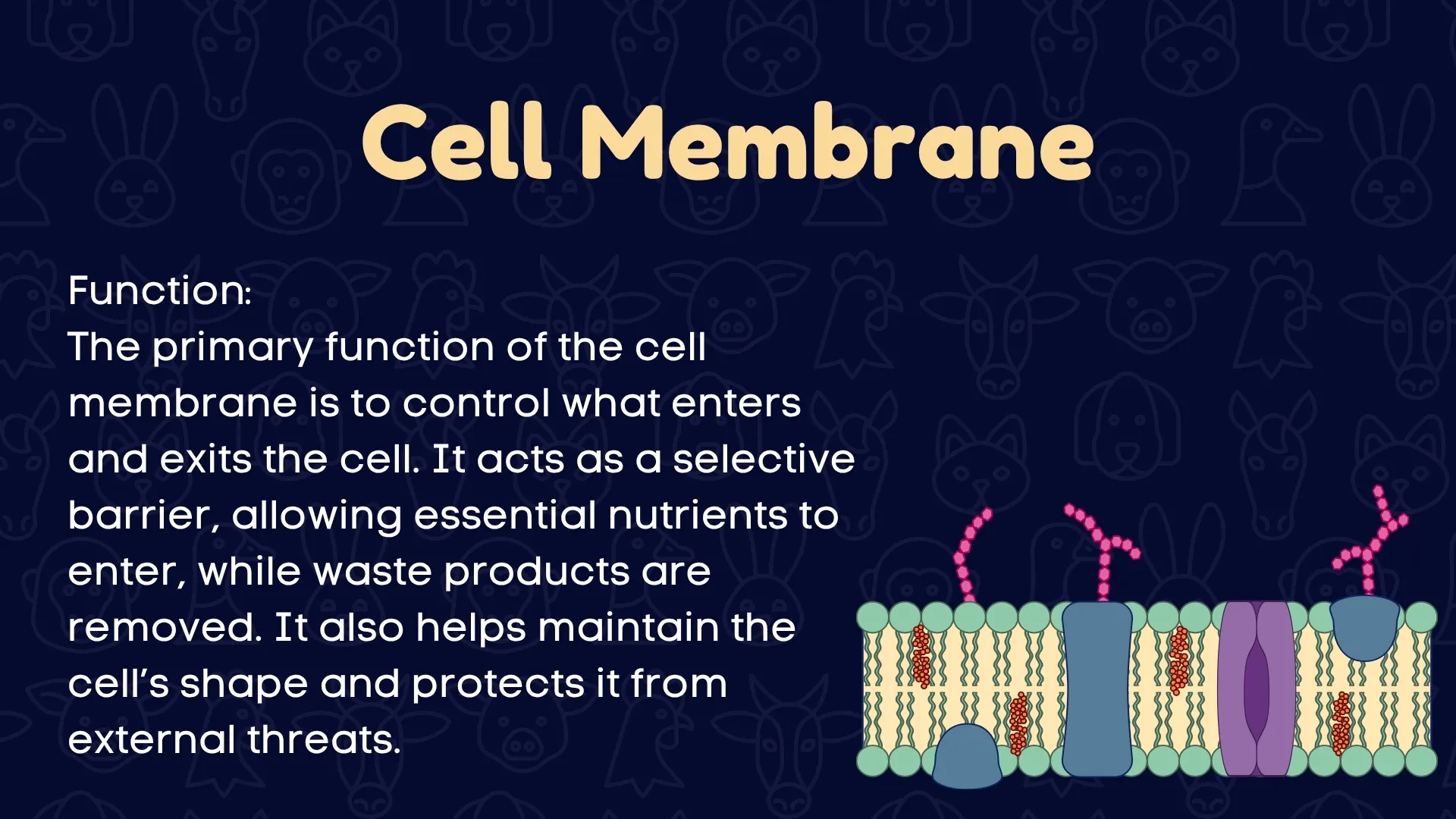
Cell membrane
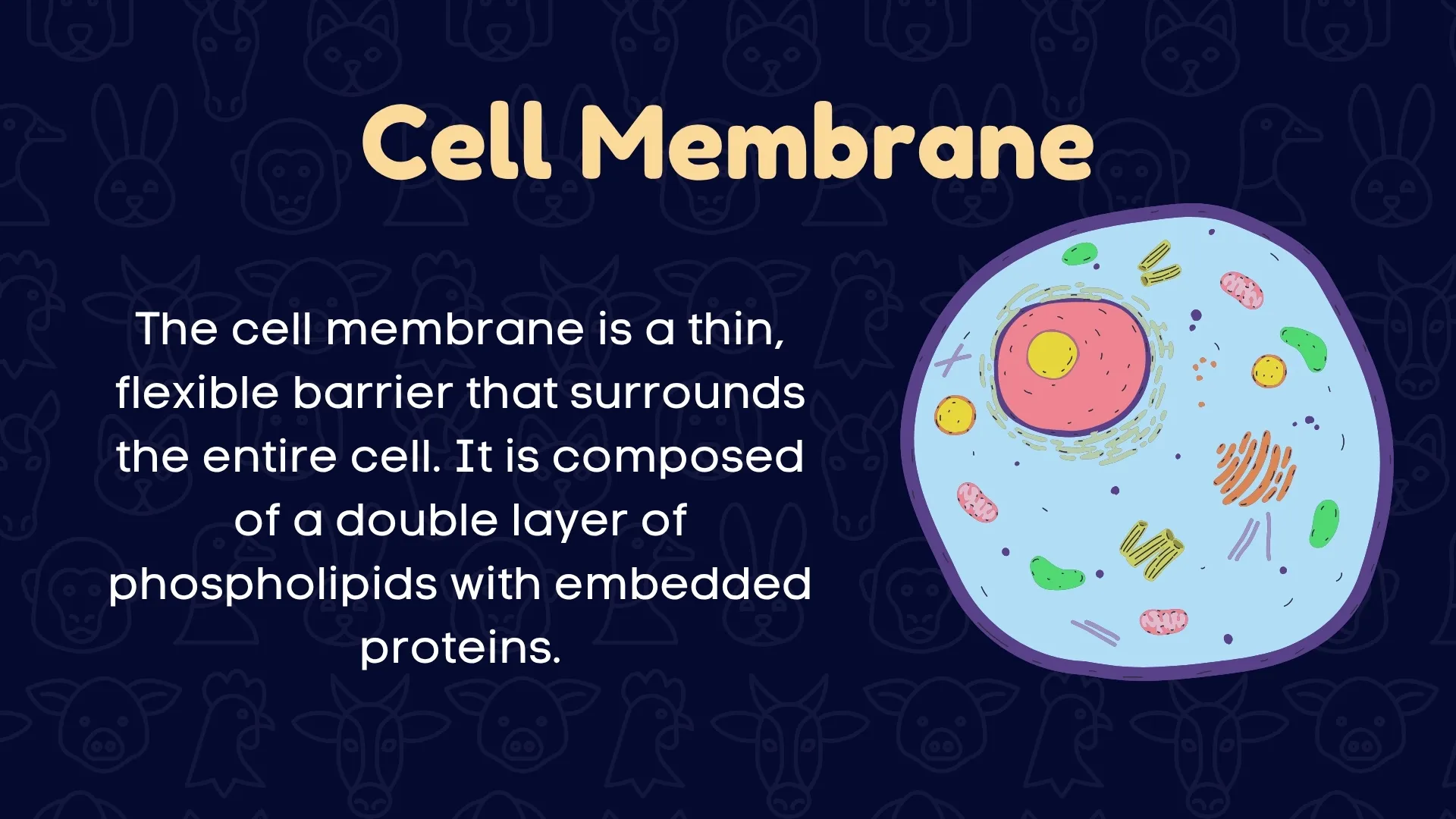
The cell membrane is the thin boundary around the outside of the cell. It is built from a double layer of phospholipid molecules with proteins embedded in it. Its function is to control what enters and leaves the cell, and it can do that because it is partially permeable: some substances pass through it freely, others pass only through particular proteins, and some are kept out altogether. Oxygen and glucose move in; carbon dioxide and other waste move out.
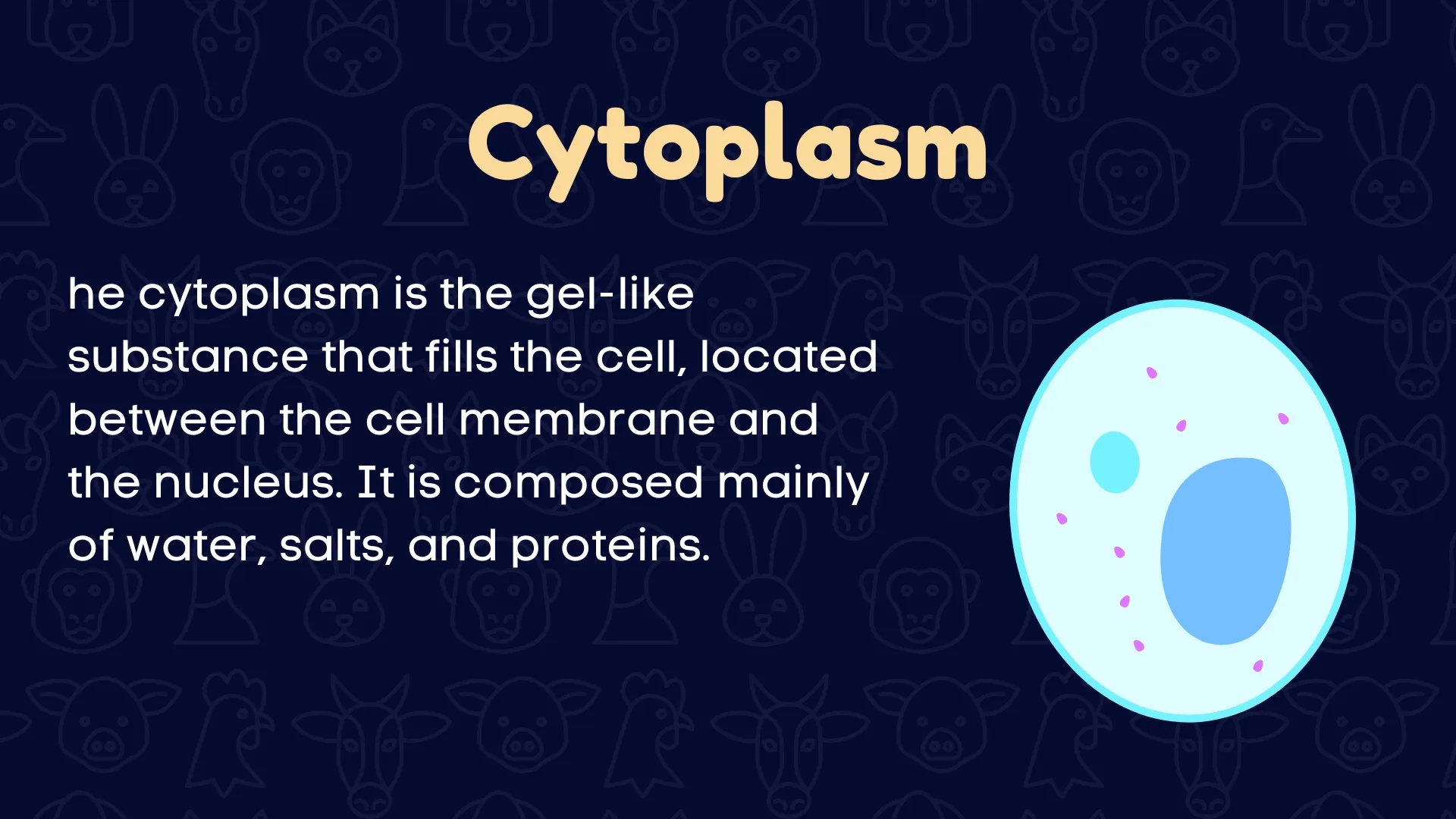
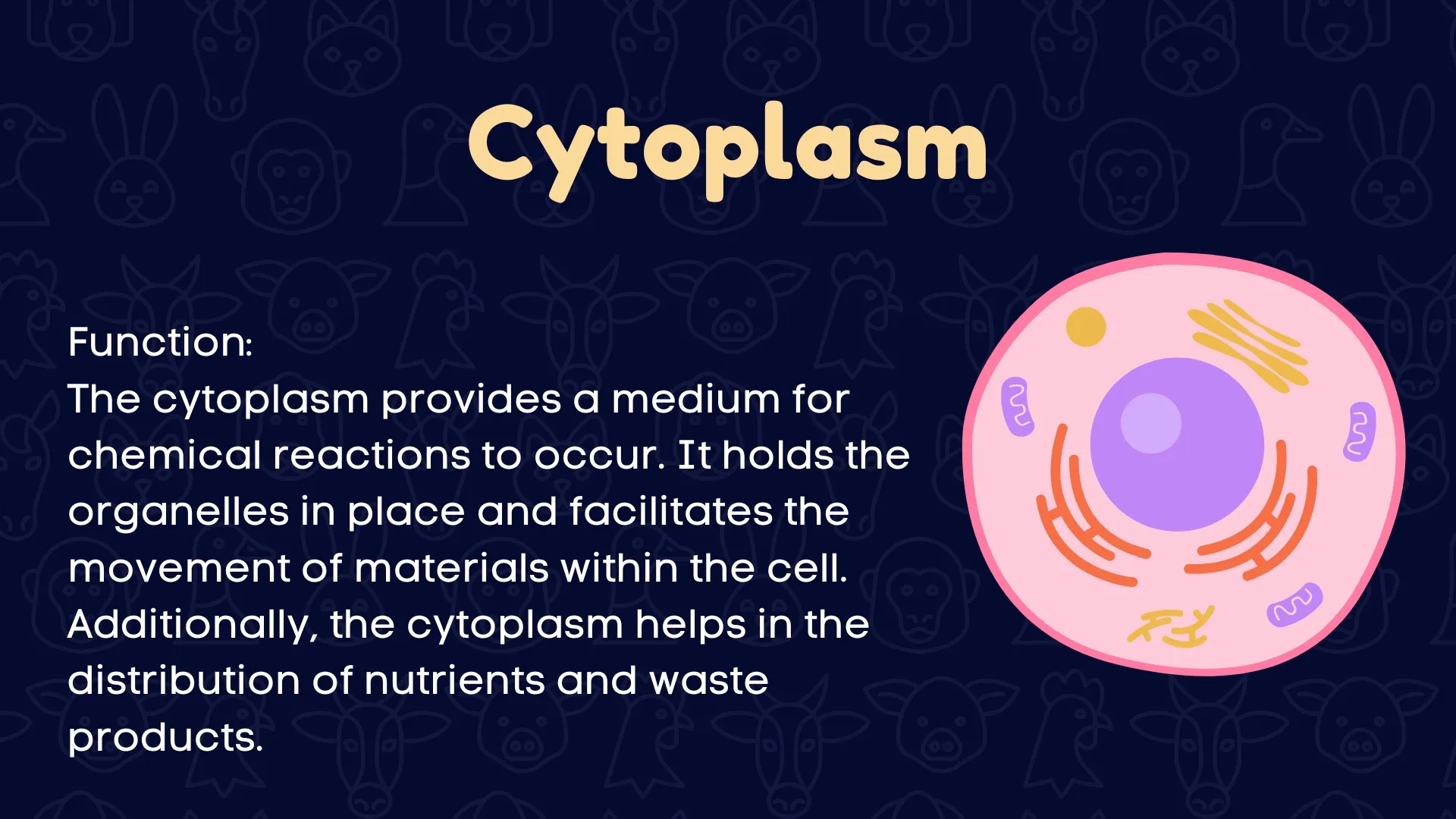
Cytoplasm
The cytoplasm is the jelly-like fluid that fills the space between the membrane and the nucleus. It is mostly water with salts, sugars and amino acids dissolved in it. Two things happen here: it holds the organelles in position, and it is where most of the cell's chemical reactions take place, including the first stage of respiration.
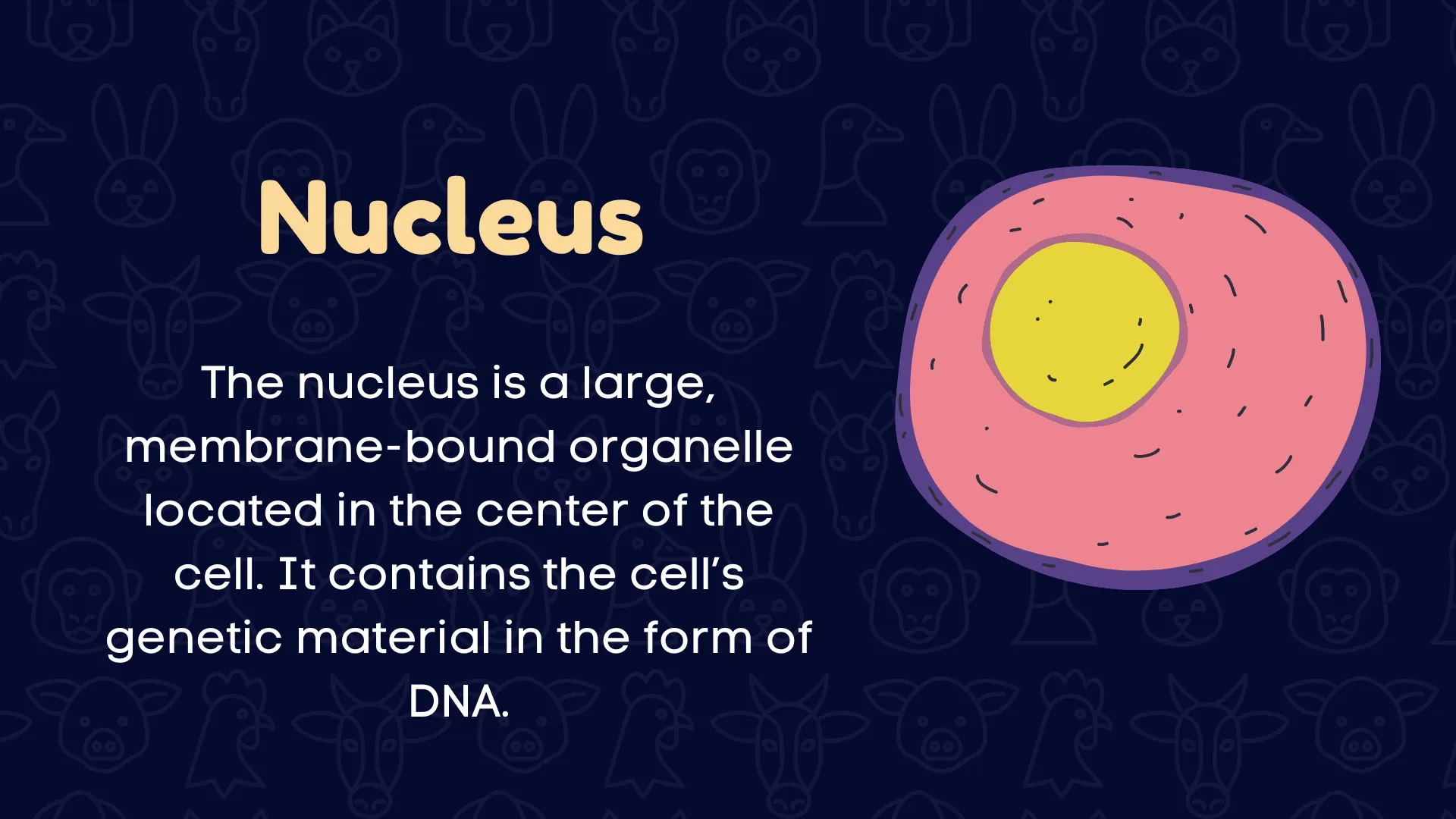
Nucleus
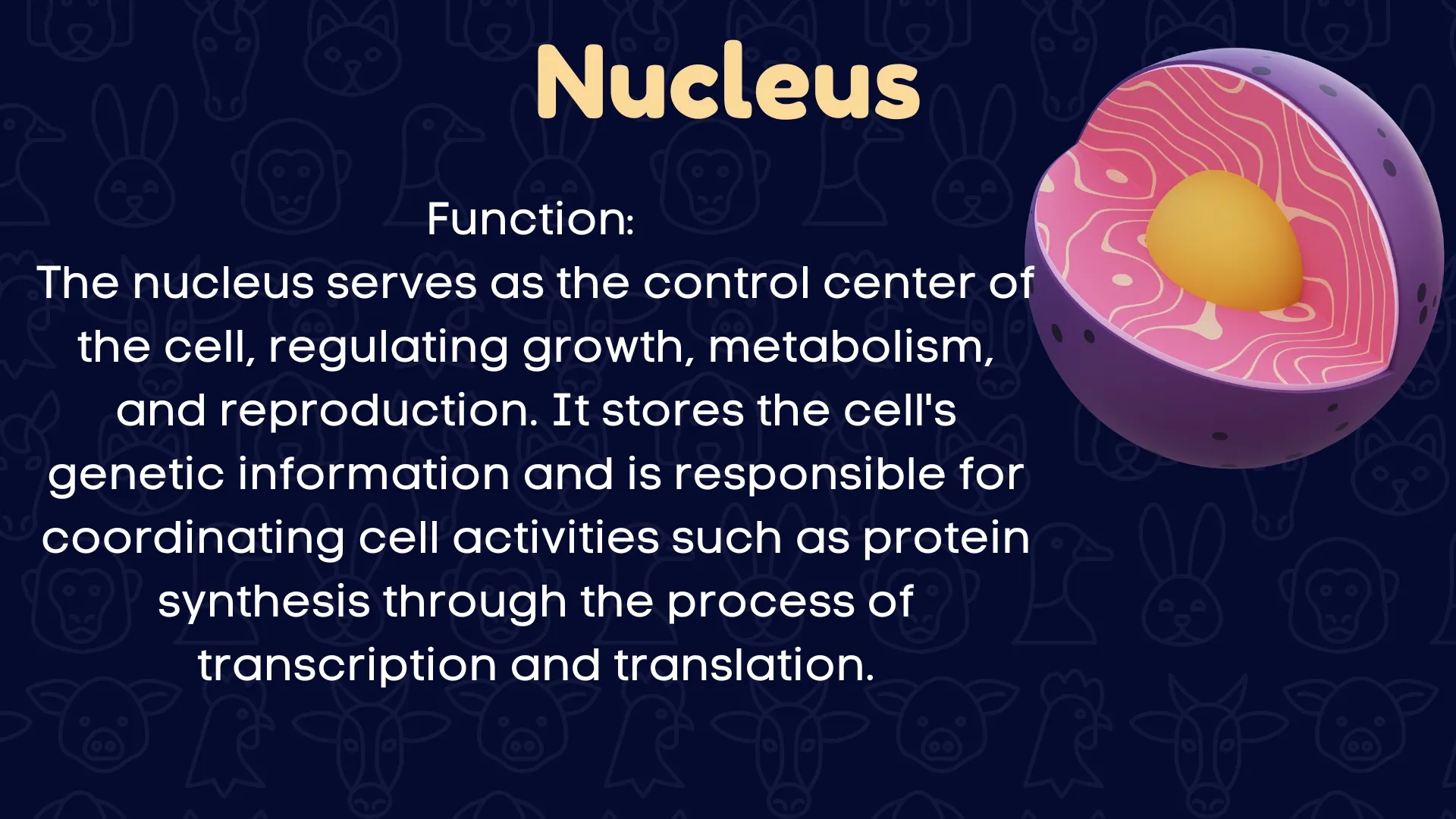
The nucleus is usually the largest structure in the cell. It contains the cell's DNA, wound up into structures called chromosomes, and a human body cell carries 46 of them in 23 pairs. Sections of that DNA are genes, and genes are the instructions for building proteins. So the function of the nucleus is to store the genetic material and control the activities of the cell by deciding which proteins get made. It is wrapped in its own membrane, the nuclear envelope, which is dotted with pores that let instructions out into the cytoplasm.
Mitochondria
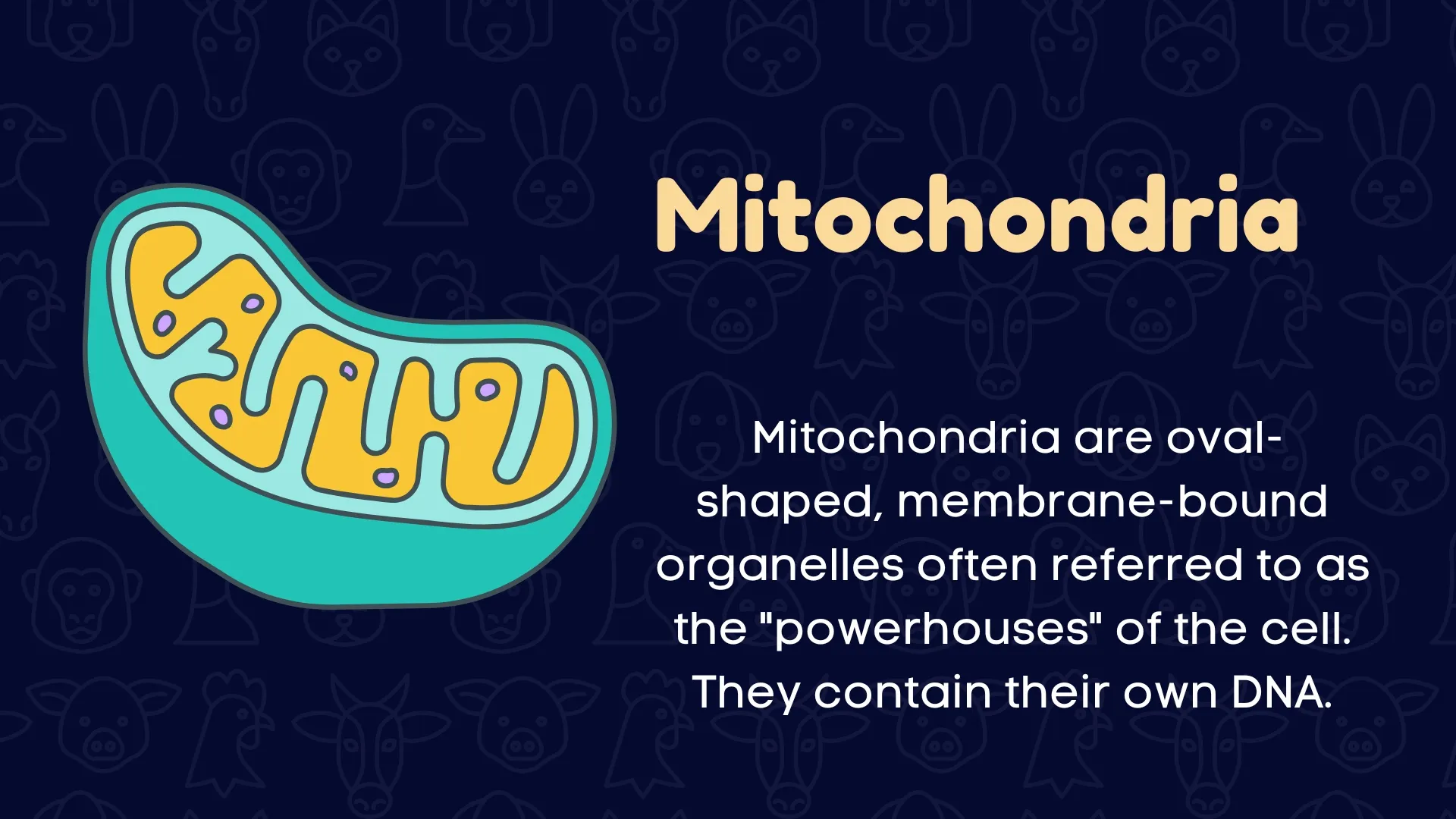
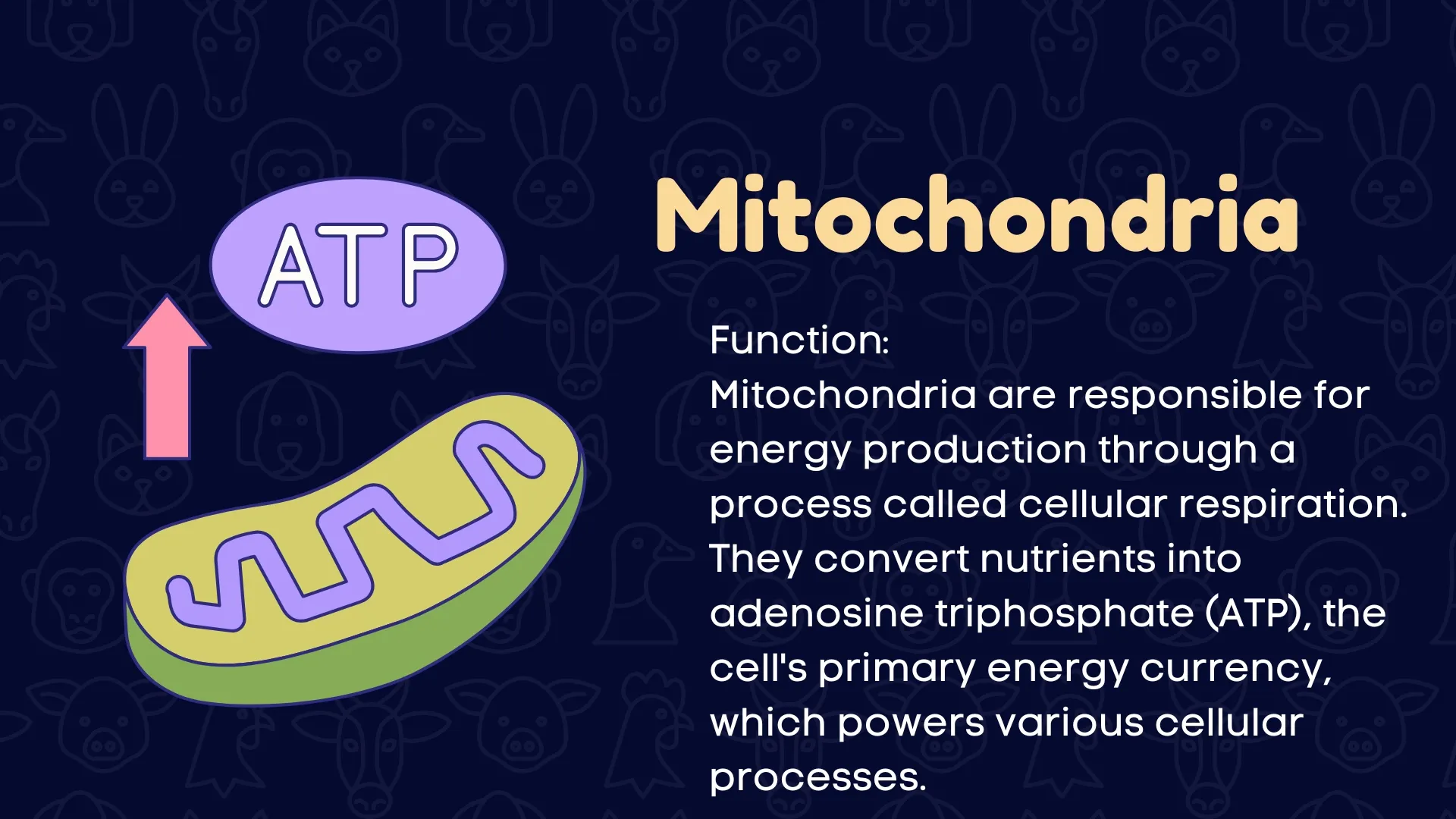
Mitochondria (one of them is a mitochondrion) are the site of aerobic respiration. Mitochondria do not make, create or produce energy — energy cannot be created. They release the energy already stored in glucose and transfer it to a molecule called ATP, which the rest of the cell can spend. Each one has two membranes, and the inner membrane is folded into ridges that give a large surface area for the reactions. Cells that need a great deal of energy, such as muscle cells and liver cells, contain large numbers of mitochondria.
Ribosomes
Ribosomes are the site of protein synthesis — they make proteins. They appear as tiny dots and, unlike most organelles, are not surrounded by a membrane. Some float freely in the cytoplasm and others are attached to the endoplasmic reticulum. A ribosome reads the instructions copied from a gene and joins amino acids together in the right order to build the protein those instructions describe.
Endoplasmic reticulum
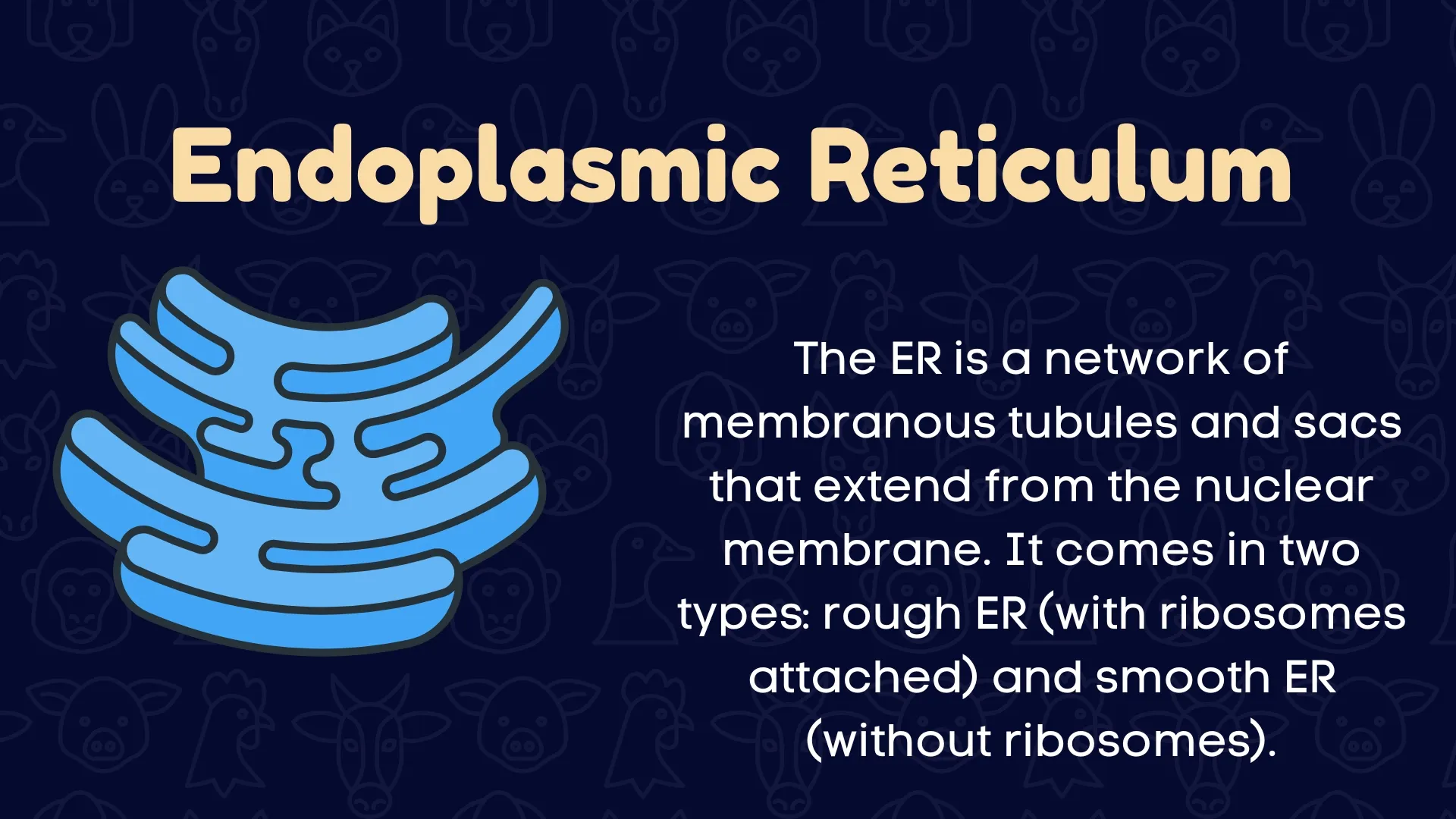
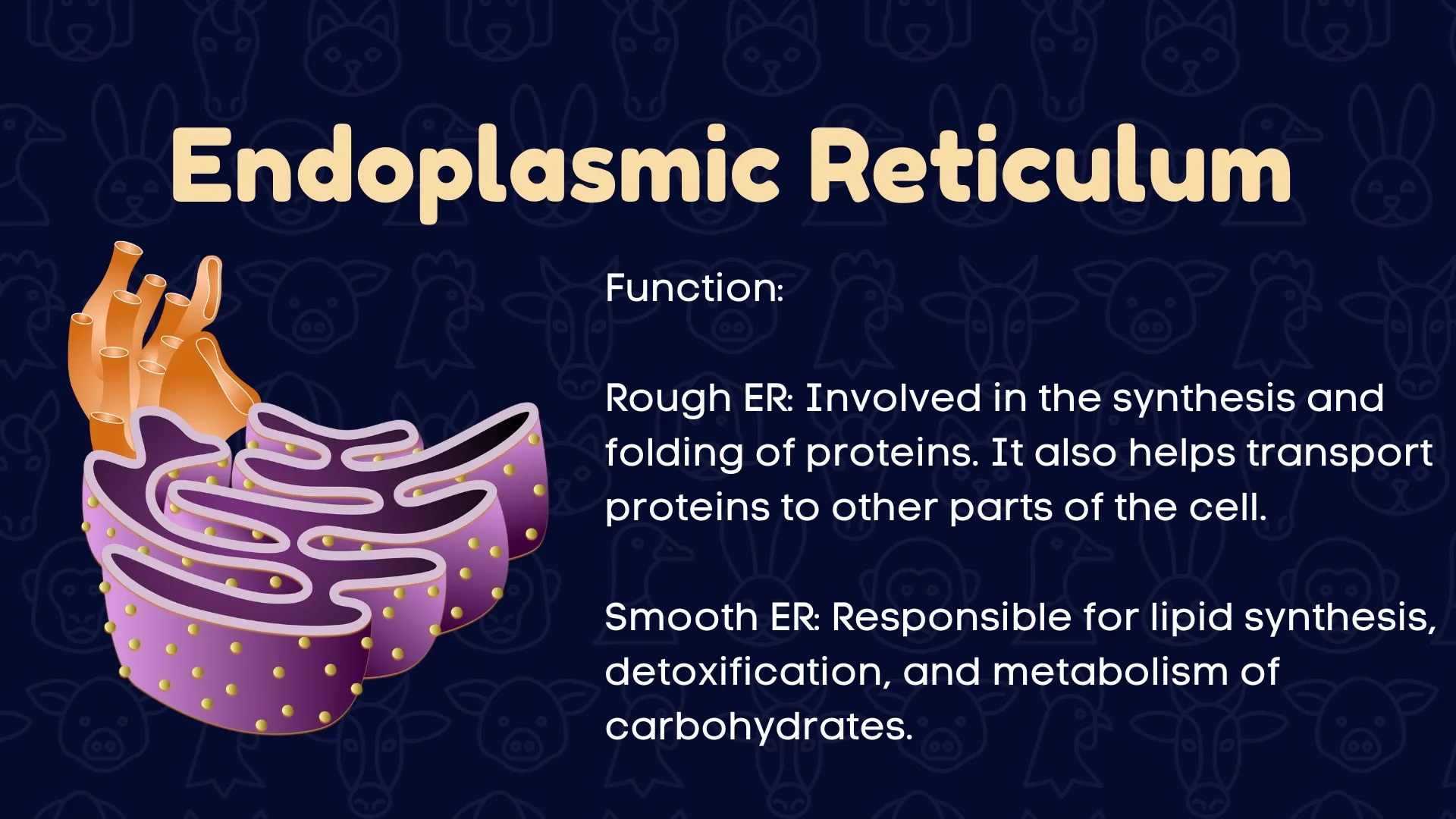
The endoplasmic reticulum, or ER, is a network of folded membranes and tubes spreading outwards from the nuclear envelope. It comes in two forms. Rough ER is studded with ribosomes; it collects the proteins those ribosomes make, folds them into shape and transports them onwards. Smooth ER carries no ribosomes and makes lipids instead. Together they act as the cell's internal transport and manufacturing system.
Golgi apparatus
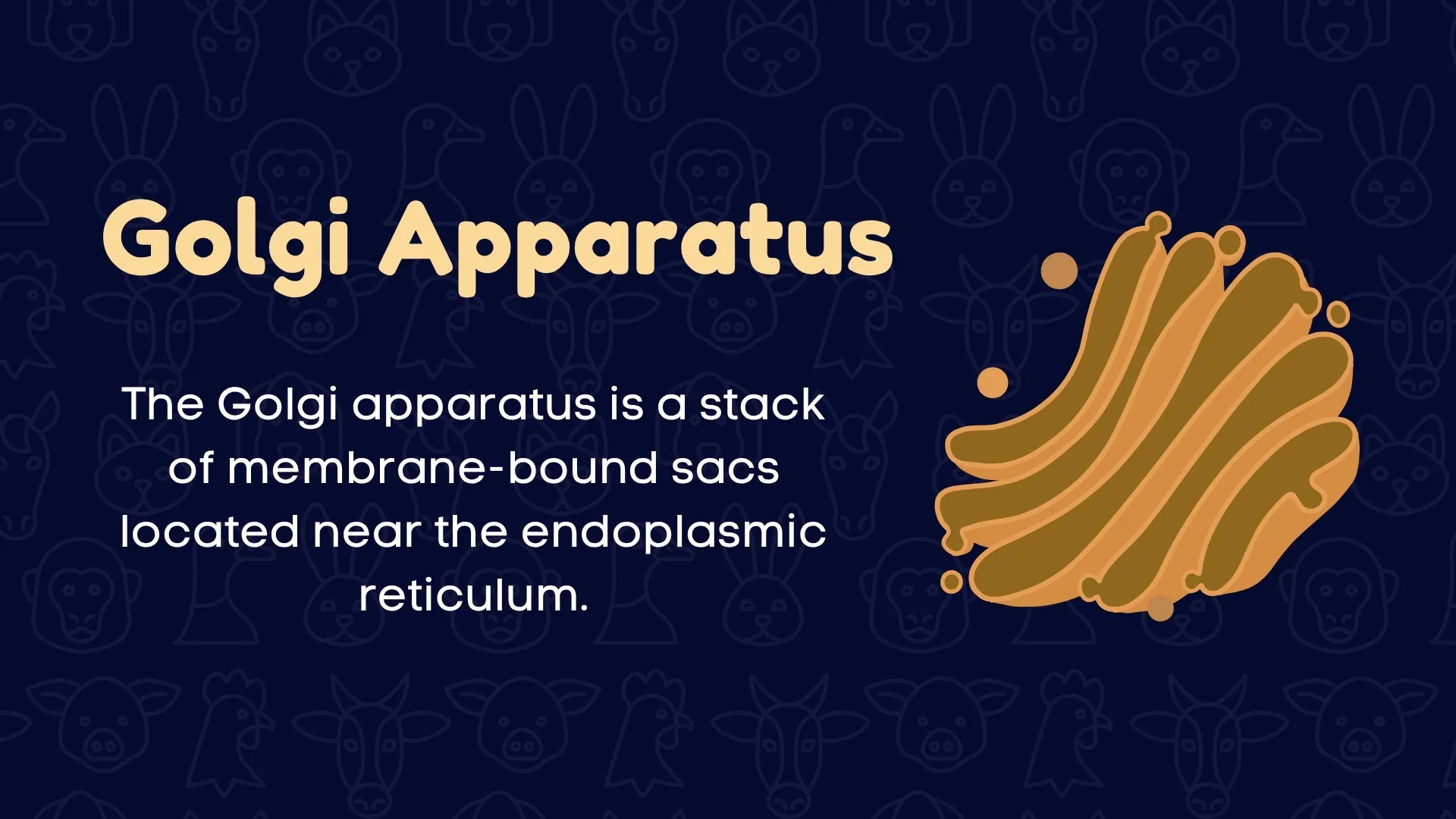
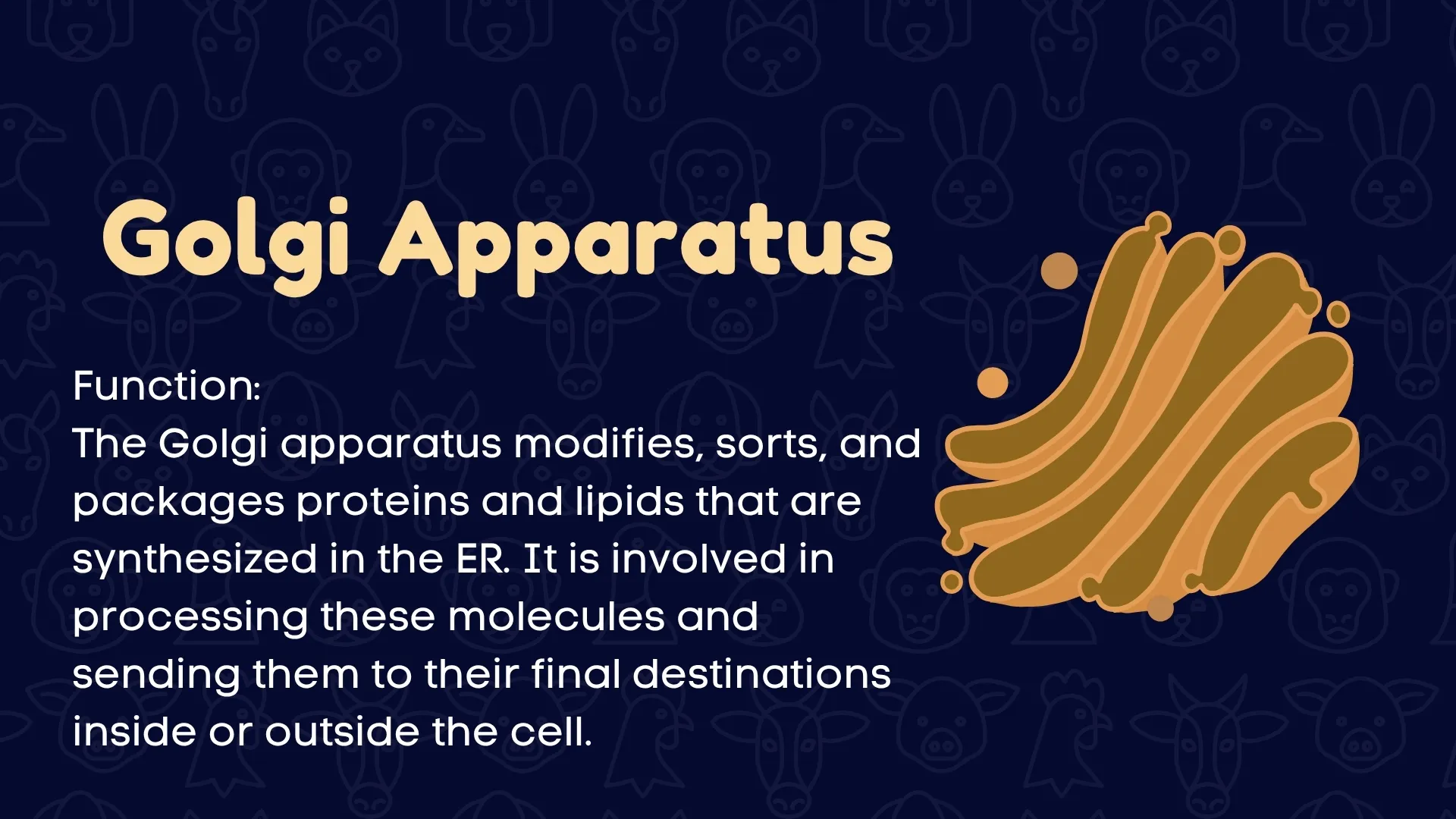
The Golgi apparatus is a stack of flattened sacs. It receives proteins from the endoplasmic reticulum and then modifies, sorts and packages them, pinching off small bubbles called vesicles that carry each finished protein to where it is needed — either elsewhere in the cell or out through the cell membrane.
Lysosomes
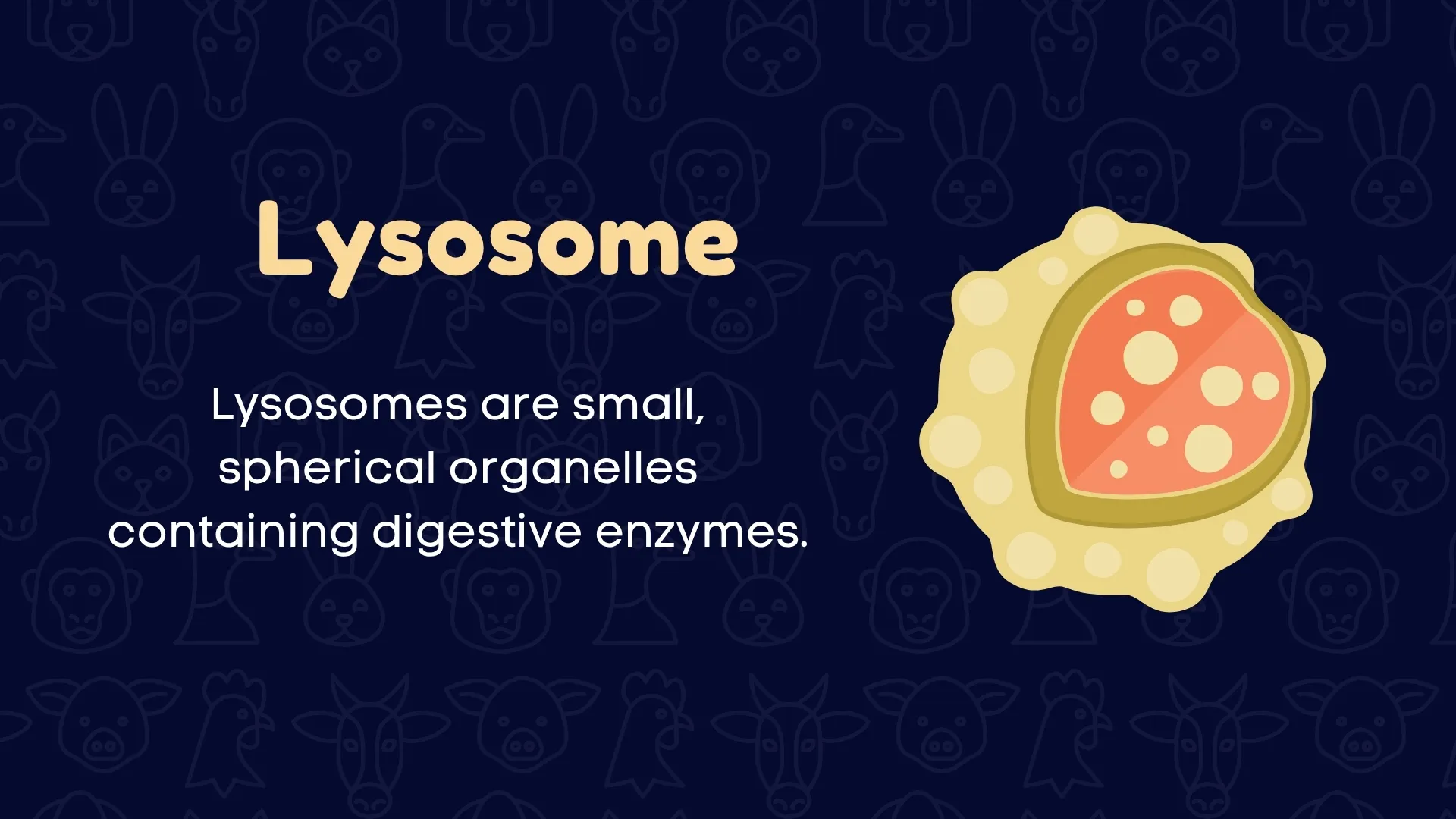
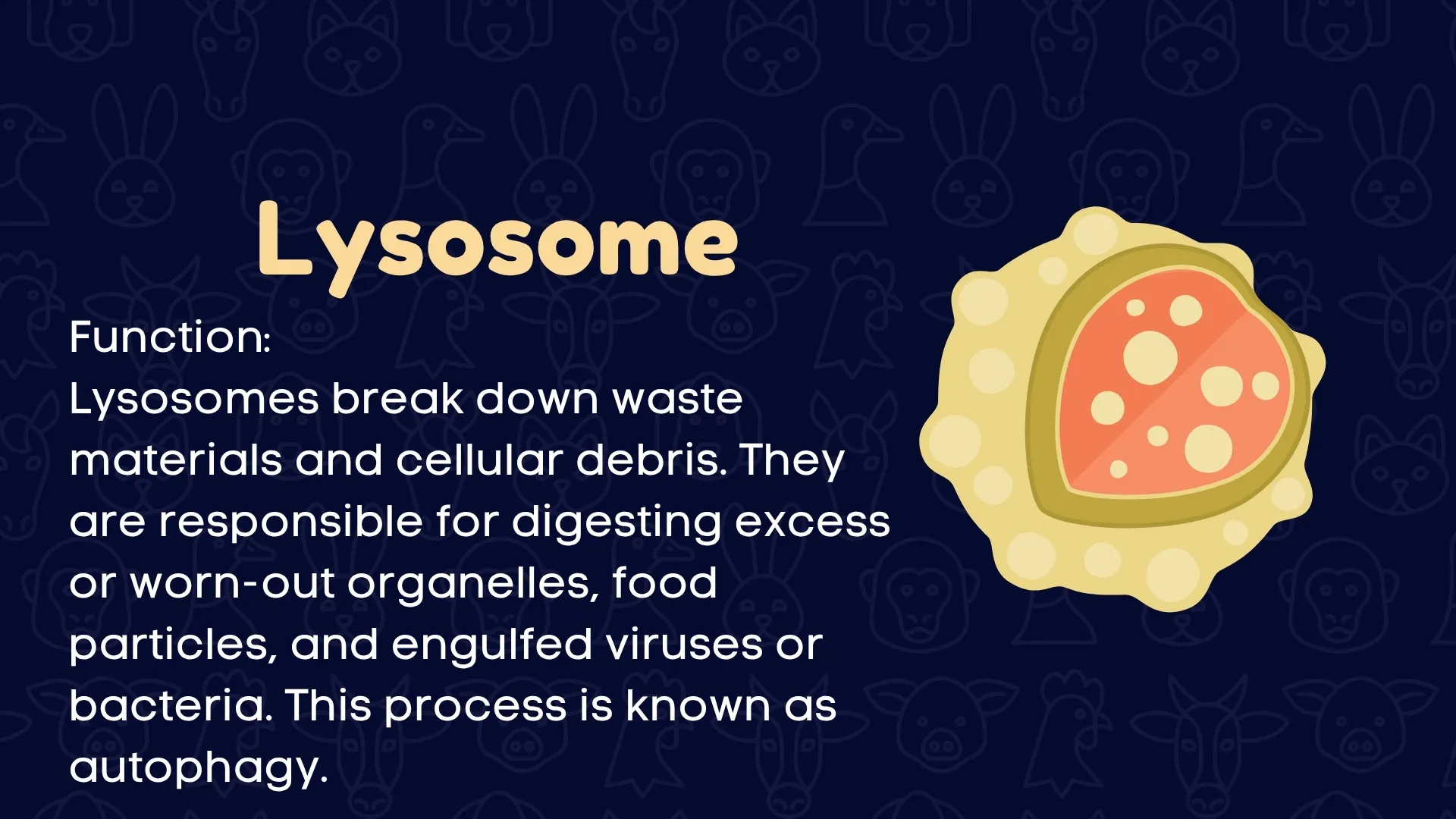
Lysosomes are small sacs filled with digestive enzymes. They break down worn-out organelles and unwanted material so the useful parts can be recycled, and in white blood cells they destroy bacteria that have been engulfed. Keeping those enzymes inside a membrane matters: loose in the cytoplasm they would digest the cell itself.
Vacuoles in animal cells
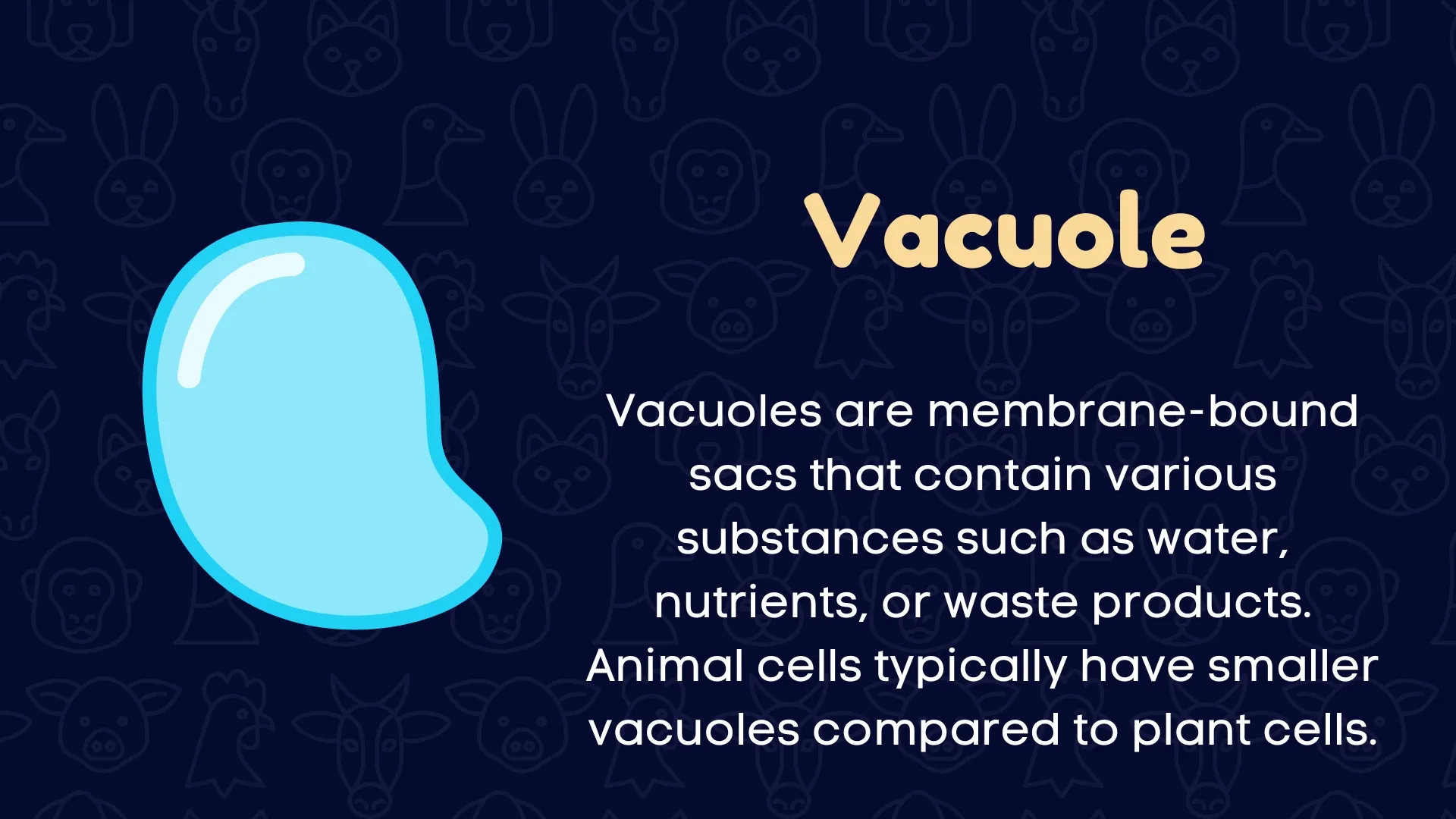
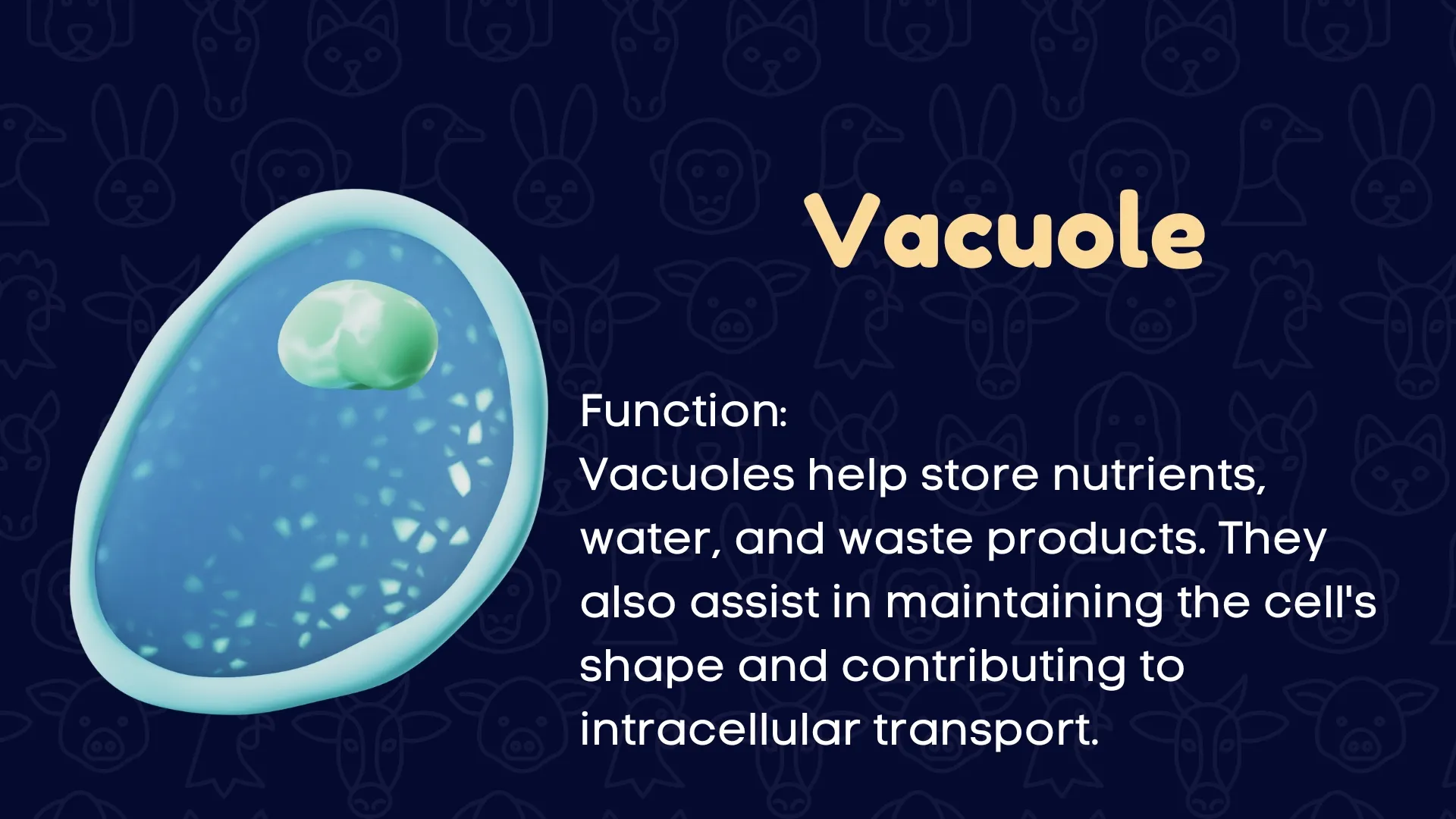
Animal cells can contain vacuoles, but theirs are small and temporary. A vacuole here is a fluid-filled sac used to store or move a substance for a short time. This is quite different from the single large permanent vacuole of a plant cell.
What an animal cell does not have
Three structures found in plant cells are missing from animal cells, and knowing why matters as much as knowing that:
- No cell wall. An animal cell has only its flexible cell membrane on the outside. That is why animal cells have no fixed shape, and why an animal cell placed in pure water can swell and burst instead of becoming firm.
- No chloroplasts. Animal cells cannot photosynthesise, so an animal cannot make its own food from sunlight. It must take in ready-made food from what it eats.
- No large permanent vacuole. Animal cells do not rely on a water-filled vacuole for support, so they get no turgor from one.
Animal cells do have one structure that the cells of flowering plants lack: centrioles, small cylinders that help organise the fibres pulling chromosomes apart during cell division.
Animal cells are eukaryotic, not prokaryotic
Animal, plant and fungal cells are all eukaryotic: their DNA sits inside a nucleus and they contain membrane-bound organelles such as mitochondria. Prokaryotic cells, which means bacteria, are built differently — they have no nucleus and no membrane-bound organelles at all. Their genetic material is a single loop of DNA lying free in the cytoplasm, often with small extra rings called plasmids, and they are much smaller than an animal cell.
How to answer questions on the parts of an animal cell
- "State the function of…" wants one job in one sentence, built around a verb: the nucleus controls, the ribosomes make, the membrane controls what enters and leaves, the mitochondria are the site of aerobic respiration.
- Never write that mitochondria "make energy". Write that they release energy from glucose during aerobic respiration. The same applies to chloroplasts in plants: they are the site of photosynthesis, not producers of energy.
- "Explain why this cell has many mitochondria" is a structure-to-function question. Link the two: a muscle cell contracts constantly, contracting needs a lot of energy, energy is released by aerobic respiration, respiration happens in mitochondria.
Key terms
- Organelle
- A structure inside a cell that carries out a particular job.
- Eukaryotic cell
- A cell whose DNA is enclosed in a nucleus and which contains membrane-bound organelles.
- Prokaryotic cell
- A bacterial cell, with no nucleus and no membrane-bound organelles; its DNA is a loop in the cytoplasm.
- Partially permeable
- Describes a membrane that lets some substances through but not others.
- Aerobic respiration
- The reaction that releases energy from glucose using oxygen; it takes place in the mitochondria.
- Protein synthesis
- The building of proteins from amino acids, carried out by ribosomes.
- Vesicle
- A small membrane bubble that carries substances around the cell.
- Chromosome
- A long molecule of DNA in the nucleus, carrying the genes.