Excretion vs egestion, the nephron, the three steps of urine formation, ADH and water balance, and dialysis.
Introduction: Every Factory Produces Waste
Every factory that makes something also produces waste, and if that waste is not removed the factory eventually shuts down. Your body is a factory running millions of chemical reactions every second, and those reactions leave behind substances that are useless or actually poisonous.
The excretory system is the department responsible for clearing them out. It is not a glamorous topic, and students often skip it in favour of the heart or the brain, but it deserves more respect than it gets. A person can survive with one kidney, but a person whose kidneys have completely failed will die within days unless a machine takes over the job.
This guide explains what excretion actually means, how the kidneys perform one of the most precise filtering operations in nature, and why the system is about far more than simply making urine.
What Is Excretion?
Excretion is the removal of harmful metabolic wastes produced inside the body cells.
The words metabolic and inside are the important ones. Excretion deals with substances that were created by your own body chemistry, not with material that merely passed through you.
This is exactly why passing faeces is not excretion. Faeces contain undigested food, fibre and bacteria. That material travelled through the alimentary canal without ever entering your body cells, so removing it is called egestion. The bile pigments in faeces are the only genuinely excretory part, and they arrived there from the liver.
What Wastes Does the Body Produce?
The main nitrogenous waste in humans is urea. When you eat more protein than your body needs, the surplus amino acids cannot be stored. The liver removes the nitrogen containing part of each amino acid in a process called deamination, and that nitrogen becomes ammonia. Ammonia is extremely toxic, so the liver immediately converts it into urea, which is far less harmful and easy to dissolve in water. Urea then travels in the blood to the kidneys.
The body also removes carbon dioxide produced by respiration, mostly through the lungs. It removes excess water and mineral salts, mainly through the kidneys and partly through sweat. It removes bile pigments produced when old red blood cells are broken down, and it removes drugs, toxins and other foreign chemicals processed by the liver.
The Organs of the Human Excretory System
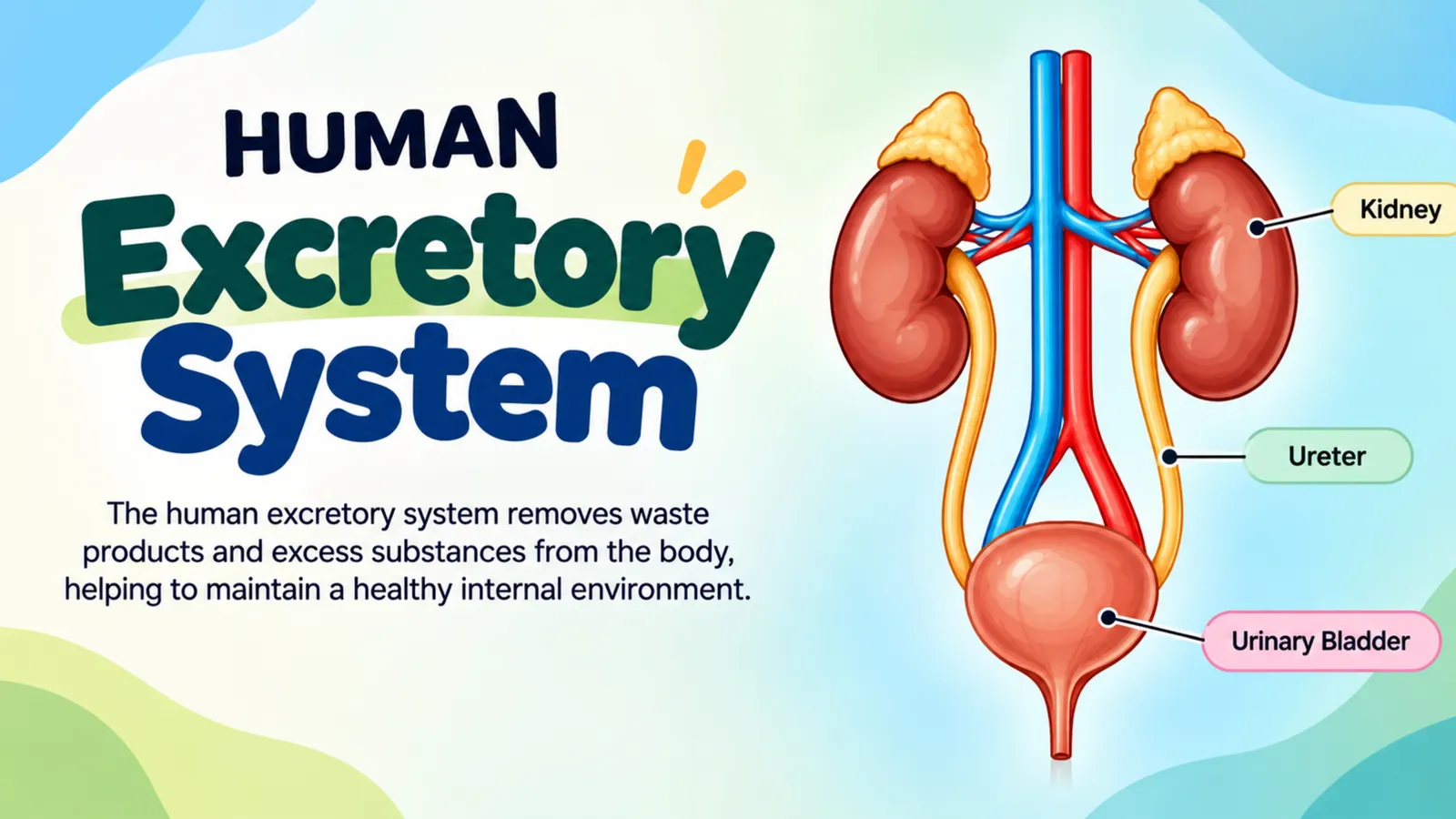
The excretory system is often called the urinary system because urine formation is its central activity. It consists of the following parts.
Two kidneys, which filter the blood and make urine.
Two ureters, which carry urine from the kidneys down to the bladder.
One urinary bladder, which stores urine until it is convenient to release it.
One urethra, the tube through which urine leaves the body.
🫘
Slides: The human excretory system
Kidneys, ureters, bladder and urethra
1/2
The Kidneys
The kidneys are two bean shaped organs located on either side of the backbone, just above the waist at the back. Each is roughly eleven centimetres long. The right kidney sits slightly lower than the left because the liver occupies space above it.
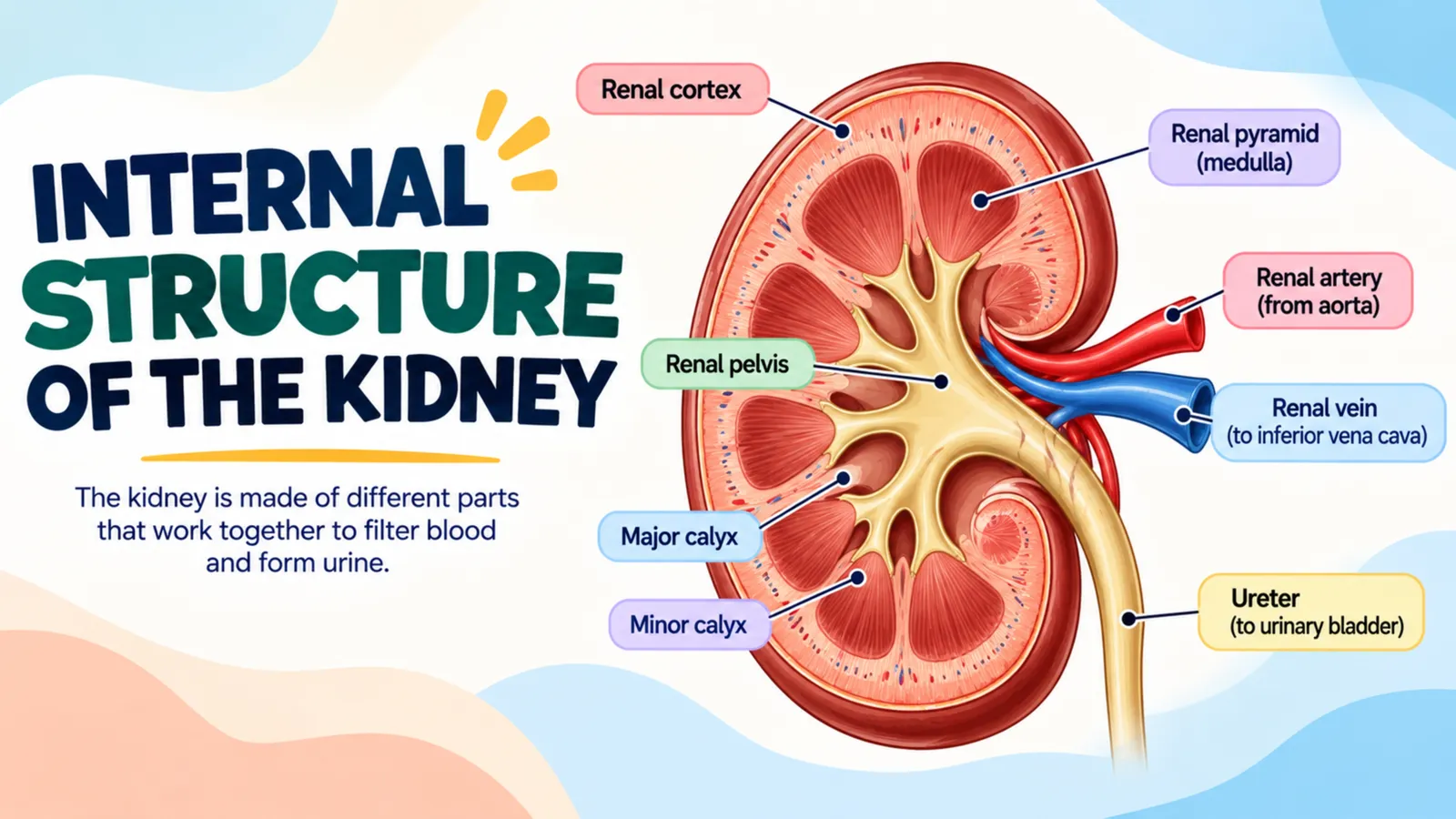
Kidneys receive an extraordinary blood supply. Although they make up less than one percent of body weight, they receive around a quarter of the blood pumped by the heart. Blood enters through the renal artery and leaves through the renal vein, considerably cleaner than when it arrived.
Cut a kidney lengthwise and you see three regions. The outer cortex is darker and granular. The inner medulla contains cone shaped structures called pyramids. The pelvis is the funnel shaped space in the centre that collects urine and channels it into the ureter.
🔬
Slide: Inside the kidney
Cortex, medulla, pelvis and the blood supply
1/1
The Ureters, Bladder and Urethra
Each ureter is a narrow muscular tube about twenty five centimetres long. Urine does not simply drip down through gravity. Waves of muscular contraction, the same peristalsis used in the food pipe, push it along.
The urinary bladder is a stretchy muscular bag that stores urine. As it fills, stretch receptors in its wall send signals to the brain producing the familiar urge to urinate. A ring of muscle called a sphincter guards the exit, and in older children and adults this sphincter is under conscious control, which is why urination can be delayed for a reasonable time.
The Nephron: The Working Unit of the Kidney
Each kidney contains roughly one million microscopic filtering units called nephrons. If you understand one nephron, you understand the kidney, because the organ is essentially a million copies of the same device working in parallel.
Parts of a Nephron
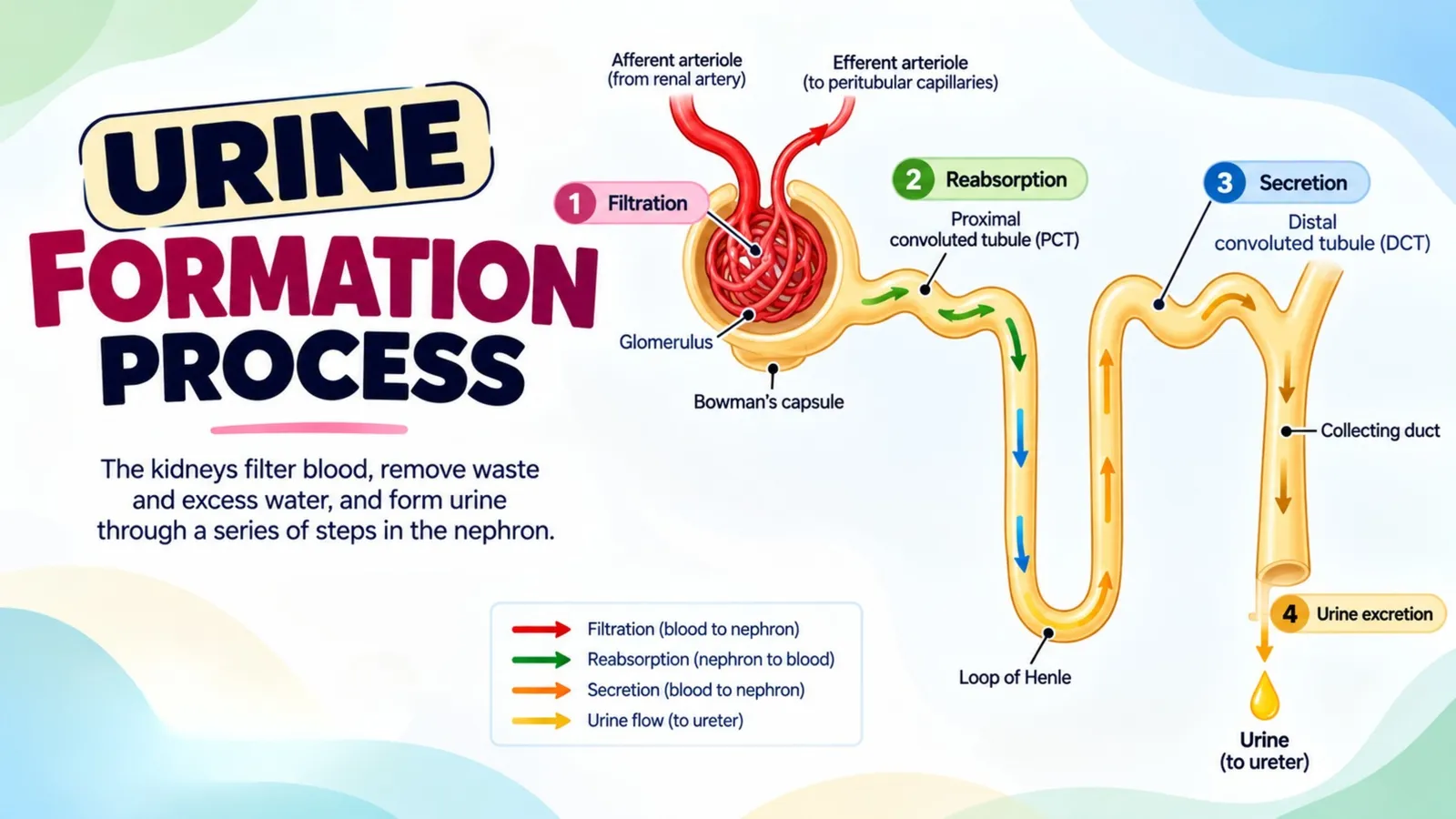
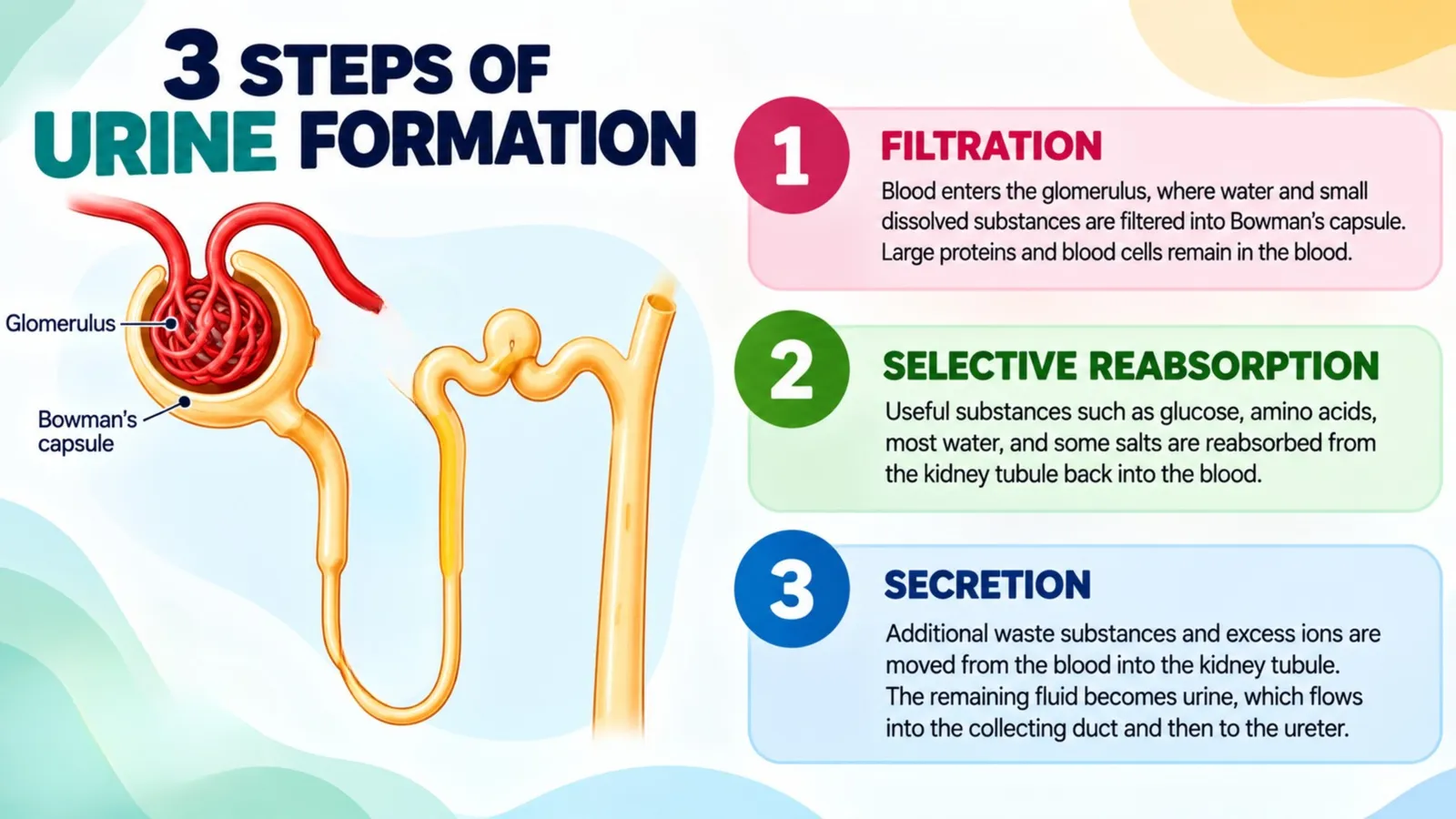
The Bowman capsule is a cup shaped structure at the beginning of the nephron. Inside it sits a tight knot of capillaries called the glomerulus. Together they form the filtering unit, sometimes called the Malpighian body.
Leading away from the capsule is a long twisted tube. The first coiled section is the proximal convoluted tubule. It leads into a long hairpin shaped section called the loop of Henle, which dips down into the medulla and comes back up. This connects to the distal convoluted tubule, and finally into a collecting duct that carries the finished urine towards the kidney pelvis.
The whole tubule is wrapped in a network of capillaries, which is essential, because a great deal of what is filtered out has to be taken back in again.
How Urine Is Formed: Three Clear Steps
Step One: Ultrafiltration
Blood enters the glomerulus through a wide vessel and leaves through a narrower one. Because the exit is narrower than the entrance, pressure builds up inside the knot of capillaries. This high pressure squeezes fluid out through the capillary walls and into the Bowman capsule.
This is filtration by pressure rather than by choice, which is why it is called ultrafiltration. The capillary walls act as a sieve based purely on molecule size. Water, glucose, amino acids, mineral salts, urea and vitamins all pass through easily. Blood cells and large plasma proteins are far too big and remain in the blood.
The fluid that collects in the Bowman capsule is called the glomerular filtrate. Here is the surprising number. Your kidneys produce roughly one hundred and eighty litres of filtrate every single day, which is around ninety times the volume of water most people drink. Clearly you do not pass one hundred and eighty litres of urine, so something dramatic must happen next.
Step Two: Selective Reabsorption
This is the step that makes the kidney remarkable. Ultrafiltration was blind, so it removed many useful substances along with the waste. Selective reabsorption goes back and rescues everything the body still needs.
As the filtrate flows along the tubule, the surrounding capillaries take back what is valuable.
All the glucose is reabsorbed, mostly in the proximal convoluted tubule, using active transport. Healthy urine contains no glucose at all. If glucose appears in urine, it usually means blood glucose was so high that the reabsorption mechanism was overwhelmed, which is a classic sign of diabetes.
All the amino acids are reabsorbed, since the body cannot afford to lose protein building blocks.
Most of the water is reabsorbed by osmosis, and the loop of Henle plays a central role in concentrating the urine.
Mineral salts are reabsorbed in the amount the body requires, and any surplus is left behind.
Urea is mostly left in the tubule, because it is the waste the system is trying to remove in the first place.
By the end of this step, around ninety nine percent of the filtered water has been returned to the blood. One hundred and eighty litres of filtrate becomes roughly one point five litres of urine.
Step Three: Tubular Secretion
The final adjustment happens in the distal convoluted tubule. Here, certain substances are actively moved from the blood into the tubule rather than out of it. Excess hydrogen ions, potassium ions, ammonia and many drugs are secreted this way.
Tubular secretion allows the kidney to fine tune the acidity of the blood and to clear substances that filtration alone did not fully remove. This is one reason doctors can detect certain medicines in a urine test.
💧
Slides: How urine is formed
Filtration, reabsorption and secretion along the nephron
1/2
Composition of Normal Urine
Normal urine is about ninety five percent water. The remaining five percent contains urea as the main solid waste, along with uric acid, creatinine, sodium, potassium, chloride and traces of pigments. The yellow colour comes from a pigment called urochrome, produced during the breakdown of haemoglobin.
The colour of urine is a quick health indicator. Pale yellow generally suggests good hydration. Dark yellow suggests the kidneys are conserving water, meaning you should drink more. Healthy urine should contain no glucose, no protein and no blood cells, and the presence of any of these is a reason to see a doctor.
Osmoregulation: Controlling Water Balance
The kidneys do not only remove waste. They also carry out osmoregulation, which is the control of water and salt balance in the body. This is a vital part of homeostasis, the maintenance of a steady internal environment.
The system is controlled by antidiuretic hormone, usually shortened to ADH, which is released by the pituitary gland.
When you have not drunk enough water, the blood becomes more concentrated. The hypothalamus detects this and the pituitary releases more ADH. ADH makes the walls of the collecting duct more permeable to water, so more water is reabsorbed into the blood. The result is a small volume of dark, concentrated urine, and you feel thirsty.
When you have drunk a large amount of water, the blood becomes dilute. Less ADH is released, the collecting duct becomes less permeable, less water is reabsorbed, and you produce a large volume of pale urine within an hour or so.
This is a textbook example of negative feedback in action, and it is also the reason that drinks containing alcohol or caffeine increase urine output. Both interfere with ADH activity.
Other Excretory Organs
The kidneys get most of the attention, but they are not working alone.
The lungs excrete carbon dioxide and a significant amount of water vapour every time you breathe out. By sheer quantity of waste removed, the lungs are extremely important excretory organs.
The skin excretes water, salts and small amounts of urea through sweat. The main purpose of sweating is cooling rather than excretion, but waste removal happens alongside it.
The liver converts toxic ammonia into urea, breaks down old red blood cells into bile pigments, and detoxifies alcohol, drugs and other harmful chemicals. It is best described as the preparation centre for excretion, since it converts wastes into forms the kidneys can safely handle.
Common Excretory System Problems
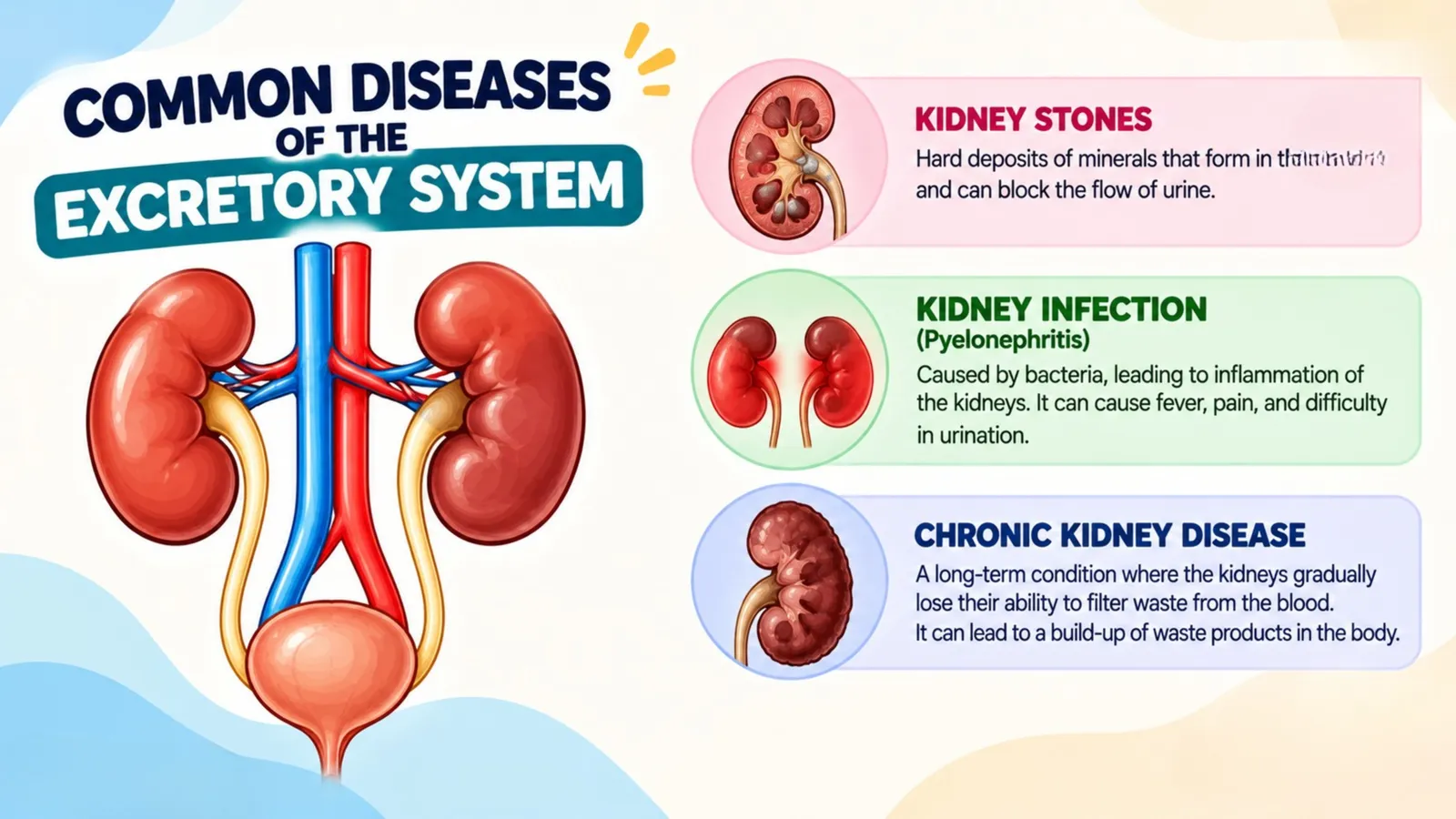
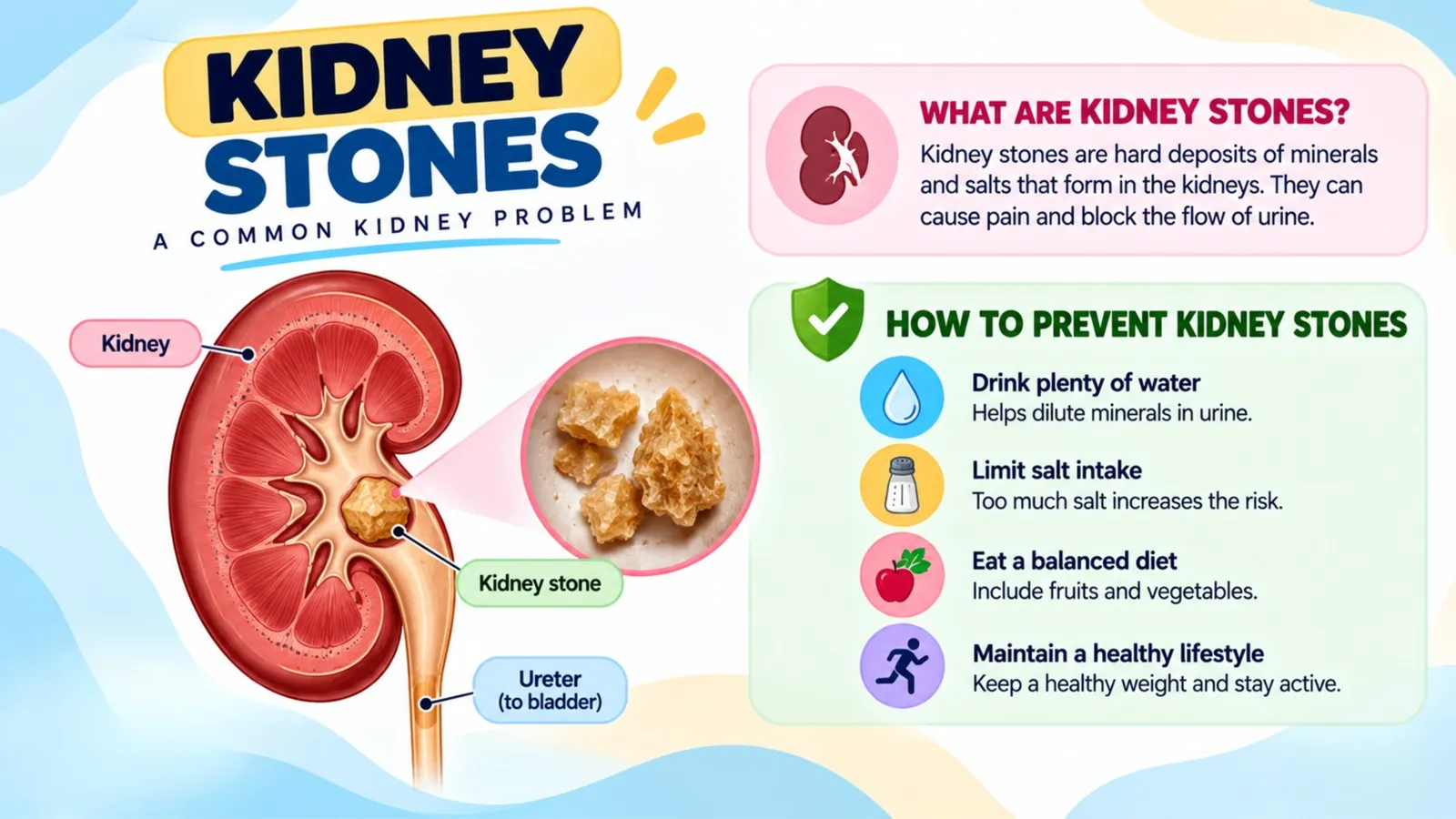
Kidney stones are hard crystals formed from concentrated minerals such as calcium salts. They can be extremely painful when they move into the ureter, and drinking plenty of water is the simplest preventive measure.
Urinary tract infection occurs when bacteria enter the urethra and multiply, causing pain and a burning feeling during urination.
Nephritis is inflammation of the nephrons, often following an infection, which can allow protein or blood to leak into the urine.
Kidney failure means the kidneys can no longer filter the blood adequately, allowing urea and excess fluid to build up dangerously.
Diabetes insipidus results from a lack of ADH, causing very large volumes of dilute urine and constant thirst. It is unrelated to diabetes mellitus despite the shared name.
🩺
Slides: Kidney problems
Common diseases and how to prevent kidney stones
1/2
Dialysis and Kidney Transplant
When kidneys fail, the waste products they normally remove build up in the blood and quickly become life threatening. Two treatments exist.
Dialysis uses a machine that acts as an artificial kidney. The patient's blood is passed through tubing made of a partially permeable membrane, surrounded by a specially prepared dialysis fluid. This fluid contains the correct concentrations of glucose and mineral salts but no urea at all. Because there is no urea outside, urea diffuses out of the blood down its concentration gradient. Because glucose and salt concentrations match the blood, those useful substances are not lost. Cleaned blood then returns to the patient. A typical session lasts several hours and is usually needed a few times a week.
A kidney transplant replaces the failed organ with a healthy one from a donor. It offers a much better quality of life than long term dialysis, but the recipient must take medicines that suppress the immune system so that the body does not reject the new organ.
How to Keep Your Kidneys Healthy
Drink enough water throughout the day so that urine stays pale rather than dark.
Do not routinely hold urine for long periods, since this encourages infection.
Keep salt intake moderate, because high salt raises blood pressure and blood pressure damages the fine vessels in the glomerulus.
Control blood sugar, as diabetes is one of the leading causes of kidney damage worldwide.
Avoid taking painkillers frequently without medical advice, since some can harm kidney tissue over time.
Treat urinary infections early rather than waiting for them to clear on their own.
Frequently Asked Questions About the Excretory System
What is the difference between excretion and egestion?
Excretion removes waste produced by chemical reactions inside body cells, such as urea and carbon dioxide. Egestion removes undigested food that never entered the cells.
Why is glucose present in the filtrate but absent from normal urine?
Ultrafiltration works purely by molecule size, so small glucose molecules pass through easily. They are then completely taken back into the blood during selective reabsorption, so healthy urine contains none.
Why do you urinate more in cold weather?
In cold weather you sweat far less, so more water remains in the blood. The kidneys remove that extra water, producing a larger volume of urine.
What exactly does the loop of Henle do?
It creates a salty environment in the medulla, which allows water to be drawn out of the collecting duct by osmosis. This is what makes it possible to produce urine that is more concentrated than blood.
Can a person live with one kidney?
Yes. A single healthy kidney can enlarge slightly and take on the work of both, which is why living kidney donation is possible.
Final Thoughts
The excretory system is a masterclass in careful management. Rather than trying to identify and remove only the harmful molecules, the kidney takes a bold approach. It filters out almost everything small enough to pass, then carefully takes back every valuable item, and finally makes small adjustments at the end. It is far easier to sort a pile after emptying the drawer than to search through a full one, and evolution arrived at the same conclusion.
For revision, learn the three steps of urine formation in order and know exactly which substances are involved at each stage. Then be ready to explain ADH and water balance as an example of homeostasis. Those two answers cover the majority of examination questions on this topic, and both become far easier once you can picture the filtrate travelling along a single nephron from the Bowman capsule to the collecting duct.
🗂️ Revision Flashcards
Tap a card to reveal the answer.
🎯 Quick Quiz
8 questions. Pick an answer to check it straight away.
1Why is passing faeces not excretion?
Undigested food travels through the alimentary canal without entering cells, so removing it is egestion.
2Which organ converts toxic ammonia into urea?
The liver deaminates surplus amino acids and immediately converts the ammonia into urea.
3Which substance stays in the blood during ultrafiltration?
Ultrafiltration sorts by size: blood cells and large plasma proteins are too big to pass.
4Healthy urine contains no glucose because glucose is…
Glucose is filtered but then all of it is reabsorbed, mostly in the proximal convoluted tubule, by active transport.
5Roughly how much filtrate do the kidneys produce each day?
About 180 litres of filtrate become around 1.5 litres of urine.
6You have not drunk enough water. What happens?
More ADH makes the collecting duct more permeable, so more water is reabsorbed and urine is concentrated.
7Why does dialysis fluid contain no urea?
With no urea outside, urea diffuses out of the blood; glucose and salts match the blood so they are not lost.
8Diabetes insipidus is caused by…
A lack of ADH causes very large volumes of dilute urine and constant thirst.