📖 Lesson: Vertebrates
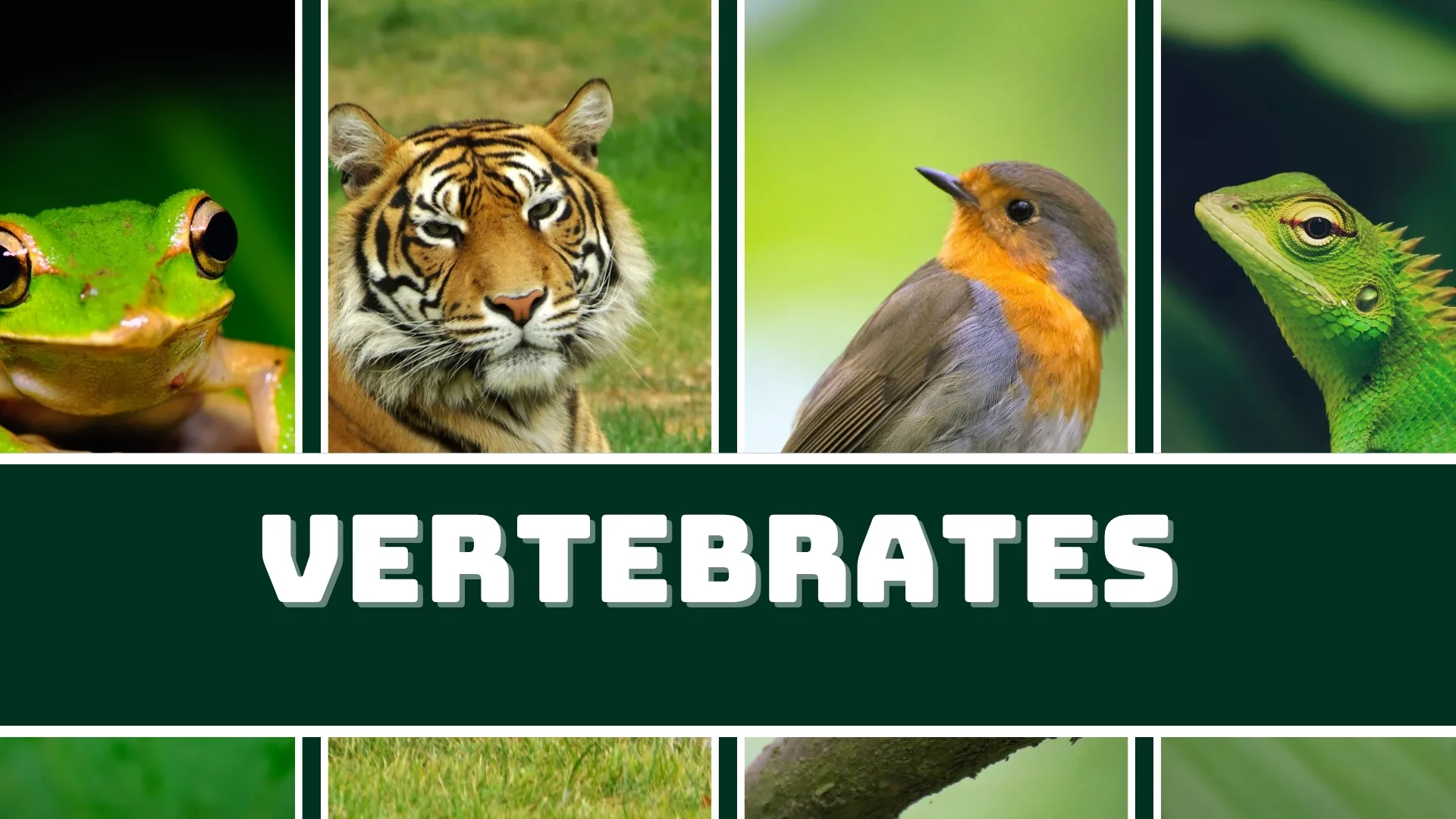
Learn about animals with backbones and their five major groups
🎮 Categorization Activities
Use the classification keys to sort animals into their correct groups
📝 Quiz: Test Your Knowledge
Select ALL correct answers for each question (2-3 correct per question)
📚 The Five Major Groups of Vertebrates Explained
What is a vertebrate?
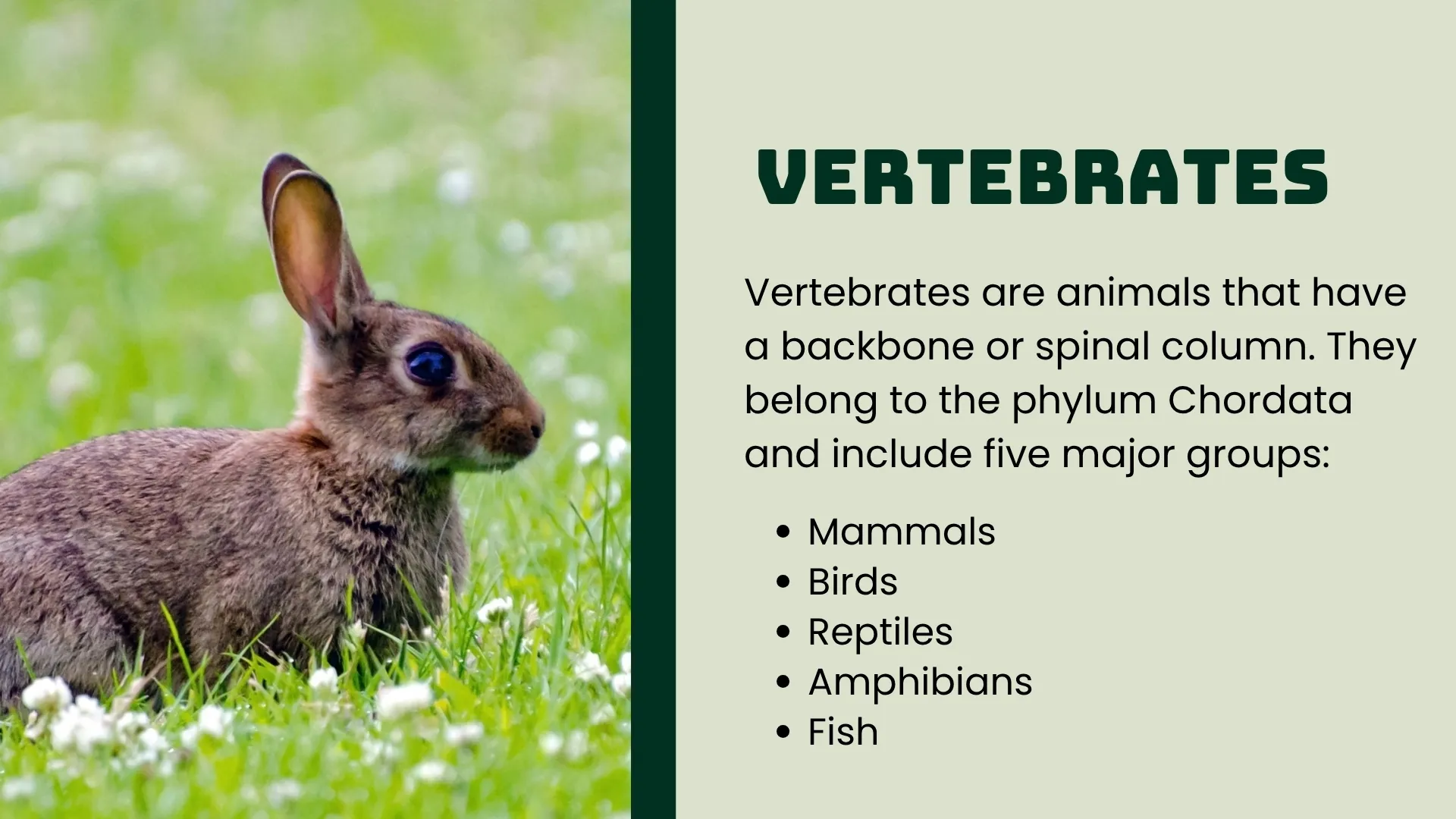
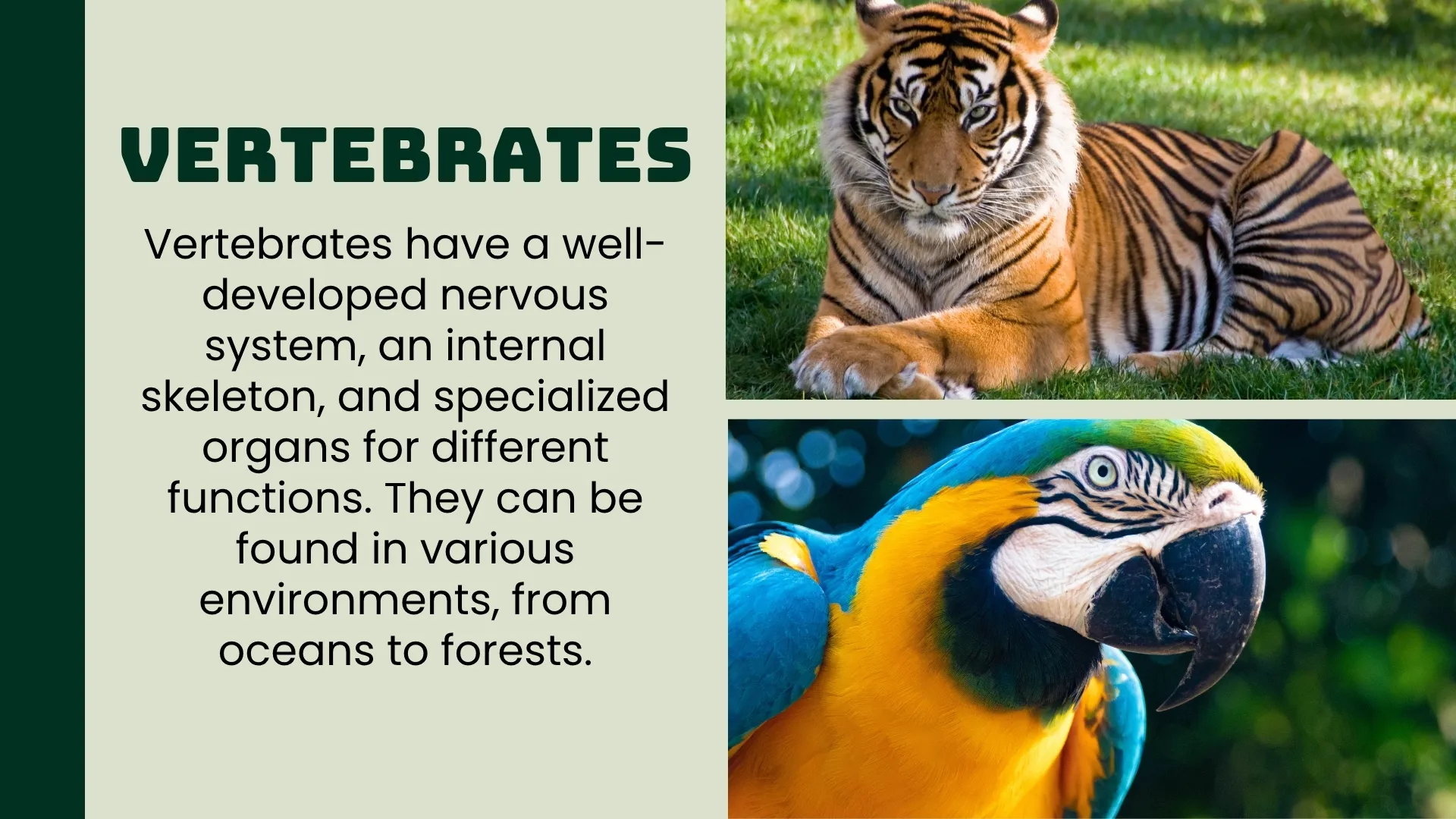
A vertebrate is an animal with a backbone. The backbone, or vertebral column, is a chain of small bones called vertebrae that runs down the animal's back, protects the spinal cord and anchors the rest of the internal skeleton. Vertebrates belong to the phylum Chordata and share several features: a skull that protects the brain, an internal skeleton (endoskeleton) made of bone or cartilage that grows with the animal, a body with a left and right side that mirror each other (bilateral symmetry), and a closed circulatory system with a heart that pumps blood through vessels.
Vertebrates include the largest and most familiar animals on Earth, but they are a small minority. Fewer than 5 per cent of known animal species are vertebrates; the rest are invertebrates such as insects, spiders, worms, snails and jellyfish, which have no backbone at all. Biologists sort the vertebrates into five major groups, called classes, on the basis of their skin covering, how they breathe, how they reproduce and how they control their body temperature.
The five groups of vertebrates
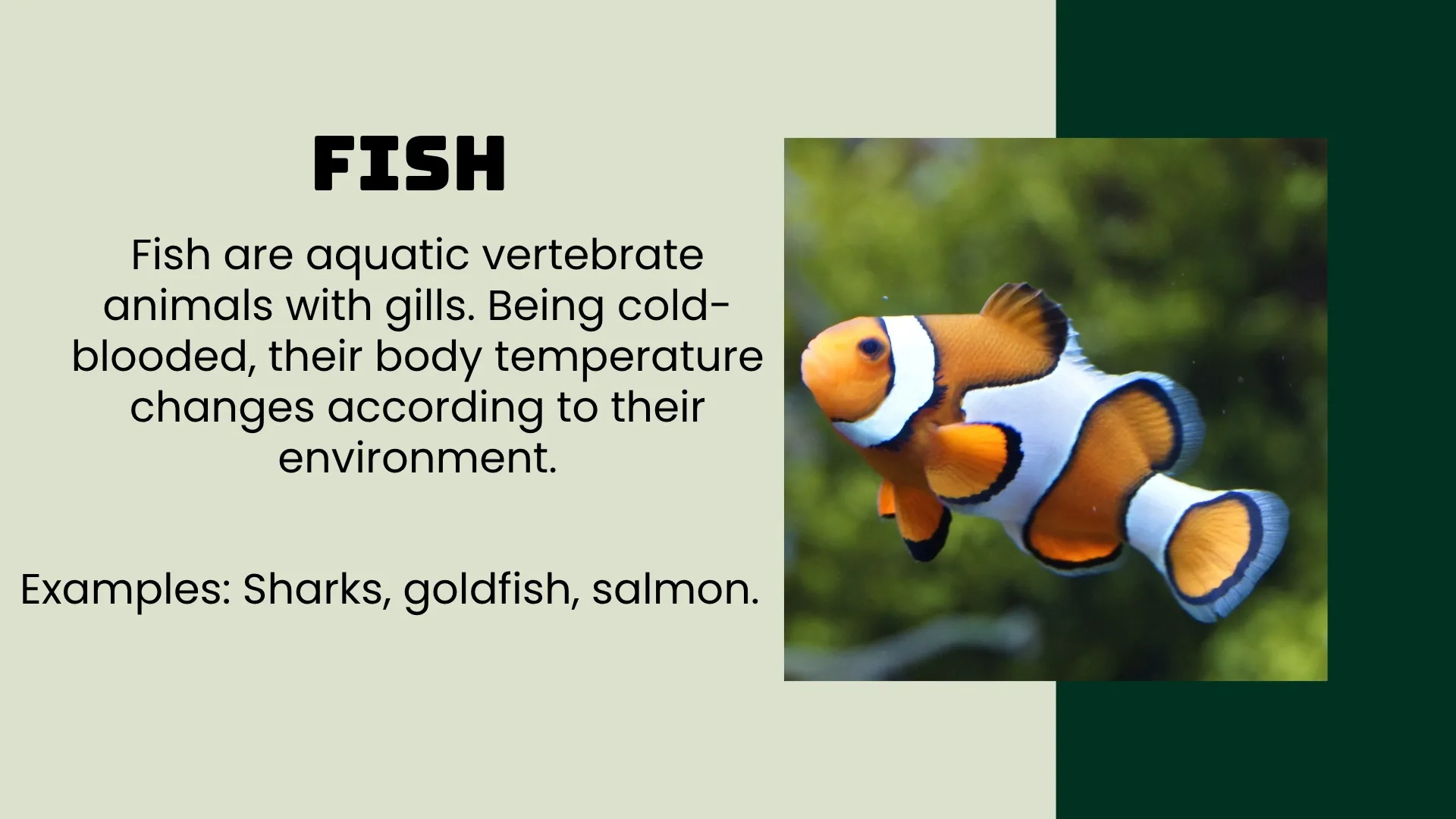
- Fish — live in water, breathe with gills, and have scales and fins.
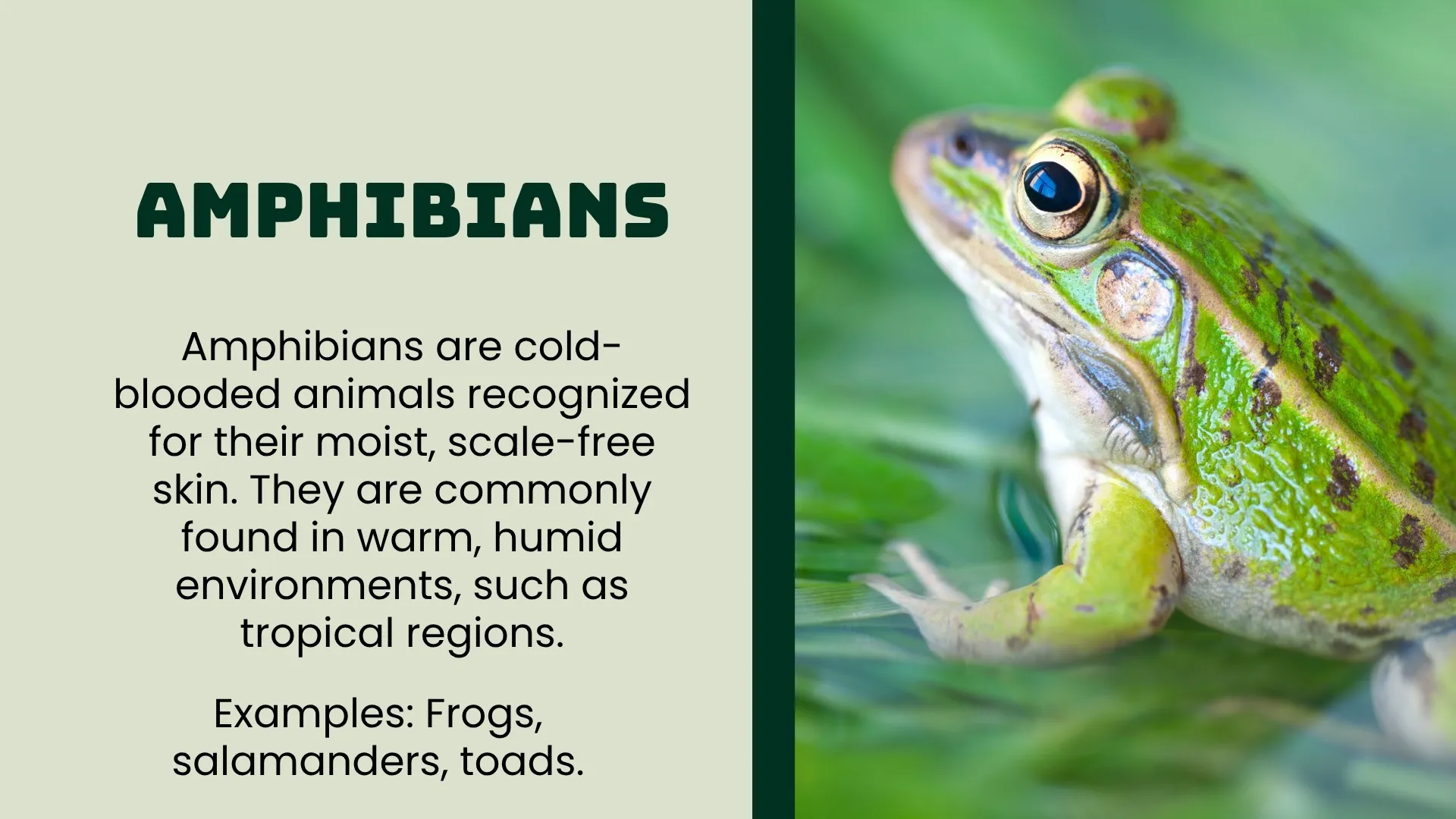
- Amphibians — begin life in water and usually move onto land as adults; moist skin without scales.
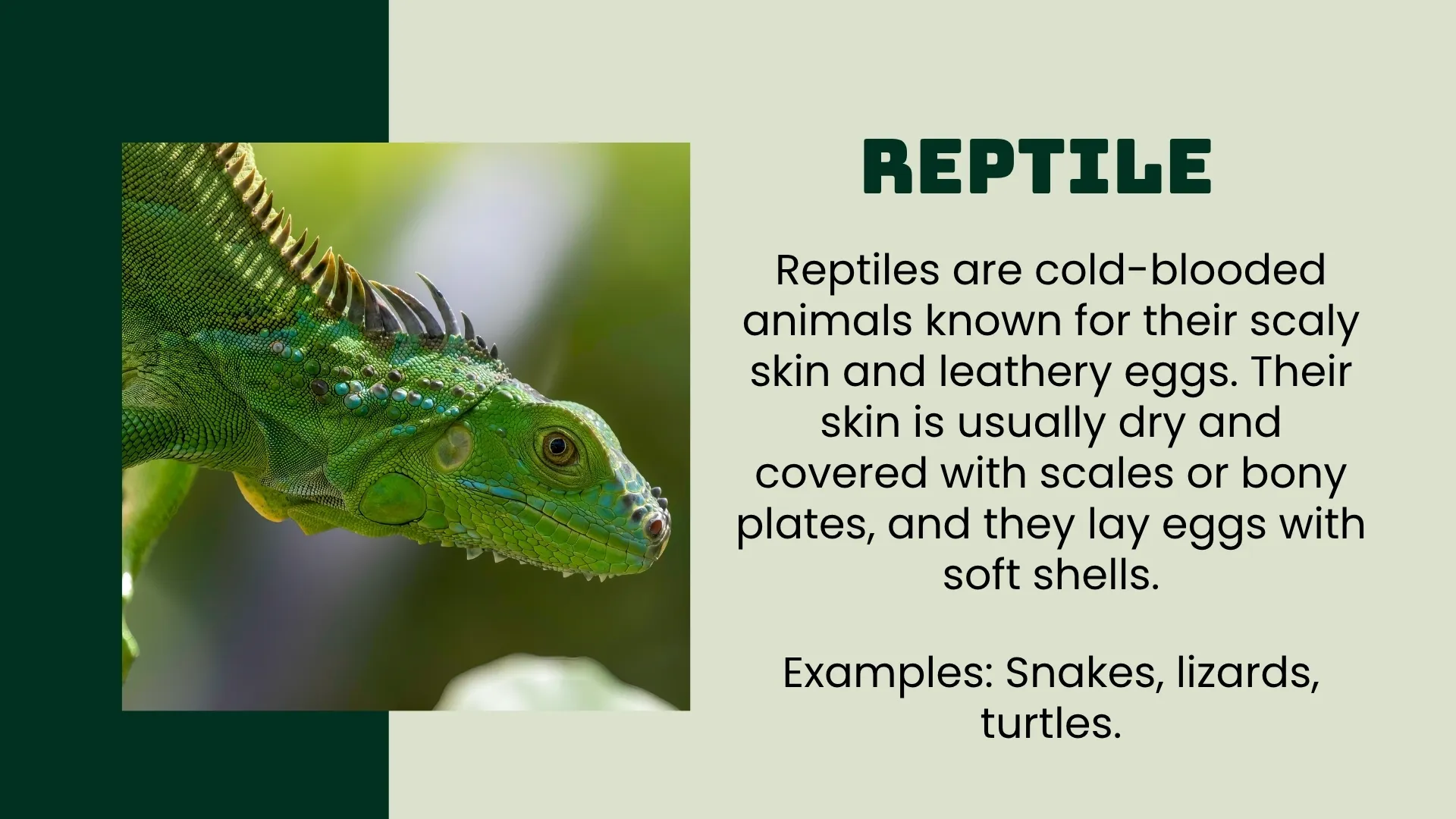
- Reptiles — dry scaly skin, breathe with lungs, and lay shelled eggs on land.
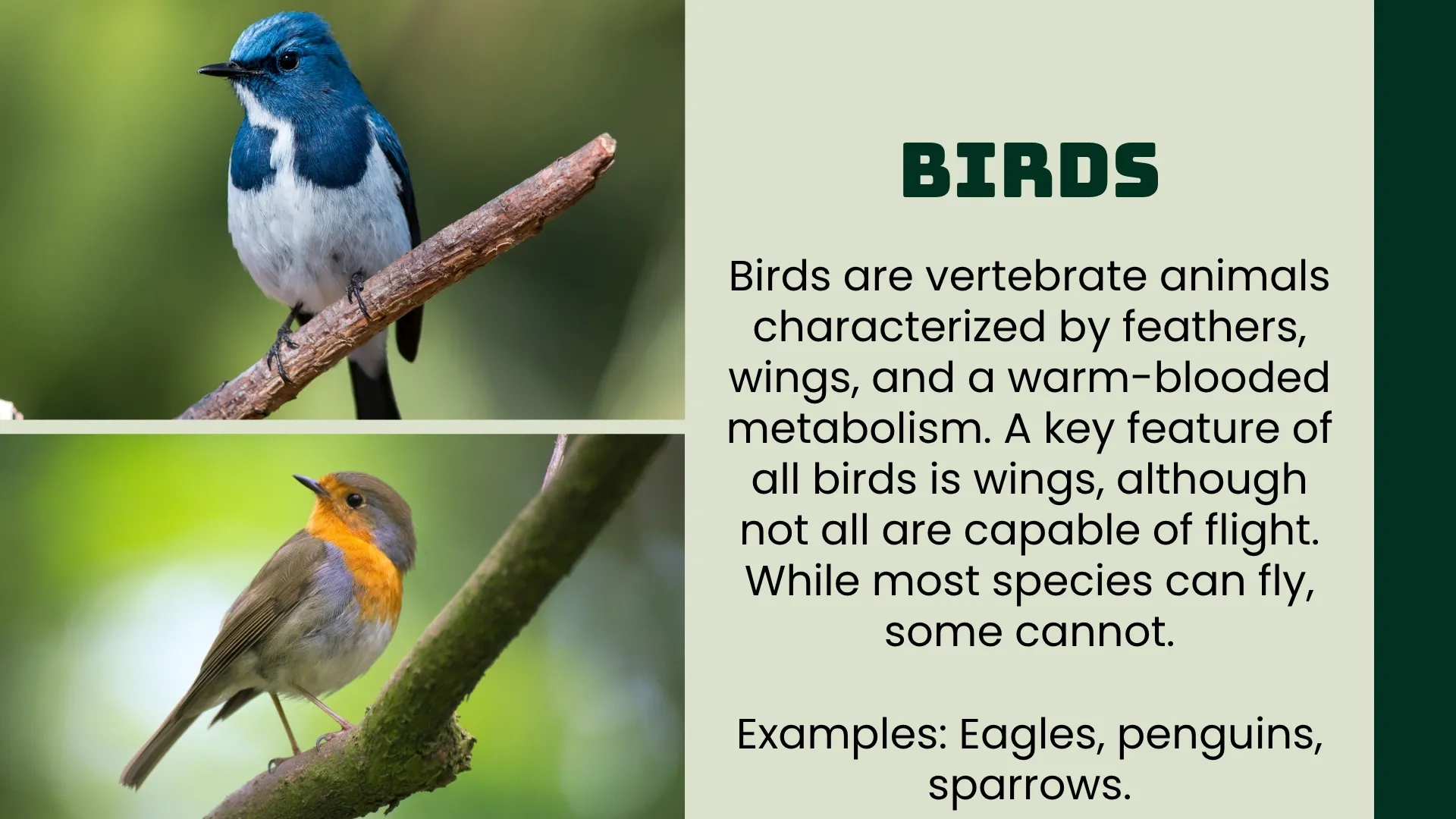
- Birds — feathers, wings and a beak; lay hard-shelled eggs.
- Mammals — hair or fur, and feed their young on milk.
1. Fish
Fish are vertebrates that spend their whole lives in water. They take in oxygen dissolved in the water using gills, swim with fins, and most have a skin covered in overlapping scales with a layer of slimy mucus. Most fish reproduce by laying large numbers of eggs in the water, where they are fertilised outside the female's body. Fish are ectotherms: their body temperature rises and falls with the temperature of the water around them. There are three sub-groups: bony fish such as salmon, cod, goldfish and tuna; cartilaginous fish such as sharks and rays, whose skeleton is made of cartilage rather than bone; and the jawless fish, lampreys and hagfish.
2. Amphibians
Amphibians such as frogs, toads, newts and salamanders lead a double life. Their eggs have no shell, only a coat of jelly, so they would dry out on land and must be laid in water. The young that hatch, such as tadpoles, breathe with gills and live entirely in water. As they grow they go through metamorphosis: gills are replaced by lungs, legs develop, and the adult can live on land. Adult amphibians also take in oxygen through their thin, moist skin, which has no scales and must stay damp for this to work. Like fish, amphibians are ectotherms.
3. Reptiles
Reptiles include snakes, lizards, crocodiles, alligators, turtles and tortoises. Their skin is dry and covered in tough, waterproof scales made of keratin, the same material as your fingernails, which prevents water loss and lets reptiles live in very dry places. They breathe with lungs throughout their lives. Most reptiles lay eggs with a leathery or hard shell on land; the shell and the membranes inside it keep the developing young from drying out, so reptiles do not need water to reproduce. A few snakes and lizards give birth to live young instead. Reptiles are ectotherms, which is why lizards and snakes bask in the sun in the morning to warm up before they become active.
4. Birds
Birds are the only living animals with feathers. Feathers insulate the body, and the specially shaped wing and tail feathers make flight possible, although some birds such as penguins and ostriches cannot fly. Birds have a beak with no teeth, two legs, and light, hollow bones that reduce the weight to be lifted. They breathe with lungs. All birds lay eggs with a hard, chalky shell, and most incubate them by sitting on them. Birds are endotherms: they generate heat inside their bodies and keep their temperature nearly constant whatever the weather. Examples include eagles, sparrows, ducks, penguins and hummingbirds.
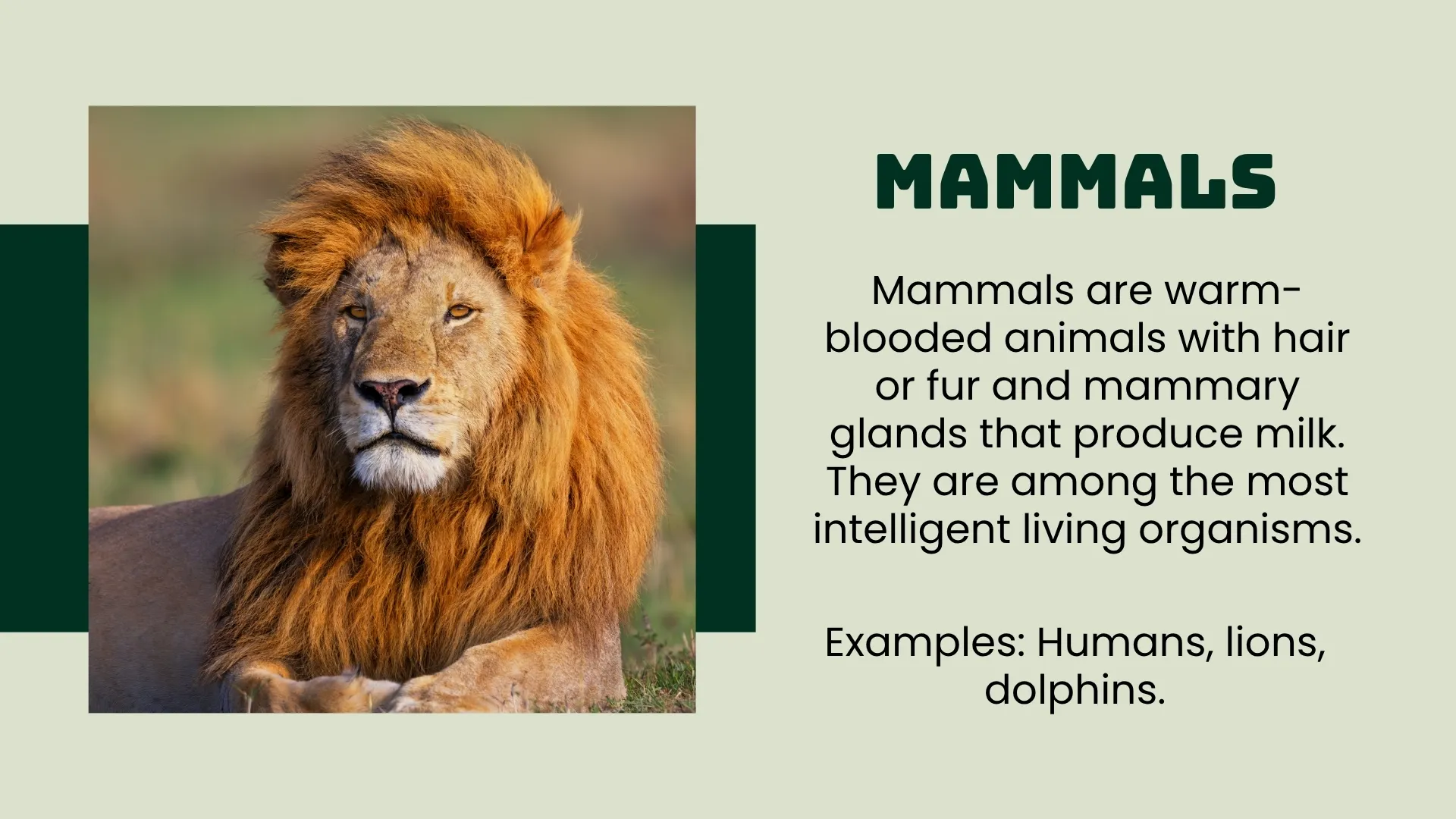
5. Mammals
Mammals are named after the mammary glands with which females produce milk to feed their young. All mammals have hair or fur at some stage of life, breathe with lungs, and are endotherms with a constant body temperature. Most mammals give birth to live young that developed inside the mother, but there are two exceptions. Marsupials such as kangaroos and koalas give birth to tiny, undeveloped young that finish growing in a pouch. The monotremes, the platypus and the echidnas of Australia and New Guinea, are mammals that lay eggs, yet still feed the hatchlings on milk. Mammals include humans, dogs, elephants, bats (the only mammals that truly fly) and whales and dolphins, which live entirely in the sea but must surface to breathe air.
Comparing the five vertebrate groups
| Group | Skin covering | Gas exchange | Body temperature | Reproduction | Examples |
|---|---|---|---|---|---|
| Fish | Scales with mucus | Gills | Ectotherm | Most lay eggs in water, fertilised externally | Salmon, shark, goldfish, tuna |
| Amphibians | Thin, moist, no scales | Gills as larvae; lungs and skin as adults | Ectotherm | Jelly-coated eggs with no shell, laid in water; metamorphosis | Frog, toad, newt, salamander |
| Reptiles | Dry, waterproof scales | Lungs | Ectotherm | Most lay leathery or hard-shelled eggs on land | Snake, lizard, crocodile, tortoise |
| Birds | Feathers; scales on the legs | Lungs | Endotherm | All lay hard-shelled eggs | Eagle, penguin, ostrich, sparrow |
| Mammals | Hair or fur | Lungs | Endotherm | Most give birth to live young; all feed young on milk (monotremes lay eggs) | Human, dog, whale, bat, kangaroo |
Ectotherms and endotherms
Older books describe fish, amphibians and reptiles as "cold-blooded" and birds and mammals as "warm-blooded". The scientific terms are more precise. An ectotherm gets most of its body heat from its surroundings, so it is sluggish when cold and active when warm; a basking lizard can actually have warmer blood than you do. An endotherm produces heat from the chemical reactions in its own cells and keeps its temperature steady, which lets birds and mammals stay active in cold climates and at night, but costs them far more food.
Classifying an unknown vertebrate
The activities on this page use a dichotomous key, a series of yes-or-no questions that narrows the possibilities one step at a time. A simple key for vertebrates might ask: Does it have feathers? If yes, it is a bird. If no, does it have hair or fur? If yes, it is a mammal. If no, is its skin dry and scaly? If yes, it is a reptile. If no, does it have fins and breathe with gills all its life? If yes, it is a fish; if no, it is an amphibian. Working through the key in order means that even a tricky animal, such as a whale, a penguin or a legless lizard, ends up in the right group.
Key terms
- Vertebrate
- An animal with a backbone made of vertebrae and an internal skeleton.
- Invertebrate
- An animal without a backbone, such as an insect, worm or snail.
- Ectotherm
- An animal whose body temperature depends mainly on its surroundings (fish, amphibians, reptiles).
- Endotherm
- An animal that generates its own body heat and keeps a steady temperature (birds, mammals).
- Metamorphosis
- The change in body form from larva to adult, as when a tadpole becomes a frog.
- Gills
- Organs that absorb oxygen dissolved in water.
- Mammary glands
- Glands in female mammals that produce milk.