Take a moment to look at the back of your hand. That thin, flexible layer is doing an extraordinary number of jobs. It is keeping out billions of microbes, stopping you from drying out, sensing the texture of whatever you touch, shielding you from harmful ultraviolet rays and keeping your internal temperature steady. Skin is a living organ that constantly renews itself. In this guide we explore the layers of the skin, its many functions and the most common skin problems, with plenty of fascinating facts along the way.
📖 Lesson
The epidermis, dermis and hypodermis, how skin controls body temperature, melanin, vitamin D, healing and common skin conditions.
How Big Is Your Skin? Surprising Numbers
An adult's skin covers about 1.5 to 2 square metres, roughly the size of a single bed.
It weighs around 3 to 4 kilograms, about 15 percent of body weight when the tissues beneath are included.
It ranges from about 0.5 millimetres thick on the eyelids to around 4 millimetres on the soles of the feet.
You shed tens of thousands of dead skin cells every minute. Much of the dust in homes is made of shed skin.
Your outer skin layer completely renews itself roughly every four weeks.
Skin, together with the hair, nails and glands, forms the integumentary system.
Slide: The human skin
Protection, sensation, regulation
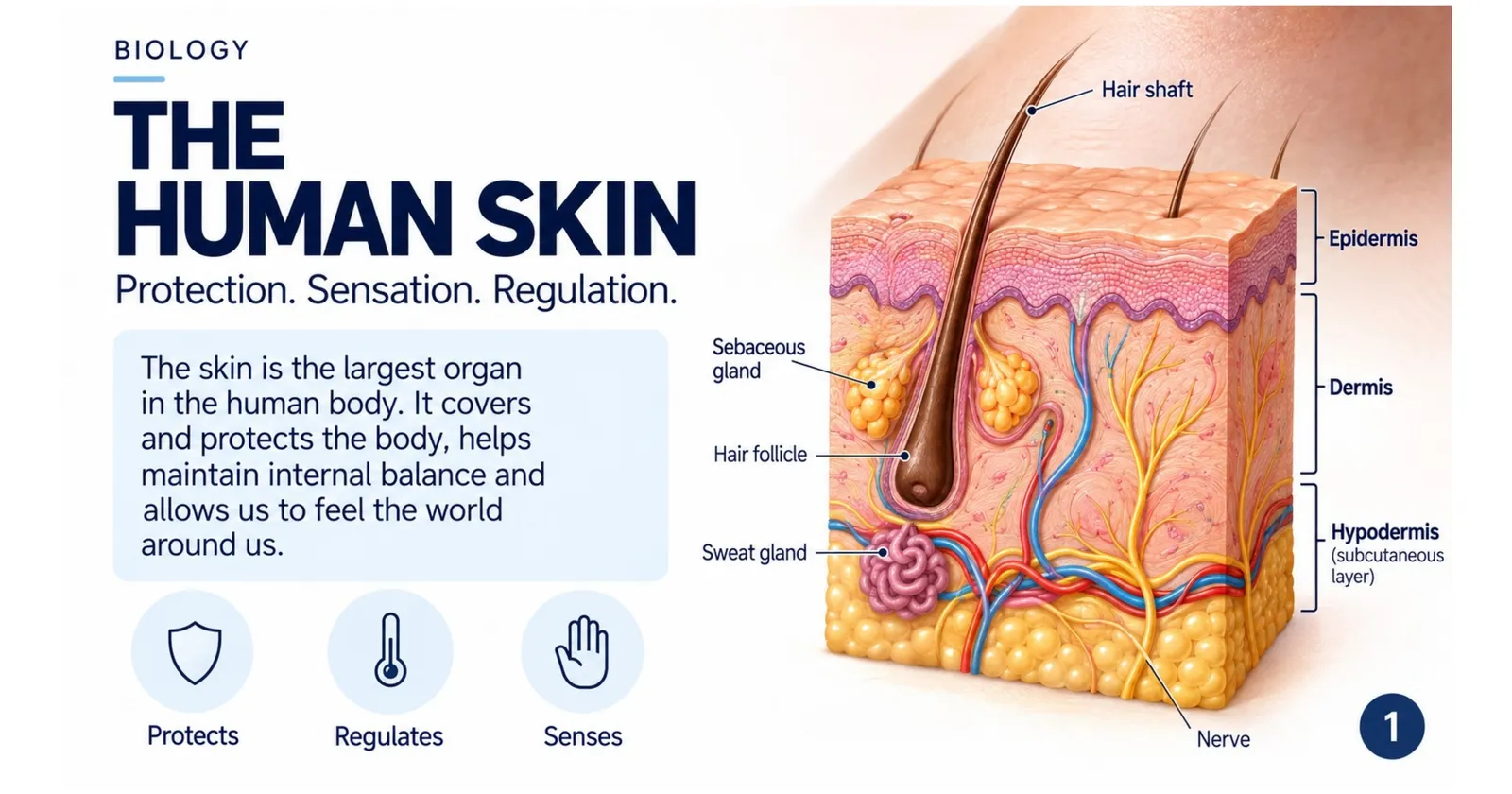
1/1
The Layers of the Skin
| Layer | Main tissues and structures | Key jobs |
|---|---|---|
| Epidermis | Stratified epithelium, keratinocytes, melanocytes | Waterproof barrier, protection from microbes and UV light |
| Dermis | Connective tissue, collagen, blood vessels, nerves, glands, hair follicles | Strength, elasticity, sensation, temperature control |
| Hypodermis | Fat (adipose tissue) and loose connective tissue | Insulation, energy store, cushioning, anchoring skin |
The epidermis: your protective outer shield
The epidermis is the thin outer layer that you can see. It contains no blood vessels, so it gets its nutrients from the dermis below. The epidermis is made of several sub-layers:
Stratum basale (basal layer): the deepest layer, where new cells are made constantly by cell division. It also contains melanocytes, the cells that make the pigment melanin.
Stratum spinosum and stratum granulosum: as new cells are pushed upwards, they fill up with a tough protein called keratin and begin to die.
Stratum lucidum: a clear extra layer found only in thick skin, such as on the palms and soles.
Stratum corneum: the outermost layer, made of 15 to 30 layers of flat, dead, keratin-filled cells. These cells overlap like roof tiles to form a tough, waterproof barrier, and they are constantly flaking off.
The epidermis also contains special immune cells called Langerhans cells, which detect invading microbes and alert the immune system.
The dermis: the working layer
The dermis lies beneath the epidermis and is much thicker. It is made of connective tissue rich in two proteins: collagen, which gives skin strength, and elastin, which lets it stretch and spring back. The dermis contains:
Blood capillaries that supply nutrients and help control body temperature.
Sweat glands that produce sweat to cool the body.
Hair follicles, each with a tiny muscle called the erector pili (arrector pili) muscle that makes hairs stand up.
Sebaceous glands that produce an oily substance called sebum, which keeps skin and hair supple and waterproof and has antimicrobial properties.
Sensory receptors and nerve endings that detect touch, pressure, pain and temperature.
The wavy boundary between the dermis and epidermis creates the ridges that form your unique fingerprints. Even identical twins have different fingerprints.
The hypodermis: the insulating base
The hypodermis, also called the subcutaneous layer, is not strictly part of the skin, but it is closely linked to it. It is made mainly of fat cells. This fat insulates the body to reduce heat loss, stores energy and cushions the body against knocks and bumps. It also connects the skin to the muscles underneath.
Slides: Structure of the skin
Epidermis, dermis, hypodermis and the structures inside them
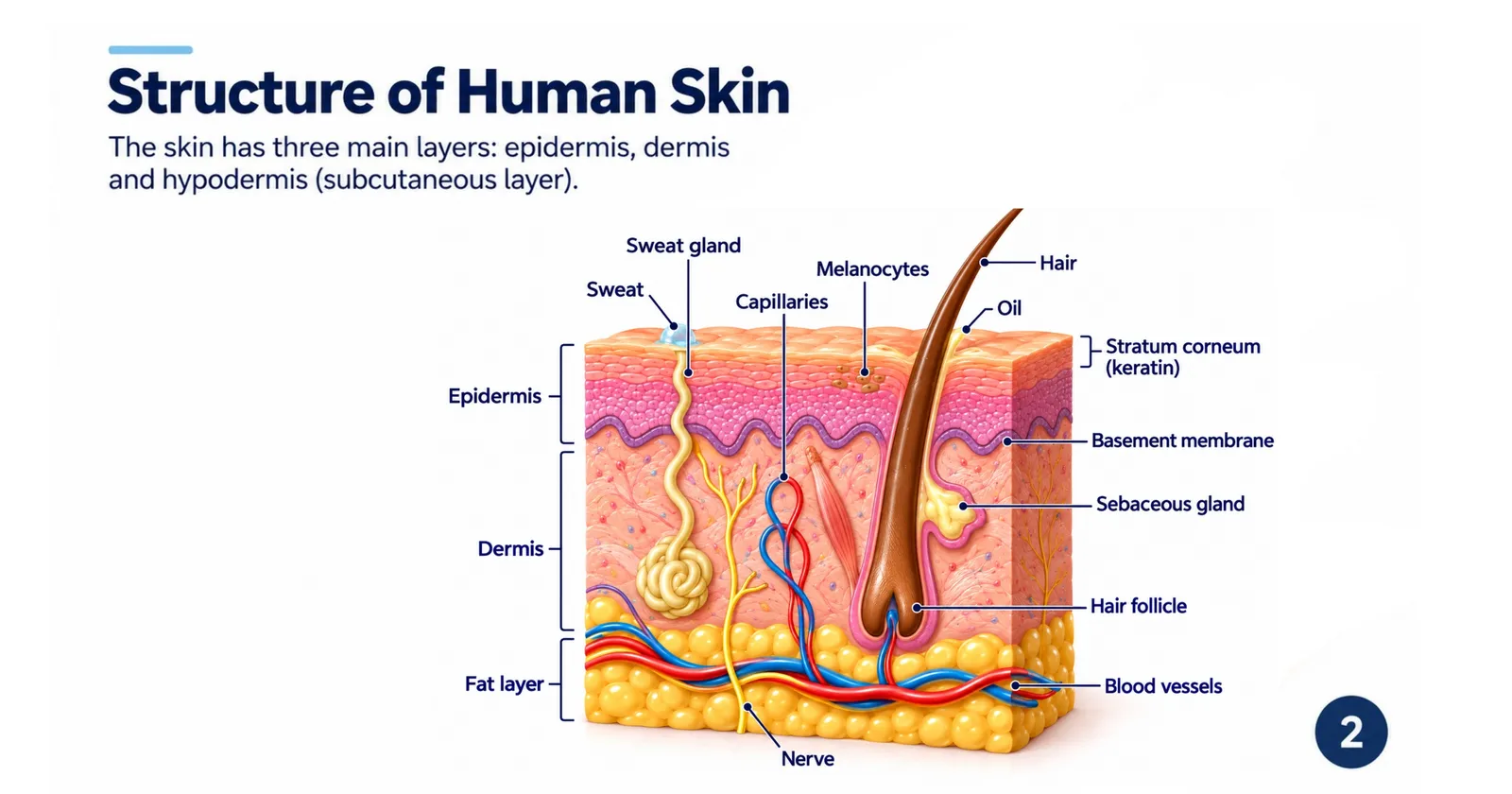
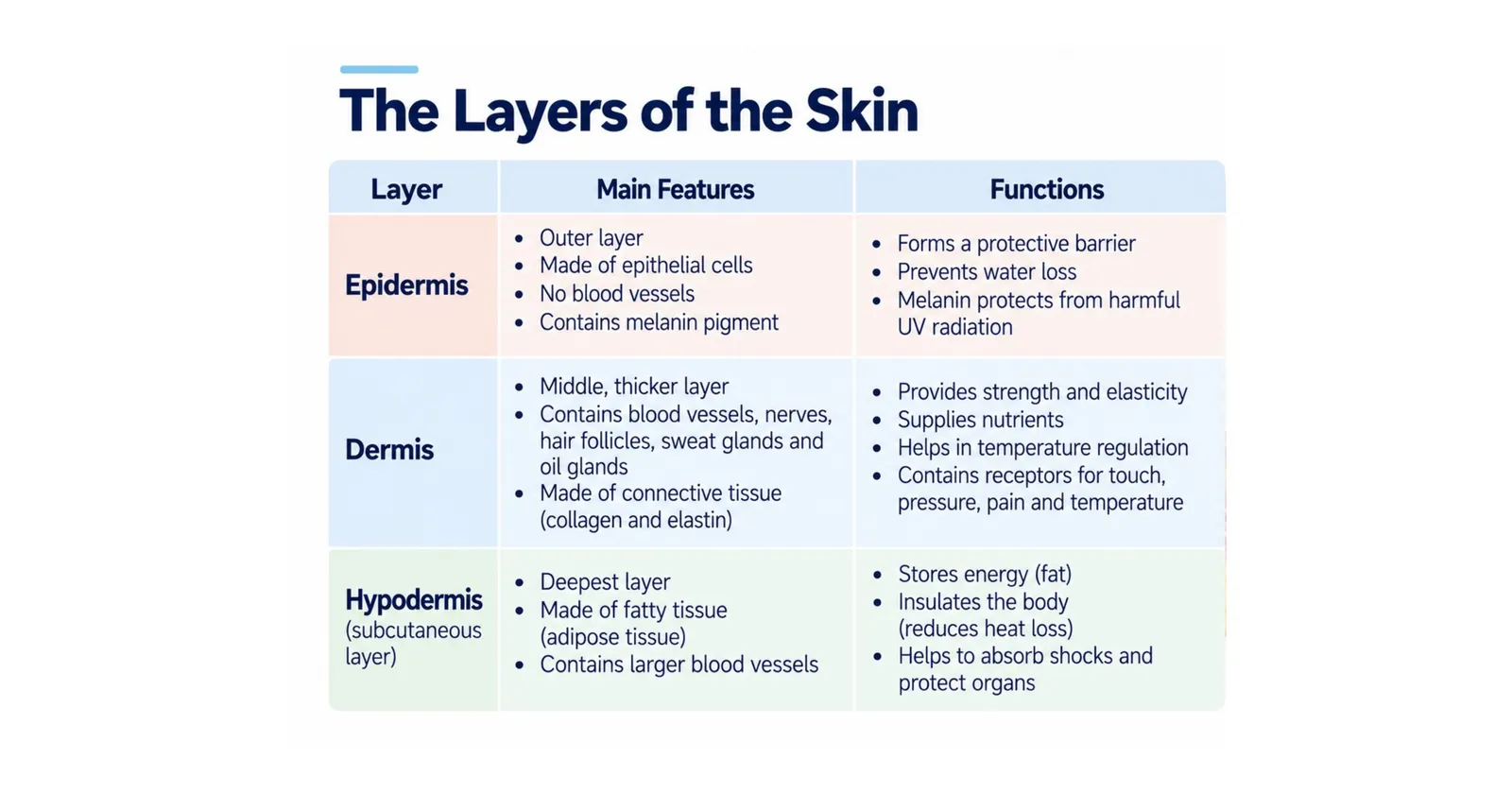
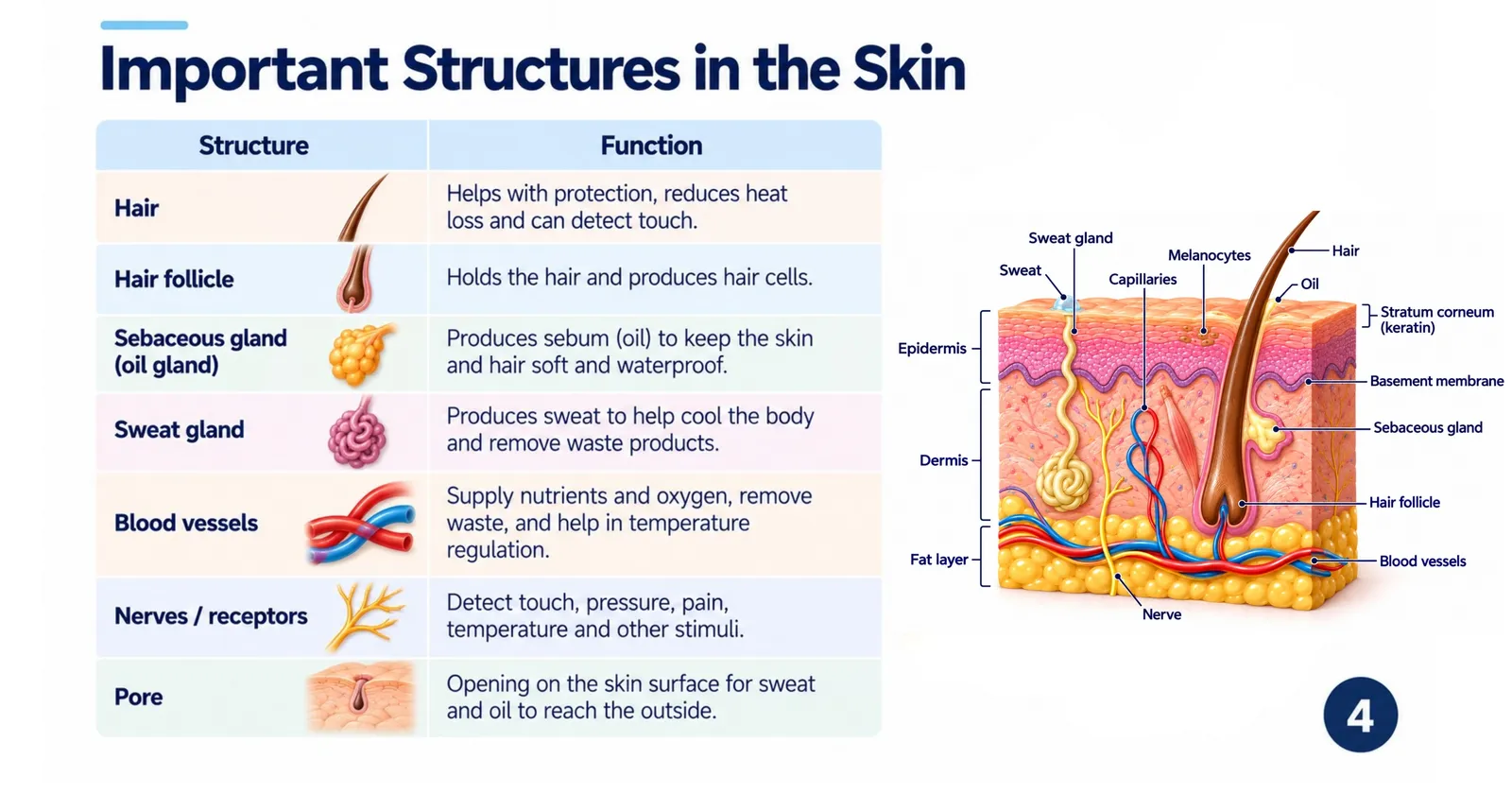
1/3
The Main Functions of the Skin
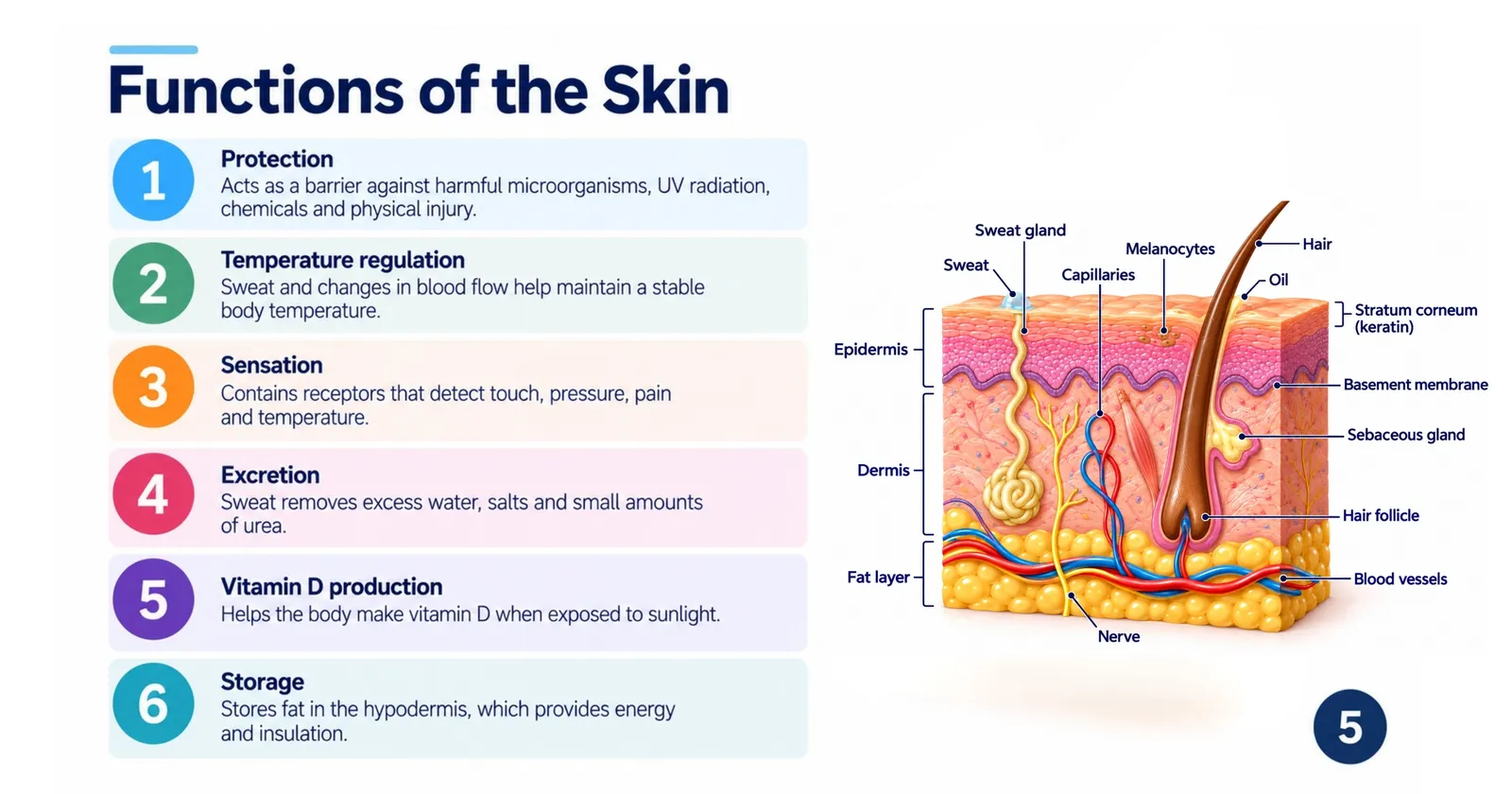
1. Protection: your first line of defence
Skin forms a physical barrier that stops pathogens such as bacteria and fungi from entering the body. The acidic surface, sometimes called the acid mantle, and the natural oils in sebum make it hard for many microbes to grow. Harmless bacteria that live on the skin also compete with harmful ones. The skin also protects against physical injury, chemicals and dehydration. People who suffer severe burns lose this barrier, which is why they are at high risk of infection and dangerous fluid loss.
2. Protection from ultraviolet (UV) light
When skin is exposed to sunlight, melanocytes produce more melanin, a brown-black pigment that absorbs harmful UV radiation and protects the DNA in skin cells. This is what causes a suntan. Sunburn happens when UV exposure is greater than the skin's protection, damaging cells and causing inflammation.
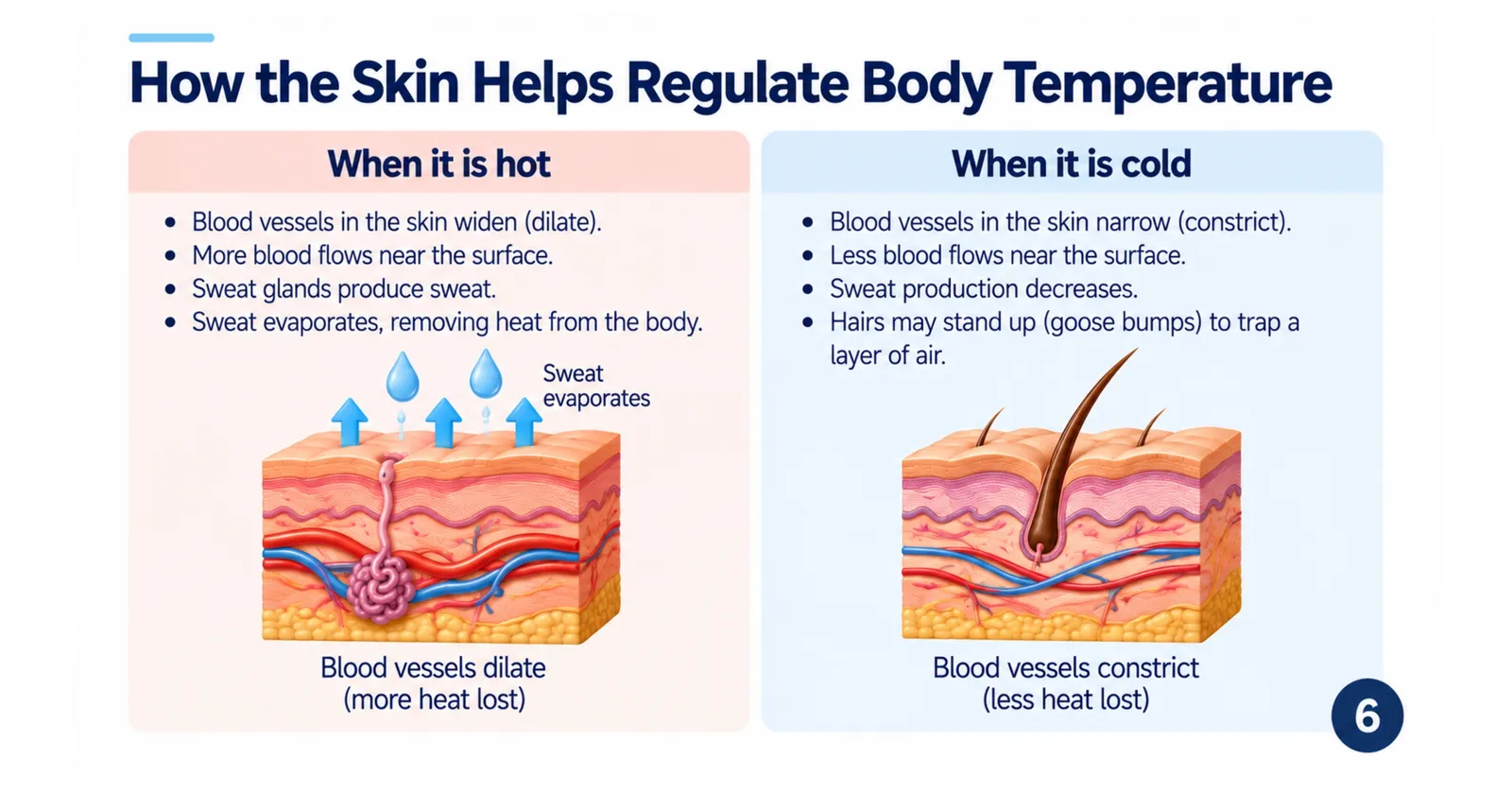
3. Temperature regulation (thermoregulation)
Keeping the body at around 37 °C is vital because enzymes work best at this temperature. The skin is the body's main temperature control organ, and this is a key homeostasis topic in exams. A part of the brain called the hypothalamus monitors blood temperature and sends signals to the skin.
When you are too hot:
Vasodilation: arterioles supplying the skin capillaries widen, so more blood flows near the surface and more heat is lost by radiation. This is why your face goes red when you exercise.
Sweating: sweat glands release more sweat. As sweat evaporates, it takes heat energy from the skin, cooling you down.
Hairs lie flat so that air can move freely over the skin.
When you are too cold:
Vasoconstriction: arterioles supplying the skin capillaries narrow, so less blood flows near the surface and less heat is lost. This is why skin looks pale when it is cold.
Less sweat is produced.
Hairs stand up as the erector pili muscles contract, trapping a layer of insulating air. In humans this mainly produces goosebumps.
Shivering: muscles contract rapidly, releasing heat from respiration.
A common exam mistake is to say that blood vessels move closer to the skin surface. They do not move; the arterioles widen or narrow to change how much blood flows through the surface capillaries.
Slide: How skin controls body temperature
Hot vs cold responses
1/1
4. Sensation: the sense of touch
The skin is a huge sense organ packed with receptors. Different receptors detect light touch, pressure, vibration, heat, cold and pain. Your fingertips and lips have the most receptors, which is why they are so sensitive, while the skin on your back has far fewer. Pain receptors are vital warnings that protect you from damage.
5. Making vitamin D
When UVB rays from sunlight hit the skin, a chemical made from cholesterol is converted into vitamin D. Vitamin D helps the body absorb calcium for strong bones and teeth. A lack of vitamin D can cause rickets in children and weak bones in adults.
6. Excretion and storage
Sweat removes small amounts of water, salts and urea from the body. The hypodermis stores fat as an energy reserve.
Slide: Functions of the skin
Six jobs in one organ
1/1
What Gives Skin Its Colour?
Skin colour depends mainly on the type and amount of melanin. All humans have roughly the same number of melanocytes; the difference is how much melanin they produce. People whose ancestors lived near the equator, where UV light is intense, generally have darker skin with more melanin for protection. People whose ancestors lived further from the equator generally have lighter skin, which allows more vitamin D to be made in weaker sunlight. Freckles are small patches of concentrated melanin. Blood flow (redness), the yellow pigment carotene and skin thickness also affect skin colour.
How Skin Heals a Wound
Clotting: platelets and fibrin form a clot that stops bleeding and becomes a scab.
Inflammation: white blood cells move in to destroy bacteria and clear debris, causing redness and swelling.
Repair: new blood vessels grow and fibroblasts produce collagen to fill the wound.
Remodelling: epidermal cells grow across the wound and the collagen is reorganised. Deep wounds may leave a scar made of dense collagen without hair follicles or sweat glands.
Hair and Nails: Skin's Hidden Helpers
Hair and nails are both made from the skin and both consist mainly of hard keratin.
Hair grows from follicles in the dermis. Only the root at the base of the follicle is alive; the shaft you see is made of dead cells. Hair protects the scalp from UV light, helps trap heat, and eyelashes and nose hairs keep out dust. Scalp hair grows about 1 centimetre a month.
Nails grow from a region called the nail matrix under the cuticle. They protect the sensitive tips of the fingers and toes and help us pick up small objects. Fingernails grow about 3 millimetres a month, faster than toenails. Doctors sometimes look at nails for clues about health, because pale or spoon-shaped nails can be a sign of anaemia.
How Skin Changes With Age
Skin changes throughout life. Babies have thin, delicate skin that loses heat and water easily, which is why they need extra warmth. During puberty, hormones make sebaceous glands more active, often leading to oily skin and acne.
As we get older, the body makes less collagen and elastin, and the fat layer beneath the skin gets thinner. Skin becomes thinner, drier and less elastic, and wrinkles appear. Cell renewal slows, so wounds take longer to heal. Years of sun exposure speed up this process, which is called photoageing. In fact, dermatologists estimate that most of the visible signs of skin ageing on the face are caused by UV light rather than by age alone. Protecting your skin from the sun when you are young is the best way to keep it healthy later in life.
Common Skin Conditions
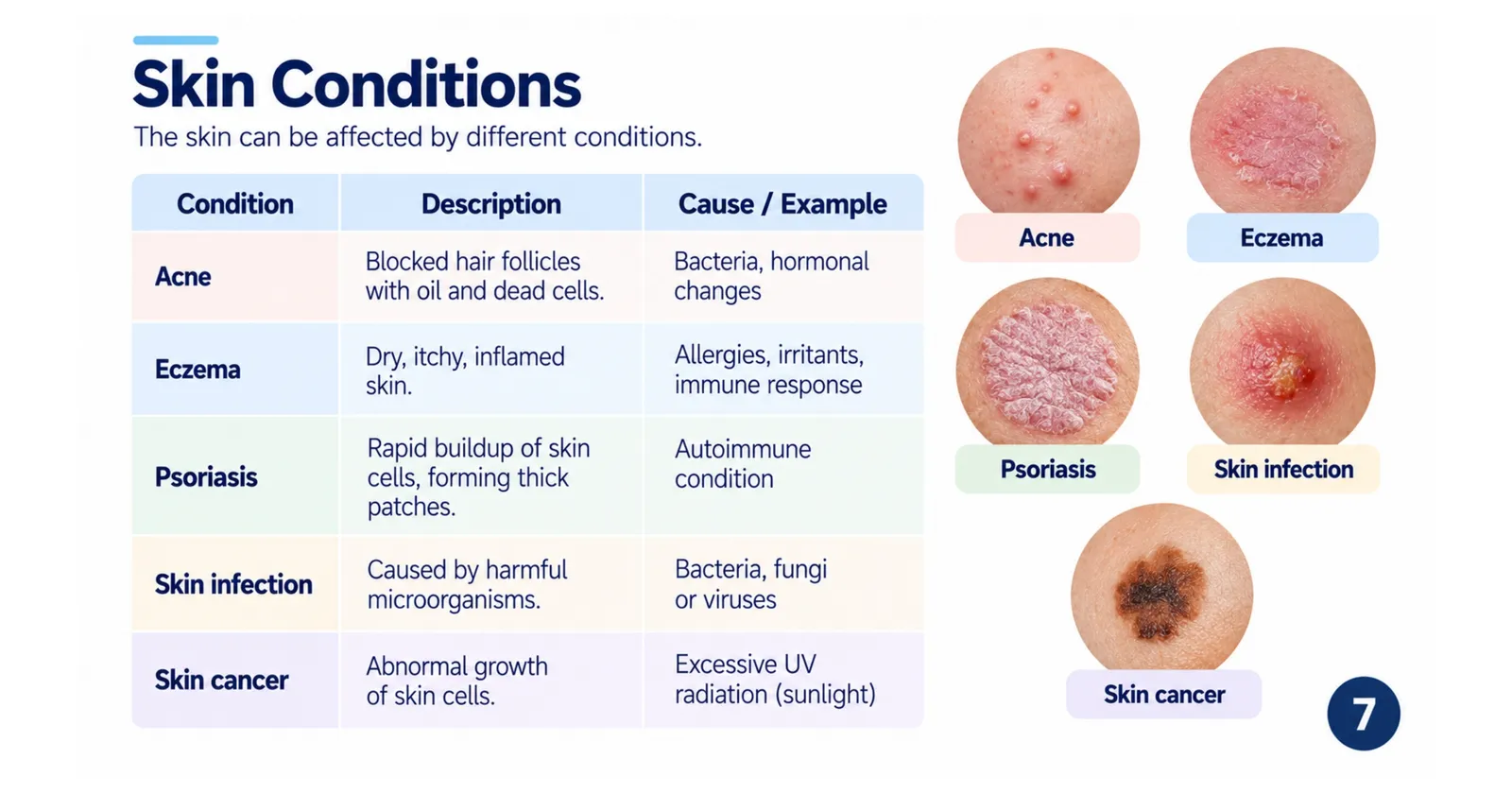
Acne: blocked hair follicles become inflamed when excess sebum and dead cells combine with bacteria. It is very common during puberty because hormones increase sebum production.
Eczema (atopic dermatitis): dry, itchy, inflamed patches caused by a weakened skin barrier and an overactive immune response.
Psoriasis: an autoimmune condition in which skin cells are produced too quickly, forming thick, scaly patches.
Fungal infections: such as athlete's foot and ringworm, which thrive in warm, damp skin.
Vitiligo: loss of melanocytes causes pale patches of skin.
Skin cancer: mainly caused by UV damage. Melanoma is the most dangerous type. Check moles using the ABCDE rule: Asymmetry, Border irregularity, Colour variation, Diameter over 6 mm and Evolving (changing). See a doctor about any mole that changes.
Slide: Skin conditions
Causes of common skin problems
1/1
How to Keep Your Skin Healthy
Use sunscreen with a high SPF and avoid the strongest midday sun.
Drink plenty of water and eat a balanced diet with fruit, vegetables and healthy fats.
Wash gently and moisturise to protect the skin barrier.
Do not smoke, because smoking reduces blood flow and damages collagen, causing early wrinkles.
Get enough sleep, since skin repairs itself overnight.
Never use tanning beds, which greatly increase the risk of skin cancer.
Frequently Asked Questions About Human Skin
Why is skin called the largest organ?
It has the greatest surface area and weight of any single organ, and it is made of several tissues working together.
Why do fingers wrinkle in water?
Scientists now know this is controlled by nerves that make blood vessels constrict, possibly to improve grip on wet objects, although water entering the outer layer also plays a part.
Does skin really renew itself?
Yes. The epidermis is replaced roughly every four weeks as new cells move up from the basal layer and old cells flake away.
Key Takeaways
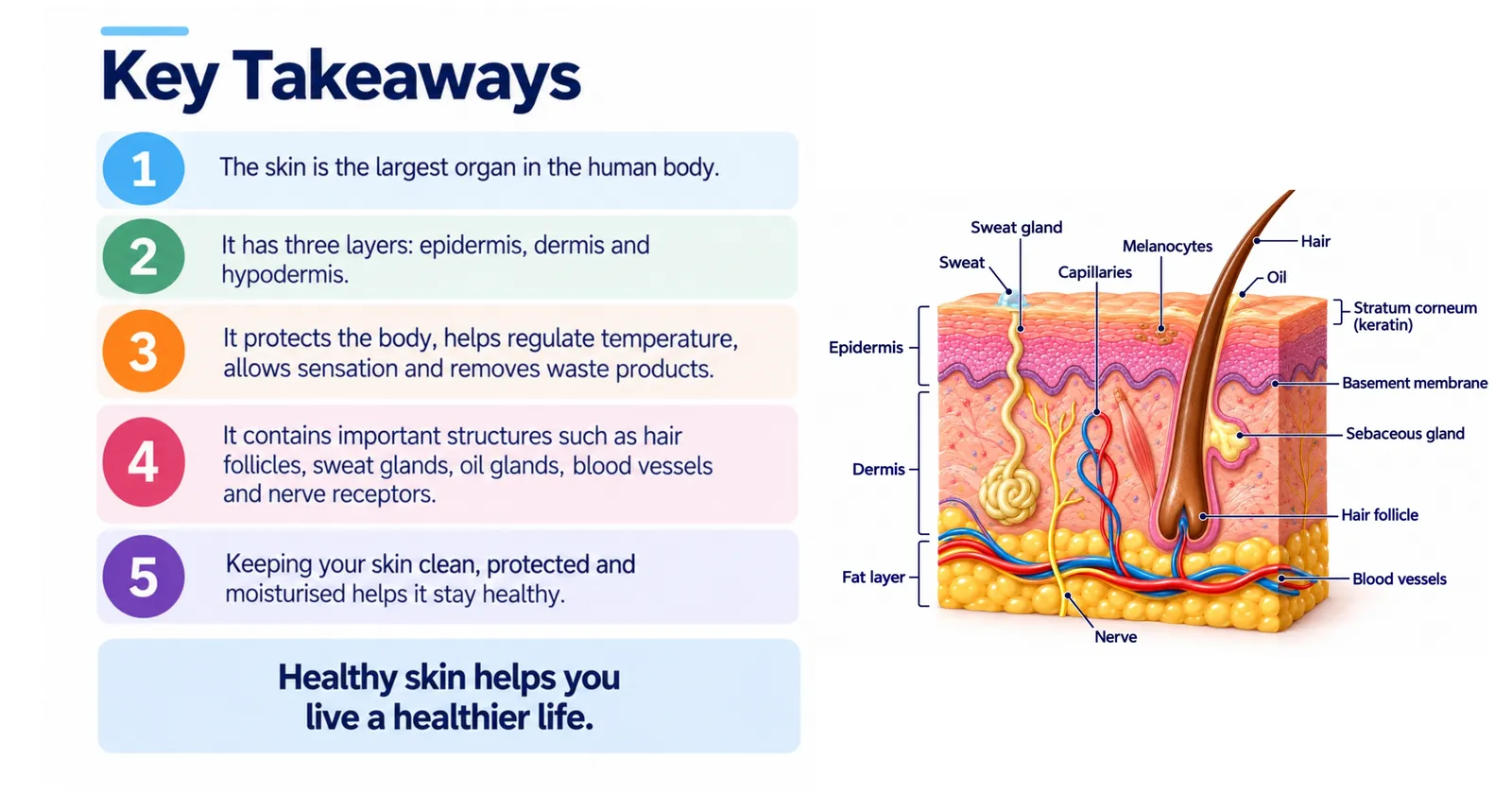
Skin is the body's largest organ, made of the epidermis, dermis and hypodermis.
The epidermis forms a waterproof, microbe-proof barrier made of dead keratin-filled cells.
The dermis contains blood vessels, sweat glands, hair follicles, sebaceous glands and sensory receptors.
Skin controls body temperature through vasodilation, vasoconstriction, sweating and hair erection.
Melanin protects against UV light, and sunlight on the skin produces vitamin D.
Slide: Key takeaways
1/1
Your skin is your first line of defence against infection. Read our guide to human immunity to find out what happens if a pathogen manages to break through.
🗂️ Revision Flashcards
Tap a card to reveal the answer.
🎯 Quick Quiz
8 questions. Pick an answer to check it straight away.
1Which layer of the skin contains no blood vessels?
The epidermis contains no blood vessels, so it gets its nutrients from the dermis below.
2What do sebaceous glands produce?
Sebaceous glands produce sebum, an oily substance that keeps skin and hair supple and waterproof.
3What happens to the arterioles supplying the skin capillaries when you are too hot?
Arterioles widen so more blood flows near the surface; blood vessels do not move.
4How does sweating cool you down?
Evaporating sweat takes heat energy from the skin.
5Which cells make the pigment melanin?
Melanocytes, found in the basal layer, make melanin.
6A lack of vitamin D can cause which condition in children?
A lack of vitamin D can cause rickets in children and weak bones in adults.
7Which skin condition is an autoimmune condition in which skin cells are produced too quickly?
Psoriasis forms thick, scaly patches because skin cells are produced too quickly.
8In the ABCDE rule for checking moles, what does D stand for?
D is Diameter over 6 mm.