Atomic Structure

The Foundation of Chemistry

Lesson

Introduction

Atomic structure is the foundation of chemistry, explaining the composition, properties and behaviour of matter. Every element and compound are made of atoms, and understanding how atoms are built helps us predict chemical reactions, bonding and periodic trends. In this blog, we explore the structure of the atom, subatomic particles, isotopes and electron configuration, along with examples, tables and comparisons to make learning clear and engaging.

This lesson is designed for students studying GCSE, IGCSE, CBSE, IB and the AP Curriculum, particularly those in Grades 9 to 11. It includes informative notes, interactive activity sheets, flashcards and engaging learning tasks to make this topic more enjoyable and easier to understand.

Components of an Atom

An atom consists of three primary subatomic particles:

Protons (p⁺)

  • Positive charge (+1)
  • Mass ≈ 1 u (atomic mass unit)
  • Located in the nucleus
  • Determines the atomic number and element identity

Neutrons (n⁰)

  • Neutral (0 charge)
  • Mass ≈ 1 u
  • Located in the nucleus
  • Contributes to mass number and isotope variations

Electrons (e⁻)

  • Negative charge (-1)
  • Mass ≈ 1/1836 u (very small)
  • Orbit the nucleus in energy levels or shells
  • Determines chemical reactivity and bonding

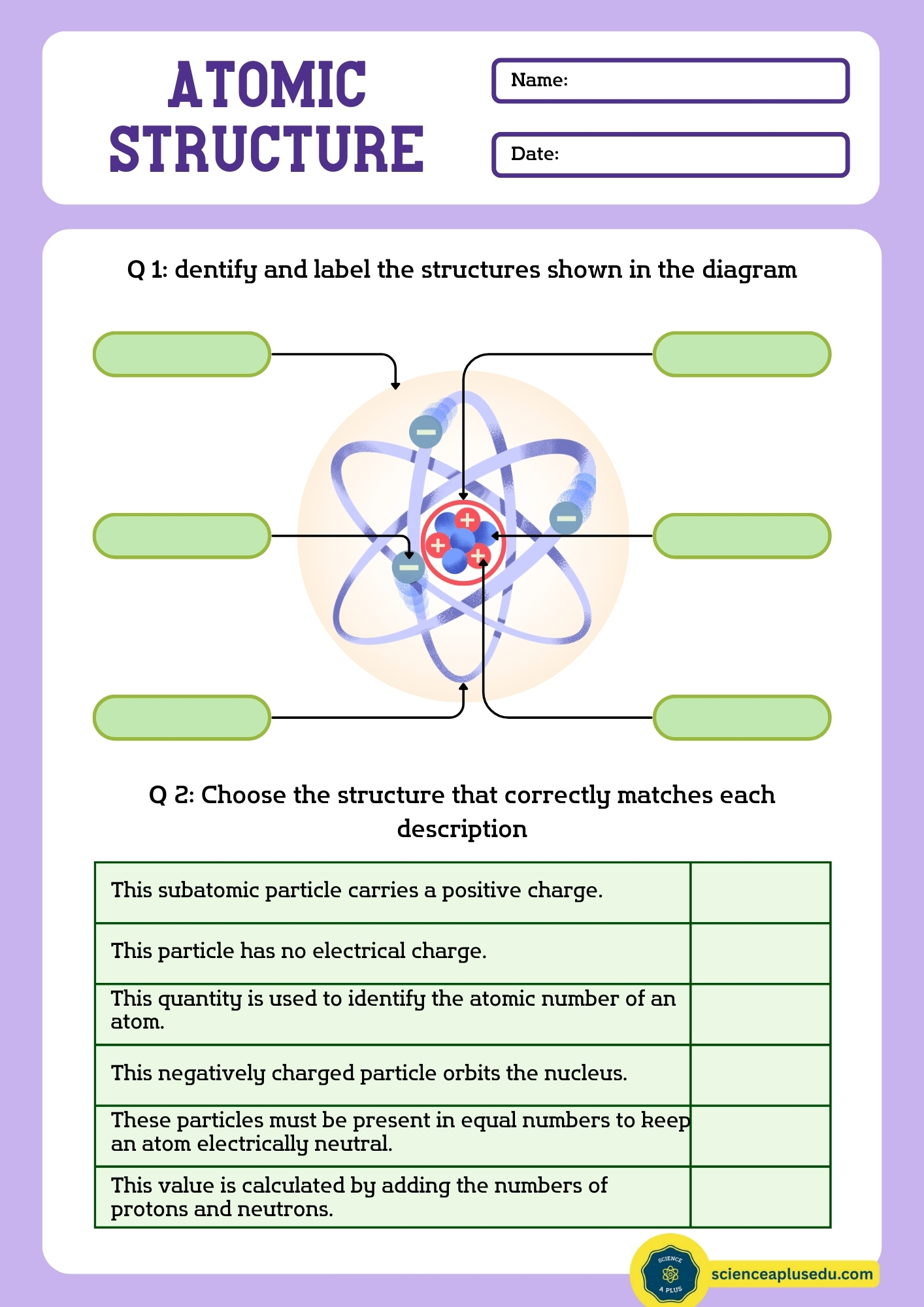
Atomic Structure and Subatomic Particles
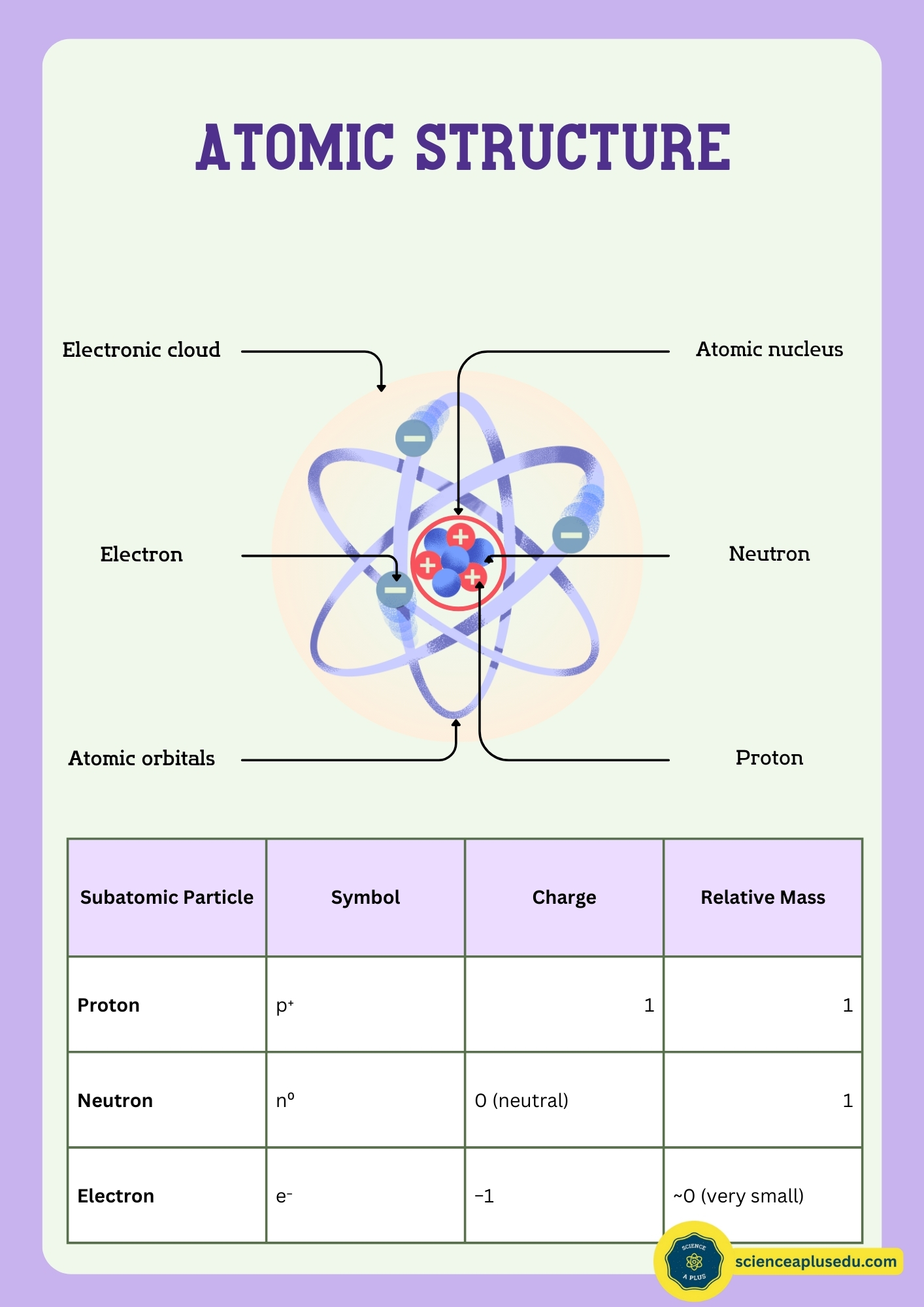
Atomic structure diagram with subatomic particles

Atomic Structure Diagram

Atomic Number and Mass Number

  • Atomic number (Z): Number of protons in an atom
  • Mass number (A): Sum of protons and neutrons

Example: Oxygen atom (O)

  • Atomic number = 8 → 8 protons, 8 electrons
  • Mass number = 16 → 16 – 8 = 8 neutrons
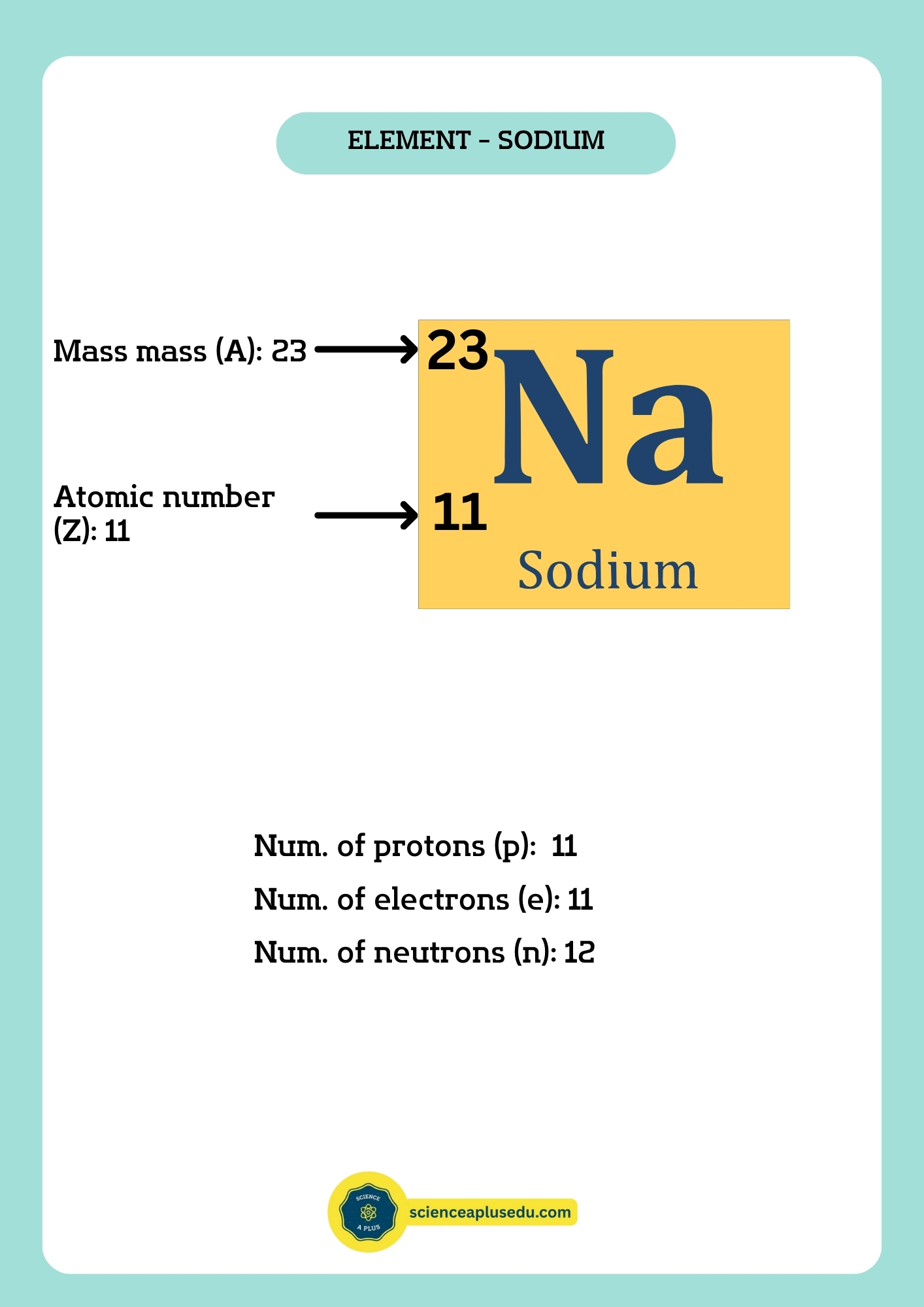
STEM chemistry atomic number of Na

Isotopes

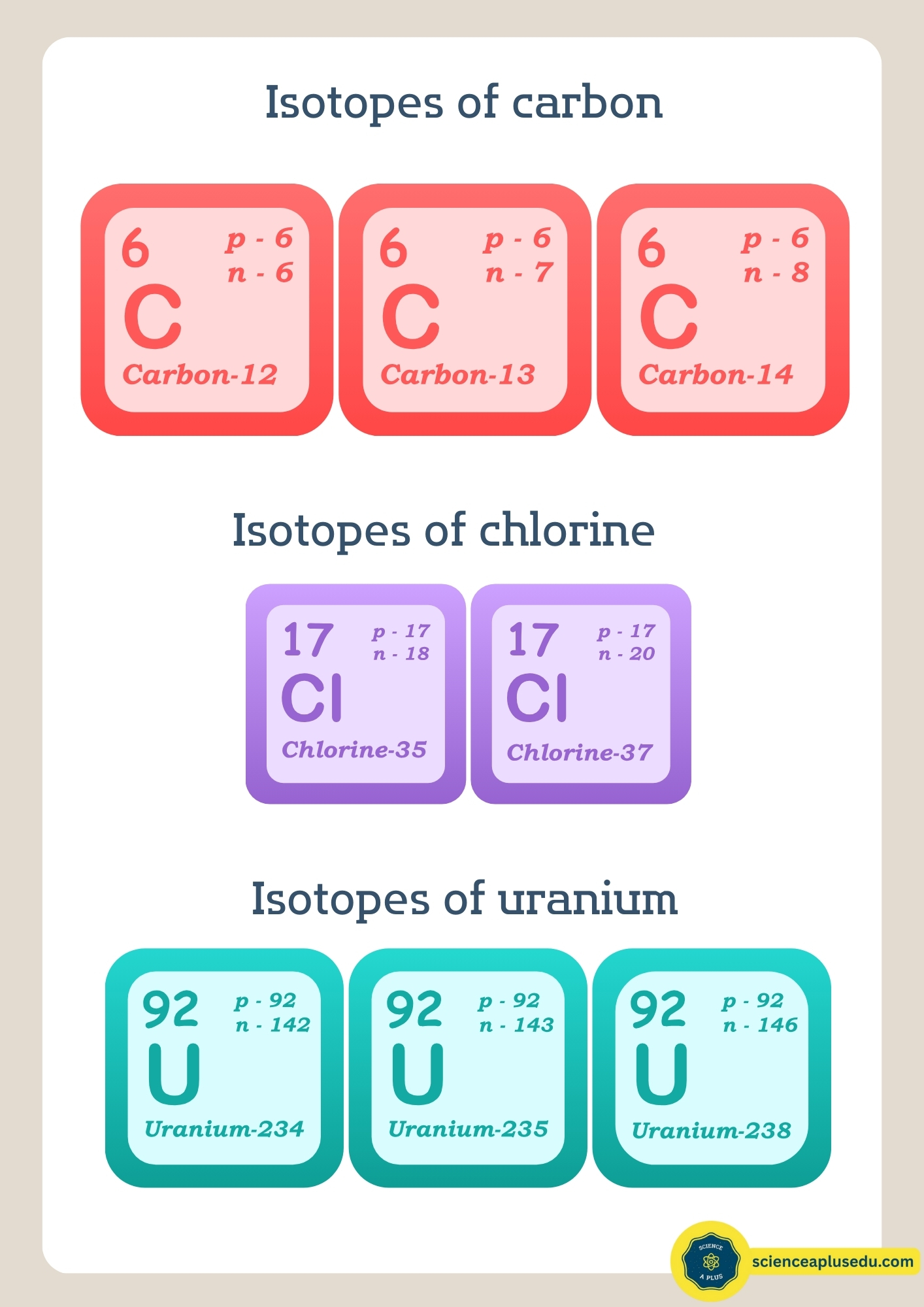
Isotopes are atoms of the same element with the same number of protons but different numbers of neutrons.

Example: Carbon

  • Carbon-12: 6 protons, 6 neutrons
  • Carbon-14: 6 protons, 8 neutrons

Applications of Isotopes:

  • Carbon-14: Radiocarbon dating
  • Iodine-131: Medical imaging
  • Uranium-235: Nuclear fuel
diagram of Isotopes-Carbon Chlorine-Uranium

Electron Configuration

Electrons occupy energy levels (shells) around the nucleus: K, L, M, N, etc. Each shell has a maximum capacity:

  • K: 2 electrons
  • L: 8 electrons
  • M: 18 electrons
  • N: 32 electrons

Example: Oxygen (O), 8 electrons

  • Shell K: 2 electrons
  • Shell L: 6 electrons
  • Configuration: 1s² 2s² 2p⁴
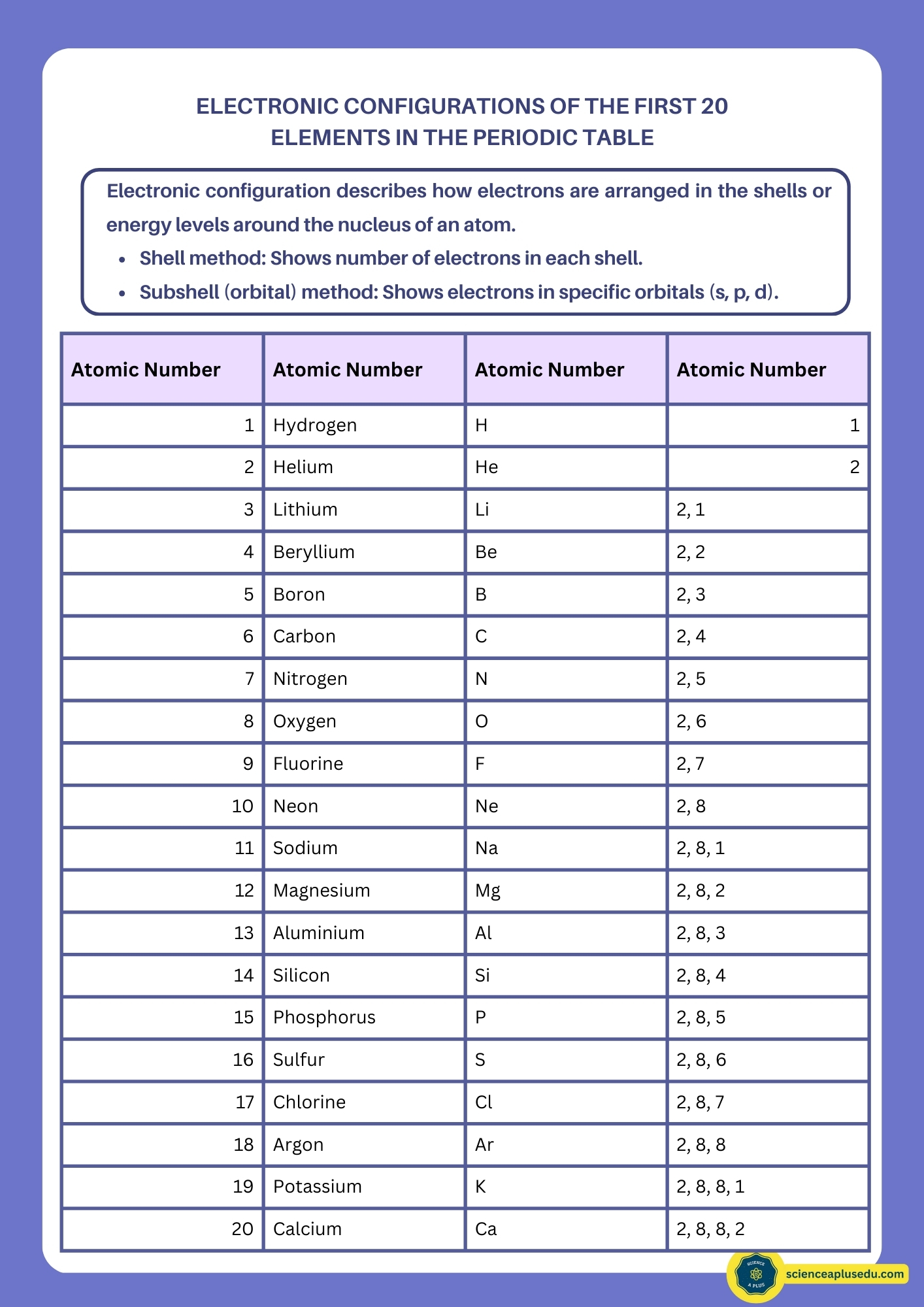
Table-presents-element-symbols-and-configurations

Element symbols and configurations

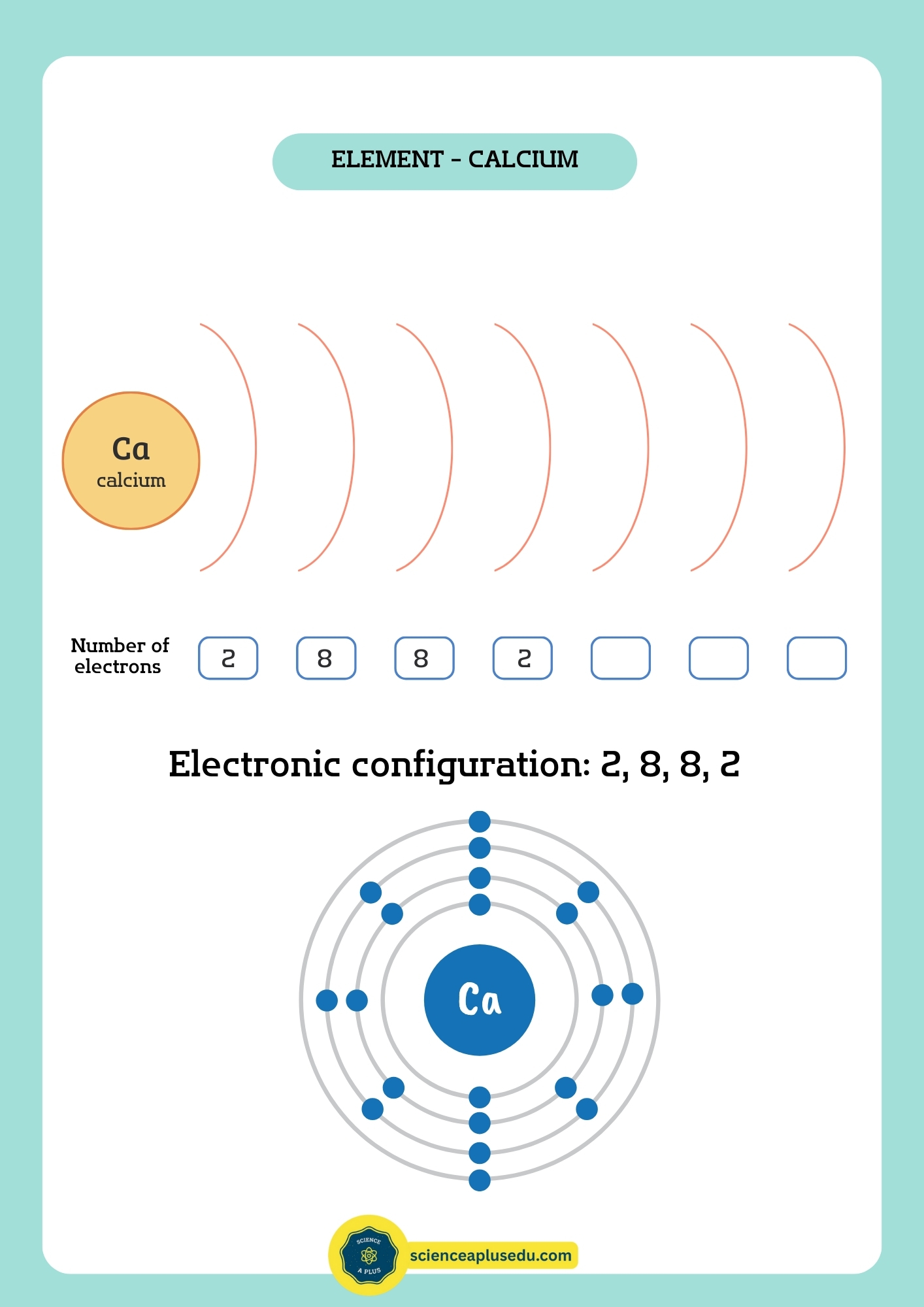
Electronic configuration for Calcium

Electron Configuration - Calcium

Models of the Atom

  1. Dalton's Model (1803): Atoms are indivisible spheres.
  2. Thomson's Plum Pudding Model (1897): Atoms contain electrons in a positive sphere.
  3. Rutherford Model (1911): Small, dense nucleus; electrons orbit outside.
  4. Bohr Model (1913): Electrons occupy fixed energy levels.
  5. Quantum Mechanical Model: Electrons exist in clouds (orbitals); modern theory.

Applications of Atomic Structure

  • Predicting chemical reactions
  • Explaining periodic table trends
  • Understanding bonding and molecular geometry
  • Practical use in medicine, industry, and research
  • Example: Hydrogen bonding in water explained by electron distribution

Conclusion

Atomic structure forms the foundation of chemistry, linking subatomic particles, isotopes, electron configuration, and chemical behaviour. Mastery of atomic structure helps students understand bonding, periodic trends, and reactions, providing the knowledge required for advanced studies in chemistry, physics, biology, and applied sciences.
Flashcards

Click on each card to reveal the answer

What is the atomic number?

The atomic number (Z) is the number of protons in an atom's nucleus. It determines the element's identity.

What is the mass number?

The mass number (A) is the sum of protons and neutrons in an atom's nucleus.

What are isotopes?

Isotopes are atoms of the same element with the same number of protons but different numbers of neutrons.

What charge do protons have?

Protons have a positive charge (+1).

Where are electrons located?

Electrons orbit the nucleus in energy levels or shells (K, L, M, N, etc.).

What is the K shell capacity?

The K shell (first energy level) can hold a maximum of 2 electrons.

What is the L shell capacity?

The L shell (second energy level) can hold a maximum of 8 electrons.

What determines an element's chemical properties?

The number and arrangement of electrons, particularly in the outermost shell (valence electrons).

Who proposed the Plum Pudding Model?

J.J. Thomson proposed the Plum Pudding Model in 1897, showing electrons embedded in a positive sphere.

What are neutrons?

Neutrons are subatomic particles with no electrical charge (neutral) located in the nucleus with a mass of approximately 1 u.

What is Carbon-14 used for?

Carbon-14 is an isotope used for radiocarbon dating to determine the age of ancient objects.

What is the Bohr Model?

The Bohr Model (1913) shows electrons orbiting the nucleus in fixed energy levels or shells.

Quiz

1. What is the atomic number of an element?

A) Number of neutrons
B) Number of protons
C) Number of electrons in outer shell
D) Sum of protons and neutrons

2. What is the mass number of an atom?

A) Number of protons only
B) Sum of protons and neutrons
C) Number of electrons
D) Number of neutrons only

3. Which subatomic particle has a negative charge?

A) Proton
B) Neutron
C) Electron
D) Nucleus

4. Isotopes of an element have the same number of ___ but different number of ___.

A) Protons, neutrons
B) Electrons, protons
C) Neutrons, electrons
D) Protons, electrons

5. What is the maximum number of electrons in the K shell?

A) 2
B) 8
C) 18
D) 32

6. Which model proposed that electrons orbit in fixed energy levels?

A) Dalton's Model
B) Thomson's Plum Pudding Model
C) Bohr Model
D) Rutherford Model

7. Where are protons and neutrons located in an atom?

A) Electron shells
B) Nucleus
C) Orbiting around the nucleus
D) Outside the atom

8. Carbon-12 has 6 protons. How many neutrons does it have?

A) 12
B) 6
C) 8
D) 14

9. What determines an element's chemical reactivity?

A) Number of protons
B) Number of neutrons
C) Number and arrangement of electrons
D) Mass number

10. An oxygen atom has 8 protons and a mass number of 16. How many neutrons does it have?

A) 16
B) 8
C) 24
D) 6

Worksheets

Electronic Configuration Worksheet Set

Electronic Configuration Collection

Complete set of electron configuration worksheets for Na, Ca, K, and Mg


Download Collection
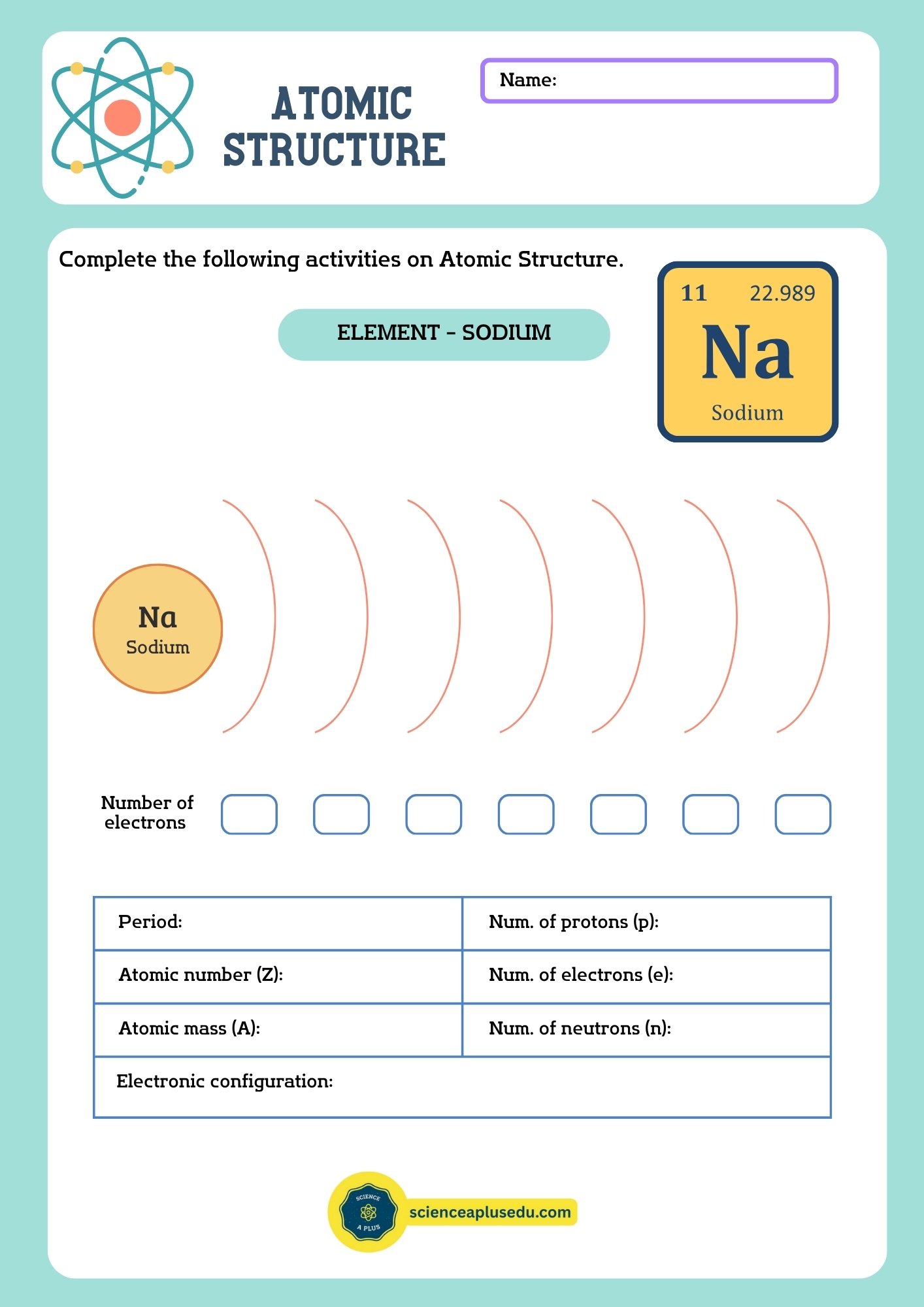
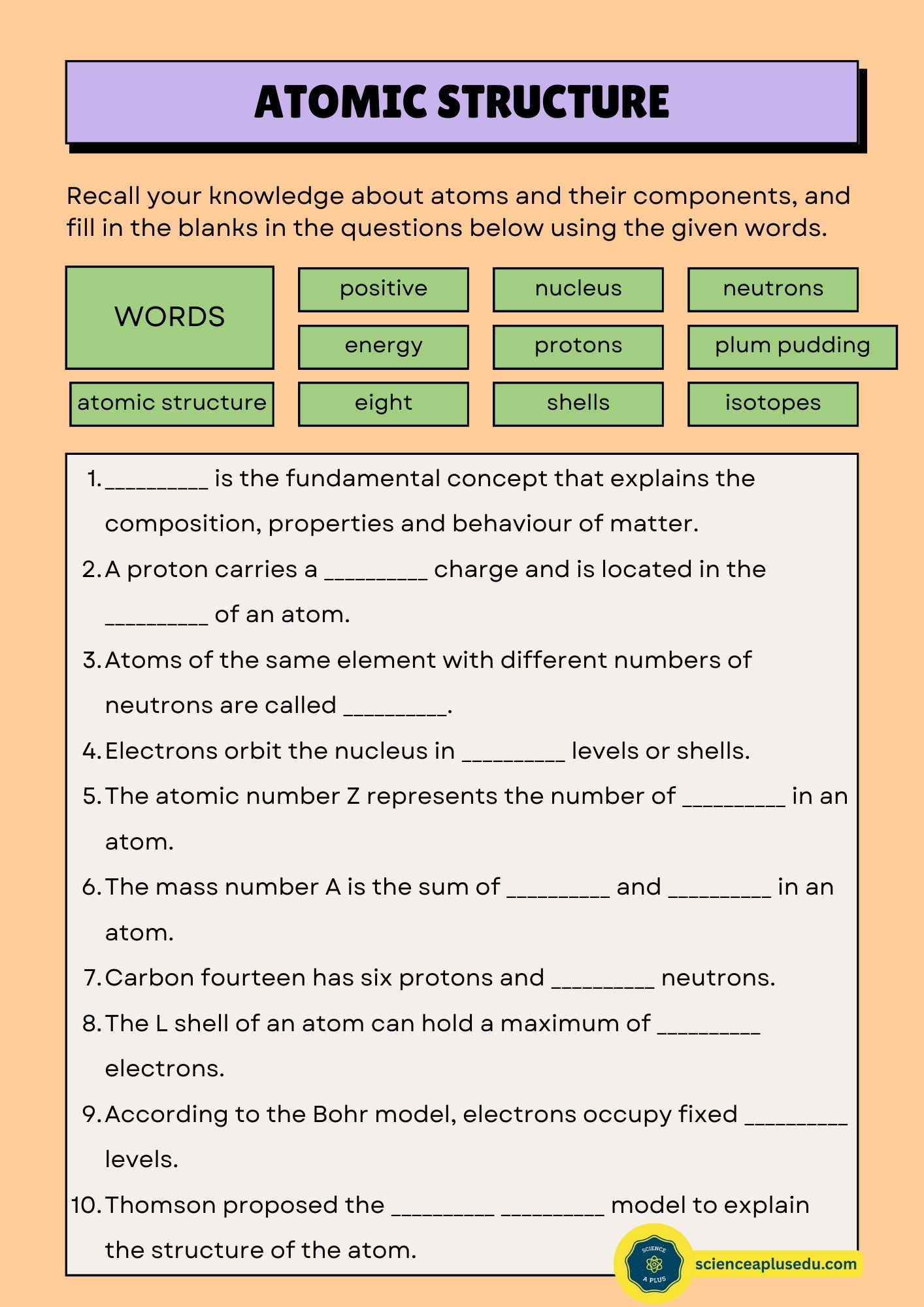
Fill in the Blank Worksheet

Fill in the Blank Worksheet

Test your knowledge with fill-in-the-blank questions about atomic structure


Download Collection
Name the Atom Activity Sheet

Identify Atomic Structures

Label the parts of an atom and practice identification skills


Download Collection
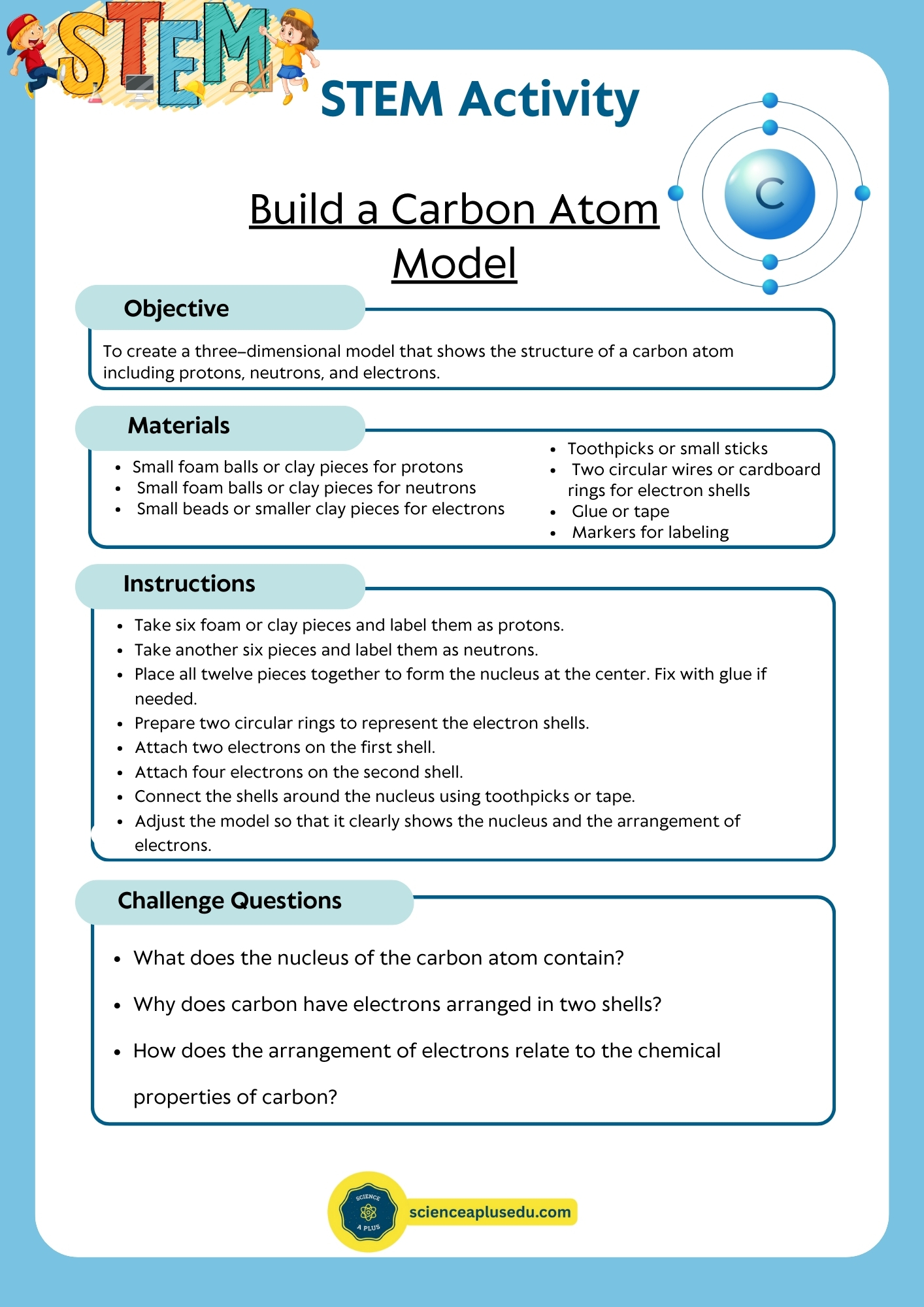
STEM Activity - Build a Carbon Atom

STEM Activity: Build a Carbon Atom

Hands-on activity to create a 3D model of a carbon atom


Download Collection
×